

Master your seasonal cleanup with practical summer recycling tips that help you responsibly dispose of everything from broken pool floats to old portable air conditioners.
Key Takeaways
- Do not throw portable AC units in the trash; they contain refrigerants that must be professionally processed to protect the environment.
- Flexible plastic pool floats and squeeze-tube sunscreen bottles typically cannot go in standard curbside recycling bins.
- Propane tanks from your summer BBQs are considered hazardous waste and must be dropped off at designated municipal facilities.
Household waste generation experiences a dramatic spike during the summer months, fueled by backyard barbecues, landscaping overhauls, and outdoor events. To help you navigate this seasonal surge, this comprehensive summer recycling guide provides actionable summer recycling tips to effectively manage your waste and protect the local environment. When you properly dispose of leaky pool floats, broken air conditioners, and hazardous chemicals, you prevent harmful greenhouse gases from escaping and keep your community safe.
The Impact of Summer Waste on Local Landfills
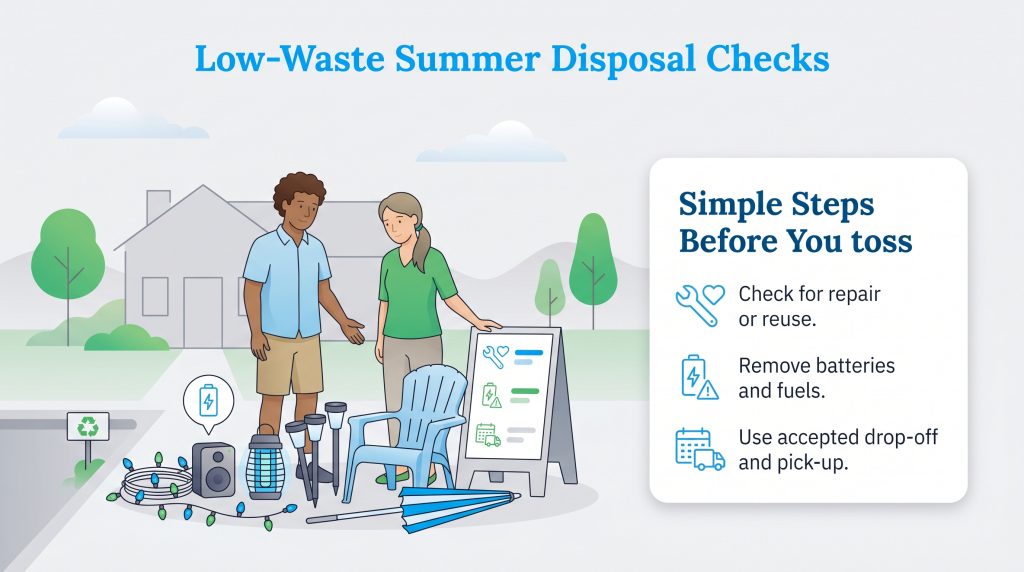
Protect your home and neighborhood by taking a few extra minutes to sort out your seasonal waste correctly. Understanding the difference between curbside recycling, dangerous wish-cycling, household hazardous waste (HHW), and e-waste will help you make the right disposal choices. Facility managers often see a record high in waste management fires during the summer due to improperly discarded batteries and pressurized containers.
To reduce your impact, keep these three recycling rules for summer in mind before you drag your bins to the curb:
- Keep flexible plastics out of the bin: Beach balls, soft coolers, and inflatable pool toys quickly jam up municipal sorting machines.
- Never trash hazardous chemicals: Leftover pool shock, algaecides, and bug sprays must go directly to household hazardous waste drop-off sites.
- Sort your summer batteries: Solar pathway lights, bug zappers, and Bluetooth speakers contain batteries that can spark fires in garbage trucks if not removed and recycled properly.
How to Recycle Heavy Summer Hardware
Navigating home waste and understanding how to recycle properly at home means recognizing that heavy seasonal hardware has completely different disposal rules than rigid household containers. Bulky items often contain gas, chemical refrigerants, or complex metal components that demand specialized care to keep your community safe.
Disposing of Propane Tanks Safely
Replacing an empty grill cylinder feels routine, but learning how to dispose of propane tanks safely requires extreme caution. Even a seemingly empty cylinder holds residual gas that explodes when compressed inside a garbage truck. You must take unwanted grill cylinders directly to specialized disposal facilities to avoid triggering dangerous facility fires.
🚩 Heads Up: Never throw a pressurized propane tank into a standard trash or recycling bin. Always exchange refillable tanks through a retailer or review EPA guidance to locate municipal hazardous waste drop-off locations for damaged cylinders.
How to Recycle a BBQ Grill
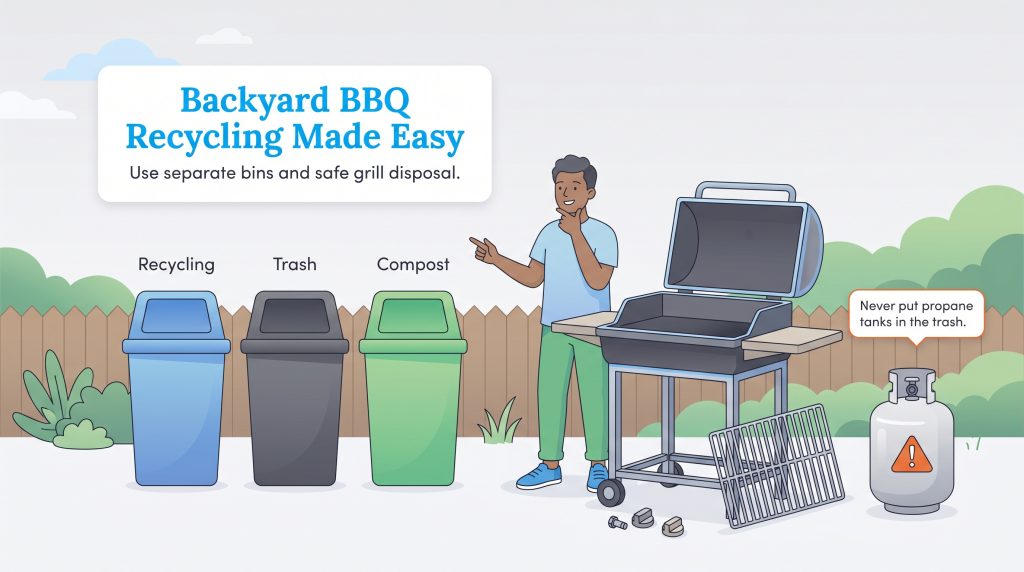
When your trusty backyard cooker finally rusts out, do not drag it to the curb expecting the standard garbage truck to take it. To safely recycle a BBQ grill, you need to break it down into manageable components so the scrap metal can be efficiently recovered. Follow these step-by-step instructions to break down a metal cooker:
- Disconnect the fuel source: Remove the propane tank or unplug the electrical cord before doing anything else.
- Clean the grates: Scrape off heavy grease and food residue so the metal is relatively clean for the scrapyard.
- Dismantle the plastic and electronic parts: Unscrew plastic handles, side tables, and electronic ignition wires to throw in the standard trash.
- Transport the metal body: Load the remaining aluminum, stainless steel, or cast-iron body into your vehicle and drop it off at a local scrap metal recycling center.
Air Conditioners and Dehumidifiers
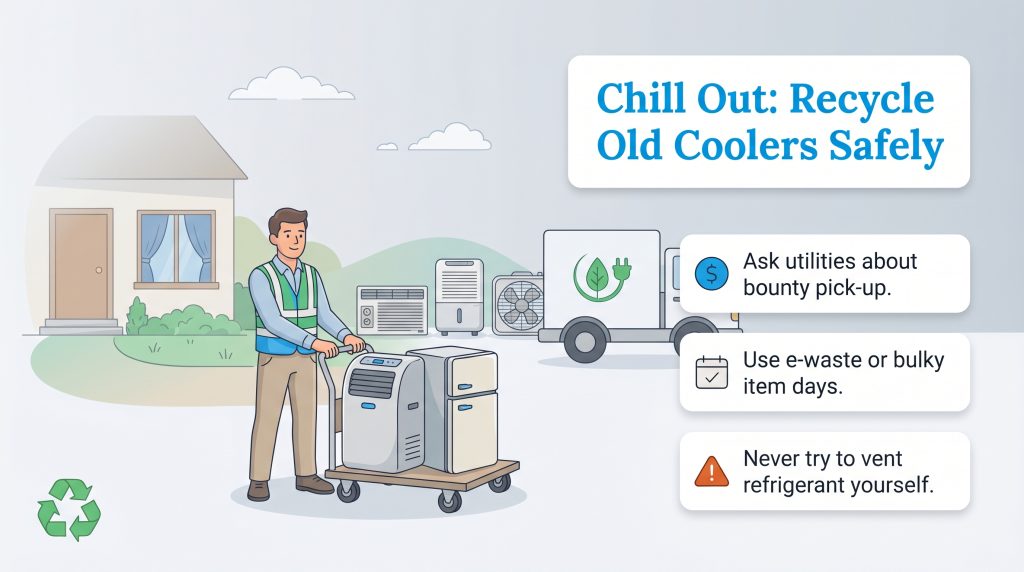
Keeping your new home cool is an absolute priority during scorching heat waves, but hauling broken window units down to the curb causes significant environmental damage. Air conditioner disposal requires care because these appliances are packed with e-waste components and chemical refrigerants. If crushed in a standard garbage truck, those refrigerants immediately escape into the atmosphere.
💡 Pro Tip: Upgrading an older window AC unit to an ENERGY STAR-certified model — along with following routine summer cooling maintenance tips — can lower energy use while helping your room stay comfortable and actively reduce your summer electric bill.
Seek out specialized programs for hazardous appliance disposal. The EPA’s Responsible Appliance Disposal program helps you find participating retailers and utility companies nationwide. Drop off the appliance so certified recyclers can safely recover refrigerants, metals, and oils.
Managing Yard Waste and Grass Clippings
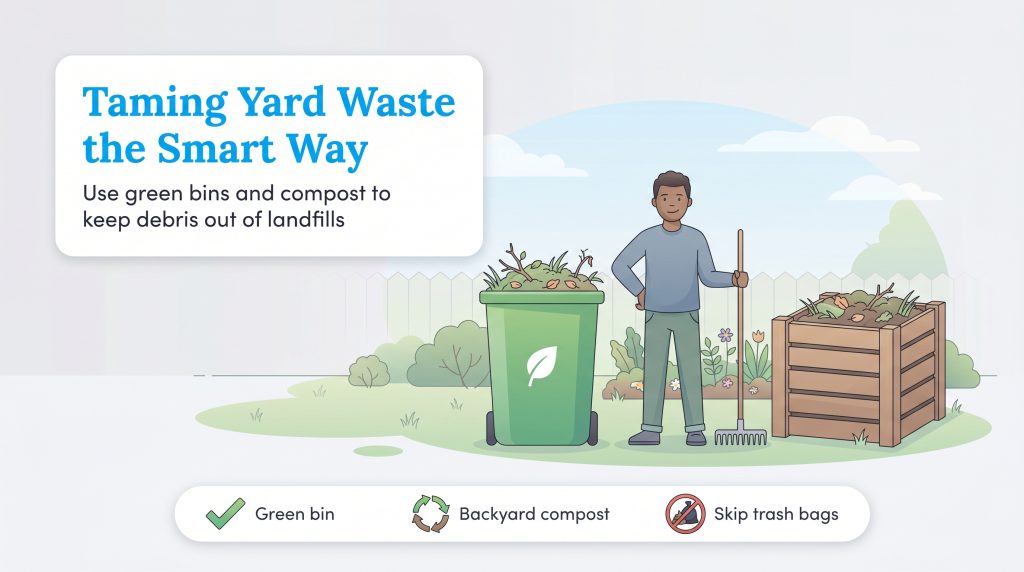
Taking control of an overgrown lawn leaves you with massive piles of landscape debris. According to the EPA’s yard trimmings material-specific data, landscape waste accounts for millions of tons of municipal solid waste annually. Throwing branches and dead summer plants into black trash bags contributes heavily to this problem and produces harmful methane gas as it slowly decays.
To handle your yard waste disposal responsibly, utilize your city’s municipal green bin collection, which safely diverts organic matter to industrial composting centers. Better yet, practice grasscycling by simply leaving your clippings on the lawn after you mow. This acts as a free, natural fertilizer that returns essential nitrogen directly to the soil, strengthening your grass while keeping excess yard waste out of the local dump.
If you have more debris than your lawn can absorb, follow these four summer compost tips to start a backyard bin:
- Choose a shaded spot: Set up your compost bin in a dry, shady area near a water source to maintain optimal moisture levels.
- Add brown and green materials: Mix equal parts of brown items (dead leaves, twigs) and green items (grass clippings, fruit scraps) to create the right carbon-to-nitrogen balance.
- Keep it moist: Add water during dry summer weeks so the pile feels like a damp sponge, which helps microbes break down the material faster.
- Aerate the pile: Turn your compost every week with a pitchfork to introduce oxygen and accelerate the decomposition process.
🌱 Eco Edge: Combine these practices with essential summer composting tips to turn your excess yard trimmings into nutrient-dense soil for next year’s garden.
Beach Day and Road Trip Recycling Rules
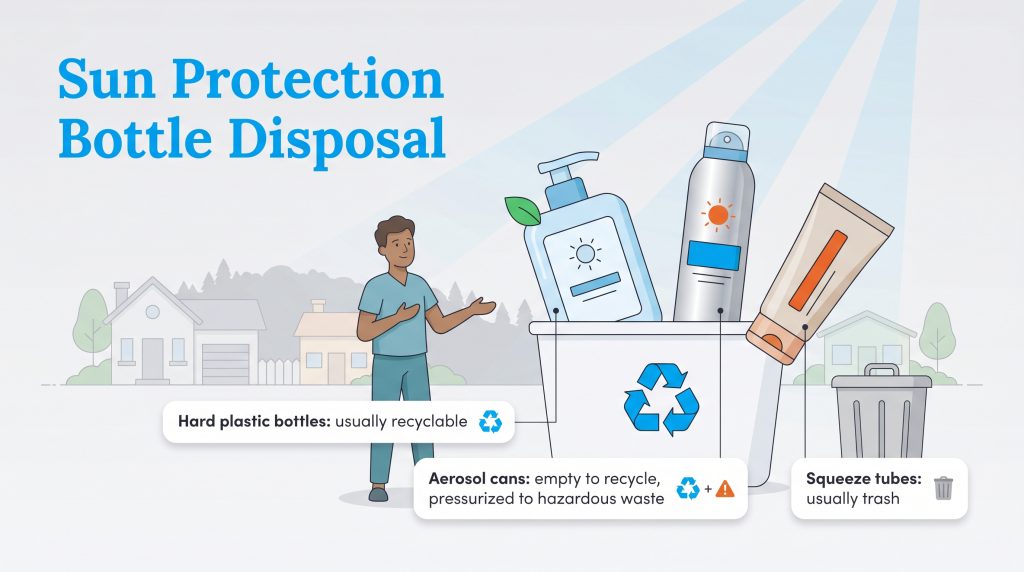
Sorting your sunblock empties correctly protects nature trails during your summer travels. Packing eco-friendly summer essentials for your road trips and campsite visits means knowing what to do with the waste you generate outdoors. Packaging varies wildly, so follow these straightforward beach day recycling guidelines to manage your sunscreen correctly:
- Hard Plastic Bottles: Empty hard plastic bottles are often recyclable if your local program accepts that plastic type. Check the meaning of the recycling symbols on the bottom of the bottle to confirm before tossing it in the bin.
- Aerosol Sprays: Empty aerosol sunscreen cans may be recyclable where metal aerosol cans are accepted. If the can still sprays or feels pressurized, treat it as household hazardous waste.
- Squeeze Tubes: Squeeze tubes go straight in the trash because they feature layered flexible plastics that are impossible to clean efficiently.
When you are traveling to public parks and shorelines, demand zero-waste practices during your wilderness excursions. Managing your trash respectfully ensures natural spaces remain pristine for the next visitors. Always use a strict pack-in, pack-out system, meaning whatever garbage you bring into the park must leave with you.
Check off these essential reusable items to cut down on travel waste:
- Pack washable camping dinnerware and real metal silverware for outdoor meals to avoid leaving a trail of single-use paper and plastic behind.
- Bring insulated stainless steel water bottles rather than buying heavy cases of disposable plastic bottles.
- Carry cloth tote bags for hauling wet swimsuits and beach towels, replacing flimsy plastic grocery bags.
- Store your road trip snacks in reusable silicone food bags or glass containers to reduce landfill waste along your route.
Upcycling Ideas for Deflated Pool Toys and Beach Gear
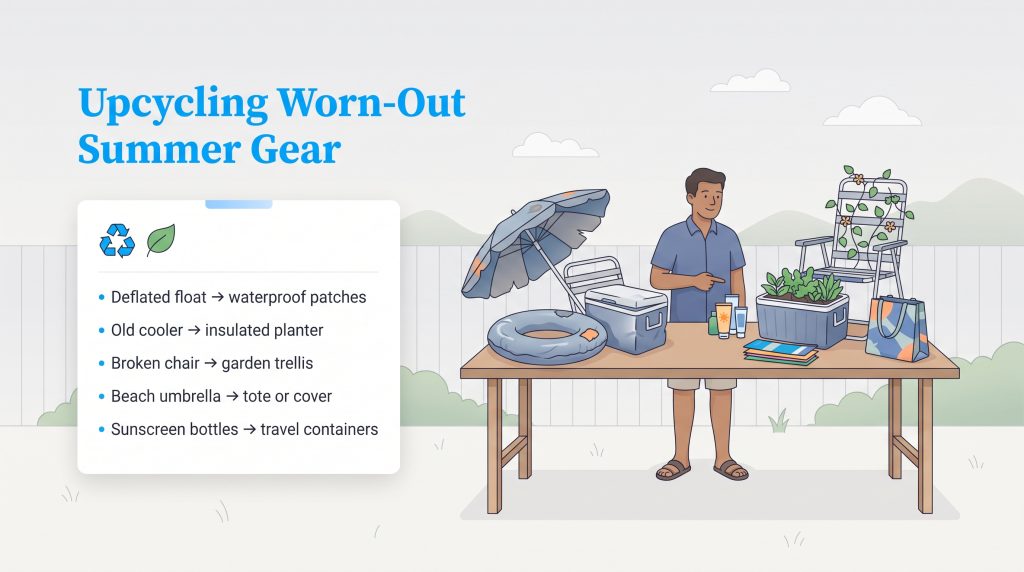
Review local PVC recycling facts before tossing torn pool toys into your bin. Most inflatable pools, beach balls, and floaties are manufactured from flexible plastics that are rarely accepted in standard curbside recycling because they tangle in machinery. Before throwing a deflated pool float in the trash, check whether the manufacturer included a vinyl repair patch kit to extend its life for another season.
If the item is beyond repair, consider creative ways to upcycle summer items. Reusing materials around your home keeps difficult plastics out of the landfill and gives new life to seasonal goods. Use the table below to decide whether to dispose of or upcycle your worn-out summer gear.
| Item | Standard Disposal Method | Upcycle / Reuse Idea |
|---|---|---|
| Deflated Pool Toys (PVC) | Regular trash or mail-in plastic recycling program | Cut the vinyl into waterproof patches or use it to line hanging garden baskets. |
| Broken Lawn Chairs | Municipal bulk waste pickup or local scrap yard | Remove the damaged webbing and turn the sturdy metal frame into a trellis for climbing plants. |
| Plastic Coolers | Regular trash or bulky item drop-off | Drill drainage holes in the bottom and repurpose it as an insulated outdoor planter box. |
| Beach Umbrellas | Remove the fabric and recycle the metal pole as scrap | Stitch the waterproof canvas into a durable tote bag or a protective cover for your outdoor grill. |
| Sunscreen Bottles (Hard Plastic) | Curbside recycling bin (if washed and accepted locally) | Clean them out thoroughly to store travel-sized toiletries or homemade bug repellent. |
Blueprint for a Zero-Waste Summer
Ditch the disposable plastics to host a truly eco-conscious summer event. Whether you are throwing a casual neighborhood cookout or looking for tips for a sustainable 4th of July celebration, making smarter hosting choices drastically cuts down on single-use plates, cups, and food packaging. To streamline your cleanup, repurpose an old cooler as a clearly labeled recycling bin at your outdoor events so guests know exactly where to drop their empty cans.
Implement these sustainable swap-outs to reduce your cookout waste:
- Provide washable cloth napkins for messy BBQ fingers instead of single-use paper towels.
- Serve drinks in large glass dispensers rather than handing out individual plastic water bottles.
- Opt for locally sourced, package-free produce to cut down on unnecessary plastic wrapping during your grocery run.
Maintaining an Eco-Friendly Household This Summer
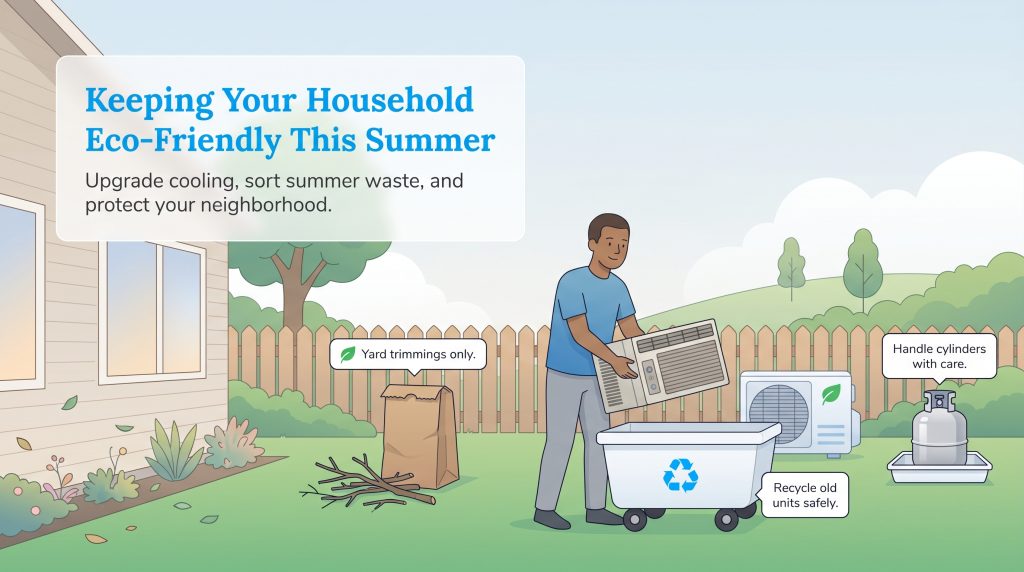
Taking a few extra minutes to sort out your seasonal waste protects your local environment and creates a healthier neighborhood for everyone to enjoy. By ditching outdated cooling units, managing yard trimmings responsibly, and handling pressurized cylinders with care, you actively prevent harmful chemicals from seeping into the ground. A few of these environmentally mindful choices save you money over time, especially if an energy-saving option lowers your electricity use. Embrace these smarter habits, and you will enjoy a cleaner, greener, and vastly more relaxing summer season.
Frequently Asked Questions About Summer Recycling
How do I properly dispose of a rusted BBQ grill?
Can I put empty propane tanks in my curbside recycling bin?
What is the best way to recycle deflated plastic pool floats?
How do I handle yard waste if my city doesn’t offer compost pickup?
Are spray sunscreen bottles recyclable?
Can window air conditioning units be recycled?
Are compostable plates and cups recyclable?
Can I recycle my old camping gear?
About the Author

LaLeesha has a Masters degree in English and enjoys writing whenever she has the chance. She is passionate about gardening, reducing her carbon footprint, and protecting the environment. She also recently served as President of the Board for City Sprouts (a community garden).

David has been an integral part of some of the biggest utility sites on the internet, including InMyArea.com, HighSpeedInternet.com, BroadbandNow.com, and U.S. News. He brings over 15 years of experience writing about, compiling and analyzing utility data.