

Understanding the fixed fees on your Georgia natural gas bill helps you budget better and manage your home’s energy efficiency.
Key Takeaways
- These fees are mandatory for all AGL customers, regardless of which natural gas marketer you choose.
- The Dedicated Design Day Capacity (DDDC) is the largest portion of the charge and is based on your home’s potential demand on the coldest day of the year.
- While you cannot negotiate these fees directly, improving your home’s insulation can eventually lower your capacity rating and reduce future costs.
Opening your monthly energy statement to find a massive Atlanta Gas Light Pass Through Charge can be incredibly frustrating, especially during the sweltering summer months when you have not touched your thermostat in weeks. It helps to understand that this specific fee is a mandatory, regulated delivery cost strictly passed on by your marketer to maintain the physical pipeline grid. We are here to simplify the natural gas bill breakdown on your Georgia statements, explaining exactly how your winter usage dictates your future AGL dedicated capacity charge and why this annualized infrastructure fee keeps your home safely supplied with energy all year long.
What Is The Atlanta Gas Light Pass-Through Charge?
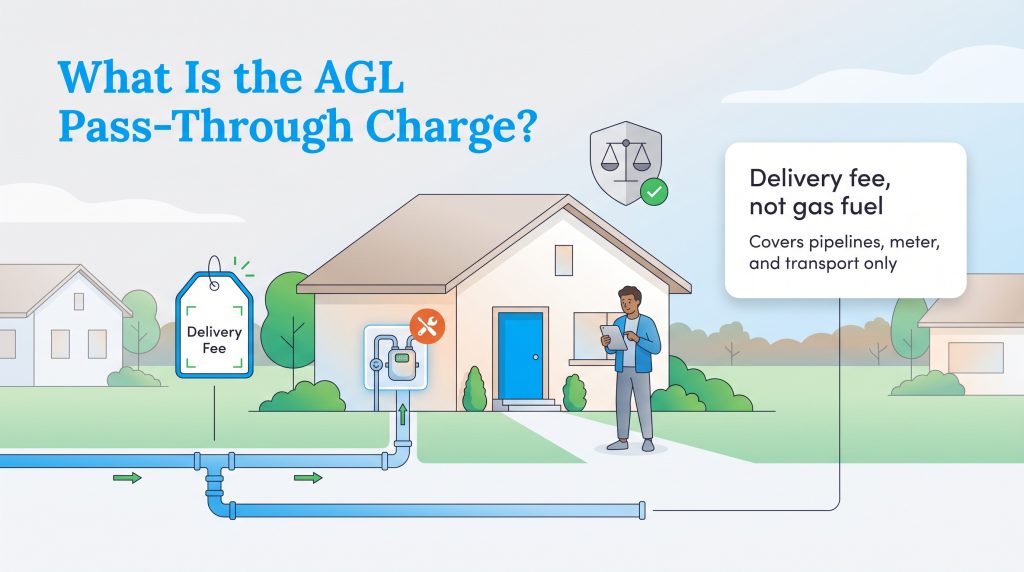
The Atlanta Gas Light pass-through charge explained simply: it is a regulated delivery fee covering the exact costs of transporting fuel to your home, maintaining local pipeline infrastructure, and managing your physical meter. The Georgia Public Service Commission rigorously monitors this fee to ensure residents only pay for essential operational expenses. Because AGL owns the pipelines, this fee is required regardless of which natural gas marketer you choose to supply your home.
It is incredibly important to note the difference between your fuel supply and physical delivery. Your chosen marketer’s per-therm rate covers the actual natural gas you consume, while the AGL pass-through charge is strictly an infrastructure delivery fee. Because it operates exactly at cost without any markups, you might see it listed under slightly different names depending on your provider, such as the Gas South AGL base fee, but the charge itself remains entirely uniform across the state grid.
The Breakdown: 7 Components Of Your AGL Base Charge
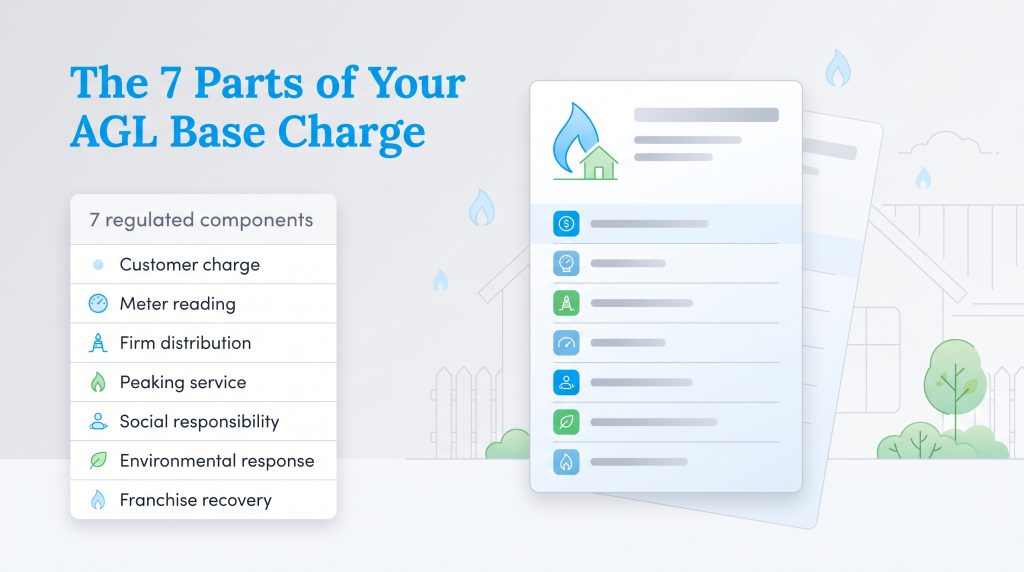
When you look closely at your statement, the Georgia natural gas base charges are not just a single arbitrary number. Instead, they encompass a specific set of distinct, state-regulated line items that fund the safe operation of the entire regional grid. State officials carefully review these tariff provisions to ensure customers are only billed for transparent operational expenses.
To give you a comprehensive natural gas bill breakdown Georgia residents can rely on, here are the exact seven components that make up your total base cost:
| AGL Pass-Through Charge Component | Definition |
|---|---|
| Customer Charge | A standard flat fee (currently $20 per month for residential meters) covering the basic cost of keeping your home connected to the physical gas network. |
| Ancillary Service (Meter Reading) | This fixed monthly fee covers the direct operational cost of utility workers manually or digitally recording your monthly gas consumption. |
| Firm Distribution Charge | This represents the variable cost of delivering natural gas to your specific home through the AGL pipe network, based largely on your seasonal DDDC capacity factor. |
| Peaking Service | Funds specialized storage facilities that hold reserve gas for extremely high-demand winter days, ensuring grid reliability during unexpected freezes. |
| Social Responsibility Fee | This small rider supports state-approved assistance programs to help vulnerable, low-income seniors and households maintain heating access during dangerous weather. |
| Environmental Response Cost | This fee directly supports the safe environmental cleanup and monitoring of former manufactured gas plant sites across the state. |
| Franchise Recovery Cost | A regulated fee collected to pay local municipalities for the right to run gas pipelines safely across public property, sidewalks, and roadways. |
Understanding Your DDDC (Dedicated Design Day Capacity)
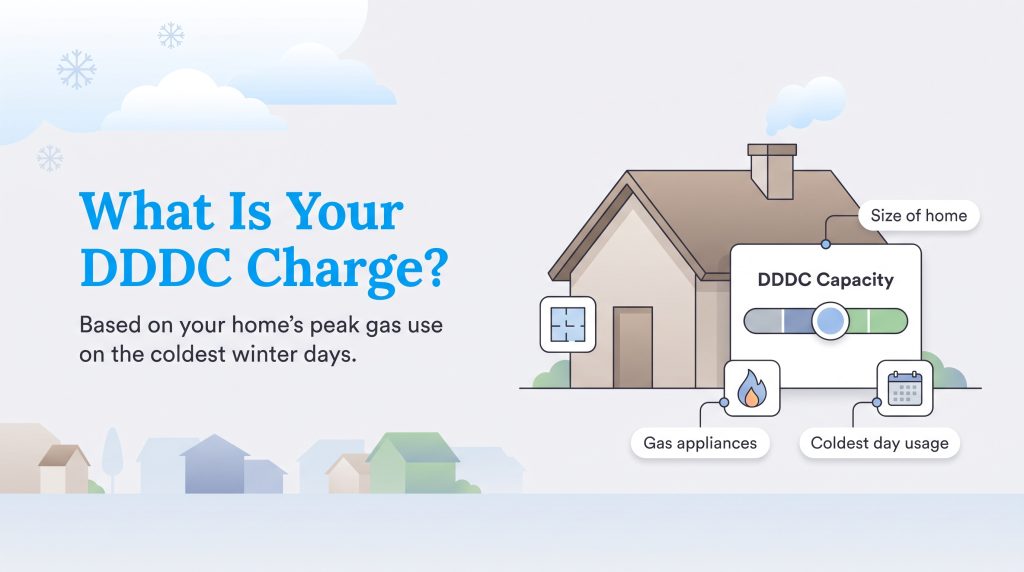
The DDDC charge applied to your bill is arguably the most confusing — and frequently the most expensive — portion of your monthly statement. It acts as a mandatory insurance policy for the local grid, guaranteeing the pipeline system is robust enough to handle the massive volume demand if every single house turned on their heat simultaneously during a severe winter freeze.
Instead of a flat rate, your DDDC calculation natural gas Georgia factor is explicitly based on your home’s peak historical consumption during the absolute coldest day of the previous winter. The utility evaluates a few primary factors to determine your home’s capacity rating:
- Square footage: Larger homes require significantly more energy to heat, which naturally increases the pipeline capacity needed to service your property.
- Appliance types: Homes with natural gas furnaces, water heaters, and stoves pull much higher fuel volumes than houses only using a gas fireplace.
- Historical peak usage: Because the infrastructure must accommodate worst-case scenarios, the utility analyzes your home’s peak natural gas consumption during the coldest days of the previous winter to predict your future maximum demand.
- Annual recalculations: The utility explicitly assesses your usage profile annually, meaning your factor can shift each year depending on your household efficiency.
Think of it like a standing reservation at a popular restaurant. Atlanta Gas Light has to “reserve a table” large enough to seat your entire family, and they must keep it open for you whether you show up to eat that day or not. Switching natural gas providers will not reset or alter your DDDC factor, as the utility tracks this consumption data independently for your specific address.
How To Find Your DDDC Factor On Your Natural Gas Bill
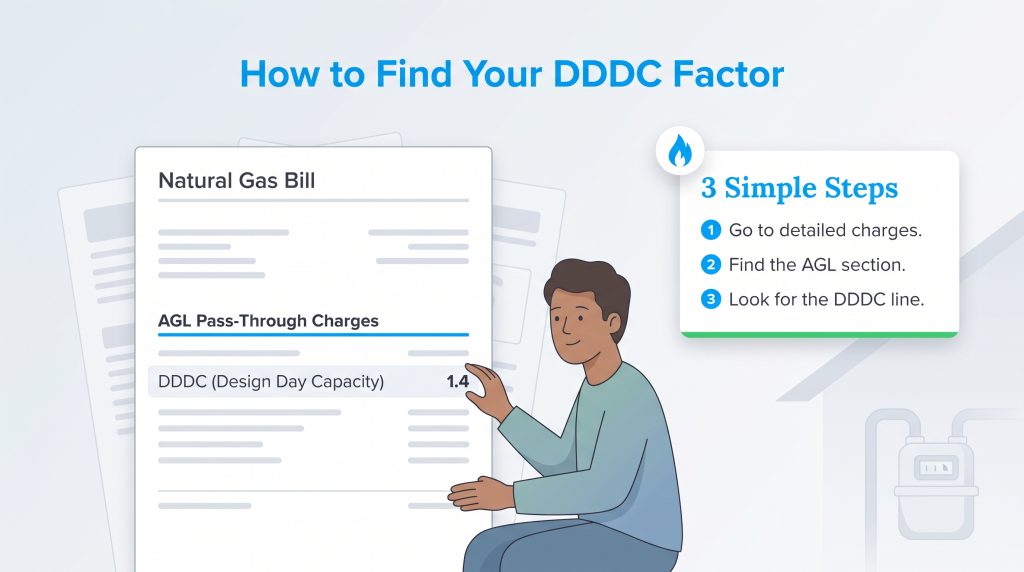
Locating the DDDC factor on your gas bill statements can feel tricky since each marketer formats their monthly statements slightly differently. However, because this is a standardized state fee, it always appears in the same general breakdown section. Follow these steps to find your current capacity rating:
- Navigate to the detailed charges breakdown: Flip to the second or third page of your statement, skipping past the initial summary page and payment stub.
- Find the AGL section: Look for a dedicated box or header labeled “How We Calculated Your Gas Charges,” “AGL Pass-Through Charges,” or “Base Charges.”
- Look for the multiplier: Scan the line items for the acronym “DDDC” or “Design Day Capacity.” Next to this, you will see a decimal number — usually between 0.8 and 2.5 for residential homes. This specific number is your dedicated capacity factor.
Month-By-Month AGL Base Charge Allocation Table
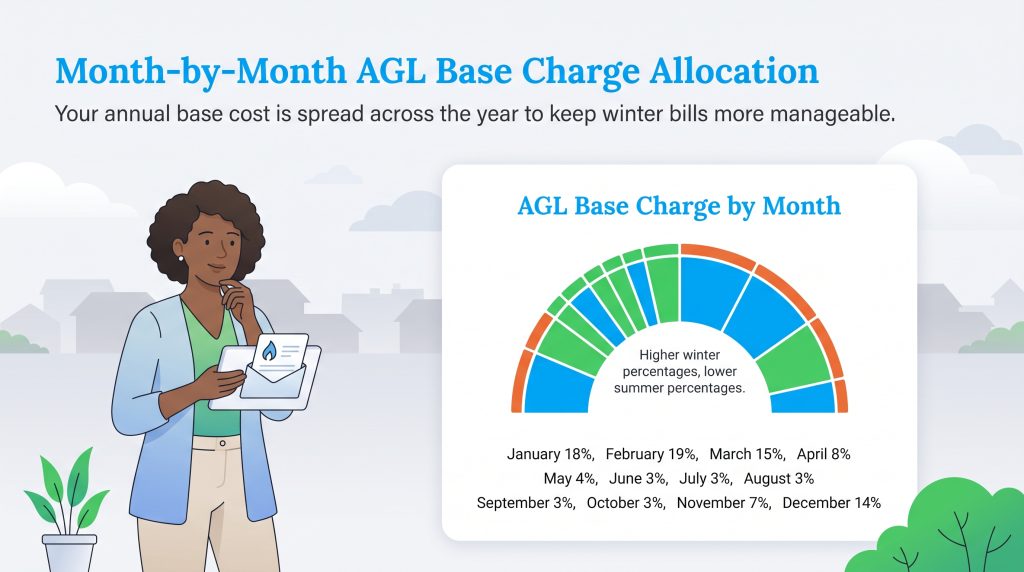
To prevent residents from being overwhelmed by massive infrastructure bills during the freezing winter months, the Georgia Public Service Commission divides your total annual base cost into staggered monthly percentages. This creates a predictable rhythm for your Atlanta Gas Light delivery fees throughout the year.
| Month | Percentage of Annual Base Charge |
|---|---|
| January | 18% |
| February | 19% |
| March | 15% |
| April | 8% |
| May | 4% |
| June | 3% |
| July | 3% |
| August | 3% |
| September | 3% |
| October | 3% |
| November | 7% |
| December | 14% |
How To Qualify For The AGL Senior Citizen Discount
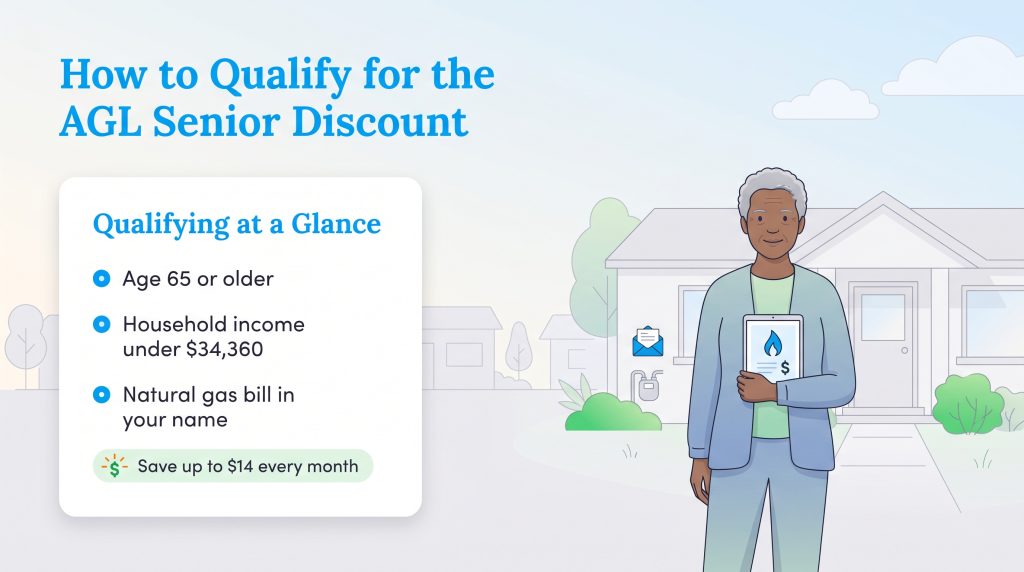
If you are an older adult looking to lower your monthly utility expenses, you might be eligible for a specialized AGL senior discount. The Georgia Public Service Commission mandates that qualified seniors receive a standardized reduction on their base utility charges, which can provide excellent financial relief throughout the year.
To secure this monthly discount on your AGL pass-through charges, you must meet a few specific requirements. Follow these steps to apply:
- Verify your age eligibility: You must be 65 years of age or older to qualify for the program.
- Verify your income: Your combined annual household income cannot exceed $34,360 to remain eligible.
- Ensure the bill is in your name: The primary name listed on the natural gas account must match the senior applicant requesting the discount.
- Submit your application: You can apply directly through your current natural gas marketer or submit your paperwork via the official Georgia Public Service Commission senior discount portal.
💸 Money-Saver: Eligible seniors can save up to $14 per month on their standard base charge. Over the course of a year, that adds up to substantial savings kept right in your pocket.
Strategizing Your Georgia Natural Gas Costs
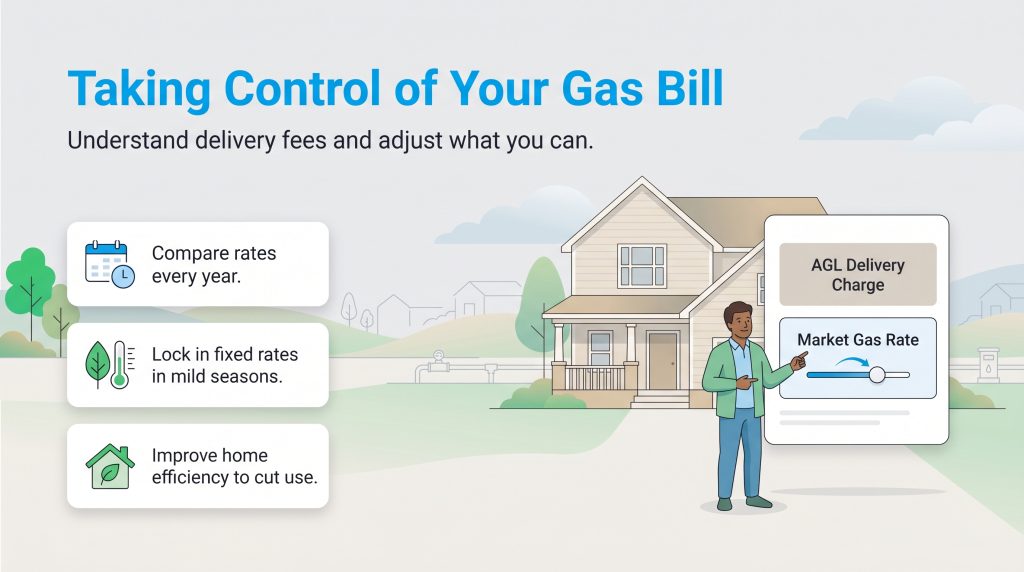
While the Atlanta Gas Light pass-through charge is a mandatory reality of living in the region, understanding the mechanics behind it completely removes the shock from your monthly statement. Because you cannot negotiate your utility’s delivery fee, securing the best possible supply rate from your marketer is essential for keeping your overall costs low.
The most effective time to lock in a favorable fixed-rate plan is during the mild “shoulder months” of spring and fall. During these temperate seasons, household fuel demand drops significantly across the state, prompting marketers to offer highly competitive pricing. Always evaluate new marketer plans and review our tips for choosing a natural gas plan before your current contract expires to avoid being rolled into a volatile variable rate.
Eco-Conscious Strategies To Lower Your Future AGL Pass-Through Charge
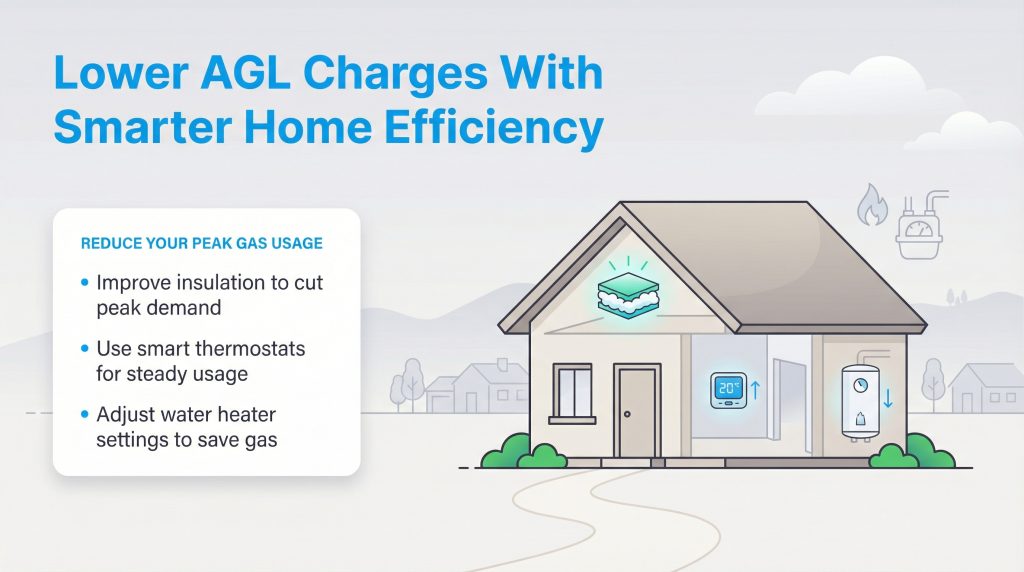
If you feel stuck paying high delivery rates, there is actually a proven long-term strategy for finding relief. Because your DDDC is recalculated annually based on your peak winter usage, lowering your energy consumption on the absolute coldest days of the year will directly reduce your pass-through charge for the following year.
By implementing a few environmentally mindful choices, you can successfully lower your peak capacity rating while shrinking your carbon footprint:
- Install a smart thermostat: Maintaining consistent, programmed heating habits prevents sudden, massive spikes in your usage data. Smart thermostats optimize your heating schedule, effectively moderating your overall load profile during cold snaps.
- Upgrade home insulation and weatherstripping: Applying tighter weatherstripping around doors and windows ensures your home retains warmth. On a freezing day, your furnace will not have to work nearly as hard, directly lowering your theoretical maximum demand.
- Invest in comprehensive home winterization: Lowering your water heater temperature to 120°F or sealing leaky air ducts are simple, cost-effective adjustments that contribute to a more efficient household energy profile.
🌱 Eco Edge: Energy efficiency improvements do double duty. They lower your immediate usage bills and reduce your carbon footprint while officially qualifying you for a lower DDDC calculation in future years.
By taking control of your supply rate and consistently investing in household efficiency, you can successfully manage your total utility budget and keep your home comfortable in every season. For more tips on making these improvements, check out our guide on how to save on your gas bill.
Frequently Asked Questions About Atlanta Gas Light Charges
What is the AGL pass-through charge?
It is a regulated infrastructure fee from Atlanta Gas Light covering the physical delivery of gas, pipeline maintenance, and meter reading. This mandatory fee is passed directly to you by your chosen marketer without any markups.
Can I opt out of the Atlanta Gas Light pass-through charge?
No, you cannot opt out. As long as your home has an active natural gas connection hooked up to the local grid, the fee is mandatory to cover ongoing pipeline maintenance and emergency readiness.
Why is my AGL pass-through charge higher than my actual gas usage?
This frequently happens during the summer or mild shoulder months when you use very little fuel. Because the AGL pass-through charge is an annualized infrastructure cost spread across 12 months, the fixed delivery fees often exceed the cost of the tiny amount of gas you actually consumed.
Does switching natural gas providers lower my AGL pass-through charge?
No. Every marketer operating in the deregulated market is required to pass this exact, state-approved utility fee directly to you. Switching suppliers only impacts your per-therm fuel rate and administrative customer service fees.
Do renters have to pay the Atlanta Gas Light pass-through charge?
Yes, if you are a renter and the natural gas utility bill is registered in your name, you are responsible for paying the AGL pass-through charge. It applies to any active residential meter regardless of whether you own or rent the property.
Why did my AGL pass-through charge go up this month?
Your bill typically increases when the seasonal allocation percentage shifts higher for the winter months, or if your home’s DDDC factor was recently recalculated to a higher number based on increased gas usage during the previous winter.
Why is my gas bill so high in the summer?
Even with zero usage, you must pay fixed base charges to maintain your grid connection. The state spreads annualized delivery costs across all 12 months, ensuring infrastructure is funded year-round without overwhelming you during peak winter heating months.
What is the DDDC charge on my gas bill?
DDDC stands for Dedicated Design Day Capacity. It is a capacity reservation fee based on your maximum historical fuel usage, guaranteeing the grid has enough space to deliver fuel to your home on the coldest day of the year.
How often does the utility recalculate the DDDC?
The Dedicated Design Day Capacity factor is recalculated annually based on your home’s peak natural gas consumption during the previous winter season.
Why am I charged a peaking service fee if I live in Atlanta?
The peaking service fee funds specialized gas storage facilities. Even in a mild climate like Atlanta, these reserve facilities are essential for injecting extra fuel into the grid when unexpected winter freezes trigger statewide demand spikes.
Where do I find the AGL pass through charge worksheet?
You can find the official AGL pass through charge worksheet directly on the Atlanta Gas Light corporate website under their rates and tariff section. This digital tool allows you to plug in your specific DDDC factor to estimate upcoming seasonal charges.
Is the Atlanta Gas Light pass-through charge a tax?
No, the pass-through charge is not a government tax. It is a regulated utility fee that specifically covers physical pipeline maintenance, meter readings, and essential infrastructure upgrades.
Do commercial properties have a different base charge calculation than residential homes?
Yes, commercial properties are assessed differently. Because businesses consume significantly higher volumes of natural gas and often have larger pipeline connections, their base charges include different multipliers and higher fixed operational riders.
About the Author

David has been an integral part of some of the biggest utility sites on the internet, including InMyArea.com, HighSpeedInternet.com, BroadbandNow.com, and U.S. News. He brings over 15 years of experience writing about, compiling and analyzing utility data.

LaLeesha has a Masters degree in English and enjoys writing whenever she has the chance. She is passionate about gardening, reducing her carbon footprint, and protecting the environment. She also recently served as President of the Board for City Sprouts (a community garden).