
Understanding The Real Differences Between Georgia’s Top Two Natural Gas Providers Helps You Avoid Hidden Fees And Secure The Best Long-Term Rate For Your Home
Key Takeaways
- Gas South shines with high customer satisfaction and no-deposit options for strong credit, while SCANA Energy serves as Georgia’s regulated provider for wider credit profiles.
- The price per therm is only one factor of your bill; you must calculate the monthly service fees and fixed early termination penalties to find actual long-term savings.
- Both marketers use the exact same pipelines, meaning your choice directly impacts billing and green energy options, not physical gas reliability.
When setting up utility service in your home, conducting a thorough SCANA vs. Gas South comparison is essential to locking in the best rate. Both companies are heavyweights in the market, but determining the best natural gas provider in Georgia depends entirely on your household budget and energy habits. Because both marketers rely on the exact same Atlanta Gas Light (AGL) pipelines to deliver fuel, the physical reliability of your heating system remains completely identical. Instead, your decision comes down to contrasting SCANA Energy vs Gas South rates, green energy initiatives, deposit requirements, and customer support. Let’s cut through the marketing noise and evaluate their 2026 pricing structures so you can secure the smartest long-term plan.
High-Level Comparison SCANA Energy Vs Gas South
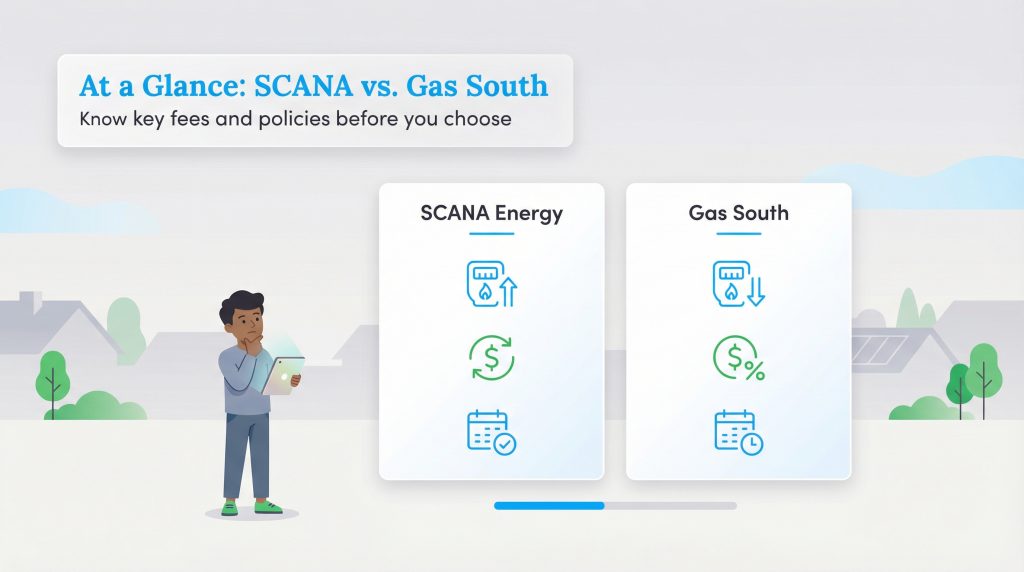
If you are rushing to turn on the heat before moving day, you need the facts fast. Our Georgia natural gas providers comparison highlights the core operational differences between these two major marketers. While their per-therm energy rates fluctuate monthly based on seasonal market demand, their foundational fee structures and service policies remain steady.

- $0.399 /THM
- $5.95-6.95
- None
- 1-36 Months

- $0.390 /THM
- $6.95-9.95
- None
- 1-24 Months
*rates may vary by location and household usage
| Provider | Average Base Rate & Fees | Deposit Requirements | Eco-Friendly / Green Plans |
|---|---|---|---|
| SCANA Energy | Highly competitive 12–36 month fixed plans with a predictable $6.95 monthly service fee. | Standard credit checks required; state-regulated options available for low-income residents. | Relies on parent company goals; no heavily marketed retail carbon offset plans. |
| Gas South | Aggressive short-term and 12-month plans with variable monthly fees ranging from $6.95 to $9.95. | Highly advertised “no deposit” options for applicants with strong credit histories. | Donates 5% of profits to charity; verified carbon offset options available. |
Understanding Atlanta Gas Light AGL Pass-Through Charges
Before you dive into analyzing the cheapest gas price per therm in Atlanta, you must understand how natural gas billing works in a deregulated market. Every single customer pays standard infrastructure fees, regardless of the logo at the top of their invoice.
📌 Quick Fact: The Atlanta Gas Light pass-through charges cover the physical delivery of gas through local pipes. Neither SCANA nor Gas South controls this baseline fee. Because AGL owns and maintains the infrastructure, your gas reliability and emergency response times are identical across both marketers.
Because you cannot escape the AGL pass-through charge, your primary goal when shopping is to ruthlessly compare the marketer’s price per therm and their individual administrative fees.
Rate Structures Fixed Vs Variable Plans
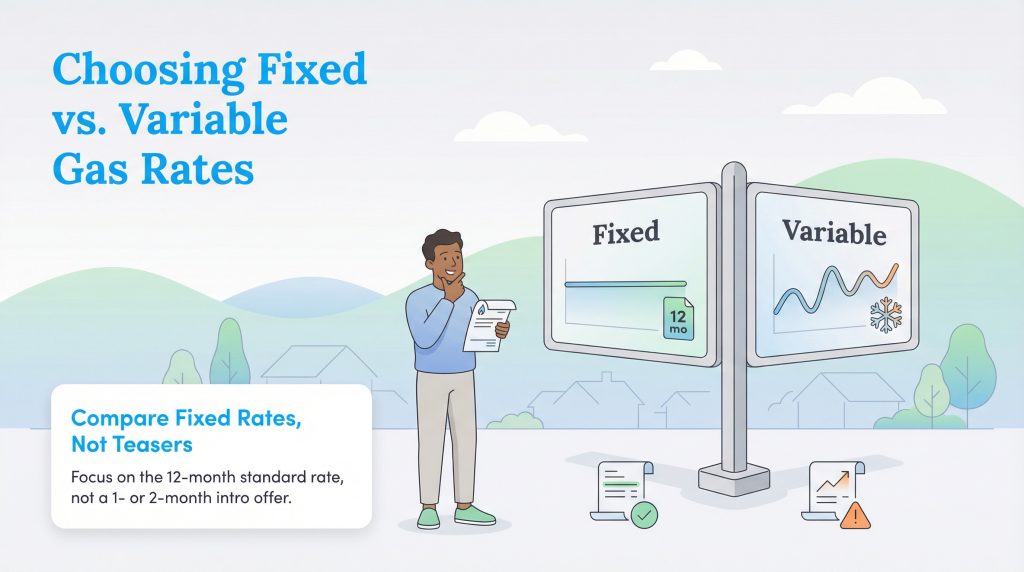
Both companies offer standard fixed and variable options, but understanding the fixed vs variable gas rates Georgia residents encounter is critical to avoiding a massive winter bill spike. In 2026, standard 12-month fixed plans generally range between $0.65 and $0.85 per therm. We heavily recommend avoiding variable-rate plans, which expose you to intense market surges during unpredictable winter freezes.
SCANA Energy Rates And Fees
SCANA Energy shines by prioritizing long-term budget stability. They routinely offer extended 24-month and 36-month contracts, allowing homeowners to lock in a low rate for years at a time.
| Plan Name | Rate | Plan Type | Base Charge | Cancellation Fee | |
|---|---|---|---|---|---|
| Introductory Variable Rate - $100 Bill Credits | $0.399 /THM | 1 Months Month to Month Rate | $5.95 MRC (Monthly Recurring Charge) is a fixed monthly fee charged by the energy provider, separate from the cost of the energy you use. | Check Availability | |
| 18 Month | $0.489 /THM | 18 Months fixed rate Rate | $9.95 MRC (Monthly Recurring Charge) is a fixed monthly fee charged by the energy provider, separate from the cost of the energy you use. | $200 | Check Availability |
| 12 Month | $0.499 /THM | 12 Months fixed rate Rate | $9.95 MRC (Monthly Recurring Charge) is a fixed monthly fee charged by the energy provider, separate from the cost of the energy you use. | $150 | Check Availability |
| 6 Month | $0.589 /THM | 6 Months fixed rate Rate | $6.95 MRC (Monthly Recurring Charge) is a fixed monthly fee charged by the energy provider, separate from the cost of the energy you use. | $150 | Check Availability |
| 24 Month | $0.599 /THM | 24 Months fixed rate Rate | $9.95 MRC (Monthly Recurring Charge) is a fixed monthly fee charged by the energy provider, separate from the cost of the energy you use. | $250 | Check Availability |
| 36 Month | $0.649 /THM | 36 Months fixed rate Rate | $9.95 MRC (Monthly Recurring Charge) is a fixed monthly fee charged by the energy provider, separate from the cost of the energy you use. | $300 | Check Availability |
- Pros: Excellent rate stability for homeowners, predictable monthly fees, and transparent pricing structures.
- Cons: Stricter tiered cancellation fees if you break a longer multi-year contract early.
Gas South Rates And Fees
Gas South leans into highly competitive 12-month terms and unique alternative billing methods. They aggressively market their OnePrice Plan, a popular flat rate natural gas plan that averages your usage into a completely predictable monthly cost, effectively eliminating seasonal billing surprises.
| Plan Name | Rate | Plan Type | Base Charge | Cancellation Fee | |
|---|---|---|---|---|---|
| Intro Variable | $0.390 /THM | 1 Months Month to Month Rate | $6.95 to 9.95 MRC (Monthly Recurring Charge) is a fixed monthly fee charged by the energy provider, separate from the cost of the energy you use. | $150.00 | Check Availability |
| 12 Month Fixed plus $50 in Bill Credits | $0.670 /THM | 12 Months fixed rate Rate | $6.95 to 9.95 MRC (Monthly Recurring Charge) is a fixed monthly fee charged by the energy provider, separate from the cost of the energy you use. | $150.00 | Check Availability |
| 6 Month Fixed plus $50 in Bill Credits | $0.690 /THM | 6 Months fixed rate Rate | $6.95 to 9.95 MRC (Monthly Recurring Charge) is a fixed monthly fee charged by the energy provider, separate from the cost of the energy you use. | $150.00 | Check Availability |
| 24 Month Fixed plus $50 in Bill Credits | $0.770 /THM | 24 Months fixed rate Rate | $6.95 to 9.95 MRC (Monthly Recurring Charge) is a fixed monthly fee charged by the energy provider, separate from the cost of the energy you use. | $150.00 | Check Availability |
| Variable | $2.090 /THM | 1 Months Month to Month Rate | $6.95 to 9.95 MRC (Monthly Recurring Charge) is a fixed monthly fee charged by the energy provider, separate from the cost of the energy you use. | $150.00 | Check Availability |
- Pros: Strong introductory promotional rates, flexible flat-rate billing options, and flat early termination fees.
- Cons: Their monthly administrative fee is variable and can slide up to $9.95 based on your credit profile.
Side-By-Side Comparison Which Provider Is Cheaper?
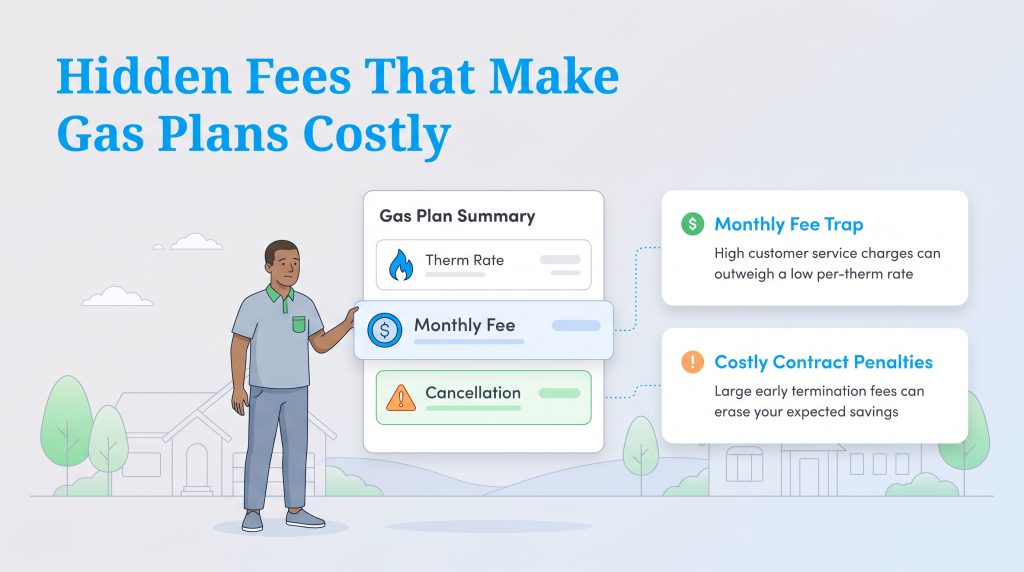
One of the biggest sources of confusion for homeowners is understanding their natural gas bill and figuring out why it stays so high even when their contracted fuel rate seems low. A deeper dive reveals that your total invoice is heavily influenced by administrative costs.
| Fee Type | SCANA Energy | Gas South |
|---|---|---|
| Monthly Service Charge (CSC) | $6.95 (typical) | $6.95 – $9.95 |
| Early Termination Fee (ETF) | $150 – $250 (tiered by term length) | $150 (flat fee for standard fixed plans) |
| Late Payment Penalty | $10 or 1.5% of past-due balance | $10 or 1.5% of past-due balance |
The SCANA Energy monthly service fee is typically a highly predictable $6.95 across most of its plans. In contrast, Gas South’s fees vary more widely, reaching up to $9.95 depending on your credit profile. This means a promotional rate of $0.65 per therm from Gas South might look slightly cheaper on paper than SCANA’s $0.69 per therm. However, if Gas South applies a $9.95 flat fee and SCANA applies a $6.95 fee, SCANA often becomes the more cost-effective option during low-usage spring and summer months.
Customer Service Reviews And Community Impact
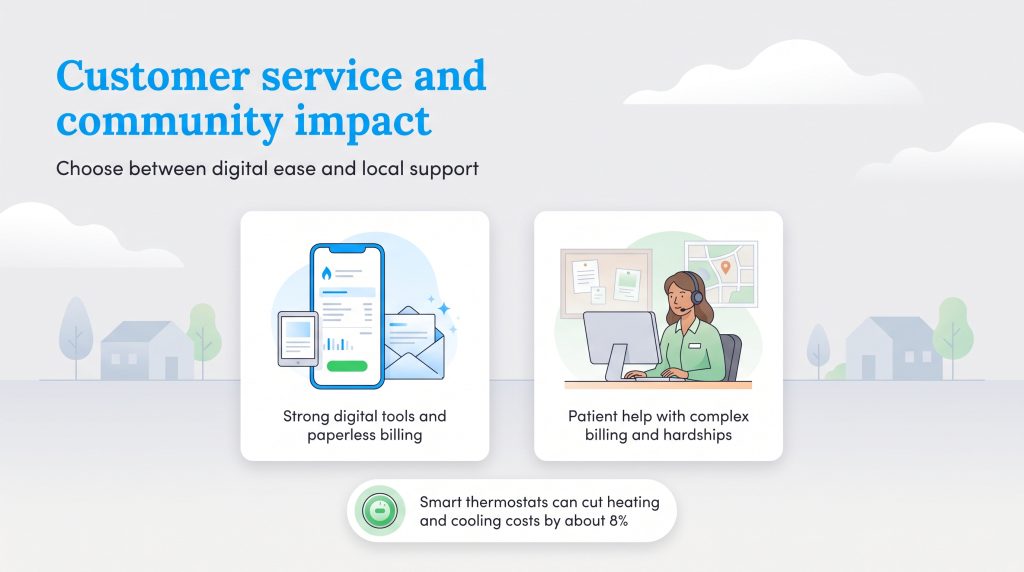
When you have a billing question, the responsiveness of the customer support team makes a world of difference. Looking closely at recent Gas South customer service reviews highlights a distinct operational advantage. Gas South frequently tops the charts in the deregulated market, maintaining an A+ rating with the Better Business Bureau (BBB). Users specifically praise Gas South’s modern digital ecosystem, featuring a streamlined mobile app and highly accessible paperless billing.
SCANA Energy operates as a trusted legacy provider with deep community roots. While they offer slightly fewer flashy digital tools, SCANA is highly respected for its patient customer care. They excel at helping residents navigate complex billing issues and financial hardships, bringing a localized touch to their support center.
🌱 Eco Edge: While neither company offers 100% renewable gas in the traditional sense, you can still lower your carbon footprint at home. Reliable smart thermostats can lower your heating and cooling bills by approximately 8% annually, saving you money regardless of which logo is on your bill.
Special Programs Low Credit No Deposit And Green Energy Options
Comparing rates is only one part of the equation. Sign-up incentives and credit requirements heavily dictate which company ultimately earns your business.
SCANA Energy is a crucial safety net for many residents, serving as the official SCANA regulated provider Georgia residents rely on. If you have poor credit, zero credit history, or meet low-income guidelines, SCANA offers state-regulated plans designed explicitly for low-income households. These specialized programs bypass the strict approvals of standard marketers, providing a reliable path to establishing service.
Conversely, Gas South aggressively targets new movers with excellent credit. They provide lucrative Gas South bill credits and heavily advertise a “no deposit” option for qualifying applicants, allowing you to establish service immediately without tying up your cash.
For the eco-conscious consumer, Gas South takes a clear lead. Through their “Be A Fuel For Good” commitment, they donate 5% of their profits annually to children’s charities. They also offer dedicated carbon offset programs that purchase verified credits to neutralize your household emissions. SCANA Energy relies on broader corporate sustainability goals but does not heavily market retail-level green options.
Choosing The Right Natural Gas Provider For Your Home
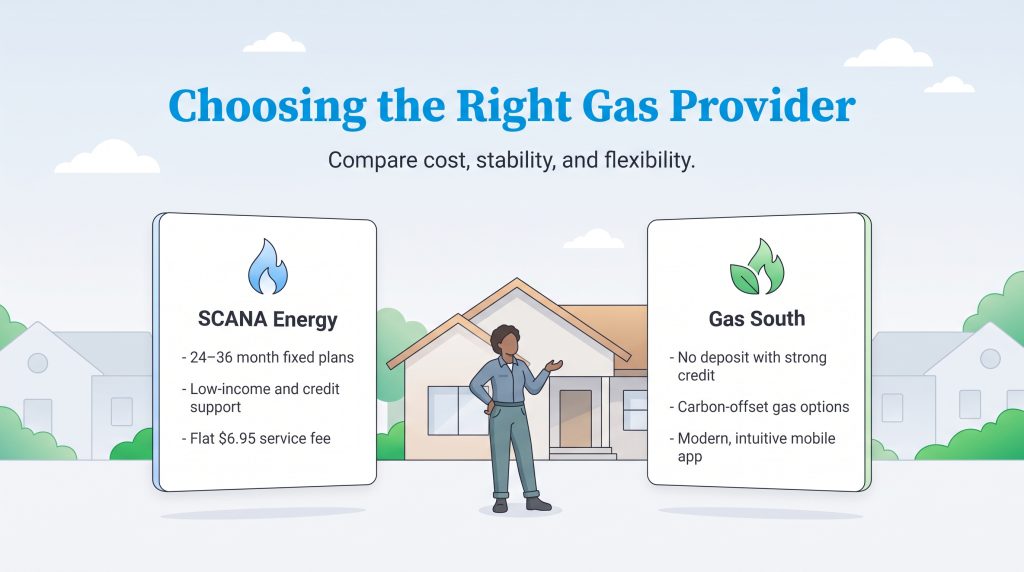
Deciding between these two utility giants doesn’t have to be a headache. By looking past flashy introductory marketing and focusing on your total cost — including termination fees, monthly service charges, and per-therm pricing — you can confidently choose the partner that matches your life.
Choose SCANA Energy if:
- You want maximum long-term stability and prefer 24- or 36-month fixed contracts.
- You qualify for low-income assistance, or you are actively rebuilding your credit score.
- You prefer a completely predictable, flat $6.95 monthly customer service fee.
Choose Gas South if:
- You have excellent credit and want to bypass standard deposit requirements entirely.
- You prioritize environmental sustainability and wish to utilize carbon offset initiatives.
- You prefer managing your household utilities through a modern, highly rated mobile application.
Switching Your Natural Gas Provider Safely
Whichever direction you go, if you plan on switching natural gas providers, locking in a fixed rate is the single most important step to protect your family from unpredictable winter market volatility. Take control of your utility bills today by comparing the latest offers and reading the fine print before you make a move.
💸 Money-Saver: The absolute best time to lock in a new fixed rate is usually during the “shoulder seasons” of spring (March/April) or autumn (October/November) when consumer demand for natural gas is significantly lower compared to the peaks of summer and winter.
Frequently Asked Questions About SCANA Energy And Gas South
Which is cheaper, SCANA Energy or Gas South?
Do I contact SCANA Energy or Gas South for a gas leak?
Does Gas South or SCANA Energy require a deposit to start service?
How much does it cost to cancel my contract with Gas South or SCANA?
Does switching providers affect my gas service?
What is the difference between a fixed and variable rate?
Does Gas South or SCANA Energy have a senior discount?
About the Author

LaLeesha has a Masters degree in English and enjoys writing whenever she has the chance. She is passionate about gardening, reducing her carbon footprint, and protecting the environment. She also recently served as President of the Board for City Sprouts (a community garden).