
SCANA Energy Offers Accessible Plans for Credit-Challenged Customers, While Georgia Natural Gas Provides Competitive Fixed Rates and Delta SkyMiles Rewards for Long-Term Homeowners
Key Takeaways
- Georgia Natural Gas (GNG) often advertises highly competitive fixed rates per therm for customers with established credit, especially on 12- and 24-month plans.
- SCANA Energy operates a state-designated Regulated Division, serving as a reliable provider of last resort for residents with limited or poor credit.
- Both providers charge monthly customer service fees and early termination penalties that you must factor into your total annual energy budget before signing a contract.
Moving into a new home in the Atlanta Gas Light territory can feel overwhelming when numerous marketers vie for your business, but choosing the best natural gas company in Georgia comes down to your credit profile and household energy goals. The deregulated market in Georgia means you have the power to choose, but parsing through promotional traps and hidden fees is often a headache for the everyday consumer. When you compare Atlanta gas rates, you quickly realize that the cheapest advertised therm is not always the best overall deal. In this comprehensive SCANA vs. Georgia Natural Gas comparison, we cut through the marketing noise to deliver a bottom-line verdict: Georgia Natural Gas is ideal for homeowners with strong credit seeking low fixed rates and travel rewards, whereas SCANA Energy is the undeniable champion for residents needing flexible credit approvals or looking to rebuild their financial standing without steep upfront deposits.

- $0.399 /THM
- $5.95-6.95
- None
- 1-36 Months
- $0.399 /THM
- $0.00-9.99
- None
- 1-24 Months
*rates may vary by location and household usage
At a Glance: SCANA Energy vs Georgia Natural Gas
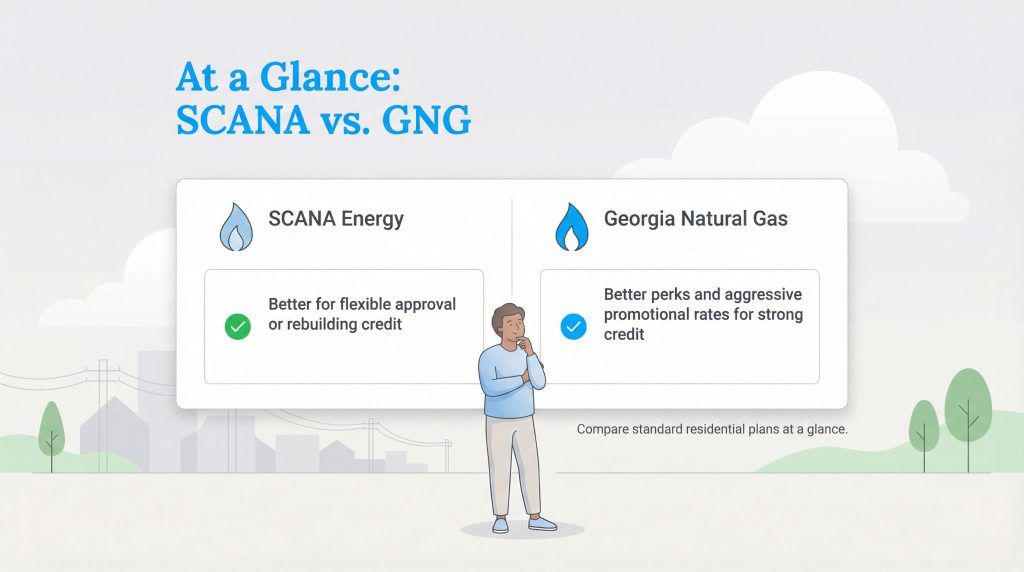
To help you evaluate these two major marketers quickly, we broke down the essential features of their standard residential plans. While both companies deliver highly reliable customer service, their target audiences and financial structures differ drastically.
SCANA Energy Pros and Cons
- Pros: Features a state-designated Regulated Division for credit-challenged customers, offers highly consistent standard pricing without confusing introductory gimmicks, and provides excellent local community support initiatives including senior and military discounts.
- Cons: Lacks digital travel rewards and carries higher early termination fees for long-term 36-month plans.
Georgia Natural Gas Pros and Cons
- Pros: Offers lucrative Delta SkyMiles rewards, a dedicated 100% carbon offset program called Greener Life, and aggressive promotional rates for customers with excellent credit.
- Cons: Requires strict credit requirements to secure the best rates without a deposit, and monthly service fees can scale higher depending on the chosen plan tier.
| Feature | SCANA Energy | Georgia Natural Gas |
|---|---|---|
| Plan Types | Fixed, Variable | Fixed, Variable |
| Customer Service Charge | $4.95 – $6.95/month | $5.99 – $9.99/month |
| ETF Ranges | $50 – $200 (scales with term) | $50 – $150 (scales with term) |
| Credit Check Type | Flexible (Regulated options available) | Strict (for lowest promotional rates) |
| Unique Perks | Military/Senior discounts, low-credit access | Delta SkyMiles, Greener Life offsets |
Rate Structures and Plan Options
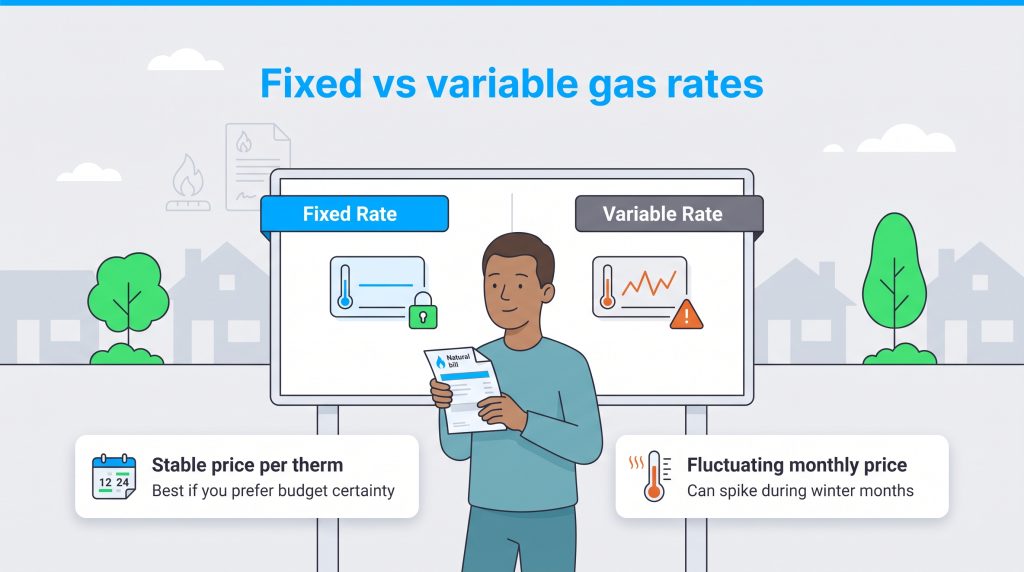
Successfully navigating the Georgia deregulated natural gas market means understanding the fundamental differences between fixed vs variable natural gas plans. The cheapest option for your household depends heavily on your usage, preferred contract length, and ability to track renewal dates.
A fixed-rate plan locks in your price per therm for the entire duration of your contract. Both SCANA and Georgia Natural Gas offer a variety of terms, typically ranging from 6, 12, 18, to 24 months. Georgia Natural Gas frequently advertises lower natural gas introductory rates on their 12- and 24-month terms to attract customers with good credit. SCANA Energy generally offers consistent, moderate pricing across their 6- to 36-month terms, catering to a broader audience without steep introductory cliffs.
However, you must stay vigilant regarding introductory rate expirations. When your fixed-rate contract expires with either provider, you are automatically rolled onto a variable-rate plan if you fail to renew. Variable rates fluctuate with the monthly energy market and are historically much more expensive than fixed rates. Falling onto a variable plan during the peak winter heating season can easily double your monthly bill.
SCANA Energy Plans
| Plan Name | Rate | Plan Type | Base Charge | Cancellation Fee | |
|---|---|---|---|---|---|
| Introductory Variable Rate - $100 Bill Credits | $0.399 /THM | 1 Months Month to Month Rate | $5.95 MRC (Monthly Recurring Charge) is a fixed monthly fee charged by the energy provider, separate from the cost of the energy you use. | Check Availability | |
| 18 Month | $0.489 /THM | 18 Months fixed rate Rate | $9.95 MRC (Monthly Recurring Charge) is a fixed monthly fee charged by the energy provider, separate from the cost of the energy you use. | $200 | Check Availability |
| 12 Month | $0.499 /THM | 12 Months fixed rate Rate | $9.95 MRC (Monthly Recurring Charge) is a fixed monthly fee charged by the energy provider, separate from the cost of the energy you use. | $150 | Check Availability |
| 6 Month | $0.589 /THM | 6 Months fixed rate Rate | $6.95 MRC (Monthly Recurring Charge) is a fixed monthly fee charged by the energy provider, separate from the cost of the energy you use. | $150 | Check Availability |
| 24 Month | $0.599 /THM | 24 Months fixed rate Rate | $9.95 MRC (Monthly Recurring Charge) is a fixed monthly fee charged by the energy provider, separate from the cost of the energy you use. | $250 | Check Availability |
| 36 Month | $0.649 /THM | 36 Months fixed rate Rate | $9.95 MRC (Monthly Recurring Charge) is a fixed monthly fee charged by the energy provider, separate from the cost of the energy you use. | $300 | Check Availability |
Georgia Natural Gas Plans
| Plan Name | Rate | Plan Type | Base Charge | Cancellation Fee | |
|---|---|---|---|---|---|
| Market Intro | $0.499 /THM | 2 Months fixed rate Rate | $9.95 MRC (Monthly Recurring Charge) is a fixed monthly fee charged by the energy provider, separate from the cost of the energy you use. | Check Availability | |
| 12-Month Fixed | $0.499 /THM | 12 Months fixed rate Rate | $7.99 to 8.99 MRC (Monthly Recurring Charge) is a fixed monthly fee charged by the energy provider, separate from the cost of the energy you use. | $100 during first half of agreement, $50 during second half. | Check Availability |
| 24-Month Fixed | $0.599 /THM | 24 Months fixed rate Rate | $8.99 to 9.99 MRC (Monthly Recurring Charge) is a fixed monthly fee charged by the energy provider, separate from the cost of the energy you use. | $200 in the first six months of the plan term, $150 in the second six months, $100 in the third six months, and $50 in the final six months. | Check Availability |
| 6-Month Fixed | $0.599 /THM | 6 Months fixed rate Rate | $6.99 to 7.99 MRC (Monthly Recurring Charge) is a fixed monthly fee charged by the energy provider, separate from the cost of the energy you use. | $50.00 | Check Availability |
| 18-Month Fixed | $0.599 /THM | 18 Months fixed rate Rate | $8.99 to 9.99 MRC (Monthly Recurring Charge) is a fixed monthly fee charged by the energy provider, separate from the cost of the energy you use. | $150 in the first six months of the plan term, $100 in the second six months and $50 in the final six months. | Check Availability |
| Variable Select | $2.109 /THM | 1 Months Month to Month Rate | $3.99 to 6.99 | Check Availability |
Hidden Costs: Fees, ETFs, and AGL Pass-Through Charges
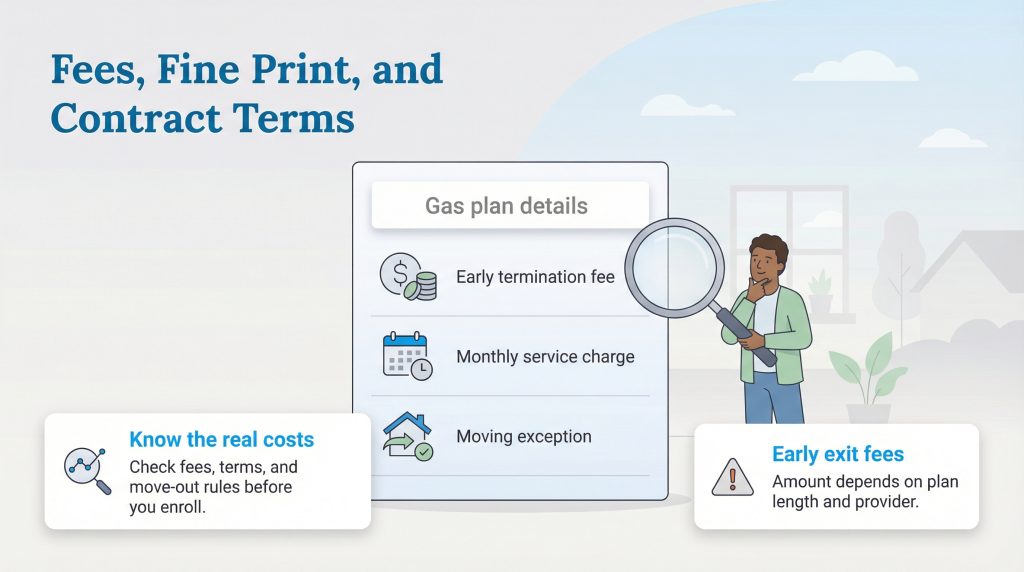
Before diving into the cheapest therm rates, you need to understand how your monthly gas bill is structured under Atlanta Gas Light deregulation. Identifying the hidden costs that inflate your natural gas bill is essential for accurate budget planning.
The local energy market is split: retail marketers like SCANA and GNG sell you the gas, but the utility company actually delivers it. Because Atlanta Gas Light (AGL) owns and maintains the underground pipelines across the state, they levy a mandatory fee to cover infrastructure maintenance, meter reading, and emergency response. These Atlanta Gas Light pass-through charges are exactly identical across every provider in the state. Neither SCANA nor GNG controls this fee.
Beyond the AGL pass-through charges, you must evaluate the fees controlled directly by the marketers:
- Natural Gas Customer Service Charges (CSC): This is an administrative fee you pay every month regardless of your actual gas usage. GNG typically charges a CSC ranging from $5.99 to $9.99 depending on your specific plan tier. In contrast, SCANA Energy standard plans generally carry a lower flat fee ranging from $4.95 to $6.95.
- Early Termination Fees (ETF): Breaking your fixed-rate contract early triggers an ETF. The Georgia Natural Gas cancellation fee usually ranges from $50 to $150, while SCANA’s penalties scale up from $50 to $200 for their longest terms. Both companies will generally waive these fees if you provide official documentation proving you are physically moving to a new residence.
💡 Pro Tip: AGL pass-through charges are exactly the same whether you choose SCANA Energy or Georgia Natural Gas. Ignore any marketing claims that promise lower pipeline delivery fees, as those rates are regulated directly by the state.
Credit Requirements and Deposit Policies
Establishing utility service almost always involves a background credit check, which frequently brings upfront costs to light. If you are researching no-deposit options, understanding how both companies handle approvals will save you from unexpected billing surprises.
As a standard marketer, GNG requires a satisfactory credit score to qualify for their best promotional rates without paying an upfront security deposit. If your credit history is limited, you might face standard Georgia Natural Gas connection fees or strict deposit requests before your gas service is activated.
Conversely, if you are looking for a low credit natural gas provider in Georgia, SCANA Energy is the clear winner. SCANA acts as the state’s regulated provider of last resort. Operating under the oversight of the Georgia Public Service Commission, the SCANA regulated provider program is legally mandated to offer accessible plans to residents who struggle to secure service due to low credit scores or fixed incomes. If other marketers deny you, this program ensures your home stays warm without forcing you to jump through impossible financial hoops.
Perks, Rewards, and Eco-Friendly Options
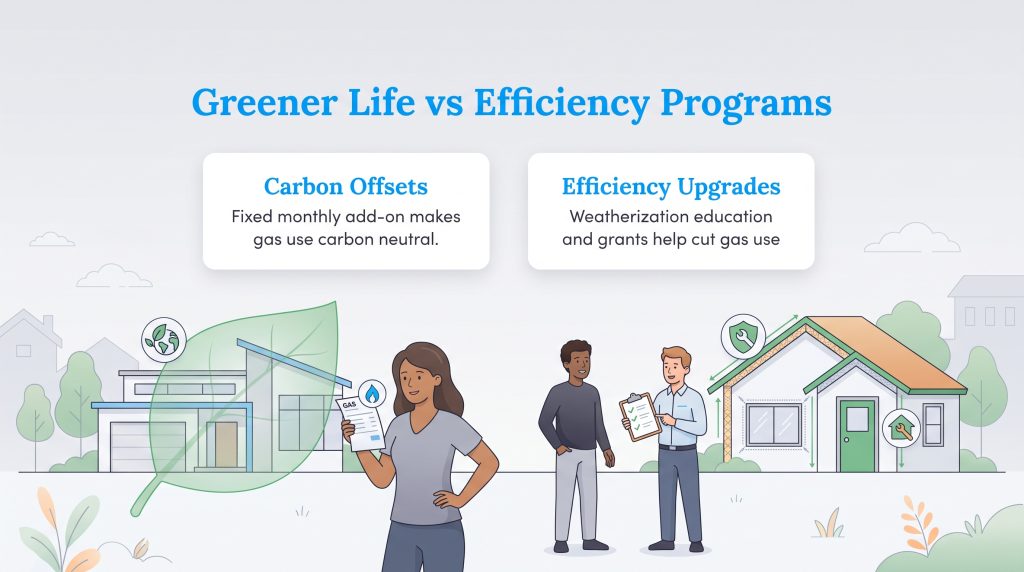
Once rates and fees are accounted for, lifestyle perks often serve as the tiebreaker. Georgia Natural Gas excels in digital convenience and consumer loyalty programs. Their standout feature is the Georgia Natural Gas Delta SkyMiles partnership, allowing you to earn travel rewards simply by paying your monthly heating bill. Additionally, GNG offers the Greener Life program, an environmentally mindful choice that offsets 100% of your household carbon emissions for a small, fixed monthly premium.
While SCANA Energy does not currently offer an automatic carbon offset program or digital travel rewards, they focus heavily on demographic discounts and localized care. SCANA provides notable senior citizen discounts and active-duty military discounts that lower the monthly customer service charge. On the sustainability front, they partner with local community action agencies to provide weatherization grants, ensuring low-income households can afford to make their homes more energy-saving and eco-friendly.
Select the Best Natural Gas Provider for Your Household
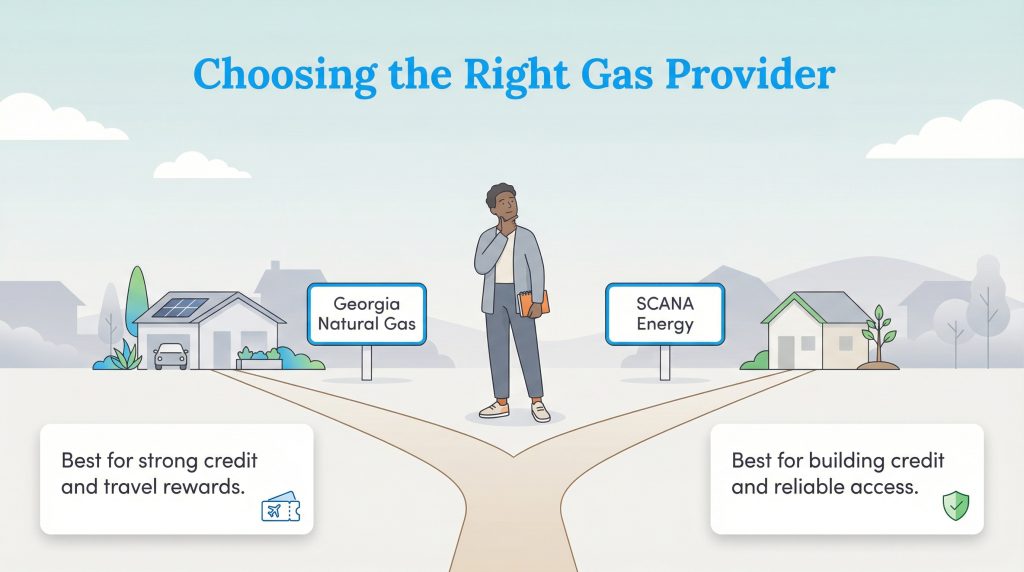
Choosing a natural gas provider ultimately depends on your financial profile, credit history, and household priorities. Since the physical gas flowing into your furnace is completely identical, your decision should center entirely on competitive rates, contract flexibility, and lifestyle perks. Even if you are trying to weigh Gas South vs. SCANA vs. GNG, SCANA remains the best local safety net, while GNG holds the crown for travel rewards.
- The Credit Rebuilder (Winner: SCANA Energy): If you are actively rebuilding your credit score or have been denied service by other utility companies, SCANA is the clear choice. Operating as the state’s regulated safety net, they ensure you get reliable gas service turned on with flexible deposit options and lower monthly customer service charges.
- The Long-Term Homeowner (Winner: Georgia Natural Gas): If you have an established credit history and plan to stay in your home for years, GNG offers excellent stability. Their 24-month fixed-rate contracts often feature lower promotional rates that protect you from market volatility.
- The Frequent Traveler (Winner: Georgia Natural Gas): If you love maximizing lifestyle perks, GNG’s Delta SkyMiles partnership is unbeatable. Earning miles just for heating your home is an effortless way to fund your next vacation.
Before you lock into a new plan, grab your most recent bill and evaluate your actual monthly usage. By taking just ten minutes to review your options and compare natural gas plans today, you can easily save hundreds of dollars over the next year.
Frequently Asked Questions About SCANA Energy and Georgia Natural Gas
Is SCANA Energy the same as Georgia Natural Gas?
Do SCANA Energy and Georgia Natural Gas run hard credit checks?
Does Atlanta Gas Light charge a fee no matter which provider I choose?
What happens when my fixed-rate contract expires with SCANA or GNG?
Are there penalties for switching natural gas providers in GA?
Can I switch from SCANA to Georgia Natural Gas without paying a fee?
Does SCANA or Georgia Natural Gas require a deposit?
Do I need to contact Atlanta Gas Light if my gas goes out, or my marketer?
What is the difference between the regulated and unregulated divisions of SCANA?
About the Author

David has been an integral part of some of the biggest utility sites on the internet, including InMyArea.com, HighSpeedInternet.com, BroadbandNow.com, and U.S. News. He brings over 15 years of experience writing about, compiling and analyzing utility data.