

Switching your natural gas supplier can lower your monthly utility bills and give you access to eco-conscious energy options without interrupting your service.
Key Takeaways
- Deregulation allows you to shop for competitive rates on the supply portion of your gas bill while keeping the same utility company for delivery.
- The best times to switch are during “shoulder months,” such as spring and fall, when demand is low and prices often drop.
- Always check your current contract for early termination fees before making a switch to ensure penalties don’t wipe out your savings.
Executing a natural gas provider switch is one of the fastest and most effective ways to lower high energy bills without sacrificing household comfort. In deregulated markets, you have the power to break free from standard utility rates and shop for a more affordable, competitive energy supplier. Whether you are moving into a new home or simply tired of unpredictable winter price spikes, taking control of your energy plan is a straightforward process that yields immediate financial benefits. By learning how to compare plans and secure a favorable contract, you can reliably cut your monthly utility costs while ensuring your home stays perfectly warm all season long.
Verify Your Eligibility: What Is Natural Gas Deregulation?
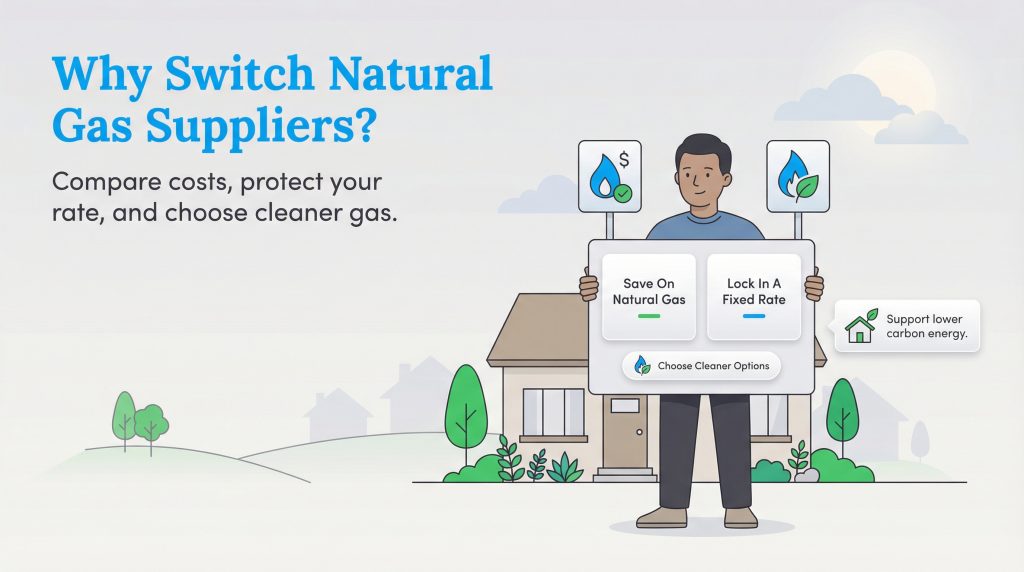
Natural gas deregulation is a legislative policy that separates the supply of energy from its physical delivery, allowing competitive companies to bid for your business. This open market structure gives you the legal right to choose your own energy supplier instead of being forced to pay the default rate set by your local utility company. If you reside in one of the 16 deregulated states listed below, you are in a prime position to shop the market and cut your utility costs.
- California
- Colorado
- Connecticut
- Georgia
- Illinois
- Indiana
- Maryland
- Massachusetts
- Michigan
- New Jersey
- New York
- Ohio
- Pennsylvania
- Rhode Island
- Texas
- Virginia
Plan Comparison: Fixed vs Variable Gas Rates
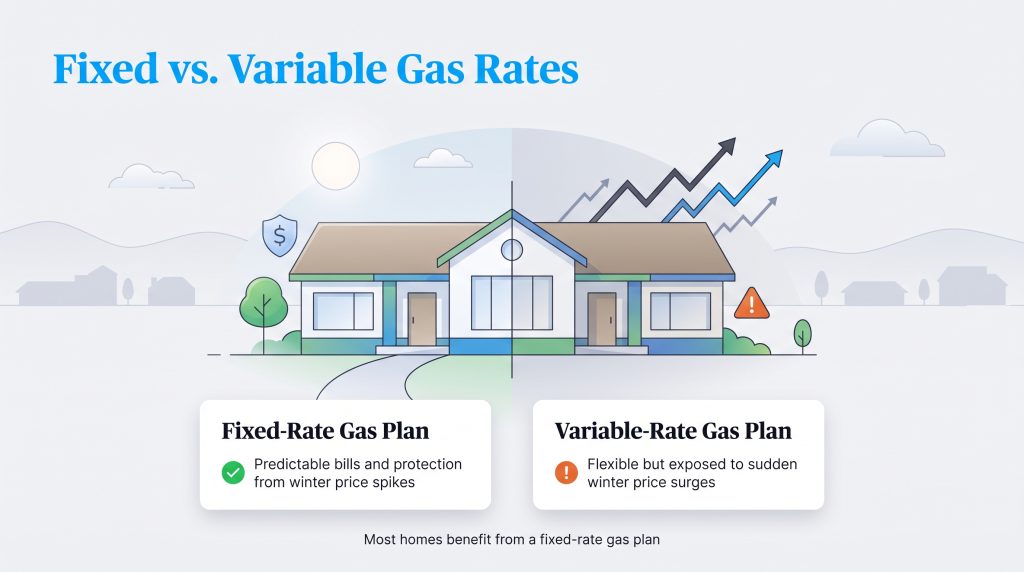
Once you verify your eligibility, your next major decision involves selecting the right pricing structure for your home. During a natural gas plan comparison, you will immediately encounter two dominant options: fixed rates and variable rates. Understanding how these distinct structures function is crucial, as this choice directly dictates how your monthly utility bills behave over the coming year.
| Plan Type | Primary Benefits | Potential Drawbacks |
|---|---|---|
| Fixed-Rate Gas Plan | Offers predictable monthly bills and completely shields your budget from extreme winter wholesale market price spikes. | Can include an early termination fee if you decide to cancel the contract before it officially expires. |
| Variable-Rate Gas Plan | No long-term commitments or cancellation penalties, granting you the flexibility to change providers at any time. | High risk of sudden, painful bill shock when seasonal heating demand causes market prices to surge. |
A fixed-rate plan (often structured as a flat rate natural gas plan) guarantees that you will pay the exact same price per therm or Ccf for the full duration of your contract, regardless of chaotic energy market shifts. A variable-rate plan fluctuates from month to month based entirely on current wholesale market conditions, meaning your rate can suddenly skyrocket during a harsh winter storm.
We highly recommend selecting a fixed-rate plan to establish long-term financial stability for your household. The primary financial advantage of fixed rates is that they provide total price protection, ensuring that unpredictable market swings never inflate your monthly budget. While variable rates can occasionally look cheaper during the low-demand spring and fall shoulder months, the inevitable winter price spikes almost always erase those temporary savings.
5 Steps to Switch Your Natural Gas Provider
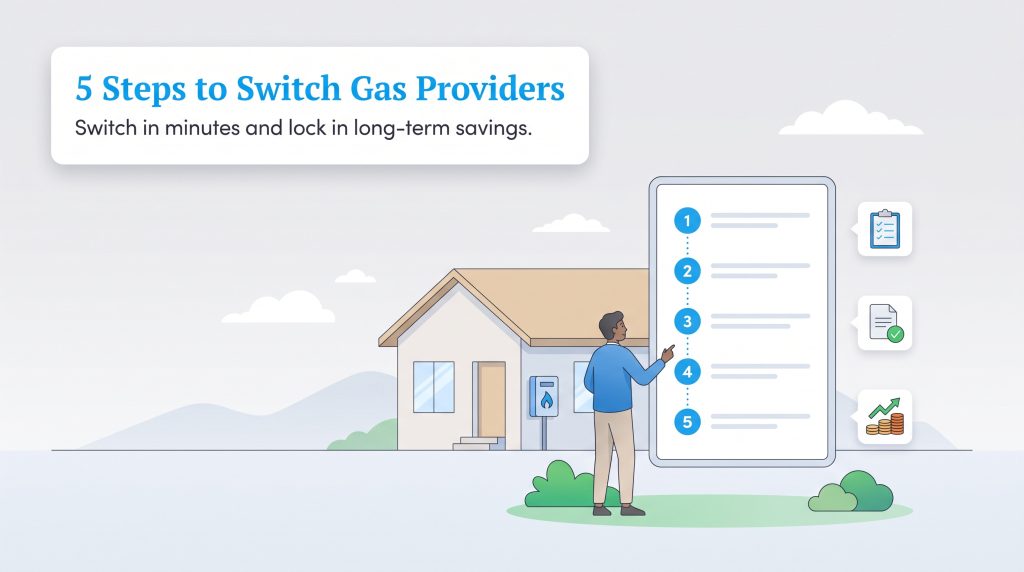
If you are ready to take control of your energy costs, follow this simple, highly actionable tutorial to change gas providers. The entire sign-up process takes less time than ordering a pizza online, yet the financial payoff can benefit your household for years.
1. Review Your Current Plan for a Natural Gas Contract Cancellation Fee
Before you even look at new rates, physically check your current bill or active agreement for early termination fees (ETFs). This is a monetary penalty charged by your supplier if you break your fixed-term agreement before the expiration date. Always do the math to ensure this fee won’t wipe out the savings you’d gain from a slightly lower rate.
💸 Money-Saver: If you are currently on a month-to-month variable plan, or if you are within 30 days of your contract expiring, you are generally free to switch providers without paying a dime in early termination penalties.
2. Compare Natural Gas Rates and Plan Types in Your Zip Code
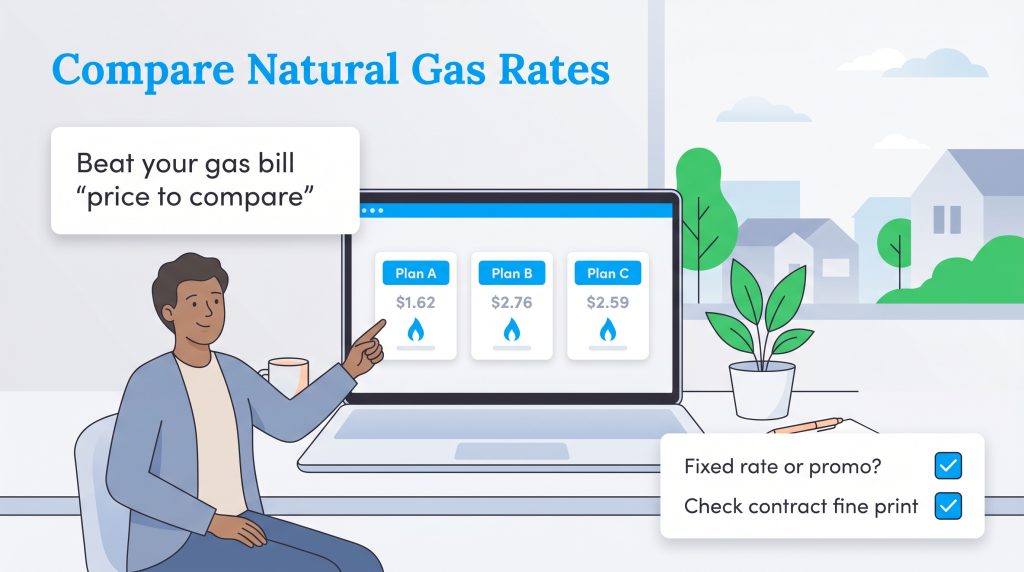
When searching for the cheapest natural gas provider, use your state’s official public utility comparison tool or a trusted marketplace to see what offers are actively available. To ensure you are making an exact apples-to-apples comparison, start by understanding your natural gas bill to successfully locate the “Price to Compare” printed on it. This specific number is the benchmark you need to beat. When evaluating options, always check the fine print to confirm whether a low rate is fixed for a full year or if it is just a temporary introductory promotion that will spike after the first billing cycle.
3. Evaluate Environmentally Mindful Green Natural Gas Options
As you browse the market, consider upgrading to an eco-conscious plan that significantly reduces your household’s carbon footprint. These modern plans typically utilize renewable natural gas sourced from agricultural waste and landfills, or they include certified carbon offsets. Choosing a green energy plan is a fantastic way to contribute to a healthier planet without modifying your home’s existing furnace.
🌱 Eco Edge: Opting for a 100% carbon offset natural gas plan is an excellent, low-effort way to support sustainable living initiatives right from your computer screen.
4. Complete the Natural Gas Sign-Up Process With Your New Supplier
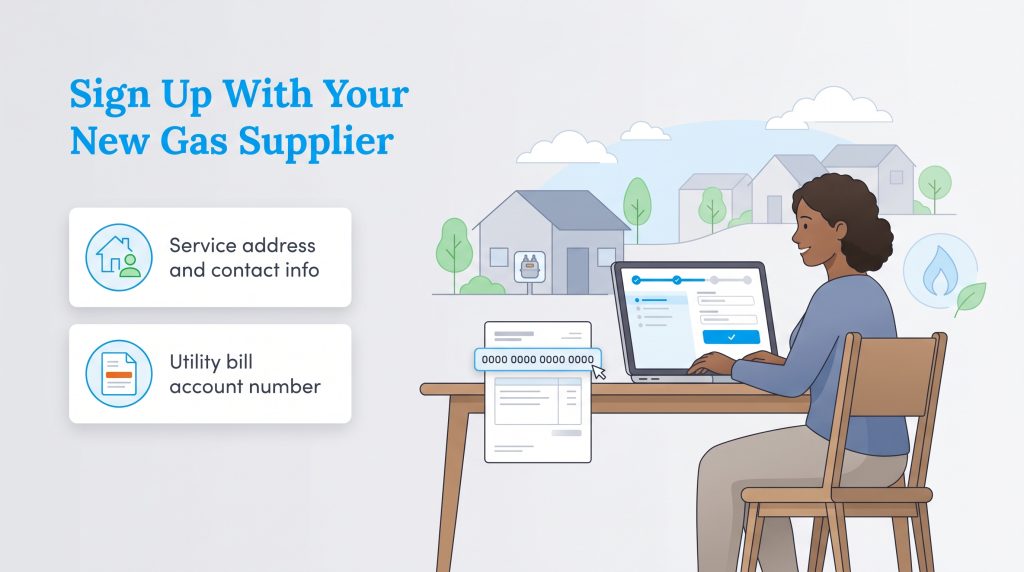
Once you find a reputable company offering a great fixed rate, complete the enrollment on their secure website. You will need your exact service address, your contact information, and your current utility account number. Your account number is usually located at the very top of your most recent utility bill and is absolutely required to authorize the legal transition to the new energy company.
5. Let Your New Provider Handle the Cancellation Behind the Scenes
The best part about executing a switch is how little manual labor is involved at the end. Your new supplier will automatically notify your local utility company to process the transition and cancel the old service for you. You absolutely do not need to call your previous provider to cancel the service yourself.
What Happens After You Change Gas Providers?
You can rest easy knowing there is absolutely no physical interruption of service during a switch. Your heat will not be turned off, nobody needs to visit your home to install new equipment, and the raw gas flowing directly into your appliances remains exactly the same. The switch is purely a seamless administrative update to your billing profile.
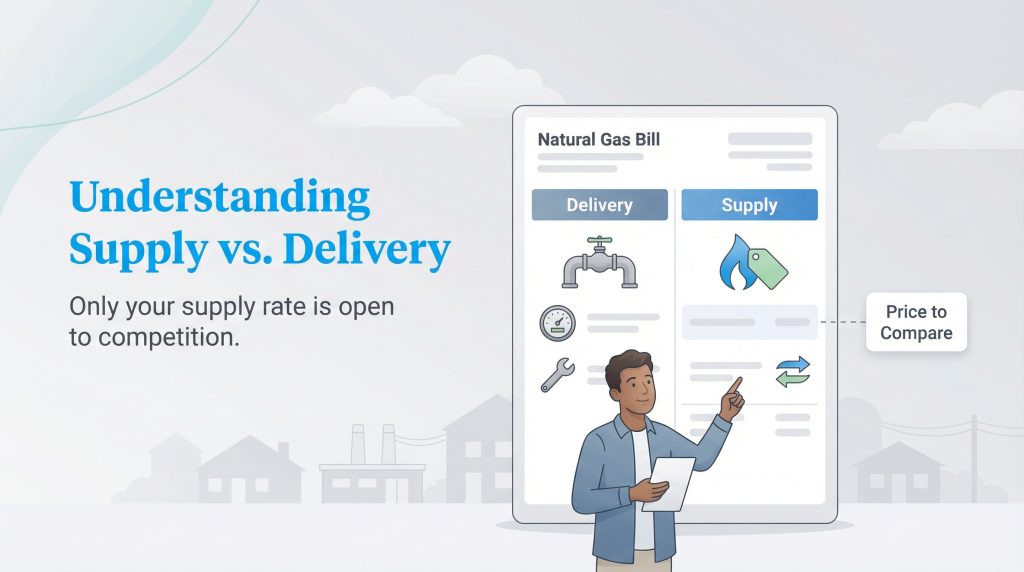
To understand why this transition is so reliable, it helps to recognize the exact difference between a utility and a supplier. Your Utility is the local company that owns the physical infrastructure, maintains the heavy underground pipes, reads your meter, and physically delivers the gas to your home. Your Supplier is the competitive third-party company that actually purchases the gas commodity on the open market and dictates the rate you pay per therm. After your switch is finalized, your local utility company will continue to send you the exact same monthly bill, but the “Supply Charges” section will now feature your new competitive supplier’s name alongside your lower negotiated rate.
Because your local utility company remains in charge of the physical infrastructure, they are still your primary point of contact for safety. If you ever smell a dangerous gas leak or experience an unexpected outage, you must continue calling the emergency number listed on your utility bill. They remain completely responsible for emergency responses, regardless of who supplies your gas. You can learn more about managing these critical safety situations in our comprehensive natural gas guide.
Executing Your Provider Transition Strategy
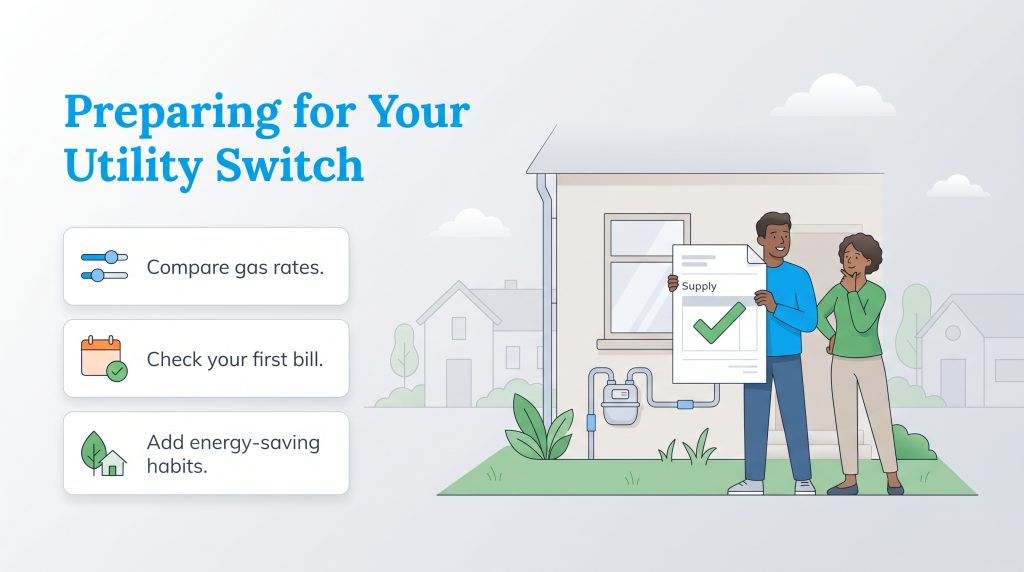
Learning how to switch natural gas suppliers is an incredibly empowering financial move that yields serious long-term savings for your family. By taking the time to verify your eligibility, carefully compare natural gas rates, and lock in a favorable fixed contract, you successfully insulate your household budget from the unpredictable swings of the global energy market. To guarantee a successful outcome, set a simple calendar reminder to audit the very first utility bill you receive following your switch, ensuring your new supplier’s rate is accurately reflected in the supply section.
If you proactively pair your new, lower gas rate with smart conservation habits — like properly sealing drafty windows or investing in ENERGY STAR certified heating equipment — you will rapidly multiply your financial savings. This holistic approach helps you drastically save on your gas bill while simultaneously reducing your environmental impact for years to come.
Frequently Asked Questions About Switching Natural Gas Providers
Will my gas be shut off during the transition to a new provider?
Who do I call if I smell a gas leak after changing providers?
Do I need to contact my current gas supplier to cancel my service?
How long does a natural gas provider switch take to take effect?
Does it cost money to switch natural gas providers?
What is the difference between a fixed and variable gas rate?
Can I change gas providers if I rent an apartment?
What happens if I move after signing a contract?
About the Author

Claudio is a sustainability-focused writer with a background in Anthropology and Psychology from NC State University. He has spent over 15 years working in writing, interpretation, and translation, driven by a deep interest in how human culture shapes the environment. Today, he shares his curiosity with readers by writing about sustainable living solutions and the connection between everyday choices and environmental impact.

David has been an integral part of some of the biggest utility sites on the internet, including InMyArea.com, HighSpeedInternet.com, BroadbandNow.com, and U.S. News. He brings over 15 years of experience writing about, compiling and analyzing utility data.