

Changing your energy supplier is a simple and effective way to reduce monthly utility bills without sacrificing reliability.
Key Takeaways
- Switching providers does not affect your home’s power reliability because your local utility company will always continue to deliver the electricity and maintain the physical grid.
- Review your current contract’s terms and expiration dates before making a transition to easily avoid unexpected early termination fees or awkward billing overlaps.
- Comparing fixed versus variable electricity rates by your zip code is the single most critical step in securing long-term financial stability and lowering your monthly household budget.
If you live in a competitive area that supports energy deregulation, you have the incredible power to choose who supplies your home’s electricity, yet millions of homeowners stick with their default provider purely out of habit. The truth is that comparing rates and learning how to switch electricity providers takes less than 10 minutes from start to finish. Best of all, your power will not go out during the transition. While hunting for the cheapest electricity options might sound overly technical, it is actually a straightforward digital transaction. By taking complete control of your energy choice today, you can safely stop overpaying for the exact same electricity you use every single day to power your life.
Understanding Energy Deregulation And Eligibility
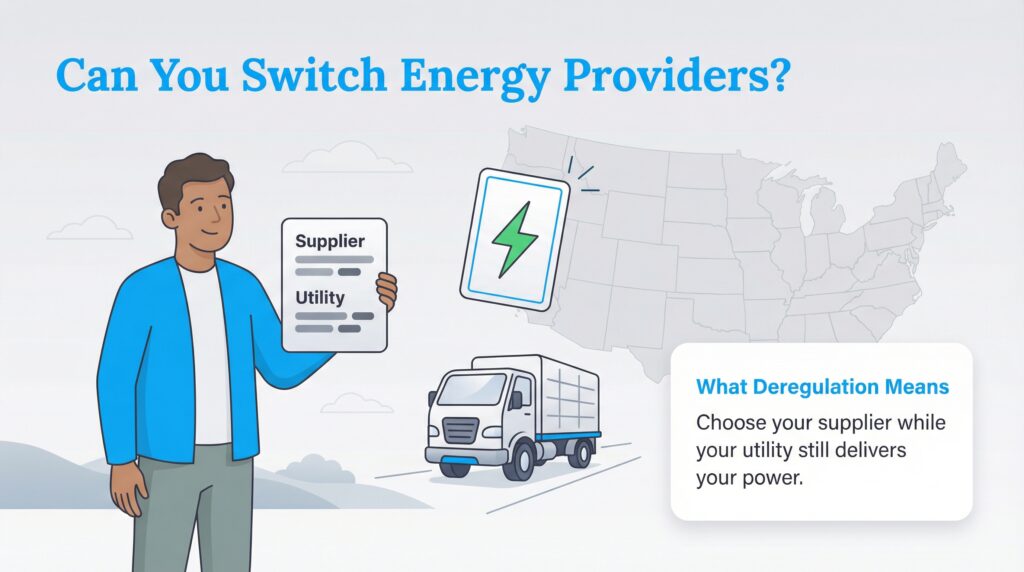
Before diving into the steps, it helps to understand why exploring the deregulated energy market is worth your time. The legislative split between energy generation and delivery allows you to shop around in a competitive marketplace for the supply portion of your bill. Currently, several states offer robust electricity choice programs for residential customers, including Texas, Pennsylvania, Ohio, Illinois, and New York. You can easily verify your home’s eligibility by checking the status of energy restructuring nationwide.
Why You Should Switch Your Electric Company
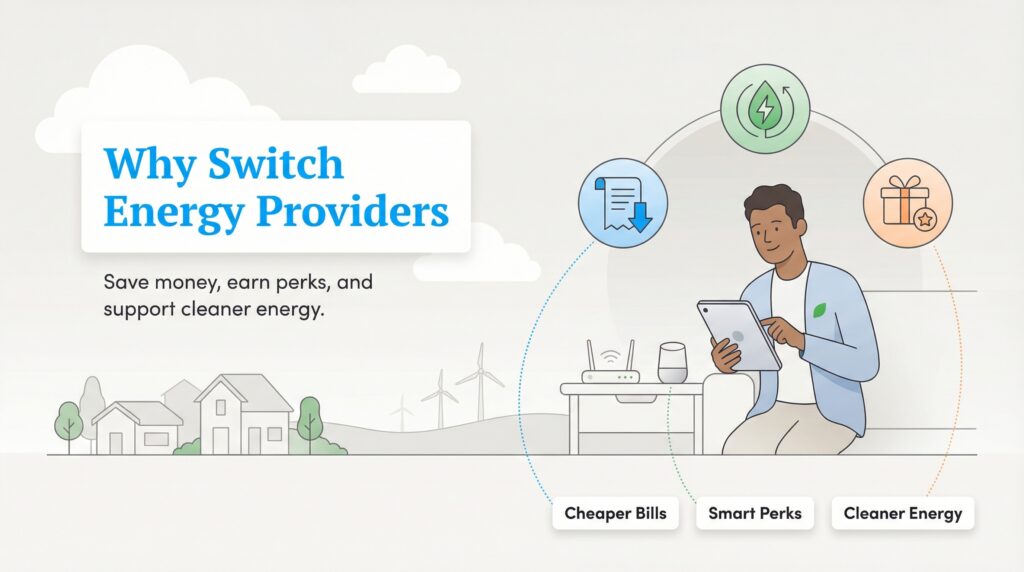
While securing a noticeably lower monthly bill is always a fantastic motivator, actively comparing rates opens the door to several other benefits tailored to your lifestyle. You should seriously consider making a switch for the following reasons:
- Locking in Lower Rates: Energy suppliers constantly reserve their absolute best promotional pricing for brand-new customers. If your attractive introductory rate is expiring soon, switching prevents a budget-busting price hike on your next statement.
- Moving to a New Home: Setting up a utility service transfer at a brand-new address is the perfect time to evaluate the open market rather than defaulting to the previous owner’s expensive plan.
- Escaping Poor Customer Service: If your current provider consistently struggles with billing transparency, website glitches, or agonizingly slow phone support, moving to a highly rated competitor saves you serious frustration.
- Upgrading to Green Energy: Eco-conscious households can rapidly transition to certified green energy plans — fully backed by wind or solar generation credits — without needing to install expensive physical solar panels on their property.
How To Switch Electricity Providers
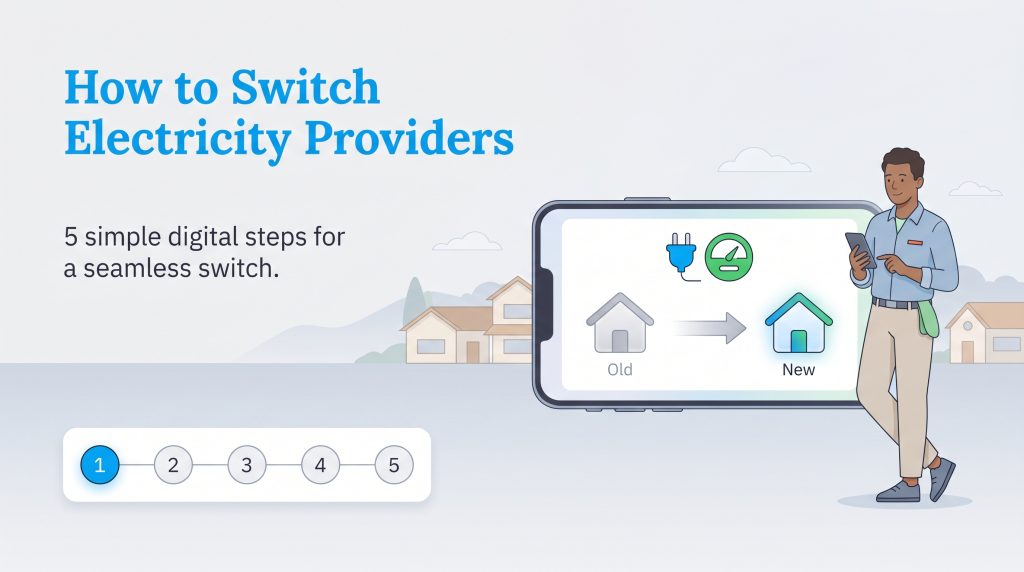
Switching electricity providers is an entirely digital process that rarely requires a phone call and never requires a technician visiting your property. Follow these straightforward steps to ensure a completely seamless transition from your old supplier to your new one.
1. Review Your Current Bill For Energy Usage
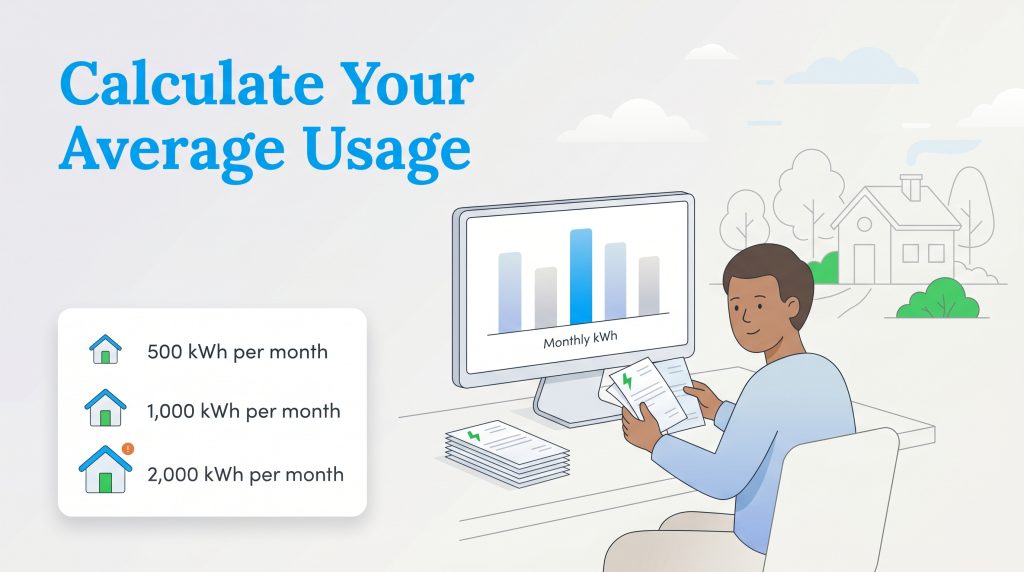
Look closely at your last three to 12 months of statements to calculate your exact average monthly energy consumption. Your exact monthly usage will be listed in kilowatt-hours (kWh). Knowing whether your household routinely averages 500, 1,000, or 2,000 kWh a month is vital because advertised rates drastically change based on these specific usage tiers. Mastering your usage tiers is a crucial part of lowering your daily usage costs.
2. Check Your Electricity Facts Label
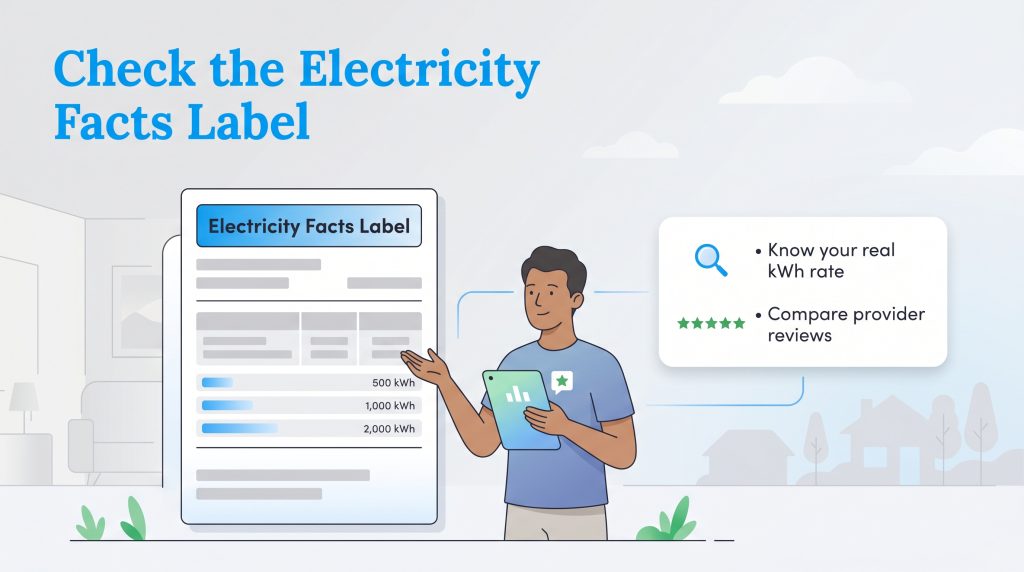
Next, log into your current provider’s online portal and check your electricity facts label (EFL). This legally mandated document clearly states your contract’s exact end date. Knowing this expiration date is necessary to accurately time your switch.
3. Review Your Contract For Early Termination Fees
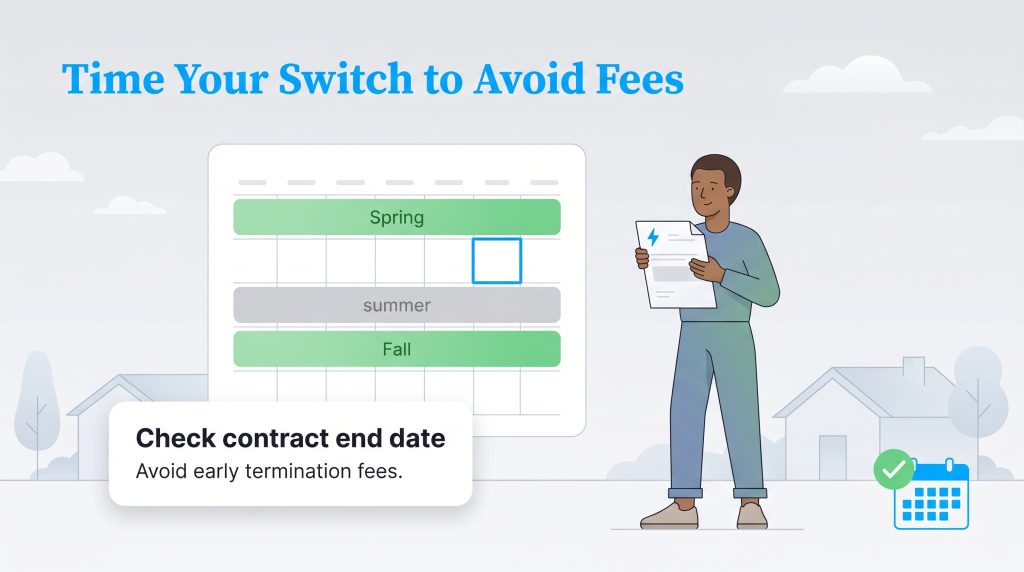
An early termination fee (ETF) is a penalty charge applied by your current supplier if you decide to break a fixed-term contract before its agreed-upon expiration date. These fees can range anywhere from $20 to over $150, making it critical to review your terms carefully.
4. Explore Ways To Avoid Cancellation Penalties
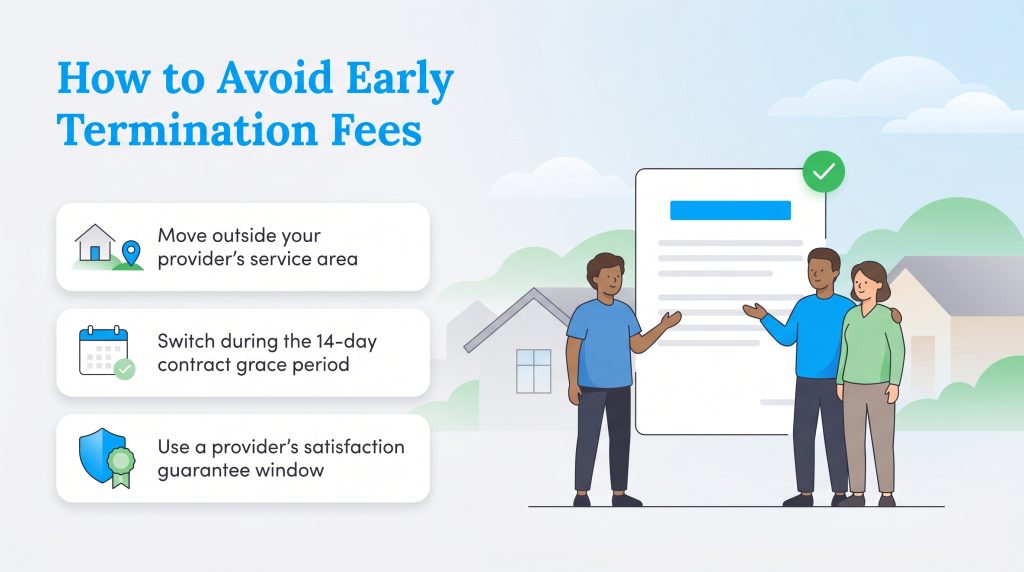
However, there are two main legal exemptions to paying an ETF: moving to a completely new address outside the provider’s service area, or scheduling your supplier switch within the final 14 days of your contract (a mandatory grace period enforced in most markets). If neither of these exemptions applies to you, simply call your prospective new provider’s customer service line. Ask them directly for a fee reimbursement as an incentive for signing up. Many top-rated companies are more than happy to issue a bill credit to cover your cancellation penalty in exchange for your long-term business.
5. Compare Electricity Rates And Plans
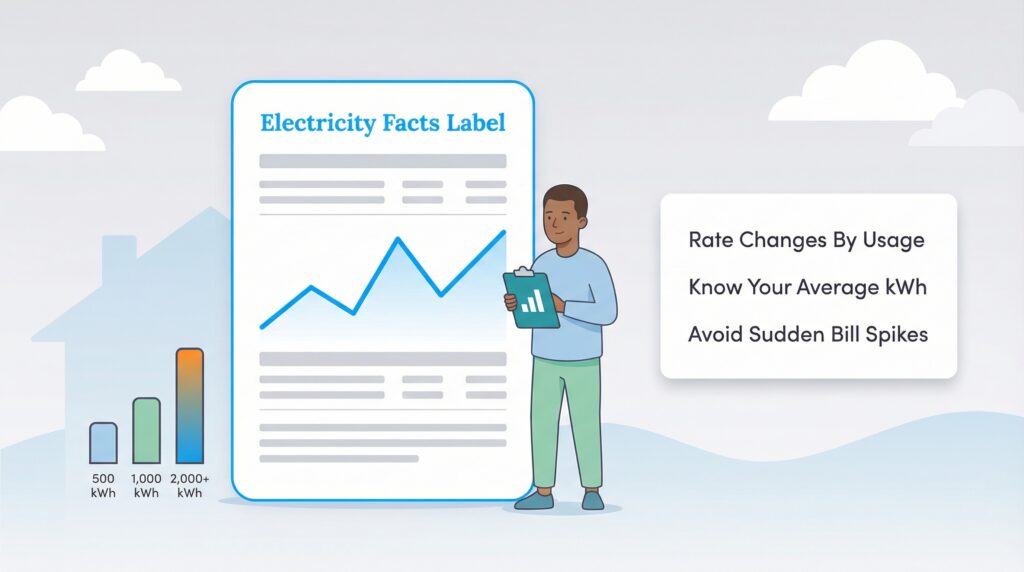
Because grid delivery charges and supplier availability vary wildly from city to city, the only accurate way to shop is to compare electricity rates by your specific zip code. Utilize your state’s official public shopping websites to confidently pull up the exact offers available for your home. Depending on your location, you can compare Texas electricity rates or easily shop Pennsylvania energy suppliers online.
Look for competitive energy plans that closely align with your calculated monthly kWh usage, and be sure to check provider reviews for billing transparency before making a decision.
6. Sign Up With Your New Energy Provider
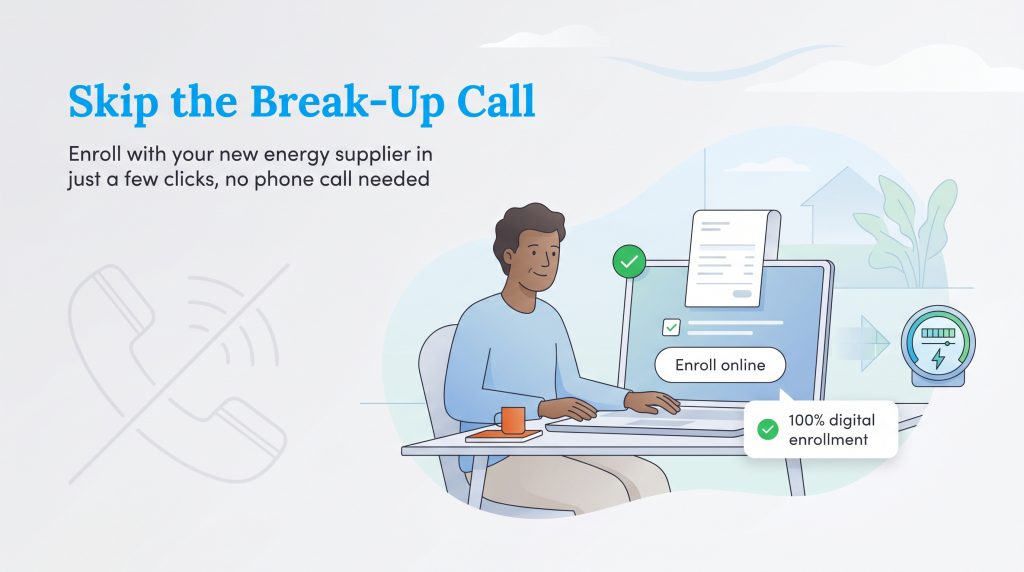
One of the biggest mental hurdles keeping people from switching electric companies is the dread of dealing with high-pressure customer retention departments. The good news is that enrollment is 100% digital and entirely automatic. Once you select a winning plan, fill out a brief online enrollment form on the new supplier’s website. You can skip the awkward break-up call entirely.
Fixed-Rate Versus Variable-Rate Energy Plans
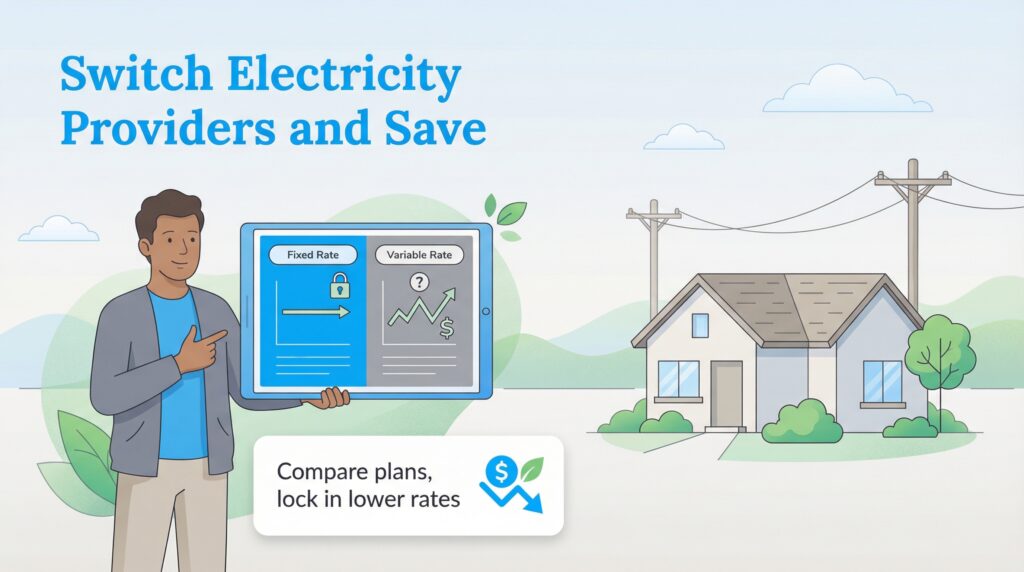
When you browse the deregulated market, you will quickly notice two distinct types of energy products: a fixed-rate plan and a variable-rate plan. A fixed-rate plan locks in your exact price per kWh for the entire duration of your contract, protecting you completely from seasonal price spikes. A variable-rate plan requires no long-term commitment, but the price per kWh will freely fluctuate every month based entirely on wholesale market conditions.
We highly recommend that you choose fixed-rate plans for long-term budget stability. Leaving your monthly household bills to the unpredictable whims of a variable rate is incredibly risky, especially during intense summer heat or freezing winter weather.
| Feature | Fixed-Rate Electricity Plan | Variable-Rate Electricity Plan |
|---|---|---|
| Pros | Price per kWh stays exactly the same for the length of the contract, offering long-term stability. | No long-term commitments or early termination fees, allowing you to switch at any time. |
| Cons | Requires a 6, 12, 24, or 36-month commitment and may charge penalty fees for leaving early. | Price per kWh fluctuates monthly based on the wholesale energy market and can spike drastically. |
| Ideal Customer | Homeowners looking for predictable budgeting and robust protection against seasonal price hikes. | Renters in short-term living situations or those taking advantage of temporary market dips. |
What Happens After You Switch?
Once you complete your online enrollment, your new supplier takes over the heavy lifting immediately. They seamlessly handle all backend communication with your local utility via a secure electronic data transfer, and your old provider is automatically dropped from your account. Do not call your old provider to cancel, or you risk a complete power disruption. If you try to personally cancel your electricity contract, the utility company may interpret it as a full move-out request and shut off the electricity completely at your meter.
Furthermore, your local utility company remains exactly the same. Your utility is assigned by geography, not consumer choice. They will continue to maintain the physical power grid, read your smart meter, and actively dispatch trucks to restore outages during severe weather. For more details on how the physical grid operates during storms, you can visit our electricity hub.
Preparing For Your Next Billing Cycle
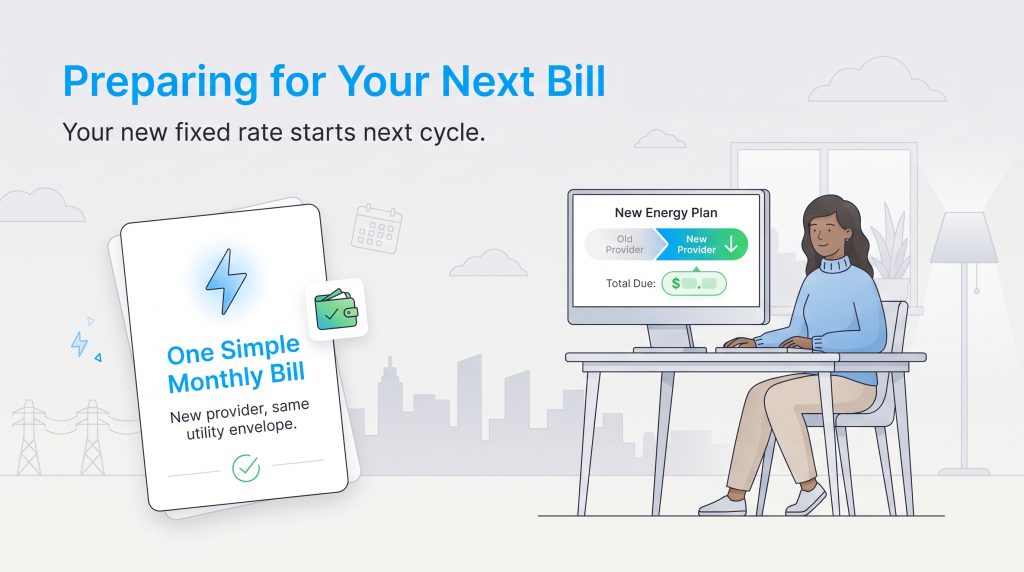
Taking the proactive time to switch electricity providers is easily one of the most practical strategies you can use to manage your household budget. After you finalize the digital switch, simply wait for your next billing cycle to review your new statement. You will see a utility service transfer clearly noted, showing your previous supplier dropping off and your new supplier’s cheaper rates taking full effect. Your local utility will continue to send you a single, consolidated bill each month, ensuring the actual payment process remains incredibly simple. By taking control of your energy choice, you gain profound peace of mind knowing your utility costs are firmly under control.
Frequently Asked Questions About Switching Electricity Providers
Will my power go out when I switch electricity providers?
No, your home’s power will not go out or flicker during the switching process. The entire transition is purely administrative and financial. Your local utility company continues to reliably deliver electricity over the same physical lines to your home without a single moment of interruption.
Do I have to call my current electricity provider to cancel?
No, you do not need to call your old provider. When you enroll with a new energy supplier, they automatically notify your local utility, which seamlessly cancels your previous plan. Calling to cancel it yourself can accidentally trigger a full shut-off at your meter.
How long does it take to switch electric companies?
In most deregulated markets, your new electricity service will officially begin within one to two billing cycles, naturally aligning with your next scheduled meter reading date. However, advanced markets like Texas often allow for expedited or even next-day switching if you request it during online enrollment.
Can I switch energy providers if I am currently in a contract?
Yes, you can switch at any time, but doing so before your contract expires may trigger an early termination fee. Always verify your expiration date on your current bill. You can typically avoid fees by switching within your final 14-day grace period or if you are moving to a new address.
Will my deposit transfer to my new electricity provider?
No, security deposits do not automatically transfer between competing retail energy companies. Your old provider will calculate your final bill and issue a refund for any remaining deposit balance you are owed. Your new provider will independently run a soft credit check to determine if a fresh deposit is required.
What happens if I switch electricity providers while in debt to my current one?
You are legally allowed to switch to a new supplier even if you have an outstanding balance. However, switching does not erase your existing debt. You are still fully responsible for paying the final bill, and failing to do so will result in the old provider sending your unpaid account to collections.
Can I switch to a 100% renewable electricity plan without installing solar panels?
Absolutely. You can select a fully renewable supply plan that is backed by wind or solar energy credits directly from the grid. This allows you to effortlessly support green generation without modifying your home. Explore more eco-conscious options by choosing a renewable energy plan or visiting our solar and renewables page.
About the Author

Claudio is a sustainability-focused writer with a background in Anthropology and Psychology from NC State University. He has spent over 15 years working in writing, interpretation, and translation, driven by a deep interest in how human culture shapes the environment. Today, he shares his curiosity with readers by writing about sustainable living solutions and the connection between everyday choices and environmental impact.

David has been an integral part of some of the biggest utility sites on the internet, including InMyArea.com, HighSpeedInternet.com, BroadbandNow.com, and U.S. News. He brings over 15 years of experience writing about, compiling and analyzing utility data.