

Choosing a Green Energy Plan Is an Accessible Way to Lower Your Household’s Environmental Footprint Without Installing Expensive Rooftop Solar Panels
Key Takeaways
- 100% renewable energy plans use RECs to offset your electricity usage, meaning your money supports green generators even if standard grid power flows to your house.
- Switching to a green energy plan may be priced closely to standard options, and fixed-rate plans can provide a predictable energy charge for your household.
- You can choose from multiple green energy sources, including wind, solar, and hydropower, depending on your local energy market.
A renewable energy plan is a retail electricity contract that guarantees the amount of power your household consumes is matched by an equal amount of clean energy generated and fed into the shared electrical grid. Moving into a new home or reevaluating your current monthly budget provides a fresh slate to make eco-conscious choices, and switching electricity providers is the perfect moment to rethink where your power comes from. With the rising cost of utilities squeezing household budgets, choosing a sustainable option allows you to power your home responsibly without the massive upfront cost of installing rooftop solar panels. By making this switch in a deregulated energy market, you actively shrink your environmental impact while potentially locking in a cheaper, more predictable electricity rate. If you feel overwhelmed by complicated industry jargon or confusing rate structures, we are here to clear the air. This guide demystifies exactly how residential clean energy works and provides the step-by-step instructions you need to confidently compare green energy rates, spot hidden fees, and choose an environmentally mindful option that fits your budget.
How Do Renewable Energy Plans Work?
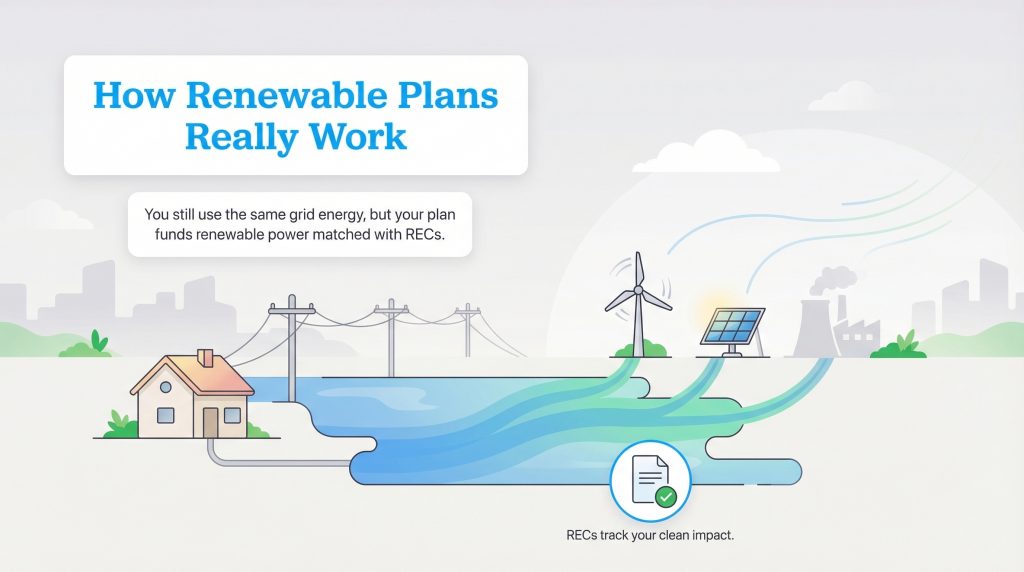
When you flip a light switch in your living room, you might picture pure solar and wind power flowing straight from a wind turbine into your home, but the physical electricity delivered to your house does not actually change when you switch plans. The U.S. power grid operates like a massive, shared pool of water where energy from coal, natural gas, nuclear, and renewable sources all mix together instantly. Because electricity travels along the path of least resistance, there is no physical way to sort “clean” electrons from “dirty” electrons once they enter the transmission lines.
Instead, a renewable energy plan functions as an advanced accounting system. It is a retail contract ensuring that for every kilowatt-hour (kWh) of electricity you consume, an equal amount of clean power is generated, metered, and added to that shared grid on your behalf. While you cannot control which specific electrons enter your home’s wiring, your monthly bill directly funds the continuous generation of sustainable energy. By driving up the demand for wind and solar power plans, your household actively displaces the need for dirty fossil fuels on the local grid over time.
The Role of Renewable Energy Certificates (RECs)
Renewable Energy Certificates (RECs) are the vital accounting tools powering most green energy plans across the country. Energy providers rely entirely on them to prove green power was generated and successfully added to the shared grid. One REC represents exactly one megawatt-hour (MWh) of renewable electricity delivered to the wholesale market. This crucial tracking mechanism is heavily regulated and prevents utility companies from double-counting the same batch of green power.
To fully understand how this system guarantees your home’s environmental impact, it helps to look at the exact lifecycle of a REC:
- Generation: A clean energy facility, such as a wind farm or a commercial solar array, produces one MWh of electricity and feeds it into the public power grid.
- Issuance and tracking: A regional regulatory body meters that generation and issues a unique, serial-numbered REC to the facility to verify its creation.
- Purchasing: Your retail energy provider buys these certified RECs on the open market in volumes large enough to match your exact monthly energy usage.
- Retirement: Once the provider applies that REC to your specific customer account, it is officially retired from the tracking system. It can never be sold or claimed again, proving that your household funded that exact unit of clean power.
This precise, serialized system guarantees that 100% renewable energy plans are legitimate and transparently audited. You should always check your plan’s terms or its Electricity Facts Label (EFL) to verify exactly how the company sources these certificates.
Are Renewable Energy Plans a Scam?
A common source of consumer skepticism is the idea that green energy plans are just a clever marketing gimmick or “greenwashing.” Because your home’s physical power supply does not change, it is easy to wonder if you are truly making a difference. The short answer is no, renewable energy plans are not a scam. They are legally binding contracts rigorously audited by state public utility commissions (such as the PUCT in Texas or the PAPUC in Pennsylvania).
When an energy company advertises a 100% green energy plan, they are legally required to purchase and retire enough RECs to offset their customers’ consumption. If a provider claims to supply clean energy but fails to buy the corresponding certificates, they face massive regulatory fines and the potential loss of their operating license. While the electrons powering your television right now might have been generated by a nearby natural gas plant, your financial investment guarantees that an equal amount of fossil fuel generation is eventually forced off the grid by cheaper, cleaner renewables.
Sources of Clean Power: Green vs. Renewable Energy
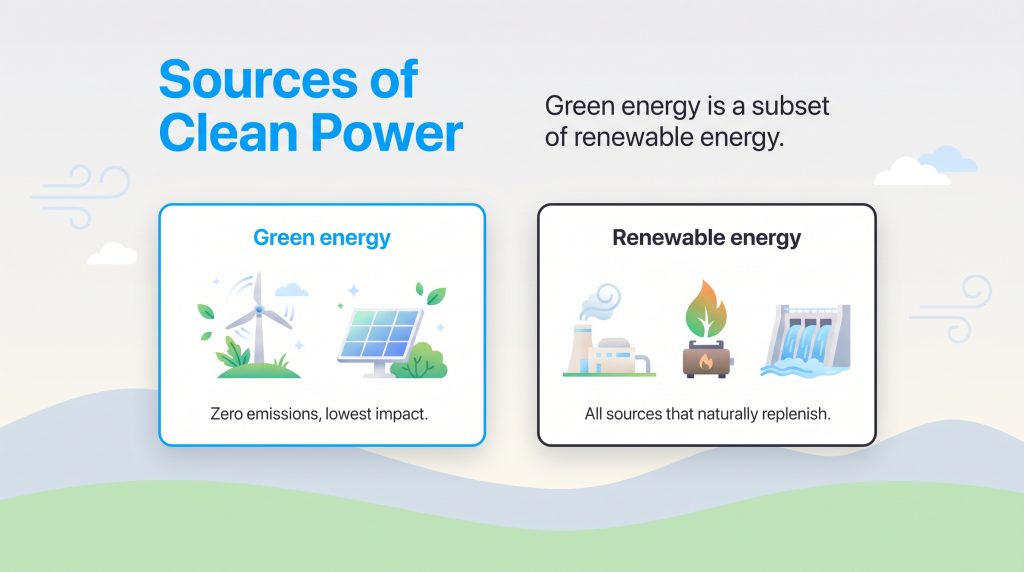
While shopping for a new electricity contract, you will frequently see the terms “green energy” and “renewable energy” used interchangeably. However, in the utility industry, they represent slightly different classifications. Understanding the distinction helps you make a more informed, environmentally mindful choice for your home.
Green energy is a strict subset of renewables that focuses entirely on resources with the absolute lowest environmental impact and zero greenhouse gas emissions. Renewable energy is a broader term encompassing any resource that naturally replenishes itself over a short period of time, even if the harvesting process carries a minor environmental footprint.
Here is a breakdown of the specific energy sources that might fund your electricity plan:
- Wind power (Green): Harnessing natural air currents to spin massive turbines. This is a zero-emission source and is typically the most abundant and affordable green energy option available in deregulated U.S. markets.
- Solar power (Green): Capturing the sun’s radiation via photovoltaic panels to generate electricity. Like wind, solar emits no greenhouse gases and has a negligible impact on local ecosystems.
- Geothermal (Renewable): Tapping into the Earth’s internal heat to create steam that drives utility-scale turbines. While incredibly reliable, the drilling process can have minor land-use impacts, categorizing it broadly under renewables.
- Biomass (Renewable): Burning organic materials — like agricultural waste, wood pellets, or landfill gas — to generate electricity. Because it releases carbon dioxide when burned, it is renewable but not strictly green.
- Large hydropower (Renewable): Damming major rivers to push water through giant turbines. While the water naturally replenishes and emissions are low, massive dams significantly alter local aquatic ecosystems, meaning large hydro is often excluded from premium “green” energy labels.
Types of Renewable Energy Plans
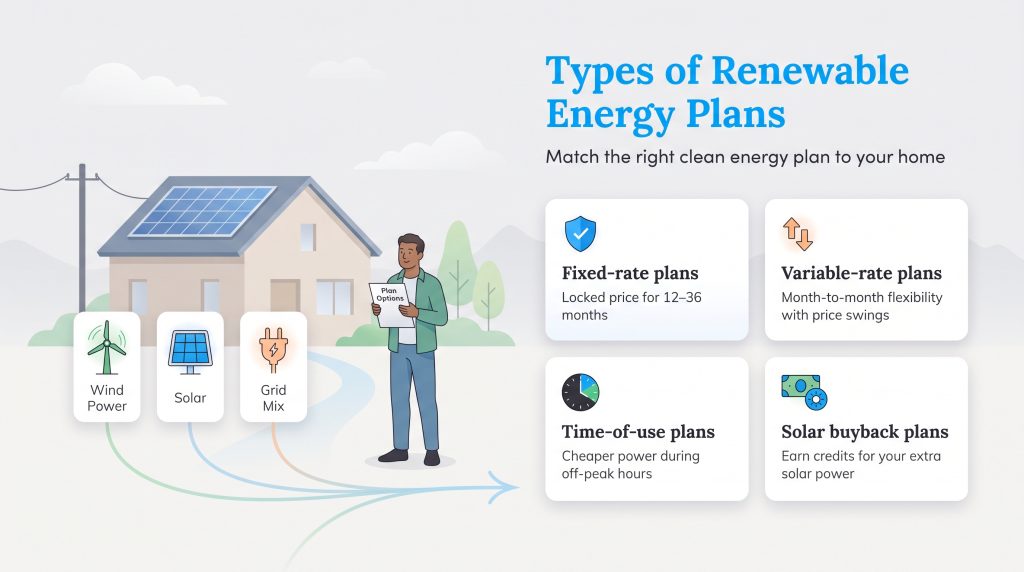
When shopping for an environmentally mindful choice, you will quickly discover that not all contracts are structured the same way. The types of plans available to you are heavily dictated by regional deregulation; if you live in a state with energy choice, you have the power to shop the open market for competitive rates. Depending on where you live, U.S. renewable energy generation comes from a few primary origins, with Wind Power being the most common and often cheapest source nationwide. By understanding the different clean energy plans available, you can easily align your sustainable goals with your household’s unique energy consumption habits.
Fixed-Rate vs. Variable-Rate Plans
Understanding your pricing structure is essential for avoiding unexpected utility bills, and the exact difference between time-of-use plans and standard variable rates can make or break your monthly budget. Fixed-rate green energy provides crucial price protection by locking in your exact rate per kWh for a set term length, typically ranging from 12 to 36 months. Conversely, standard variable-rate plans offer month-to-month flexibility without long-term cancellation fees, but the price per kWh fluctuates wildly with wholesale market conditions.
| Plan Type | Pricing Stability | Contract Length | Best For |
|---|---|---|---|
| Fixed-Rate Plans | High stability; rate locked for the term. | Typically 12 to 36 months. | Households wanting predictable monthly bills. |
| Variable-Rate Plans | Low stability; fluctuates with the market. | Month-to-month flexibility. | Short-term renters or those moving soon. |
| Time-of-Use (TOU) Plans | Variable by time of day. | Typically 12 to 36 months. | EV owners or households active late at night. |
Time-of-Use (TOU) Plans for EV Owners
As more households transition to electric vehicles, retail energy providers like TXU Energy have introduced specialized time-of-use (TOU) electricity plans. Unlike a standard variable rate that changes month-to-month based on market pricing, a TOU plan has rates that change predictably based on the time of day. These plans offer targeted off-peak charging models, giving you drastically cheaper — or even completely free — EV charging electricity rates during nighttime hours when you are most likely to plug in your car. If you commute daily and can shift your heavy appliance usage to the evening, you should evaluate your off-peak habits to take full advantage of free-night promotions.
100% Green Energy vs. Partial Blends
Not all sustainable plans are created equal. Some providers, such as Gexa Energy and Green Mountain Energy, heavily promote 100% green energy plans, meaning every single kilowatt-hour you use is fully offset by a REC from a clean source like wind or solar. Other companies offer partial blends — providing a baseline mix where only 10% to 20% of the energy comes from renewables, while the remaining balance relies on traditional natural gas or coal. For the maximum environmental benefit and a true reduction in your household’s carbon footprint, you should actively look for plans advertising 100% green coverage on their official disclosures.
Solar Buyback Programs
If you have already invested the time and money into installing rooftop solar panels, you generate your own clean residential electricity directly at home. During sunny afternoons, your panels might produce far more energy than your home actually consumes. Rather than letting that valuable electricity go to waste, you can enroll in specific solar buyback plans (often referred to as net metering in certain states). These targeted agreements allow you to sell your excess generated power back to the local utility grid in exchange for lucrative bill credits, effectively turning your home into a miniature green power plant.
Pros and Cons of Switching to Clean Energy
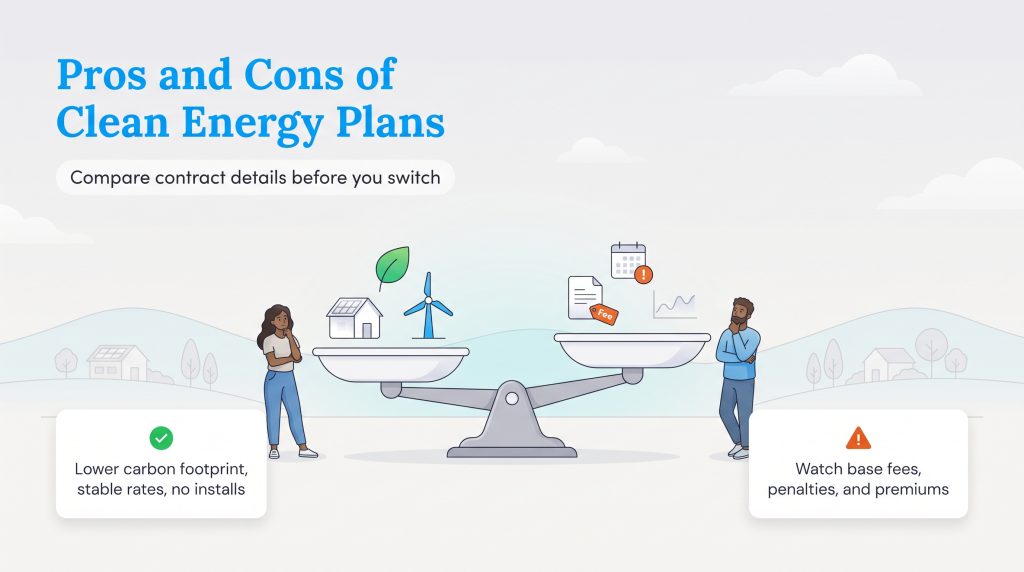
Before jumping into a brand new contract, it is incredibly helpful to weigh the benefits against the potential drawbacks. Making the switch is generally an excellent idea for both your wallet and the planet, but understanding the fine print ensures you select a reliable energy-saving option that genuinely works for your home’s unique usage.
Here is a quick breakdown of the pros and cons of clean energy plans:
- Pros:
- Carbon footprint reduction: You actively support clean energy generation and help displace fossil fuels on the local grid.
- Price locks: Fixed-rate green plans allow you to lock in a stable, predictable electricity rate for up to three years, shielding you from seasonal price spikes.
- Zero installation: You get the environmental benefits of solar and wind power without purchasing, permitting, or maintaining expensive rooftop panels.
- Cashback and rewards: Many premium green providers offer annual cashback rewards, smart thermostats, or sign-up bonuses just for enrolling in a multi-year term.
- Cons:
- Potential base charges: Some plans include hidden monthly base fees or minimum usage charges that penalize highly efficient homes if they do not consume enough power.
- Early termination fees (ETFs): If you sign a long-term fixed contract and need to switch providers before your term ends, you could face hefty cancellation penalties ranging from $150 to $395 depending on the provider.
- Market variability: In some regions, 100% renewable plans might carry a slightly higher premium compared to standard, bare-bones fossil-fuel energy rates.
How to Choose the Best Green Energy Provider
Upgrading your electricity is a powerful way to make an eco-conscious choice, but finding the absolute best renewable energy providers requires a bit of focused research. While state and municipal governments may offer promotions, you can easily verify what financial incentives are available in your area through resources like DSIRE. However, your primary focus should always be the provider’s official terms of service.
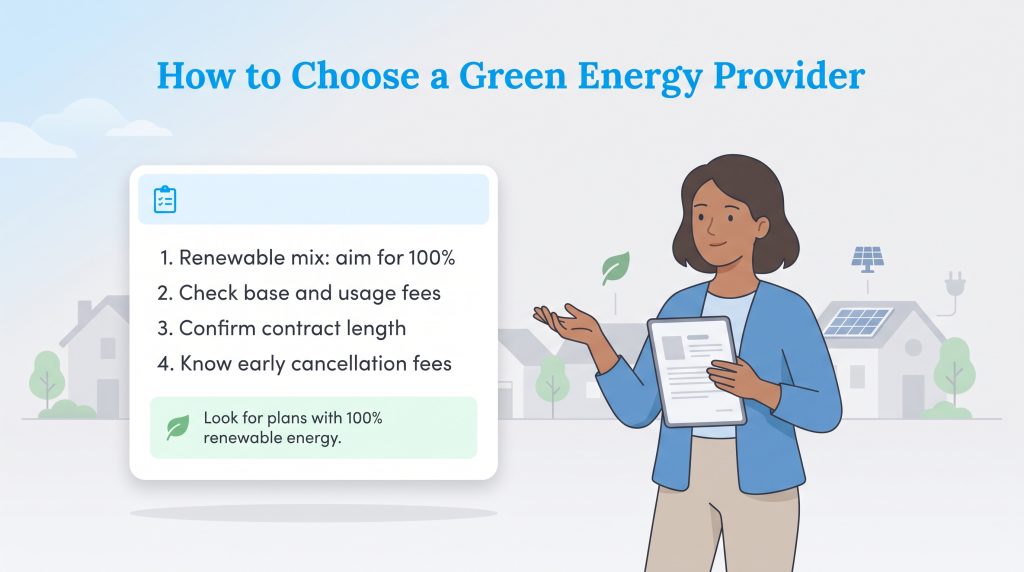
To secure the best deal, you must command your attention toward the provider’s Electricity Facts Label (EFL). Keep this essential checklist handy when reviewing an EFL:
- Renewable energy mix percentage: Verify whether the plan is 100% green or just a partial blend.
- Base charges and usage fees: Look for hidden monthly charges that apply if you use too little or too much electricity.
- Contract lengths: Note exactly how long you are committing to the locked-in rate.
- Early cancellation fees: Check what the exact numerical penalty will be if you unexpectedly move or decide to switch providers before your term ends.
Evaluating Base Charges and Rewards Incentives
When you sit down to compare rates, do not just look at the advertised price per kWh. You must evaluate the base charges and rewards incentives detailed deep within the EFL. A plan boasting an incredibly low energy rate might offset that cheap price by slapping a $9.95 monthly base fee on your bill, severely eating into your savings if you live in a small, energy-efficient apartment. Instruct yourself to compare sign-up bonuses, annual cashback percentages, and off-peak charging credits against these minimum usage base fees. If a provider offers a $100 bill credit for signing up but charges a $20 base fee every month, the math will not work in your favor long term. Always calculate your average monthly usage before making a final decision.
Step-by-Step: How to Switch to a Renewable Energy Plan
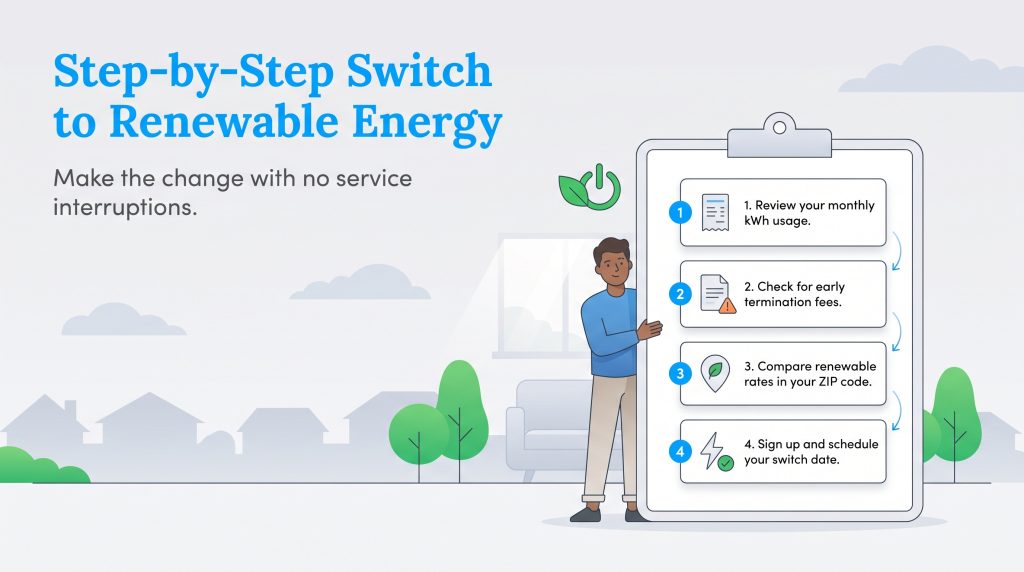
Taking control of your home’s power supply is surprisingly simple, even if you are renting an apartment. You have the total power to select green energy providers that match your values without dealing with invasive hardware installations or pushy salespeople. If you want to integrate this change with other smart strategies to save on your electric bill, follow these exact steps to make a seamless transition:
- Review your current monthly usage (kWh): Pull up your past utility bills to understand your average monthly energy consumption across different seasons. This helps you choose a plan with rates specifically tailored to your household size.
- Check your current provider for early termination fees: Review your existing contract to ensure you will not be hit with unexpected penalties for leaving early. If your contract ends within the next 14 days, you can usually switch without incurring a fee.
- Compare green energy rates in your zip code: Use a local provider search tool or your state’s public utility website to shop around. Look closely at fixed-rate vs variable-rate options to find the most competitive sustainable choices in your area.
- Sign up and schedule the switch date: Once you select the absolute best plan for your needs, enroll online. Your newly chosen provider will handle the entire administrative transition with your local utility company, ensuring you never experience a disruption to your electricity service.
Deciding if Green Energy Fits Your Household Budget
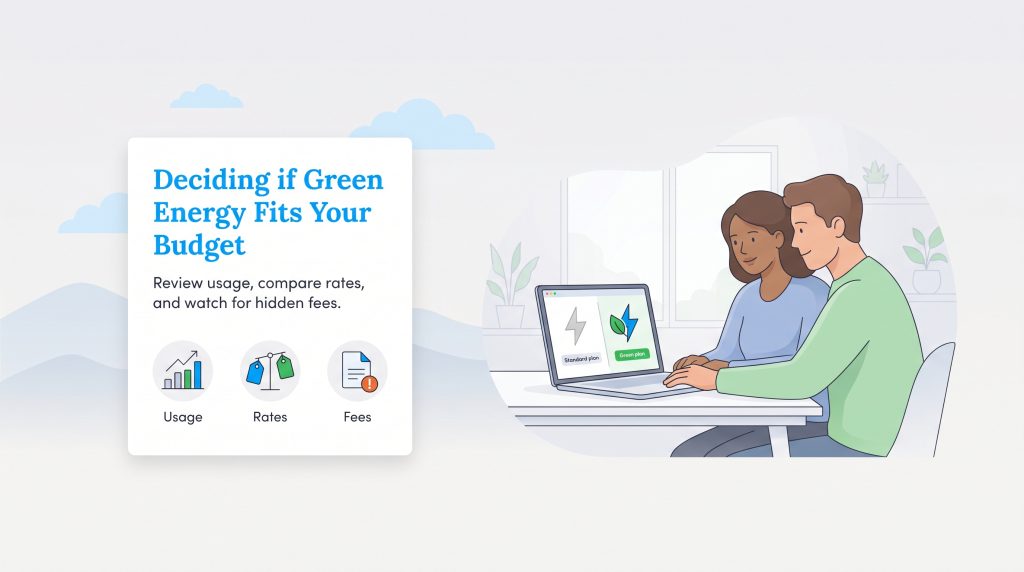
Upgrading your electricity plan is one of the most practical and immediate steps you can take to lower your household’s carbon footprint. It requires zero messy construction, zero maintenance, and absolutely no new equipment to install. By thoroughly reviewing your historical energy usage, carefully comparing fixed-rate energy plans against your budget, and closely inspecting the EFL for hidden fees, you can confidently lower your utility costs while making a highly impactful, environmentally mindful choice.
Opting for a green supplier actively drives market demand for cleaner technologies and directly funds sustainable energy generation across the country. When you clearly understand the terms of your agreement and the role of RECs, you can confidently power your new home while supporting a more resilient, modern electrical grid that benefits us all.
Frequently Asked Questions About Renewable Energy Plans
If you still have questions about how these eco-friendly options work in your area, you are certainly not alone. We compiled answers to the most common queries to help you make a smart, informed decision before signing a new contract.
What does a 100% renewable energy plan mean?
Is a renewable energy plan more expensive than traditional electricity?
Do I need to install solar panels to get a renewable energy plan?
What happens to my power if the wind doesn’t blow or the sun doesn’t shine?
What is the difference between green energy and renewable energy?
Can renters sign up for renewable energy plans?
Are there renewable energy plans for small businesses?
Do I need a smart meter to enroll in a renewable energy plan?
What is the difference between an EV charging plan and a standard green energy plan?
About the Author

David has been an integral part of some of the biggest utility sites on the internet, including InMyArea.com, HighSpeedInternet.com, BroadbandNow.com, and U.S. News. He brings over 15 years of experience writing about, compiling and analyzing utility data.

LaLeesha has a Masters degree in English and enjoys writing whenever she has the chance. She is passionate about gardening, reducing her carbon footprint, and protecting the environment. She also recently served as President of the Board for City Sprouts (a community garden).