

Understanding Where Your Power Comes From Helps You Make Smarter, More Sustainable Choices For Your Household
Key Takeaways
- Renewable electricity is generated from natural sources that replenish themselves, such as sunlight, wind, and water.
- The power grid works like a giant pool where renewable and non-renewable electrons mix together before reaching your home.
- Choosing a green energy plan encourages more renewable generation, even if the specific electrons powering your lights aren’t exclusively “green.”
If you are wondering exactly what is renewable electricity, it is simply the usable electric current delivered to your wall sockets that was originally generated from naturally replenishing resources like sunlight, wind, or flowing water. While “renewable energy” describes the broad natural resources themselves, renewable electricity is the actual power keeping your lights on. Switching to a green energy plan is one of the easiest, most effective ways to lower your home’s carbon footprint and support a cleaner grid without ever changing your daily routine.
How Does Renewable Electricity Work?
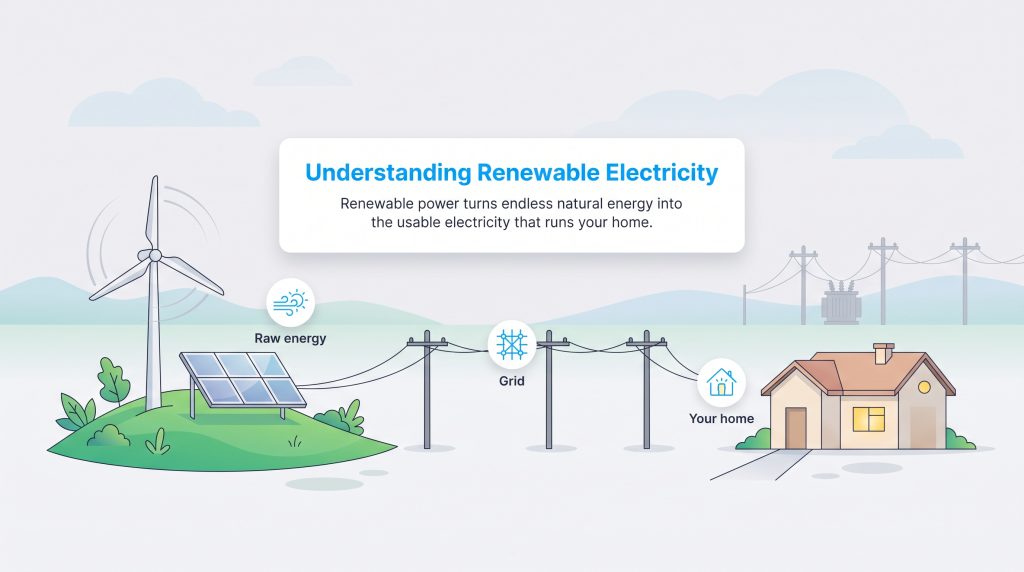
Renewable electricity is the lifeblood of a sustainable modern grid. Unlike traditional fossil fuels such as coal or natural gas — which take millions of years to form beneath the earth’s surface and are ultimately finite — renewable sources are virtually inexhaustible on a human timescale. The sun will continue to shine, the wind will continue to blow, and our planet’s rivers will keep flowing. Capturing this endless supply of natural energy is why the ongoing transition to renewables is so critical for our collective environmental and economic future.
The Power Grid and Your Home
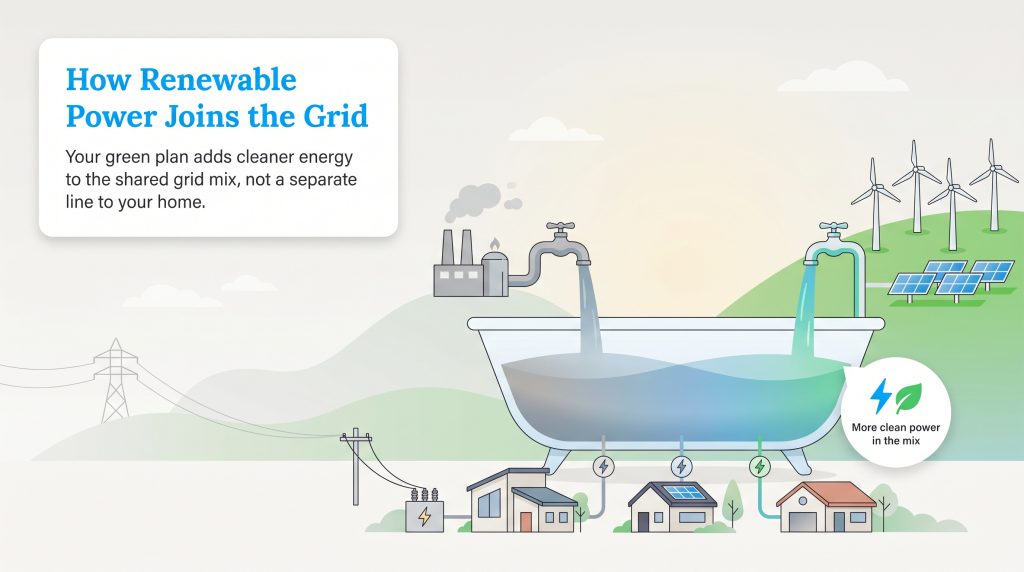
When you plug in a device, you pull electricity from a massive shared network. One of the most persistent misconceptions about signing up for a green energy plan is the belief that clean electrons will be routed directly to your specific home, completely bypassing your neighbor who continues to receive dirty power. To understand why this is physically impossible, imagine our entire national grid infrastructure as a massive, shared bathtub.
Think of all the diverse power plants in your region as various faucets continuously pouring water into this giant tub. Once the electricity enters the grid, it all mixes together instantly at nearly the speed of light. Because you cannot separate the “clean water” from the “dirty water,” you are always drawing a blended grid electricity mix of whatever happens to be in the system at that exact moment.
Understanding Renewable Energy Certificates
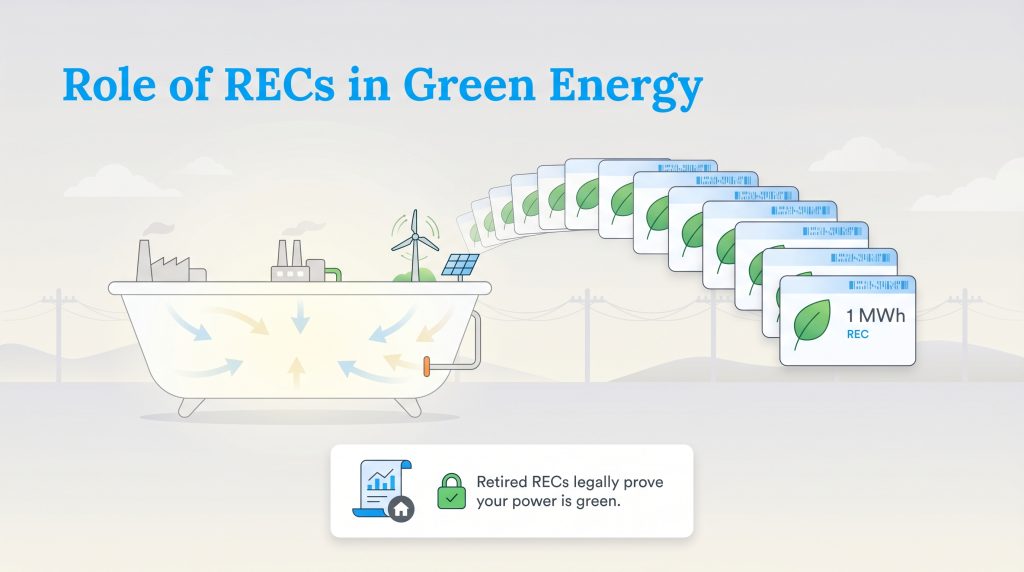
Because green electrons cannot be physically separated from fossil fuel electrons on the power grid, utility companies rely entirely on Renewable Energy Certificates (RECs) to securely verify the origin of your power. Every time a wind or solar farm injects one megawatt-hour of clean electricity into the grid, a REC is generated. When you purchase a green energy plan, your chosen utility provider legally buys and permanently “retires” these certificates to match your home’s total usage. This process rigorously guarantees that your monthly payment supports sustainable generation.
🌱 Eco Edge: What are Renewable Energy Certificates (RECs)? When you sign up for a renewable plan, you are actually purchasing RECs to legally offset your home’s usage. This highly secure certificate proves that one megawatt-hour of clean energy was generated on your behalf, effectively guaranteeing your money supports green generation rather than routing specific “green electrons” directly to your house.
Main Types of Renewable Energy
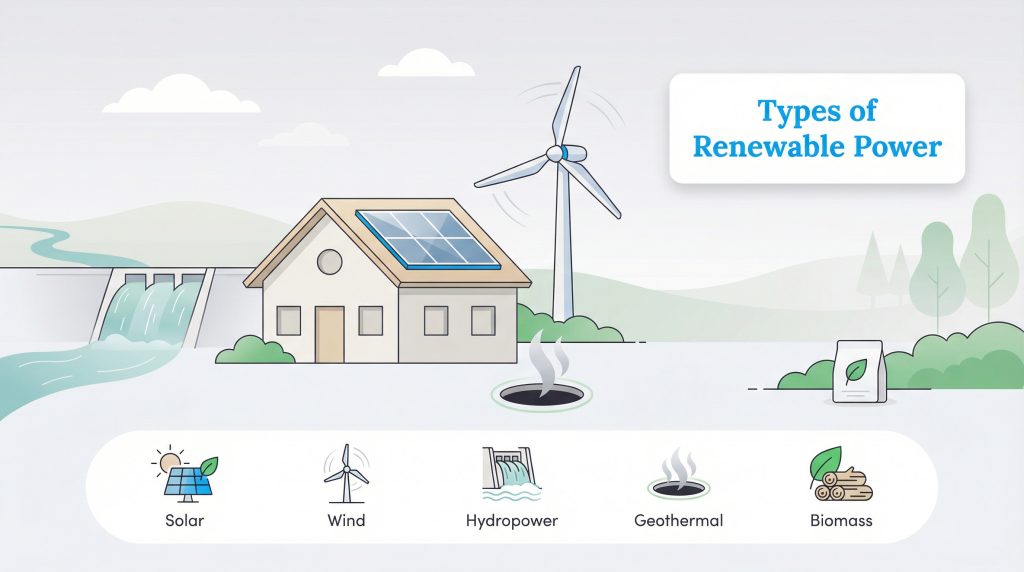
There are several core technologies we use to generate clean power today. While the specific energy mix in your region will depend heavily on local geography, state policies, and climate conditions, each of these five sources plays a distinct role in greening the broader grid.
- Solar Power: Solar technology utilizes photovoltaic (PV) cells to capture radiation from sunlight and convert it directly into an electric current, encompassing massive utility-scale farms and residential rooftop panels. It is one of the most rapidly growing and heavily subsidized sources for residential grid power today. You can learn more about how this works on our solar page.
- Wind Power: Utility-scale generation harnesses the kinetic energy of moving air to spin enormous fiberglass turbines, creating massive amounts of electricity without any carbon emissions. Wind energy currently stands as the most common and highest-producing renewable source integrated into the American household grid.
- Hydropower: One of the oldest established forms of electricity generation, hydropower uses the physical force of flowing water in rivers or dams to physically spin submerged industrial turbines. Because rivers run constantly, this source is heavily relied upon to provide stable, continuous baseline grid power for millions of residential customers.
- Geothermal: Geothermal energy taps into the massive heat reservoirs naturally stored deep beneath the earth’s crust to drive heavy industrial turbines. While highly efficient and capable of running 24/7, it remains a less common residential power source geographically limited to regions with significant tectonic activity.
- Biomass: Biomass generation involves safely burning organic materials — such as agricultural crop waste — to create steam and produce power. This method is far less common for standard utility plans but occasionally serves as a supplementary baseload power source for rural residential grids.
Renewable Electricity vs Fossil Fuels
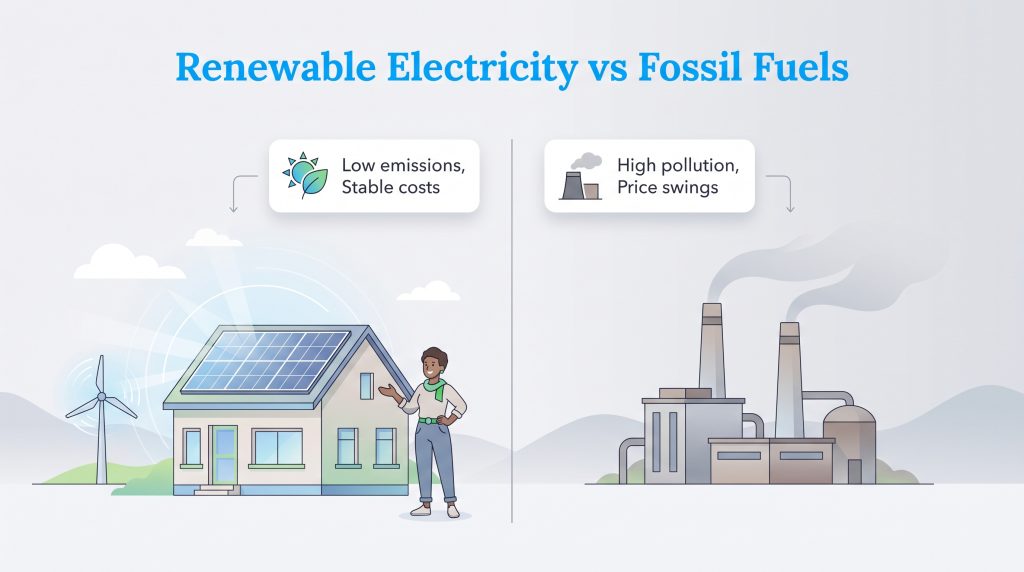
When examining green power, it is important to weigh the long-term environmental and economic advantages against traditional generation methods. Switching your home to renewables is no longer just a feel-good environmental statement; it delivers highly tangible, wide-reaching benefits for everyday consumers when compared directly to standard coal and natural gas generation.
| Feature | Renewable Electricity | Fossil Fuels |
|---|---|---|
| Environmental Impact | Produces zero direct greenhouse gas emissions during operation, drastically cutting local air pollution. | Emits high levels of carbon dioxide, sulfur dioxide, and particulate matter into the atmosphere. |
| Replenishment Rate | Utilizes virtually infinite, naturally replenishing resources like sunlight, wind, and flowing water. | Relies on finite, combustible resources extracted from the earth that take millions of years to form. |
| Price Volatility | Highly stable over the long term because the “fuel” (sun and wind) is completely free to harvest. | Subject to extreme global market fluctuations, political conflicts, and supply chain disruptions. |
Understanding these nuances also protects you from misleading utility marketing. You will often hear terms like “green energy” and “clean energy” used loosely. For example, nuclear power is widely classified by regulatory bodies as a clean source because its operational generation phase releases absolute zero carbon emissions into the atmosphere. However, it is not considered renewable because the uranium required to run the reactor core is a finite resource. In sharp contrast, utility-scale solar generation is universally considered renewable, green, and clean.
Why Choose Renewable Electricity
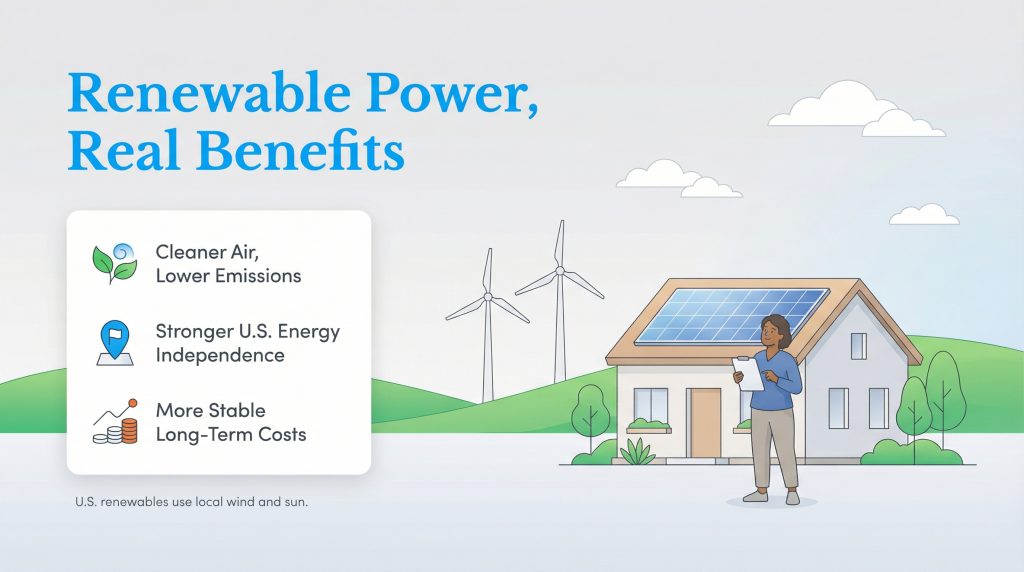
If you are debating the switch, you might be wondering if green utility plans will hike up your monthly bill. The good news is that green utility plans are now highly competitive with standard plans. Because renewable sources have incredibly low operational costs — sunlight and wind are entirely free to capture — they perfectly protect homeowners from the severe price volatility typically associated with natural gas and coal markets.
Is Renewable Energy Cheaper for Homeowners?
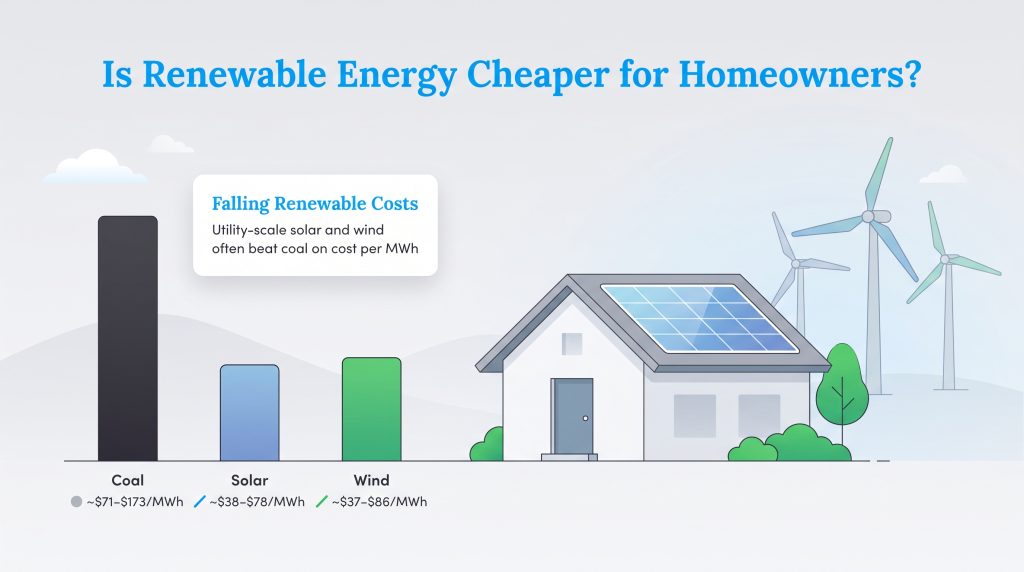
Despite the upfront setup costs for personal solar arrays, the overall cost of generating green power at scale is dropping incredibly fast. According to the 2025 Levelized Cost of Energy (LCOE) analysis by the financial firm Lazard, utility-scale solar costs have fallen to roughly $38 to $78 per megawatt-hour, while onshore wind impressively ranges from $37 to $86. In sharp contrast, generating power from a traditional coal plant can cost anywhere between $71 and $173 per megawatt-hour. You can read more about the growth of these cost-effective sources from the U.S. Energy Information Administration (EIA).
How to Switch to a Green Energy Plan
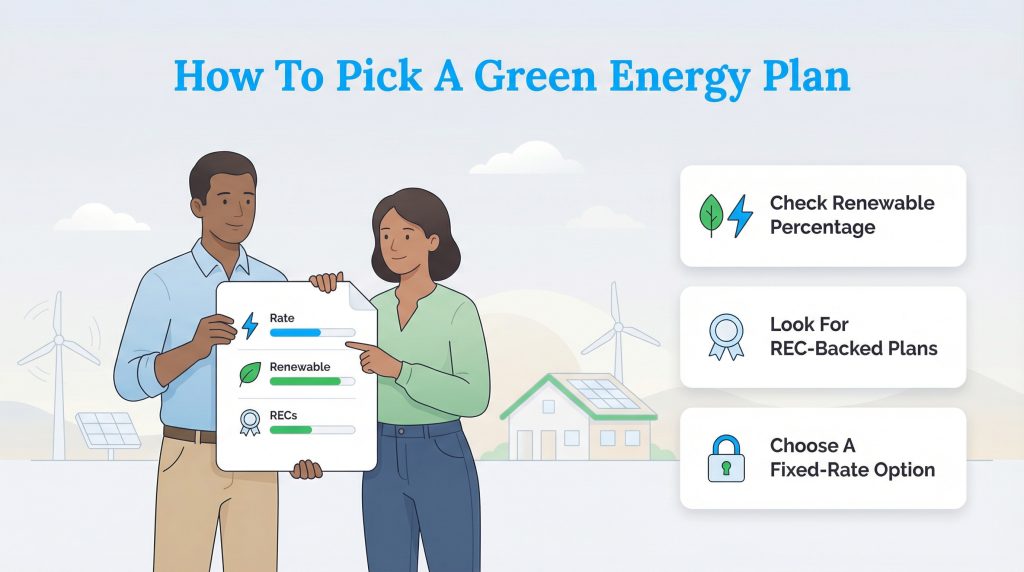
Changing how you consciously power your home is one of the most highly impactful steps you can actively take toward living a sustainable lifestyle. The process is remarkably straightforward, and switching providers will not interrupt your home’s power supply for even a second. Follow this 3-step actionable guide to transition to a cleaner grid:
- Review your current utility bill and contract. Audit your existing energy usage to understand your baseline footprint. Carefully locate your Electricity Facts Label (EFL) or recent bill to explicitly see your current rate, contract expiration date, and how much fossil fuel generation you currently support.
- Compare local green energy suppliers or tariffs. If you live in a regulated market, check your local utility for optional green pricing programs. If you live in a deregulated area, actively shop for a third-party fixed-rate plan. Ensure you choose renewable energy tariffs that strictly source 100% clean electricity securely backed by retired RECs.
- Execute the switch online. Once you select the best eco-conscious alternative for your household, sign up directly through the new provider’s website. They will handle all the backend coordination with your local utility company, seamlessly transitioning your service without any manual intervention or service drops on your end.
💸 Money-Saver: In highly deregulated markets like Texas or Pennsylvania, competitive renewable plans are frequently cheaper than their fossil-fuel counterparts. Always compare rates and contract terms to see if you can save on your electric bill while simultaneously supporting a greener grid.
Generating Renewable Electricity at Home
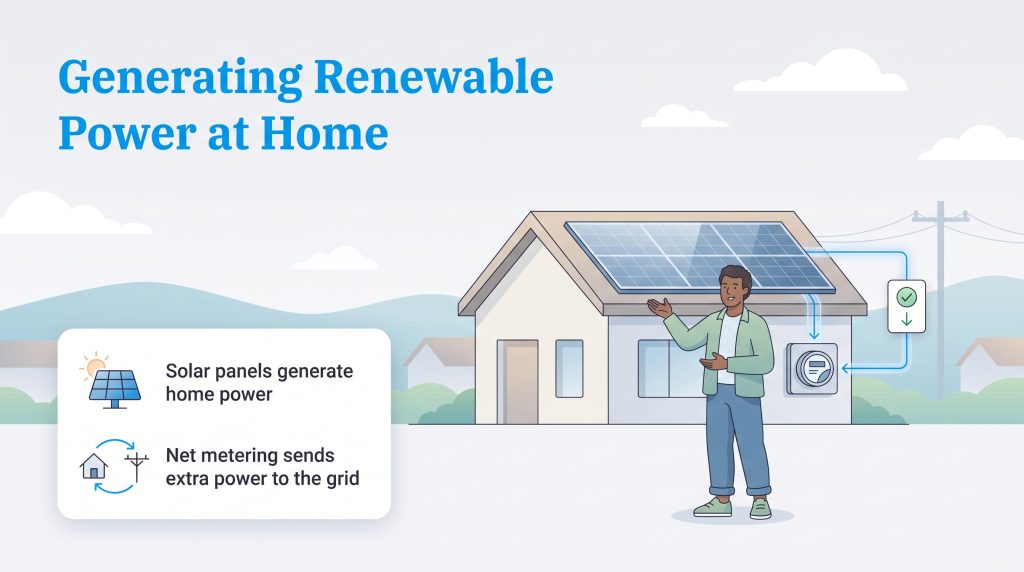
If you own your property, you have the unique opportunity to generate your own power directly. Through mechanisms like net metering and local solar buyback programs, you can safely send your surplus panel energy back to the public grid in exchange for lucrative bill credits.
Government Incentives and Tax Credits
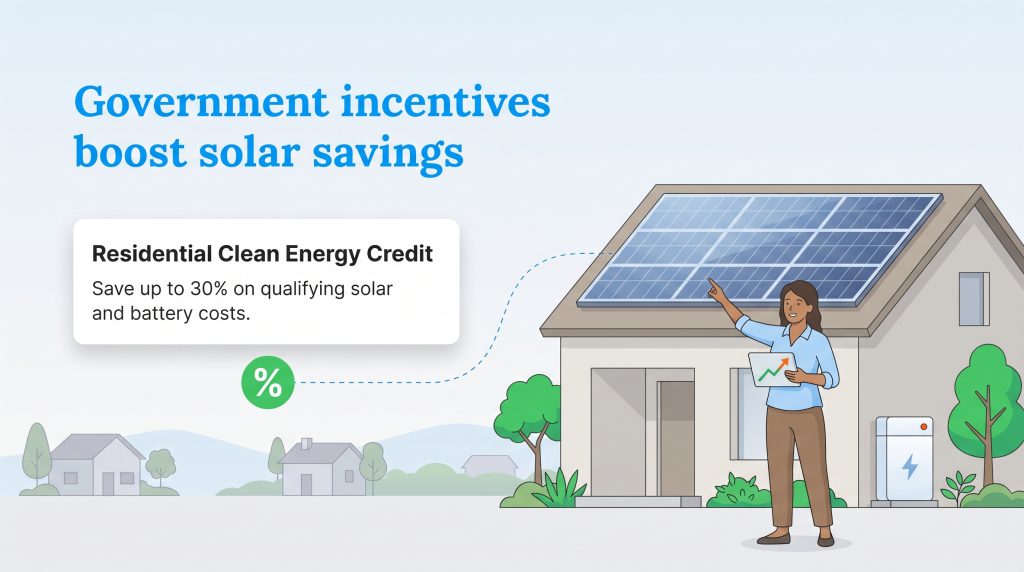
To aggressively accelerate this localized transition, the federal government offers substantial financial incentives. Homeowners can take immediate advantage of the Residential Clean Energy Credit to safely deduct up to 30% of the total installation costs for qualifying solar panels or battery systems directly from their taxes.
Renewable Electricity for Renters
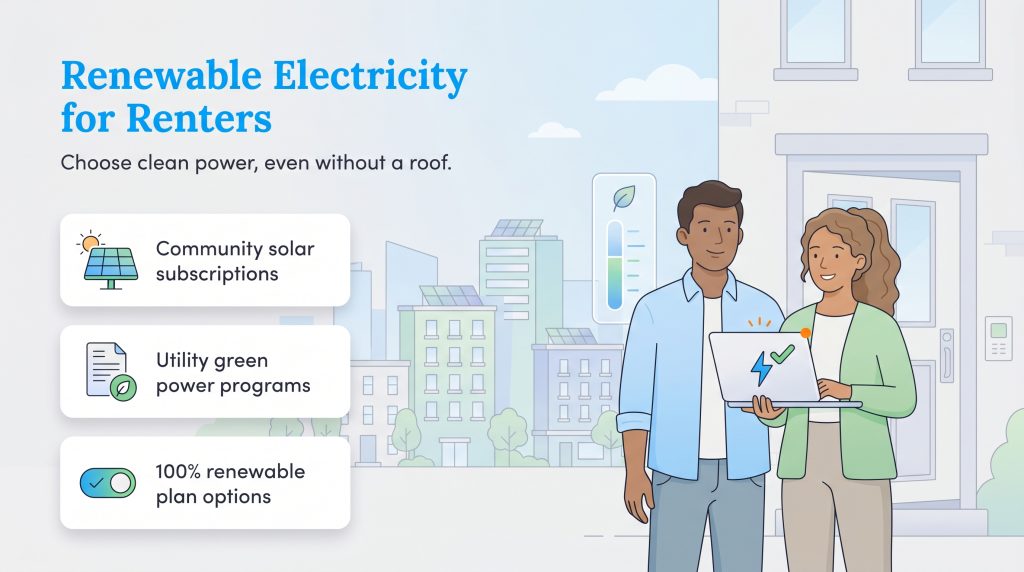
You absolutely do not need to own a home or undergo architectural renovations to make a profound difference. Renters and apartment residents have fantastic access to Renewable Energy Plans. Additionally, subscribing to a shared community solar program allows you to earn virtual net metering credits while effortlessly supporting local green infrastructure without touching your roof. For more help finding trustworthy, vetted providers directly in your area, visit our electric service hub.
Making the Switch to Renewable Electricity
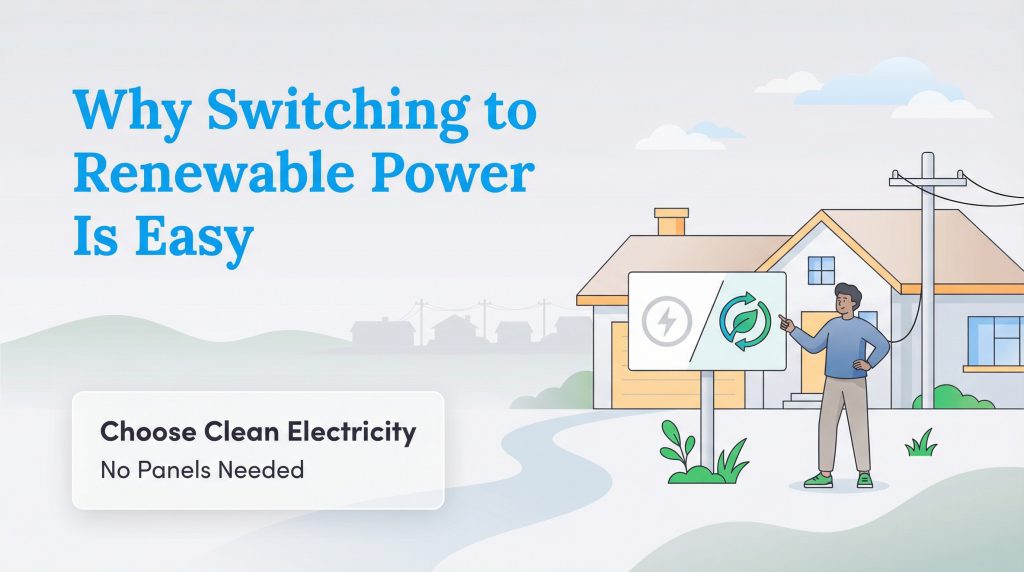
Upgrading your home’s power supply to renewable electricity is absolutely worth the investment of your time and utility budget. Whether you strategically install a robust rooftop solar array, seamlessly subscribe to a local community solar program, or intentionally choose a 100% green energy plan through your current provider, your financial decisions matter. By actively directing your utility dollars toward eco-conscious alternatives, you directly reduce the nation’s heavy reliance on finite, polluting fossil fuels.
Ultimately, transitioning to green power provides incredible public health benefits, ensures long-term economic stability, and significantly lowers your household’s overall carbon footprint. By staying thoroughly informed and actively reviewing your diverse utility options, you can easily enjoy highly reliable, affordable power while confidently knowing you are doing your crucial part to secure a much cleaner, healthier planet for future generations.
Frequently Asked Questions About Renewable Electricity
How is renewable electricity generated?
What is the difference between renewable energy and renewable electricity?
What is the difference between green power and renewable electricity?
What is an example of renewable electricity?
Do I need special equipment to use renewable electricity?
Do I need to install solar panels to use renewable electricity at home?
Are renewable energy plans actually 100% green?
Is renewable electricity more expensive than standard electricity?
Can I get renewable electricity if I rent an apartment?
Is renewable electricity reliable?
Will my power go out if the wind isn’t blowing or the sun isn’t shining?
Does using renewable electricity protect me from power outages?
About the Author

LaLeesha has a Masters degree in English and enjoys writing whenever she has the chance. She is passionate about gardening, reducing her carbon footprint, and protecting the environment. She also recently served as President of the Board for City Sprouts (a community garden).

David has been an integral part of some of the biggest utility sites on the internet, including InMyArea.com, HighSpeedInternet.com, BroadbandNow.com, and U.S. News. He brings over 15 years of experience writing about, compiling and analyzing utility data.