

Understand How To Tap Into The Earth’s Natural Heat To Warm Your Home, Lower Your Carbon Footprint, And Significantly Reduce Your Monthly Utility Costs
Key Takeaways
- Unlike solar or wind, geothermal runs 24/7, rain or shine, making it one of the most dependable renewable energy sources.
- Geothermal supplies less than 1% of U.S. electricity today, but the U.S. is the world leader in production, and new drilling technologies could unlock much more.
- With low emissions, a small land footprint, and the ability to recycle water back underground, geothermal offers a long-term, eco-friendly energy solution.
Derived from the Greek words for earth and heat, geothermal energy is the natural, renewable thermal energy generated and stored deep inside the earth. Whether capturing steam for a large-scale power plant or using specialized electric heat pumps to warm your home, tapping into this underground resource is an incredible way to start lowering your electric bills. Unlike weather-dependent wind or solar options, geothermal systems operate seamlessly around the clock to provide your household with clean, consistent power.
How Does Geothermal Energy Work?
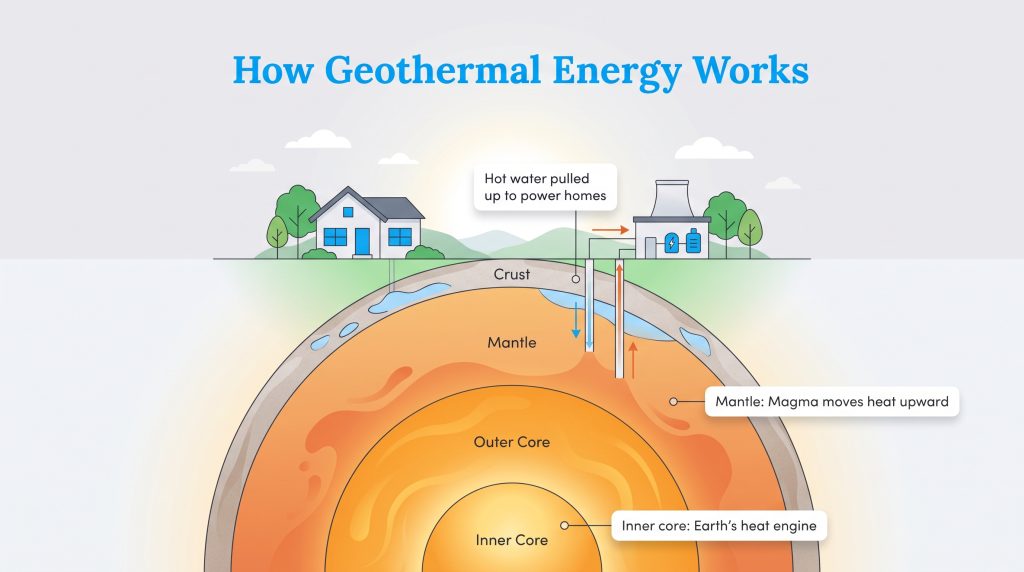
To truly understand how we harness this natural resource, you have to look beneath the surface. Heat continuously flows from the earth’s core outward, warming the surrounding rock layers and massive underground water reservoirs. When we drill engineered wells into these high-temperature environments, we bring that immense thermal energy up to the surface to generate electricity or efficiently heat our homes.
The Earth’s Layers And Heat Transfer
The earth is composed of four distinct layers, each playing a vital role in generating the thermal energy we utilize. To visualize the steady flow of heat upward to the surface, consider this natural geological progression:
- Inner Core: A dense, solid mass of iron roughly 750 miles thick, radiating extreme heat exceeding 10,800 degrees Fahrenheit to act as the planet’s ultimate thermal engine.
- Outer Core: A swirling layer of liquid metal about 1,367 miles thick, boasting intense temperatures between 7,200 and 9,000 degrees Fahrenheit.
- Mantle: A massive layer of magma and semi-solid rock spanning 1,800 miles thick, which slowly circulates heat upward at roughly 1,800 degrees Fahrenheit.
- Crust: The relatively thin outer shell we live on, ranging from 3 to 44 miles thick. Its porous rock layers hold vast amounts of underground water that absorb the extreme heat from below.
Tectonic Plate Boundaries And Hotspots
The most active and easily accessible geothermal resources are usually found along major tectonic plate boundaries, such as the famous “Ring of Fire.” In these highly active areas, the earth’s crust is naturally fractured and thinner, allowing molten magma to come closer to the surface. Because of this favorable geology, the western United States holds incredible untapped potential. While California leads the nation in geothermal power production, states like Nevada, Utah, and Idaho are rapidly expanding their infrastructure.
3 Types Of Geothermal Power Plants
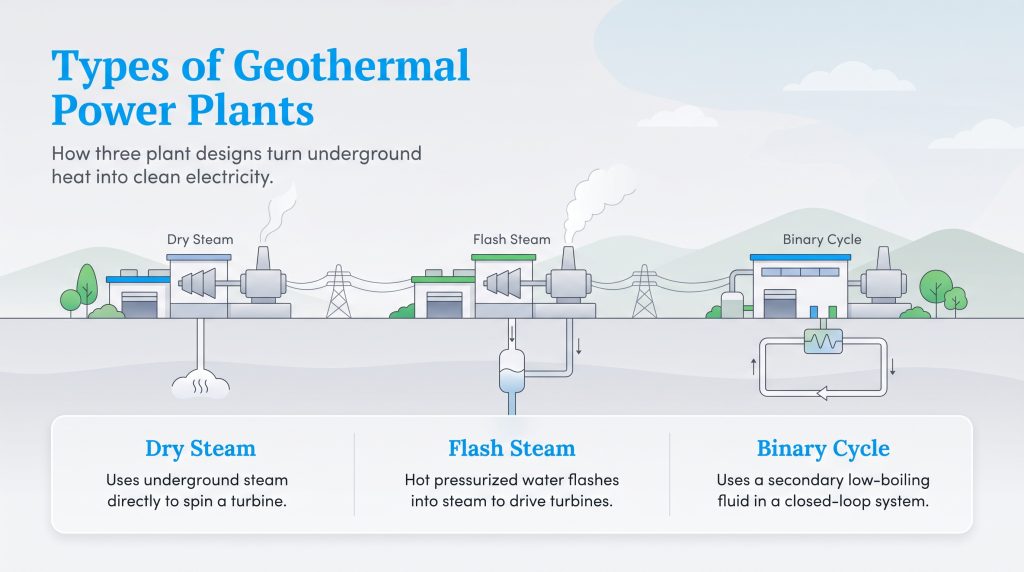
Turning underground heat into usable electricity for entire cities is a highly engineered process. Deep wells draw pressurized hot fluid to the surface to forcefully spin massive turbines, which then drive mechanical generators to produce clean electricity. There are three primary types of geothermal power plants used around world today:
- Dry Steam: This traditional plant draws pure steam directly from underground fractures and routes it straight into a turbine. It is incredibly efficient but relies on very rare geological conditions where pure steam occurs naturally.
- Flash Steam: Standing as the most common type, these facilities pump high-pressure hot water up to a low-pressure surface tank. The sudden drop in pressure causes the water to rapidly “flash” into expansive steam to drive the electrical generators.
- Binary Cycle: This advanced closed-loop system uses moderate-temperature water to heat a secondary fluid with a much lower boiling point. The secondary fluid quickly vaporizes to spin the turbine, ensuring the plant produces virtually zero atmospheric emissions.
Direct Use And District Heating
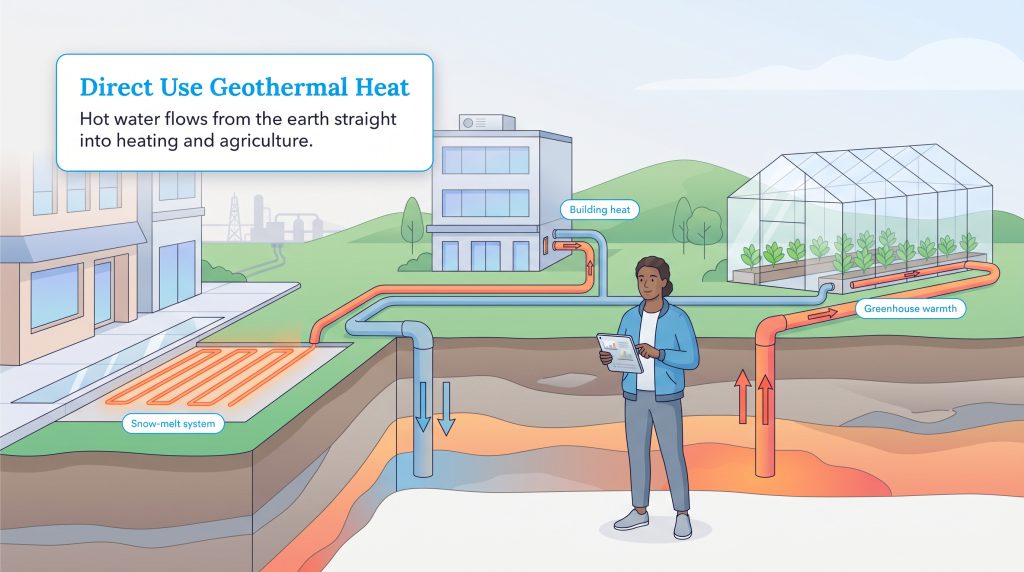
Thermal energy does not always need to be converted into electricity to be useful. Direct use involves piping hot water right from the subsurface to provide immediate heating solutions for commercial and agricultural operations. Instead of running the water through complex turbines, the natural heat is distributed exactly as it comes out of the earth.
Increasingly, entire campuses, neighborhoods, and commercial grids use shared district heating systems to regulate temperatures without electricity. By piping naturally heated underground water directly through a networked grid of buildings, communities can efficiently melt winter snow or provide widespread space heating with almost zero emissions. This practical application is also heavily relied upon in the agricultural sector to maintain steady temperatures in commercial greenhouses and aquaculture farms.
Residential Geothermal Heat Pumps
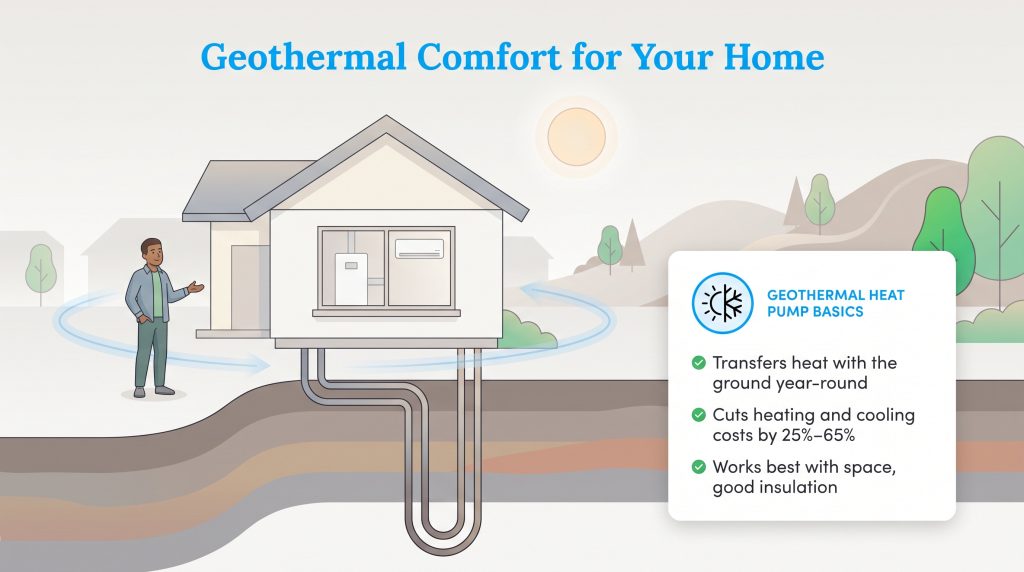
While large power plants focus on the commercial grid, you can harness the exact same scientific principles to keep your house comfortable. The average geothermal heat pump cost in 2025 typically ranges from $15,000 to $35,000 for a professional installation. While this represents a substantial upfront financial investment, a properly sized system can dramatically reduce your heating and cooling bills by 25% to 65%, often translating to $600 to $2,000 in retained savings every single year.
Before you commit to making the green energy switch, you need to ensure your property meets a few necessary conditions:
- Adequate yard space: You need enough accessible, unpaved land to install the necessary underground pipe system, either horizontally in shallow trenches or vertically in deep boreholes.
- Suitable soil type: Highly rocky soil profiles or exceptionally high underground water tables can complicate the drilling process and increase labor costs.
- Local climate considerations: Homes located in extreme temperature regions usually see the fastest overall return on investment due to their high baseline heating needs.
- Proper home insulation: To maximize your long-term energy savings, your home must be comprehensively insulated and tightly sealed against drafty air leaks.
Understanding Coefficient Of Performance (COP)
Coefficient of Performance (COP) serves as the standard measurement for a heat pump’s efficiency, comparing the heating output it provides to the electricity it consumes. A COP rating of 4.0 means that for every single unit of electricity you pay for, the system delivers four units of heat, making it roughly 400% efficient and incredibly cost-effective.
Geothermal Energy Pros And Cons
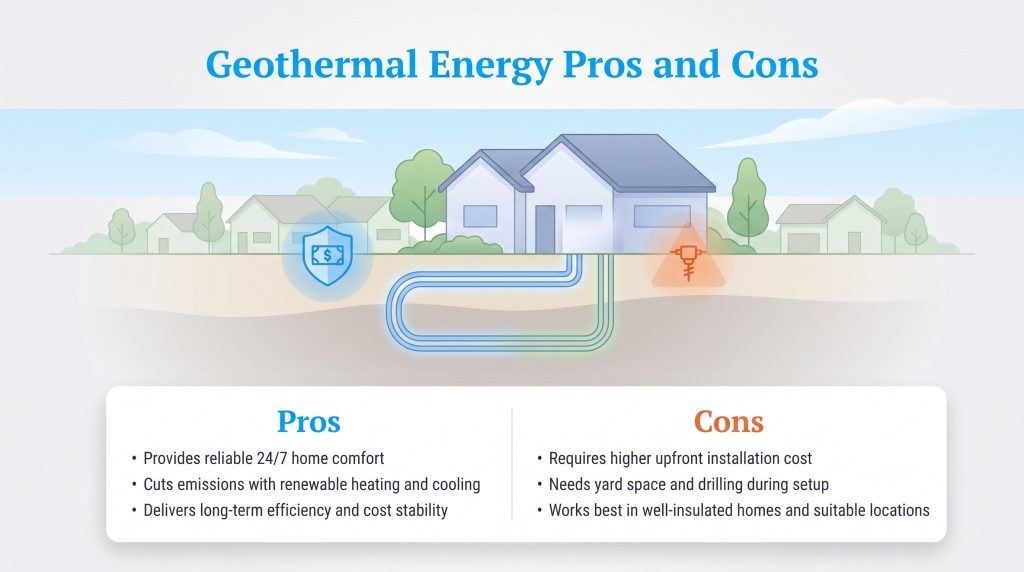
Utilizing the earth’s natural heat comes with a unique set of distinct benefits and inherent drawbacks. Unlike traditional fossil fuel power plants that burn coal, this eco-conscious alternative releases only a tiny fraction of carbon dioxide. Assessing these specific geothermal energy pros and cons can help you make a truly informed decision about upgrading your home’s utilities.
| Geothermal Pros | Geothermal Cons |
|---|---|
| Provides reliable, 24/7 energy availability | Requires a high upfront installation cost |
| Considered a 100% renewable and sustainable resource | Highly location-specific for large-scale power plants |
| Features a low visual and small land footprint | Potential for minor, naturally occurring trace gas emissions |
| Offers high efficiency for residential heating and cooling | Can experience resource depletion if reservoirs are mismanaged |
| Boasts a long lifespan (50+ years for underground loops) | Demands significant unpaved yard space for residential loops |
| Operates with near-zero greenhouse gas emissions | Involves disruptive, heavy drilling during initial installation |
| Shields homeowners from volatile fossil fuel prices | Needs well-insulated homes to reach peak efficiency |
Geothermal Vs. Solar And Wind Power
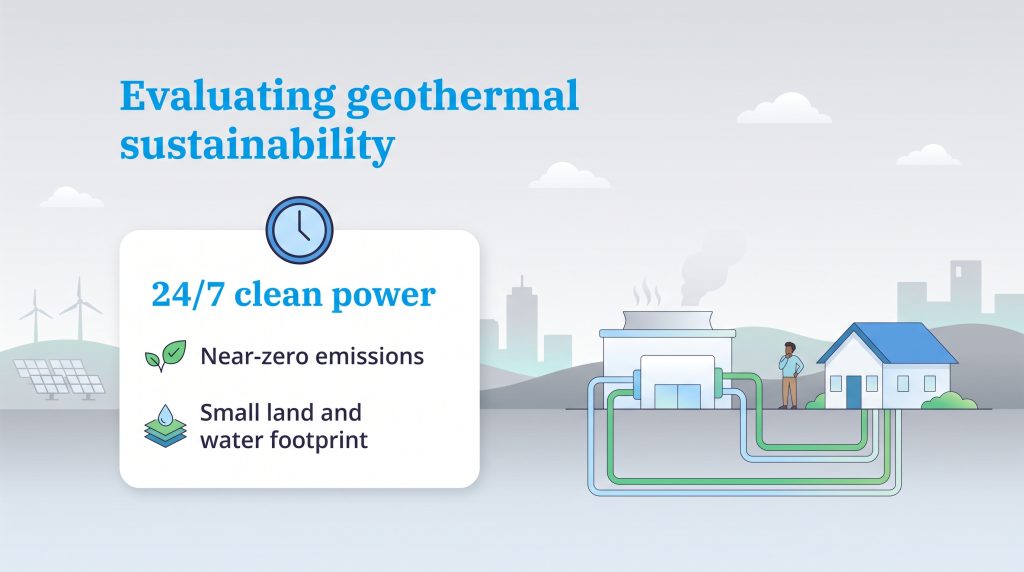
Geothermal energy clearly stands out as a highly environmentally mindful choice for both utilities and everyday homeowners. Unlike solar arrays or wind power farms, which depend heavily on unpredictable weather conditions, geothermal facilities act as a constant baseload power source. This means they run consistently day and night, offering a dependable foundation for a green energy grid.
| Feature | Geothermal | Solar | Wind |
|---|---|---|---|
| Reliability | Baseload (24/7 generation) | Intermittent (Requires sunlight) | Intermittent (Requires steady wind) |
| Land Footprint | Extremely Small | Large | Very Large |
| Average Upfront Residential Cost | $15,000 – $35,000 | $15,000 – $25,000 | Typically Utility-Scale Only |
| Lifespan | 50+ years (underground loops) | 25 – 30 years | 20 – 25 years |
The Future: Enhanced Geothermal Systems (EGS)
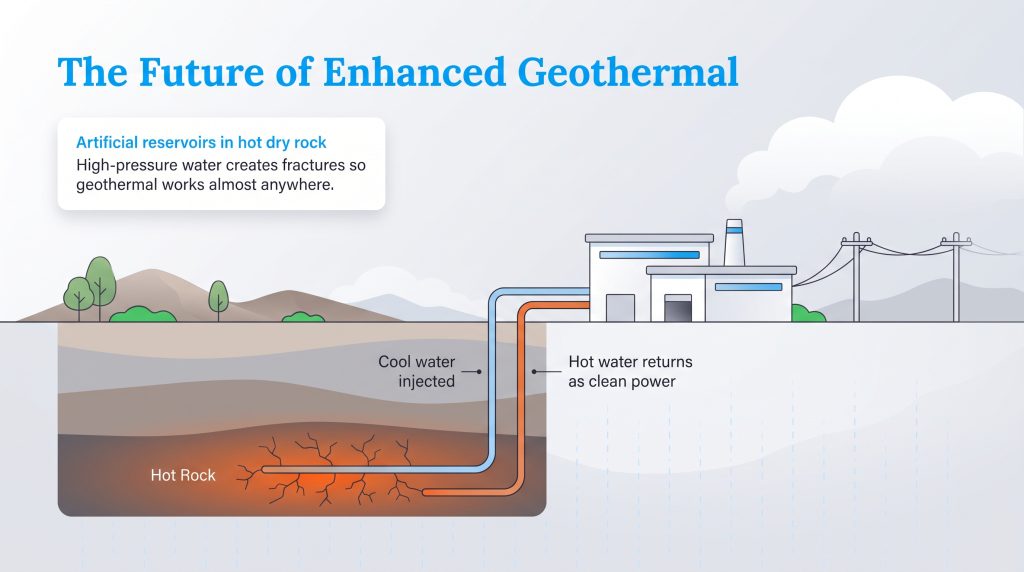
The landscape of renewable energy is rapidly evolving, and emerging drilling technologies are expanding where we can harvest the earth’s heat. Unlike traditional setups that rely heavily on naturally occurring porous rock and trapped water, an enhanced geothermal system (EGS) actively bypasses these geographical limitations. Engineers create an artificial reservoir by safely injecting high-pressure water deep into hot, dry rock layers to fracture them. This breakthrough technology creates the necessary permeability, meaning clean power plants could eventually be built almost anywhere in the country.
Next Steps For Going Geothermal
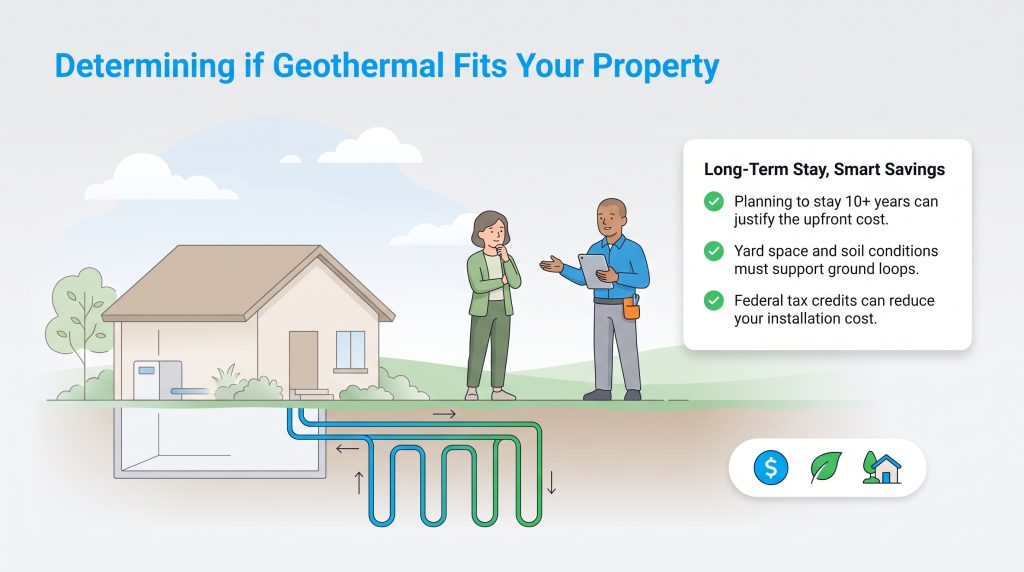
Making the leap to a residential geothermal system is undeniably a major financial decision, but it is often worth the investment if you plan to stay in your current home for the next decade. You will need to weigh the initial installation costs against your future utility savings, making sure to factor in the current 30% federal tax credit available through 2032 to lower your burden. We strongly recommend reaching out to multiple certified, highly experienced contractors in your area. By getting professional on-site soil evaluations, you ensure that you install a properly sized, energy-saving unit that will quietly and efficiently heat your home for years to come.
Frequently Asked Questions About Geothermal Energy
Is geothermal energy renewable?
Yes, geothermal energy is a fully renewable resource. By safely reinjecting the water we use back into underground reservoirs, we sustainably harvest the earth’s natural thermal energy without ever depleting it.
Where is geothermal energy found?
The most accessible commercial resources are located near active tectonic plate boundaries, volcanic hotspots, and natural geysers. In the United States, western states like California and Nevada currently lead the nation in geothermal power production.
How much does a residential geothermal heat pump cost?
The average professional installation cost in 2025 ranges between $15,000 and $35,000. However, homeowners can significantly offset this upfront expense through generous federal tax credits and long-term utility savings.
Can geothermal energy be used in any home?
While the heat transfer technology works effectively in almost any climate, not every physical property is suitable. You need adequate, unpaved yard space for the pipe loops, favorable drilling soils, and a comprehensively insulated home.
What is the difference between geothermal energy and solar power?
While solar power captures daytime energy and relies heavily on clear weather, geothermal energy harnesses constant underground heat. This reliable baseload capacity allows geothermal systems to operate at full efficiency 24/7, rain or shine.
Do geothermal power plants produce greenhouse gas emissions?
Geothermal plants produce exceptionally low emissions compared to fossil fuel alternatives. While a small amount of naturally occurring trace gases may be released during steam extraction, modern binary cycle plants emit virtually zero atmospheric greenhouse gases.
What is an enhanced geothermal system (EGS)?
An EGS is a modern, engineered approach to capturing thermal energy in areas that lack naturally permeable rock. Engineers safely inject high-pressure fluid into hot, dry rock to create artificial fractures, allowing them to harvest clean electricity almost anywhere.
What are real-world examples of geothermal energy?
Natural hot springs and geysers like Old Faithful are the most famous visual examples of geothermal activity. On a commercial scale, the Hellisheidi Power Station in Iceland and The Geysers in California actively generate massive amounts of electricity from this resource.
How long do residential geothermal heat pumps last?
The indoor heat pump unit typically lasts 20 to 25 years with routine maintenance. Remarkably, the durable underground pipe loops can reliably function for more than 50 years, making the setup an excellent long-term investment.
Can a geothermal system cool a house in the summer?
Yes, a geothermal heat pump seamlessly reverses its cycle during the sweltering summer months to act as a highly efficient air conditioner. It actively pulls unwanted heat out of your living space and sinks it back into the cooler ground below.
About the Author

LaLeesha has a Masters degree in English and enjoys writing whenever she has the chance. She is passionate about gardening, reducing her carbon footprint, and protecting the environment. She also recently served as President of the Board for City Sprouts (a community garden).

David has been an integral part of some of the biggest utility sites on the internet, including InMyArea.com, HighSpeedInternet.com, BroadbandNow.com, and U.S. News. He brings over 15 years of experience writing about, compiling and analyzing utility data.