

Wind Power Is a Clean, Renewable Energy Source That Can Lower Your Carbon Footprint and Potentially Reduce Your Utility Bills
Key Takeaways
- Wind energy converts kinetic energy from air currents into electricity, offering a highly sustainable power generation method for modern utility grids.
- Homeowners can easily access wind power by choosing a green energy provider, purchasing RECs, or installing small residential turbines.
- The benefits of wind energy include zero operational emissions, significant cost stability, and independence from volatile fossil fuel markets.
What is wind energy, and how does this massive infrastructure serve a practical purpose for your everyday household? At its core, wind energy is the process of capturing kinetic energy from natural air currents and converting it into reliable electricity for the regional grid. With the World Wind Energy Association reporting global wind capacity exceeding 1,346 gigawatts in 2026 and meeting over 11% of the world’s electricity demand, this inexhaustible resource is rapidly transforming how we power our communities. In this guide, we break down exactly how modern turbine technology works, weigh the honest pros and cons, and explore the highly actionable steps you can take to utilize distributed wind power for your property.
The Science Behind Wind Power
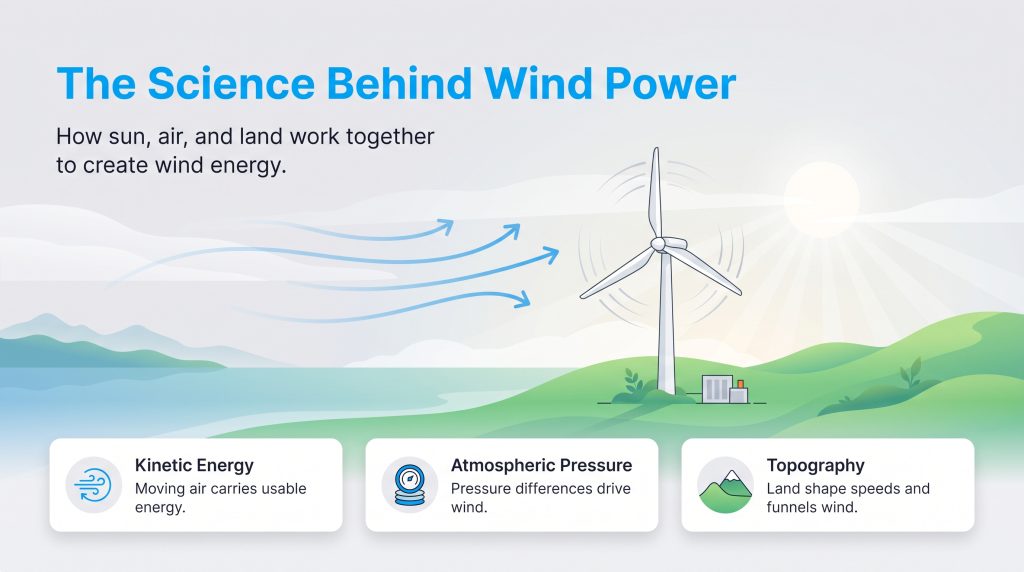
Before exploring the complex mechanics of modern turbines, it is essential to understand the fundamental physics that create wind in the first place. Wind is actually a natural byproduct of solar energy. As the sun shines, it unevenly heats the Earth’s atmosphere. This uneven heating, combined with the rapid rotation of our planet, creates significant pressure differences in the air. As high-pressure air continuously rushes to fill low-pressure zones, it generates the powerful wind currents we experience daily.
To fully grasp the science of this renewable powerhouse, you need to understand three vital terms:
- Kinetic energy: The energy of physical motion. In this context, it refers to the raw, invisible power carried by moving air currents.
- Atmospheric pressure: The weight of the Earth’s atmosphere pressing down on the surface. Changes in this pressure are the primary drivers of strong, consistent wind.
- Topography: The physical layout of the land, including mountains, valleys, and open oceans. Irregular topographies can funnel and significantly accelerate wind speeds, making certain regions ideal for large-scale energy harvesting.
The History of Wind Power
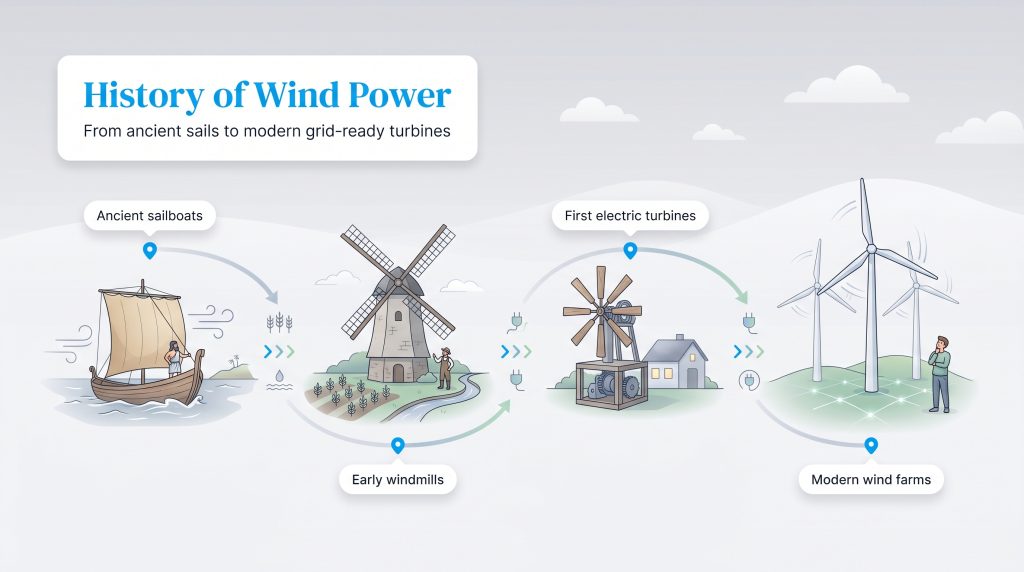
While the atmospheric science remains constant, humanity’s ability to harness these forces has evolved dramatically. The rich history of wind energy dates back thousands of years, long before colossal white turbines ever dotted our modern horizons. Early civilizations heavily relied on the wind’s natural kinetic energy to navigate vast oceans with sailboats and operate simple mechanical windmills for grinding grain. Today, incredible advancements in aerodynamics and composite manufacturing have transformed this ancient practice into a deeply sophisticated, highly reliable pillar of the global power grid.
How Does Wind Energy Work?
The Role of the Wind Turbine
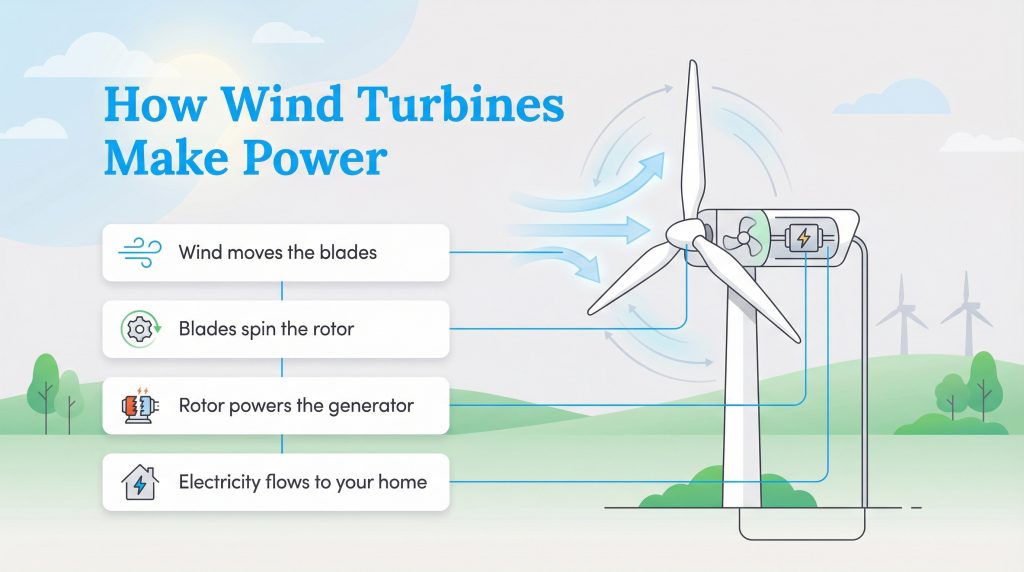
While wind acts as the invisible natural resource, the wind turbine is the robust technology that actively captures it. So, what is a wind turbine? It is a highly sophisticated piece of machinery deliberately engineered to catch moving air and translate it into usable electrical power. Modern utility-scale turbines feature advanced external sensors that constantly detect wind direction and speed, allowing the entire top structure — known as the nacelle — to rotate and face the incoming breeze perfectly.
Converting Kinetic Energy to Electricity
Understanding exactly how does wind energy work requires breaking down the electrical generation process step-by-step. Here is how a standard turbine transforms a gust of wind into the electricity that powers your home appliances:
- Wind turns the rotor blades: As air flows past the aerodynamic blades, it creates a pressure difference that generates physical lift, forcing the massive blades to spin and successfully capturing the kinetic energy in wind.
- Spins the main shaft: The rotating blades are securely attached to a central hub, which actively turns a low-speed main shaft inside the turbine housing.
- Connects to a gearbox: In most traditional turbine designs, the slow-moving main shaft feeds directly into a heavy-duty gearbox, which aggressively steps up the rotational speed by a factor of 100 or more.
- Drives a generator: This fast-spinning high-speed shaft powers an internal generator. By utilizing incredibly powerful magnetic fields, the generator flawlessly converts the rotational mechanical energy directly into raw electricity for the grid.
Onshore vs Offshore Wind Power
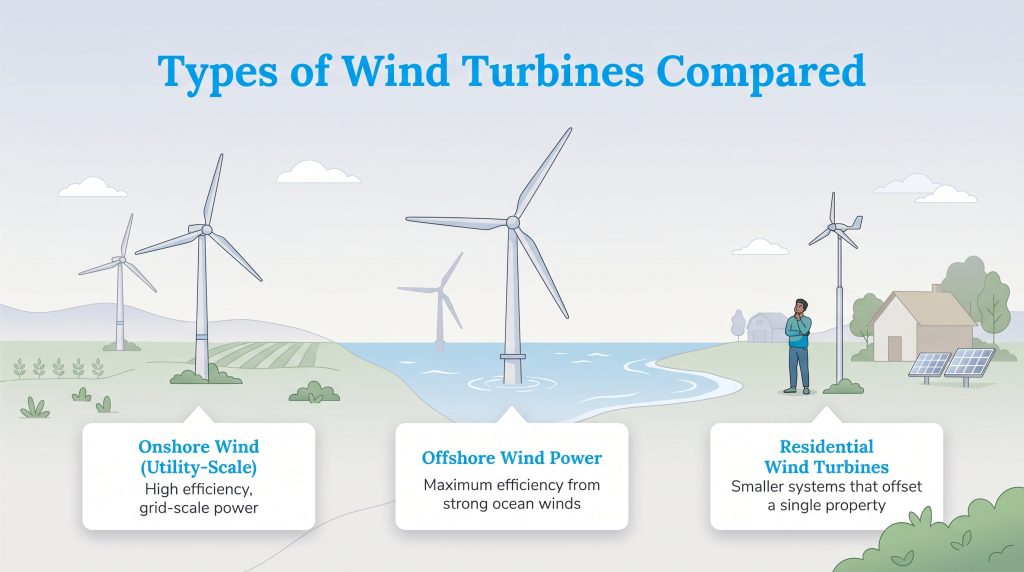
Not all wind farms are constructed in the same environment. When comparing onshore vs offshore wind power, the core generation mechanics remain identical, but their scale, efficiency, and logistical deployment differ significantly. Choosing between land-based and ocean-based installations is a critical decision for utility providers seeking to maximize their clean energy output.
| Feature | Onshore Wind Power | Offshore Wind Power |
|---|---|---|
| Typical Location | Open plains, agricultural land, and high-altitude mountain ridges. | Coastal ocean waters, continental shelves, and large open lakes. |
| Average Wind Speed | Moderate to strong, but subject to interference from terrain and buildings. | Consistently high and incredibly strong, with zero topographical obstruction. |
| Installation Cost | Moderately expensive; requires standard overland transportation and cranes. | Highly expensive; demands specialized marine vessels and deep-water engineering. |
| Energy Output | High efficiency, producing massive bulk power for local regional grids. | Maximum efficiency, generating vastly more megawatts per turbine than land models. |
Pros and Cons of Wind Energy
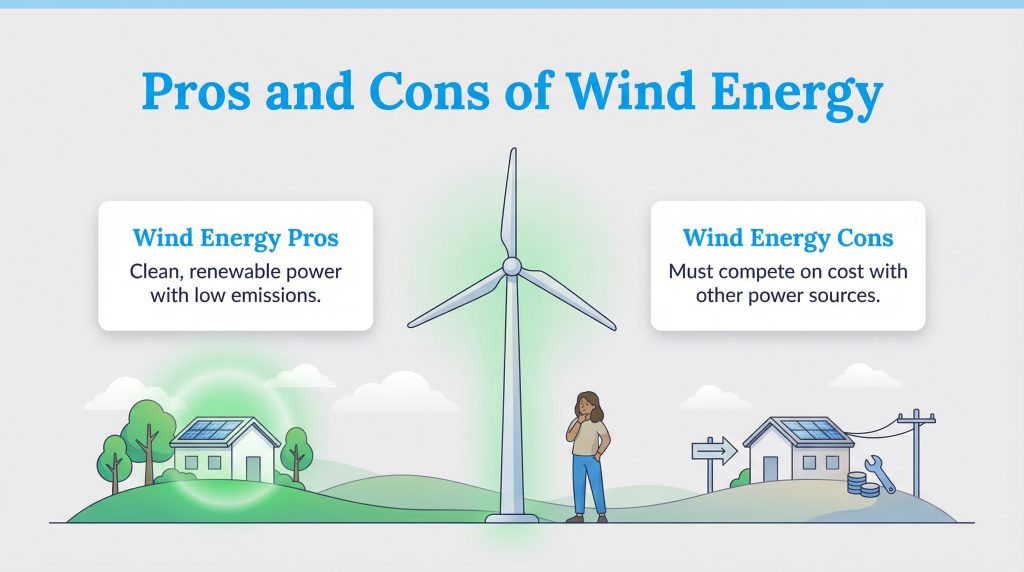
Transitioning away from carbon-heavy power is a massive national undertaking. To fully grasp the viability of this resource, you must carefully evaluate the objective pros and cons of wind energy. While the Department of Energy continually champions the economic drivers of wind generation, we must also acknowledge the logistical roadblocks hindering total grid adoption.
Advantages of Wind Energy
- Completely renewable: Wind is an inexhaustible fuel source that will never deplete as long as the sun shines.
- Zero operational emissions: Active power generation creates absolutely no smog, acid rain, or greenhouse gases.
- Exceptional cost stability: Because the fuel is free, it beautifully insulates consumers from volatile fossil fuel price spikes.
- Robust job creation: The sector vigorously stimulates local economies through manufacturing and maintenance careers.
Disadvantages of Wind Energy
- Natural intermittency: Turbines only produce electricity when the wind blows, requiring expensive battery backup systems.
- Visual impact: Towering turbine arrays permanently alter natural landscapes, which can frustrate local property owners.
- High installation costs: Erecting massive utility-scale machines requires substantial upfront capital and massive logistical coordination.
- Wildlife disruption: Spinning blades present a highly documented collision risk for migrating birds and local bat populations.
The Environmental Impact of Wind Farms
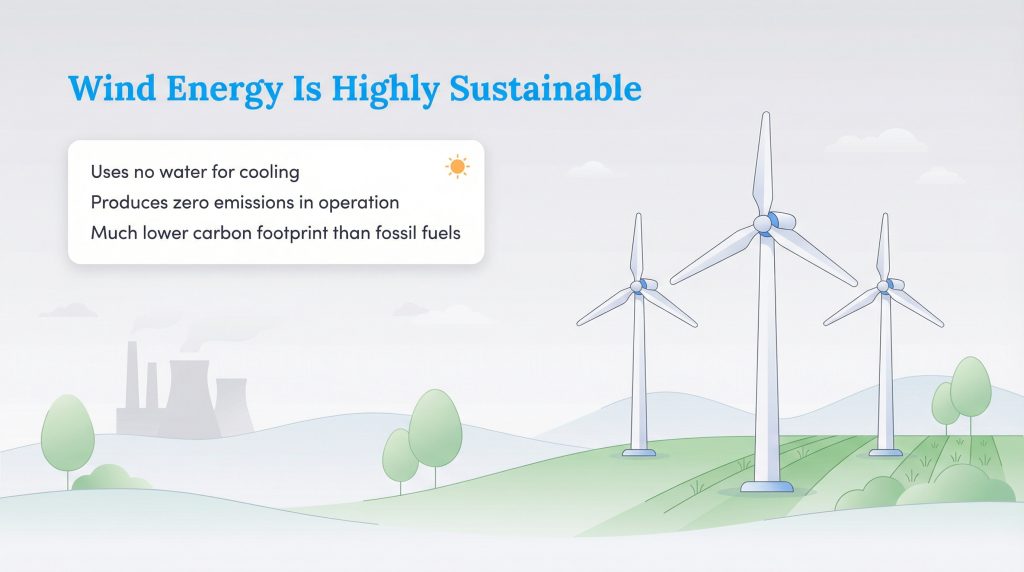
Beyond the fundamental economics, evaluating the environmental impact of wind turbines reveals a deeply sustainable, albeit imperfect, solution. Unlike aging thermal power plants, spinning wind farms consume absolutely zero water for cooling, fiercely preserving a truly vital resource for agriculture and community drinking supplies. However, addressing ecological concerns — such as local wildlife disruption and the difficulty of recycling composite fiberglass blades — remains a top priority. Innovative engineers are aggressively developing advanced radar deterrents and emerging recycling technologies to ensure wind power remains an environmentally mindful choice from installation to decommissioning.
Can You Use Residential Wind Turbines?
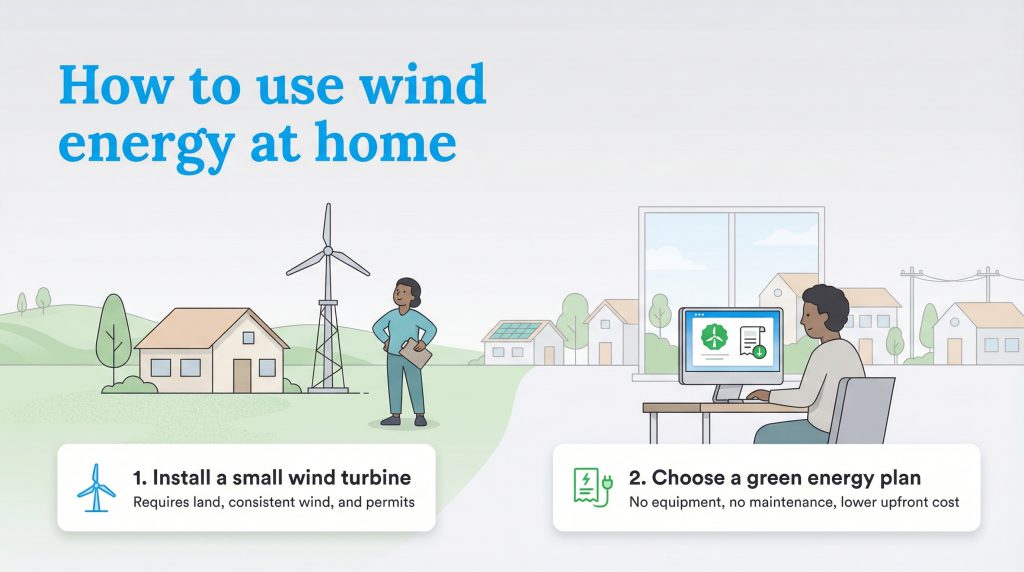
If you strongly prefer a highly self-sufficient lifestyle, installing a small-scale turbine on your property might seem like an incredible idea. However, successfully adopting residential wind turbines is a significant financial commitment that requires highly specific environmental conditions. Unlike rooftop solar panels, which seamlessly fit into dense suburban neighborhoods, home wind systems strictly require massive open space to operate safely and efficiently.
Before purchasing an onsite turbine, you must carefully evaluate the following essential requirements:
- Property size: You realistically need at least one full acre of completely unobstructed land. Turbines must be placed far away from houses, tall trees, and property lines to safely bypass messy ground-level turbulence.
- Consistent wind speeds: Your specific geographical location heavily dictates performance. To justify the investment, your property needs average annual wind speeds of at least 10 miles per hour.
- Zoning requirements: You absolutely must check local zoning laws and homeowners association covenants. Residential towers frequently stretch 80 to 100 feet tall, and many local jurisdictions heavily restrict structures of that immense height.
- Upfront installation costs: Expect a substantial initial layout. A standard home system typically ranges between $30,000 and $70,000 before factoring in any state utility rebates or generous federal tax credits.
Deciding on Wind Power for Your Property
Wind energy has officially matured from a niche scientific experiment into a massive commercial powerhouse that actively drives our modern national grid. By understanding exactly how kinetic energy transforms into the electricity that powers your lights, you are far better equipped to make informed utility decisions. The beauty of this inexhaustible resource is that you do not have to be a rural farmer to benefit from it. Whether you possess the expansive land required to aggressively install a private residential turbine or you simply take five minutes to review your electric bill and switch to a 100% wind-supported provider, your actions genuinely make a deeply meaningful impact. By actively supporting the rapid expansion of clean energy, you are helping build a highly sustainable, highly resilient grid for future generations.
Frequently Asked Questions About Wind Energy
Is wind energy completely renewable?
Do wind turbines work when there is no wind?
How much space is needed for a residential wind turbine?
How much does a home distributed wind turbine cost?
Can I put a wind turbine on my roof?
Are wind turbines safe for birds and wildlife?
How long do wind turbines last?
About the Author

David has been an integral part of some of the biggest utility sites on the internet, including InMyArea.com, HighSpeedInternet.com, BroadbandNow.com, and U.S. News. He brings over 15 years of experience writing about, compiling and analyzing utility data.

Jared Evans is a licensed electrician and the owner of Full Circuit Electric in Omaha, Nebraska. As an expert reviewer for UtilitiesForMyHome.com, Jared uses his 10+ years of hands-on experience to ensure our electrical advice is safe, accurate, and easy to follow. Whether he's troubleshooting a complex wiring issue or sharing tips on green energy upgrades, Jared is dedicated to helping you power your home efficiently — and safely.