

Understanding How Moving Water Becomes Reliable, Renewable Energy to Power Our Homes and Grids
Key Takeaways
- Hydropower captures moving water to generate renewable, highly reliable electricity for our grid.
- There are three main types of plants, with pumped-storage hydropower acting as massive batteries for clean energy.
- While large dams impact local ecosystems, modernization and small-scale innovations are making it a greener option.
If you are wondering what is hydroelectric power, it is a clean, renewable energy source that captures the kinetic energy of flowing water and converts it into electricity for our homes and businesses. Also known as hydropower, this highly reliable technology dates back to the early history of hydroelectric power in the late 19th century and remains a fundamental cornerstone of the modern electrical grid. By channeling water’s natural movement into usable power, these massive systems support local utilities and provide a robust, eco-conscious alternative to burning fossil fuels. When you shop for a renewable energy source for your new residence, understanding exactly how these sustainable resources work helps you make a smarter, environmentally mindful choice that benefits both your household budget and the planet.
How Does Hydroelectric Power Work?
If you are exploring how does hydroelectric power work, the underlying process is straightforward, incredibly efficient, and vital for utility stability. Instead of relying on expensive fossil fuels to create pressurized steam, hydroelectric facilities rely entirely on the natural force of gravity and the Earth’s endless water cycle. It is a brilliant, self-sustaining system that works around the clock to keep our lights on, making it an indispensable foundation for neighborhood grids everywhere.
Potential vs. Kinetic Energy in Hydropower
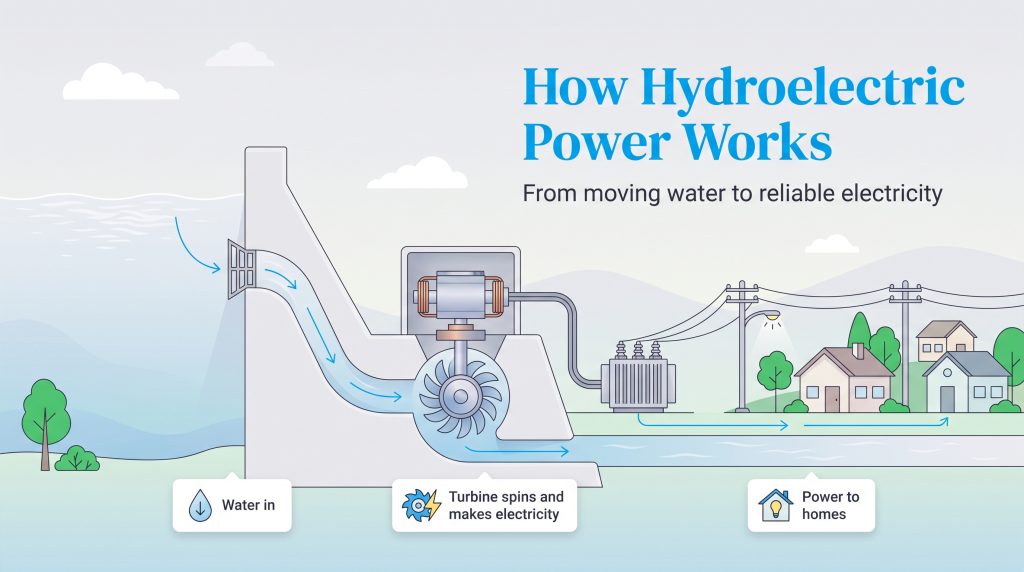
The secret to generating clean electricity from flowing water lies in understanding the physical transition between energy states. When a massive concrete dam holds millions of gallons of water back in a high-elevation reservoir, that stationary water stores an immense amount of potential energy. This stored power relies entirely on gravity and the vertical drop — often referred to by engineers as the “head” — between the reservoir’s surface and the generating equipment located far below. Ultimately, the higher the water is elevated, the more potential energy it holds ready for deployment.
Once facility operators open the heavy intake gates, gravity immediately pulls the water downward, transforming that stored potential energy into highly active kinetic energy. As the rushing water accelerates through the steep, confined pipes of the dam, its kinetic energy hits a maximum peak right before it reaches the bottom. At the exact moment of impact, the flowing water transfers its kinetic power into mechanical energy, forcibly turning the massive machinery that eventually lights up your living room.
The Turbine and Generator Mechanism
The beating heart of any hydropower plant is the advanced generator mechanism, which seamlessly converts that kinetic energy into mechanical energy, and finally into usable electrical power. Here is the exact journey of water as it travels from the reservoir straight to your local utility grid:
- Water intake: Fast-flowing river water or deep reservoir storage rushes downward through massive, highly pressurized pipes known as the Penstock.
- Spinning the blades: The immense pressure and physical force of the rushing water push directly against the submerged blades of a Turbine, converting the water’s kinetic energy into rotational mechanical energy.
- Driving the equipment: A sturdy metal shaft connects the spinning turbine to a heavy generator Rotor. As this rotating component spins rapidly inside a stationary metal cylinder called a Stator, powerful electromagnets brush past copper wire coils to generate alternating current (AC) electricity.
- Powering the grid: Transformers immediately step up the electrical voltage so the newly created power can travel efficiently across long-distance transmission lines directly to homes, businesses, and rural communities without losing charge.
The 3 Main Types of Hydroelectric Power Plants
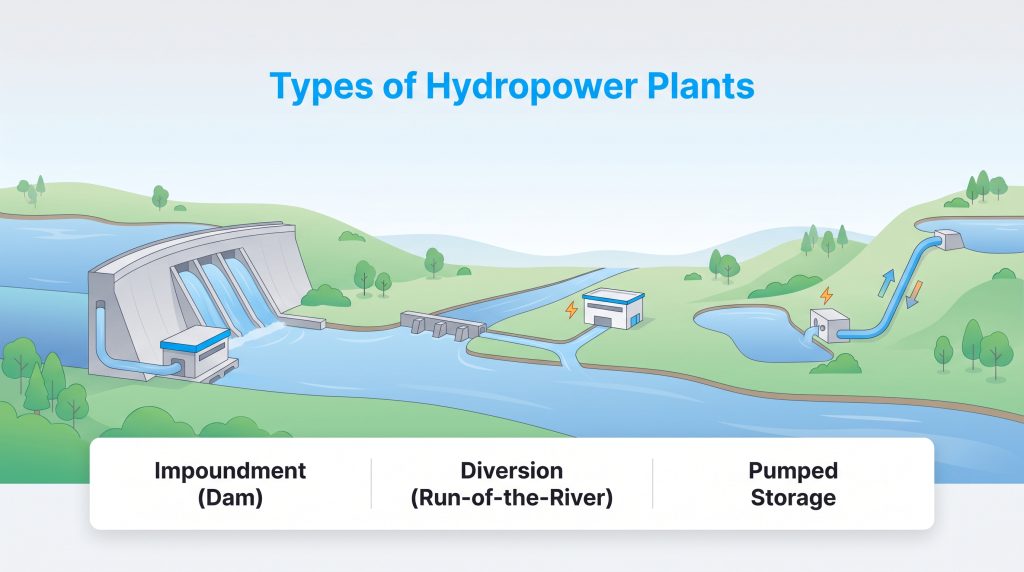
Not all hydropower facilities look like giant concrete walls blocking a deep canyon. Depending on the local landscape and the specific energy demands of the region, engineers utilize vastly different structural designs to safely capture water’s natural power. Understanding the different types of hydroelectric power plants reveals why some communities rely heavily on massive reservoirs while others successfully tap into low-impact, flowing alternatives.
Impoundment Facilities (Dams)
An impoundment facility is the most common and widely recognized structural design, utilizing a large dam to hold river water in an artificial reservoir. When grid demand suddenly spikes on a hot summer day, operators release water from the reservoir downward through the penstock to spin the turbines, guaranteeing a highly reliable electricity supply regardless of immediate weather conditions. The iconic Hoover Dam is a perfect real-world example of an impoundment facility, holding back the Colorado River to create Lake Mead while dispatching vital, reliable power to millions of homes across the American Southwest.
Diversion (Run-of-the-River)
Instead of halting a river entirely to create a massive lake, a diversion system gracefully channels a portion of the moving water through a canal or penstock to generate run-of-the-river hydroelectricity. Because they require little to no reservoir storage, these plants typically boast a much smaller environmental footprint, though their daily power output fluctuates directly based on seasonal rainfall and natural river volume. The Chief Joseph Dam in Washington state operates as a prime example of a massive run-of-the-river diversion facility, providing substantial clean energy to the grid without relying on deep, long-term water storage.
Pumped-Storage Hydropower
Pumped-storage hydropower operates exactly like a giant, natural battery for the utility grid by featuring two connected reservoirs located at distinctly different elevations. When electricity is cheap and abundant — such as a sunny afternoon when regional solar panels overproduce — the plant uses excess grid power to pump water up to the higher reservoir. Later, when energy demand peaks in the evening, it releases the water back down through the turbines to generate instant clean energy. The Bath County Pumped Storage Station in Virginia perfectly illustrates this technology, currently standing as one of the largest and most critical energy storage facilities on the globe.
The Pros and Cons of Hydroelectric Energy
Before reviewing the specifics, it helps to understand why hydropower plays such a dominant role compared to other green technologies. Unlike intermittent renewable sources like wind or solar panels, which only produce electricity when the wind blows or the sun shines, hydropower serves as a highly reliable baseload power source. Facilities can generate massive amounts of power on demand 24 hours a day, offering unparalleled grid stability. Still, like any major utility infrastructure, evaluating the pros and cons of hydroelectric energy is essential. We must carefully weigh the exceptional reliability and zero-emission output of these facilities against their high upfront financial costs and their undeniable ecological footprint.
| Pros of Hydroelectric Energy | Cons of Hydroelectric Energy |
|---|---|
|
|
Ultimately, hydropower provides a robust, rock-solid foundation that allows utility companies to confidently integrate unpredictable wind and solar energy into the electrical grid without risking rolling blackouts for local residents.
The Environmental Impact of Dams
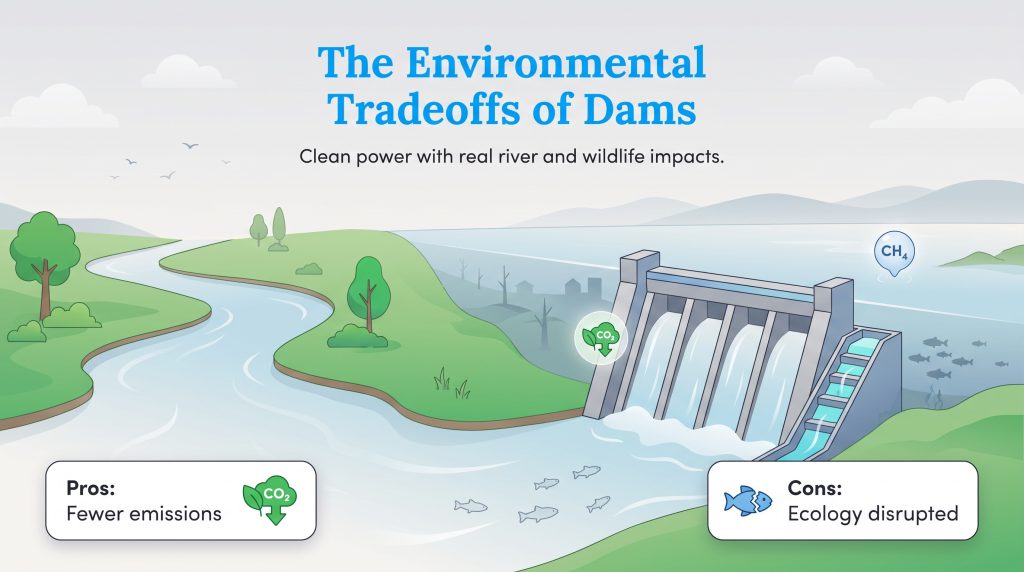
While hydroelectricity does not burn fossil fuels or pollute the air with toxic smog, we must objectively consider the long-term environmental impact of dams. On the positive side, these massive facilities are incredible tools for carbon reduction. They offset millions of tons of greenhouse gas emissions that would otherwise be actively produced by traditional coal or natural gas power plants to meet residential demand. However, building a towering concrete wall across a natural, free-flowing river fundamentally changes the local ecology.
Reservoirs aggressively flood surrounding valleys, permanently altering historic land use and occasionally displacing rural communities. Furthermore, decaying organic matter trapped at the bottom of newly formed reservoirs can sometimes release methane, a potent greenhouse gas. For aquatic wildlife, commercial dams act as devastating physical barriers. Migratory fish like salmon historically struggle to navigate past these imposing structures to reach vital spawning grounds, and the stagnant water held in deep reservoirs frequently changes in temperature and oxygen levels, harming delicate habitats downstream.
Fortunately, the modern energy industry is rapidly evolving to address these serious concerns and minimize ecological harm. Today, infrastructure engineering focuses heavily on advanced ecological solutions, specifically detailing the installation of high-tech fish ladders, bypass systems, and strict environmental flow management protocols that mimic natural seasonal river patterns. Instead of damming new waterways, current sustainable trends heavily favor retrofitting existing non-powered dams with efficient, low-impact turbines. By upgrading infrastructure that is already sitting in the water, communities gain access to clean energy without further disrupting local wildlife.
Micro-Hydropower Systems for Off-Grid Homes
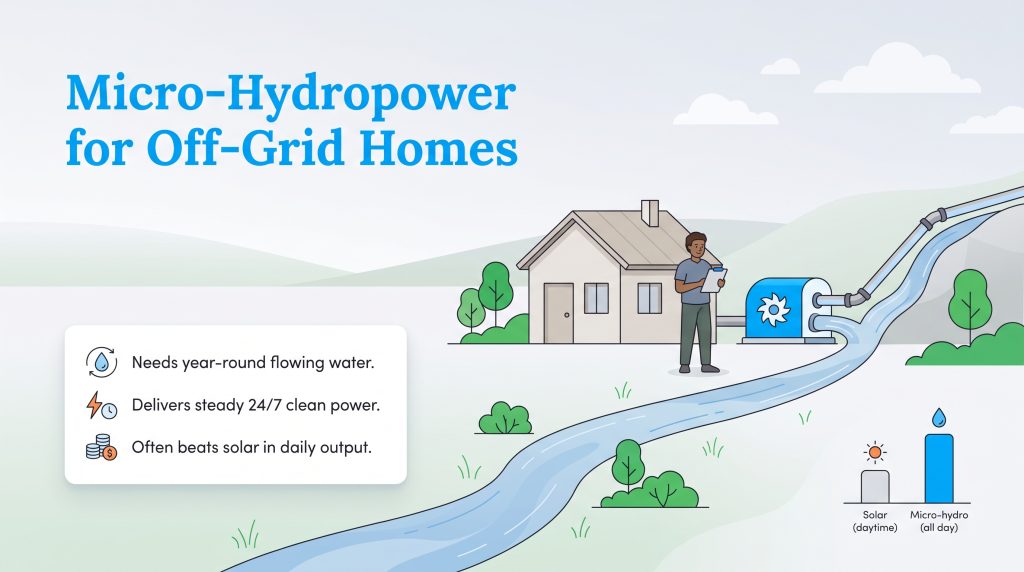
If you are an eco-conscious consumer looking to sever your ties to the local utility grid completely, micro-hydropower systems offer an incredibly reliable, energy-saving option for your property. Unlike massive commercial dams that power entire cities, these small-scale setups cater directly to the off-grid homeowner, generating enough clean electricity to comfortably run a single household, cabin, or small rural farm without relying on a retail provider.
To successfully install one of these systems, your property must have direct access to flowing water, such as a fast-moving creek or a steep hillside stream. A basic installation requires measuring the “head” (the vertical drop of the water on your land) and the “flow” (the consistent volume of water passing through per minute). A portion of the water is gently diverted into a small penstock pipe, spun through a compact micro-turbine, and returned straight back to the stream with virtually zero ecological disruption. A typical residential micro-hydropower system provides a kilowatt output ranging from one to 10 kilowatts (kW) — easily enough to handle the daily heating, cooling, and heavy appliance needs of an average American household.
When reviewing the cost-benefit analysis of a micro-hydro system compared to traditional solar panels, moving water frequently wins on long-term reliability. While a high-quality solar array might only generate maximum power for five or six hours a day during optimal weather, a healthy stream flows consistently around the clock. This means a tiny 2-kW micro-hydro system operating 24/7 can easily produce double the daily energy of a massive 10-kW solar system. The upfront equipment and installation cost for micro-hydro usually ranges between $4,000 and $10,000 depending on the complexity of your plumbing and wiring. However, the unique ability to generate constant, reliable power in the dead of winter or the middle of the night makes it an unbeatable choice for serious off-grid living.
Choosing the Right Renewable Energy Plan for Your Home
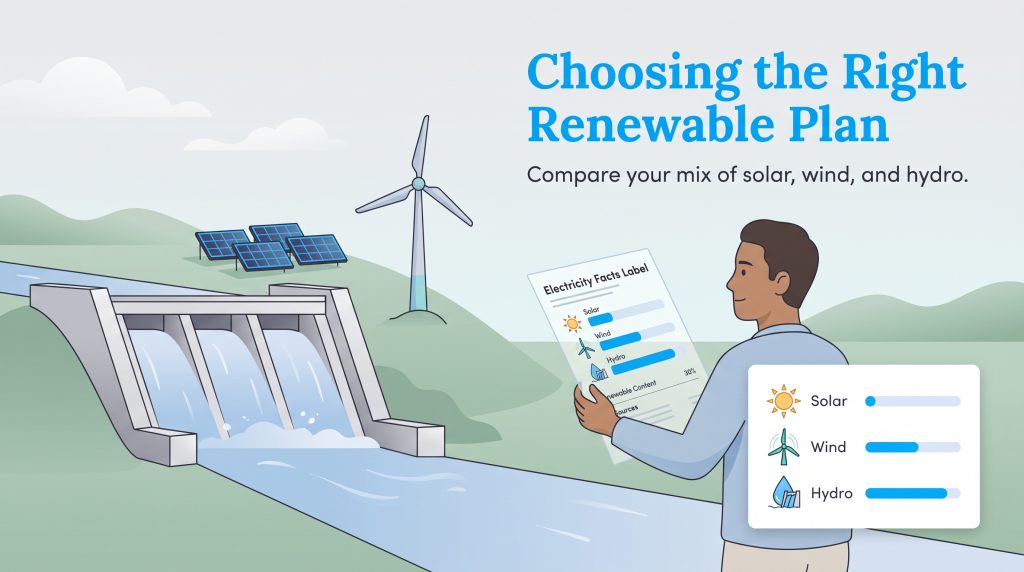
Hydropower is much more than a historical achievement in structural engineering — it remains a fundamental, irreplaceable pillar of our modern renewable energy mix. While residential solar panels and massive wind turbines are expanding rapidly across the country, they still rely heavily on the heavy-lifting baseline power that flowing water provides to prevent neighborhood blackouts when the wind suddenly stops blowing or the sun goes down.
When you sign up for electricity service at a new residence, understanding the generation sources behind your plan helps you comfortably align your household budget with your personal eco-conscious goals. Before you sign a binding long-term contract, you must check your local utility provider’s generation mix to verify exactly where your money goes. To determine if your local provider genuinely utilizes renewable energy sources, carefully review your utility company’s “Electricity Facts Label” (EFL) or generation mix disclosure. This standard document transparently breaks down exactly what percentage of your power originates from natural gas, wind, solar, or hydro.
If you currently live in a deregulated energy market, take a few minutes to compare local green energy plans side-by-side to find an environmentally mindful choice that securely fits your monthly budget. By actively supporting grids and retail providers that invest heavily in modernized hydroelectric systems, you are contributing directly to a resilient, low-emission energy future for generations to come.
Supporting the Future of Water-Powered Electricity in Our Homes
Whether we are pulling energy from a massive impoundment facility blocking a canyon or a tiny micro-turbine whirring quietly in a backyard stream, flowing water remains an essential component of a reliable, green electrical grid. As engineering techniques improve and ecological protections grow much stronger, hydroelectricity will continue to offer the unparalleled baseload power required to balance out our rapidly expanding solar and wind infrastructure. By understanding the technology behind the outlet and actively choosing a green energy plan, you play a direct role in supporting clean, renewable power for your community.
Frequently Asked Questions About Hydroelectric Power
How does a hydropower plant work?
A hydropower plant captures the active kinetic energy of flowing water to generate power. Water moves rapidly through a penstock and spins a turbine, which then forcibly drives a connected generator rotor past a stationary stator to convert that physical motion into usable electrical energy. The process is clean, highly efficient, and incredibly reliable for the grid.
What is the difference between hydropower and hydroelectric power?
While the terms are frequently used interchangeably in everyday conversation, they have slightly different technical meanings. Hydropower broadly refers to any capture of energy from moving water, which historically included mechanical uses like wooden watermills grinding grain. Hydroelectric power refers to the specific, modern process of converting that flowing water’s mechanical energy into electricity for the utility grid.
Is hydropower renewable?
Yes, when people ask is hydropower renewable, the answer is absolutely. It is a completely renewable energy source because it relies entirely on the Earth’s endless natural water cycle. The sun constantly evaporates water that eventually returns as fresh rain and snow to continuously feed our rivers and streams.
What is the largest hydroelectric dam in the world?
The Three Gorges Dam in China is currently the largest power station in the world by installed capacity, spanning the Yangtze River and producing a massive 22,500 megawatts of electricity.
What are the top 5 largest hydroelectric plants in the US?
The top five largest hydroelectric plants in the United States by total generating capacity are the Grand Coulee Dam in Washington, the Bath County Pumped Storage Station in Virginia, the Chief Joseph Dam in Washington, the Robert Moses Niagara Hydroelectric Power Station in New York, and the John Day Dam located along the Oregon and Washington border.
Can hydroelectric power run out?
While the underlying water cycle is technically infinite, hydroelectric power can temporarily face severe disruptions during regional droughts. If water levels in a primary reservoir drop too low, a facility cannot generate sufficient electricity, forcing utility grids to rely heavily on other renewable or fossil fuel sources until heavy rainfall finally replenishes the system.
Can hydropower be used to generate electricity for a single off-grid home?
Absolutely. Small-scale or micro-hydropower systems can be successfully installed on private properties with access to a fast-flowing stream or small river. These setups are an excellent, energy-saving option for off-grid homes, providing continuous, 24/7 power without the need to build a massive, ecologically disruptive reservoir.
How much does a micro-hydropower system cost for a house?
The total cost of a residential micro-hydropower system typically ranges from $4,000 to $10,000, depending heavily on your property’s specific landscape, the required plumbing distance, and the system’s kilowatt capacity. While the upfront installation requires a moderate financial investment, the long-term benefit of reliable off-grid electricity generation often makes it much more cost-effective than a comparably sized solar panel array.
How much of the U.S. electricity comes from hydropower?
Hydropower reliably supplies about 6% to 7% of the nation’s total electricity and accounts for nearly 30% of utility-scale renewable generation, making it the largest, most consistent source of clean electricity in the U.S. for many decades.
Which states use the most hydropower?
The top states for hydropower generation are Washington, Oregon, California, New York, and Alaska. Washington alone produces more than a quarter of all U.S. hydroelectricity, thanks to its powerful rivers and massive dam infrastructure. Because of these abundant natural resources, cities like Seattle and Portland get the vast majority of their electricity directly from hydropower, making them some of the greenest metro areas in the country.
Is hydropower expensive to build or maintain?
Building a hydropower plant requires a substantial upfront financial investment, especially for large impoundment dams. However, once it is finally constructed and operational, hydropower is remarkably cost-effective to reliably run and maintain. The facilities require no expensive fuel and can easily last 50 to 100 years or more, making them one of the most durable utility investments available today.
About the Author

David has been an integral part of some of the biggest utility sites on the internet, including InMyArea.com, HighSpeedInternet.com, BroadbandNow.com, and U.S. News. He brings over 15 years of experience writing about, compiling and analyzing utility data.

Claudio is a sustainability-focused writer with a background in Anthropology and Psychology from NC State University. He has spent over 15 years working in writing, interpretation, and translation, driven by a deep interest in how human culture shapes the environment. Today, he shares his curiosity with readers by writing about sustainable living solutions and the connection between everyday choices and environmental impact.