

Understanding How Nuclear Power Works, Its Environmental Impact, And What It Means For Your Monthly Utility Bill
Key Takeaways
- Nuclear energy provides reliable “baseload” power, meaning it keeps your lights on even when the sun isn’t shining or the wind isn’t blowing.
- While not technically renewable like solar or wind, nuclear power produces zero carbon emissions during operation, making it a strong contender for eco-conscious homes.
- Small Modular Reactors (SMRs) are an emerging technology that could make nuclear energy safer, cheaper, and more accessible for residential grids in the near future.
When you flip a light switch, you expect instant, reliable power, but you might not realize that nearly 19% of all electricity generated in the United States comes directly from nuclear power. While the phrase “nuclear energy” often brings to mind dramatic historical events or complex science fiction, the everyday reality is that this technology serves as a silent, dependable workhorse for the modern utility grid. Nuclear power provides a steady, continuous stream of carbon-free electricity to millions of households around the clock, acting as the invisible backbone that keeps local grids stable when weather-dependent sources fall short. We know the topic can feel highly technical, politically charged, or even a little intimidating to explore. However, understanding how these massive facilities operate — and how their costs influence your local electric rates — is a critical piece of the puzzle if you want to build a reliable, environmentally mindful lifestyle. We are here to demystify the complex science behind the reactors, analyze the real-world economics affecting your wallet, and help you decide if choosing a utility plan backed by nuclear energy is the smartest choice for your home.
1. What Is Nuclear Power?
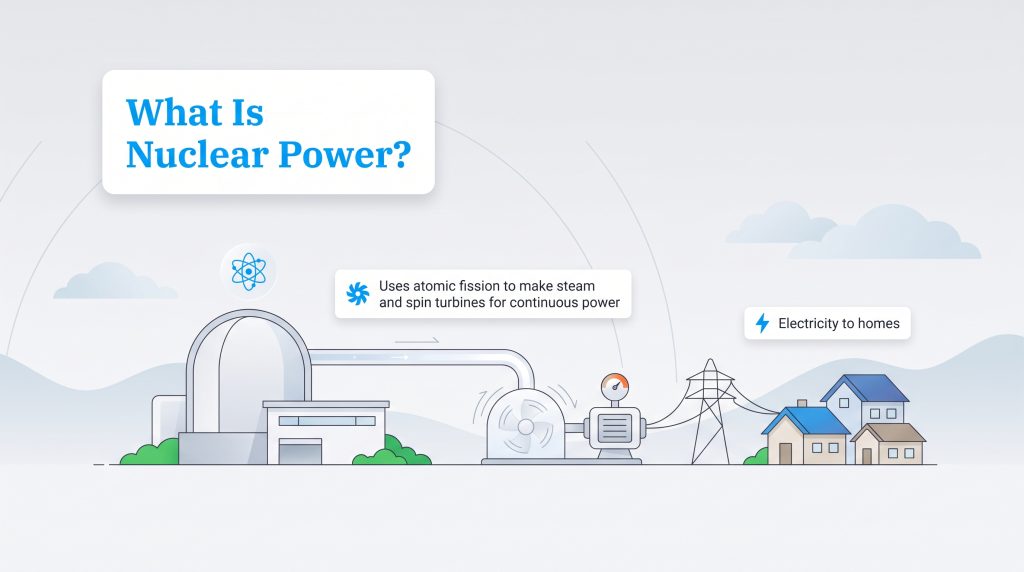
Nuclear power is a robust, highly efficient method of electricity generation that relies on the energy trapped inside atomic cores. At a fundamental level, nuclear power generation functions surprisingly like a traditional coal or natural gas facility. They all exist to heat water, produce highly pressurized steam, and forcefully spin a massive turbine connected to a generator to produce electricity for the grid. The major difference lies entirely in how they generate that intense heat. Instead of burning dirty fossil fuels to boil the water, nuclear plants use a carefully controlled physical reaction to unlock the massive energy stored inside atoms. This process allows a remarkably small amount of fuel to generate an immense, uninterrupted supply of energy for millions of households.
2. How Nuclear Power Plants Work
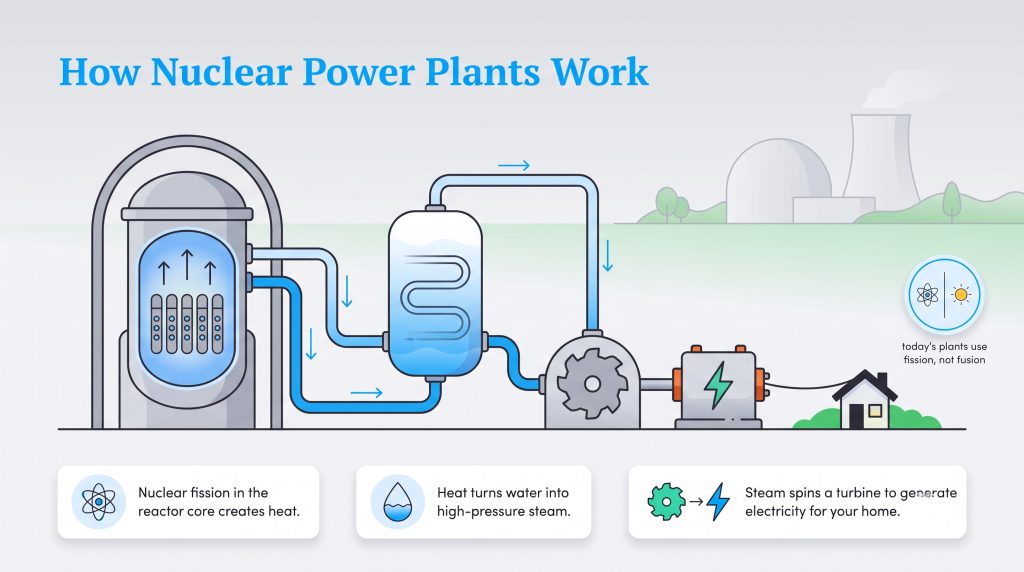
While the underlying physics has remained constant since the 1950s, the industry has evolved significantly over the past several decades. Today’s commercial nuclear power plants are complex engineering marvels heavily equipped with fail-safes. To truly understand how this technology supplies your home with electricity, it is helpful to look closely at the mechanical processes happening inside the facility’s containment dome.
Nuclear Fission Vs. Fusion
When discussing atomic energy, you will frequently hear the terms fission and fusion, but they describe entirely different physical processes. Nuclear fission occurs when heavy, unstable atoms are intentionally split apart. This is the proven technology currently used in every commercial nuclear power plant around the world. On the other hand, nuclear fusion involves combining extremely light atoms together under immense heat and pressure — replicating the exact process that powers our sun. While fusion has the potential to produce virtually limitless energy with minimal radioactive waste, it remains in the experimental phase and is not yet a viable option for powering the residential grid.
Inside The Reactor: The Chain Reaction
To generate electricity for your home, commercial reactors rely on the nuclear fission process of Uranium-235. This specific isotope is shaped into small ceramic pellets and loaded into sealed metal rods because its atoms are particularly easy to split. The entire process of converting this nuclear fuel into usable household electricity follows a precise, highly monitored sequence:
- Initiating the Chain Reaction: A fast-moving neutron strikes a Uranium-235 atom inside the reactor core. The atom absorbs it, becomes violently unstable, and splits in two, releasing intense heat and several more neutrons.
- Sustaining the Process: These newly released neutrons crash into surrounding uranium atoms, causing them to split in a rapid, continuous chain reaction that is carefully regulated by automated control rods.
- Heating the Water: The immense heat generated by this sustained fission process warms the water circulating directly around the core to incredibly high temperatures.
- Producing Pressurized Steam: This superheated water is pumped to a separate steam generator, where its heat boils a secondary supply of water into highly pressurized steam.
- Spinning the Turbine: The high-pressure steam violently rushes past massive turbine blades, causing them to spin at exceptional speeds.
- Generating Electricity: The spinning turbine continuously drives an electrical generator, producing the alternating current (AC) electricity that flows out to the public utility grid and eventually powers your household appliances.
3. The Pros And Cons Of Nuclear Power
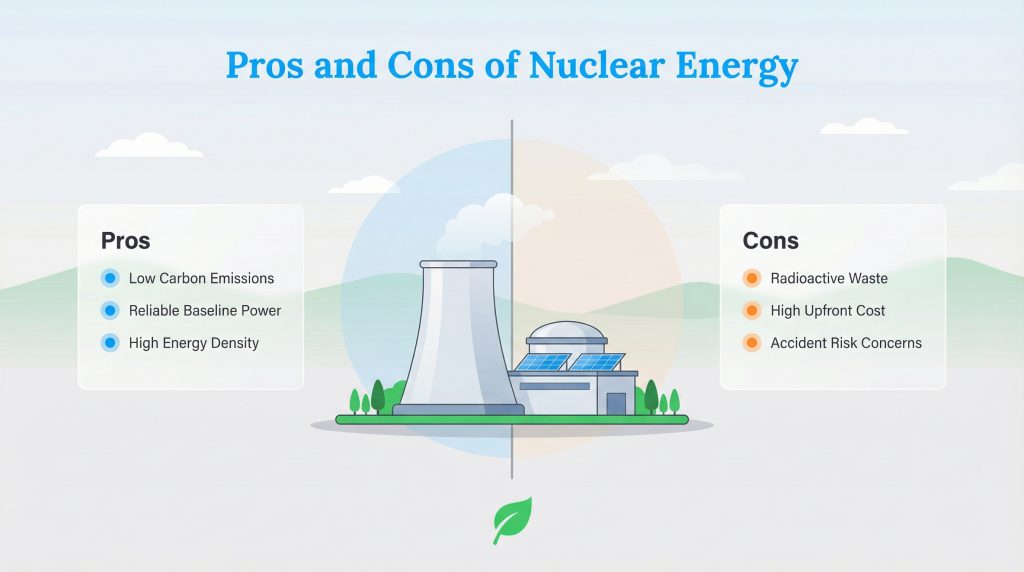
To decide if nuclear fits your household values, you will want to carefully weigh its biggest benefits and drawbacks. Before looking at our detailed table below, here are three essential takeaways about the nuclear energy pros and cons you should keep in mind:
- Nuclear power delivers unmatched, zero-emission reliability to the grid, operating effectively 24 hours a day regardless of the weather.
- The financial barrier to entry is staggering, making nuclear power generation extremely difficult to scale quickly compared to renewable alternatives.
- Safely managing the long-term environmental hazards of spent fuel remains the largest hurdle for wide-scale clean energy alternatives utilizing atomic power.
Like any complex energy technology, there are significant trade-offs to consider when comparing it to other sources on the grid. Here is a clear, side-by-side breakdown to help you see the full picture.
| Pros of Nuclear Energy | Cons of Nuclear Energy |
|---|---|
| Zero Carbon Emissions: Produces virtually no direct greenhouse gases during daily electricity generation, helping to combat climate change. | Radioactive Waste Disposal: Spent fuel remains hazardous for thousands of years and requires strict, highly secure, long-term storage solutions. |
| Baseload Reliability: Provides consistent, round-the-clock power to the grid regardless of weather conditions or time of day. | High Upfront Construction Costs: Building new, large-scale nuclear power plants requires billions of dollars and decades of complex engineering. |
| High Energy Density: A minuscule amount of uranium fuel produces a massive amount of energy, requiring far less physical space than sprawling wind or solar farms. | Accident Risk: While extremely rare and heavily mitigated by modern safety protocols, severe accidents can have catastrophic, long-lasting environmental consequences. |
| Low Operating Fuel Costs: Once the facility is built, uranium fuel is relatively inexpensive and market prices remain highly stable compared to natural gas. | Non-Renewable Resource: Relies on commercial uranium mining, which extracts a finite resource from the earth that cannot be naturally replenished. |
4. The Environmental Impact Of Nuclear Energy
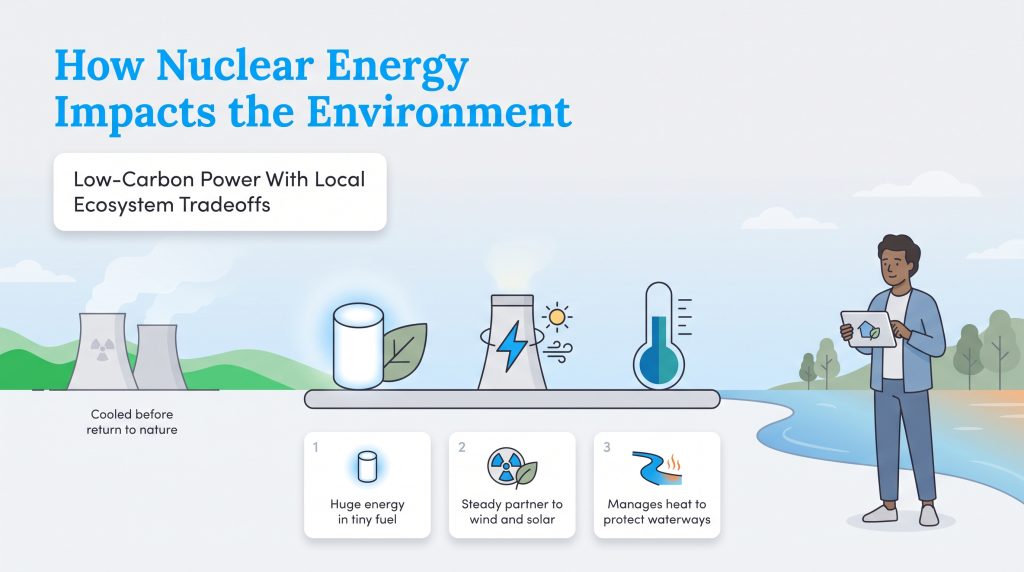
One of the most common questions eco-conscious homeowners ask is whether this technology is genuinely good for the planet. Technically, nuclear energy is not renewable. Renewable energy sources, like wind, solar, and hydro, rely on fuel sources that replenish themselves naturally. Nuclear plants run on mined uranium, which is a finite resource. Once we consume our global reserves, it is gone.
However, the broader environmental impact is widely recognized as highly sustainable. Modern extraction techniques and highly efficient reactor designs mean that our current, known uranium reserves can easily support the grid for many generations to come without contributing to immediate climate change. When looking at long-term sustainability, we must analyze how nuclear interacts with our ecosystems beyond just carbon output.
Comparing Clean Energy Alternatives
When looking at the broader transition to an emission-free grid, it is essential to understand how nuclear power compares directly to other clean energy alternatives. Solar panels only generate electricity when the sun is shining, and wind turbines sit idle on calm days. This unpredictability forces utility operators to rely on massive, expensive battery storage systems or backup natural gas plants to ensure your lights stay on during a dark, windless evening.
Nuclear energy bridges this critical reliability gap perfectly. Because these massive plants operate continuously at maximum capacity, they provide the steady, unwavering baseload power that the electrical grid desperately needs to function. By combining the cheap, intermittent output of solar and wind with the relentless reliability of nuclear power, regional grids can successfully eliminate their dependence on carbon-heavy fossil fuels without risking widespread blackouts or massive price spikes for everyday consumers.
Thermal Pollution And Aquatic Ecosystems
While nuclear power avoids polluting the air, its relationship with local water sources is far more complex. Nuclear reactors generate an incredible amount of heat, which means they require millions of gallons of water every single day for cooling purposes. Once this water absorbs the heat from the plant’s secondary systems, it is safely discharged back into the local lake, river, or ocean. However, this returned water is significantly warmer than when it was withdrawn. This sudden shift in water temperature is known as thermal pollution, and it can seriously disrupt surrounding aquatic habitats.
- Decreased Dissolved Oxygen: Warmer water naturally holds less oxygen, which can create stressful or even fatal conditions for local fish populations that rely on highly oxygenated water to survive.
- Altered Breeding Cycles: Many aquatic species rely on seasonal temperature changes to trigger spawning and migration. An artificial influx of warm water can confuse these biological clocks, throwing local food webs out of balance.
- Harmful Algal Blooms: Elevated water temperatures create the perfect breeding ground for invasive algae species, which can rapidly blanket a water source, block sunlight from bottom-dwelling plants, and release toxins into the environment.
To combat thermal pollution, modern facilities often utilize towering cooling towers (the iconic, hourglass-shaped concrete structures) to dissipate heat into the atmosphere as water vapor before discharging the liquid back into nature. Strict Environmental Protection Agency (EPA) regulations monitor these discharge temperatures to protect aquatic ecosystems.
The Uranium Fuel Cycle And Mining Impacts
The journey from the earth to the reactor core — known as the uranium fuel cycle — involves several highly industrialized steps, each carrying its own distinct environmental footprint. If you are comparing nuclear power vs fossil fuels, evaluating the entire extraction process is essential for understanding the true cost to the planet.
- Uranium Mining: Uranium is extracted either through traditional open-pit mining or in-situ recovery (where chemicals are pumped underground to dissolve the uranium before pumping it back to the surface). Both methods require substantial earth movement, heavy machinery, and significant water usage. In-situ mining carefully monitors local groundwater to prevent chemical leaching into public aquifers.
- Milling: The raw, extracted ore is transported to a milling facility where it is crushed and treated with strong acids. This process isolates the uranium, producing a concentrated powder commonly known as “yellowcake.” The leftover crushed rock, known as tailings, contains low-level radioactivity and must be permanently contained in engineered dams to prevent soil and wind contamination.
- Enrichment: Natural uranium does not contain enough of the specific Uranium-235 isotope needed to sustain a chain reaction. The yellowcake is converted into a gas and spun in high-speed centrifuges to increase the concentration of U-235. This step is incredibly energy-intensive and historically relied on fossil-fuel-powered electricity, though the industry is shifting toward cleaner power sources for enrichment facilities.
- Fuel Fabrication: The enriched uranium gas is converted back into a solid uranium dioxide powder, pressed into small ceramic pellets, and baked at high temperatures. These pellets are then carefully stacked and sealed inside corrosion-resistant zirconium alloy tubes, creating the final fuel rods ready for the reactor core.
5. Nuclear Waste Disposal And Safety Protocols
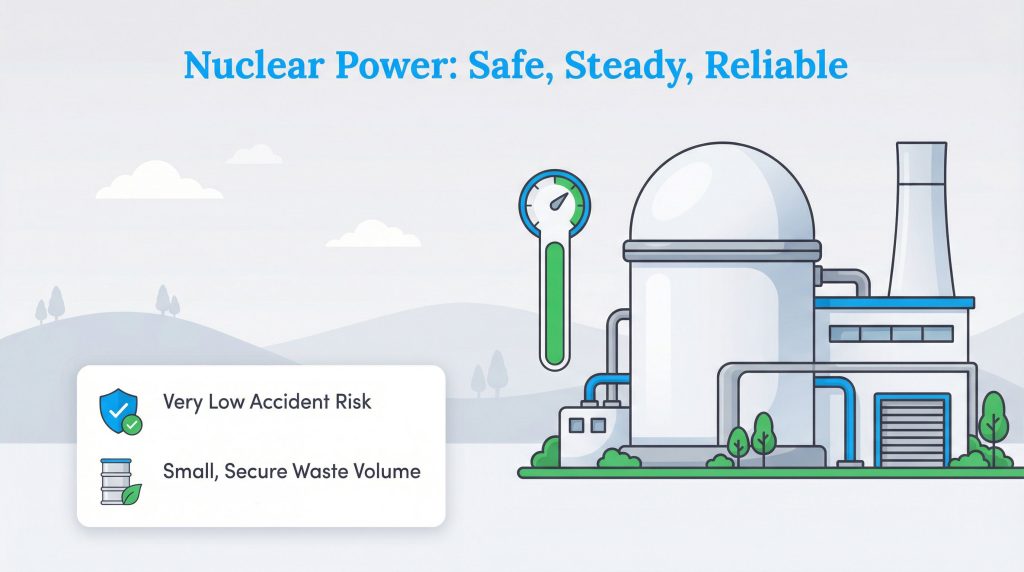
You simply cannot evaluate the environmental impact of nuclear power without discussing safety and waste. High-profile, tragic incidents in the distant past have understandably created deep-seated public hesitation. However, the modern reality is rooted in objective data. The industry operates under some of the strictest regulatory oversight in the world, utilizing multiple redundant safety systems designed to safely shut down operations instantly to prevent accidents. When analyzing total fatality rates per unit of electricity produced, objective statistics clearly show that nuclear energy is vastly safer than burning traditional fossil fuels.
According to the latest aggregated data from the International Atomic Energy Agency (IAEA) and the U.S. Energy Information Administration (EIA), the safety profile of energy sources breaks down as follows:
- Nuclear Power: Boasts an exceptionally low mortality rate of roughly 0.03 deaths per terawatt-hour (TWh) generated, making it statistically one of the safest energy sources in the world.
- Coal: Averages a staggering 24.6 deaths per TWh, largely due to air pollution, respiratory diseases, and hazardous mining conditions.
- Natural Gas: Causes approximately 2.8 deaths per TWh from extraction accidents, pipeline leaks, and localized emissions.
- Wind and Solar: Hover closely alongside nuclear power (0.04 and 0.02 deaths per TWh, respectively), with the rare fatalities generally linked to construction or maintenance accidents.
Regarding nuclear waste disposal, the challenge is significant but heavily managed. Nuclear waste is not pumped into the atmosphere or casually dumped into local rivers. Spent solid fuel is strictly monitored and secured on-site at power plants in thick, steel-lined concrete pools or incredibly robust dry storage casks. While this material remains radioactive for thousands of years and ultimately requires deep geological repositories for permanent disposal, its total volume is remarkably tiny compared to the millions of tons of toxic ash and airborne sludge produced annually by traditional coal plants.
6. The Economics Of Nuclear Power
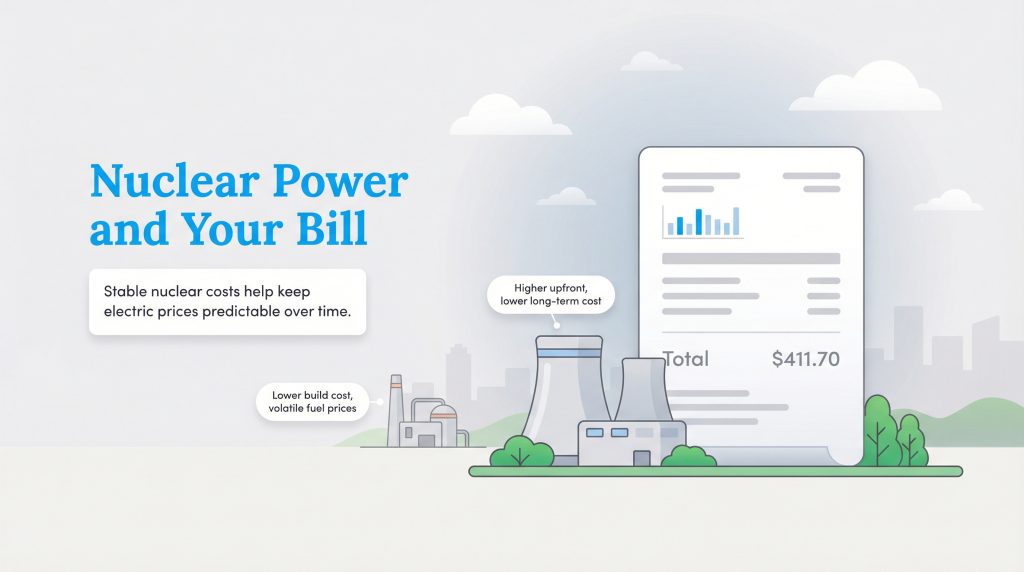
When you look closely at your monthly utility bill, you might wonder how exactly the cost of nuclear power influences the bottom line. The economics of nuclear energy are entirely unique compared to fossil fuels, functioning as a stabilizing force in the constantly shifting energy market.
Plant Costs Vs. Your Electric Bill
The financial structure of the nuclear industry is heavily front-loaded. Investors and utility companies must shoulder the massive financial burden of securing regulatory approvals, sourcing highly specialized engineering materials, and paying skilled labor for years before a single watt of electricity is ever sold to consumers. Building a new facility requires billions of dollars and many decades of complex construction.
However, once the plant is successfully up and running, the actual day-to-day impact on your residential electric rates is incredibly positive. This is because uranium fuel is exceptionally dense and relatively cheap compared to the vast amount of energy it produces. In fact, most plants can operate continuously for 18 to 24 months without ever needing to shut down to refuel.
In stark contrast, natural gas plants are much cheaper and faster to build but are completely at the mercy of volatile, unpredictable fuel markets. If natural gas prices spike during a brutally cold winter, your electricity bill often jumps right along with them. The operational cost per kilowatt-hour (kWh) for nuclear power tends to be much more stable, acting as a financial buffer against these wild market swings. If you live in a state powered heavily by nuclear energy, you are less likely to experience those sudden, shocking rate hikes during extreme weather. If you want to further reduce your expenses, there are many other actionable ways to save on your electric bill regardless of your home’s energy source.
7. The Aging Infrastructure Dilemma
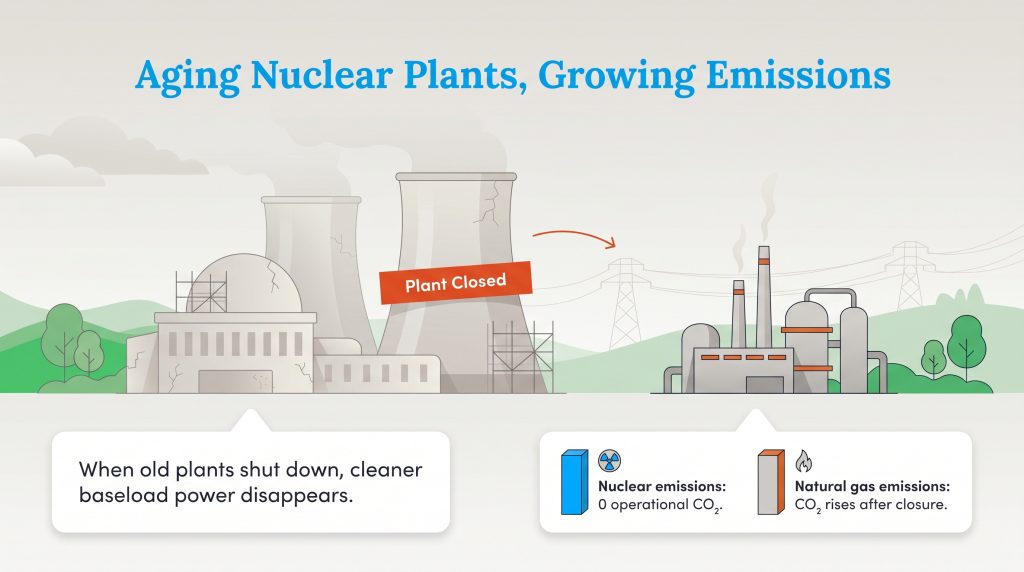
While nuclear facilities excel at providing stable, low-carbon energy, the industry is currently facing a massive, unavoidable economic hurdle: an aging infrastructure. Many of the commercial reactors operating in the U.S. today were originally built in the 1970s and 1980s. Maintaining these aging industrial giants requires rigorous safety upgrades, extremely expensive specialized part replacements, and large, highly trained workforces to guarantee daily safety compliance.
In deregulated energy markets, where different power sources must compete directly on wholesale price, some older nuclear plants have simply become unprofitable to run. They struggle to match the artificially low prices of heavily subsidized renewable energy and the currently cheap, abundant supply of natural gas. As a result, several U.S. plants have been forced into early retirement over the last decade and have permanently closed their doors.
This trend presents a serious dilemma for eco-conscious homeowners and environmentalists alike. When older plants are forced into early retirement, the grid loses a massive source of reliable, emission-free power that must be immediately replaced to prevent regional blackouts. Historically, grid operators are forced to fire up supplemental natural gas plants because battery storage isn’t ready to handle the full load. Consequently, regional carbon emissions often spike significantly following a nuclear plant closure.
8. The Future Of Nuclear Power And Small Modular Reactors
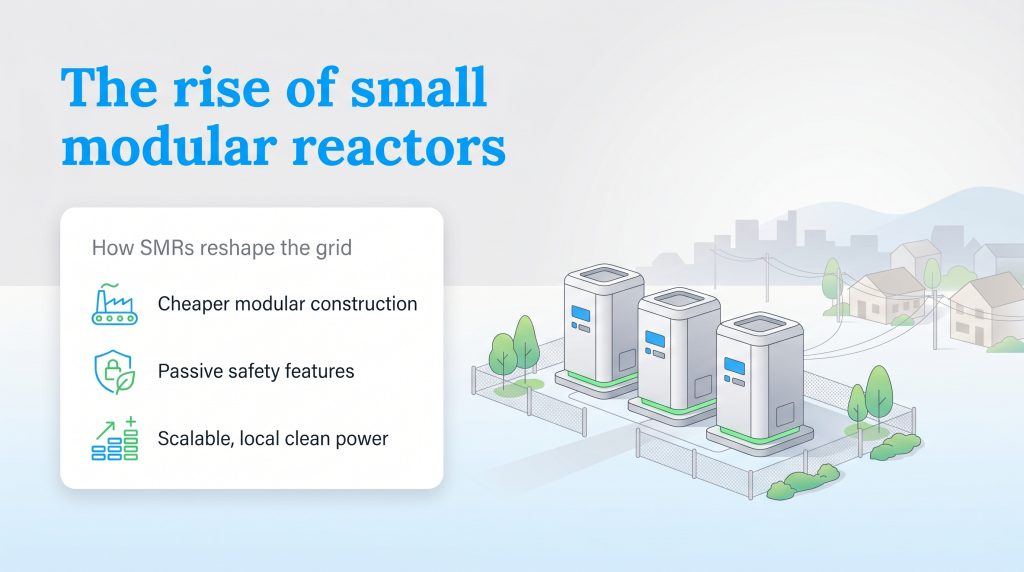
The future of the American power grid might look very different from the massive, looming cooling towers we see today. As energy demands soar and the push for decarbonization intensifies, the industry is pivoting toward smaller, smarter, and more adaptable technology.
Enter Small Modular Reactors (SMRs). These advanced nuclear reactors are exactly what their name implies — they are physically much smaller, mechanically simpler, and designed to be built in centralized manufacturing factories before being shipped directly to a specialized site for final assembly. This innovative, modular approach aims to solve the single biggest problem plaguing traditional nuclear power: the astronomical upfront cost and the decades-long timeline of construction. SMRs bring several distinct advantages to the future energy landscape:
- Cheaper Construction: By utilizing factory-line production for standardized components, SMRs drastically reduce the capital costs associated with custom-built, large-scale facilities.
- Safer Operations: These modern designs heavily incorporate passive safety features that rely on fundamental physics — like natural circulation and gravity — to automatically cool the reactor and shut down safely without requiring human intervention or external power.
- Highly Scalable: Utility companies can install a single module to meet current community demand, and seamlessly add more modules to the same site as the local population or power needs grow over time.
- Faster to Build: Because the complex internal components are pre-fabricated off-site, construction timelines are reduced from decades to just a few short years.
For everyday homeowners, the widespread adoption of SMRs could eventually mean more localized, flexible, and resilient power grids. Because they require a fraction of the physical footprint and boast enhanced safety profiles, they could potentially be sited much closer to where the power is actually needed, drastically reducing transmission line losses and improving local reliability.
9. Assessing Your Home’s Energy Mix
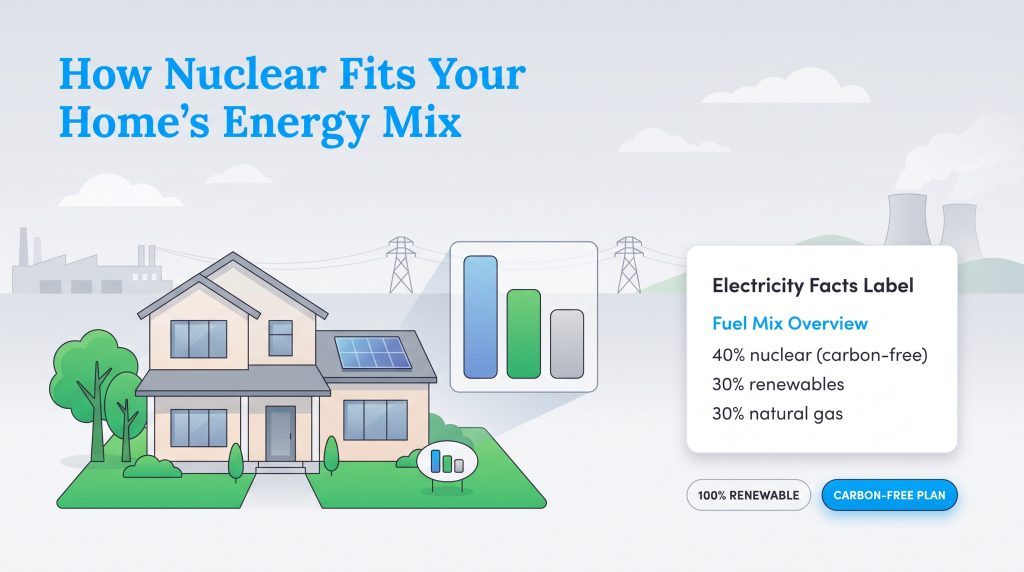
To truly understand the everyday impact of this technology, it helps to look at the hard data regarding your local utility grid. While solar and wind often dominate the conversation about green energy, nuclear plants quietly serve as the invisible backbone for dozens of states. This reliance on nuclear energy is not evenly distributed across the nation. Many regions rely heavily on these massive facilities to keep local manufacturing running and residential utility costs stable through extreme seasonal weather.
If you live in one of the top-producing states below, a significant portion of the electricity powering your refrigerator, air conditioner, and home office comes directly from the nuclear fission process. Here is a quick look at the states leading the country in nuclear power generation:
| State | Operating Reactors | Approx. Share of Electricity |
|---|---|---|
| Illinois | 11 | 54% |
| Pennsylvania | 8 | 32% |
| South Carolina | 7 | 55% |
| North Carolina | 6 | 33% |
| New York | 4 | 22% |
| Texas | 4 | 10% |
| Virginia | 4 | 30% |
| Tennessee | 3 | 47% |
| New Jersey | 3 | 45% |
| Michigan | 3 | 22% |
If you have decided that you want nuclear power to play a deliberate role in your home’s energy profile, you might be wondering how to actively support it. In deregulated energy markets, you actually have the power to choose your electricity provider and select a customized utility plan that aligns with your environmental values.
- Check the Label: Look for the “Electricity Facts Label” or “Fuel Mix” disclosure on a prospective provider’s website. This document breaks down exactly where their power comes from. For example, if you live in New York, your plan’s fuel mix might explicitly show 30% nuclear, 40% natural gas, and 30% renewables.
- Carbon-Free vs. Renewable: This distinction matters significantly when shopping. If you buy a plan marketed exclusively as “100% Renewable,” it usually only includes wind, solar, and hydro, deliberately excluding nuclear. If you want to actively support nuclear generation as a clean source, look specifically for plans labeled “Carbon-Free” or “Emission-Free.”
- Shop Around: Visit your state’s official energy choice website to compare various plans. Many providers now offer specific green energy utility plans that prioritize these low-carbon sources, helping you vote with your wallet.
10. Deciding On A Nuclear-Backed Utility Plan
When it comes to powering a modern, eco-conscious household, there is unfortunately no single perfect, magic-bullet solution. However, armed with the knowledge of how nuclear power generation works and its impact on the grid, you can now make highly informed decisions for your home. By opting for a nuclear-backed or “carbon-free” energy plan, you are actively supporting a highly reliable baseload power source that does not pump greenhouse gases into our atmosphere. This choice creates a financial demand that encourages utility companies to keep these vital plants operating safely.
If you live in a deregulated state, you can utilize your state’s official comparison tool — such as Texas Power to Choose, Ohio Energy Choice, or PA Power Switch — to easily filter and compare the exact fuel mix of various electric plans side-by-side. Look closely at the Electricity Facts Label for any plan catching your eye to verify its nuclear percentage. By thoughtfully balancing your home’s reliance on a mix of nuclear and renewable options, you help fund a clean energy future that keeps your family’s lights on while simultaneously protecting the planet for generations to come.
Frequently Asked Questions About Nuclear Power
What is the main purpose of a nuclear power plant?
Why is nuclear power considered a low-carbon energy source?
How long does nuclear waste stay radioactive?
How much of the U.S. power grid is powered by nuclear energy?
Is nuclear power cheaper than solar and wind energy?
Can I power my home entirely with nuclear energy?
What happens to the nuclear waste?
Is living near a nuclear power plant safe?
About the Author

David has been an integral part of some of the biggest utility sites on the internet, including InMyArea.com, HighSpeedInternet.com, BroadbandNow.com, and U.S. News. He brings over 15 years of experience writing about, compiling and analyzing utility data.

Claudio is a sustainability-focused writer with a background in Anthropology and Psychology from NC State University. He has spent over 15 years working in writing, interpretation, and translation, driven by a deep interest in how human culture shapes the environment. Today, he shares his curiosity with readers by writing about sustainable living solutions and the connection between everyday choices and environmental impact.