

Coal Has Fueled The Electric Grid For Over A Century But Rising Costs And Environmental Concerns Are Changing How It Powers Our Homes
Key Takeaways
- Coal power accounts for a shrinking percentage of the U.S. energy grid as renewables and natural gas become more affordable.
- The process involves burning mined coal to create steam, which spins a turbine to generate electricity for your home.
- Homeowners can often choose cleaner alternatives by shopping for renewable energy plans or installing solar panels.
You might flip a switch without thinking about where the light comes from, but understanding what is coal power can help you make smarter, more environmentally mindful utility choices for your household. In short, coal power is the electricity produced when a thermal plant burns combustible rock to generate heat. This process is a traditional form of fossil fuels electricity generation that converts stored chemical energy into the voltage flowing through your outlets. For decades, coal served as the reliable workhorse of the American energy grid, keeping the lights on day and night. However, the energy landscape is shifting rapidly as technology advances, environmental concerns rise, and homeowner priorities change. In this guide, we break down exactly how this fossil fuel generates electricity, its environmental impact, and what the transition toward renewable energy means for your daily life.
The Basics: What Is A Coal-Fired Power Plant
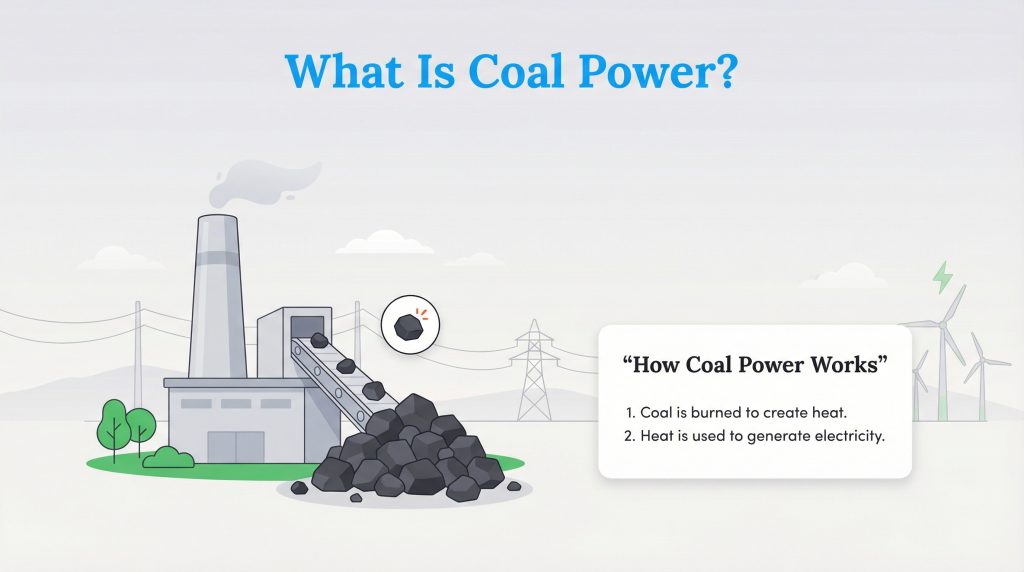
A coal-fired power plant is a large-scale industrial facility that relies on various types of coal — from hard anthracite to softer lignite — to produce a dependable “baseload” power source. Because it can produce energy steadily around the clock, coal has shaped modern infrastructure, providing a significant part of electricity generation across the country.
To understand its current role in the utility sector, it helps to look at a brief timeline of its usage:
- 1880s: The first commercial coal-fired power stations open, proving that fossil fuels could reliably electrify major cities.
- Mid-20th Century: Coal expands rapidly, cementing itself as the dominant source of electricity to meet heavy post-war industrial energy demands.
- 2000s to Present: A steady decline begins as utilities transition toward natural gas and modern renewable alternatives due to stricter emission standards and falling green energy costs.
Today, relying on this raw, mined material is no longer the only way to keep a steady voltage flowing to your devices, but these established plants still play a role in stabilizing regional grids during periods of peak demand.
How Does Coal Power Work?
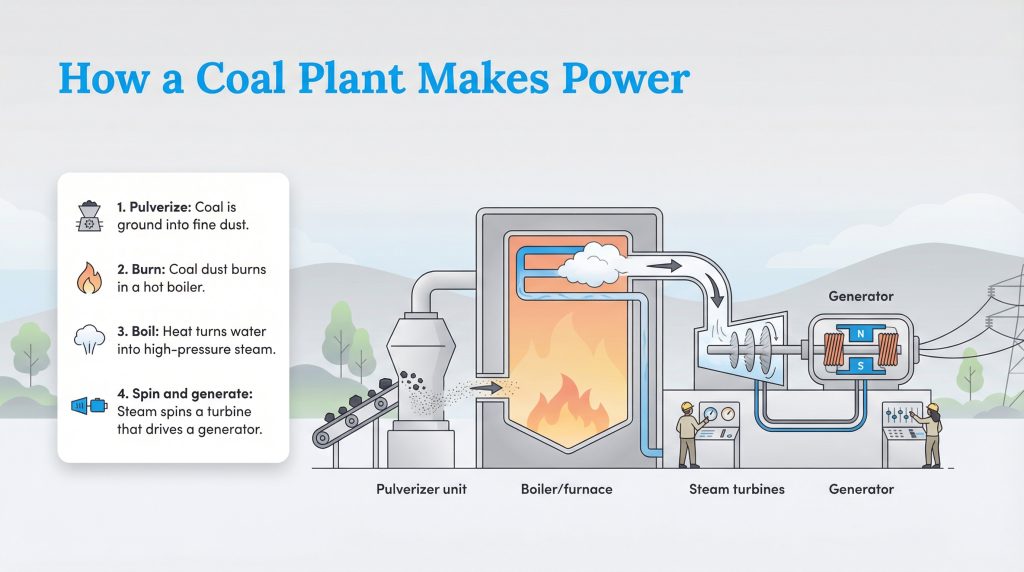
The machinery inside a thermal power station is massive and complex, but the basic concept is actually quite simple: It is all about using fire to boil water. Converting raw rock into household power follows a straightforward linear path. Here is the step-by-step coal combustion process:
- Pulverization: Before it can be burned, raw coal is mined, transported, and crushed into a fine powder in a large machine called a pulverizer. This drastically increases the surface area of the fuel so it ignites faster and burns more efficiently.
- Combustion: The fine coal dust is blown into a giant boiler furnace, where it rapidly combusts at incredibly high temperatures.
- Steam Generation: The intense heat from combustion boils thousands of gallons of water flowing through intricate pipes, instantly turning the liquid into high-pressure steam.
- Turbine Spin: This high-pressure steam rushes against the blades of a massive steam turbine, spinning it at thousands of revolutions per minute.
- Condensation: After passing through the turbine, the steam is cooled back into liquid water inside a condenser, allowing it to be pumped back into the boiler to repeat the cycle.
The spinning turbine is continuously connected to an electrical generator, which uses giant magnets and tightly wound copper wire to convert that mechanical motion into the electricity sent to your home.
From The Plant To Your Plug: The Grid Connection
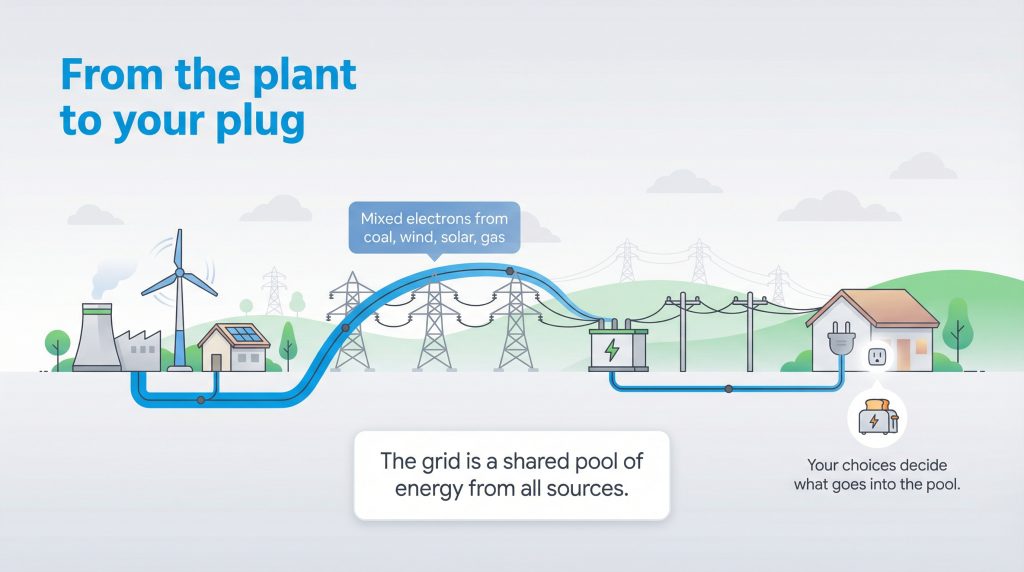
After leaving the generator, the electrical voltage is stepped up by massive transformers so it can travel efficiently over long-distance transmission lines before it is stepped back down for safe use in your neighborhood grid. Once it hits the broader electrical pool, electrons generated by coal plants mix seamlessly with those from wind farms, solar panels, and natural gas plants.
The “thermal” process of using steam to spin a turbine isn’t unique to coal. Nuclear plants and natural gas plants often use similar steam turbines to generate power, but they heat the water using uranium fission or gas combustion instead of burning fossilized rock.
Common Types Of Coal Power Technologies
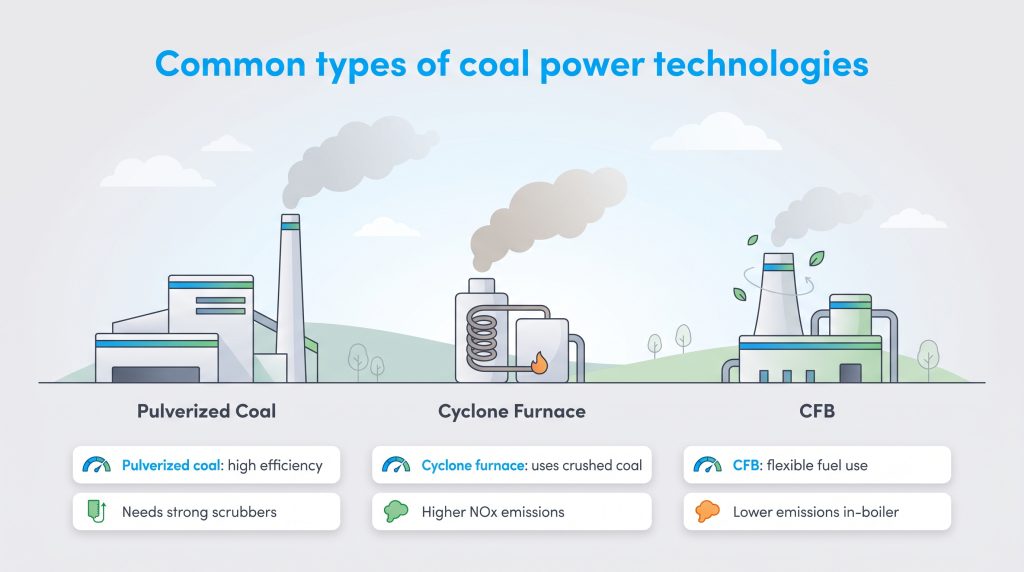
While the basic concept remains the same, the exact combustion method can vary depending on the plant’s design. Utilities use different thermal power station processes to balance efficiency, cost, and emission controls. Understanding these variations highlights why some facilities operate cleaner or more efficiently than others.
- Pulverized Coal Firing: The most common method used globally, where coal is ground to a fine dust and blown directly into the combustion chamber. It offers high reliability and energy output but generally requires advanced scrubbers to manage elevated baseline emissions.
- Cyclone Furnaces: These systems burn crushed — rather than fully pulverized — coal in a cyclonic air stream. The intense heat melts the ash into a liquid slag that is easily removed from the bottom, though this high-heat process can produce elevated nitrogen oxide emissions.
- Circulating Fluidized Bed (CFB): This newer technology suspends solid fuels on upward-blowing jets of air during combustion. It operates at lower temperatures, which significantly reduces nitrogen oxide emissions and allows for the capture of sulfur pollutants directly inside the furnace before they reach the smokestack.
Coal Power Plant Pros And Cons
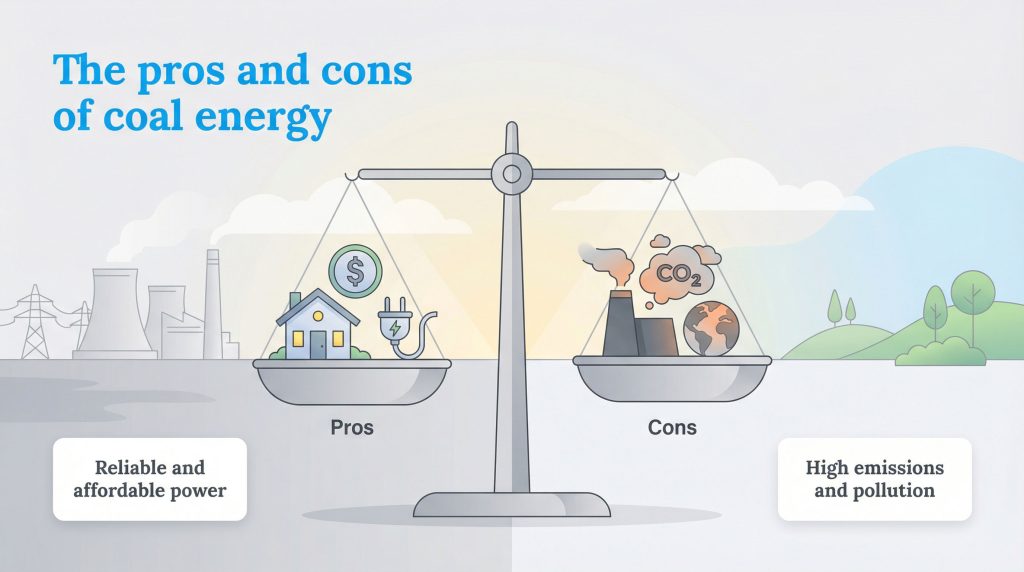
Coal helped build the modern economy, but relying heavily on this non-renewable source comes with significant drawbacks that are becoming harder to ignore. We have broken down the primary advantages and disadvantages to help you understand why utilities historically utilized it and why many are now aggressively pivoting toward greener solutions.
| Advantages of Coal Power | Disadvantages of Coal Power |
|---|---|
| Reliable Baseline Power: Operates 24/7 regardless of weather conditions, providing the constant, steady flow of electricity needed to stabilize the grid. | High Carbon Emissions from Coal: Produces the highest levels of carbon dioxide and greenhouse gases per kilowatt-hour of any major energy source. |
| Established Infrastructure: Existing supply chains, railways, and power plants keep operational costs fairly predictable for regional utilities. | Air and Water Pollution: Combustion releases toxic particulate matter into the atmosphere, while extraction disrupts landscapes and local water tables. |
| Affordability: Historically cheap to mine, transport, and burn in areas with naturally abundant coal reserves. | Non-Renewable Resource: Coal relies on a finite, dwindling fuel supply that cannot be replenished on a human timescale once it is burned. |
Renewable Energy Versus Coal
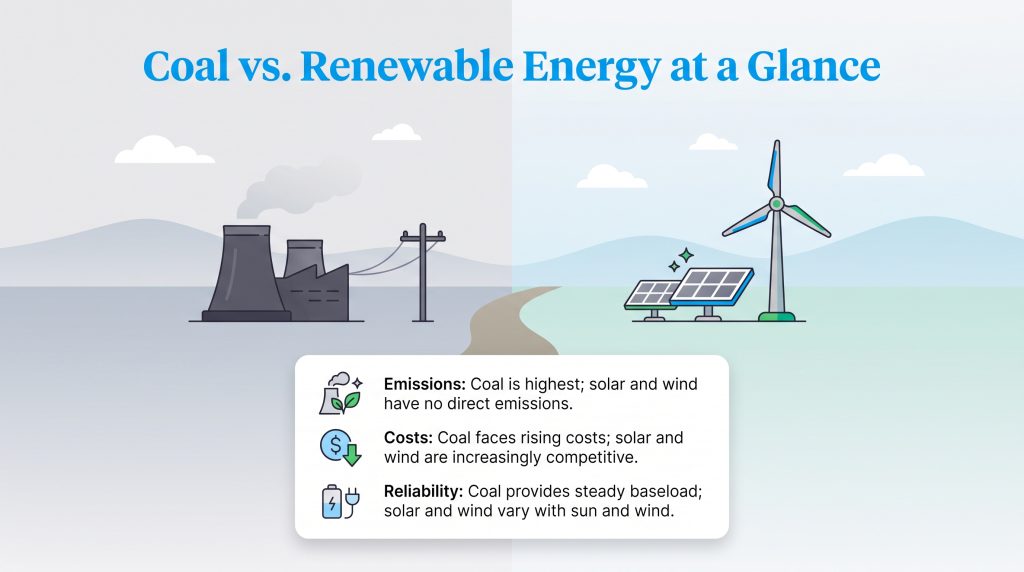
When comparing coal to green alternatives like solar and wind, the differences in operational style and environmental footprint become glaringly obvious. Coal is a highly dispatchable energy source, meaning grid operators can quickly increase or decrease power output to meet current demand. In contrast, wind and solar are often variable, generating electricity only when the wind blows or the sun shines.
However, the infrastructure requirements and long-term costs reveal why renewables are rapidly winning the modern energy race. Coal requires massive centralized facilities, continuous fuel delivery via rail, and extensive mining operations. Renewables require vast plots of land for panels or turbines and upgraded transmission lines, but once built, their fuel (sunlight and wind) is completely free. This dynamic is drastically shifting the long-term cost advantage away from fossil fuels.
| Energy Feature | Coal Power | Solar Energy | Wind Energy |
|---|---|---|---|
| Emissions Profile | Highest CO₂ and air pollutant emissions. | No direct emissions during operation. | No direct emissions during operation. |
| Cost Trend | Operating costs can be high as plants age and fuel prices fluctuate. | Upfront installation cost, but very low operating cost once built. | Falling costs make it highly competitive with fossil fuels. |
| Grid Reliability | Excellent baseload stability; runs 24/7. | Variable; produces energy only when the sun shines (often paired with batteries). | Variable; relies on consistent wind patterns. |
The Environmental Impact Of Coal Energy
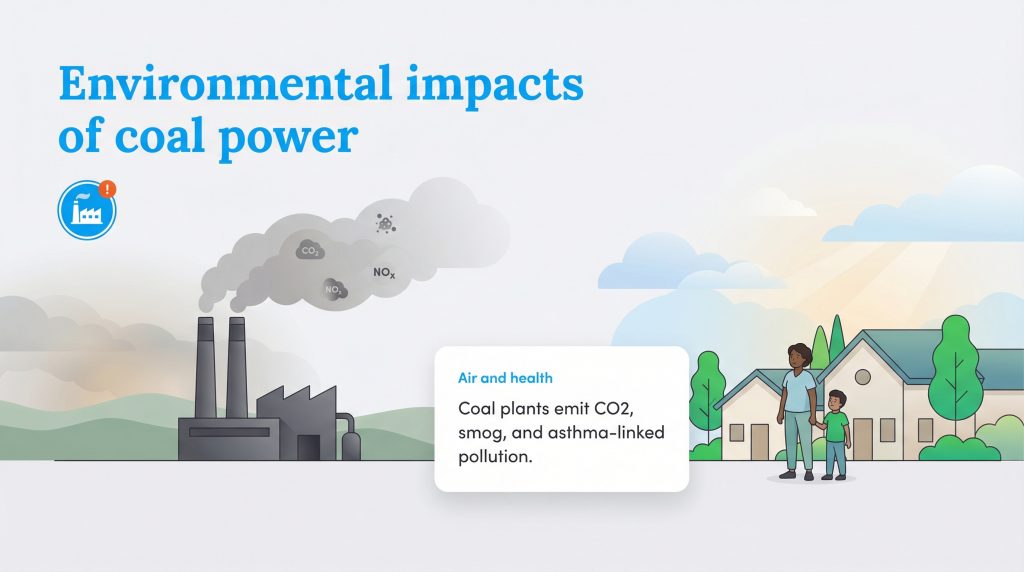
The primary reason for the global shift away from this fossil fuel is its massive environmental footprint. Burning coal releases staggering amounts of carbon dioxide, which acts as a primary driver of global climate change. In fact, in 2022, carbon dioxide emissions from burning coal accounted for roughly 55% of all CO2 emissions from the U.S. electric power sector, despite generating a much smaller percentage of the nation’s total electricity.
Beyond massive carbon output, the combustion process unleashes a cocktail of dangerous elements into the atmosphere. The resulting particulate matter deeply degrades local air quality and can trigger severe respiratory issues for nearby communities. According to the Environmental Protection Agency (EPA), these emissions contribute to acid rain, smog, and respiratory illnesses. Some of the most concerning pollutants released by coal-fired power plants include:
- Sulfur Dioxide (SO2): A primary contributor to acid rain and severe respiratory illnesses in neighboring communities.
- Nitrogen Oxide (NOx): Reacts with volatile organic compounds in the presence of sunlight to form dangerous ground-level smog.
- Mercury: A highly toxic heavy metal that can easily settle into waterways, accumulating in fish and posing severe neurological risks to humans.
🌱 Eco Edge: Fossil fuel power generation remains a major driver of global warming. According to international energy reports, electricity and heat production from fossil fuels accounts for roughly 40% of all energy-related carbon dioxide emissions worldwide.
To mitigate some of these hazards, modern plants employ a variety of pollution-control strategies:
- Electrostatic Precipitators: Devices that use strong electrical charges to capture fine particulate matter — also known as fly ash — before it escapes the smokestack.
- Flue Gas Desulfurization (Scrubbers): Heavy-duty chemical systems designed to remove sulfur dioxide from the exhaust gases.
- Selective Catalytic Reduction: A process that breaks down dangerous nitrogen oxides into harmless nitrogen and water.
- Activated Carbon Injection: A specialized method used to trap heavy metals, such as mercury, preventing them from entering the local environment.
What Are Clean Coal Technologies?
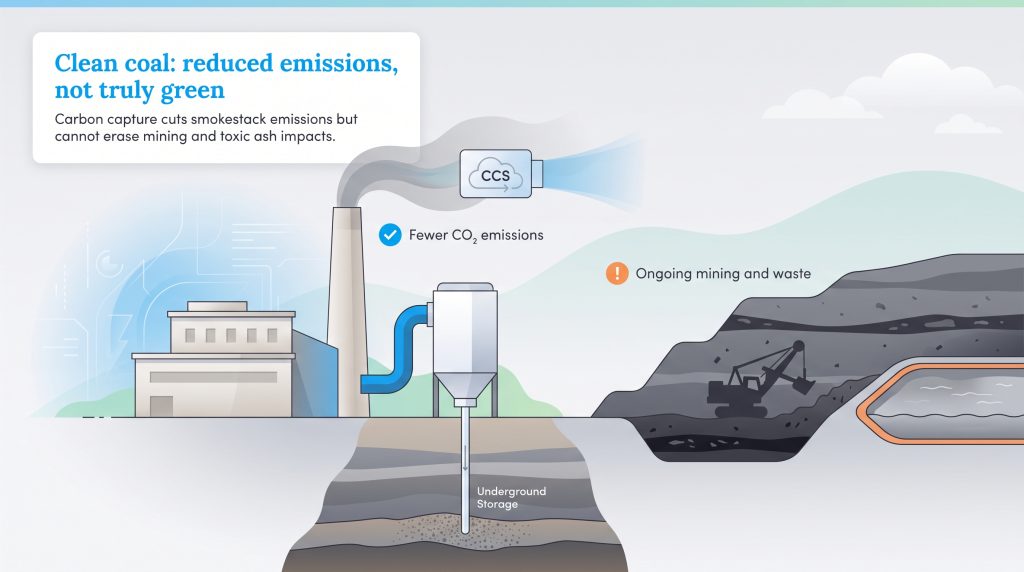
You may hear the term “clean coal” tossed around in discussions about energy policy, but what does it actually mean? In essence, clean coal technologies refer to specialized industrial methods aimed at mitigating the severe environmental impact of coal combustion. While these advancements attempt to make the fuel more sustainable, they are often incredibly expensive and do not completely eliminate the ecological damage caused by mining or waste disposal.
The most commonly discussed clean coal methods include:
- Carbon Capture and Storage (CCS): This process involves trapping carbon dioxide emissions directly at the smokestack, compressing the gas into a liquid state, and injecting it deep underground for permanent geological sequestration.
- Coal Washing: Before combustion, raw coal is crushed and washed with specific liquids to separate unwanted minerals and impurities. This technique actively helps reduce the amount of sulfur dioxide released when the fuel is burned.
- Gasification: Instead of burning the rock directly, this process exposes the coal to steam and oxygen under high pressure, converting it into a synthetic gas (syngas). The syngas can then be aggressively scrubbed of pollutants before being burned to generate electricity.
The Verdict: Assessing The Future Of Coal Energy
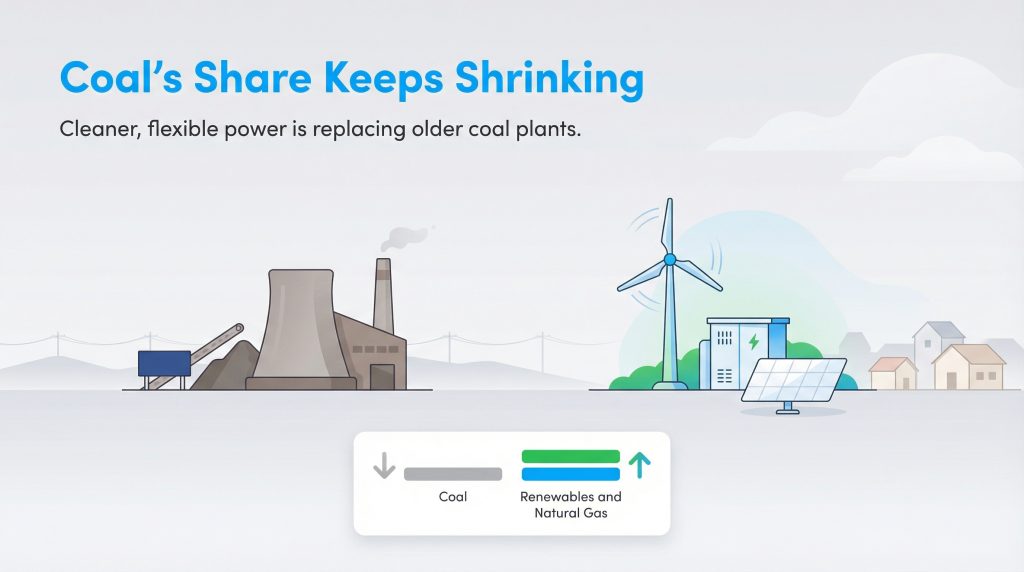
The role of coal in the United States is shrinking. According to the U.S. Energy Information Administration (EIA), coal’s share of electricity generation has dropped significantly over the last decade. In recent years, hundreds of coal-fired power plants have been retired, and very few new ones are being built. This isn’t just about stricter environmental regulations; it is largely driven by basic economics. Natural gas has become abundantly cheap, and the cost of building large-scale renewable energy projects has plummeted.
As grid operators look toward 2030 and beyond, they are prioritizing flexible, cleaner energy sources. While coal will likely remain a small part of the mix for years to come to ensure reliability during intense winter storms or summer heatwaves, its days as the dominant king of the grid are effectively over. Because older coal facilities are becoming increasingly expensive to maintain compared to modern alternatives, relying heavily on them can unfortunately lead to higher utility rates for homeowners over time.
Making The Switch To Greener Home Utilities
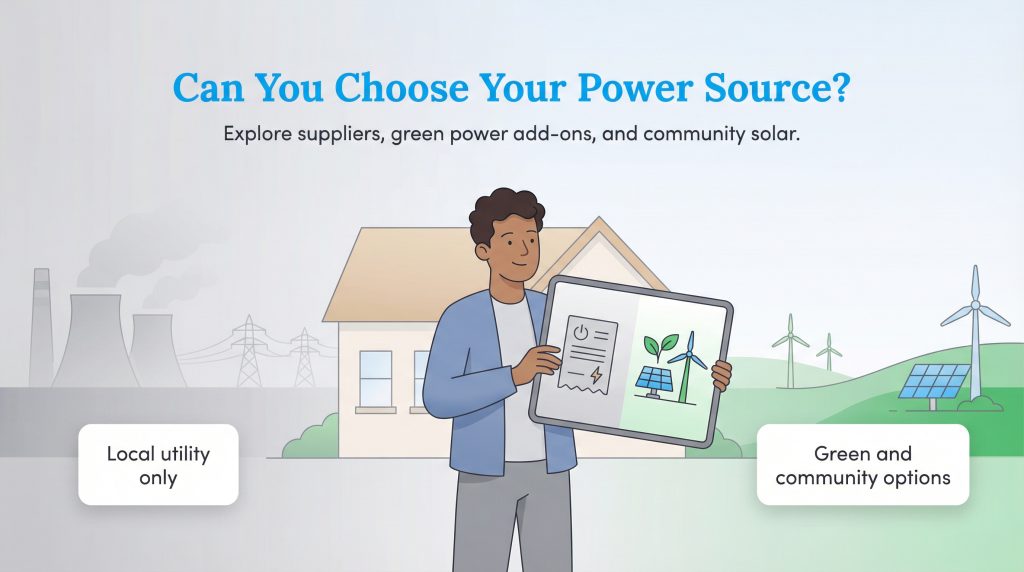
If you are concerned about the environmental impacts of coal, you can take actionable steps to green your household grid. In deregulated energy markets — such as those in Texas, Pennsylvania, and Ohio — you have the power to choose your electricity supplier. This means you can actively opt out of coal-heavy grid mixes by selecting an energy provider, such as Green Mountain Energy or Rhythm Energy, that sources its power exclusively from wind or solar.
To ensure you are actually getting green energy, you need to know how to read an Electricity Facts Label (EFL). Here is a quick guide to verifying your plan:
- 1. Locate the EFL: Every competitive energy plan provides an Electricity Facts Label document before you sign up. Look for the link in the plan details.
- 2. Review the Generation Mix: Scroll to the section detailing the plan’s fuel mix or emissions profile. This chart breaks down the exact percentages of coal, natural gas, nuclear, and renewables used to generate the electricity.
- 3. Verify 100% Green Energy: Check that the renewable energy percentage reads 100%. If the plan relies on coal, the EFL will clearly show the percentage of traditional fossil fuels in the mix.
If you live in a regulated market where you must buy from the local utility, contact them to see if they offer an eco-conscious “Green Power” program. These programs typically allow you to pay a small premium to support local renewable projects, directly helping to reduce overall market demand for fossil fuels.
Taking Charge Of Your Household Power
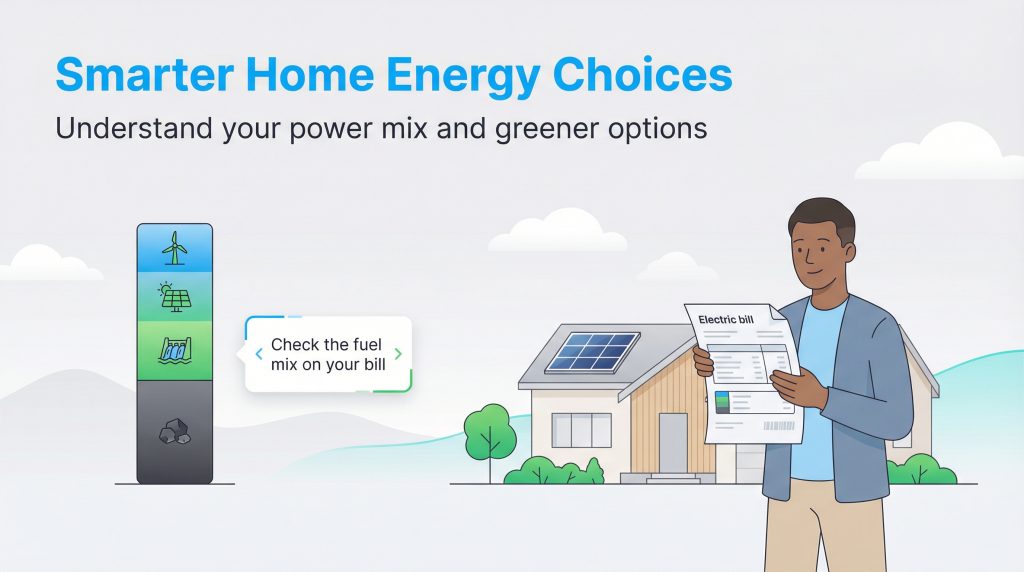
While coal provided the vital energy that built much of our modern infrastructure, the future is clearly moving toward cleaner, more efficient resources. Understanding exactly where your power comes from allows you to make informed, environmentally mindful decisions about your household budget and your personal carbon footprint. Check your next electric bill to see your fuel mix disclosure, and explore what green alternatives are available in your area so you can finally take complete control over your home’s environmental impact.
💸 Money-Saver: Going green doesn’t always cost more. In many competitive markets, renewable energy plans are now priced lower than traditional fossil-fuel plans due to the falling costs of wind and solar technology. For more tips on lowering your monthly expenses, read our guide on how to save on your electric bill.
Frequently Asked Questions About Coal Power
What is the main use of coal power today?
How much of the U.S. electricity grid still relies on coal power?
What is clean coal technology, and does it actually work?
Can I choose a home utility provider that does not use coal?
How much of the world’s electricity comes from coal power?
What is pulverized coal and why is it used in power plants?
Are coal-fired power plants being phased out?
Is coal a renewable or non-renewable energy source?
About the Author

LaLeesha has a Masters degree in English and enjoys writing whenever she has the chance. She is passionate about gardening, reducing her carbon footprint, and protecting the environment. She also recently served as President of the Board for City Sprouts (a community garden).

David has been an integral part of some of the biggest utility sites on the internet, including InMyArea.com, HighSpeedInternet.com, BroadbandNow.com, and U.S. News. He brings over 15 years of experience writing about, compiling and analyzing utility data.