


Understanding The Differences In Efficiency, Cost, And Appearance To Make The Right Choice For Your Energy Needs
Key Takeaways
- Monocrystalline panels are the most efficient and space-saving option for residential roofs, though they typically come with a higher price tag.
- Polycrystalline panels offer a budget-friendly alternative, recognizable by their speckled blue hue, but they require more roof space to generate the same amount of power.
- Thin-film and solar shingles serve specific niches, offering flexibility for DIY projects or high-end aesthetic integration rather than standard rooftop installations.
Choosing to switch to renewable energy is a brilliant financial move, but navigating the highly technical jargon found on installation quotes can feel a bit overwhelming. When evaluating the different types of solar panels for your home, you need to look beyond the slick sales pitches and truly understand the foundational technology. Because the average solar panel lifespan typically ranges from 25 to 30 years, selecting the right hardware is the absolute key to ensuring your long-term investment pays off. The exact panels you select will dictate your upfront installation costs, the aesthetic appeal of your roofline, and exactly how much money you save on your utility bills over the next few decades.
The 3 Main Types Of Solar Panels
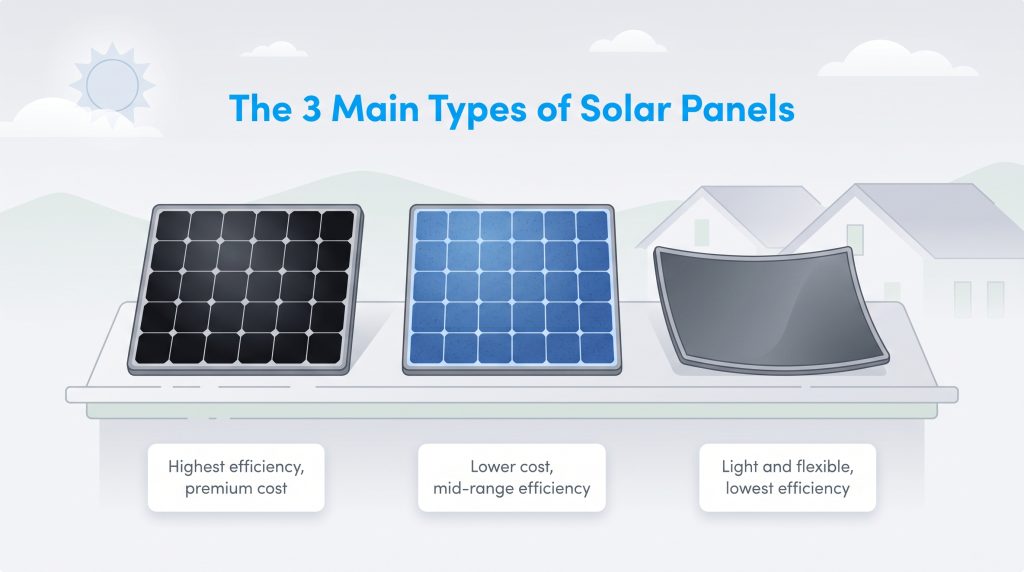
When you start gathering quotes for a new renewable energy system, you will quickly notice that the residential market is dominated by three primary categories of technology. Most conventional panels rely heavily on silicon, a highly conductive natural element that effortlessly converts sunlight into usable electricity through a fascinating process known as the photovoltaic effect — the foundational science behind how solar panels work. The primary difference in real-world performance simply comes down to the absolute purity of that silicon and exactly how manufacturers choose to process it in the factory. Let’s break down the solar options you will encounter when shopping for a robust, long-lasting residential setup.
Monocrystalline Solar Panels (High Efficiency)
Monocrystalline panels are widely considered the premium gold standard and the unquestioned residential industry standard for modern rooftop installations. Manufacturers construct these highly sought-after panels from a single, continuous crystal structure of exceptionally pure silicon. Because they use such incredibly high-purity material, the electrons inside the solar cell have much more room to move freely. This unimpeded movement makes them remarkably efficient at generating raw power.
When comparing monocrystalline vs polycrystalline solar panels, you can easily identify monocrystalline modules by their distinct physical appearance. They feature uniform, solid black cells with clearly cropped corners. When these cells are pressed together on the backing sheet, those cropped corners create tiny, repeating white diamond shapes across the surface of the module. Today, these premium panels reliably produce an impressive average efficiency rating of 20% to 23%, easily capturing enough sunlight to power the modern, high-demand household.
Pros and Cons of Monocrystalline Panels:
- Pro: They offer the absolute highest efficiency ratings on the market, allowing you to maximize total energy production on a relatively small roof layout.
- Pro: Their dark, uniform black aesthetic blends exceptionally well with most modern roofing materials, easily preserving your home’s curb appeal.
- Con: The single-crystal manufacturing process is highly complex and time-consuming, resulting in a noticeably higher initial purchase price.
- Con: The precise circular cutting process creates slightly more wasted silicon offcuts during factory production than alternative manufacturing methods.
Polycrystalline Solar Panels (Budget-Friendly)
Polycrystalline panels serve as the tried-and-true, budget-friendly older sibling in the silicon family. Instead of carefully cultivating a single, massive crystal, manufacturers simply melt together many smaller fragments of raw silicon and pour them into square molds to form the necessary wafers. This specific production process is much faster and considerably cheaper. However, it is vital to know that polycrystalline technology is largely being phased out for modern home rooftop installations.
Today, these panels are strictly viewed as a legacy or extreme budget option. Visually, these panels stand out immediately. They are distinctly blue with perfectly sharp corners, giving the surface a speckled, fragmented look that closely resembles crushed granite or shattered glass. Because the silicon is fragmented, the electrons experience more resistance, which drops their standard efficiency range to roughly 15% to 17%. As a result, you will absolutely need significantly more roof space to generate the exact same power output as a premium monocrystalline system, making them best suited for massive, unshaded ground mounts where physical space is not an issue.
Pros and Cons of Polycrystalline Panels:
- Pro: They are noticeably cheaper to manufacture and purchase, making them a solid entry point for homeowners building a large-scale ground array on a tight budget.
- Pro: The factory melting process utilizes almost all of the raw silicon, resulting in far less manufacturing waste.
- Con: Their significantly lower efficiency ratings mean they require a much larger dedicated physical footprint to achieve your desired energy goals.
- Con: The fragmented blue tint can easily clash with darker, modern roof colors, making them slightly less desirable for highly visible street-facing installations.
Thin-Film Solar Panels (Flexible & Lightweight)
Thin-film panels represent the highly versatile, specialty sector of the modern renewable market. Unlike the heavy, rigid silicon wafers utilized in traditional panels, thin-film technology involves actively depositing incredibly thin layers of specialized photovoltaic substances — like amorphous silicon or cadmium telluride — onto adaptable backings such as tempered glass, durable plastic, or lightweight metal.
When weighing flexible vs rigid solar panels, you need to look purely at your intended use case. Thin-film solar panels are almost never used for standard residential rooftops. Thin-film solar panel efficiency typically maxes out around 10% to 13%, meaning you would need a truly massive amount of surface area to power an entire home. Instead, they are incredibly useful for niche, mobile applications. They are highly sought after for RV projects, the best solar panels for camping, marine boats, or massive commercial warehouse roofs featuring non-traditional curves that structurally cannot support the immense weight of standard silicon arrays.
Pros and Cons of Thin-Film Panels:
- Pro: They are exceptionally lightweight and highly flexible, allowing them to perfectly adhere to curved or uneven surfaces with ease.
- Pro: They handle partial shading and extreme low-light conditions surprisingly well compared to rigid silicon options.
- Con: They suffer from the lowest baseline efficiency of the three main types, severely limiting their usefulness on small residential roofs.
- Con: The unique chemical materials degrade much faster than standard silicon panels, resulting in a significantly shorter functional lifespan.
Advanced Solar Panel Technologies To Know
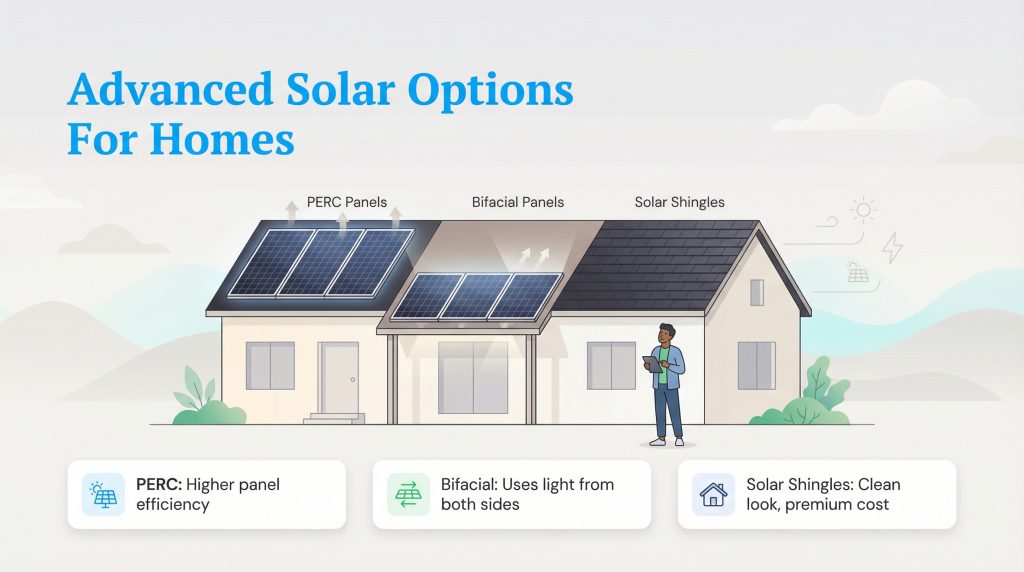
Renewable energy technology moves incredibly fast, and standard silicon is constantly being modified to push the limits of power generation. Beyond the traditional foundational categories, you will likely spot unfamiliar terminology on a residential quote that sounds highly technical. The industry has recently introduced powerful innovations like TOPCon (Tunnel Oxide Passivated Contact) and HJT (Heterojunction Technology) cells, which layer different types of silicon together to drastically reduce energy loss and push efficiency ratings closer to 24%. Understanding these advanced modifications is critical because they dictate the ultimate efficiency and financial return of your setup.
Passivated Emitter And Rear Cell (PERC) Technology
If you are shopping for top-tier residential hardware, you will absolutely encounter PERC solar panel technology. PERC officially stands for Passivated Emitter and Rear Cell, representing a brilliant, highly effective upgrade to standard monocrystalline manufacturing. To create PERC solar cells, manufacturers carefully add a specialized reflective passivation layer to the immediate back of the silicon. This unique, microscopic layer actively bounces any unabsorbed sunlight back up toward the surface, giving the panel a crucial second chance to successfully convert that light into electricity.
This ingenious reflection prevents unwanted electron recombination, effectively ensuring you receive much higher efficiency ratings without causing a massive jump in the final retail price. Today, the vast majority of premium residential panels utilize some form of PERC technology to maximize your daily energy yields.
Bifacial Solar Panels
While traditional panels only absorb sunlight on the side directly facing the sky, bifacial solar panels are intelligently designed to capture incoming sunlight on both the front and back sides of the module. When looking at bifacial solar panels explained simply, the transparent rear side of the panel actively catches ambient light reflecting off the ground below it — a natural phenomenon known in the solar industry as the albedo effect.
It is important to note that you will rarely see bifacial panels utilized for standard, flush-mounted rooftop systems because the back of the panel is entirely shadowed by your roof shingles. Instead, they are primarily manufactured for dedicated residential ground mounts, functional backyard solar pergolas, and heavy-duty solar awnings where light can easily bounce off the bright concrete or snow beneath them to generate extra power.
N-Type Vs P-Type Solar Cells
To make silicon highly conductive, manufacturers must infuse it with distinct chemicals during the factory process, a technique known as “doping.” The choice of chemical creates either N-Type or P-Type solar cells, and the difference is a massive talking point for top-tier installers in 2026.
- P-Type Cells: These cells are infused with boron, which has one less electron than silicon. Historically, P-Type was the absolute industry standard for decades. However, the boron reacts poorly with oxygen when first exposed to sunlight, causing a slight permanent drop in power output known as Light-Induced Degradation (LID).
- N-Type Cells: These cells are infused with phosphorus, which has one extra electron. Because they do not use boron, N-Type panels are completely immune to the dreaded boron-oxygen defect. They suffer from practically zero initial Light-Induced Degradation and offer a significantly longer, more productive lifespan. Due to advanced manufacturing scaling, N-Type cells have rapidly become the preferred choice for premium 2026 residential installations.
Solar Panel Efficiency Comparison Table
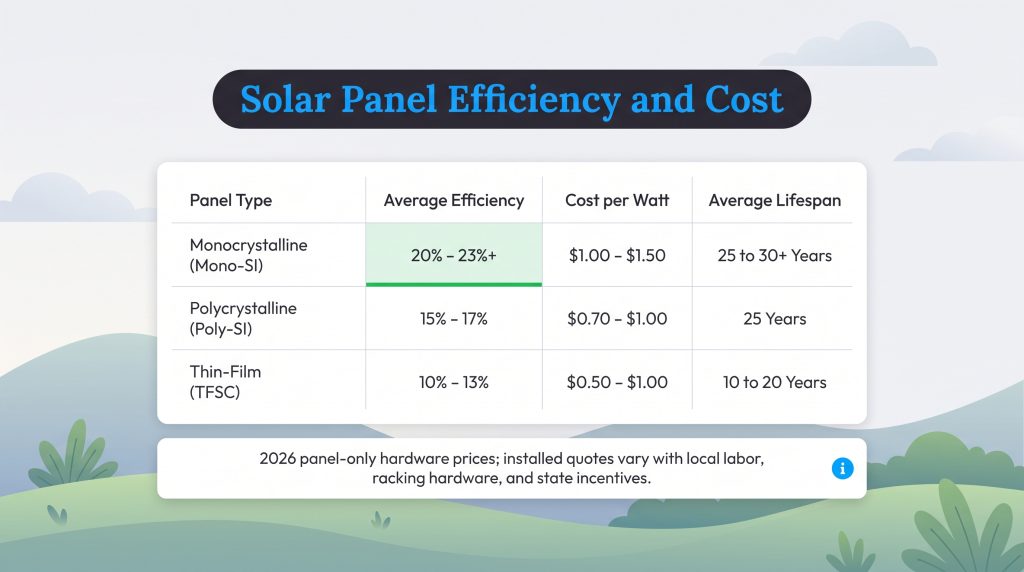
Evaluating hardware requires balancing upfront expenses against long-term energy generation. To easily visualize the core differences between the big three options, we have compiled a fast, scannable solar panel efficiency comparison table. Understanding the general cost of different types of solar panels alongside their expected lifespans will help you confidently discuss your options with your local installer.
| Panel Type | Average Efficiency | Cost per Watt | Average Lifespan |
|---|---|---|---|
| Monocrystalline (Mono-SI) | 20% – 23%+ | $1.00 – $1.50 | 25 to 30+ Years |
| Polycrystalline (Poly-SI) | 15% – 17% | $0.70 – $1.00 | 25 Years |
| Thin-Film (TFSC) | 10% – 13% | $0.50 – $1.00 | 10 to 20 Years |
Note: The average cost per watt specifically reflects the raw hardware price of the panels themselves as of 2026. Your actual, final installed quote will fluctuate significantly depending on local labor rates, specialized racking hardware, and active state incentives in your immediate area.
How To Choose The Best Solar Panels For Your Needs
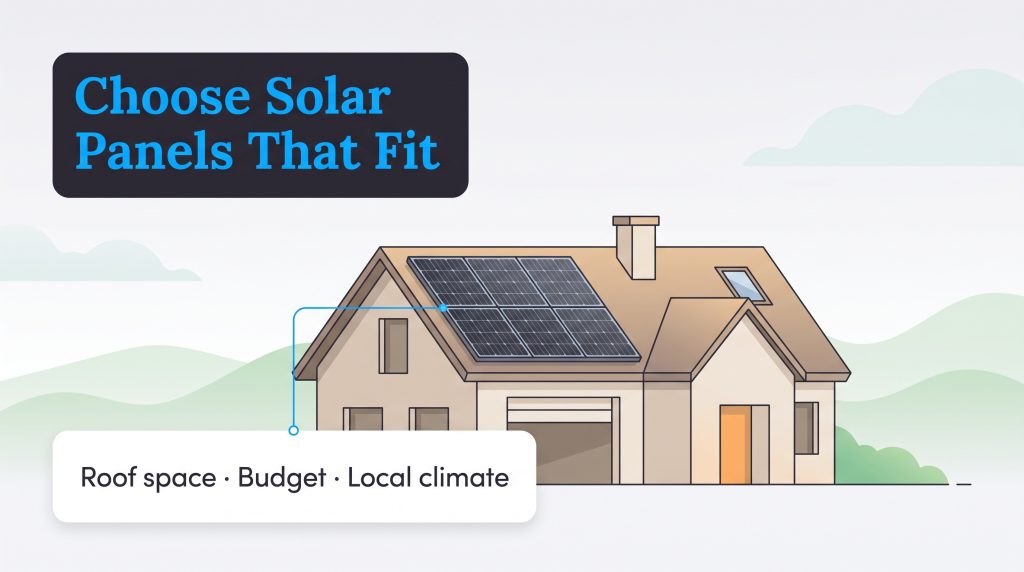
Choosing the absolute right hardware for your property is entirely about strategically matching the available technology to your specific constraints. Every single home and project is structurally different. What works perfectly for a neighbor’s massive farm might not be the smartest financial play for your suburban property. To secure maximum value, you need to evaluate your needs based on the following specific use cases.
Best Solar Panels For Home Use
When searching for the best solar panels for home use, you are almost always going to land on N-Type monocrystalline panels featuring PERC or TOPCon technology. Your available, unshaded roof space is the single largest dictating factor for a residential installation. Most homeowners must contend with permanent architectural obstructions like brick chimneys, skylights, and dormers, meaning you desperately need to generate as much raw power as physically possible per square foot.
High-efficiency monocrystalline panels are universally your best choice here because they effectively condense massive power potential into a highly compact physical array. While monocrystalline panels carry a steeper cost per watt upfront, they consistently offset a much larger portion of your monthly utility bill through beneficial programs like net metering.
Types Of Solar Panels For RVs And Camping
Evaluating the types of solar panels for RVs completely shifts your focus away from maximum power output and heavily leans toward durability, weight, and aerodynamics. A motorhome bouncing down a bumpy highway or parking under heavy, shaded tree canopies requires a highly adaptable power source. Because standard silicon modules are encased in heavy tempered glass and thick aluminum frames, they can add excessive, unwanted weight to your vehicle’s roof.
In this specialized scenario, flexible thin-film solar panels are often the superior choice. They easily mold to the curved aerodynamic roofline of a camper or van, practically eliminating wind resistance while you drive. Furthermore, thin-film technology is significantly better at generating a steady trickle of power in low-light, heavily shaded campsite conditions, ensuring your essential onboard batteries stay topped off even when parked under the pines.
Best Options For Commercial Properties
Commercial installations operate on an entirely different scale than residential jobs. If you are outfitting a massive, flat warehouse roof or a sprawling agricultural field, available space is rarely an issue. For these incredibly large projects, older polycrystalline modules or slightly lower-tier monocrystalline panels offer an outstanding balance of upfront affordability and economies of scale. Additionally, if the property features a bright white commercial roof membrane, upgrading to bifacial solar panels becomes an incredibly lucrative option, allowing the business to capture highly valuable reflected light and turbocharge their overall energy yields.
Preparing Your Roof For A Solar Installation
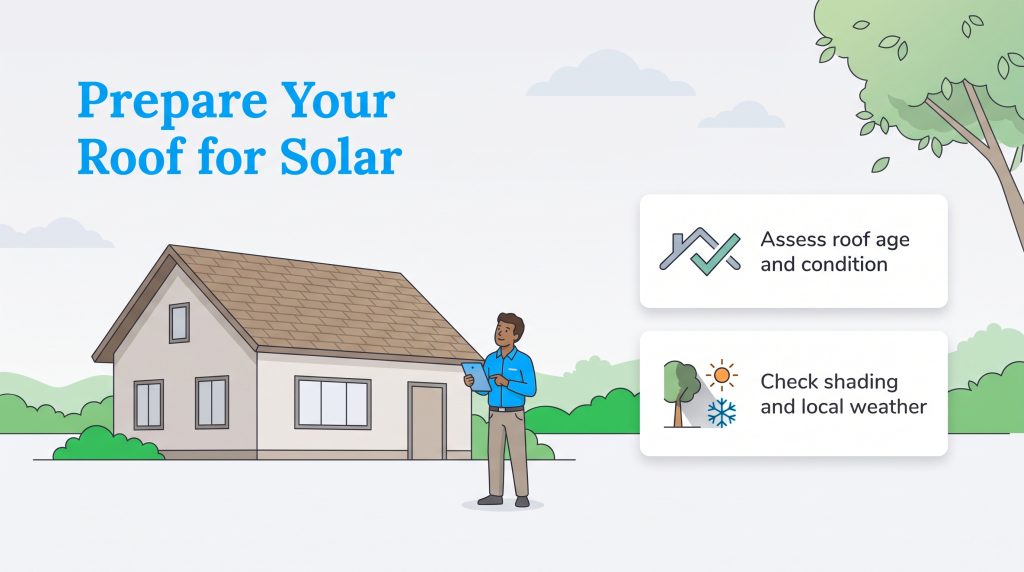
Before you commit to a specific panel type or sign a contract with a local installer, you must thoroughly evaluate the physical condition of your property. Placing brand-new hardware on an unprepared home can lead to disastrous financial headaches down the road. Use this quick checklist to ensure your home is truly ready for renewable energy:
- Roof Age and Condition: Never install panels expected to last 25 years on a roof that needs replacing in five years. Removing and reinstalling an entire solar array to fix old shingles is incredibly expensive. If your roof is older than 10 to 15 years, consider replacing it alongside your solar project.
- Shading and Obstructions: Track how sunlight moves across your property during the day. Fast-growing oak trees or towering neighboring buildings can easily cast heavy shadows that cripple your energy production. Trim back problematic branches before your final site inspection.
- Local Weather Patterns: If you live in an area prone to massive blizzards, you must ensure your chosen panels feature a high structural snow load rating. Conversely, if you live in a sweltering desert environment, you need premium monocrystalline panels with an excellent temperature coefficient to prevent massive efficiency losses during intense summer heatwaves.
Making Your Final Solar Investment Decision
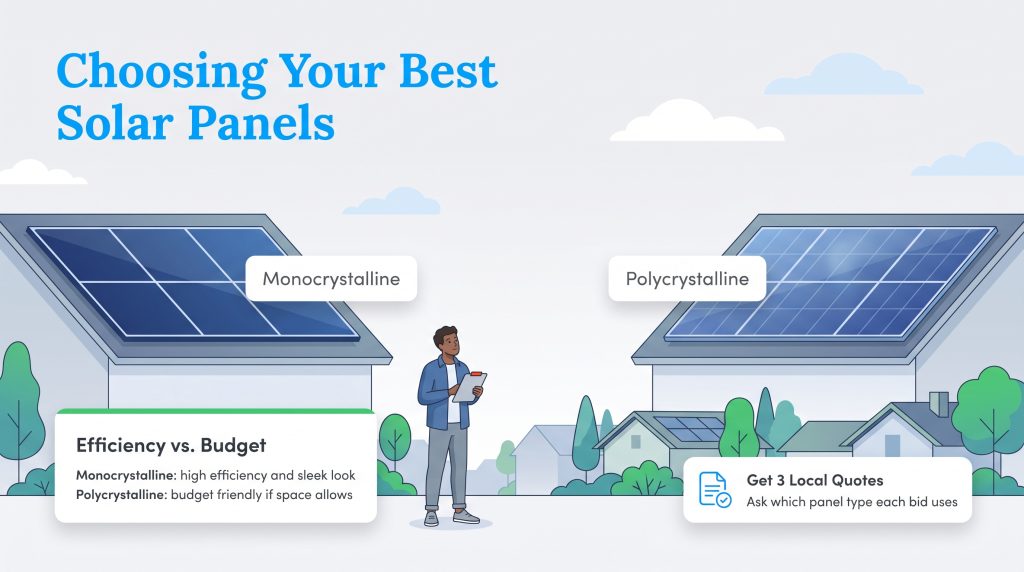
For the vast majority of modern residential homeowners, high-efficiency monocrystalline panels represent the absolute sweet spot in today’s renewable market. Thanks to rapidly advancing N-Type technology and vastly superior performance metrics, they effortlessly offer the best possible balance of sleek aesthetics, immense power output, and structural longevity. If you are strictly outfitting a specialized mobile project like a camper, thin-film panels remain an incredibly practical and adaptable choice. The smartest approach you can take is to actively request at least three different estimates from reputable local installers. Ask your representatives specifically which panel type and underlying cell technology are included in each proposal. This high level of technical transparency ensures you know exactly what hardware is going onto your roof, allowing you to secure an energy-saving option that fits your exact long-term financial goals.
Frequently Asked Questions About Types Of Solar Panels
What is the most efficient type of solar panel?
Are monocrystalline solar panels worth the extra cost?
How long do different types of solar panels last?
What is the difference between monocrystalline and polycrystalline solar panels?
Are flexible thin-film solar panels a good choice for residential roofs?
Do I need a specific type of solar panel for a flat roof?
Can I mix different types of solar panels on my roof?
Do solar panels work on cloudy days?
What are solar panels made out of?
About the Author

David has been an integral part of some of the biggest utility sites on the internet, including InMyArea.com, HighSpeedInternet.com, BroadbandNow.com, and U.S. News. He brings over 15 years of experience writing about, compiling and analyzing utility data.

Jared Evans is a licensed electrician and the owner of Full Circuit Electric in Omaha, Nebraska. As an expert reviewer for UtilitiesForMyHome.com, Jared uses his 10+ years of hands-on experience to ensure our electrical advice is safe, accurate, and easy to follow. Whether he's troubleshooting a complex wiring issue or sharing tips on green energy upgrades, Jared is dedicated to helping you power your home efficiently — and safely.

LaLeesha has a Masters degree in English and enjoys writing whenever she has the chance. She is passionate about gardening, reducing her carbon footprint, and protecting the environment. She also recently served as President of the Board for City Sprouts (a community garden).