

Understanding the Differences Between Fixed and Variable Rates Helps You Take Control of Your Monthly Utility Bills and Avoid Unexpected Seasonal Price Spikes
Key Takeaways
- A fixed rate electricity plan locks in your supply price per kilowatt-hour for the duration of your contract, offering predictable monthly budgeting.
- Variable rate energy contracts fluctuate based on wholesale market prices, which can save you money during off-peak seasons but carry the risk of sudden spikes.
- Comparing fixed and variable utility plans in a deregulated energy market allows you to successfully align your household’s unique usage habits with the right provider.
Tired of watching your utility costs climb unexpectedly every season? Choosing between fixed & variable rates is the most effective way to take back control of your household budget and avoid devastating bill shock. In today’s deregulated energy market, you have the power to shop around and select a pricing model that fits your exact lifestyle. By understanding how these competitive contracts work, you can secure peace of mind, prevent sudden seasonal price spikes, and make a highly informed decision before you sign your next utility agreement. Read on to discover which energy-saving option is best for your new home.
What Are Fixed Rate Electricity Plans?
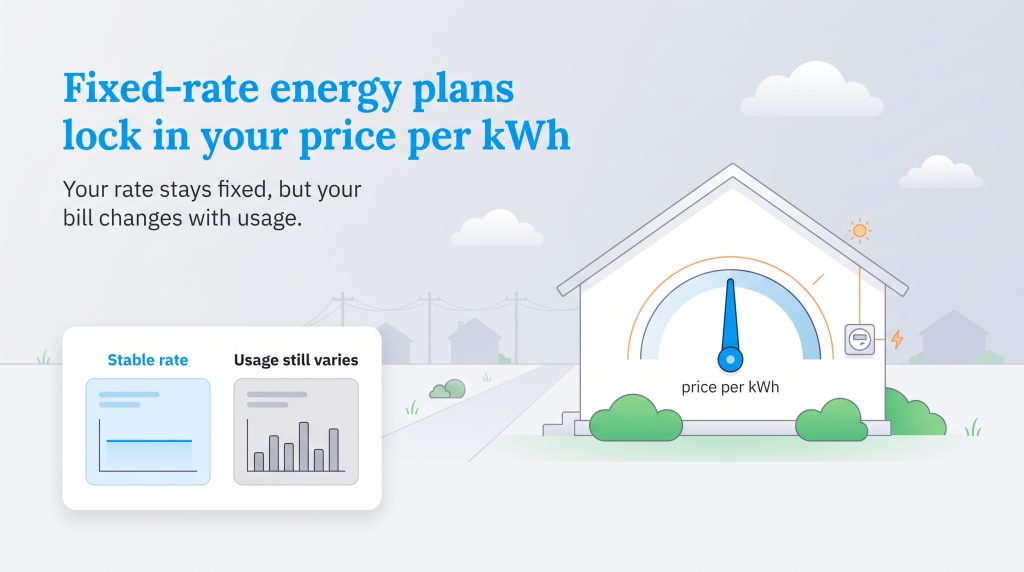
A fixed rate electricity plan is a utility agreement that secures your exact supply price per kilowatt-hour for the entire length of your contract. This structure guarantees price predictability, allowing you to budget with confidence because your base rate will never change during the agreed-upon term. To provide this level of long-term stability, energy companies purchase power in advance on the wholesale market. Because providers commit to these bulk supply purchases upfront, they often charge early termination fees (ETF) to recoup their financial losses if you unexpectedly break your contract before it officially expires. Whether a sudden heatwave strikes or a severe winter storm limits the grid’s overall power generation, your baseline rate remains perfectly protected from the chaos of the open market.
What Are Variable Rate Energy Contracts?
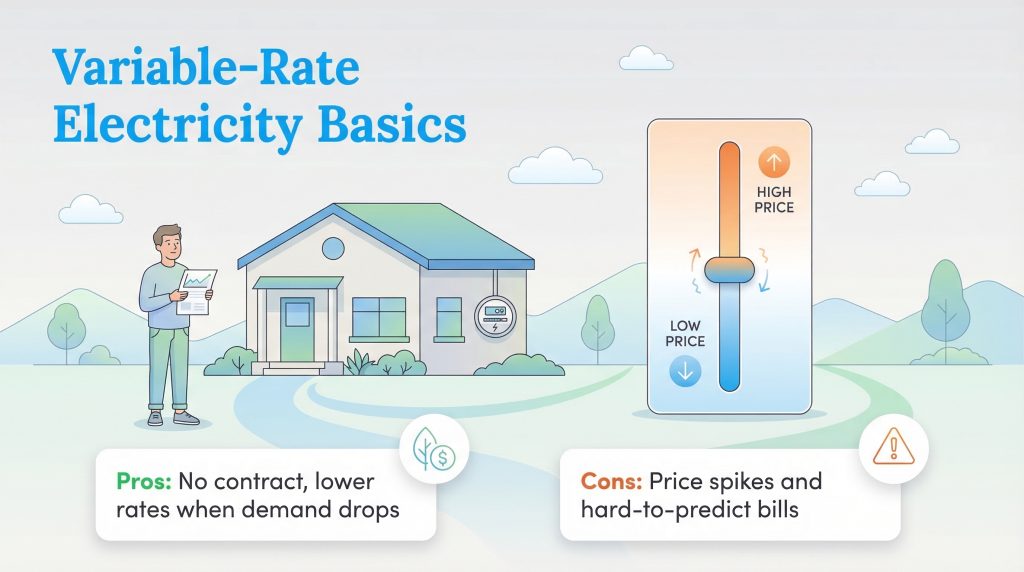
When you choose variable rate energy contracts, your pricing structure operates strictly on a month-to-month basis without any restrictive, long-term commitments. With this highly flexible setup, your price per kilowatt-hour fluctuates continuously based on wholesale electricity prices and overall consumer demand across the grid. While you might enjoy lower utility bills during mild seasons, you face a significant risk of extreme price spikes during severe weather events when power generation struggles to keep up with skyrocketing demand.
Keep in mind that variable pricing structures are not exclusively for electricity. Residential natural gas plans often use similar fixed- and variable-rate structures, though specific terms and administrative fees vary widely depending on your local service market.
Head-to-Head Comparison: Fixed vs Variable Rates
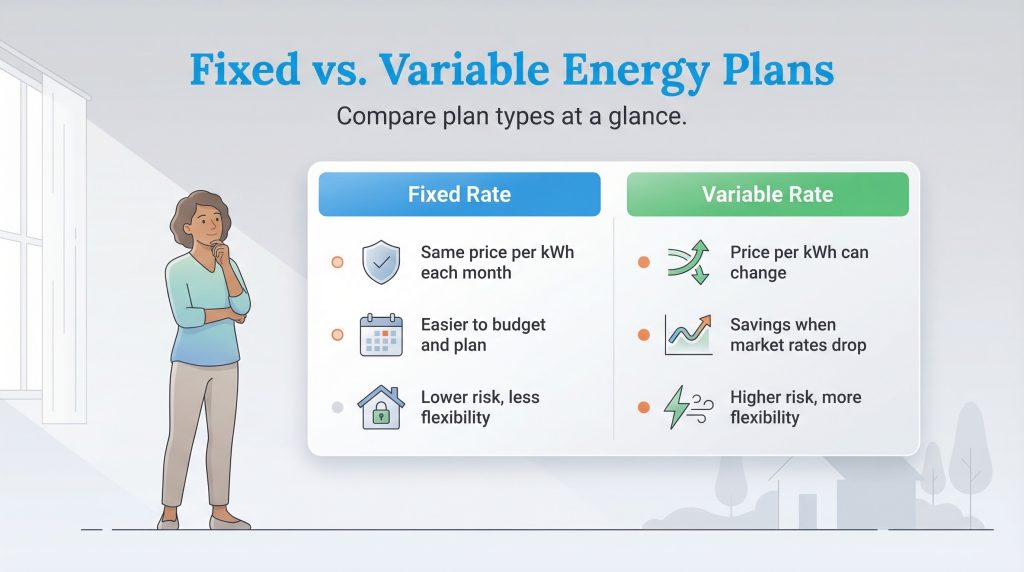
To make your shopping process much easier, compare fixed and variable utility plans side-by-side. Review these core differences to clearly see which contract structure aligns with your household needs, budget stability goals, and overall risk tolerance.
| Feature | Fixed Rate | Variable Rate |
|---|---|---|
| Price Predictability | Guarantees a highly predictable supply rate. | Causes unpredictable and fluctuating energy costs. |
| Contract Length | Requires a 12-, 24-, or 36-month commitment. | Operates strictly on a month-to-month agreement. |
| Risk of Price Spikes | Protects you entirely from extreme market volatility. | Exposes your budget directly to wholesale surges. |
| Best-Fit Consumer | Homeowners seeking long-term budget stability. | Short-term renters wanting maximum flexibility. |
Pros and Cons of Each Energy Plan
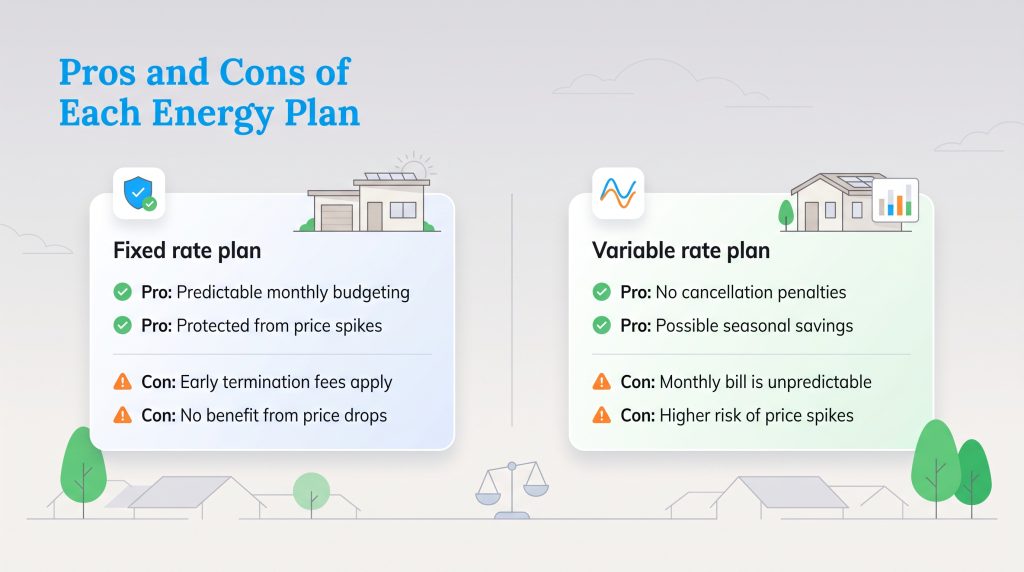
Understanding fixed vs variable electricity pros and cons is essential for making a confident, lasting choice. Review the specific advantages and disadvantages of each option to accurately determine which pricing model best aligns with your family’s budget and daily lifestyle.
Fixed Rate Plans
- Predictable monthly budgeting: You lock in a highly stable supply rate, making family financial planning much easier throughout the entire year.
- Protection from market volatility: Extreme weather events and sudden wholesale grid shortages will not impact your locked supply costs.
- Early termination fees (ETF): You can expect to pay a restrictive cancellation penalty if you need to break your contract before the term officially expires.
- Inability to capitalize on price drops: If wholesale electricity prices naturally fall during mild spring and fall seasons, you will not see those savings reflected on your bill.
Variable Rate Plans
- No early termination fees: You can quickly switch providers or move to a new property at any time without paying restrictive cancellation penalties.
- Potential seasonal savings: You capture immediate financial savings when wholesale energy market prices dip during periods of low demand.
- Unpredictable monthly budgeting: Financial planning becomes incredibly difficult since your base energy supply rate shifts without advanced warning.
- Vulnerability to price spikes: You might suffer extreme bill shock during severe summer heatwaves or unexpected winter freezes when grid wholesale prices surge.
How Market Volatility Impacts Your Utility Bill
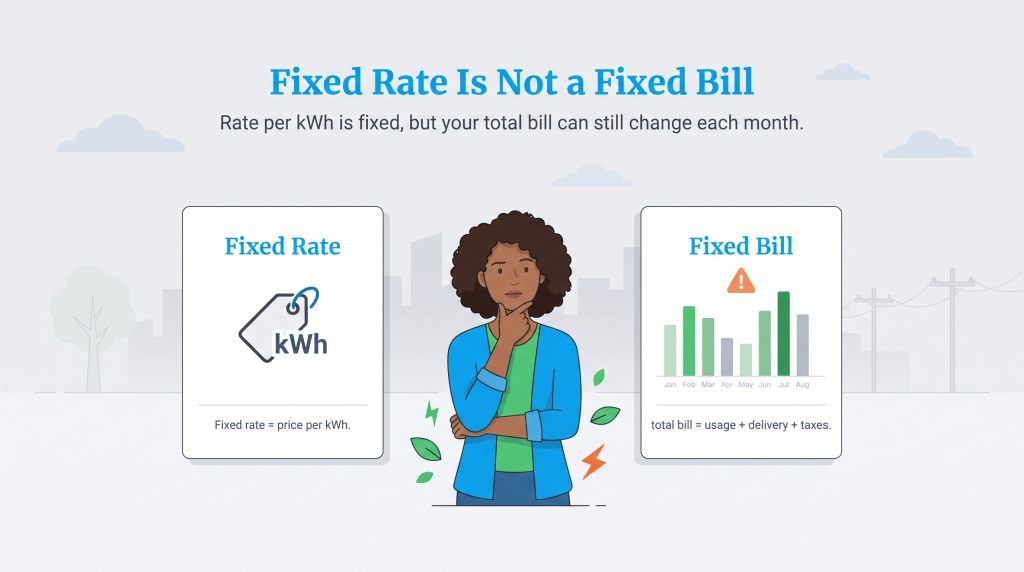
Understanding how market volatility influences your total monthly expenses is crucial for taking long-term control of your budget. In a deregulated energy market, wholesale electricity prices constantly rise and fall based on shifting seasonal demand and regional power generation capabilities. During peak summer heatwaves, millions of residential air conditioners running simultaneously strain the grid, causing supply costs to skyrocket almost instantly. Similarly, unexpected winter freezes can severely disrupt power generation infrastructure while simultaneously driving up the intense demand for household heating.
If you rely on a variable contract, these sudden market shifts directly inflate your price per kilowatt-hour. Even if you secure a fixed rate, severe regional temperatures continuously alter electricity prices and influence local utility delivery charges. This means your final bill will still fluctuate from month to month based strictly on the actual volume of energy your household naturally consumes.
Choosing Fixed & Variable Rates for Renewable Energy
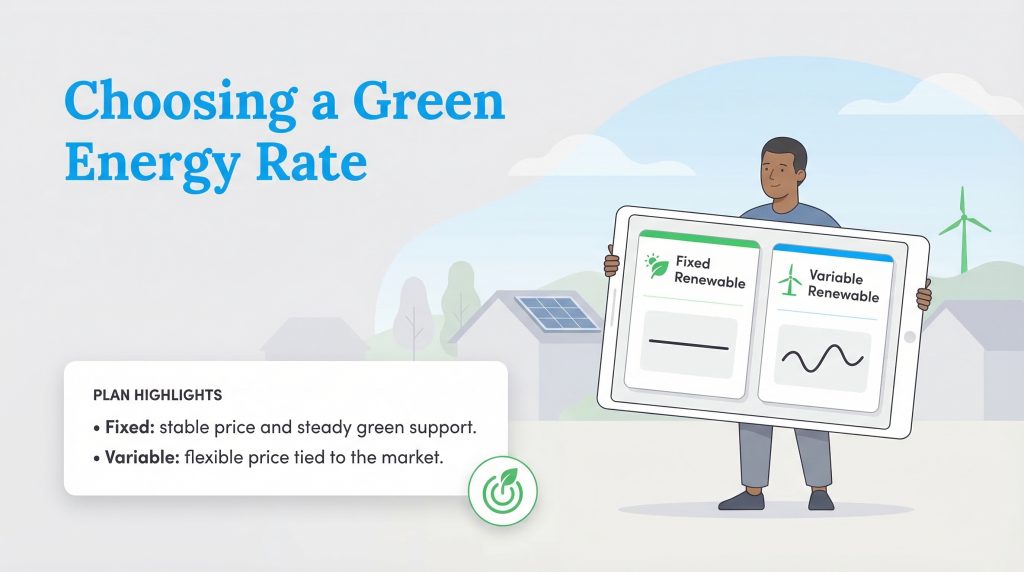
When evaluating your household’s renewable energy options, understanding how green energy plans are priced allows you to close the sustainability gap without overspending. Eco-conscious providers typically source their electricity directly from solar arrays and wind farms, seamlessly passing the clean energy credits on to residential consumers. We highly recommend locking in a fixed rate for solar and wind energy rather than gambling with a variable approach.
Securing fixed rate electricity plans ensures your environmentally mindful choice remains completely affordable year-round, successfully shielding your budget from the inherent generation fluctuations associated with weather-dependent power sources. By supporting clean infrastructure through long-term, fixed contracts, you gain tremendous budget stability while actively reducing your home’s carbon footprint. Established providers like Gexa Energy often offer competitive renewable choices, supported by the EPA Green Power Partnership, to help you comfortably achieve your green goals.
Key Factors to Check Before Signing an Energy Contract
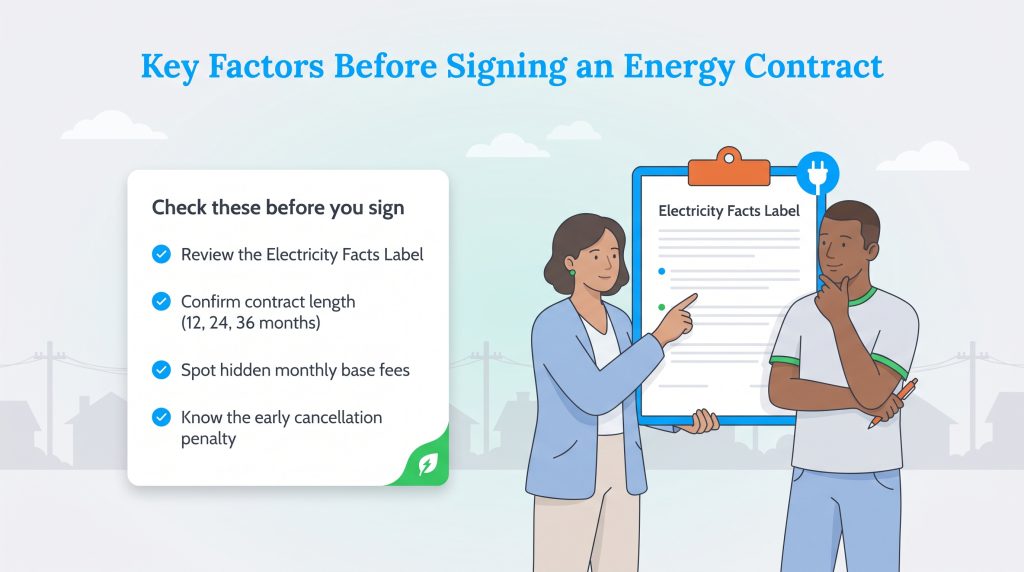
Before choosing an energy provider and signing an agreement, you must thoroughly review the fine print to protect yourself from predatory billing practices and extreme energy market fluctuations. A surprising number of households skip this crucial step and end up overpaying for basic utility service. Follow this straightforward, actionable checklist to safely evaluate any utility offer before you agree to the terms:
- Review the Electricity Facts Label (EFL): This standardized document breaks down the exact pricing formula, allowing you to easily compare competing offers side-by-side.
- Verify the fixed energy contract length: Confirm whether the agreement locks you in for 12, 24, or 36 months so you know exactly when the protected term expires.
- Identify hidden monthly base fees: Look for minimum usage fees or base administrative charges that apply even if you barely consume any power.
- Confirm the exact penalty amount: If you choose a fixed plan, determine exactly how much the provider charges for an early cancellation if you suddenly need to move.
Selecting Your Ideal Energy Strategy

Figuring out which energy plan works best ultimately comes down to analyzing your personal risk tolerance and daily lifestyle habits. Do not simply guess — evaluate your current housing situation and choose an energy strategy that clearly supports your long-term financial goals.
Choose a fixed rate plan if:
- You absolutely need predictable monthly electricity bills to stick to a tight household budget.
- You plan to stay in your current home or apartment for 12 months or longer.
- You want complete protection from seasonal price spikes during peak summer and winter months.
Choose a variable rate plan if:
- You prefer flexible month-to-month energy plans without restrictive long-term commitments.
- You are a short-term renter or intend to move out of your property within the year.
- You want to capitalize on potential savings during mild spring and fall seasons when wholesale prices drop.
Securing the Right Rate for Your Home
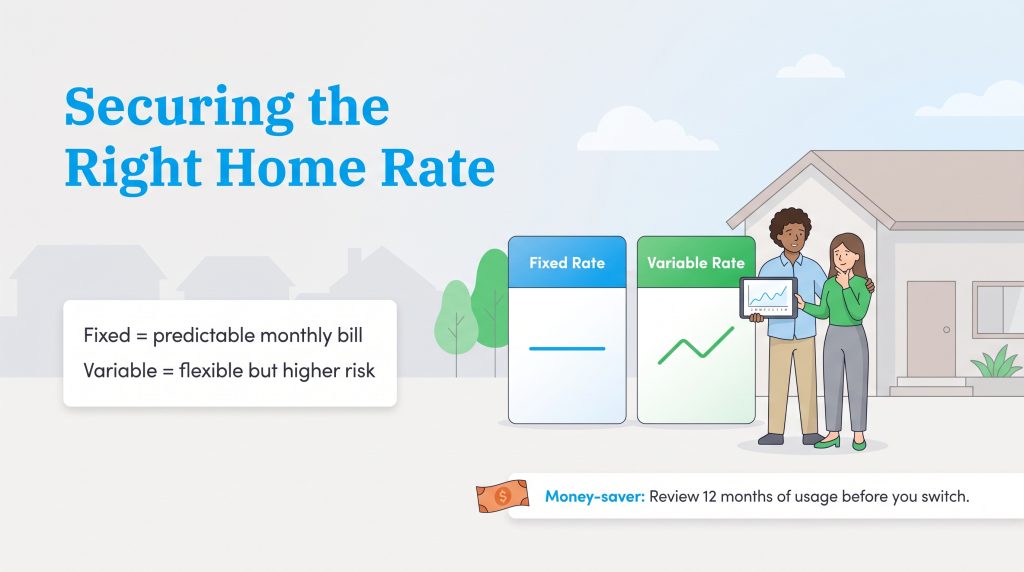
Moving into a new residence brings plenty of unexpected surprises, so your monthly power bill absolutely should not be one of them. While fixed contracts deliver the predictable bills most families crave, variable options offer excellent short-term flexibility if you can comfortably stomach weather-related market risks. Texas residents can utilize the official state shopping tool, Power to Choose, as a verified, risk-free way to safely compare live market rates.
Once you understand your options and pick a reputable provider, focus on practical ways to save on your electric bill by actively reducing your daily household consumption. By honestly assessing your habits and reading the fine print, you put yourself in a prime position to secure an energy-saving plan that keeps your home comfortable all year long.
Frequently Asked Questions About Fixed and Variable Rates
Do fixed-rate electricity plans have cancellation fees?
Yes, most fixed-rate plans charge an early termination fee (ETF) if you cancel your service before the contract expires. You can often avoid this penalty if you provide proof that you are moving to a new residence outside the provider’s service area.
What happens to my fixed rate when my energy contract expires?
If you do not actively renew your contract or switch to a new provider, your utility company automatically rolls your account onto a month-to-month default renewal rate. Check your Electricity Facts Label (EFL), as this default rate is typically a variable plan that costs significantly more than your previously protected fixed price.
Why do variable energy rates spike during the summer and winter?
Variable energy rates spike during the summer and winter because extreme weather dramatically increases consumer demand across the grid. Millions of households running air conditioners during summer heatwaves or heaters during winter freezes strain power generation facilities, directly causing wholesale electricity prices to soar.
Do fixed-rate electricity plans guarantee the same exact monthly bill?
No, a fixed-rate plan only guarantees your supply price per kilowatt-hour. Your total monthly bill still fluctuates based on how much actual electricity you consume, as well as mandatory delivery fees charged by your local utility company.
Can I switch from a variable rate to a fixed rate plan without a penalty?
Yes, you can easily switch providers and select a fixed electricity plan without a penalty because variable contracts typically lack early cancellation fees. This complete flexibility allows you to lock in a stable, long-term rate whenever you find a competitive market offer.
Is a variable-rate plan the same as a time-of-use plan?
No, they are different. A variable-rate plan changes your price per kilowatt-hour from month to month based on wholesale market conditions. A time-of-use (TOU) plan has a predictable, set schedule where electricity costs more during specific peak hours of the day and less during off-peak nighttime hours.
What is an Electricity Facts Label (EFL)?
An Electricity Facts Label (EFL) is a standardized document provided by energy companies in deregulated markets. It clearly details the exact pricing, fixed energy contract length, early termination fees, and renewable energy percentage of a specific plan, making it infinitely easier to compare competing offers side-by-side.
About the Author

David has been an integral part of some of the biggest utility sites on the internet, including InMyArea.com, HighSpeedInternet.com, BroadbandNow.com, and U.S. News. He brings over 15 years of experience writing about, compiling and analyzing utility data.

LaLeesha has a Masters degree in English and enjoys writing whenever she has the chance. She is passionate about gardening, reducing her carbon footprint, and protecting the environment. She also recently served as President of the Board for City Sprouts (a community garden).