Find out if switching to CleanSky Energy’s 100% renewable electricity plans can help you lower your monthly utility bill without sacrificing reliability.
Key Takeaways
- CleanSky Energy offers renewable electricity plans in select deregulated markets.
- Fixed-rate plans can help you avoid month-to-month price swings.
- Electricity Facts Labels and cancellation fees are the fine print to check before enrolling.
If you are searching for a 100% renewable energy provider, CleanSky Energy offers an accessible way to green your home’s power supply without the hassle of installing solar panels. Navigating the deregulated market can be tricky when every supplier claims to have the best rates, but our goal is to help you sift through the noise. We break down the latest CleanSky Energy plans, decode the contract fine print, and evaluate real customer experiences so you can confidently decide if this supplier is the right eco-conscious alternative for your household.
Is CleanSky Energy a Scam?
When researching energy suppliers, you might encounter search queries or forum posts asking about a potential CleanSky energy scam. We want to clear the air immediately: CleanSky Energy is a legitimate, fully licensed retail energy provider operating safely in multiple deregulated markets across the United States. They are strictly regulated by state public utility commissions.
Much of the online confusion stems from historical complaints regarding third-party, door-to-door sales representatives. Some consumers have reported aggressive or misleading sales tactics from these independent contractors. To protect yourself and verify legitimate offers, we strongly recommend bypassing door-to-door salespeople entirely. You can easily avoid predatory tactics by enrolling directly through the provider’s official website or your state’s energy choice portal.
CleanSky Energy Plans and Pricing
Finding the right electricity plan means balancing your monthly budget with your environmental goals. When comparing CleanSky Energy rates, you will find competitive pricing structures designed to offset your home’s carbon footprint effortlessly. The company offers a straightforward mix of fixed and variable structures, allowing you to choose the level of commitment that makes sense for your living situation.
| Plan Type | Pros | Cons |
|---|---|---|
| Fixed-Rate | Protects your supply rate from market changes during the contract term. | Requires a contract and charges early termination fees if you cancel early. |
| Variable-Rate | Offers flexibility with no long-term commitments or cancellation penalties. | Rates fluctuate with the market, leading to unpredictable utility bills. |
Fixed-Rate vs. Variable Plans
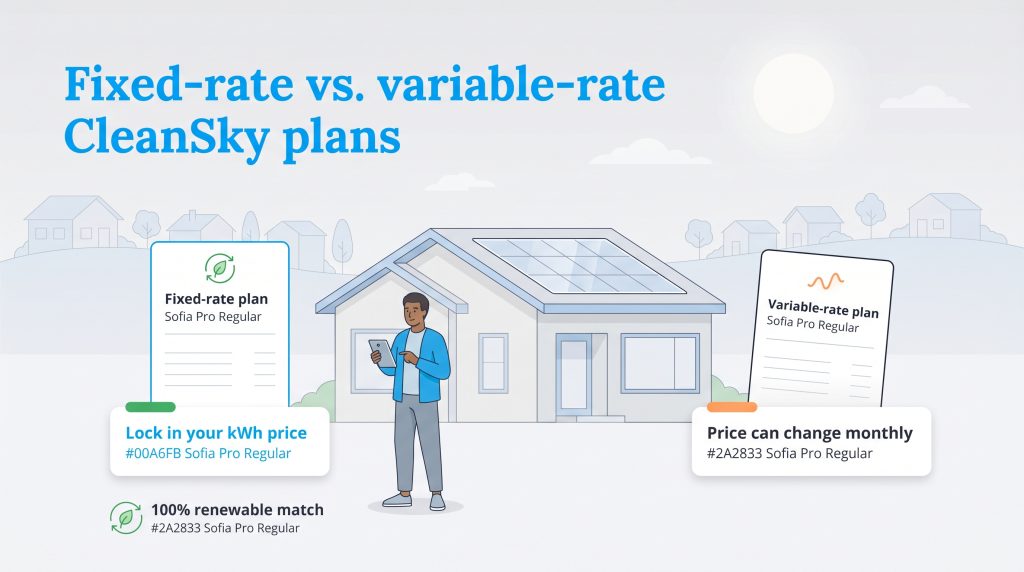
We heavily encourage shoppers to choose a fixed-rate plan. Locking in a fixed rate guarantees that your price per kilowatt-hour (kWh) remains completely unchanged for the duration of your contract, which usually lasts anywhere from 12 to 36 months. This setup protects your budget against drastic seasonal market spikes during hot summers or freezing winters.
Conversely, variable rates can rise rapidly when wholesale market prices or seasonal demand jump. While they offer the flexibility of canceling anytime without a financial penalty, they expose you to highly unpredictable utility bills. We recommend variable plans only as a short-term stopgap if you are moving in a few weeks.
100% Renewable Energy Options
CleanSky’s primary mission focuses on environmental conservation. As a dedicated 100% renewable energy provider, they offer plans that make sustainability accessible for everyone. Their green energy initiatives include:
- Wind and Solar Sourcing: The company purchases Renewable Energy Certificates (RECs) equivalent to your electricity usage, entirely offsetting the power you pull from the grid.
- Carbon-Neutral Natural Gas: In select markets, they offer natural gas plans designed to be completely carbon-neutral. This means the emissions associated with your home’s gas usage are offset through verified carbon credits tied to environmental projects.
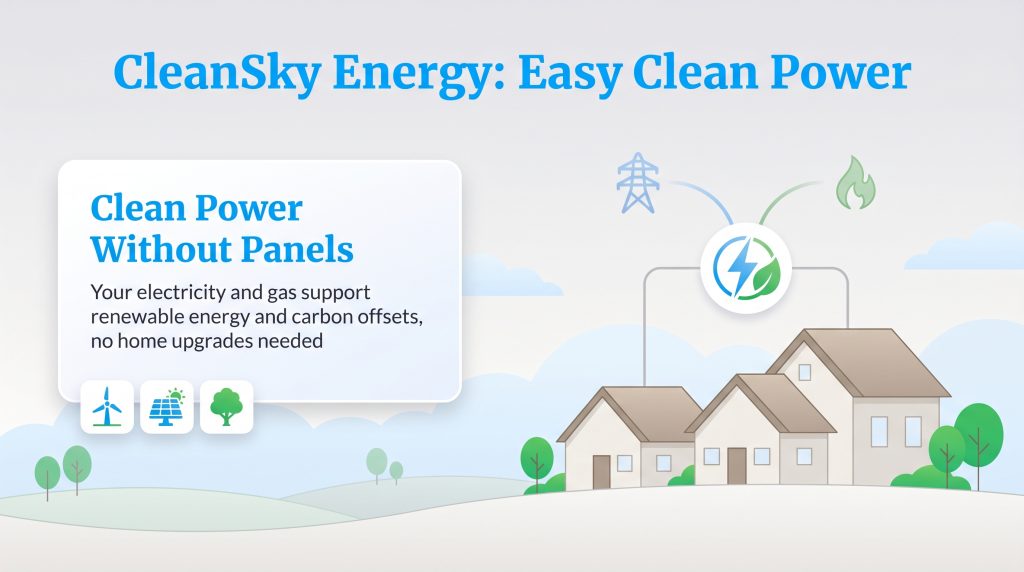
- Zero Installation Required: You support clean energy development seamlessly on the backend without needing expensive rooftop solar installations or special home upgrades.
CleanSky Energy Coverage Area and Locations
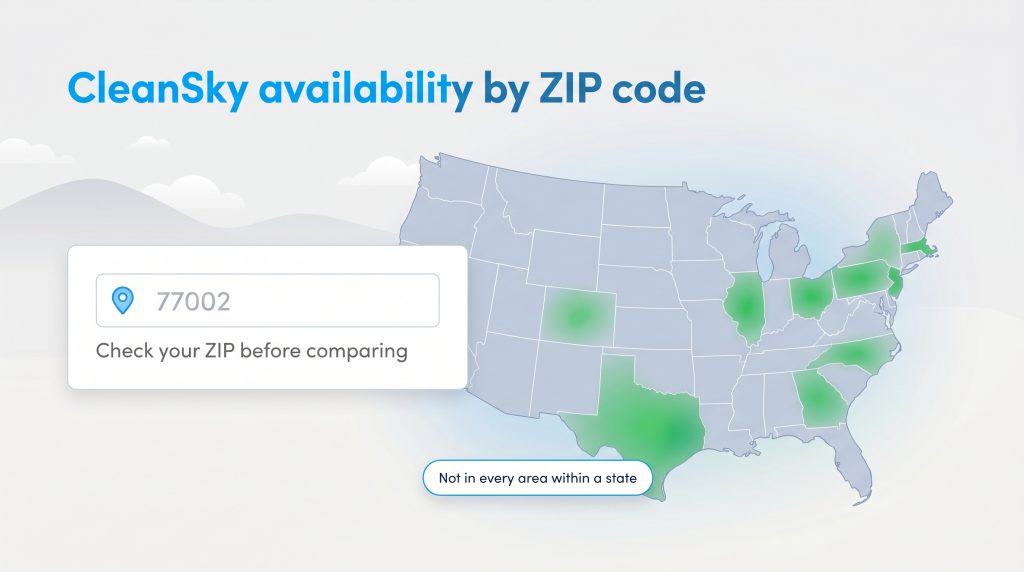
Plan availability varies significantly by utility territory, so you must always verify active offers using your specific ZIP code. Do not assume a plan is offered everywhere just because you live in a deregulated state.
CleanSky energy locations cover several deregulated electricity and natural gas markets. Currently, the company operates in the following states and their major metropolitan areas:
- Texas (including Houston, Dallas, and Fort Worth)
- Pennsylvania (including Philadelphia and Pittsburgh)
- Ohio (including Cleveland and Columbus)
- New Jersey (including Newark and Jersey City)
- Massachusetts (including Boston)
- Other Service Areas: Maryland, Illinois, Delaware, Michigan, New Hampshire, and Washington, D.C.
💡 Pro Tip: Your chosen retail supplier handles the energy generation, but your local utility company still maintains the grid, infrastructure, and meters in these areas.
Deals, Discounts, and Ways to Save
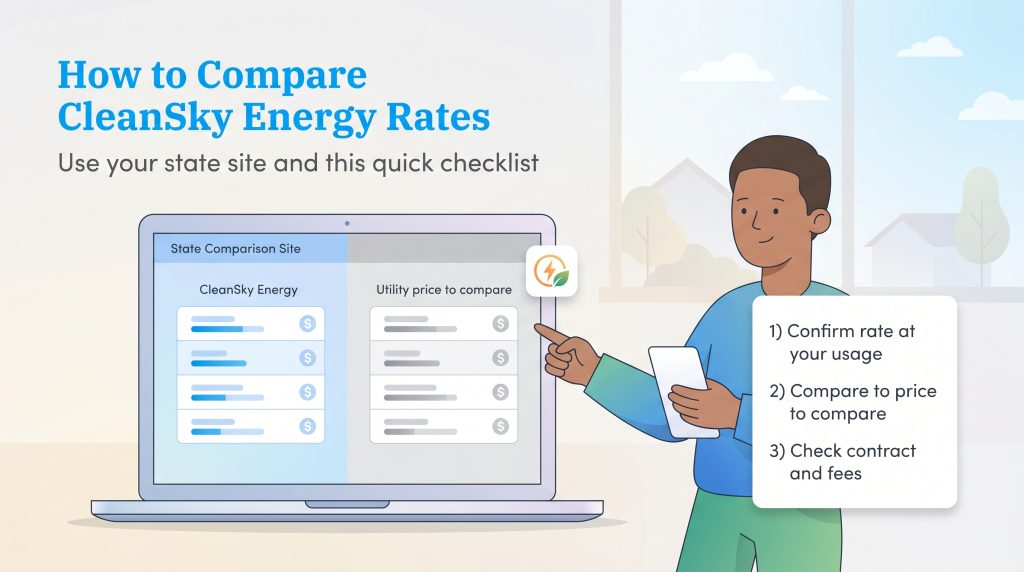
Maximizing your savings requires strategic shopping before you sign a new contract. Always check your state’s official energy comparison site — such as Power to Choose in Texas or PA Power Switch in Pennsylvania — so you can compare live rates directly against the default utility “Price to Compare.” Knowing where to find the right numbers is half the battle.
If CleanSky advertises a referral bonus or promotional code, read the offer terms carefully, as eligibility rules and expiration dates can change frequently. Embracing an energy-saving option works best alongside proactive household habits like sealing air leaks and running heavy appliances during off-peak hours.
CleanSky Energy Reviews and Customer Ratings
Analyzing real customer feedback gives us a clear picture of what it is actually like to use this provider. When searching through CleanSky Energy reviews online, opinions are predictably polarized, which is a common reality in the retail energy sector.
Many satisfied customers highlight the company’s straightforward fixed rates and seamless transition process. The transparency of knowing exactly where their green energy comes from is a major benefit for environmentally conscious homeowners. On the other hand, negative feedback submitted to the Better Business Bureau (BBB) and various state public utility commissions often centers around confusion over early exit fees and unwanted solicitation from independent sales reps.
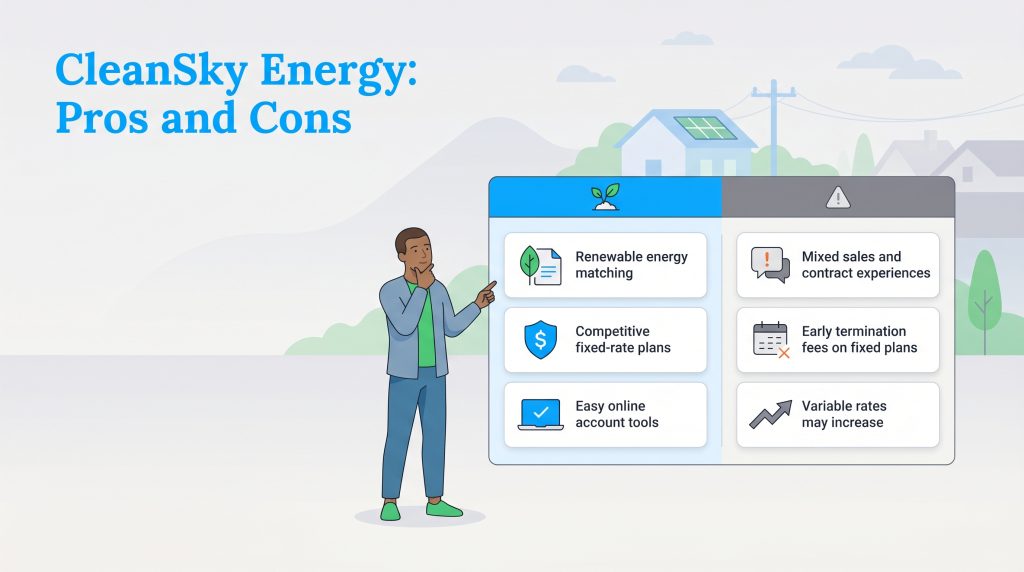
Here is a breakdown of the primary strengths and weaknesses we found during our review process:
- Pros: Excellent commitment to renewable energy matching through RECs, competitive fixed-rate plans that protect against market volatility, and an easy-to-use digital dashboard.
- Cons: Aggressive third-party sales representatives in certain states, strict early termination fees, and expensive variable rates if you let your fixed contract expire without renewing.
Fees, Guarantees, and Contract Terms
The biggest hurdle for most consumers switching energy providers is understanding the fine print. To prevent unexpected bill shock, you need to be aware of standard operational costs. Many CleanSky plans include a recurring monthly base charge, with standard $5.95 base fees being a very common fixture in their terms of service.
Additionally, if you sign up for a fixed-rate plan and decide to break your contract early, you will encounter a strict early termination fee (ETF). CleanSky’s early termination fees vary by plan and market. Some plans charge a flat fee, while others calculate the penalty based on the months remaining in the contract. These fees range significantly, often starting at $25 and climbing as high as $275 depending on your specific agreement.
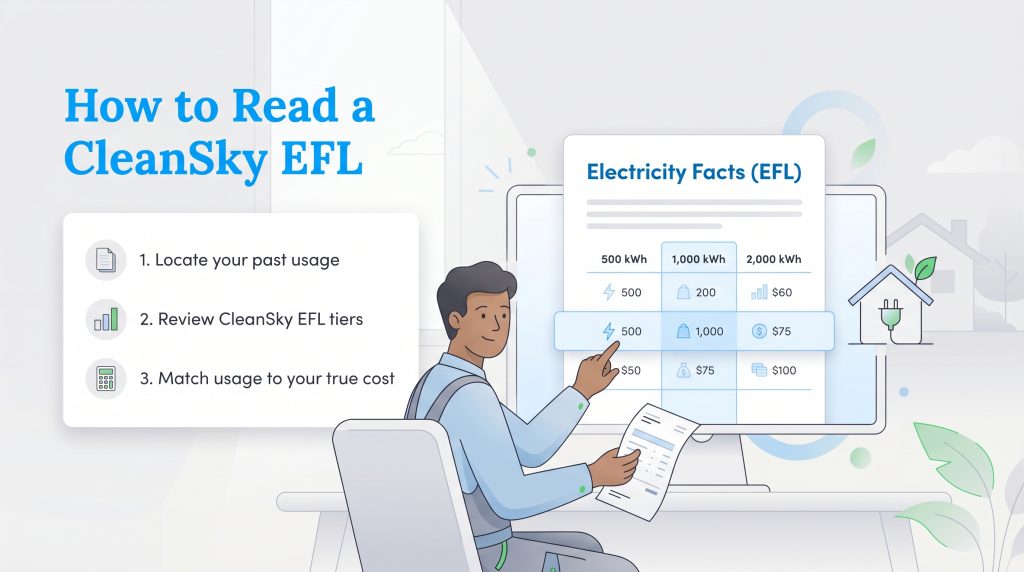
To fully understand these costs, you must read the Electricity Facts Label (EFL) attached to your plan. The EFL acts like a nutrition label for your power bill, detailing exactly what you will pay based on your average monthly kilowatt-hour consumption. Providers typically advertise their rates at specific usage tiers, so matching your past usage to the EFL is the only way to get an accurate cost estimate.
🚩 Heads Up: Always set a calendar reminder for your contract end date so you don’t automatically roll over into an expensive variable-rate plan once your initial term expires.
Managing Your Account Login and Bill Pay
Staying on top of your monthly usage is critical for maintaining a predictable budget. CleanSky makes it relatively simple to handle your financials through their digital portal. Whether you need to review past statements or update your payment method, managing your profile takes only a few minutes.
Follow these steps to access your account seamlessly:
- Register Your Profile: Visit the official website and navigate to the CleanSky energy login page to create your online account using your unique customer ID or account number.
- Log In to the Dashboard: Use your new credentials to securely access your monthly energy usage statistics, contract expiration dates, and billing history.
- Complete Your CleanSky Energy Bill Pay: The portal allows you to set up automatic drafts, make a one-time digital payment, call the automated phone system to pay via credit card, or find the proper address to mail a physical check.
How to Switch or Transfer Service When Moving
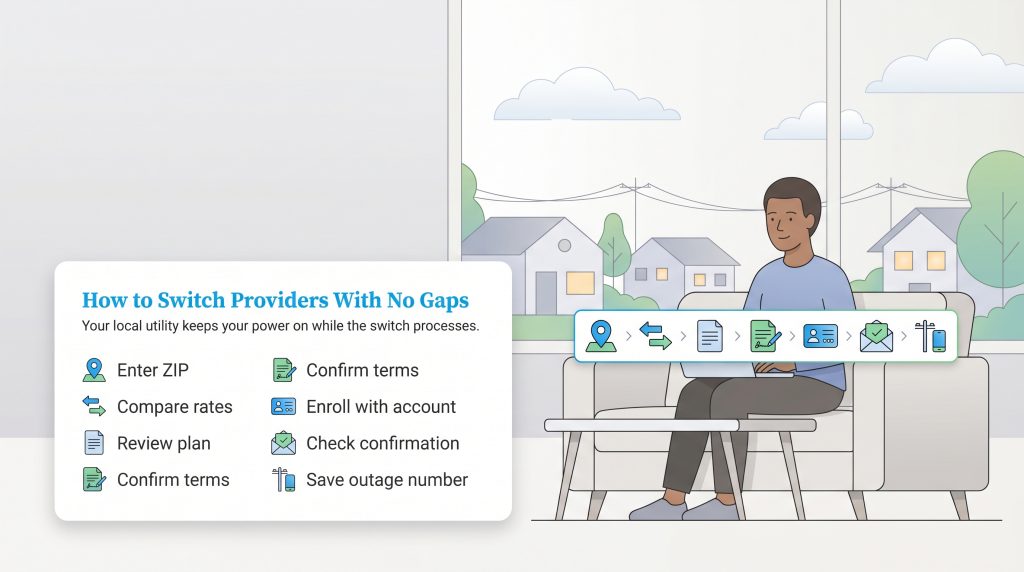
If you are a renter or new homeowner moving into a deregulated area, you can easily transfer or set up your service through this same digital portal, provided they service your new ZIP code. Verifying availability in advance ensures that you won’t experience an unexpected disruption when you arrive at your new residence.
Many consumers worry that switching providers will cause a lapse in coverage, but the transition is an entirely administrative process. Your local utility will keep the lights on while the paperwork is securely processed in the background, allowing you to settle into your home without any utility headaches.
How to Report a CleanSky Energy Outage
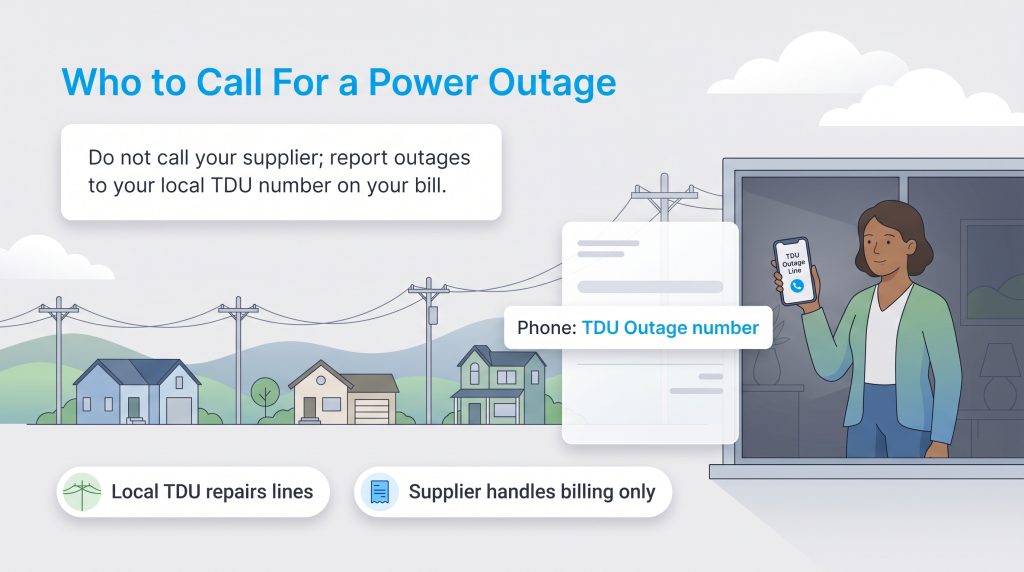
A common misconception when switching energy suppliers is assuming your new provider handles physical grid repairs. We want to be very clear: CleanSky Energy does not restore power during an outage. They strictly handle the financial and supply side of your electricity account.
The actual physical delivery of power remains the responsibility of your local Transmission and Distribution Utility (TDU). If a severe storm rolls through and your lights go dark, do not call CleanSky. Instead, you need to contact your local utility company directly. Your TDU owns the poles and wires, making them the only entity equipped to fix the problem and restore your service.
| State / Territory | Local Utility (TDU) | Emergency Outage Contact |
|---|---|---|
| Texas | Oncor | 1-888-313-4747 |
| Texas | CenterPoint | 1-800-332-7143 |
| Pennsylvania | PECO | 1-800-841-4141 |
| Ohio | AEP Ohio | 1-800-672-2231 |
CleanSky Energy Customer Service and Contact Info
Having reliable access to support is crucial when dealing with utility contracts. If you need to clarify a billing issue, update your mailing address, or discuss your renewal options, you can reach out to their support team directly.
For immediate assistance during standard business hours (Monday through Friday, 8:00 a.m. to 7:00 p.m. EST), dial the CleanSky energy phone number at 1-888-355-6205. For non-urgent inquiries, you can also utilize the secure messaging feature located inside the account portal on their official website.
Deciding if CleanSky Energy Is the Right Choice for Your Home

CleanSky Energy is an excellent match for eco-conscious consumers who want a reliable, fixed-rate renewable energy plan. If you prioritize shrinking your household’s carbon footprint and want the peace of mind that comes with predictable pricing, their 100% renewable electricity and carbon-neutral natural gas options provide immense value. It is the perfect fit for homeowners who are willing to read the contract fine print and lock in a long-term rate that beats their local utility’s default pricing.
However, this provider is not for everyone. You should avoid CleanSky Energy if your sole priority is securing the absolute lowest price per kilowatt-hour, regardless of where the energy comes from. Additionally, if you plan on moving in the near future or prefer the flexibility of canceling at a moment’s notice, the strict early termination fees attached to their best plans will likely make this supplier a poor fit for your lifestyle.
Frequently Asked Questions About CleanSky Energy
These quick answers cover the most common questions about CleanSky Energy plans, fees, renewable claims, and switching service. Review these details carefully to ensure a smooth transition to your new provider.
Is CleanSky Energy a legitimate company?
How do I cancel my CleanSky Energy plan?
Does CleanSky Energy charge an early termination fee?
Is CleanSky Energy actually 100% renewable?
Do I need solar panels to use CleanSky Energy?
How do I contact CleanSky Energy customer service?
Will my power go out if I switch to CleanSky Energy?
About the Author

David has been an integral part of some of the biggest utility sites on the internet, including InMyArea.com, HighSpeedInternet.com, BroadbandNow.com, and U.S. News. He brings over 15 years of experience writing about, compiling and analyzing utility data.