

Timing your electricity switch correctly can lower your monthly bills and unlock better renewable energy perks
Key Takeaways
- Shop during spring and fall when heating and cooling demands drop significantly to secure the lowest possible electricity rates.
- Compare transfer options against new provider rates when moving to a new home to avoid hidden costs and expensive auto-renewals.
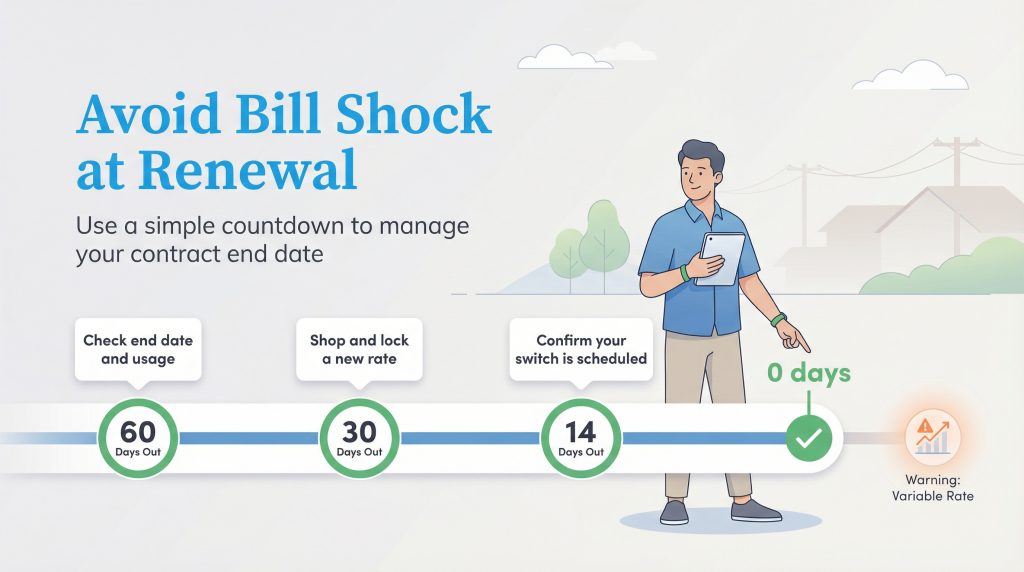
- Start shopping 30 to 60 days before your contract expires to comfortably lock in a competitive fixed rate and bypass unpredictable variable pricing.
Knowing exactly when to switch electric service can save your household hundreds of dollars annually, but your strategy will depend entirely on whether you are relocating to a new property or simply hunting for a cheaper rate at your current address. Most homeowners and renters don’t realize that energy prices fluctuate predictably throughout the year based on extreme weather patterns, wholesale generation costs, and overall grid demand. Because of these distinct seasonal shifts, your timing is absolutely critical to securing a low, stable rate that protects your family budget. Whether you need to establish a brand-new utility connection for an upcoming move or want to confidently swap your current plan for an eco-conscious alternative, understanding the best times to shop will shield your wallet from unnecessary cancellation fees, safeguard you against massive variable rate spikes, and give you lasting peace of mind.
- Are You Moving or Just Switching Providers?
- When to Switch Electric Service When Moving
- When to Change Electricity Supplier to Save Money
- Fixed vs Variable Rates: What to Know Before You Switch
- Executing Your Transition: 4 Steps to Switch Safely
Are You Moving or Just Switching Providers?
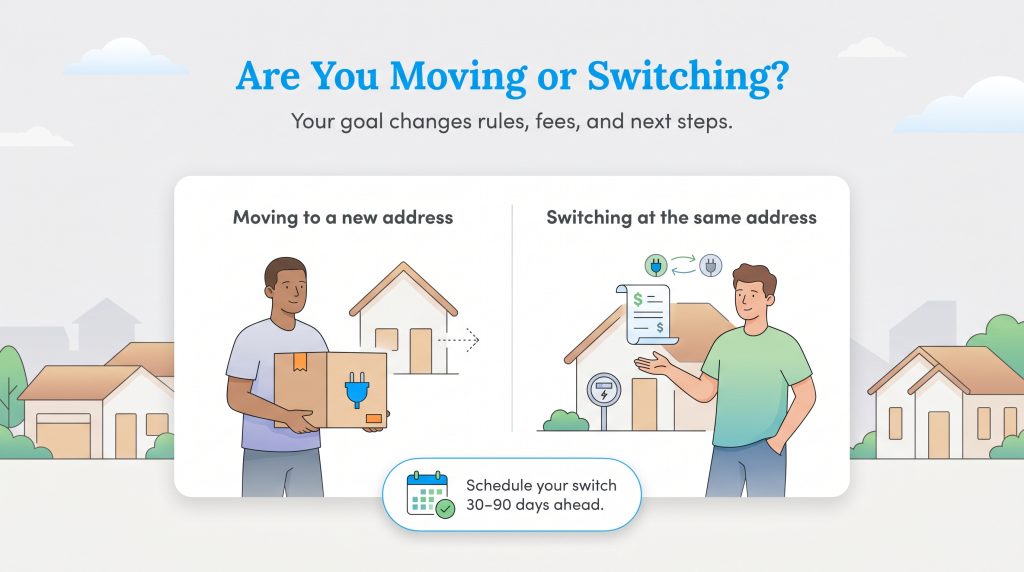
Before diving into seasonal timelines and complex rate structures, we need to correctly identify your primary goal. Figuring out exactly when to change electricity providers hinges on whether you are packing up moving boxes or just tired of overpaying for power at your current house. Living in a deregulated energy choice market means you have the power to select your retail electricity provider rather than being forced to use the local utility’s default rates. Switching electric providers in these markets is generally straightforward, but categorizing your upcoming transition correctly is the essential first step to avoiding surprise charges and utility headaches. By understanding exactly which bucket you fall into, you can take advantage of specific consumer protections and flexibility tools built into the energy industry.
Moving to a New Address
When you physically move to a new property, you trigger a qualifying event in the eyes of utility companies. This legal designation is incredibly beneficial because it typically allows you to break your current contract without facing any financial penalties, provided you submit adequate proof of your change of address. However, establishing service at a new home requires more administrative legwork on your end. You must manually contact your old provider to request a shut-off date and then independently establish an account with a new provider for your new residence. Because this involves setting up a brand-new connection with the local delivery grid, it often requires a harder look at your credit history and demands tighter coordination to ensure your lights are on when the moving truck arrives.
Switching at the Same Address
If you are perfectly happy in your current home but highly dissatisfied with your expensive monthly energy bill, you fall into the standard switch category. Transitioning providers at the same address is remarkably seamless. You do not have to endure a disruptive power outage, and you don’t even need to call your old company to cancel. Your new supplier handles all the background communication directly with your local utility grid operator to shift the billing transparently. The most critical factor when executing a standard switch is timing your contract expiration correctly so you aren’t hit with a massive penalty fee for leaving your current agreement too early.
| Feature | Moving to a New Address | Switching at the Same Address |
|---|---|---|
| Service Cancellation | You must manually cancel your old service and contact a provider to schedule your new service. | Your new provider automatically contacts your old supplier and cancels your old service when you switch. |
| Cancellation Fees | Moving is typically considered a “qualifying event,” meaning no Early Termination Fees (ETFs) usually apply if you provide proof of your move. | If you decide to break an active fixed-rate contract early without moving, you will likely have to pay a steep Early Termination Fee. |
| Credit Impact | Often requires a hard credit pull to establish brand-new service and verify your identity at a new location. | Usually only requires a soft credit check or relies on your existing utility payment history, protecting your credit score. |
| Logistical Timing | You must carefully consider overlapping service dates for moving days, deep cleaning, and property inspections. | Service transitions seamlessly on your monthly meter reading date with absolutely no power interruption inside your home. |
When to Switch Electric Service When Moving
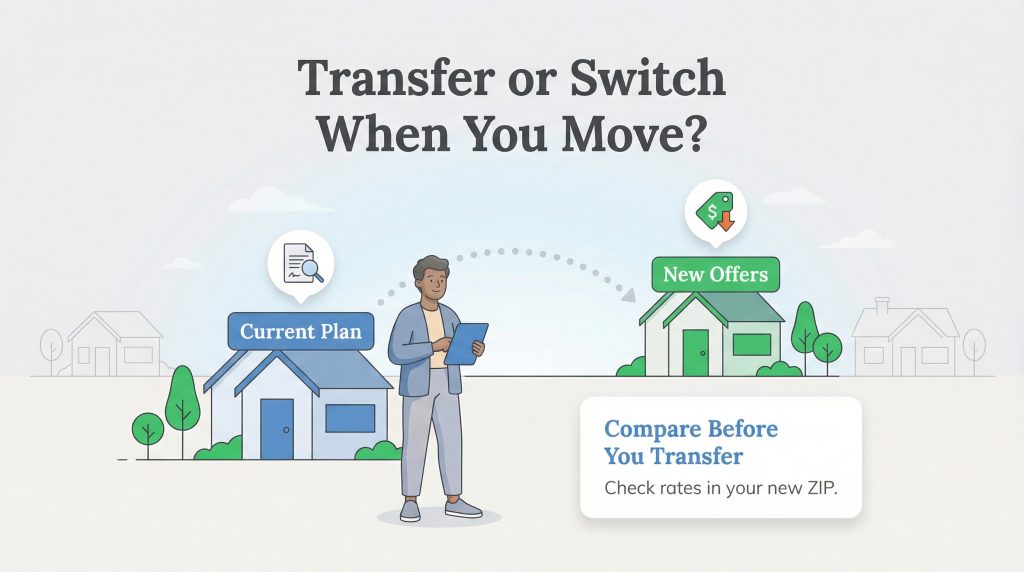
Relocating is chaotic, and figuring out your switch electric service moving timeline takes a bit of deliberate coordination. It is incredibly tempting to simply bring your current utility provider to the new address to save time. However, assuming that transferring service is your best option can be a very costly mistake. Before you finalize transferring utilities when buying a house or signing a lease, carefully evaluate your options. Competitive rates available in your future ZIP code might be significantly lower than the loyalty rate you are currently paying. Canceling your old service entirely and signing up fresh is often the easiest way to financially reset your energy costs. We highly recommend exploring our complete guide on comparing electric providers to find the absolute best deal for your new neighborhood before making a final commitment.
The 2-3 Week Rule for Scheduling Utilities
If you are wondering exactly when to set up utilities when buying a house or moving into an apartment, our golden rule is to schedule your electric service two to three weeks before your official closing or move-in date. Waiting until the absolute last minute can leave you stranded without functioning power on move-in day, particularly during busy summer months when utility companies are highly backlogged with thousands of requests. By securing your grid connection 14 to 21 days in advance, you ensure your account is fully processed, the smart meter is ready to communicate, and you have ample time to address any unexpected credit checks.
If a real estate closing gets delayed or a landlord hands over the keys unexpectedly, you can often utilize same-day service availability for emergencies. Most retail providers offer expedited connection for an additional fee. While same-day setup is a lifesaver when you are in a pinch, relying on it strips away your ability to comfortably shop around, so always aim for the two-week buffer whenever possible.
How to Overlap Service Safely
One of the most common logistical mistakes people make when relocating is cutting off the power at their old house on the exact day they load up the moving truck. To execute this transition safely and avoid a major headache, you must track overlapping service dates exactly. Follow this strict instruction: Leave the power on for one to two days after moving out of your old home, and turn it on one to two days before moving into your new home. Strategically overlapping your transition dates is an absolute necessity for several important reasons:
- Final Walkthroughs: Landlords and prospective property buyers need functioning overhead lights to comfortably complete their final property inspections without rushing in the dark.
- Deep Cleaning: You will absolutely need electricity for heavy-duty vacuums, steam carpet cleaners, and proper lighting while scrubbing empty rooms before handing over the keys.
- Climate Control: Maintaining an active HVAC system prevents dangerous mold in humid climates and avoids costly frozen pipes in freezing weather during the brief vacancy.
- Avoiding the Dark: Arriving at your new home only to unpack heavy, cumbersome boxes by smartphone flashlight is an incredibly miserable way to start your first night.
🚩 Heads Up: You must submit proof of your move to your current provider to waive the cancellation charge. Providing a forwarded lease agreement or official closing document ensures you avoid these unexpected penalties.
When to Change Electricity Supplier to Save Money
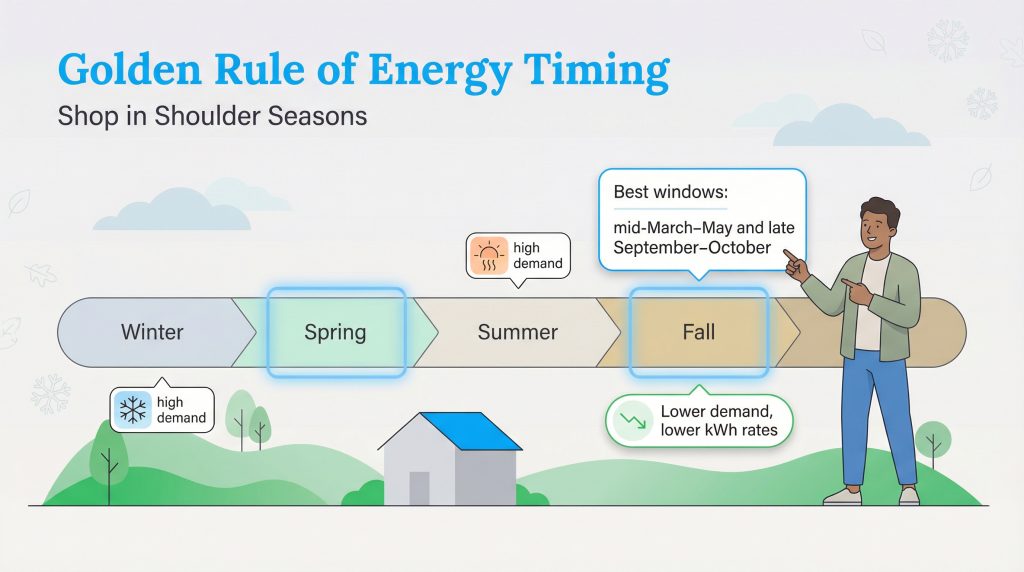
In the competitive retail energy industry, timing is truly everything. Electricity prices are heavily influenced by the delicate balance of supply and demand, which is driven almost entirely by extreme weather patterns. According to the U.S. Energy Information Administration (EIA), electricity prices often rise sharply when regional demand peaks. During the hottest weeks of summer, residential air conditioners work overtime, straining the power grid and driving generation prices aggressively upward. Similarly, deep winter freezes drastically increase the demand for electric heating, leading to another highly predictable price spike. If you plan to stay in your current home but want to permanently lower your monthly bills, securing a cheaper rate requires strategic timing and a clear understanding of macroeconomic market conditions.
The Best Months to Switch (Energy Shoulder Seasons)
If you want to completely avoid paying seasonal premiums, the best time of year to switch energy suppliers is purposefully during the energy shoulder seasons. The absolute best months to target are March, April, October, and November. During these incredibly mild transitional periods, homes naturally require significantly less energy for daily heating and cooling. Local power plants aren’t working nearly as hard to keep up with intense HVAC usage, resulting in a massive, reliable surplus of supply on the overall grid.
This dynamic plays out on a massive scale across major grid networks. Wholesale energy markets like the PJM Interconnection or ISO New England (ISO-NE) operate on capacity auctions. During peak summer heat or extreme winter freezes, capacity fluctuations force these grid operators to dispatch highly expensive, inefficient peaker plants just to keep the lights on. The cost of running these backup generators is passed directly down to you. However, during the spring and fall shoulder seasons, capacity is abundant, and the baseline generation costs plummet. This lower overall demand directly translates to a much lower rate per kilowatt-hour (kWh) for consumers. If you can properly align your provider switch with these precise seasonal windows, you will consistently find the cheapest rates available.
How Natural Gas and Wholesale Markets Dictate Rates
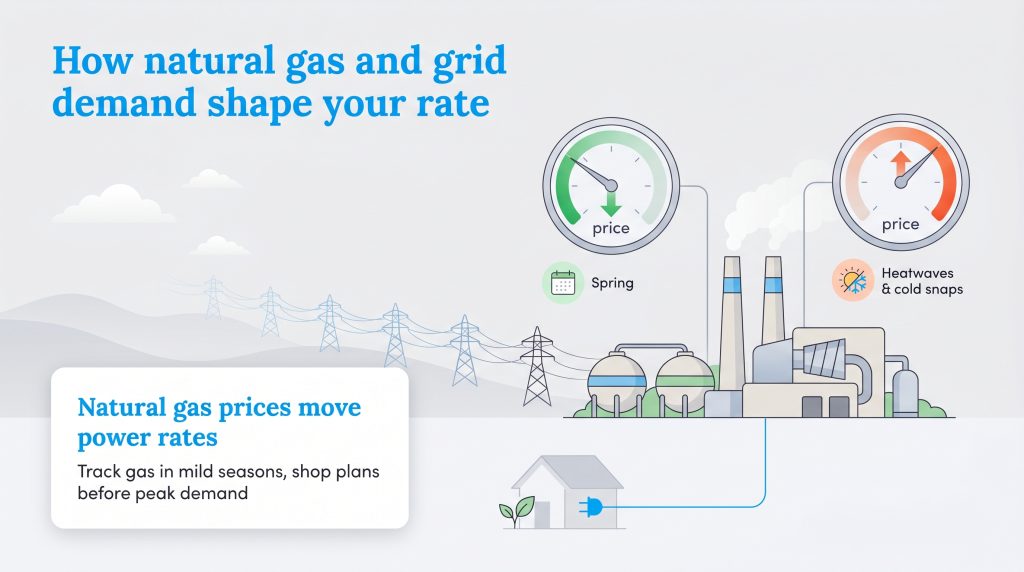
To truly understand when to switch electric service, we have to look behind the scenes at how power is physically generated. Across the United States, natural gas fuels the vast majority of commercial power plants. Because of this heavy reliance, the wholesale price of natural gas directly dictates what you will ultimately pay on your monthly electricity bill. When natural gas is cheap and abundant, generating power costs the utility companies much less, and retail suppliers are eager to pass those wholesale savings on to consumers to win their business.
💡 Pro Tip: We highly recommend tracking natural gas spot prices as a leading indicator for electricity rates. When natural gas prices trend downward in the early spring, retail electricity rates will almost certainly drop shortly after.
Fixed vs Variable Rates: What to Know Before You Switch
When selecting a new energy plan, deciding between a fixed vs variable electric rates structure will dictate your entire household budget for the next year. The energy market is notoriously volatile, and determining how you want to manage that financial risk will clarify which plan type is right for your home. The biggest enemy of affordable household electricity is inaction, and unknowingly falling into the wrong rate structure can cost you dearly. Below, we break down the critical comparisons between the two primary rate structures available in deregulated regions.
| Feature | Fixed-Rate Electric Plans | Variable-Rate Electric Plans |
|---|---|---|
| Price Stability | Firmly locks in your exact price per kWh for the entire duration of the contract (usually 12 to 36 months), making monthly household budgeting incredibly easy and predictable. | Fluctuates monthly based directly on real-time wholesale energy market conditions, meaning your bill could wildly vary from one month to the next without warning. |
| Market Exposure | Provides total financial protection against seasonal market volatility, natural disaster supply issues, and extreme weather price surges like summer heatwaves. | Leaves you entirely exposed to massive, exponential price spikes when grid demand is critically high or wholesale power generation becomes strained. |
| Commitment & Fees | Requires a formal long-term commitment. You must pay an Early Termination Fee (ETF) if you decide to break the contract early without executing a qualifying residential move. | Provides ultimate flexibility with absolutely no long-term commitments, meaning you can walk away at any time without facing early cancellation penalties. |
| Holdover Risk | If you fail to actively renew or switch plans before expiration, you automatically roll into a highly volatile default rate. | Since you are already paying a fluctuating market price, there is no expiring contract risk — but your baseline price could spike at any moment. |
- The Danger of Month-to-Month Rates: The financial dangers of falling into expensive month-to-month electricity plans cannot be overstated. If you let your fixed-rate contract simply expire without manually selecting a new plan, your provider will legally shift your account onto a month-to-month holdover rate. These default variable rates are notoriously expensive and can cause your monthly bill to double overnight. Always take decisive action before your expiration date.
How to Avoid Early Termination Fees and Gimmicks
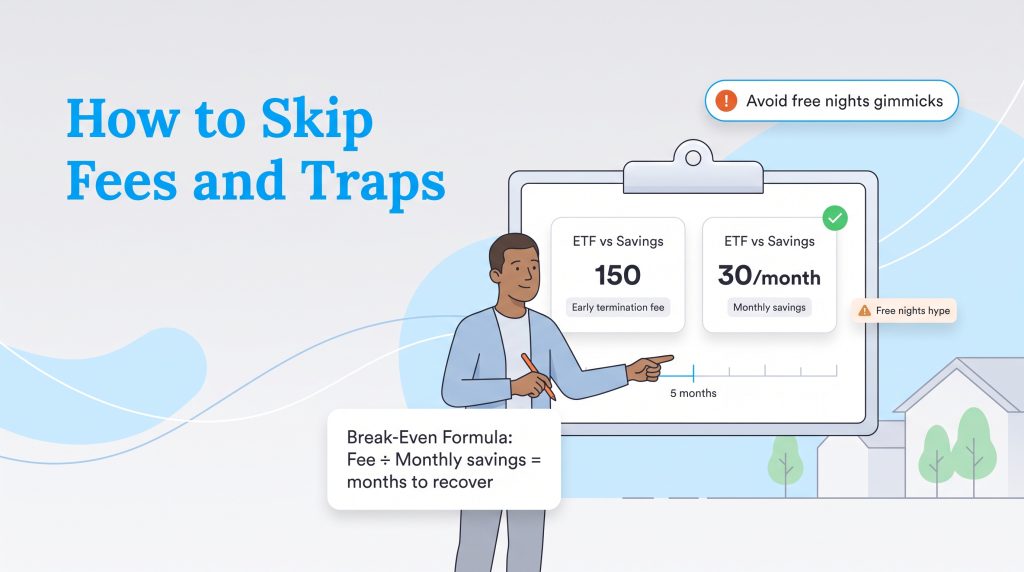
Sometimes you spot a promotional deal that is simply too good to pass up, but you are still securely locked into a contract for another six months. To navigate this transition seamlessly and protect your bank account from predatory tactics, you must calculate whether paying a penalty is mathematically worth the long-term monthly savings. Knowing the insider rules of utility contracts empowers you to safely change providers.
Break-Even Formula: (Early Termination Fee) ÷ (Estimated Monthly Savings) = Months to Break Even
To figure out if taking an early termination fee electricity charge makes sense, apply the formula above. For example, if your current provider’s cancellation penalty is $150 and your new plan definitively saves you $30 a month, it will take exactly five months to break even. If you have more than five months left on your current agreement, switching makes incredibly strong financial sense. You can confidently compound these savings by pairing a well-timed switch with behavioral usage tweaks from our guide on how to save on your electric bill.
The 14-Day Switching Window
You do not have to wait until the literal final day of your contract to make a move. Thanks to consumer protection laws in most deregulated energy markets, customers are granted a generous grace period to finalize their transitions. You are legally permitted to switch providers up to 14 days before your current fixed-rate contract officially expires without paying a single penalty fee. Using this critical legal buffer prevents last-minute panic and guarantees your account transitions smoothly before falling into a dreaded variable holdover rate.
Why You Must Avoid “Free Nights and Weekends” Plans
As you shop for new energy suppliers, you will inevitably encounter flashy marketing campaigns promising incredibly appealing perks. However, many of these time-of-use structures are cleverly designed traps. You must carefully scrutinize “Free Nights and Weekends” plans before ever signing up. Here is exactly why these gimmicks often cost consumers more money:
- Exorbitant Daytime Base Rates: While electricity might be genuinely “free” from 9 p.m. to 6 a.m., providers heavily inflate the rate you pay during daytime hours to recover their costs. You might end up paying double or triple the standard market rate during the day.
- Mismatched Household Usage: If you work from home, have young children, or prefer running major appliances like your dishwasher or dryer on a Tuesday afternoon, these plans will severely punish your daily routine with massive charges.
- Misleading Averages: Providers calculate the advertised average price based on the assumption that you will shift over 40% of your total energy consumption into the free periods, which is incredibly difficult for a normal family to achieve.
💸 Money-Saver: To see if a time-of-use plan actually fits your lifestyle, log into your current utility portal and review your hourly usage data. If you already use the vast majority of your power in the evening without trying, it might be a fit. Otherwise, stick to a flat, predictable fixed rate.
Shifting Your Contract Cycle With Odd-Term Plans
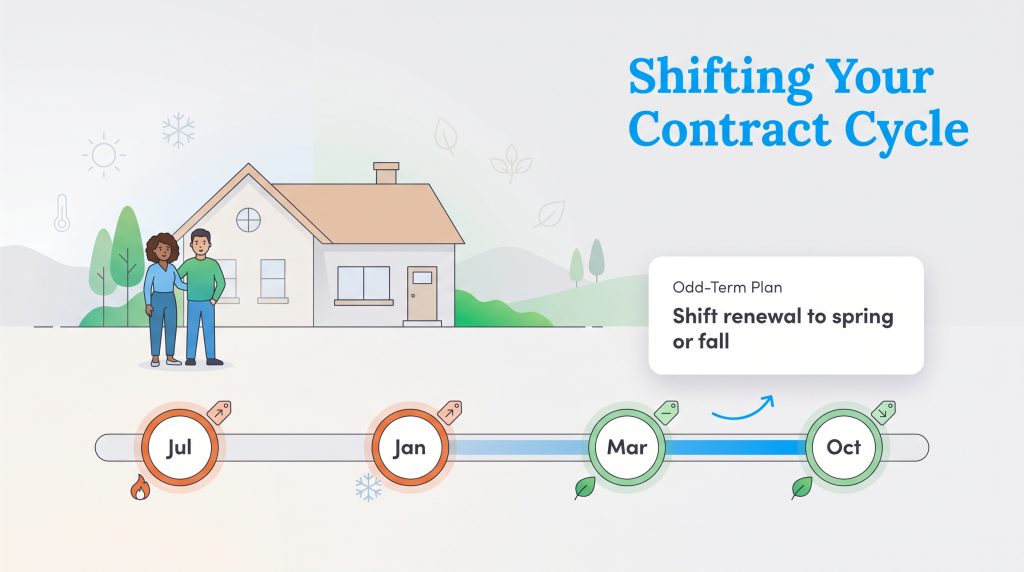
One of the most powerful tactics savvy homeowners use to guarantee long-term affordability is proactively shifting their electricity contract expiration date. Millions of consumers are unknowingly trapped in a terrible renewal cycle. If you originally signed up for electricity in the middle of a blazing July or a freezing January, a standard 12-month or 24-month contract ensures you will always have to renew your service during peak pricing months. This leaves you completely at the mercy of inflated seasonal rates year after year.
You can permanently break this bad cycle by utilizing an odd-term electricity plan. Instead of defaulting to a 12-month term, aggressively search for an 8-month, 10-month, or 14-month contract. By intentionally selecting an unconventional duration, you will forcefully push your future expiration date back into the highly favorable spring or fall shoulder seasons. Once your expiration date lands safely in March, April, October, or November, you can return to signing standard 12-month or 24-month agreements, perpetually locking in low shoulder-season pricing for the rest of your life.
Lifestyle Triggers: When to Switch Based on Usage Changes
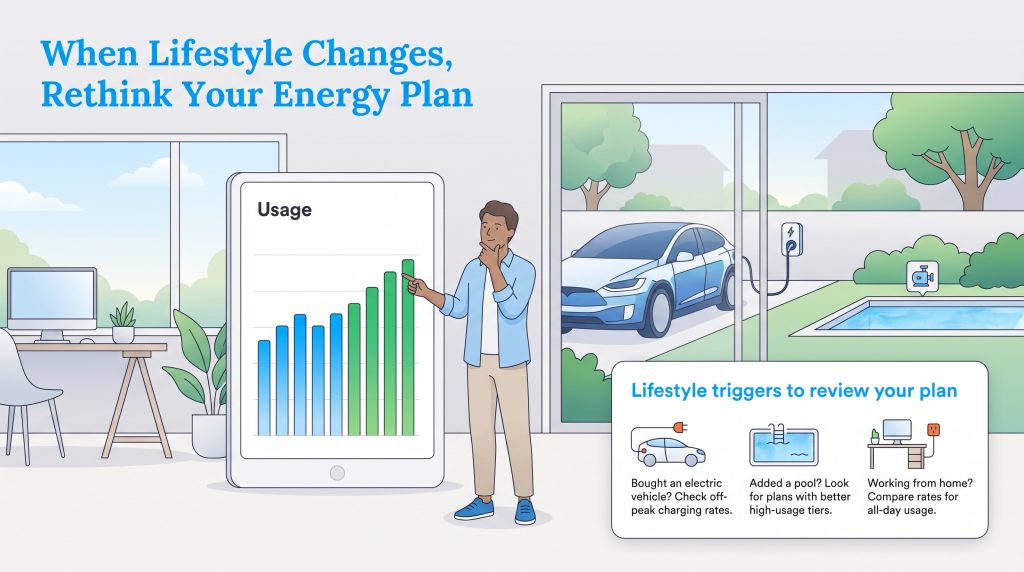
Timing your switch is not just about the calendar — it is also about exactly what is happening inside your house. Major life events drastically alter your kilowatt-hour consumption, meaning the energy plan you signed up for last year might be entirely wrong for you today. If your daily consumption patterns have fundamentally shifted, you need to reevaluate your service immediately. There are three major lifestyle changes that mandate a rate switch:
- Purchasing an Electric Vehicle (EV): Charging an EV at home requires a massive amount of power. If you recently bought a Tesla or Ford F-150 Lightning, your nightly usage will skyrocket. You need a plan explicitly structured with lower nighttime base rates to handle the heavy load without destroying your budget.
- Installing a Pool: A residential pool pump running eight to 12 hours a day will easily add hundreds of kilowatt-hours to your monthly bill, especially in the summer. You need to switch to a higher usage tier plan that offers a lower rate for heavy consumers.
- Transitioning to Work-From-Home: Moving from an office to a permanent remote schedule means running your home HVAC, monitors, and lighting all day long. A plan that seemed perfectly affordable when the house was empty from 9-to-5 will quickly become a financial burden.
Before selecting a new rate tier, you must comprehensively audit your previous 12 months of usage data. Log into your current utility portal, pull your historical consumption numbers, and ensure your new plan perfectly aligns with your newly established lifestyle footprint.
Leveraging Provider Satisfaction Guarantees
Making the jump to a new retail electricity company can be slightly nerve-wracking, especially if you are concerned about hidden fees or poor customer support. To reduce buyer friction, many premium retail providers now offer robust satisfaction guarantees. These safety nets allow you to thoroughly test-drive a new supplier without risking a heavy cancellation penalty.
A typical 30-day or 60-day satisfaction guarantee permits you to switch to a new provider, receive your first bill, and evaluate their service quality entirely risk-free. If you discover that their billing transparency is inadequate or their customer service department is unresponsive, you can immediately cancel your contract and switch back to your old provider without paying a dime in early termination fees. We highly command that you verify this specific clause directly in the Terms of Service document before you enroll. Having this guarantee explicitly written in your contract gives you total leverage and unmatched peace of mind during your transition.
Switching to a Renewable Energy Plan
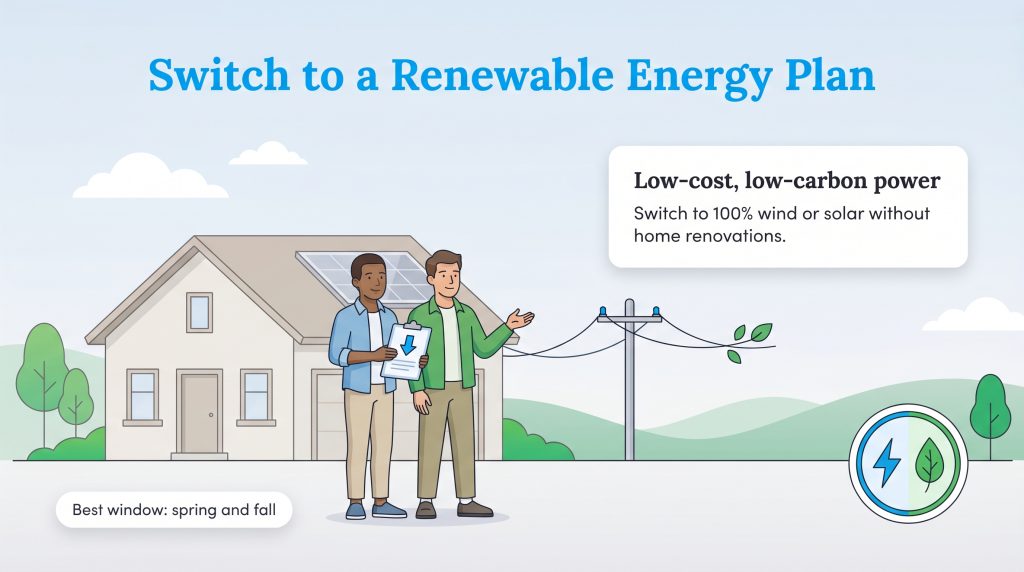
Timing your switch strategically isn’t just about saving cash; it is also an ideal moment to finally access cleaner, more sustainable power sources. As the national grid rapidly modernizes, renewable energy plans powered by 100% wind or solar are becoming incredibly price-competitive with traditional fossil fuel plans. Choosing an environmentally mindful choice is the single most impactful step you can take to easily lower your household’s carbon footprint without making expensive physical renovations to your property. It is an energy-saving option that actively funds the rapid development of green infrastructure. For more detailed information on how these eco-friendly plans work, you can explore resources directly from the Department of Energy, or even look into longer-term property investments like adding solar panels.
🌱 Eco Edge: Shoulder months are generally the best time to shop for green energy. Renewable rates often drop below traditional fossil fuel plans during these low-demand periods, giving you budget stability while you help the planet.
Executing Your Transition: 4 Steps to Switch Safely
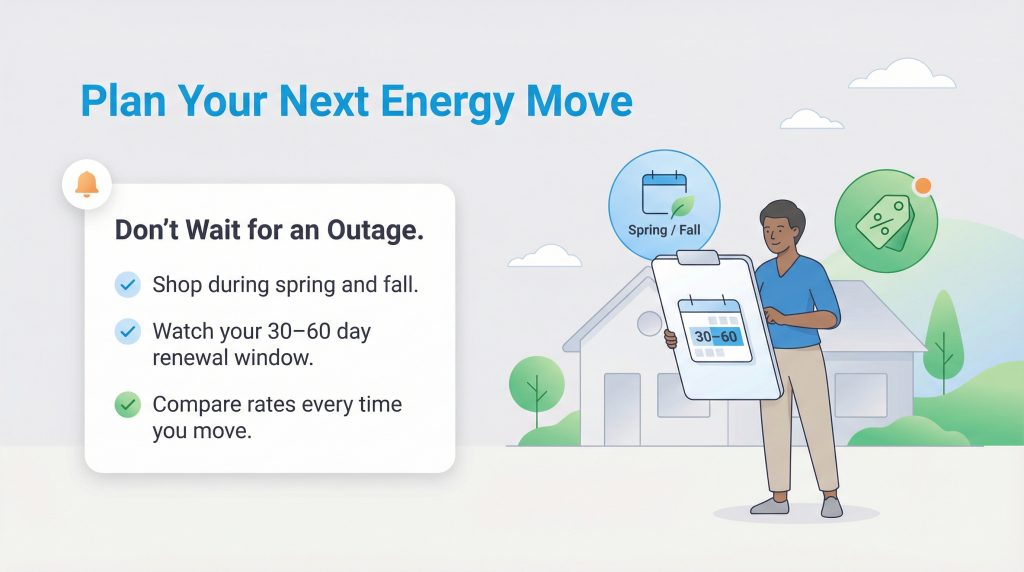
Taking confident, permanent control of your electricity service is less about perfectly predicting the future and far more about meticulously executing a solid, actionable game plan. Whether you are successfully transitioning to a greener, eco-conscious alternative or just stubbornly hunting down the absolute lowest rate possible, thorough preparation ensures you won’t experience any stressful gaps in your power. Before you make the final phone call or hit submit on a provider’s online enrollment form, thoughtfully complete this simple four-step checklist to guarantee a flawless, cost-effective switch:
- Step 1: Read the Fine Print: Review your current Electricity Facts Label (EFL) or a recent billing statement to confirm exactly when your existing plan expires. You must know exactly how to read the electricity facts label EFL to uncover hidden delivery fees, base charges, and termination penalties.
- Step 2: Check Your Previous Usage Data: Log securely into your current utility portal and review your kilowatt-hour usage over the last 12 months. Providers price their tiers based on standard usage benchmarks (typically 500, 1,000, or 2,000 kWh), so knowing your true average consumption ensures you pick a genuinely accurate rate for your home size.
- Step 3: Access Official Portals: Use state-sponsored energy choice websites—such as the official power to choose electricity portal in Texas or your state’s equivalent—to compare electricity rates securely. Look past the flashy promotional headlines on these sites and ensure you are comparing straightforward, flat-rate plans based solely on your actual historical usage data.
- Step 4: Pick a Strategic Start Date: If you are moving, smartly plan to start service one to two days before you arrive. If you are staying at your current address, you must carefully schedule your electricity start date to seamlessly overlap with the very final day of your expiring contract.
Securing Your Energy Savings
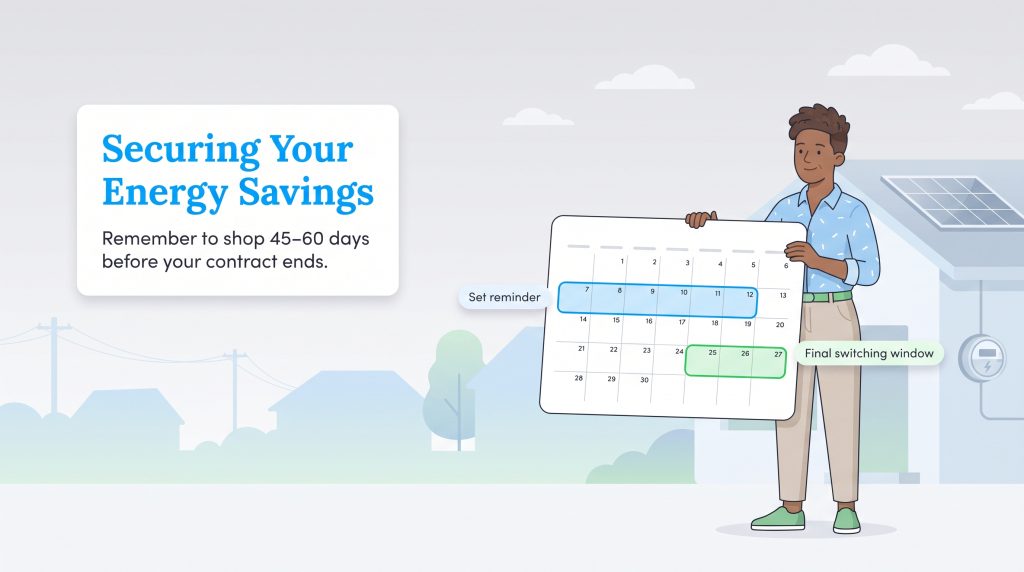
If you are wondering exactly what happens when my electricity contract expires, the answer is simple: your provider will automatically shift you to a costly default variable rate unless you intervene. To ensure you never accidentally overpay for residential power, we strongly recommend setting a proactive calendar reminder exactly 45 to 60 days before your current contract ends. This comfortable lead time gives you plenty of opportunity to actively shop around and secure a fresh plan before your critical 14-day switching window electricity period closes. Taking these quick, decisive steps prevents financial surprises, guarantees you access to the best shoulder-season pricing, and keeps your household budget perfectly intact for the year ahead.
Frequently Asked Questions About Switching Electric Service
Is it worth switching electric providers?
What are the energy shoulder seasons?
How do natural gas prices affect when I should switch electric service?
How long does it take to switch electric suppliers?
Can I switch electricity providers if I am renting?
What happens if I switch electric companies before my contract ends?
How far in advance can I schedule a new electricity provider?
Does the title company handle transferring utilities when buying a house?
How do I avoid paying an early termination fee when switching electricity?
Will my power go out when I switch electricity providers?
Should I choose a fixed or variable electric rate?
What is an odd-term electricity plan?
Can I switch electricity providers if I owe my current company money?
Do I need a credit check to switch electricity providers?
About the Author

Claudio is a sustainability-focused writer with a background in Anthropology and Psychology from NC State University. He has spent over 15 years working in writing, interpretation, and translation, driven by a deep interest in how human culture shapes the environment. Today, he shares his curiosity with readers by writing about sustainable living solutions and the connection between everyday choices and environmental impact.

David has been an integral part of some of the biggest utility sites on the internet, including InMyArea.com, HighSpeedInternet.com, BroadbandNow.com, and U.S. News. He brings over 15 years of experience writing about, compiling and analyzing utility data.