

Locking in a flat rate natural gas plan can protect your budget from unpredictable winter weather spikes, but it requires understanding exactly how your monthly premium is calculated and what usage limits apply.
Key Takeaways
- Guaranteed bill natural gas plans offer budget stability by charging a predictable amount every month, provided your consumption stays within the plan’s allowed range.
- Providers typically calculate your custom flat rate using your address’s historical energy consumption, account type, and expected seasonal demand.
- Comparing flat rate vs. fixed rate natural gas reveals that while flat rates lock in your final bill, fixed rates only lock in the price per unit of energy.
We have all felt that familiar anxiety before opening a January heating bill, wondering if our attempts to compromise at the thermostat were enough to keep costs reasonable. If you are tired of bracing for the worst, flat rate natural gas plans offer a reliable, budget-stabilizing solution to seasonal weather spikes by functioning as an energy insurance policy for your home. Rather than paying a fluctuating price for the exact amount of fuel you burn during a brutal cold snap, you pay a predictable premium to transfer that financial risk back to the energy provider. We designed this objective guide to help you break down the mechanics behind these unique contracts, compare your available options, and decide if paying for absolute peace of mind makes sense for your household budget.
What Is A Flat Rate Natural Gas Plan
When exploring deregulated energy options, consumers frequently confuse two very different pricing models: fixed rates and flat bills. Understanding this crucial distinction is the first step toward securing reliable natural gas price protection for your home.
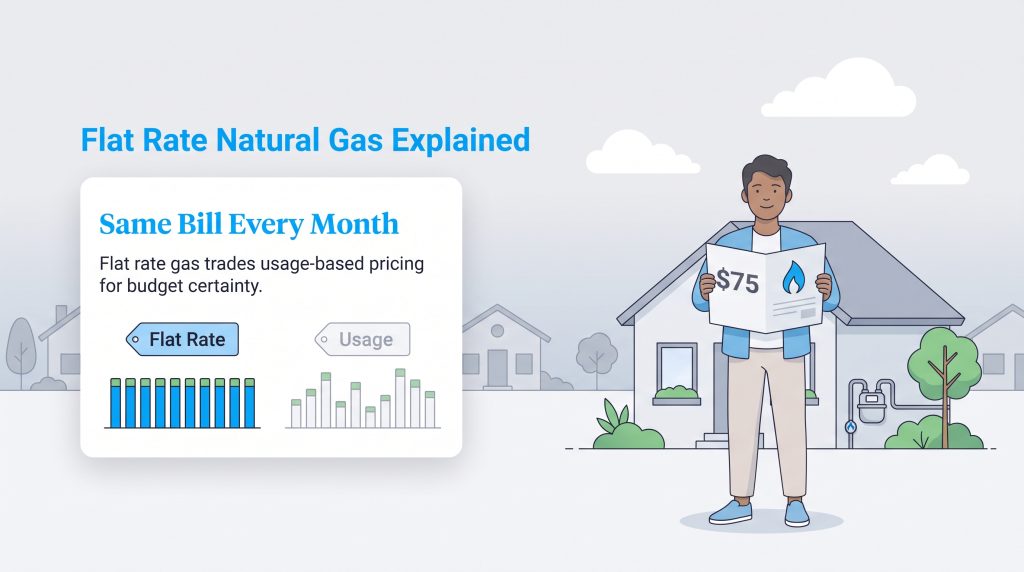
A fixed rate natural gas plan means you secure a locked-in price per therm, but your final invoice still fluctuates based on how much heat you actually use. In contrast, a flat monthly natural gas bill guarantees you will pay the exact same total dollar amount every single month, regardless of minor weather fluctuations or variations in your consumption.
Major suppliers frequently market these as a guaranteed natural gas bill because they completely divorce your monthly invoice from standard per-therm pricing. Instead of paying for each unit of fuel you burn, you are purchasing absolute budget certainty. If your contract dictates a $75 monthly gas bill, you will pay exactly $75 in the mild days of October and the freezing depths of February. You bypass wholesale market volatility entirely, meaning you do not have to ration your heater usage just to protect your wallet.
Flat Rate Plans Vs Budget Billing
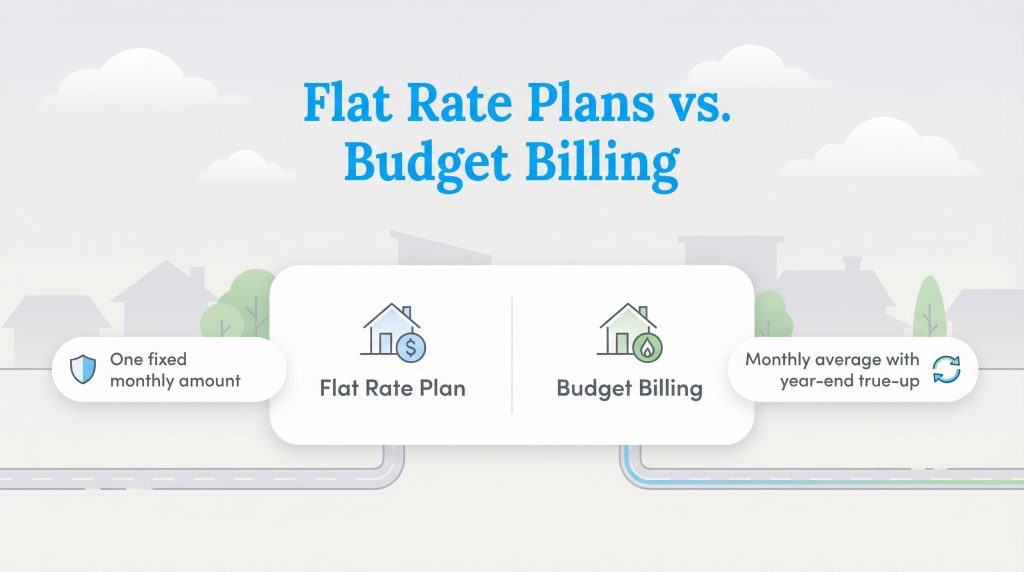
It is incredibly common to confuse flat bill natural gas plans with budget billing. While both aim to smooth out your monthly expenses, they operate quite differently. Flat rate plans are offered by competitive energy providers and lock in a set price that acts as a risk premium. Budget billing, on the other hand, is merely an averaging payment program offered by traditional utility companies, meaning you are still financially responsible for the exact amount of gas you consume by the end of the year.
💡 Pro Tip: Always double-check your contract’s terminology. While providers sometimes use “flat rate” and “fixed rate” interchangeably in their marketing, true guaranteed natural gas bills completely detach your monthly payment from your daily usage.
How Your Flat Rate Is Calculated
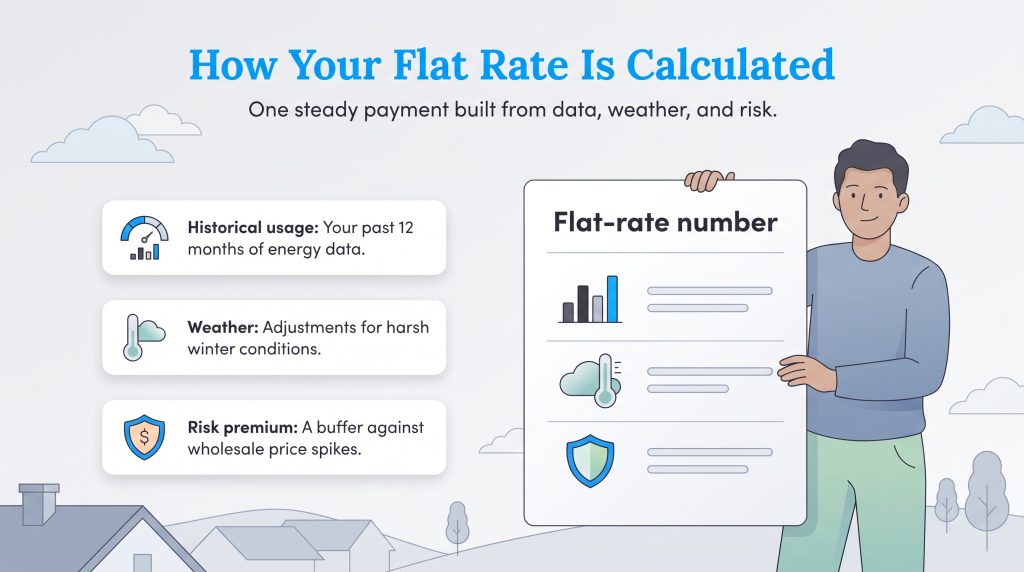
Energy suppliers rely on precise mathematical formulas and predictive modeling to generate your flat monthly gas bill. To ensure they can reliably cover the cost of the fuel you inevitably burn during peak winter months, providers meticulously calculate your custom rate based on a few core factors:
- Historical usage (past 12 months): The supplier pulls deep historical consumption data from your specific residential meter to estimate your home’s unique annual efficiency and baseline energy footprint.
- Weather adjustments: Formulas account for projected local climate trends, adjusting your base estimate upward to cover the risk of unusually harsh, extended winter cold snaps.
- Seasonal risk premiums: Providers bake in an additional markup to shield their profit margins from volatile wholesale market swings, ensuring they do not lose money if fuel costs surge.
By assuming the heavy financial risk of a brutal winter, providers calculate these variables carefully. You are ultimately paying for extreme predictability, with that slight premium acting as your shield against market volatility.
Pros And Cons Of Flat Rate Gas Plans
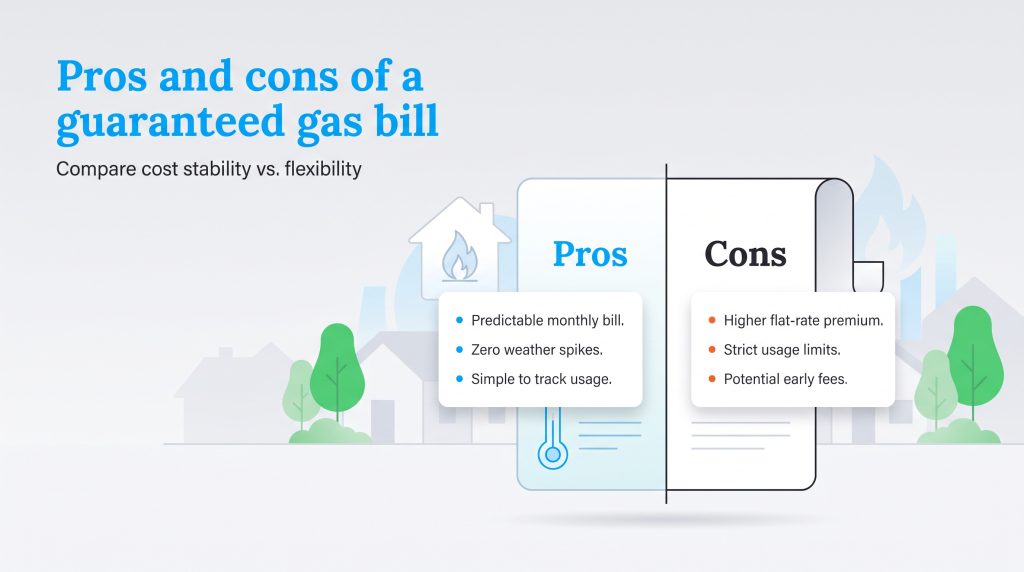
Deciding if natural gas price protection is right for your home comes down to weighing the unique conveniences against the embedded costs. Use this quick breakdown to evaluate the pros and cons before locking in a multi-year contract.
Pros
- Predictable monthly gas bills: You know exactly what your bill will be every single month, allowing for precise, worry-free financial planning.
- Zero weather-related spikes: Brutal winter storms and sudden cold snaps won’t cause an unexpected, budget-busting jump in your heating costs.
- Simplified invoices: You don’t need to obsessively track daily usage, ration your heat, or worry about fluctuating wholesale market rates.
Cons
- Flat rate natural gas premiums: Utilities generally charge an extra 15% to 30% buffer as “insurance” against extreme weather, raising your baseline cost.
- Strict usage caps: Drastically exceeding your home’s historical consumption limits can void the monthly guarantee and trigger surprise fees.
- Early termination fees: Breaking the agreement before your 12-month or 24-month term officially ends often carries steep financial penalties.
Fixed Vs Variable Natural Gas Plans
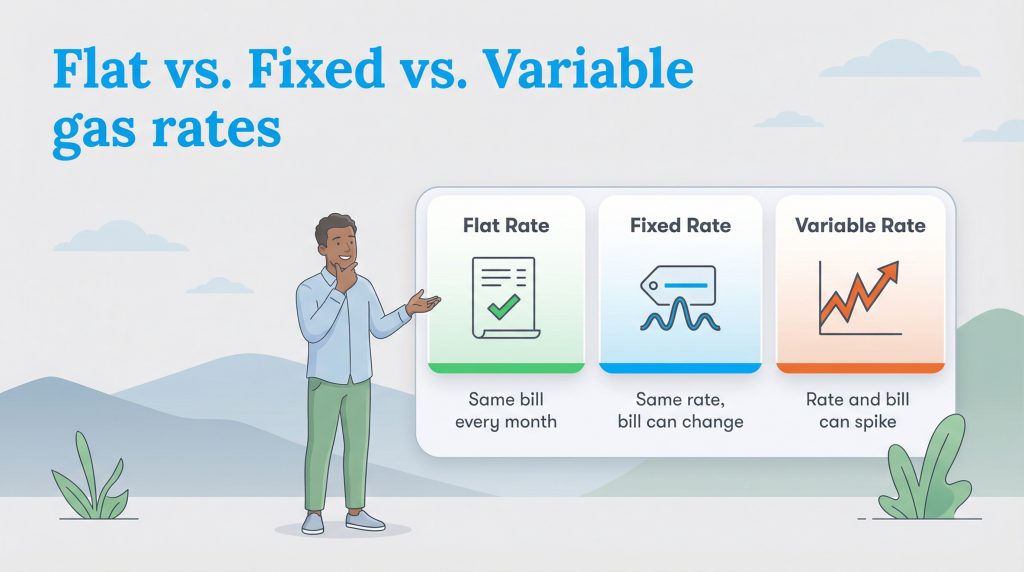
Making an informed choice for your household requires a direct, unbiased comparison of the primary pricing models on the market. When choosing a natural gas plan, understanding the differences between fixed vs variable natural gas plans can ultimately save you hundreds of dollars annually and prevent severe billing surprises.
Fixed plans guarantee your price per unit (therm), meaning your price per unit never changes during the contract term, though your total bill will rise and fall with your volume. Variable plans do not lock in your price per unit at all, leaving your rate highly vulnerable to wholesale market swings. We strongly advise against rolling the dice on variable rates during peak winter months, as a sudden, unexpected cold snap can cause your price per therm to double or triple overnight. Flat rate options bypass both traditional mechanisms to offer extreme stability.
| Plan Type | Price Predictability & Risk of Winter Spikes | Contract Requirements & Overall Value |
|---|---|---|
| Flat Rate | Guaranteed exact monthly bill with zero risk of seasonal winter spikes. | Usually 12 to 24 months; you pay a premium for absolute budget certainty. |
| Fixed Rate | Locked-in cost per therm, but moderate risk since total bills rise with high usage. | Typically 6 to 36 months; provides the best long-term value and market protection. |
| Variable Rate | No locked-in rates, leaving you at severe risk of massive winter market spikes. | Month-to-month agreements; poor long-term value with no early termination fees. |
Key Hidden Fees To Watch Out For
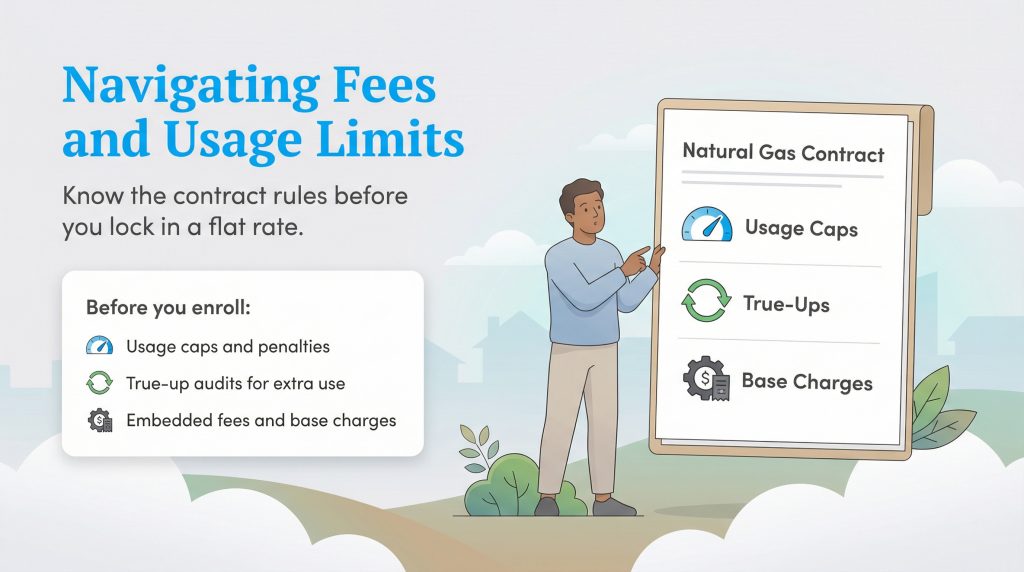
Practicing radical transparency means acknowledging the catches carefully hidden inside retail energy contracts. When you sign up for a guaranteed bill, you are not receiving a free license for unlimited energy consumption. Providers actively monitor your meter to ensure you stay within a strict “fair use” policy.
To avoid massive billing surprises at the end of your contract cycle, keep a close eye out for these essential billing terms:
- True-up bills: At the end of your contract — or during a period of heavy overuse — the supplier has the legal right to conduct an account audit. If you drastically exceeded your projected historical usage by running your heater on high while leaving windows open, the supplier can hit you with a massive retroactive balloon payment for the excess energy.
- Natural gas base charges: Fixed monthly administrative fees are frequently buried in the fine print. Always verify if these base service and delivery charges are included in your advertised flat rate quote or tacked on as an extra monthly cost.
🚩 Heads Up: In extreme cases of habitual overuse, suppliers may legally drop you from your flat rate plan entirely and move you to an expensive variable rate without warning. Always read the fine print regarding fair usage limits.
Relocating And Early Termination Fees
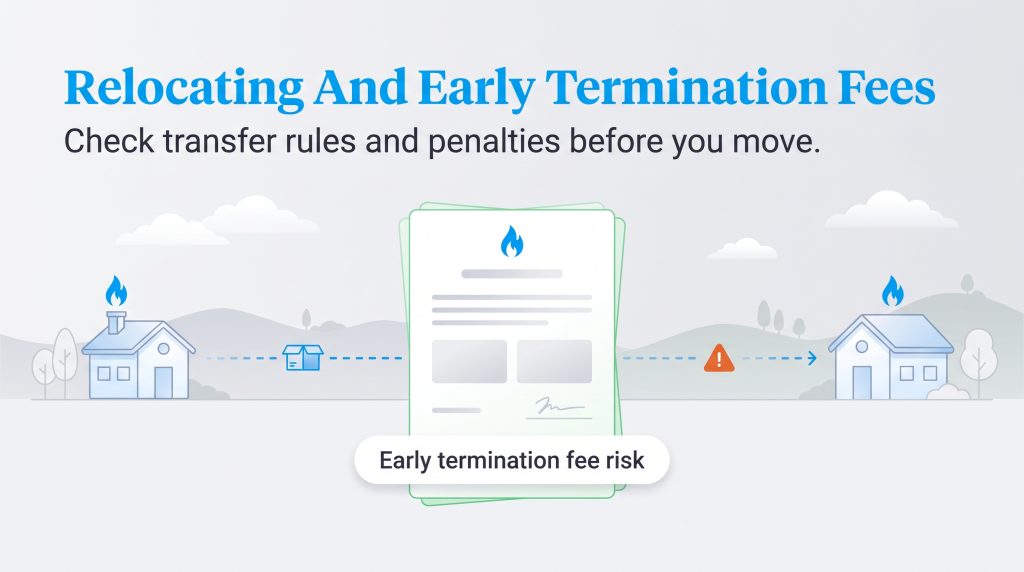
Breaking a flat-rate agreement before the term ends almost always triggers high early termination fees. Because setting up gas service in your new home requires recalculating your historical usage at a brand-new address, relocating often forces you to cancel your current plan entirely and incur this penalty.
Always scrutinize the transfer policies and cancellation penalties hidden in your contract before committing. Practicing due diligence now can prevent unexpected charges from derailing your budget when you finally decide to move.
Securing Your Homes Winter Price Protection
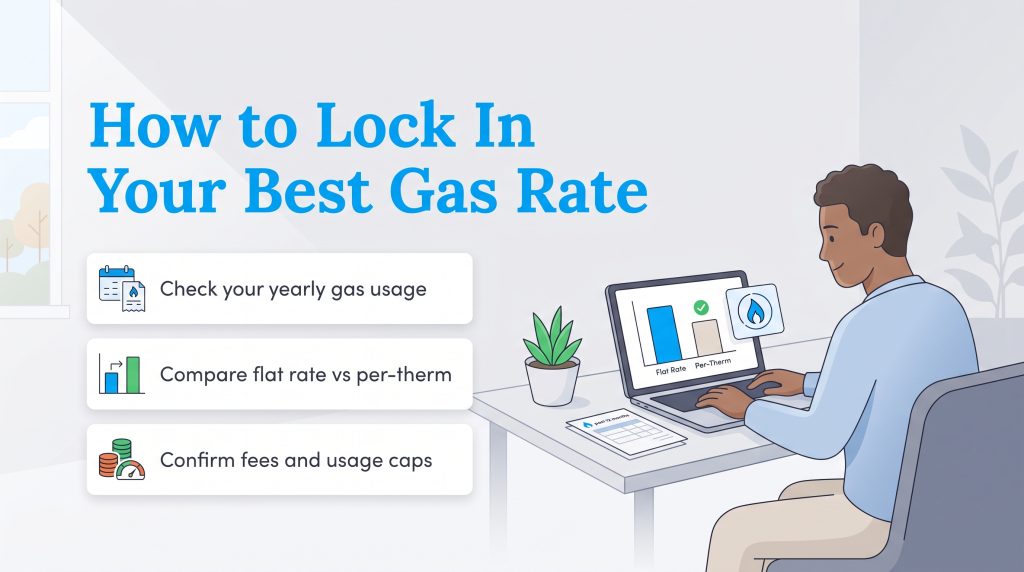
Taking control of your utility expenses requires matching your energy contract directly to your lifestyle and risk tolerance. Whether you opt for a guaranteed flat bill or decide to shop for a reliable fixed rate natural gas plan, preparing before the cold sets in is crucial.
Follow this simple three-step checklist to evaluate your options and lock in a rate before winter demand peaks:
- Analyze your historical usage: Look closely at your past 12 months of utility statements to understand exactly how many therms you consume annually, paying special attention to your peak winter volume.
- Compare fixed rate vs. flat bill plans: Calculate what those therms would cost on a traditional fixed-rate, per-therm plan. This reveals the exact size of the provider’s flat-rate premium so you can decide if the budget certainty is worth the extra cost.
- Lock in your rate early: Secure your contract in the fall before freezing temperatures drive up wholesale energy demand and retail prices aggressively spike across the market.
Eco Conscious Tips For Flat Rate Customers

Having a flat bill natural gas plan does not mean you should abandon your energy-saving habits. While your current bill won’t change this month, wasting energy puts unnecessary strain on the local grid and inflates your historical usage profile. That inflated usage will ultimately drive up your flat rate calculation for next year’s contract. Keep your future costs down by installing a smart thermostat, turning down your water heater to 120 degrees Fahrenheit, and properly sealing window drafts.
🌱 Eco Edge: Even with a guaranteed bill protecting your wallet from immediate usage spikes, actively reducing your natural gas consumption lowers your home’s overall carbon footprint and helps you secure a much cheaper quote when it’s time to renew.
Making Your Final Decision

Determining whether to lock in natural gas rates with a standard fixed-rate plan or opt for a guaranteed flat bill ultimately comes down to your unique financial personality. Flat rate natural gas plans are the ideal choice for individuals on strict fixed incomes who prioritize absolute budget certainty over pinching pennies. If an unexpected $200 heating invoice would severely derail your monthly finances, paying a slight premium for reliable peace of mind is a smart, defensive maneuver.
Conversely, you should avoid flat bill options if you actively optimize your thermostat to save money. Consumers who diligently manage their usage and actively practice weatherizing to save on your gas bill will generally secure lower yearly costs on a traditional fixed-rate contract. By understanding the true pros and cons, recognizing dangerous usage caps, and comparing all available market options, you can secure an energy plan that keeps your home warm without the lingering anxiety of a massive winter invoice heading your way.
Frequently Asked Questions About Flat Rate Natural Gas Plans
Do flat rate natural gas plans require a true-up bill at the end of the year?
Is a flat monthly natural gas bill cheaper than a fixed rate per therm?
What is the exact difference between a fixed rate and a flat bill?
What is the difference between a flat bill natural gas plan and budget billing?
Can I get a flat rate natural gas plan with no deposit?
What happens if I use less gas than my flat rate plan estimated?
Will I pay an early termination fee if I cancel my flat rate plan?
Can I get a flat rate natural gas plan in any state?
About the Author

David has been an integral part of some of the biggest utility sites on the internet, including InMyArea.com, HighSpeedInternet.com, BroadbandNow.com, and U.S. News. He brings over 15 years of experience writing about, compiling and analyzing utility data.

LaLeesha has a Masters degree in English and enjoys writing whenever she has the chance. She is passionate about gardening, reducing her carbon footprint, and protecting the environment. She also recently served as President of the Board for City Sprouts (a community garden).