

Key Takeaways
- Match your plan type to your household usage by calculating past consumption to determine if you need the stability of a fixed-rate plan or the flexibility of a variable rate.
- Review the fine print for hidden fees before signing any agreement, paying special attention to potential minimum usage charges or costly early termination fees.
- Verify state-certified natural gas suppliers through your local Public Utility Commission to guarantee you receive transparent billing and reliable service.
Following a few essential tips for choosing a natural gas plan can help you navigate confusing industry jargon—such as fixed rate, variable rate, usage tiers, and contract lengths—and secure a highly competitive rate for your home. If you reside in a deregulated energy market, you have the unique power to select your own supplier, empowering you to actively compare options and successfully lower your monthly bills. Think of this process like selecting a new cell phone package: the absolute best fit isn’t always the one with the cheapest upfront price tag, but rather the contract that seamlessly aligns with your daily habits and gives you lasting peace of mind.

1. Confirm Your Deregulated Natural Gas Market Status
Before diving into the specifics of energy shopping, it helps to understand how energy choice programs actually work. The first step to lowering your utility bill is verifying that you have the right to choose a natural gas provider in your local area. If you reside in one of the active deregulated natural gas states, responsibilities are split between two distinct entities: the utility and the supplier. Understanding the exact difference between a utility and a natural gas supplier makes the shopping process much clearer.
Your local utility is the company responsible for delivering the gas to your home, maintaining the physical pipeline infrastructure, and responding immediately to emergencies like gas leaks. You cannot choose your utility company. The natural gas supplier, on the other hand, purchases the fuel on the wholesale market and sells it directly to you. Energy deregulation is managed entirely at the state level, meaning your options depend squarely on your current zip code.
As of 2026, the following states offer some form of natural gas choice program for residential consumers:
- California
- Colorado
- Connecticut
- Florida
- Georgia
- Illinois
- Indiana
- Kentucky
- Maryland
- Massachusetts
- Michigan
- Montana
- Nebraska
- New Jersey
- New Mexico
- New York
- Ohio
- Pennsylvania
- Rhode Island
- South Dakota
- Virginia
- Washington, D.C.
- Wyoming
If your state appears on this list, check your current local utility bill. It will usually feature a dedicated section detailing your “supply charges” and indicating your explicit eligibility to shop for a competitive third-party supplier.
2. Understand Fixed vs Variable Natural Gas Plans
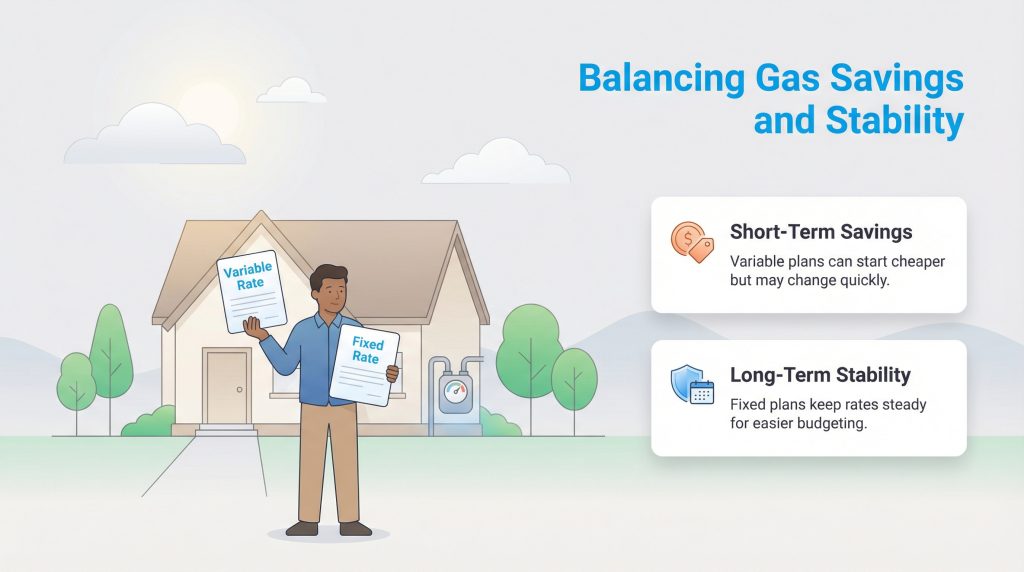
It’s tempting to jump at the lowest advertised teaser rate you see, but wholesale energy pricing remains incredibly volatile. When comparing flat rate natural gas plans against variable options, you need to actively weigh the allure of immediate savings against the comfort of long-term budget protection. Variable-rate plans might look appealing initially, but they leave your household entirely exposed to seasonal market spikes during severe weather, causing your monthly energy bill to soar unexpectedly during the winter.
| Criteria | Fixed-Rate Plans | Variable-Rate Plans |
|---|---|---|
| Pros | Provides reliable budget predictability and actively shields you from seasonal market spikes. | Offers ultimate flexibility with absolutely no long-term contracts or cancellation fees. |
| Cons | May include early termination penalties if you cancel early; starting rates are sometimes slightly higher than the market baseline. | Rates can skyrocket without warning during extreme winter weather or unexpected supply shortages. |
| Best For | Homeowners, families on a strict monthly budget, and heavy winter users. | Short-term renters or households with very low, occasional natural gas usage. |
Comparing natural gas rates between these two pricing models is one of the most impactful choices you will make during your enrollment process.
3. Calculate Your Average Natural Gas Usage
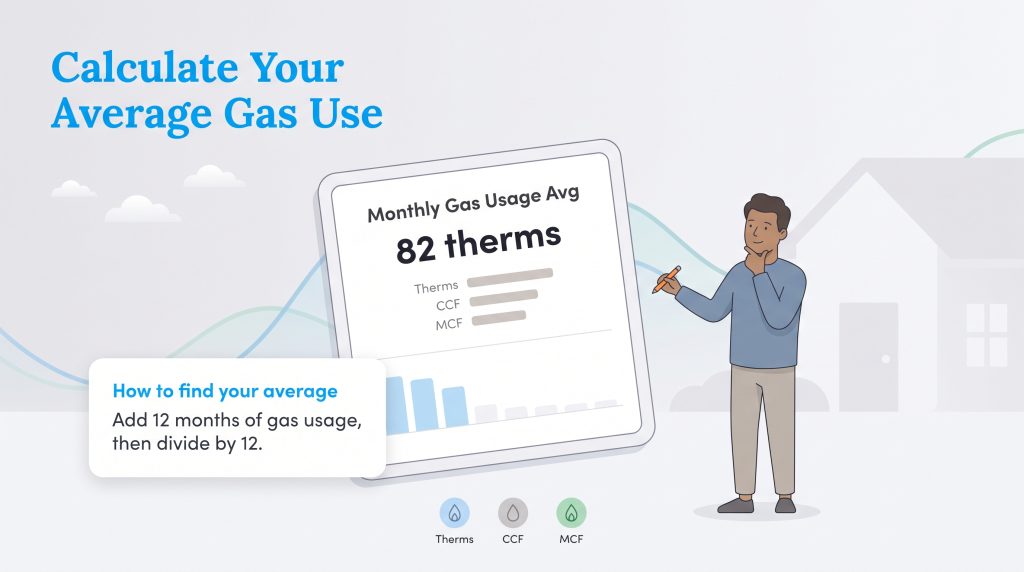
Before you commit to a fixed or variable plan, you need to understand exactly how much energy your household consumes on a regular basis. For households that rely on gas primarily for winter heating, your bills will spike dramatically during cold months — typically December through February — and drop near zero in the summer. Conversely, if you cook daily with a gas stove or run a large gas water heater, your consumption will look much steadier year-round.
Depending on your regional billing standards, your consumption will likely be calculated using one of three common natural gas measurements:
- Therms: This is a measure of actual heating value (heat energy) rather than physical volume. Most residential customers are billed by the therm because it reflects the true energy output of the gas heating your home.
- CCF (Hundred Cubic Feet): A measure of physical volume representing 100 cubic feet of natural gas. One CCF is roughly equivalent to one therm, making it easy to translate if a provider advertises a different metric than your current bill shows.
- MCF (Thousand Cubic Feet): A measure of volume representing 1,000 cubic feet. This metric is mostly seen on commercial or high-usage residential bills. For easy math, one MCF equals 10 CCF.
Compare Natural Gas Companies in Your Area
4. Compare Contract Lengths and Early Termination Fees
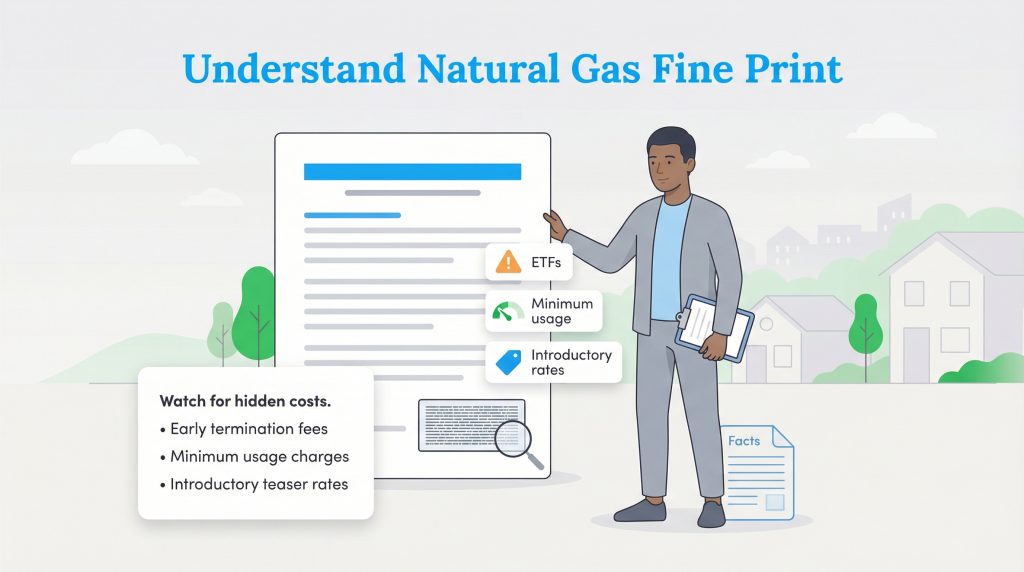
The cheapest natural gas supplier on paper is not always the most affordable option once the hidden fees hit your monthly statement. Beyond the advertised per therm rate, the specific contract terms you agree to will fundamentally govern your actual costs. Treat your provider agreement like any major financial document and read the terms of service carefully before signing.
Understanding standard natural gas contract lengths helps you plan for the future. Review the table below to see how standard terms typically correlate with costly early termination fees natural gas providers charge if you break your agreement early:
| Natural Gas Contract Lengths | Typical Early Termination Fees Natural Gas (ETFs) |
|---|---|
| 6 Months | $50 flat fee |
| 12 Months | $75 to $100 flat fee, or $10 per remaining month |
| 24 Months | $100 to $150 flat fee, or $10-$15 per remaining month |
| 36 Months | $150+ flat fee, or heavily pro-rated cancellation penalties |
In addition to ETFs, keep an eye out for potential enrollment costs, base monthly administrative fees (often $5 to $10), and minimum usage charges that can actually penalize you for conserving energy.
5. Prioritize Green Natural Gas Options
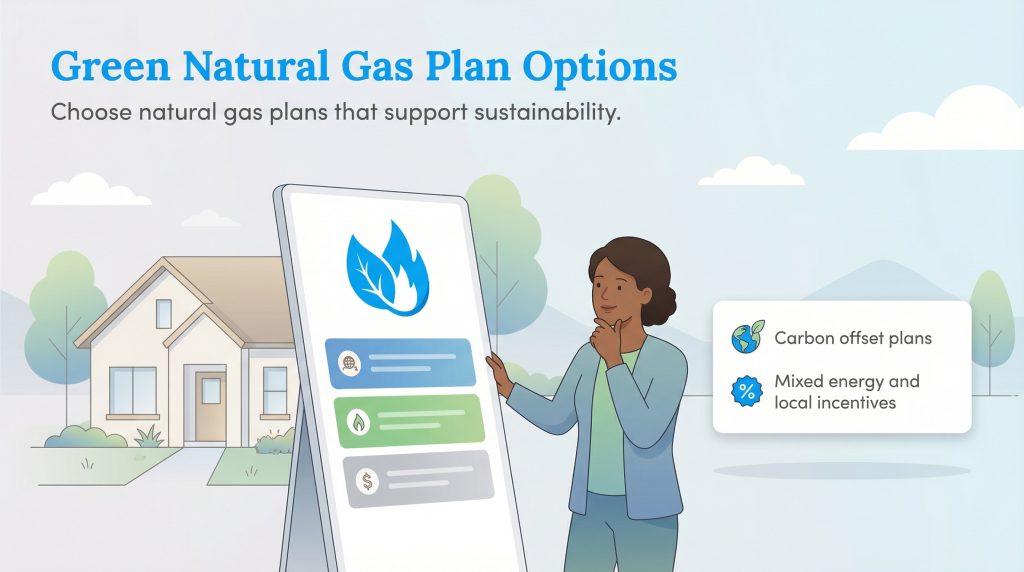
As the energy grid continues to evolve, modern utility companies frequently compete for your business by offering valuable eco-conscious incentives above and beyond the standard supply rate. If sustainability is a priority for your household, investigate your provider’s reputation for environmental stewardship and actively look for green natural gas options when browsing supplier plans.
When reviewing a supplier’s website, look specifically for phrasing like “100% carbon neutral,” “renewable natural gas blends,” or “EPA Green Power partner.” These environmentally mindful choices generally take the following forms:
- Renewable Natural Gas (RNG): Also known as biogas, renewable natural gas is captured from organic waste sources like agricultural sites, landfills, and wastewater treatment plants. Instead of letting harmful methane escape into the atmosphere, it is purified and repurposed for residential energy use.
- Carbon Offset Programs: Many traditional gas plans now feature automatic carbon offsets. The supplier calculates the emissions generated by your monthly usage and actively invests in environmental projects — such as forestry conservation or methane capture — to balance out your footprint.
- Renewable Energy Credits (RECs): If you opt for a bundled utility package, your supplier might also offer renewable energy credits to offset the electricity portion of your home’s energy usage.
6. Evaluate Customer Service and Ease of Payment
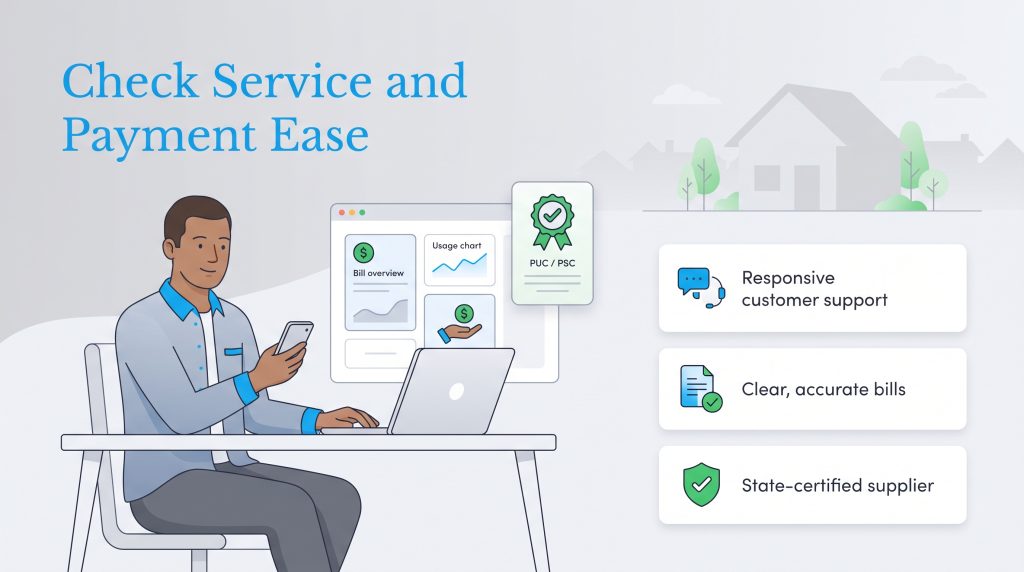
Even the most competitive per therm rate isn’t worth the hassle if your retail supplier remains entirely unresponsive when billing errors occur or if their online portal is constantly down. The best natural gas company for your household should offer a seamless digital experience, allowing you to effortlessly view plan details, track daily usage, and pay your monthly bill online.
Most importantly, you must safeguard yourself against scams by verifying that you are working with state-certified natural gas suppliers. To do this, visit the official website for your state’s Public Utility Commission (PUC) or Public Service Commission (PSC). Many state energy commissions publish official supplier scorecards and maintain active government databases that track formal consumer complaints. Reviewing these state resources allows you to verify provider ratings and confirm that the company holds an active, valid license to operate safely in your zip code.
7. Execute Your Supplier Switch
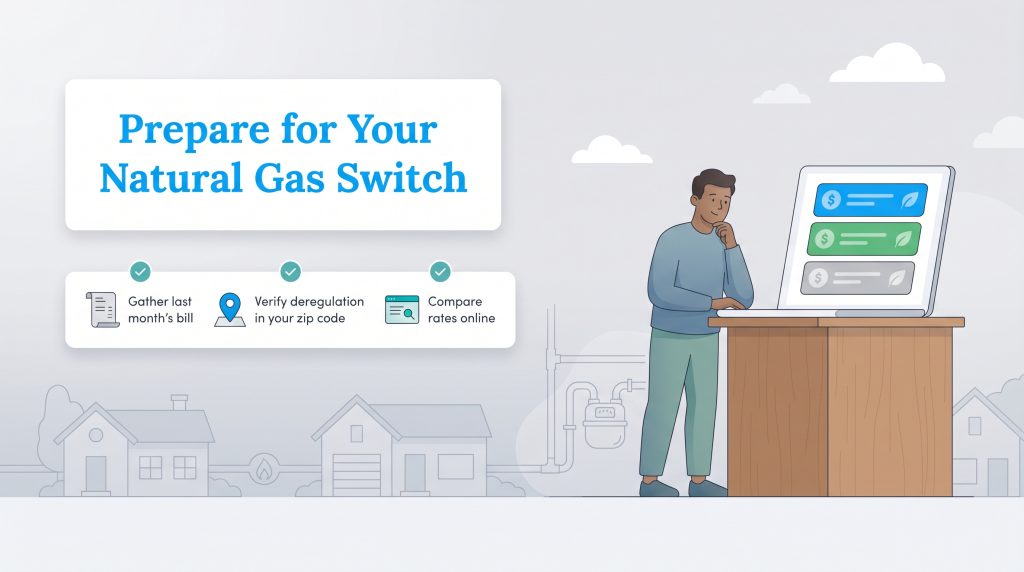
If you live in a deregulated market, learning how to switch natural gas suppliers is much easier than most homeowners expect. Your local utility company continues to own the physical pipes and respond to emergencies — you are simply electing who supplies the fuel itself. When you are ready to secure a better rate, follow this simple three-step checklist to execute your switch today:
- Gather Last Month’s Bill: Locate your most recent utility statement. You need your exact account number and your current “price to compare” to accurately evaluate new offers against your baseline rate.
- Verify State Deregulation Status: Confirm that your specific zip code is eligible for an energy choice program. The rules and available suppliers can vary widely even within the same state.
- Use an Online Comparison Tool: Enter your zip code into an internal directory for finding local providers or your state’s official PUC shopping portal. This allows you to instantly compare competing rates, review contract terms, and explore green energy options side-by-side.
Securing the Best Natural Gas Plan for Your Home
Choosing the right energy contract requires more than just glancing at a promotional flyer — it means taking a proactive approach to your home’s unique seasonal consumption. By meticulously analyzing your historical usage, boldly reading the fine print to uncover early termination fees, and verifying your provider through state PUC scorecards, you guarantee a genuinely stress-free enrollment experience. When you shop with a clear, informed strategy, you ultimately secure an eco-conscious plan that confidently protects your household budget year-round.
Frequently Asked Questions About Choosing a Natural Gas Plan
How do I find out who my natural gas provider is?
What is the difference between a natural gas utility and a supplier?
Will my natural gas service be interrupted if I switch providers?
How do I know if I live in a deregulated natural gas market?
Is it better to choose a fixed or variable natural gas plan?
Are there penalties for switching natural gas suppliers early?
What is the difference between CCF and therms on my gas bill?
Who do I call if I smell gas or have an emergency?
About the Author

LaLeesha has a Masters degree in English and enjoys writing whenever she has the chance. She is passionate about gardening, reducing her carbon footprint, and protecting the environment. She also recently served as President of the Board for City Sprouts (a community garden).

David has been an integral part of some of the biggest utility sites on the internet, including InMyArea.com, HighSpeedInternet.com, BroadbandNow.com, and U.S. News. He brings over 15 years of experience writing about, compiling and analyzing utility data.