
Understanding the trade-offs between wired stability and wireless flexibility to find the perfect fit for your household needs.
Key Takeaways
- Cable internet offers superior stability and lower latency, making it the better option for serious gamers and large households with multiple heavy users.
- 5G home internet provides a budget-friendly, flexible alternative with simple setup and fewer hidden fees, ideal for renters and moderate internet users.
- Location plays the biggest role in performance because 5G speeds rely heavily on your proximity to a tower, while cable is consistent regardless of distance.
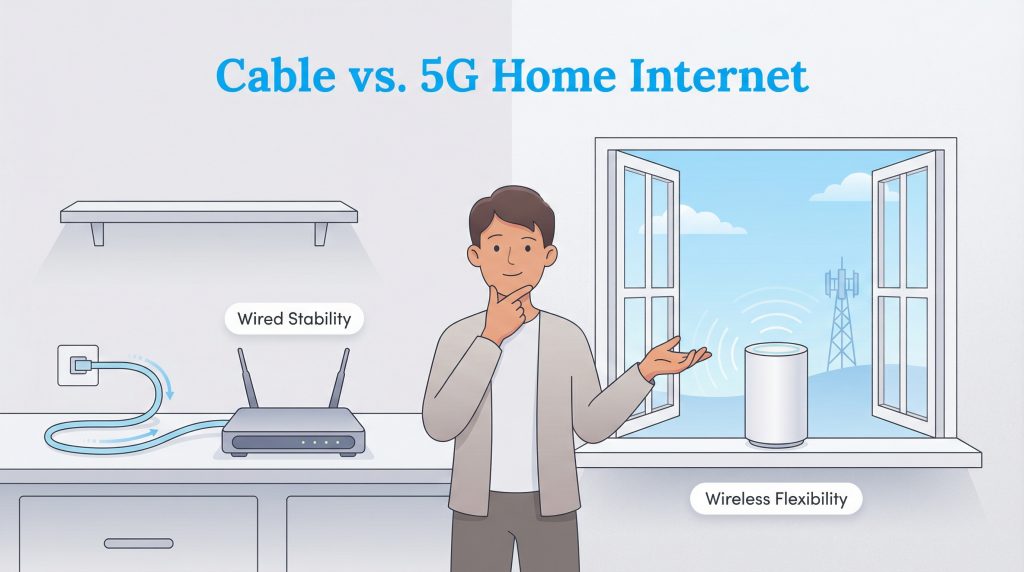
If you are in the middle of a move or just trying to lower your monthly bills, the sudden explosion of internet options can feel overwhelming. You likely see ads for “ultra-fast” 5G home internet promising freedom from wires, while traditional cable providers insist their connection is the only reliable choice. Choosing between cable vs. 5G home internet can feel confusing when both sides claim to be the best. We know how frustrating it is to decipher the marketing jargon to find out what actually works for your life. Our goal here isn’t to sell you a specific plan, but to act as an honest broker, helping you decode the technology so you can confidently choose the service that balances speed, cost, and reliability for your new home. As you compare plans, our guide to setting up internet in your new home can help you plan the rest of your setup.
At a Glance: How They Stack Up
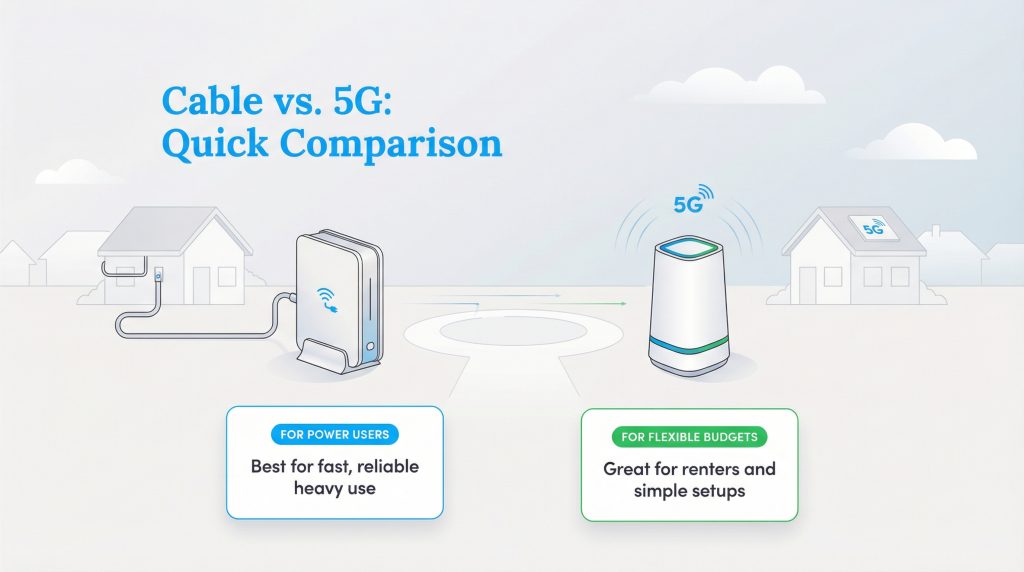
Before we dive into the technical details, it helps to see the big picture. This comparison highlights the typical differences between these two connection types, though specific speeds can vary based on your provider and location.
| Feature | Cable Internet | 5G Home Internet |
|---|---|---|
| Typical Speed | 50 Mbps – 1,000+ Mbps (1 Gbps) | 50 Mbps – 300+ Mbps (varies heavily by location) |
| Price Range | $50 – $100+ per month | $35 – $60 per month |
| Latency (Lag) | Low (Good for gaming) | Medium to High (Can cause lag) |
| Installation | Professional install usually required | DIY “Plug and Play” |
| Best For | Gamers, large families, heavy streamers | Renters, solo users, budget seekers |
If you’re a gamer or have a large family, cable usually wins; if you’re a renter on a budget, 5G home internet may be the smarter move. While 5G home internet is the exciting newcomer offering competitive pricing and ease of use, cable internet remains the heavy lifter for power users. If your household has four people streaming 4K video while someone else is on a video call, the robust nature of a physical cable line often provides the consistency you need.
The Core Difference: Wired vs. Wireless
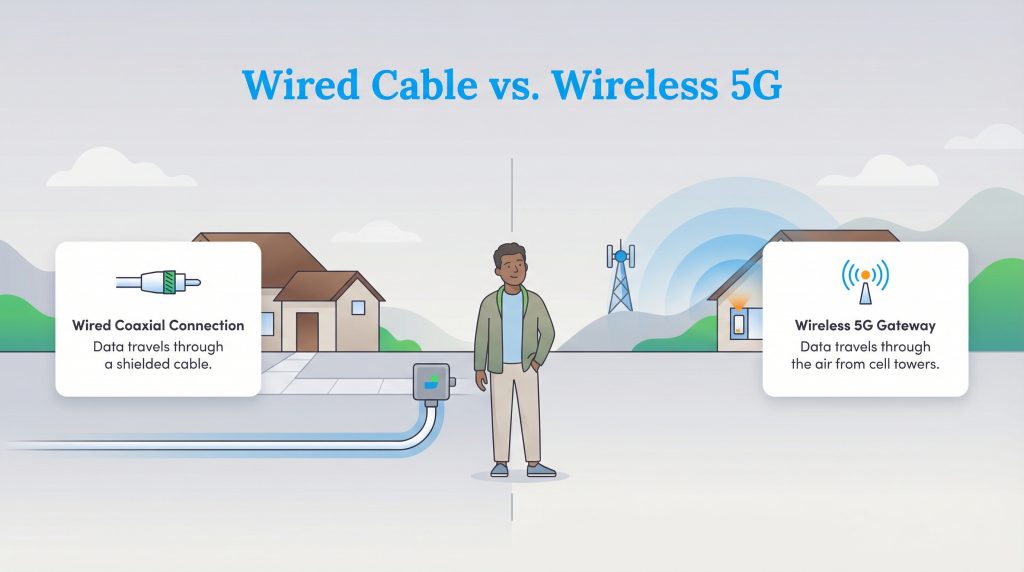
The fundamental difference between 5G and cable internet lies in how the data reaches your home. Cable internet utilizes coaxial cables, the same thick, copper-shielded wires that deliver cable TV service, which are buried underground and connected directly to your house. This physical connection is tried and true, capable of carrying massive amounts of data over long distances without losing much signal strength.
In contrast, 5G home internet uses the same cellular network as your smartphone. Instead of a wire plugging into your wall, you receive a “gateway” device that captures radio signals from a nearby cell tower and converts them into Wi-Fi for your home. It’s essentially a powerful hotspot that sits on your windowsill. Because it relies on airwaves rather than a shielded wire, it offers incredible flexibility but introduces variables like signal interference that cable doesn’t have to worry about.
Speed and Gaming: The Latency Factor
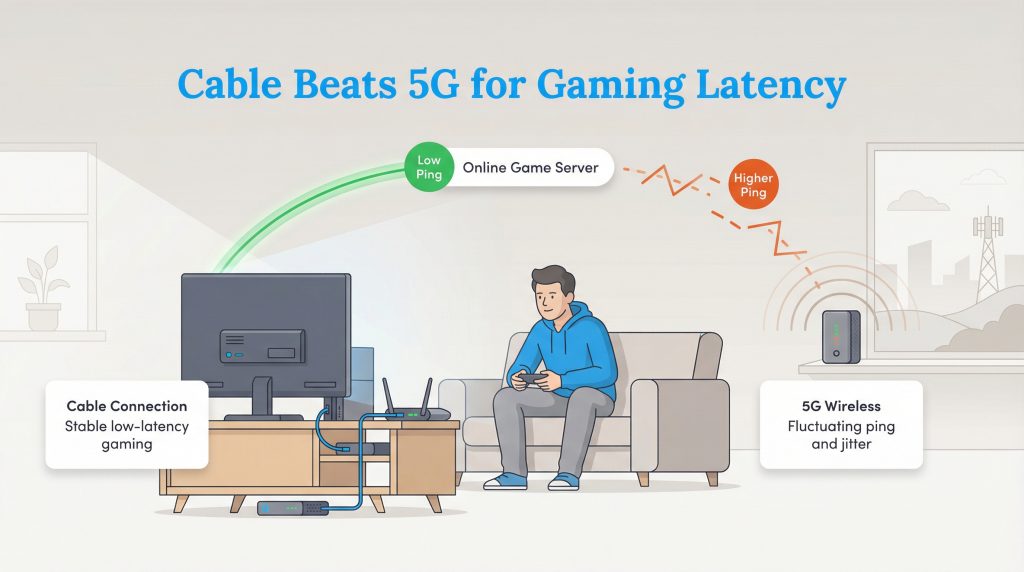
When you look at advertisements, you will often see 5G providers boasting speeds that rival cable, sometimes hitting up to 1 Gbps in perfect conditions. However, raw download speed is only half the story. While 5G can be fast enough for downloading a movie, it often struggles with consistency compared to a wired connection. Cable speeds are generally stable because they travel through a shielded line, whereas 5G speeds can fluctuate based on how many people are using the cell tower near your house.
For gamers, the most critical metric isn’t download speed, it’s latency, often called “ping.” Latency is the time it takes for a signal to travel from your console to the game server and back. When comparing 5G latency vs. cable, wired connections almost always win. Because 5G signals travel through the air, they are susceptible to “jitter” and higher ping times, which results in lag. If you are playing a competitive shooter or a fast-paced sports game, even a split-second delay can ruin the experience. Cable internet offers much lower and more consistent latency, making it the superior choice for gaming. If you want to cut down on lag and reduce data overages, you can also look at how to save on your internet bill by optimizing your plan for your usage.
Cost and Contracts: Finding Hidden Fees
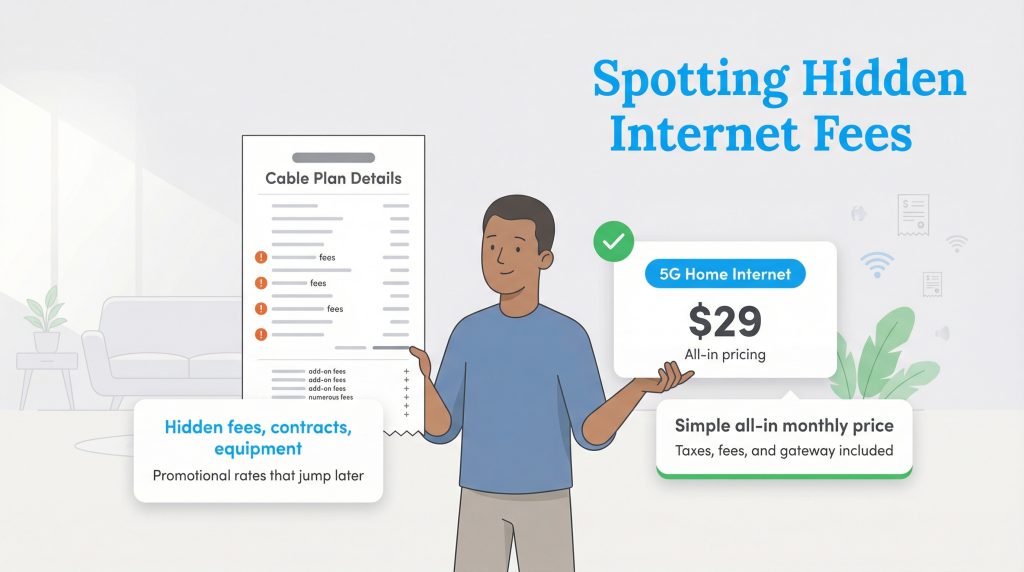
One of the biggest selling points for 5G home internet vs cable cost is the pricing structure. Cable providers are notorious for confusing bills. You might sign up for a $49.99 promotional rate, but after 12 months, that price could jump to $79.99 or more. On top of the monthly rate, you often face equipment rental fees for the modem and router, potential data cap overage charges, and administrative fees that bloat your final bill.
5G home internet providers like T-Mobile and Verizon have disrupted this model by offering simple, “all-in” pricing. The price you see is usually the price you pay, with taxes and fees included. There are typically no annual contracts, no cancellation fees, and the gateway device is included for free. For anyone tired of haggling with customer service every year to keep their bill down, this transparent model is a breath of fresh air.
However, cost isn’t the only factor to consider. You also need to weigh the value of what you are getting for that price. While the savings are attractive, ensuring the service meets your performance needs is essential before making the switch.
Reliability and Work-From-Home Needs
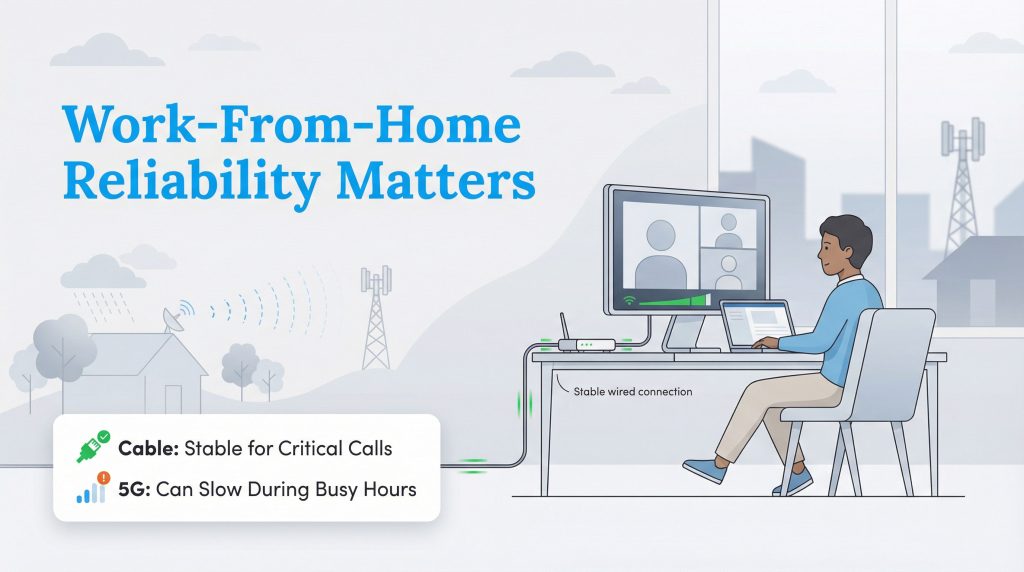
If you work from home, reliability is non-negotiable. 5G home internet has made great strides, but it still faces challenges with congestion and interference. During busy times, 5G networks can slow down home internet connections when the nearby tower is crowded, which can make your speeds less predictable than cable. Furthermore, physical obstacles like trees, heavy rain, or thick building materials can degrade the signal between your home and the tower.
Cable internet is shielded from most of these environmental factors. Unless a physical line is cut or there is a widespread neighborhood outage, your connection remains steady regardless of the weather or the time of day. For critical Zoom calls, large file uploads, or accessing remote servers, the wired stability of cable gives you the peace of mind that your meeting won’t drop mid-sentence. This level of work from home internet reliability is often the deciding factor for remote employees.
Installation: The Renter’s Best Friend
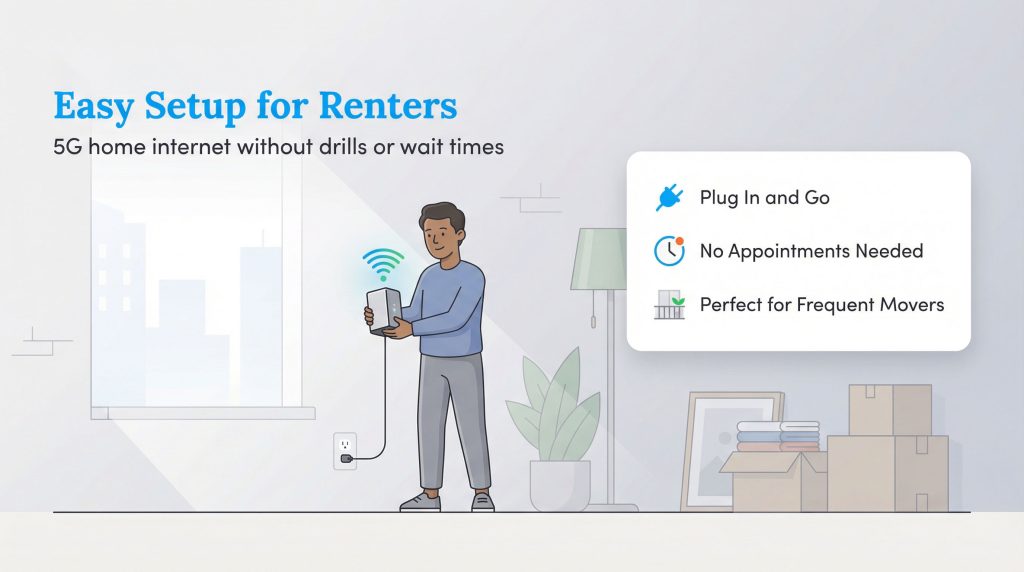
For renters and frequent movers, the hassle of setting up utilities is a major pain point. Cable internet often requires scheduling a technician appointment, waiting around during a four-hour window, and sometimes getting permission from a landlord to drill holes for coax lines. If you move every year, this process becomes tedious and expensive.
5G home internet is especially appealing here because it is almost always “plug and play.” You receive a box in the mail, plug it into a standard electrical outlet near a window, and you are online in minutes. There is no drilling, no wiring, and no waiting for a stranger to come into your home. This portability is incredibly valuable when setting up utilities when moving to a new apartment.
The Eco-Impact: Which Is Greener?
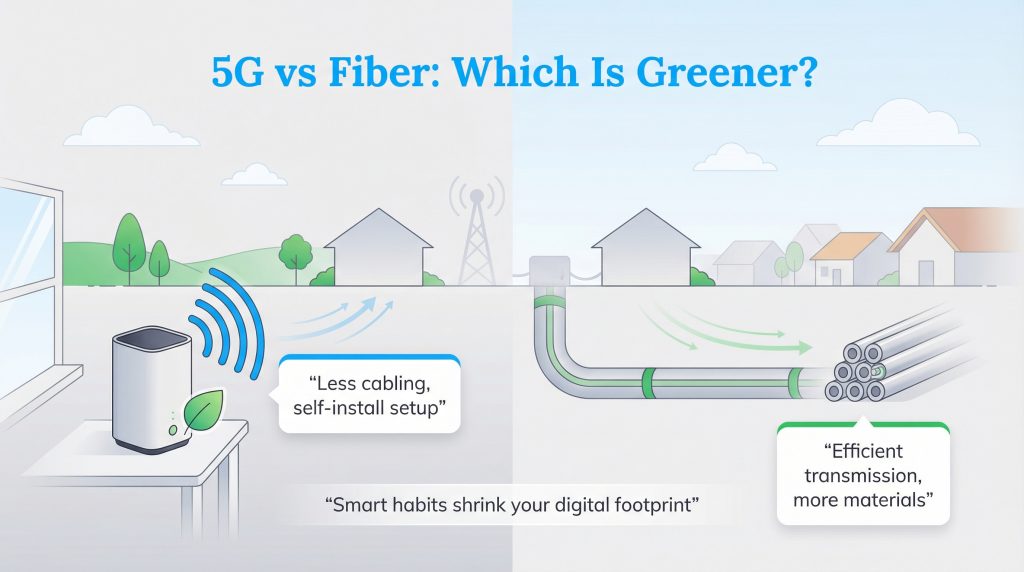
As we consider the environmental footprint of our digital lives, both technologies have pros and cons. 5G networks have the potential to be more resource-efficient regarding “last mile” infrastructure. Because 5G beams internet to your home, it may reduce the need to manufacture, transport, and bury as many plastic and copper cables all the way to individual houses. Additionally, the self-installation model eliminates the carbon emissions associated with rolling a technician’s truck to your home for setup.
However, wireless signal transmission can sometimes be less energy-efficient than wired transmission if the signal is weak, causing devices to work harder to maintain a connection. Many modern 5G gateways utilize Wi-Fi 6 technology, which is designed to manage power more effectively across your connected devices. Regardless of which service you choose, you can take small steps to reduce your energy consumption. You can also explore more eco-conscious internet and device tips to shrink your digital footprint.
[tip]
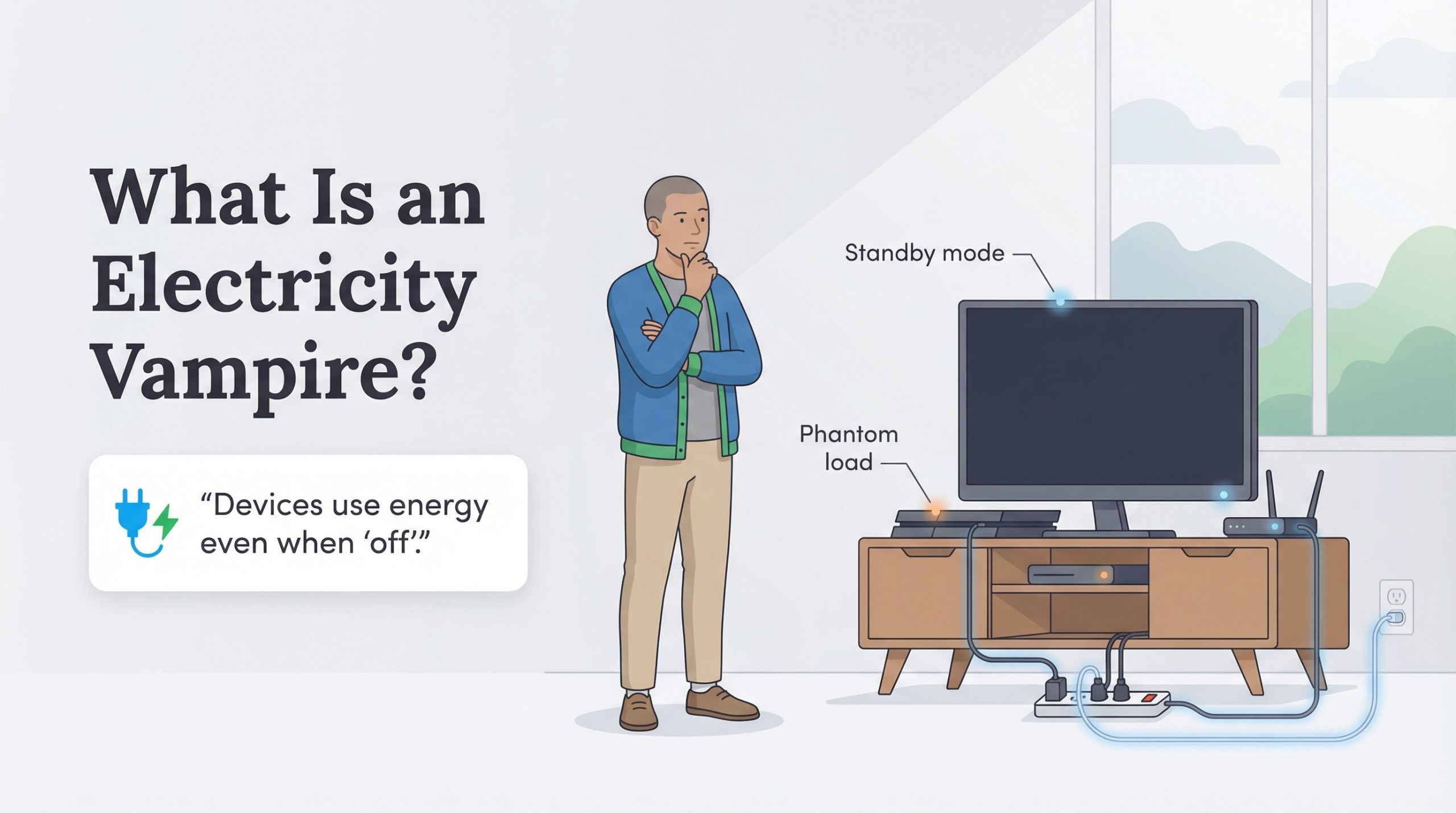
Eco Edge: Plug your modem and router into a smart power strip to cut “phantom” energy use overnight or when you are away from home, saving energy without impacting your connectivity. Look for ENERGY STAR certified network equipment to ensure maximum efficiency.
How To Decide Between Cable And 5G For Your Home
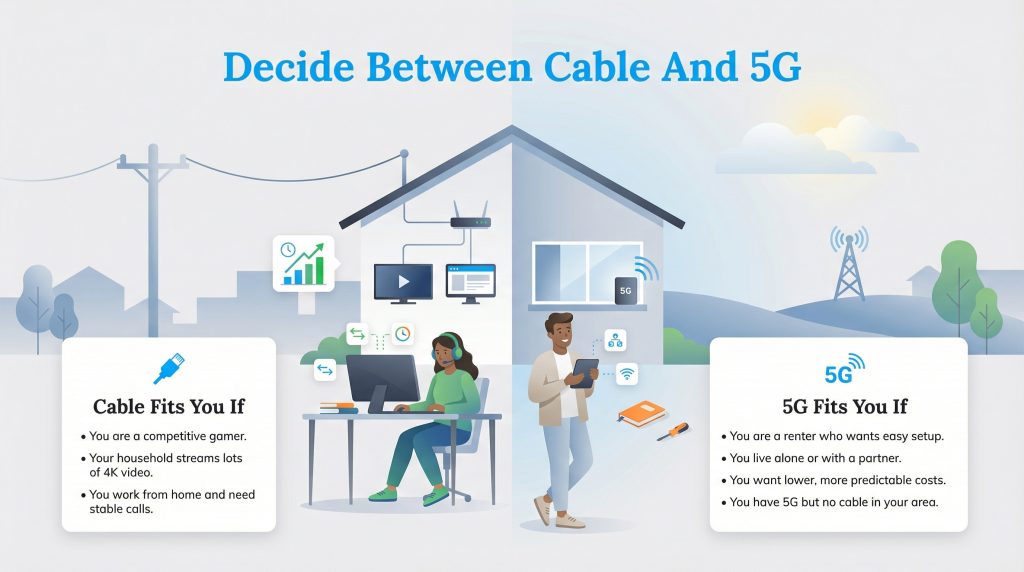
Choosing between cable and 5G home internet ultimately comes down to your lifestyle and your location. Here is a quick breakdown to help you identify which profile fits you best.
Choose Cable If:
- You are a competitive gamer who needs the lowest possible latency.
- You have a household of four or more people who stream 4K video simultaneously.
- You work from home and cannot risk a dropped connection during important meetings.
Choose 5G Home Internet If:
- You are a renter who wants to avoid drilling holes or dealing with installation appointments.
- You live alone or with a partner and have moderate internet needs.
- You are on a strict budget and want to avoid hidden fees and equipment rentals.
- You live in a rural area where traditional cable lines haven’t been laid yet but 5G home internet has coverage.
Making the Right Connection for Your Home
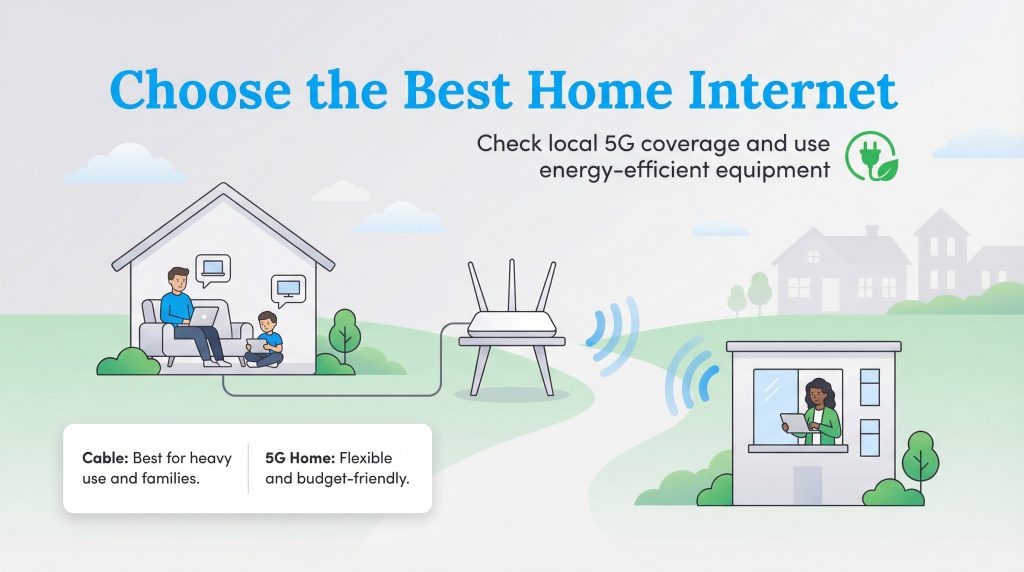
Both cable and 5G home internet are capable technologies that can keep you connected to the world. For most heavy users and families, the reliability of cable is worth the extra cost and setup. However, for students, renters, and anyone looking to save money, 5G offers a compelling, flexible alternative that is getting better every year. We recommend checking the coverage maps for 5G providers in your specific neighborhood before canceling your cable service to ensure you can get a strong signal. Whichever you choose, pairing your internet setup with energy-efficient equipment and smart usage habits will help you lower both your bill and your environmental impact.
FAQs About Cable vs. 5G
Is 5G home internet faster than cable?
Can I use 5G home internet for Netflix and streaming?
Do I need a technician to install 5G internet?
Does weather affect 5G home internet?
Is 5G internet cheaper than cable?
Is 5G home internet good for rural areas?
Is 5G home internet good for gaming?
About the Author

LaLeesha has a Masters degree in English and enjoys writing whenever she has the chance. She is passionate about gardening, reducing her carbon footprint, and protecting the environment.