
We dive into how to spot the real deals and avoid the gimmicks when it comes to cheap electricity plans.
Key Takeaways
- Teaser rates often expire after a few months, causing your monthly bill to spike unexpectedly.
- Usage tiers matter because the lowest advertised price often requires using exactly 1,000 or 2,000 kWh per month.
- Fixed-rate plans offer stability and protection against market volatility compared to risky variable-rate plans.
With the national average electricity rate hovering right around 16.3 cents per kilowatt-hour, opening your monthly utility bill shouldn’t feel like a high-stakes gamble. For many households living in deregulated energy markets, the sheer volume of provider choices can make your head spin, leaving you wondering if you’re quietly overpaying for power. The absolute fastest way to compare electricity rates and drastically lower your energy bill is to enter your zip code to evaluate local offers side-by-side. This comprehensive guide will show you exactly how to navigate the complicated market to find genuine, cheap electricity plans that fit your long-term budget — without any nasty surprises buried deep in the fine print.
Average Electricity Rates by Home Size
Before you begin shopping for a new energy provider, it helps to intimately understand your baseline household consumption. Your monthly usage level dictates the exact tier of pricing you qualify for, meaning your home’s square footage directly impacts your final customized rate. Here is a quick breakdown of average electricity rates based on typical residential consumption footprints.
| Home Type | Average Monthly Usage | Estimated Monthly Supply Cost |
|---|---|---|
| Apartment / Condo | 500 kWh | $70 – $90 |
| Small to Medium Home | 1,000 kWh | $140 – $170 |
| Large Home | 2,000 kWh | $280 – $340 |
Understanding Utility Delivery Charges
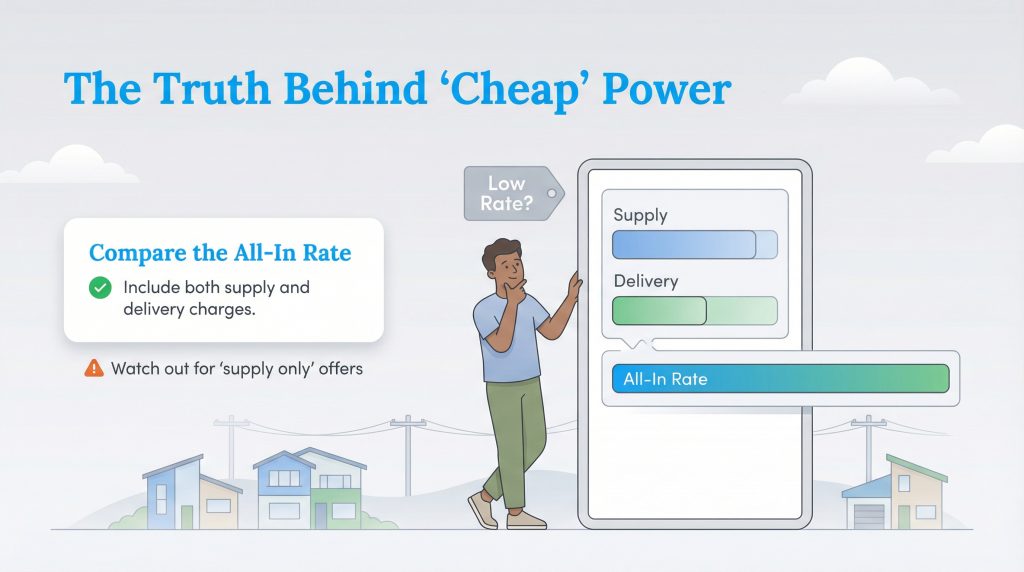
In deregulated states, steep competition frequently drives supply prices down, but it also creates a complex marketplace filled with confusing terminology. When you spot a large, bold number advertising a miraculously low rate per kilowatt-hour (kWh), you need to recognize that this figure only tells part of the story. Your monthly electricity bill is almost always split into two distinct parts: the supply charge and the delivery charge.
The supply charge covers the raw cost you pay your chosen retail provider for the actual energy you consume. Conversely, delivery charges cover the cost of maintaining the physical poles, repairing downed wires, and reading local meters. It is crucial to know that these delivery charges are strict pass-through fees mandated by the state. They remain completely standard no matter which competitive provider you choose and sit entirely separate from the provider’s advertised energy rate. Certain companies market incredibly cheap rates by omitting these unavoidable delivery fees from their ad copy, so you always want to calculate the full “all-in” rate to guarantee an honest apples-to-apples comparison.
Types of Cheap Electricity Plans
When you start shopping around, the exact contract type you select plays a massive role in your overall household savings. Each option carries distinct benefits and drawbacks tailored to different living situations, budgets, and credit histories. Fully understanding these contract variations helps you locate the cheapest electricity provider with confidence.
Fixed Electricity Rate Plans
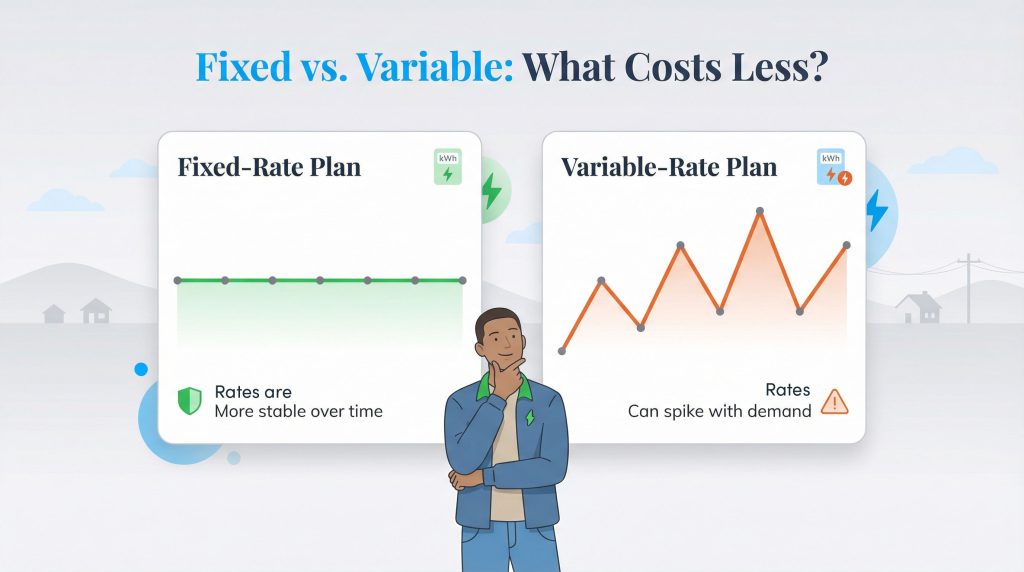
A fixed electricity rate allows you to lock in a specific, unchanging price per kWh for the entire duration of your contract — which usually spans anywhere from 12 to 36 months. This brilliant strategy shields your budget from volatile wholesale market swings. If global energy prices spike during a blistering summer or freezing winter, your locked-in rate stays comfortably flat. For the vast majority of homeowners, deciding between a fixed or variable rate heavily leans toward fixed, as this predictable stability makes it the safest and most affordable choice long-term.
Variable-Rate Plans
Unlike rigid fixed contracts, variable-rate plans fluctuate dramatically from month to month based on the ever-changing wholesale cost of electricity. These specific plans often feature a tantalizingly low introductory teaser rate that quickly vanishes after your first billing cycle concludes. When seasonal grid demand surges, your rate can skyrocket unpredictably overnight. While they offer the appealing flexibility of zero early termination fees, they carry significant financial risk if you aren’t paying close attention to the energy market.
Prepaid and No Deposit Electricity
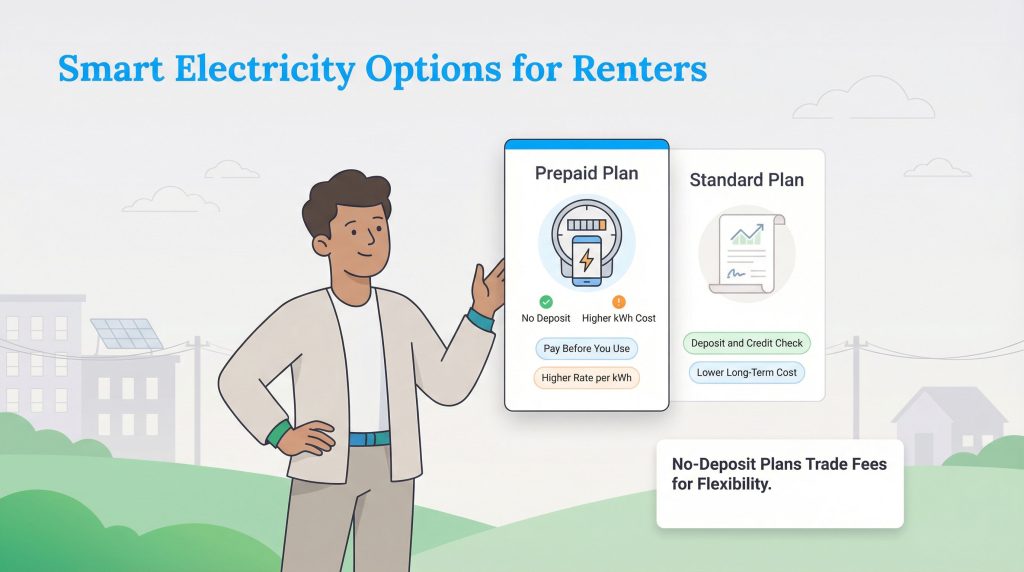
If you are renting a small apartment short-term or actively working to rebuild your credit score, standard lengthy contracts might pose a frustrating hurdle. This is where no deposit electricity and prepaid electricity plans step in to fill the gap. Prepaid plans let you pay for your power entirely upfront, completely bypassing the need for a hard credit check or an expensive initial security deposit. You simply load funds onto your account and track your usage balance in real time. However, this flexibility comes with a recognized trade-off: the base rate per kWh is almost always noticeably higher than what you would find with a standard fixed-rate agreement.
100% Renewable Energy Plans
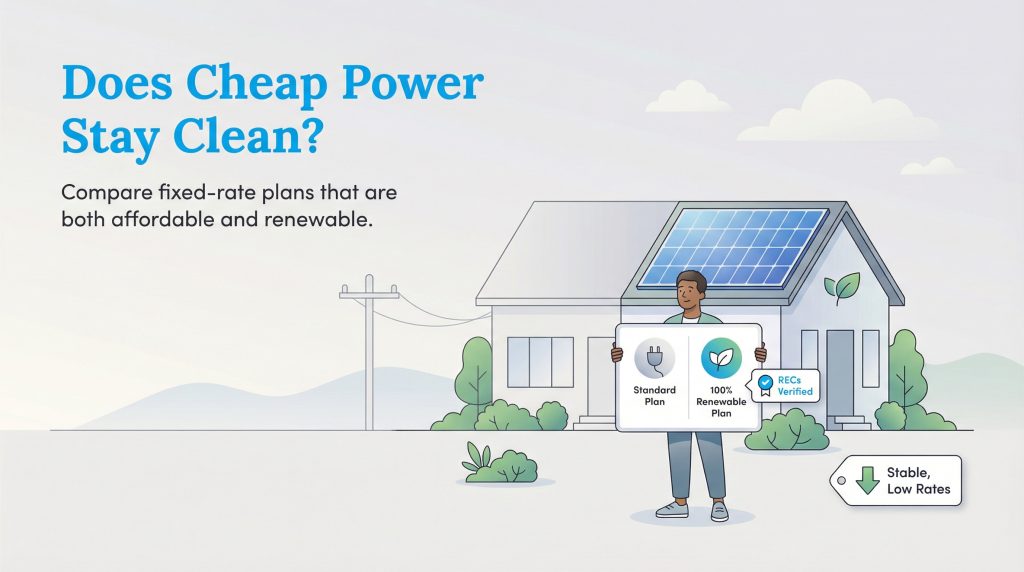
Many consumers incorrectly assume that sourcing environmentally friendly power requires paying a massive monthly premium. The reality is that the energy landscape has dynamically shifted, making wind and solar generation highly competitive against traditional fossil fuels. Today, it is incredibly easy to locate 100% renewable energy plans priced identically to standard grid power. You receive the reliable financial security of a fixed rate while simultaneously supporting a cleaner national grid. If you eventually transition your property toward home solar, your long-term eco-conscious savings compound even further. The U.S. Energy Information Administration (EIA) continually tracks this impressive competitive growth nationwide.
Time-of-Use Plans
Time-of-use plans strategically charge you different rates depending heavily on the time of day you pull electricity from the regional grid. You pay highly discounted, rock-bottom rates during off-peak hours (like late at night) and significantly higher premium rates during peak demand hours (typically late afternoon and early evening). These unique plans can drastically reduce your monthly bill if your household is willing to actively shift heavy energy tasks — like running your dishwasher, doing laundry, or charging an electric vehicle — to the middle of the night.
How to Read the Electricity Facts Label (EFL)
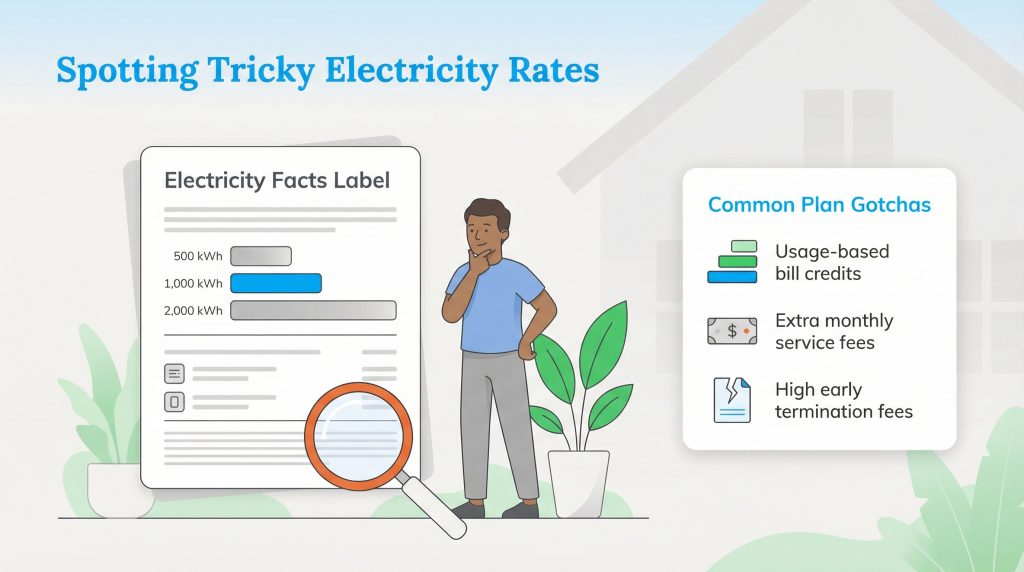
Securing a truly competitive deal means digging past the flashy marketing landing pages and going straight to the mandated disclosure documents. The “Electricity Facts Label” (EFL) acts exactly like a nutritional label for your energy contract. It completely standardizes pricing information so you can accurately compare providers and effectively dodge devastating bill shock down the line.
Some providers utilize clever usage tiers to artificially lower their advertised entry price. A plan might heavily market an incredible 10 cents per kWh rate, but if you look closely at the fine print within the EFL, that specific price point only triggers if you consume exactly 1,000 kWh or more. If you miss the mark and use 999 kWh, you lose the conditional bill credit, causing your effective rate to instantly double for that billing cycle. Here is a foolproof step-by-step method to read your EFL correctly:
- Locate the Base Charge: Look for a flat monthly fee prominently listed near the top of the document. Some providers charge $5 to $10 simply for having an active account with them, regardless of how much physical power you use.
- Find the Energy Charge: This represents the unbundled, raw cost the provider charges for the electricity itself, completely stripped of any utility delivery fees or conditional promotional credits.
- Check the 1,000 kWh Rate: Scan the standardized pricing table carefully. Ignore the 2,000 kWh column unless you own a massive, energy-hungry property. The 1,000 kWh calculation reliably provides the most accurate all-in benchmark for an average household, seamlessly factoring in both the mandated Transmission and Distribution Utility (TDU) charges and the provider’s unbundled energy charge.
The Best Time of Year to Shop for Energy
Strategically timing your contract renewal can drastically influence how much you pay for power over the coming year. Energy markets heavily rely on basic supply and demand economics. If you shop for a new plan in the dead of winter or the blistering heat of summer, retail providers typically inflate their prices to account for the massive, sustained surges in grid demand.
Instead, the optimal seasons to lock in a lengthy contract are the mild shoulder months of early spring and early fall. Because residential air conditioning and heavy heating usage plummet during these pleasant transitional seasons, wholesale power prices historically hit their lowest annual points. Snagging an extended 12- or 24-month fixed contract during April or October essentially guarantees you capture a rock-bottom rate that stays powerfully consistent straight through the harshest extreme-weather months.
Preparing to Switch Your Electricity Provider
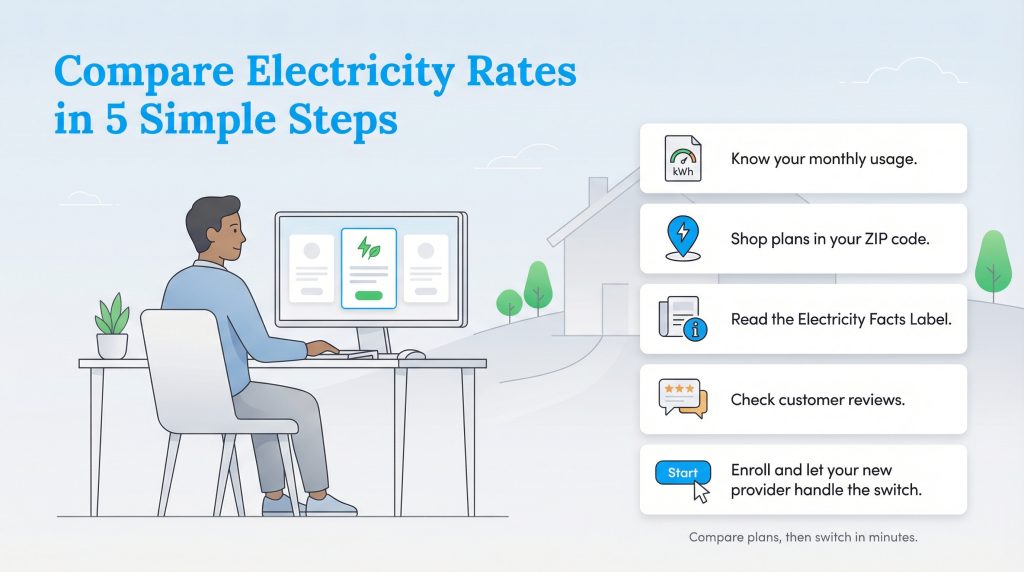
Taking actionable steps and making the switch is entirely seamless once you understand the core mechanics of the deregulated market. There is no physical disruption to your service when changing companies, as your local utility steadfastly continues delivering the power without interruption. Use this simple, structured checklist to guarantee you select the best possible option available.
- Review your historical usage: Pull up your previous electricity bills and calculate your average monthly consumption. Knowing exactly whether you hit the 500, 1,000, or 2,000 kWh tier is vital for securing accurate pricing.
- Compare local offers side-by-side: Enter your zip code into a trusted marketplace comparison tool to filter the cheapest electricity provider options available for your specific home address.
- Audit the contract details: Before digitally signing anything, open the Electricity Facts Label to boldly confirm the final rate minus any deceptive tier requirements. Verify the Early Termination Fee (ETF) so you fully understand the financial penalty for breaking the contract early.
- Complete the digital enrollment: Once you successfully locate a transparent, budget-friendly plan, seamlessly fill out the enrollment forms online. Your new provider automatically contacts your local utility to process the swift switch behind the scenes.
For brilliant additional strategies on lowering your monthly expenses beyond just securing a better rate, enthusiastically explore our targeted tips on how to save on your electric bill.
Choosing Genuine Value Over Cheap Teaser Rates
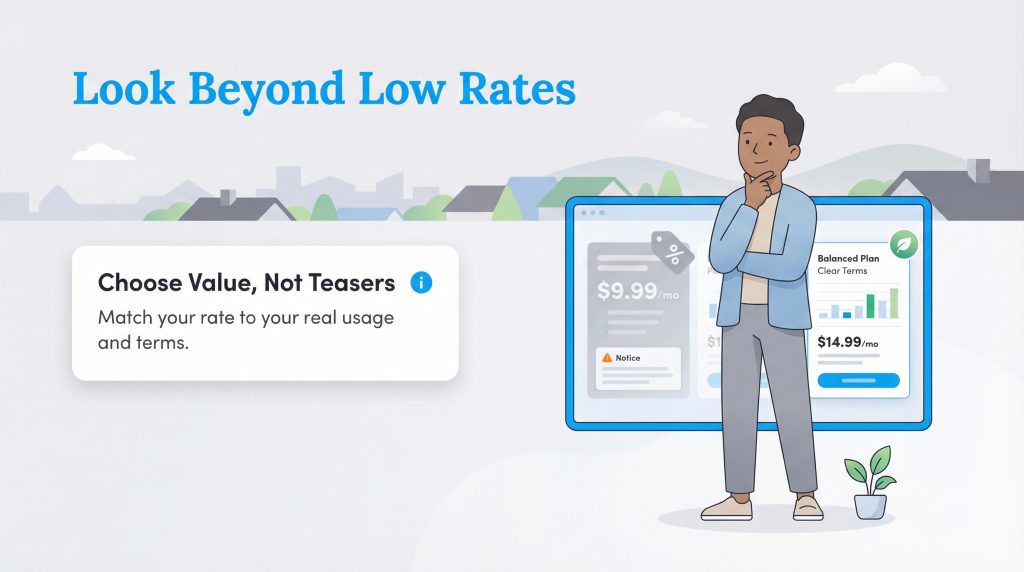
Pinpointing the absolute best electricity setup requires looking far beyond a flashy banner ad or a wildly low introductory price. The most cost-effective plan overall is always the one that mathematically aligns with your historical consumption habits and offers profoundly transparent, unbundled pricing. Taking just a few short minutes to carefully scrutinize the EFL, intelligently weigh fixed versus variable benefits, and compare current offers in your specific zip code deeply protects your budget from sudden, devastating price hikes. By pairing a fair, honest contract with a few straightforward energy-saving habits, you effortlessly keep your household costs remarkably low and your home running efficiently year-round.
Frequently Asked Questions About Cheap Electricity Plans
Who is the cheapest electricity provider right now?
Do cheap electricity plans require a deposit?
Is a fixed or variable electricity rate better?
How often do electricity rates change?
What is the best month to switch electricity providers?
Read more about the Best Time to Switch Providers
Can I switch providers if I am in a contract?
About the Author

Claudio is a sustainability-focused writer with a background in Anthropology and Psychology from NC State University. He has spent over 15 years working in writing, interpretation, and translation, driven by a deep interest in how human culture shapes the environment. Today, he shares his curiosity with readers by writing about sustainable living solutions and the connection between everyday choices and environmental impact.