
Understanding the fixed fees on your gas bill and finding actionable ways to lower your total energy costs
Key Takeaways
- The Columbia Gas of Ohio delivery charge is a regulated fee that covers the maintenance of pipes, meters, and safety infrastructure, not the actual natural gas you use.
- Various riders like the Infrastructure Replacement Rider are added to this base delivery fee to pay for specific system upgrades approved by the Public Utilities Commission of Ohio (PUCO).
- While you cannot lower the delivery charge itself, you can reduce your total bill by comparing gas supplier rates and improving your home’s energy efficiency.
Opening your natural gas bill during a month with mild weather and seeing a high total due can be incredibly frustrating. It often feels unfair when your actual usage is low, yet the amount you owe remains significant because of fees you cannot seem to avoid. To make sense of these costs, we need to distinguish between the two main parts of your bill: the “delivery” side, which is made up of fixed and regulated fees for service, and the “supply” side, which is the market-based cost of the fuel itself. In this guide, we break down exactly what you are paying for, and where you still have control.
What Is the Columbia Gas of Ohio Delivery Charge?
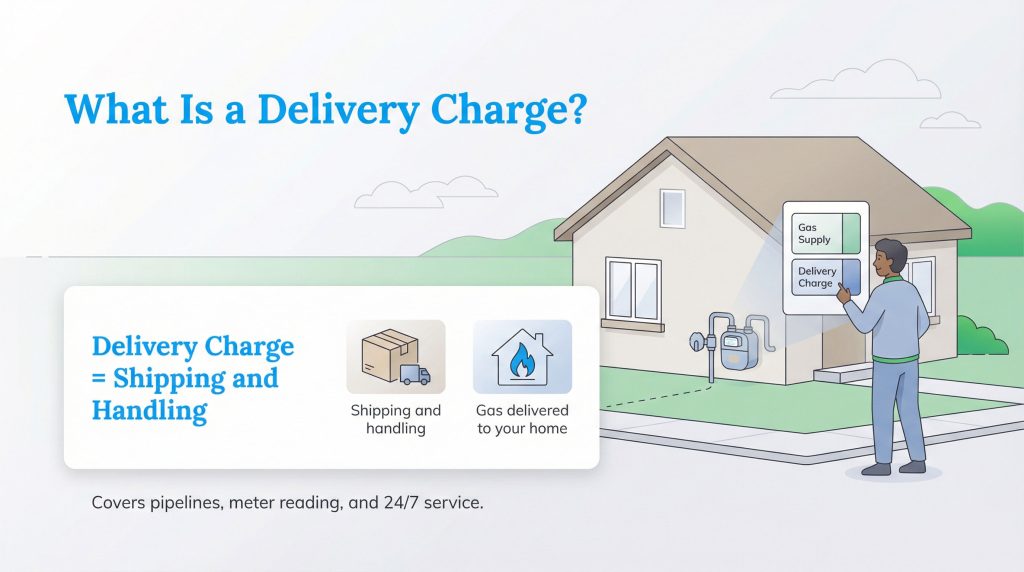
The delivery charge is essentially the cost of having a natural gas connection at your home. It pays for the physical service of bringing gas to your property, rather than the gas itself. This fee covers the operational expenses Columbia Gas of Ohio incurs to maintain thousands of miles of pipelines, read your meter, provide customer service, and respond to emergencies 24/7. Whether you burn enough gas to heat a mansion or none at all while on vacation, the infrastructure required to serve your home remains the same.
A helpful way to think about this is to compare it to ordering a package online. You pay a specific price for the item inside the box (the gas supply), but you also have to pay a shipping and handling fee to get it to your doorstep (the delivery charge). Even if the item inside is inexpensive, the cost of the truck, the driver, and the logistics network doesn’t change.
It is important to note that Columbia Gas recovers its operating costs and approved profit primarily through these delivery charges, which are regulated by the state. They typically do not mark up the cost of the gas itself; the price you pay for the commodity is usually passed through at cost or determined by the supplier you choose.
Columbia Gas of Ohio Bill Breakdown: Fixed Charges vs. Riders
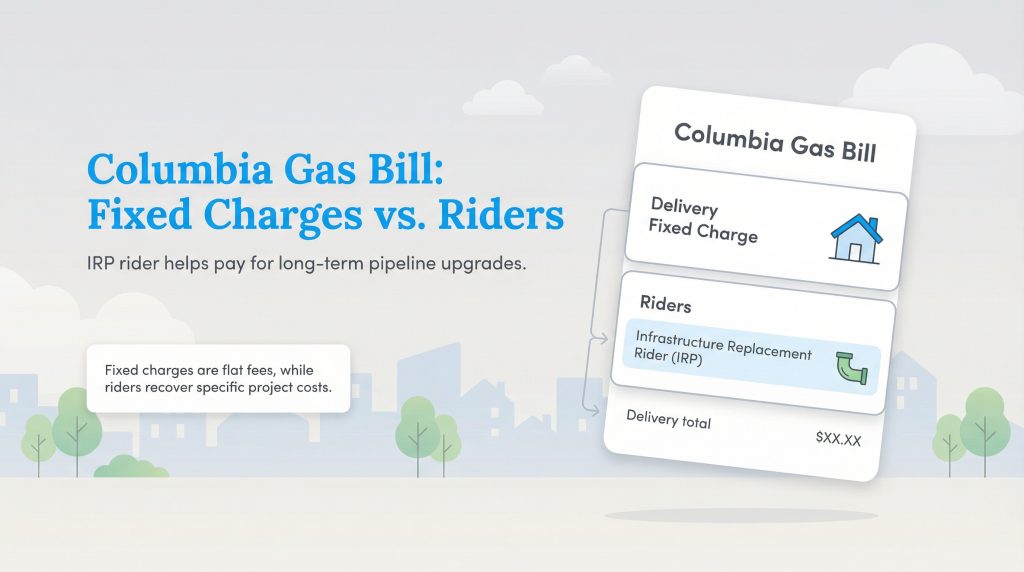
When you look at the “Current Charges” section of your bill, you might see a single line for delivery, or it might be broken down into several smaller line items. Understanding these components helps explain why the total is what it is. The delivery total is a sum of a flat monthly fee plus specific “riders”, additional charges approved by regulators to fund specific programs.
| Charge Name | What It Pays For | Can You Change It? |
|---|---|---|
| Fixed Monthly Delivery Charge | Basic operational costs, metering, billing, and customer service. | No |
| Infrastructure Replacement Rider (IRP) | Costs for replacing aging pipelines and modernizing the distribution system. | No |
| Capital Expenditure Program (CEP) | Investments in larger capital projects to ensure system reliability. | No |
| Uncollectible Expense Rider | Covers the cost of bills that other customers fail to pay (bad debt). | No |
One of the most common sources of confusion and price increases is the Infrastructure Replacement Rider (IRP). Columbia Gas of Ohio has been undertaking a long-term initiative to replace aging steel and cast-iron pipes with modern plastic ones. This project is designed to improve safety and reduce leaks. Because these upgrades cost millions of dollars, the Public Utilities Commission of Ohio (PUCO) allows the utility to recover those costs directly from customers through this specific rider.
Why Do Delivery Charges Keep Increasing?
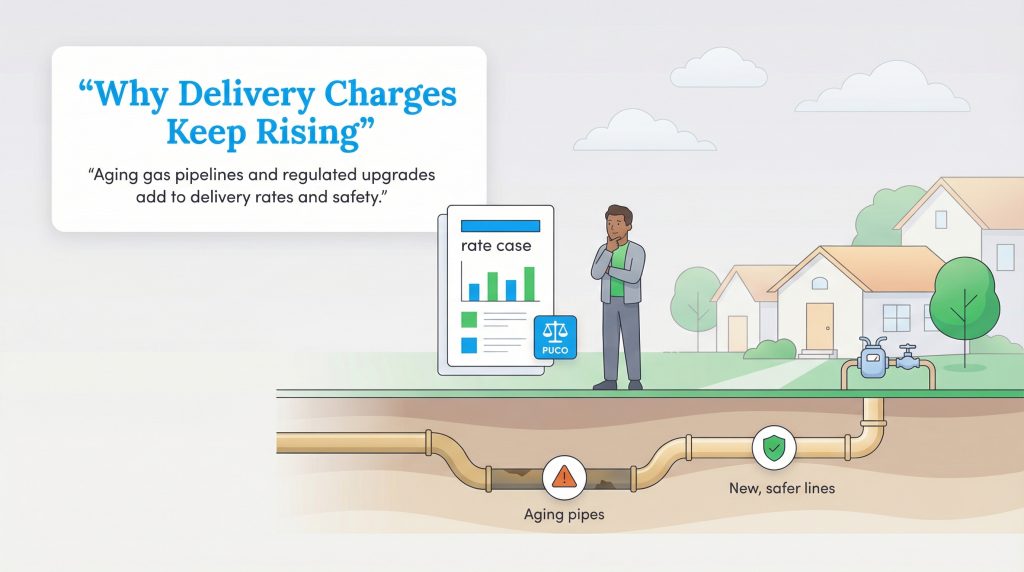
If you have lived in Ohio for several years, you have likely noticed that the delivery portion of your bill has crept up over time. This isn’t arbitrary; it is largely driven by the age of the gas infrastructure in the state. Many pipelines in older neighborhoods have been in the ground for decades. To prevent hazardous leaks and ensure reliable service during freezing winters, these pipes must be dug up and replaced.
Columbia Gas cannot simply raise rates whenever they want. They must file a “rate case” with the PUCO. This legal process involves auditing the utility’s expenses and investments to determine a fair rate that allows them to maintain the system while earning a regulated return on investment. While no one likes a higher bill, these increases are generally tied to tangible safety improvements and modernization projects that benefit the entire community.
Delivery vs. Supply: The Part of the Bill You Can Control
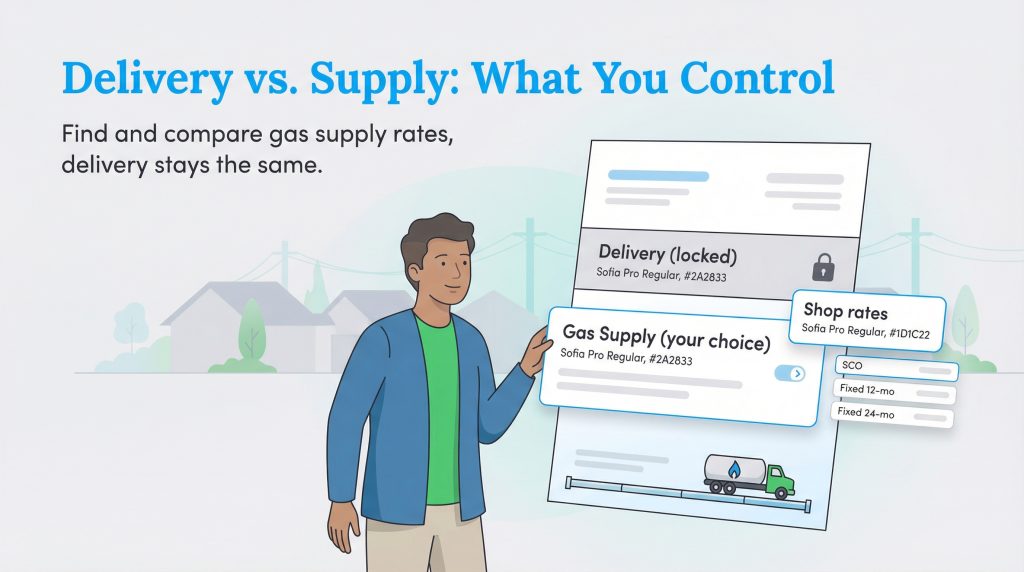
While the delivery charges are non-negotiable, you do have control over the “Gas Supply” portion of your bill. Ohio is an energy choice state, which means you are not forced to buy your natural gas directly from Columbia Gas. If you do nothing, you are placed on the Standard Choice Offer (SCO).
The SCO is a default rate set by a competitive auction process. The rate changes monthly based on the market price of natural gas. For many customers, this is a fair market rate. However, you also have the option to shop around and choose a retail supplier for your natural gas service in Ohio. These third-party companies might offer fixed-rate plans that lock in a price for 12 or 24 months, protecting you from price spikes during the winter.
You can compare these rates using the Energy Choice Ohio “Apples to Apples” tool. Just remember that switching suppliers only changes the supply rate (cost per Ccf or Mcf). Columbia Gas will still deliver the gas to your home, and you will still pay the same delivery charges and riders regardless of who supplies the gas.
| Bill Component | What It Covers | Can You Control It? |
|---|---|---|
| Delivery Charge & Riders | Pipes, meters, maintenance, and system upgrades. | No |
| Gas Supply Charge | The actual natural gas you use, priced per Ccf or Mcf. | Yes — by choosing a supplier and using less gas |
Money-Saver: Compare the “Price to Compare”: Look for the “Price to Compare” on your bill. This is the rate you are currently paying for gas supply. If you find a supplier offering a lower rate per Ccf (100 cubic feet) without hidden fees, you could save money on the supply portion of your bill.
Eco-Friendly Ways to Lower Your Total Gas Bill
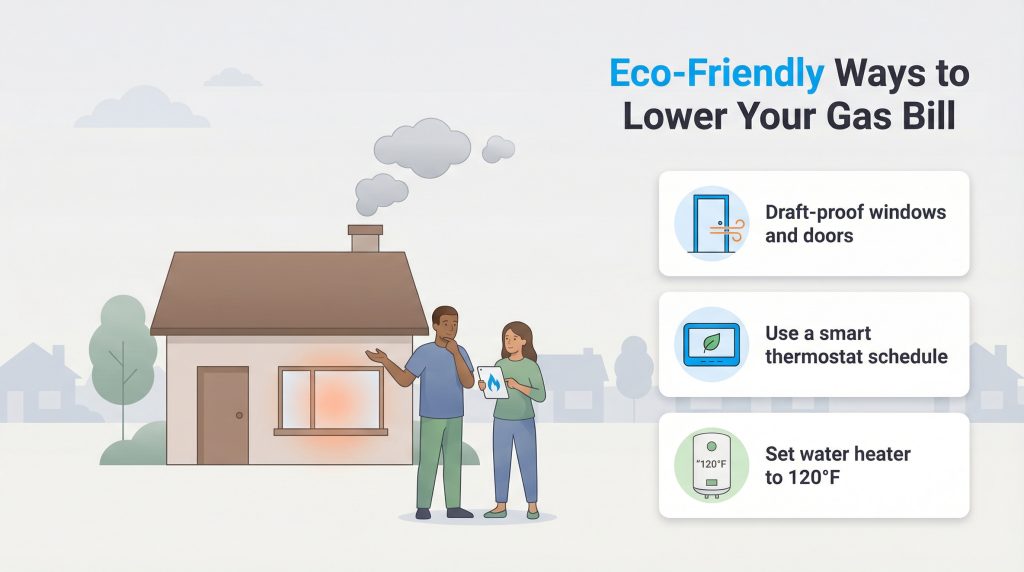
Since you cannot negotiate the fixed delivery fee, the most effective way to lower your total bill is to reduce the amount of gas you burn. Lower usage reduces the volume-based portion of your delivery charges and directly slashes your supply costs. Plus, using less gas is an environmentally mindful choice that lowers your home’s carbon footprint.
- Draft-proofing: Small gaps around windows and doors can let a significant amount of heat escape. Sealing these leaks with caulk or weatherstripping keeps the warm air inside, so your furnace doesn’t have to run as often.
- Smart Thermostats: Installing a smart thermostat allows you to optimize your heating schedule. You can automatically lower the temperature when you are away at work or sleeping, which can lead to noticeable savings over the course of a winter.
- Water Heating: Your water heater is the second-largest energy user in your home. Lowering the temperature setting to 120°F is safer for your family and saves energy without sacrificing comfort.
You can read up on how to save on your natural gas bill for even more tips.
Taking Control of Your Energy Costs
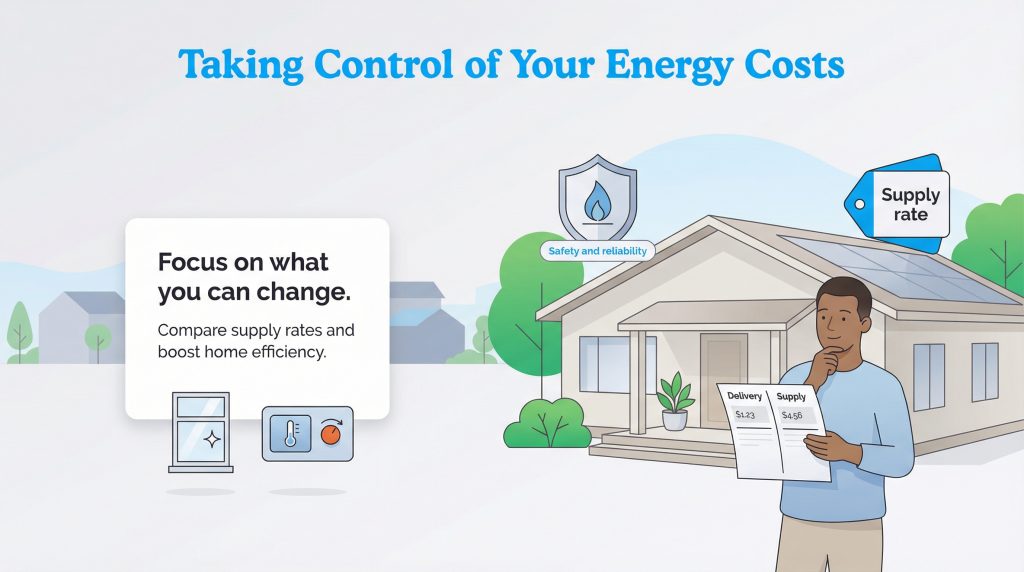
It is completely normal to feel frustrated by fees that seem out of your control, especially when they make up a large portion of your monthly statement. However, understanding that the Columbia Gas of Ohio delivery charge pays for the safety and reliability of the grid allows you to shift your focus to what you can change. By shopping for a competitive supply rate and tightening up your home’s energy efficiency, you can take meaningful steps toward a lower bill and a more sustainable home.
FAQs About Columbia Gas of Ohio Charges
Why is my Columbia Gas delivery charge higher than my gas usage?
Can I opt out of the Infrastructure Replacement Rider?
What is the Standard Choice Offer (SCO)?
Is there a way to get help if I can’t afford my Columbia Gas bill?
How often do Columbia Gas of Ohio rates change?
Does switching suppliers lower my delivery charge?
What is the Columbia Gas of Ohio fixed monthly charge?
About the Author

LaLeesha has a Masters degree in English and enjoys writing whenever she has the chance. She is passionate about gardening, reducing her carbon footprint, and protecting the environment.