

Navigating The Deregulated Energy Market And Setting Up Essential Services For Your New Texas Home
Key Takeaways
- Texas has a unique deregulated electricity market, meaning most residents must choose their own Retail Electric Provider (REP) rather than being assigned one.
- Water and natural gas services remain regulated and are typically managed by your local municipality or a designated regional utility company.
- Hidden fees like TDU delivery charges can surprise newcomers, so learning how to read an Electricity Facts Label (EFL) is critical before signing a contract.
If you are moving to Texas setting up utilities often comes with a steep learning curve, specifically due to the state’s fiercely independent power grid. Decades ago, lawmakers restructured the energy sector, meaning you now have the power — and the responsibility — to shop for and select your own electricity company. We know this open-market system feels completely overwhelming if you are relocating from a state where one traditional monopoly handles everything for you. This actionable guide cuts through the industry jargon, showing you exactly how to navigate the Texas deregulated energy market, compare average utility costs in Texas without falling for marketing traps, and confidently set up your water, gas, and internet long before moving day.
Why Setting Up Utilities In Texas Is Different (The Deregulated Market)
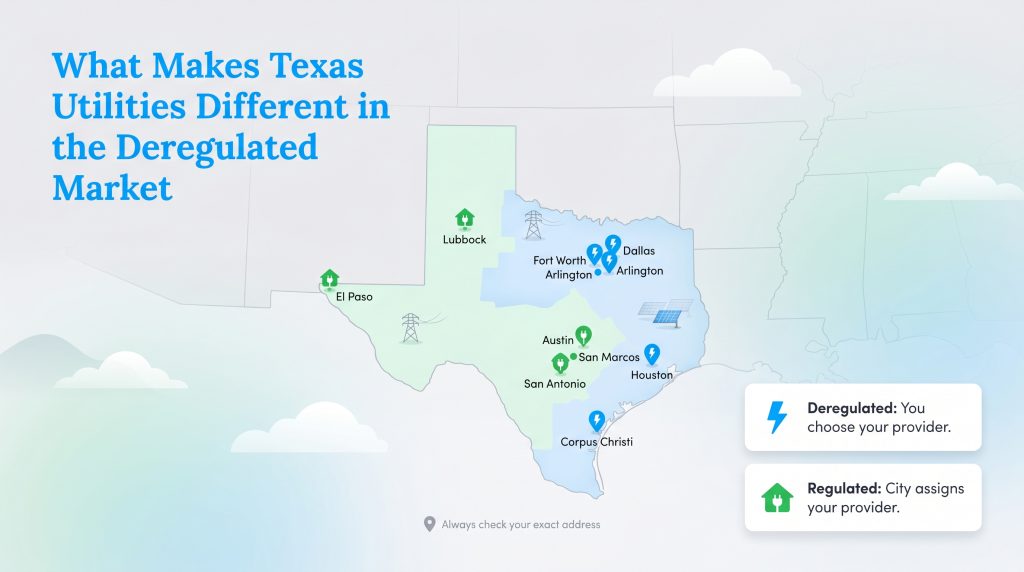
When moving to a new state, you expect a few cultural shifts — but the Texas energy framework is usually the most surprising adjustment for new residents. In roughly 85% of the state, the power grid is completely deregulated. This means that instead of relying on a single, state-owned utility monopoly, the market is open to private competition. You actively shop for and choose your own Retail Electric Provider (REP). This competitive framework is managed by the Electric Reliability Council of Texas (ERCOT), an independent organization responsible for overseeing the state’s isolated power grid and ensuring electricity reliably reaches your home.
While having the Power to Choose encourages lower rates and innovative energy plans, it also means you carry the burden of comparing contracts. Keep in mind that this open-market rule does not apply everywhere. If you are relocating from a regulated municipal area like Austin or San Antonio into a deregulated metro like Dallas or Houston, this might be your very first time evaluating energy rates. To build a stronger foundation before you start shopping, review our comprehensive guide on understanding electricity.
Regulated Vs Deregulated Cities
To help you determine what kind of market you are moving into, here is a quick breakdown of major Texas cities and how their electricity is managed.
| Deregulated Cities (You Choose Your Provider) | Regulated Cities (Assigned Provider) |
|---|---|
| Houston | Austin (Austin Energy) |
| Dallas | San Antonio (CPS Energy) |
| Fort Worth | El Paso (El Paso Electric) |
| Arlington | Lubbock (Lubbock Power & Light) |
| Corpus Christi | San Marcos (San Marcos Public Services) |
Even within deregulated regions, certain subdivisions or rural towns might be served by a local cooperative. Always verify your specific zip code and street address to confirm your eligibility to choose a provider.
30-Day Texas Utility Setup Checklist
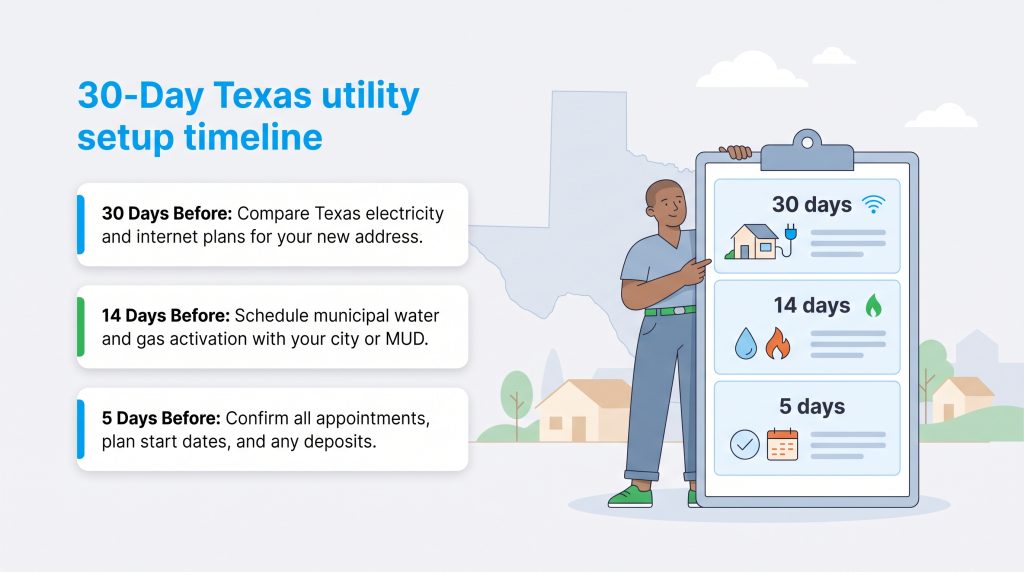
Timing is absolutely everything when relocating. If you want to avoid fumbling in the dark on your first night, utilizing a proven moving utilities checklist will keep your transition smooth and stress-free. Whether you are transferring services within the state or arriving from across the country, use this chronological guide to guarantee every connection is ready when you arrive.
- 30 Days Before Move-In: Research the deregulated market and shop for your ideal electricity and internet plans. Use your new address to verify which providers service your specific street. Taking this first step a month in advance gives you plenty of time to compare rates. If you are moving from out of state, this is also the perfect time to request a formal Letter of Credit from your current utility companies so you can easily secure a Texas utility deposit waiver.
- 14 Days Before Move-In: Establish your municipal accounts. Because water and gas setup Texas regulations dictate that these utilities remain under municipal control, you must contact your local city government or Municipal Utility District (MUD) directly. Physical setup often requires dispatching a city technician to unlock a water meter or check a gas line, so scheduling these activations two weeks early ensures the pipes are flowing well before you arrive.
- Five Days Before Move-In: Confirm all your scheduled utility connections and installation appointments. Verify the final installation window for your high-speed internet technician, pay any mandatory deposits you could not waive, and double-check that your chosen electricity plan has a confirmed start date matching your exact move-in day.
Step 1: Navigating The Power To Choose (Electricity Setup)
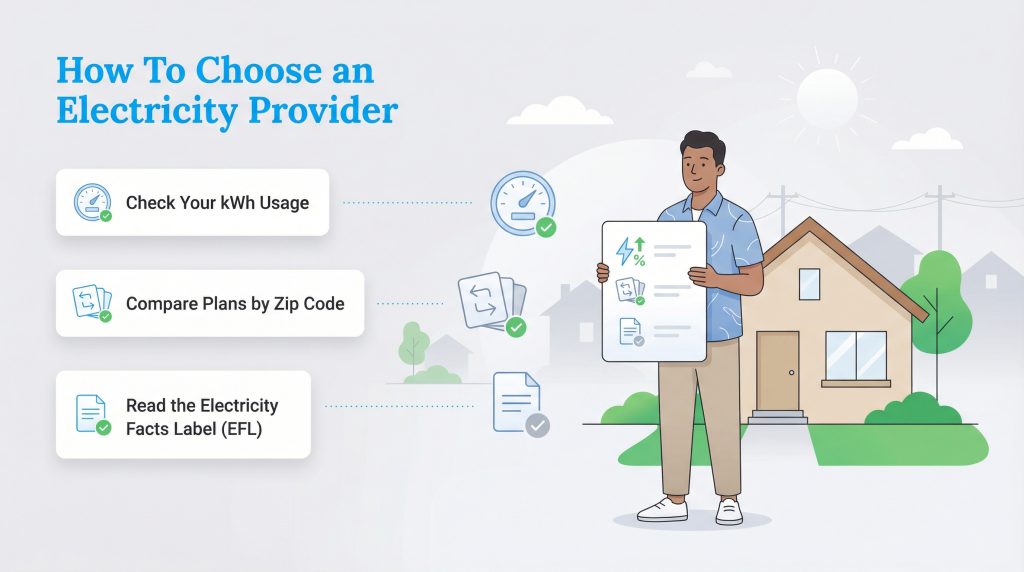
If you are wondering how to set up electricity in Texas, the process is much like shopping for a cell phone plan or comparing car insurance quotes. You want to find the best possible rate for your household habits without overpaying for flashy marketing gimmicks. Following a deliberate sequence will help you navigate this power to choose Texas guide and lock in a reliable rate.
1. Understand REP Vs TDU
One of the biggest hurdles for newcomers is grasping the difference between Retail Electricity Providers (REP) vs. TDU companies. You purchase your power from a Retail Electric Provider (REP), but a separate organization called a Transmission and Distribution Utility (TDU) physically delivers that electricity to your home.
| Retail Electric Provider (REP) | Transmission & Delivery Utility (TDU) |
|---|---|
| Sells you the electricity and handles your monthly billing. | Maintains the poles, wires, and physical grid infrastructure. |
| You have the freedom to shop around and choose this company. | Assigned to you strictly based on your geographic location. |
| Sets your energy rate per kilowatt-hour. | Restores your power during major weather outages. |
Common TDUs across the state include Oncor in the Dallas-Fort Worth region, CenterPoint Energy around Houston, AEP Texas in southern regions, and Texas-New Mexico Power (TNMP). These companies charge regulated delivery fees that cover maintaining the poles and fixing outages. These pass-through fees are added directly to the energy rate you secure with your chosen REP.
TDU delivery charges are non-negotiable. Every resident in a specific TDU service area pays the exact same state-regulated delivery rate, regardless of which retail provider they pick.
2. Find Your ESID Number
Every single power meter in the Texas deregulated market has a unique 17-digit or 22-digit identifier known as an Electric Service Identifier (ESID). Think of your ESID as the permanent social security number for your home’s physical electrical connection. Finding this number is the critical first step to securing power at your new property.
You can easily run an ESID lookup Texas tool through your chosen provider’s website or by navigating to the official energy choice portal and entering your exact address. Having this specific number on hand ensures the retail provider turns on the lights at your specific unit, rather than accidentally connecting your neighbor’s house by mistake.
3. Read The Electricity Facts Label
The Electricity Facts Label (EFL) is the single most important document you will review during this process. Getting the Texas Electricity Facts Label (EFL) explained in simple terms is crucial: it serves as the legally binding “nutrition label” for your energy plan. It breaks down your exact price per kilowatt-hour at standard 500 kWh, 1,000 kWh, and 2,000 kWh usage tiers, which makes your Texas electricity providers comparison incredibly straightforward.
Never sign a retail contract without reviewing this document first. Look specifically for hidden traps, such as minimum usage fees or bill credits that instantly disappear if you fall just one kilowatt below a certain threshold. If you need a reliable place to start your search, see our curated list of the Best Electric Providers in Texas to find the best electric providers for Texas movers.
4. Choose Between Fixed Vs Variable Rates
When you browse electricity plans, you will primarily encounter two categories: fixed-rate and variable-rate. A fixed-rate plan locks in your agreed-upon price per kilowatt-hour for the entire length of your contract — usually 12 to 36 months. We highly recommend fixed-rate plans for new residents because they provide robust protection against seasonal price spikes and make household budgeting much easier.
Conversely, a variable-rate plan typically has no long-term contract, but the rate you pay can fluctuate wildly every single month based on wholesale market conditions. During sweltering hot Texas summers or unpredictable winter freezes, variable rates can instantly skyrocket. While the flexibility is appealing, the financial risk is often too high for the average consumer.
Step 2: Activating Water, Gas, And Trash Services
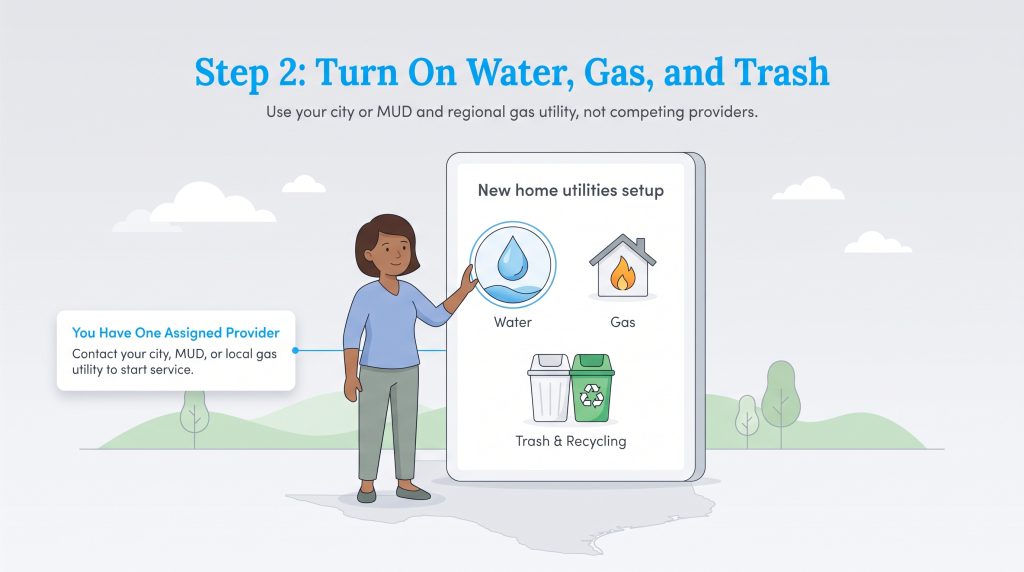
While establishing your electricity account requires careful shopping, handling your water, gas, and trash setup in Texas is incredibly straightforward. These essential services remain strictly regulated throughout the state. You generally have only one assigned provider based on your physical address, so you simply need to initiate service with the right entity.
Setting up water typically requires interacting directly with your city’s municipal utility department or a local Municipal Utility District (MUD). MUDs function as independent government entities providing water and sewage to suburban communities outside formal city limits. Follow this simple step-by-step list to secure your water connection:
- Identify your local MUD or city portal using your property tax record or lease agreement.
- Navigate to the official city website and locate the “Utility Billing” or “New Residential Service” portal.
- Submit a copy of your signed lease or property deed, alongside a valid personal ID, to initiate service.
🚩 Heads Up: Unlike your electricity, municipalities manage water and gas. You cannot shop around for these services; you must use your city’s assigned provider.
If your new home requires natural gas for heating or cooking, you will connect with the established regional monopoly in your area. You can learn more about what to expect with seasonal appliance checks in our comprehensive natural gas guide. If you are unsure who your assigned gas utility is, use this quick directory for major Texas regions.
| Region or Major City | Regulated Natural Gas Utility | Customer Service Phone |
|---|---|---|
| Houston Metro | CenterPoint Energy | 800-752-8036 |
| Dallas-Fort Worth | Atmos Energy | 888-286-6700 |
| Austin Metro | Texas Gas Service | 800-700-2443 |
| San Antonio | CPS Energy | 210-353-2222 |
| Lubbock & West Texas | Atmos Energy | 888-286-6700 |
When it comes to trash and recycling, the process depends entirely on where you live. In most incorporated cities, standard solid waste collection is seamlessly bundled with your municipal water bill. You won’t need to lift a finger to call a separate company. However, if you are moving into a rural property or specific unincorporated county zones, you must contract directly with a private waste management service (such as Waste Management or Republic Services) to schedule your weekly pickups and secure your bins.
Step 3: Internet And Cable Providers In Texas
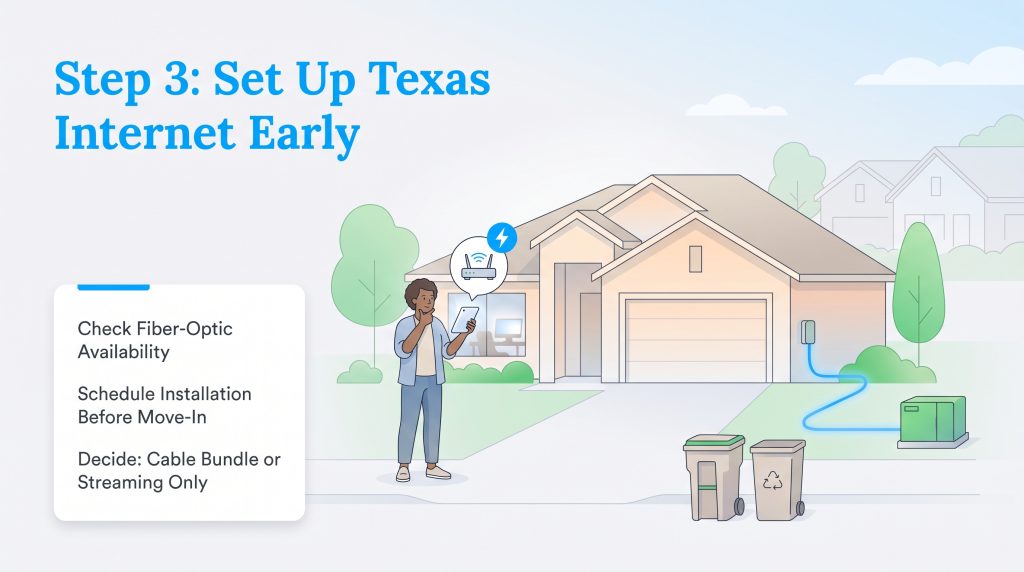
A home without high-speed internet is hardly functional, particularly if you work remotely. Before settling for standard cable broadband, we strongly advise checking for high-speed fiber-optic availability. Major providers like AT&T and Google Fiber are aggressively expanding their fiber networks across major Texas metros — specifically Dallas, Houston, and Austin — offering superior speeds and reliability.
In addition to internet, many broadband providers offer bundled cable television packages. However, with the rising costs of traditional cable, many Texas residents instead opt to pair fiber-optic internet with their favorite independent streaming platforms. Because setting up physical broadband or cable infrastructure often requires an on-site technician, be sure to schedule your installation well in advance.
Utility Setup Responsibilities For Renters Vs Homeowners
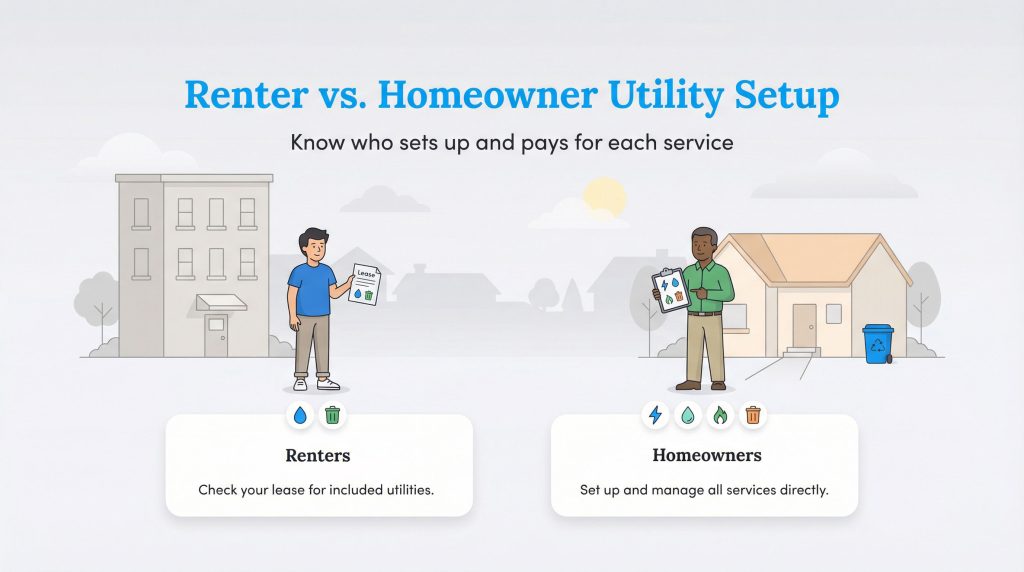
As moving day approaches, understanding your specific household responsibilities ensures you avoid unexpected delays. If you are renting an apartment, review your lease addendums carefully. While you must almost always select your own electricity provider in deregulated areas, property management companies frequently bundle water, sewer, and valet trash into your monthly rent. Conversely, homeowners naturally shoulder the burden of setting up and paying for all these infrastructure services directly.
Adopting Sustainable Energy Choices
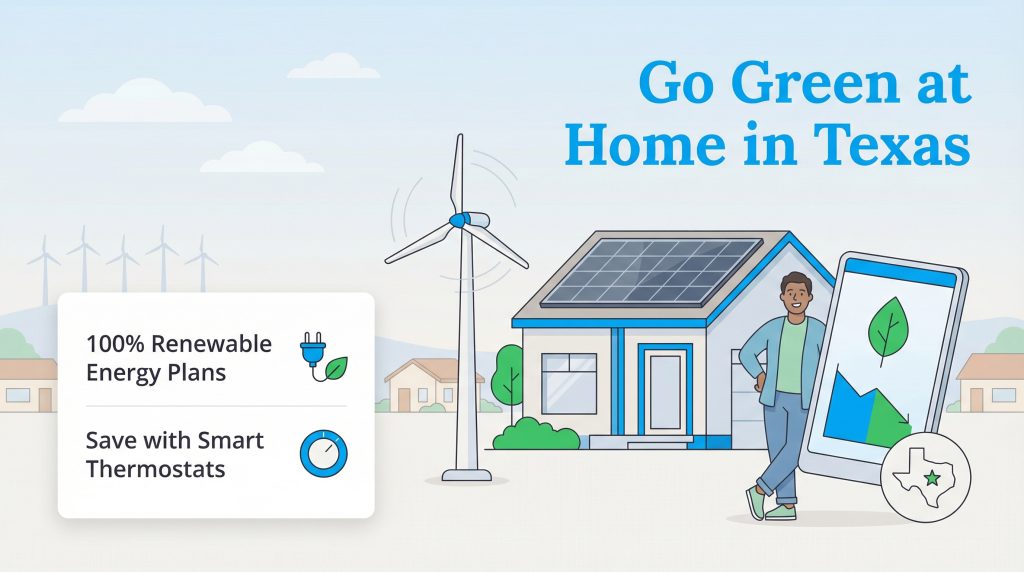
Texas is proudly a leading producer of wind energy, making it surprisingly accessible and affordable to adopt an eco-conscious lifestyle. Many competitive providers offer plans backed by 100% renewable energy. Beyond selecting a green electricity plan, permanently installing a smart thermostat is an excellent way to automatically optimize your daily usage. This environmentally mindful choice lowers your carbon footprint and reduces daily strain on the power grid. You can find more detailed data about these ongoing benefits online, or explore our solar energy resources for long-term home upgrades.
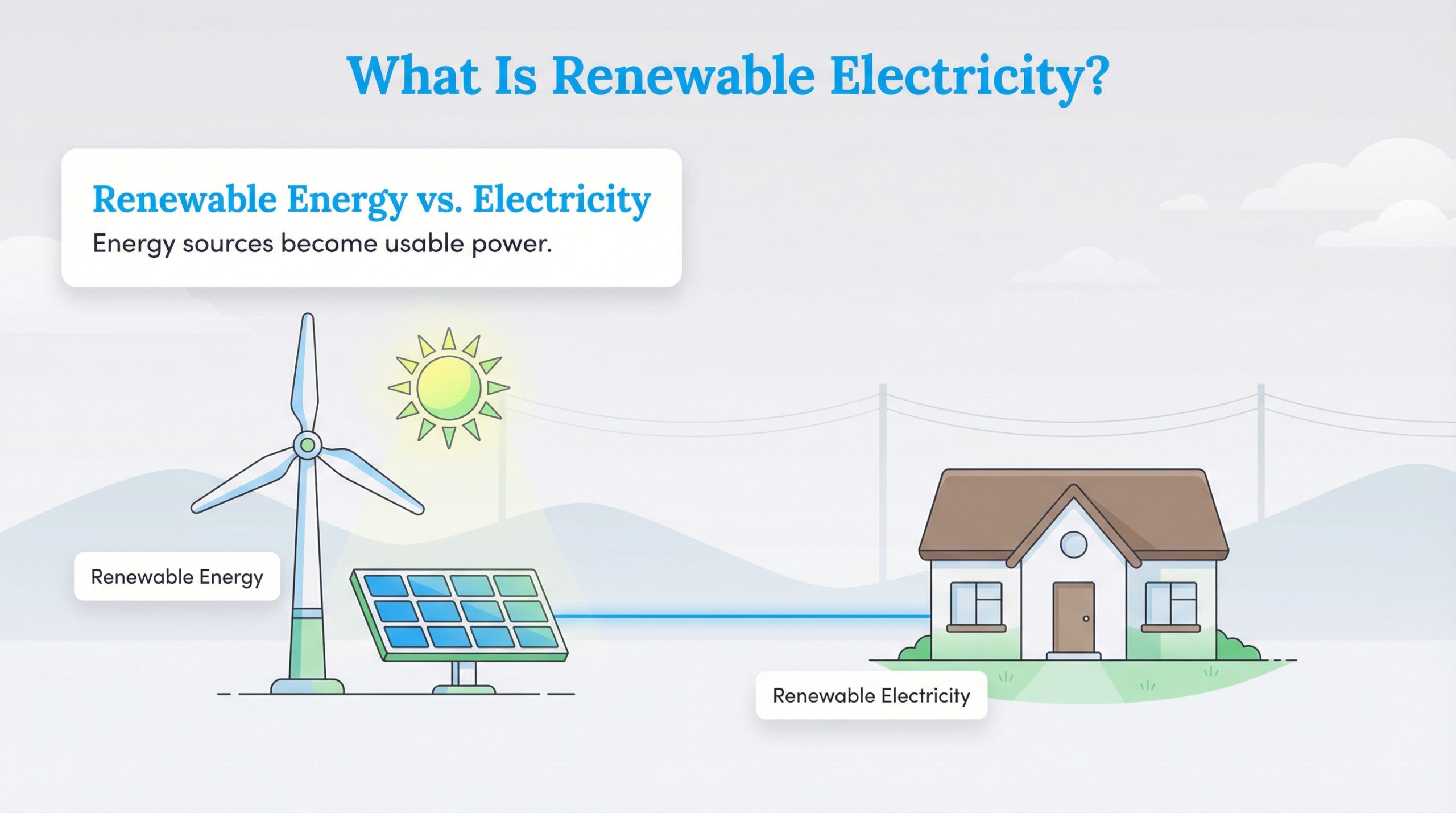
Choosing an energy plan backed by Renewable Energy Certificates (RECs) is an easy way to lower your household’s carbon footprint without installing expensive physical solar panels on your roof.
How To Avoid Utility Deposits In Texas
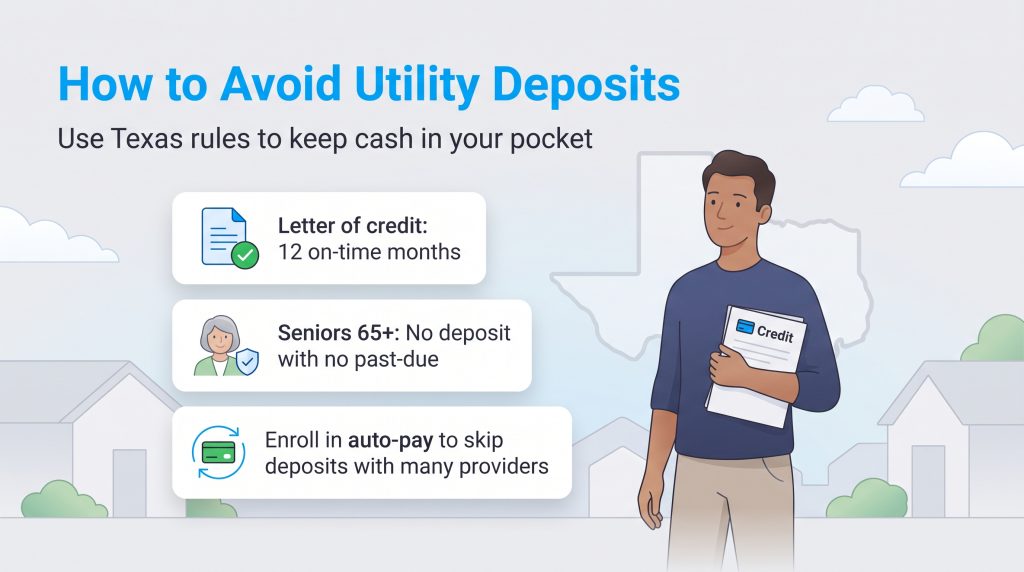
If you are worried about the upfront costs of relocating, securing a Texas utility deposit waiver is one of the easiest ways to keep cash in your pocket. In deregulated zones, most Retail Electric Providers will run a soft credit check when you apply for service. If you do not meet their minimum credit threshold, they may request a deposit ranging from $150 to over $400. Fortunately, the Public Utility Commission of Texas (PUCT) requires providers to waive these deposits if you meet certain criteria.
Here are the three primary ways you can avoid paying utility deposits in Texas:
- Submit a Letter of Credit: If you can provide a formal document from your most recent electricity provider proving you have made 12 consecutive months of on-time payments, your new Texas provider must waive the deposit. You can usually request this letter directly from your current utility company’s customer service department.
- Claim a Senior Citizen Discount: Texas law stipulates that residents who are 65 years of age or older are entirely exempt from paying utility deposits, provided they do not have a past-due balance with another electric provider. You will simply need to provide a state-issued ID or passport to verify your age during the enrollment process.
- Enroll in Auto-Pay: While not officially mandated by state law, many competitive energy providers will voluntarily waive your deposit if you agree to enroll in automatic payments using a valid credit card or bank account. This is a mutually beneficial option that streamlines your monthly billing while saving you hundreds of dollars upfront.
Preparing For Your First Texas Utility Bill
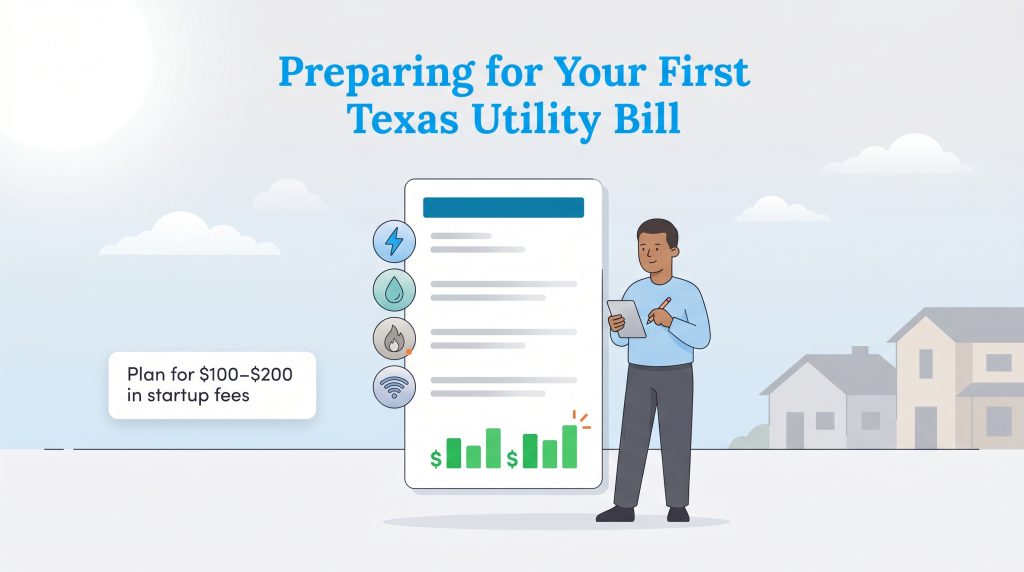
Set aside a realistic budget to cover your Texas utility connection fees. Between electricity, water, gas, and broadband, expect to pay a baseline of $100 to $200 in standard non-refundable activation charges just to get your services running. To ensure your first billing cycle is completely accurate, we strongly recommend taking a clear, time-stamped photo of your water, gas, and electric meters the moment you receive the keys on move-in day. This simple step provides undeniable proof of your starting usage in case there is ever a billing discrepancy.
Because average utility costs in Texas fluctuate wildly depending on the season, preparing your budget for the state’s extreme weather is essential. Long, blistering summers force air conditioners to work overtime, while occasional winter freezes can cause heating costs to spike.
To help you anticipate your monthly expenses, here is a general comparison of estimated seasonal electricity costs for a typical mid-sized Texas home:
| Season | Estimated Monthly kWh Usage | Average Monthly Electricity Cost |
|---|---|---|
| Summer (June – August) | 1,500 – 2,000+ kWh | $200 – $300+ |
| Winter (December – February) | 900 – 1,200 kWh | $130 – $170 |
| Spring & Fall (Mild Months) | 700 – 900 kWh | $100 – $130 |
Once you settle in, monitor your bills closely during your first full Texas summer to establish a realistic baseline budget, and refer back to our tips in Utility Bills 101 and on how to save on your electric bill year-round. Taking the time to master this system means you avoid hidden fees, secure reliable service, and reap the full financial benefits of a truly competitive energy market.
Frequently Asked Questions About Texas Utilities
How far in advance should I set up utilities in Texas?
Do I need a Texas ID to set up electricity?
Why is my Texas utility bill so high in the summer?
How much does it cost to set up utilities in Texas?
How long does it take to set up utilities in Texas?
Can I get same-day electricity connection in Texas?
Do I need to pay a deposit to set up utilities in Texas?
Do I need to set up gas and electricity with the same company?
What is the difference between a fixed and variable rate electricity plan in Texas?
Who do I call if my power goes out in Texas?
About the Author

David has been an integral part of some of the biggest utility sites on the internet, including InMyArea.com, HighSpeedInternet.com, BroadbandNow.com, and U.S. News. He brings over 15 years of experience writing about, compiling and analyzing utility data.

LaLeesha has a Masters degree in English and enjoys writing whenever she has the chance. She is passionate about gardening, reducing her carbon footprint, and protecting the environment. She also recently served as President of the Board for City Sprouts (a community garden).