Written By: David Cosseboom | Updated On: January 19th, 2026
Transform your household impact with these practical energy and cost-saving strategies.
Moving into a new home offers a fresh start and the perfect opportunity to reset your daily habits. While the concept of sustainable living can sometimes feel like an overwhelming lifestyle overhaul, it actually begins with the basic utilities you use every day. This guide focuses on setting up your home’s energy, water, and systems to run efficiently from day one, helping you save money on monthly bills while reducing your environmental impact.
What Is Sustainable Living for the Modern Homeowner’s Utilities?
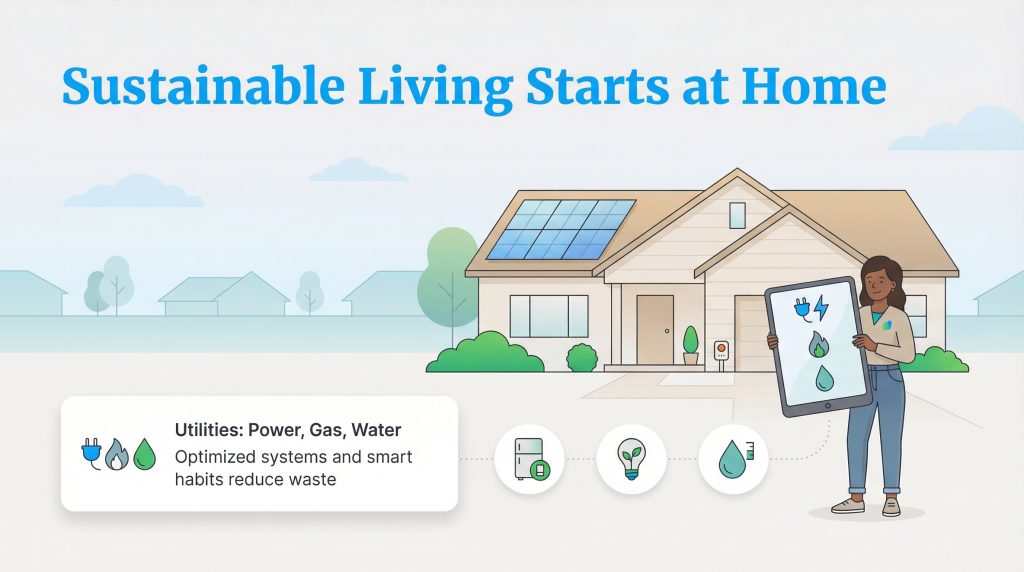
Sustainable living is often associated with recycling bins and composting, but for a homeowner, it really starts with how you manage your home’s core resources. It’s an intentional way of using electricity, natural gas, and water so you get the comfort you want with less waste. Instead of viewing these utilities as infinite resources, you manage them to minimize waste and maximize efficiency.
When you focus on what sustainable living ideas mean in the context of your new home, you are really looking at system optimization and everyday habits. It involves choosing appliances that do more work with less power and adopting habits that prevent unnecessary usage. These choices lower your carbon footprint and keep more money in your bank account every month.
Optimizing Your Energy Source and Setup
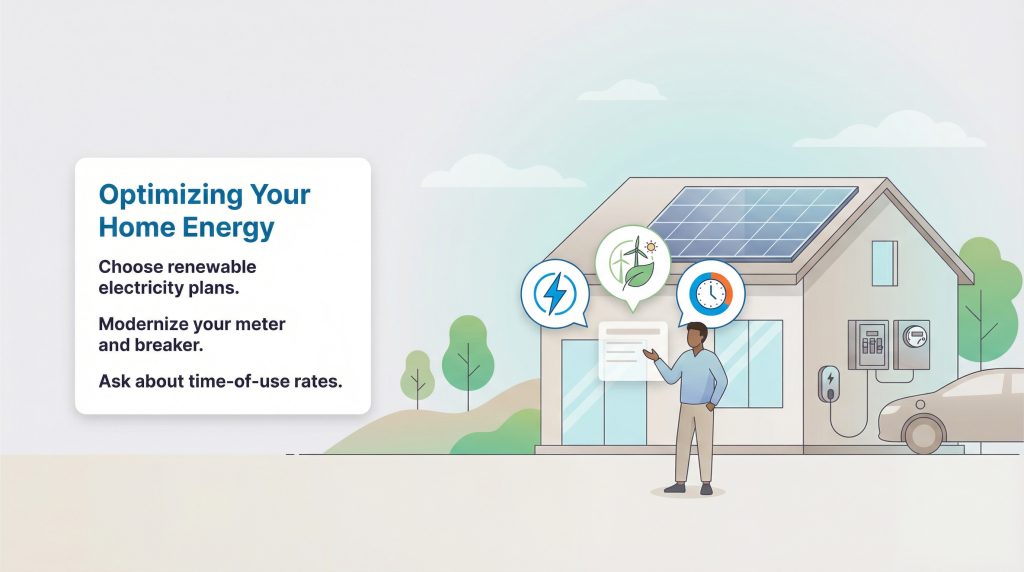
Your ability to control your home’s environmental impact often depends on where you live. In deregulated energy markets, such as Texas, Pennsylvania, and Ohio, you have the power to choose your electricity provider. This competition allows you to shop for plans that align with your values, including 100% renewable energy options sourced from wind or solar farms. If you’re considering solar for your home, explore our guide to solar utilities and setup.
Many providers offer “Green Energy Plans” that purchase renewable energy certificates (RECs) to offset your usage. Beyond choosing a provider, you can put energy-efficient home ideas into practice right at the service level. Making sure your breaker box is up to date and your meter is in good working order improves safety, supports modern equipment like EV chargers or heat pumps, and helps your utility get accurate readings. If you are setting up new service, ask your provider about time-of-use plans that reward you for shifting heavy energy usage to off-peak hours.
Smart Climate Control: Heating and Cooling Efficiently
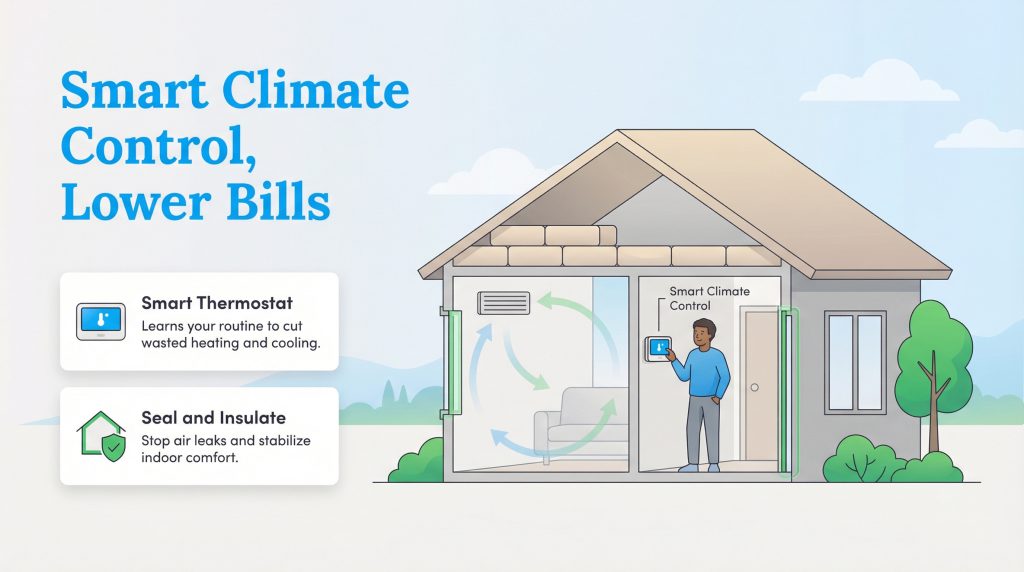
Heating and cooling your home accounts for the largest portion of your energy consumption. To keep costs down, you need to manage your HVAC system intelligently. Installing a smart thermostat is one of the most effective upgrades you can make. These devices learn your schedule and automatically adjust the temperature when you leave for work or go to sleep, ensuring you aren’t paying to cool an empty house.
Efficiency also relies on keeping the conditioned air inside your home. Sealing drafts around windows and doors with weatherstripping prevents air leaks that force your HVAC system to work overtime. Adding proper insulation to your attic and walls further stabilizes your indoor temperature. According to the Department of Energy, proper air sealing and insulation can significantly reduce heating and cooling costs while improving overall comfort.
Water Conservation Strategies That Lower Bills
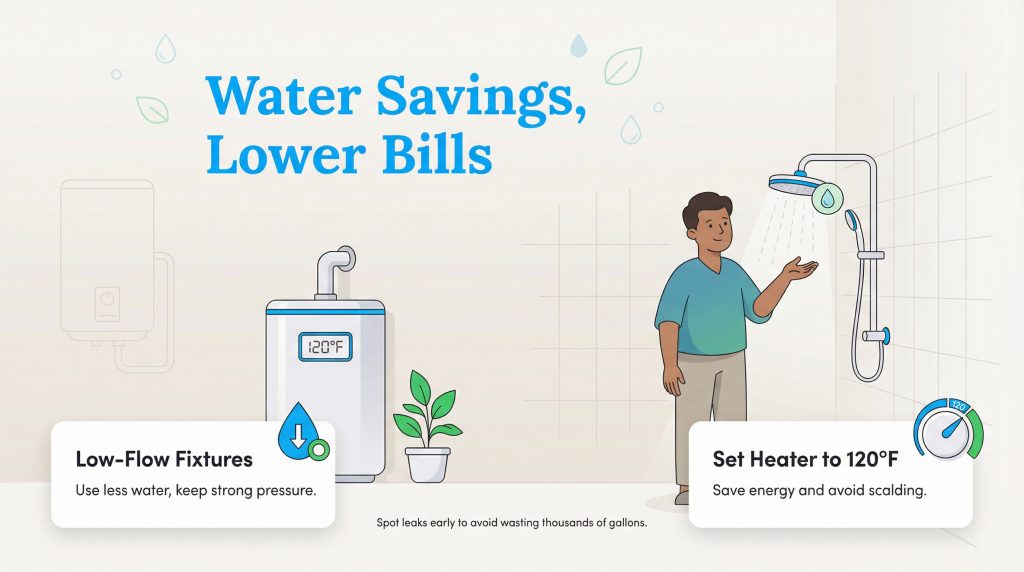
Water conservation is a critical component of an eco-friendly home. You can reduce your consumption immediately by installing low-flow fixtures. Modern low-flow showerheads and faucet aerators maintain strong water pressure while using a fraction of the water standard fixtures require. This simple swap reduces your water bill and cuts down on the energy required to heat that water.
Your water heater itself is another target for efficiency. Many water heaters are set to around 140°F, which is hotter than most households need and can pose a scalding risk. Lowering the temperature to 120°F saves energy and keeps your water safe. Additionally, stay vigilant about maintenance. The EPA’s WaterSense program notes that a single leaky faucet dripping at the rate of one drip per second can waste more than 3,000 gallons per year.
Sustainable Habits for Electronics and Appliances
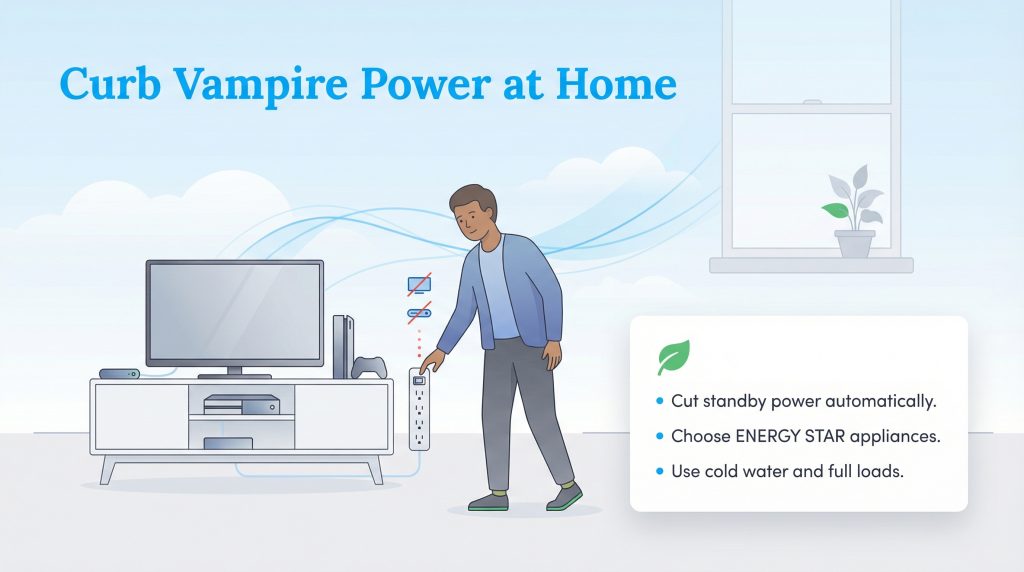
Modern homes are filled with electronics that consume energy even when they appear to be turned off. This phenomenon is known as “vampire power” or phantom load. Devices like televisions, computers, and gaming consoles stay in standby mode, drawing a steady stream of electricity. For more ways to cut costs, check out our guide on how to save on your electric bill. You can combat this by plugging these electronics into smart power strips that cut the power supply completely when the devices are not in use.
Your major appliances also offer opportunities for eco-friendly home tips. Look for ENERGY STAR® certified appliances when it’s time to replace major equipment. Washing laundry in cold water cleans clothes just as effectively as hot water for most loads but uses significantly less energy. Similarly, running your dishwasher only when it is fully loaded maximizes the efficiency of the water and energy used during the cycle.
Why an Energy Audit Is Your First Sustainable Living Step at Home
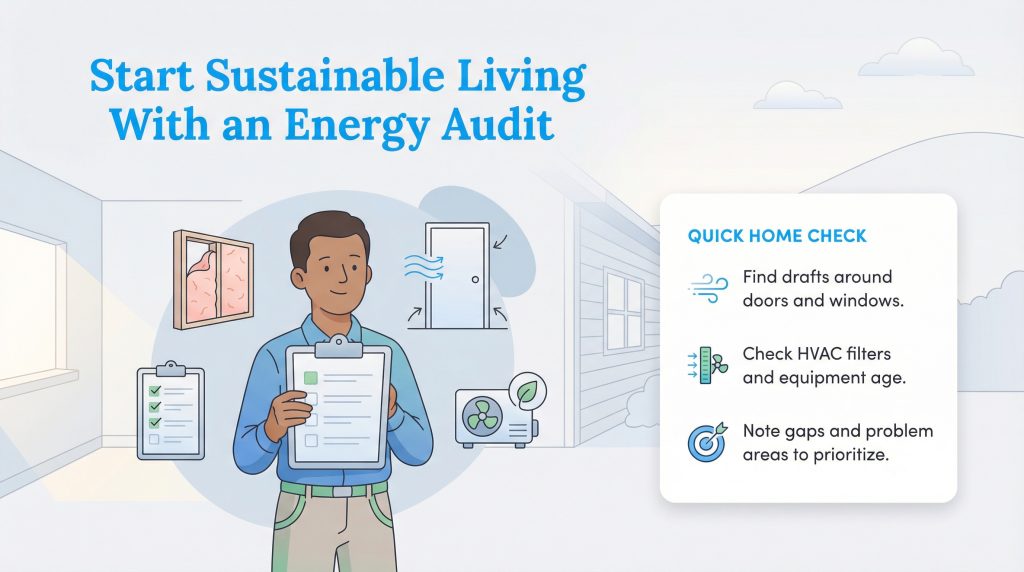
Before you invest heavily in renovations, you should understand exactly where your home is losing energy. An energy audit is a professional assessment that identifies air leaks, insufficient insulation, and inefficient equipment. It provides a roadmap for how to reduce carbon footprint at home most effectively.
Many utility providers offer free or discounted energy audits to new customers. If a professional audit isn’t in your budget, you can perform a DIY walk-through. Check for drafts around doors, inspect the age of your HVAC filters, and look for gaps around electrical outlets. Identifying these issues early gives you a clear baseline so you can prioritize the upgrades that will save you the most money.
Building a greener future, one switch at a time
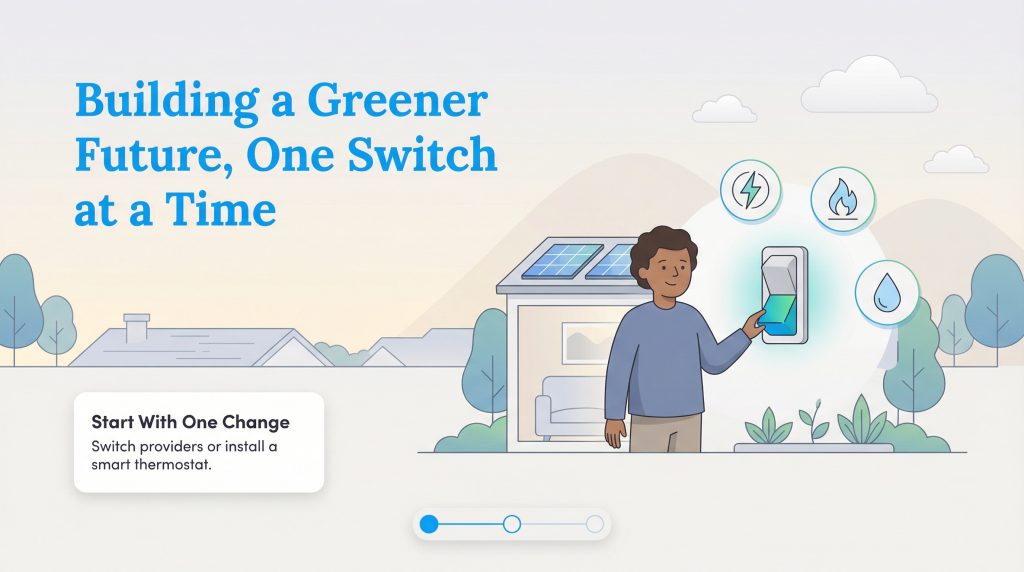
Sustainable living is a journey of small, consistent improvements rather than a race to instant perfection. By optimizing your core utilities, electricity, gas, and water, you create a foundation that saves money and resources for years to come. You don’t have to do everything at once. Start with one meaningful change this week, such as switching to a green energy provider or installing a smart thermostat, and build from there.
Other Resources About Sustainable Living
Looking for more information about sustainable living? Check out these other helpful guides to improve your sustainability every day.
- Recycling Tips: How to Recycle Properly at Home
- Composting Tips for Beginners: The Ultimate Guide to Reducing Waste at Home
- Rain Barrels 101: A Complete Guide to Installation, Savings, and Maintenance
- Is Wind Power Right for Your Home? A Practical Guide to Residential Turbines
- Electricity Vampires: How to Spot and Slay Phantom Loads in Your Home
- 10 Essential Holiday Safety Tips for a Smart and Secure Home
- 18 Tips for Winterizing Your Home
FAQs About Sustainable Living
What is the most effective way to start sustainable living at home?
Do sustainable homes cost more to maintain?
Can renters practice sustainable living?
How much money can an energy-efficient home save?
Is smart home technology considered sustainable?
About the Author

David has been an integral part of some of the biggest utility sites on the internet, including InMyArea.com, HighSpeedInternet.com, BroadbandNow.com, and U.S. News. He brings over 15 years of experience writing about, compiling and analyzing utility data.