
Ensure a warm welcome by scheduling your natural gas connection before moving day.
Key Takeaways
- Start the process at least two weeks before you move to avoid service gaps or rush fees.
- Gather necessary documents like your lease, ID, and Social Security number before calling providers.
- Check if you live in a deregulated energy market to potentially save money by choosing your own gas supplier.
Moving into a new home is notoriously stressful, but few things disrupt your first night like stepping into an ice-cold shower or discovering the stove won’t light. While unpacking boxes can wait, securing a functional, warm environment is a “Day 1” necessity for your comfort and safety. We created this guide to demystify the gas service setup for new homeowners, ensuring that crossing the threshold into your new place is as seamless and cozy as possible. We will also help you spot energy-saving choices so your new home is both comfortable and efficient.
Determine Your Service Needs: Transfer vs. New Setup
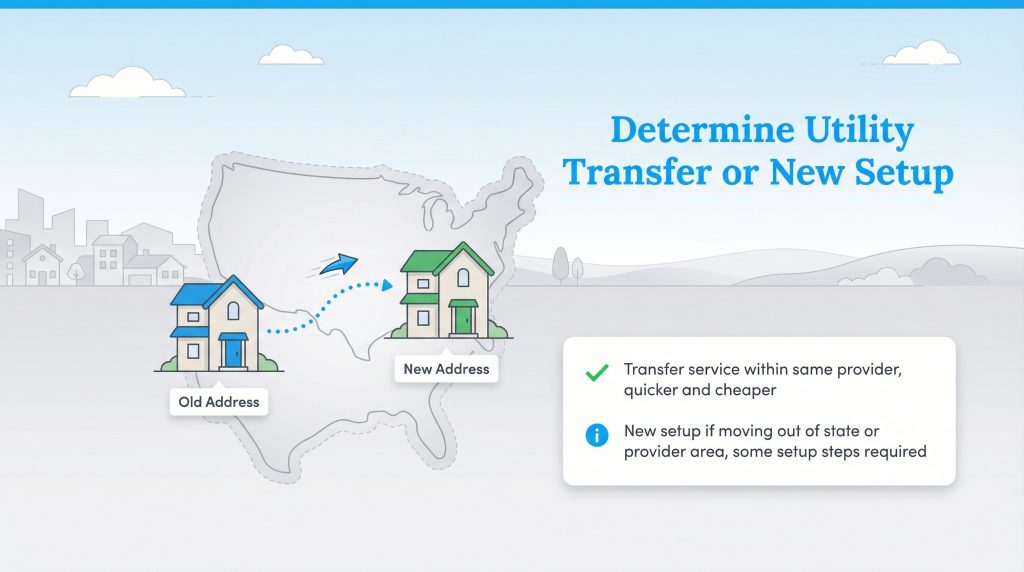
Before you pick up the phone, you need to determine if you are simply moving your account or establishing a brand-new connection. If you are moving within the same city or utility territory, you can usually transfer gas service from your old address to your new one. This is usually the easiest option; it often allows you to keep your existing account history and may waive new security deposits. For instance, if you move across town but stay with the same utility, you just transfer the account. If you move out of state, you must close the old one and start fresh. Transfers are generally faster and cheaper, so check your utility’s service map first.
Understanding Your Market: Utility vs. Supplier
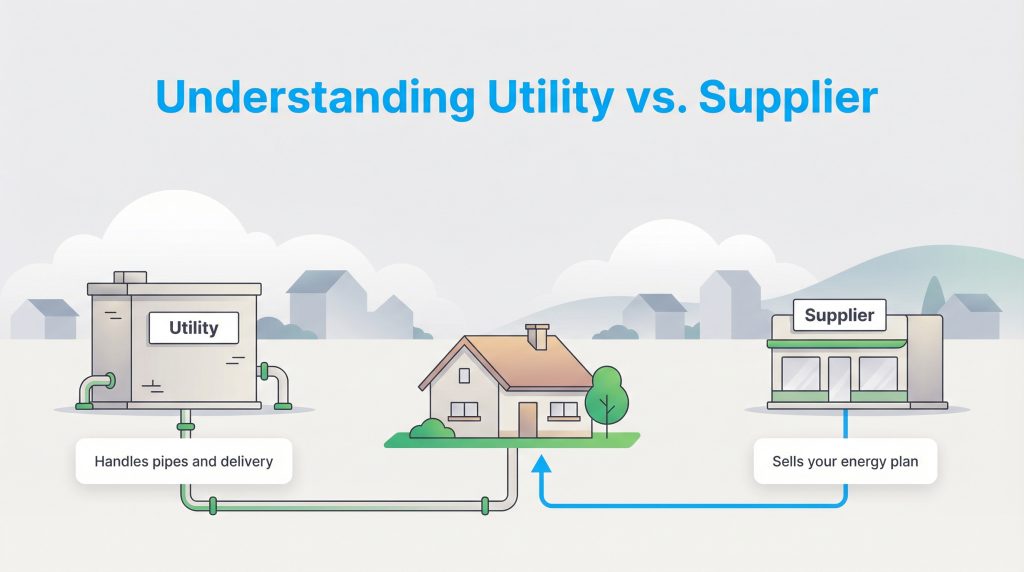
Depending on where you live, you might have more choices than you realize. In many states, you cannot choose a supplier because the market is fully regulated. In these areas, one company handles everything, they buy the gas, transport it, and send you the bill. However, in deregulated markets such as Pennsylvania, Texas, Georgia, and New York, the industry is split into two parts: the Utility and the Supplier. Keep in mind that even in these states, not every resident has a choice, so it is important to check your specific zip code.
The Utility is the company that owns the pipes, maintains the infrastructure, and delivers gas to your home. You cannot choose your utility; it is determined by your location. The Supplier is the company that actually sells the energy you use. In choice-eligible areas, you can shop around for a supplier that offers better rates or renewable energy options while the utility continues to ensure safety and delivery. If you don’t choose a specific supplier, the utility will provide a default service, but this might not always be the most cost-effective rate.
You can learn more about how these markets work in our natural gas guide. To verify if your new state offers energy choice, you can visit the American Gas Association.
Documents Needed for Gas Service Setup
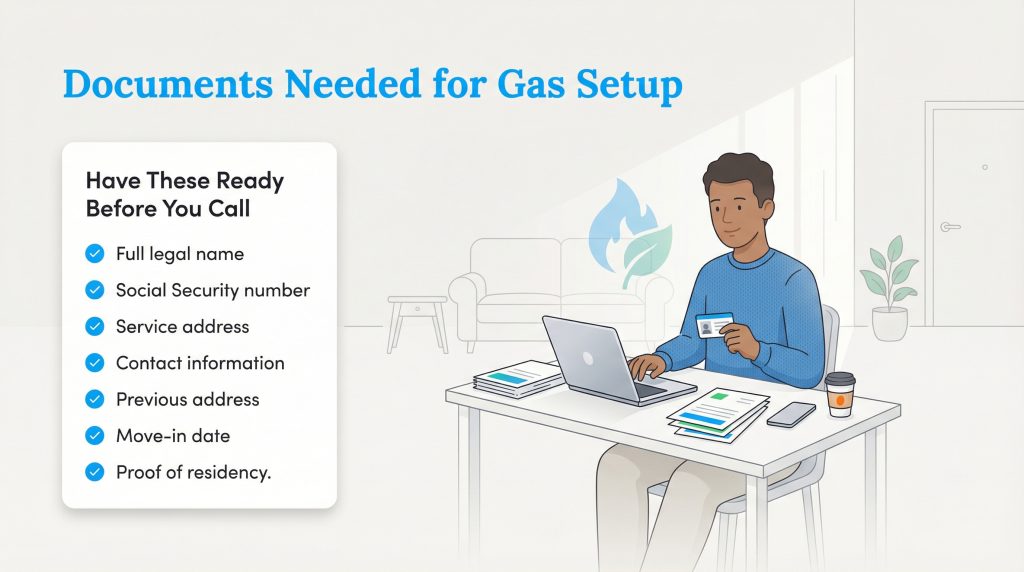
When you contact a provider, having your paperwork ready speeds up the process significantly. Customer service agents will ask for specific details to verify your identity and creditworthiness. To ensure you have all documents needed for gas service setup, gather the following items before you call:
- Full legal name: This must match your government-issued ID.
- Social Security number: Most utilities require this for a soft credit check.
- Service address: The exact address of your new home, including unit numbers.
- Contact information: A current phone number and email address.
- Previous address: This is often requested to verify your identity.
- Move-in date: The specific day you want the service to start.
- Proof of residency: A copy of your lease or deed may be required to prove you are authorized to start service.
Timeline for Turning on Gas in a New House
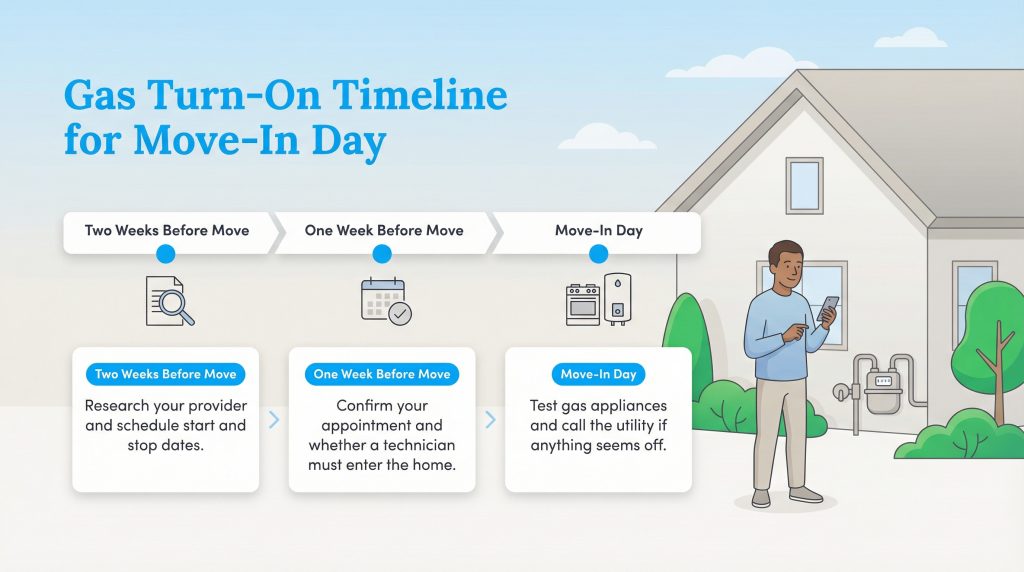
Timing is everything when coordinating utilities. Calling too late can leave you without heat, while calling too early might mean paying for gas you aren’t using yet. Follow this timeline to hit the sweet spot. You can also review our broader moving guide for more tips on coordinating your move.
Two Weeks Before Moving: Research and Schedule
About 14 days before your move, begin your research. You can find gas provider by zip code searches on state public utility commission websites or by asking your realtor for the local utility’s name. Once you identify the provider, call or go online to schedule your service. Many providers allow you to handle this online or via their app, which can save time. You should request a “Stop Service” order for your current home for the day after you move out and a “Start Service” order for your new home for the day before you move in. This overlap ensures you have hot water for cleaning your old place and a warm welcome at the new one.
One Week Before Moving: Confirmation
Seven days out, it is wise to call your provider to confirm the appointment. Verify the date and ask if a technician needs to enter the home. If your gas meter is located inside the house or if the service has been completely shut off at the street, an adult usually needs to be present to grant access. Knowing this in advance prevents the frustration of a missed appointment tag on your door.
Move-In Day: The Physical Check
On the big day, turning on gas in new house environments involves more than just unpacking. If the service is active, the technician may have already turned the valve at the meter. However, you should do a walkthrough. Check that your gas stove burners light immediately and verify that the pilot lights on your water heater and furnace are burning steady and blue. However, if your utility strictly forbids homeowners from relighting pilots, wait for a professional. If anything seems off, contact the utility immediately.
Cost to Connect Gas to a New House
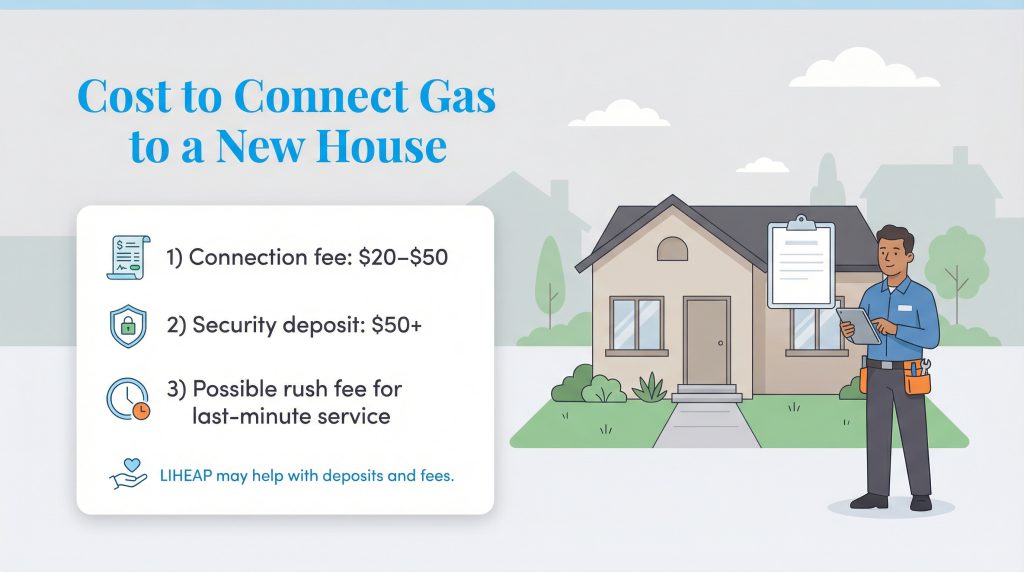
Budgeting for your move requires accounting for hidden utility fees. The cost to connect gas to new house accounts varies based on your location and credit history, but you should expect a few standard charges. While exact amounts vary by utility and state, most companies charge a connection or setup fee, typically ranging from $20 to $50, which covers the administrative cost of opening the account.
If you are a new customer or have a lower credit score, you may also be asked to pay a security deposit. This can range from $50 to several hundred dollars, though it is usually refundable after a year of on-time payments. Lastly, if you wait until the last minute, you might incur a rush fee for same-day or next-day service. Programs like LIHEAP (Low Income Home Energy Assistance Program) may help with bills, reconnection fees, or even deposits, depending on your state’s rules.
Money-Saver: Ask your provider about “budget billing” or “levelized billing” during setup. This averages your annual usage into equal monthly payments, preventing billing spikes during winter months. For more ideas on lowering your monthly energy costs, check out our guide on how to save on your gas bill.
New Construction Gas Installation
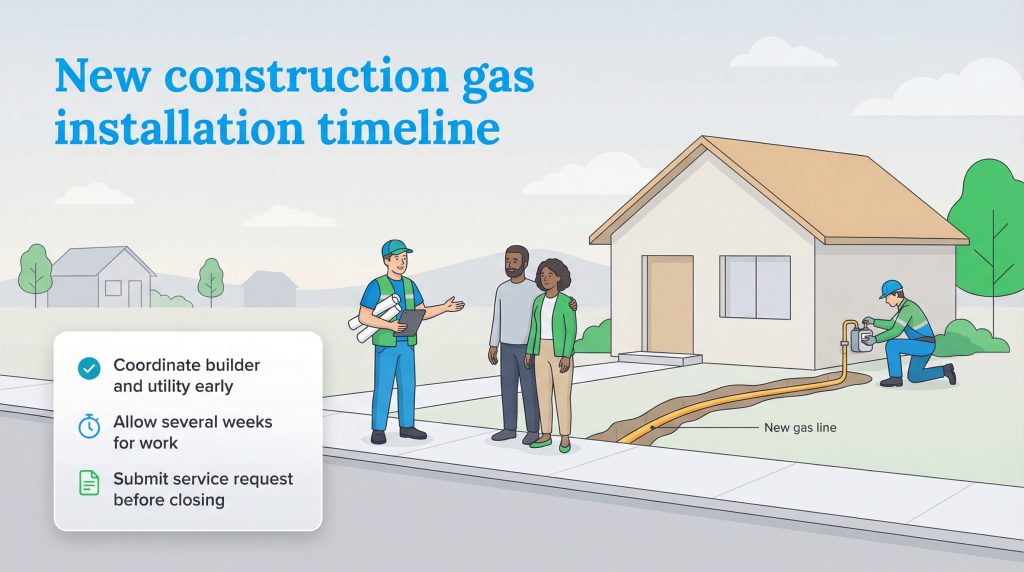
If you are moving into a newly built home that has never had occupants, the process is more complex. A standard “start service” request won’t work if there is no meter attached to the house. Gas service installation new construction projects require coordination between your builder and the utility company. This process often involves trenching, digging a path from the street to your house, and installing a new service line and meter.
Because this involves construction crews and safety inspectors, it can take several weeks rather than a few days. You or your builder must submit a service request well in advance of the closing date. Ask your builder early who handles the utility coordination so you don’t assume it’s automatic and then discover a delay. For a better understanding of the technical requirements involved in establishing new infrastructure, you can review guides from major utilities like SoCalGas regarding new home setups.
Safety First: Inspecting Your New Gas Connection
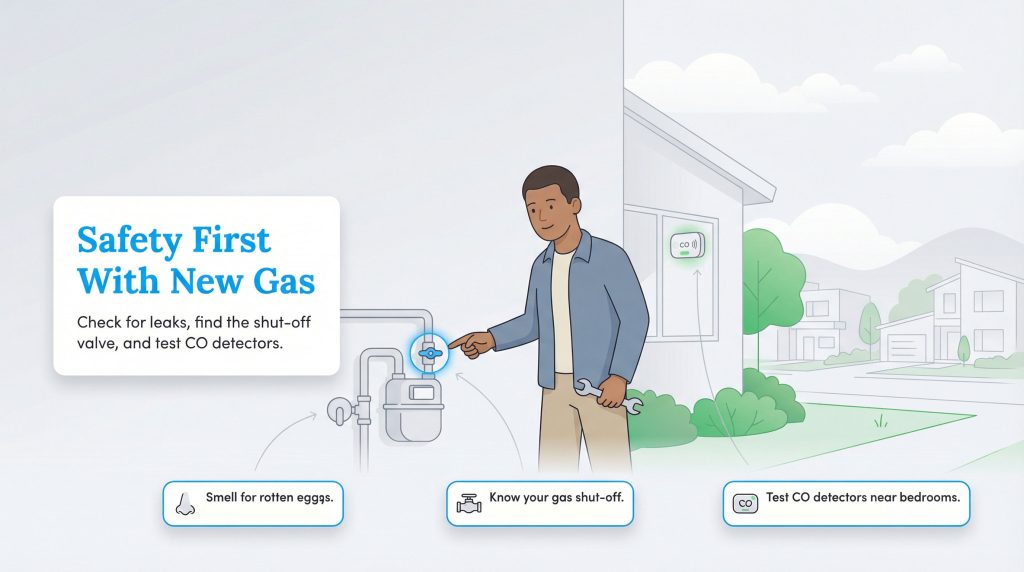
Once the gas is flowing, safety becomes your priority. A comprehensive new homeowner gas safety inspection is something you can largely do yourself, though professional help is always available. First, perform the “smell check.” Natural gas is odorless, but utilities add a chemical called mercaptan that smells like rotten eggs to alert you to leaks. If you suspect a leak, don’t use electrical switches, phones, or lighters inside, go outside and call the gas company or 911 from a safe location.
Next, locate your main gas shut-off valve. This is usually on the pipe just before the gas meter. Knowing where this is and how to turn it with a wrench is vital in case of an emergency or natural disaster. Finally, install fresh batteries in all Carbon Monoxide (CO) detectors and ensure they are installed near sleeping areas. Since you are already inspecting the system, this is an excellent opportunity to check the age of your furnace. If it is an older model, consider scheduling an energy audit to identify eco-conscious upgrades that could save you money and reduce your carbon footprint in the long run.
Stay Warm and Safe in Your New Home
Setting up your gas service is one of the most important steps in turning a house into a home. By handling the paperwork early, understanding the costs, and prioritizing safety checks, you ensure that your first week in the new place is memorable for the right reasons. File your new account documents in a safe place, set up your online payment profile, and relax knowing your home is warm, functional, and ready for living. You’ll not only stay comfortable, but you’ll also be in a better position to keep your gas use, and your environmental impact, in check.
FAQs About Gas Service Setup
How long does it take to set up gas service?
Can I transfer my gas service to another person?
Do I need to be home for the gas to be turned on?
What if my new home has gas appliances but no service is active?
Is a deposit always required for new gas service?
How can I keep my gas bill low in my new home?
About the Author

Claudio is a sustainability-focused writer with a background in Anthropology and Psychology from NC State University. He has spent over 15 years working in writing, interpretation, and translation, driven by a deep interest in how human culture shapes the environment. Today, he shares his curiosity with readers by writing about sustainable living solutions and the connection between everyday choices and environmental impact.