

Master Your Next PCS or Civilian Transition With This Strategic Plan for Transferring Services and Saving Money
Key Takeaways
- Secure utility deposit waivers and avoid early termination fees by utilizing your military service records and requesting veteran-specific exemptions.
- Leverage federal assistance programs like SSVF and LIHEAP to cover initial setup costs and keep your monthly energy bills consistently low.
- Prepare your essential documentation in advance to bypass credit checks and quickly access emergency grants during your transition.
Transitioning to civilian housing or executing a permanent change of station (PCS) brings immediate financial challenges, particularly when figuring out lights, water, and internet in a new city. We created this comprehensive Veterans Utility Setup Guide to provide you with an actionable blueprint for bypassing expensive security deposits, accessing federal grants, and securing specialized military energy rates. Instead of scrambling to cover hidden moving costs, this guide shows you exactly how to transfer utilities when moving by leveraging targeted benefits like the SSVF program, LIHEAP priority processing, and emergency nonprofit support to keep your civilian headquarters comfortably powered from day one.
Understanding Your Military Utility Rights
Before you start calling local energy providers, you must understand the powerful legal protections available to you. The Servicemembers Civil Relief Act (SCRA) is a federal law designed to ease financial and legal burdens on military personnel so they can focus entirely on their duties. When it comes to managing your household services, the SCRA provides exceptional utility protections that everyday civilians do not receive.
Under the SCRA, you are legally protected from sudden utility shut-offs if an unexpected deployment or reassignment causes temporary financial distress. More importantly, this federal statute grants you a complete exemption from early termination fees when canceling restrictive telecom and internet contracts. By asserting these rights early in the moving process, you ensure that greedy service providers cannot penalize you for fulfilling your military obligations.
Step-by-Step PCS Utility Setup Checklist
Executing a flawless transition requires a strict timeline. Following a structured PCS utility setup checklist guarantees you never face overlap billing or arrive at a dark, unheated house. If you are transferring from on-base housing to off-base civilian housing, the transition is particularly critical because you are moving from bulk-billed military services to individualized commercial accounts. Keep this timeline handy as your moving date approaches.
- 30 Days Before PCS: Visit your base housing office and request a formal letter of credit demonstrating your history of on-time payments. Call your current providers to schedule hard disconnect dates. You must know how to cancel utilities after moving to completely sever ties and avoid phantom charges.
- 14 Days Out: Research local utility companies at your new duty station. Call to establish new accounts and explicitly ask about military deposit waivers. Schedule your activation date for one full day before your expected arrival so the home is climate-controlled for your family.
- Moving Day: Perform a functional sweep of your new home immediately upon arrival. Test all light switches, flush toilets, and adjust the thermostat to verify that all municipal connections are fully active.
How to Get Military Utility Deposit Waivers
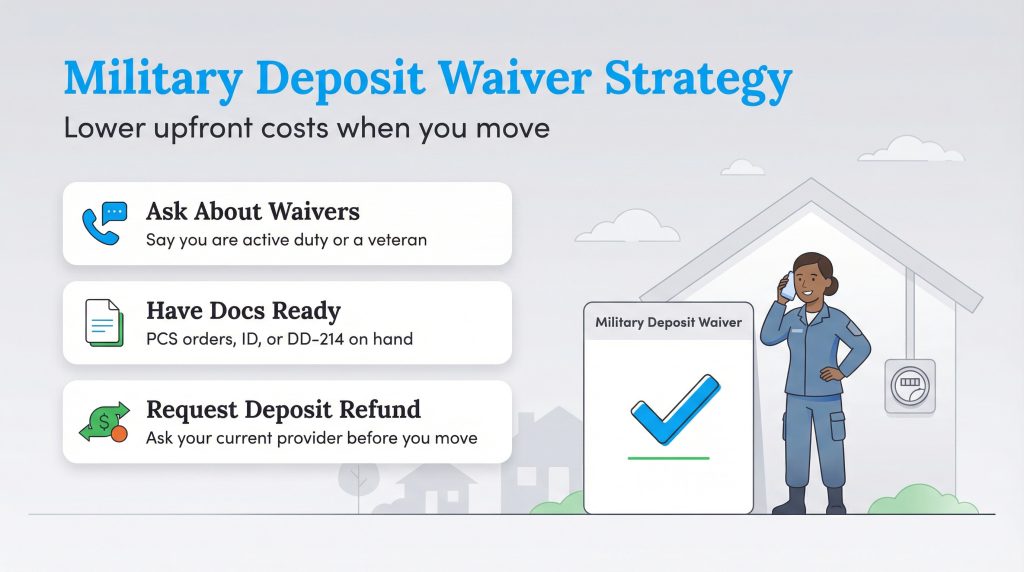
Security deposits for establishing new utility accounts often range from $100 to over $400 per service. Multiplied across water, natural gas, electricity, and high-speed internet, you could easily face connection fees exceeding $1,000. Fortunately, securing military utility deposit waivers is standard practice for major utility providers — if you take control of the conversation and know how to ask.
Energy providers rarely advertise these exemptions on their homepages. When you call to set up service, proactively state your active-duty or veteran status and request a deposit waiver. If the representative pushes back, ask to speak to their specialized military liaison.
To successfully bypass these mandatory credit checks and fees, the provider will require immediate proof of your status. You must instruct the agent to email you a secure upload link, and then promptly submit your active-duty orders, a formal Letter of Good Credit from your previous provider, or your official DD-214 discharge paperwork. Having these documents ready guarantees rapid approval.
💸 Money-Saver: Don’t forget about the money you already paid. If you put down a deposit at your current residence, ask your provider to refund that initial deposit before closing the account. Ensure they have your new forwarding address so the check reaches you without delay.
Top Utility Assistance Programs for Veterans
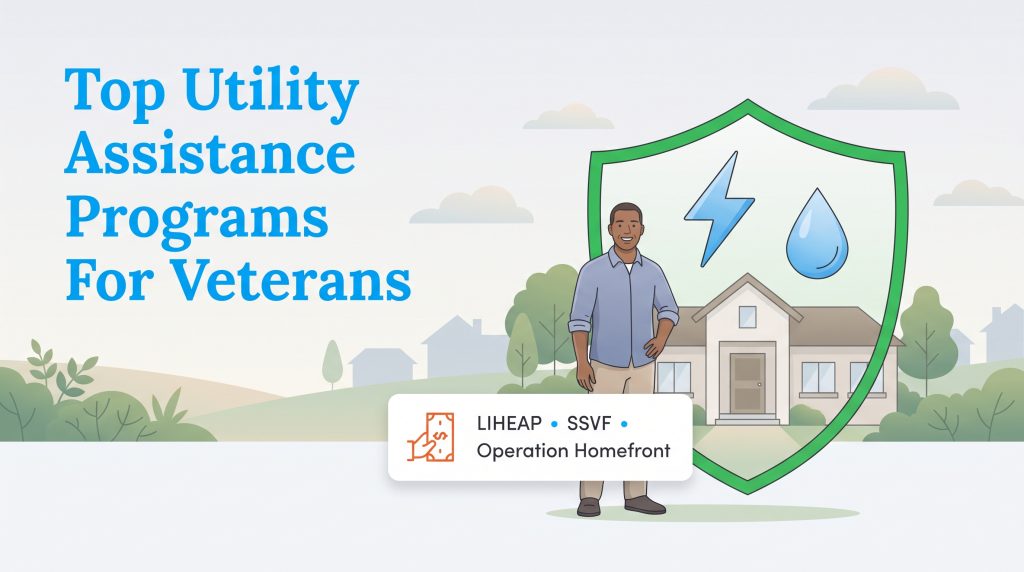
If you face unexpected financial hardship during your transition to civilian life, rely on the robust safety nets designed to support military families. Utilizing veteran utility assistance programs ensures your family never has to endure extreme temperatures or a lack of running water due to temporary budget constraints.
| Program Name | Eligibility Requirements | Primary Benefit |
|---|---|---|
| LIHEAP | Low-income veterans; priority processing for VA disability compensation recipients. | Direct federal grants paid to your utility provider to cover essential heating and cooling costs. |
| SSVF (Supportive Services for Veteran Families) | Veterans at risk of homelessness or transitioning rapidly to civilian housing. | Covers initial utility setup costs, pays mounting arrears, and prevents immediate utility shut-offs. |
| Operation Homefront | Post-9/11 wounded, ill, or deployed military families facing temporary hardship. | Emergency financial assistance for overdue utility bills and non-refundable connection fees. |
The Low Income Home Energy Assistance Program is a highly effective federal initiative. Notably, LIHEAP for veterans often includes priority processing, expediting your application. In many states, case managers offer favorable income calculations by exempting VA disability compensation from your total household income limits. If you need immediate VA utility bill help to avoid an impending disconnection, tapping into SSVF utility assistance is your best line of defense, as dedicated caseworkers will fiercely negotiate with the utility companies on your behalf.
Canceling Utilities Under the SCRA
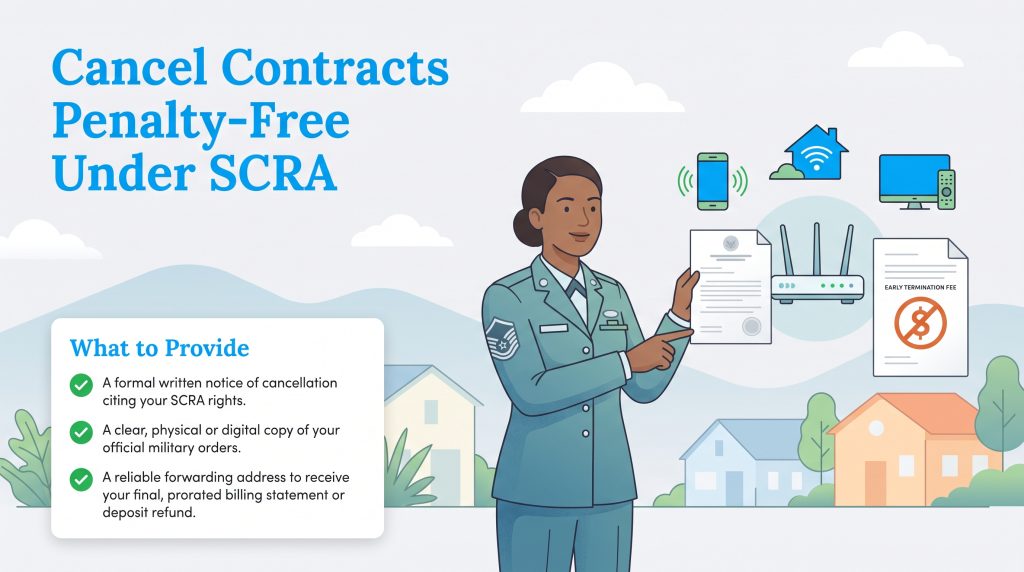
When duty calls unexpectedly, you should not be penalized for breaking a 12-month cable or internet contract. Transferring utilities during military deployment or utilizing an SCRA utility contract cancellation allows you to terminate rigid service agreements entirely penalty-free. The law explicitly covers cellular phone plans, residential internet, and television contracts.
To legally enforce this protection, your deployment orders must exceed 90 days, or you must have official PCS orders relocating you to an area unsupported by your current provider. To cancel without paying early termination fees, you must provide your telecom or utility provider with the following exact documents:
- A formal written notice of cancellation citing your SCRA rights.
- A clear, physical or digital copy of your official military orders.
- A reliable forwarding address to receive your final, prorated billing statement or deposit refund.
Securing Military Discounts on Internet and Cable
Compare Utility Providers for Your Home
Find which utilities service your address and connect your home to the best electricity, natural gas, water, internet, and trash companies in your area.
Before you lock into long-term civilian contracts, take time to inventory your required services and hunt for exclusive rates. In deregulated energy markets like Texas, Pennsylvania, and Ohio, you have the legal right to shop around for your energy supplier. Map out exactly what you need to activate, including electric, natural gas, water and sewer, and internet and cable. Making an environmentally mindful choice is another excellent way to lower bills over time. Installing a smart thermostat or simply swapping old bulbs for modern LEDs severely slashes electricity demand, offering an incredibly fast return on investment.
When setting up your home network, identifying the best military discount internet providers is straightforward. Top national ISPs — including AT&T, Xfinity, and Verizon — actively offer verified monthly discounts ranging from $10 to $25 off your bill for active-duty personnel and veterans. To claim these internet discounts, you cannot just show a military ID to an installer. You must register through a secure, third-party verification platform like ID.me or SheerID directly on the provider’s website. Once your service record is verified, the discount automatically applies to your monthly statement for the lifetime of the account.
🌱 Eco Edge: Many local utility providers offer specific rebates for energy-efficient upgrades. Browse your provider’s website for “rebates and incentives” to see if you can get cashback for installing a smart thermostat or a high-efficiency water heater.
Final Checklist Before Deployment or PCS
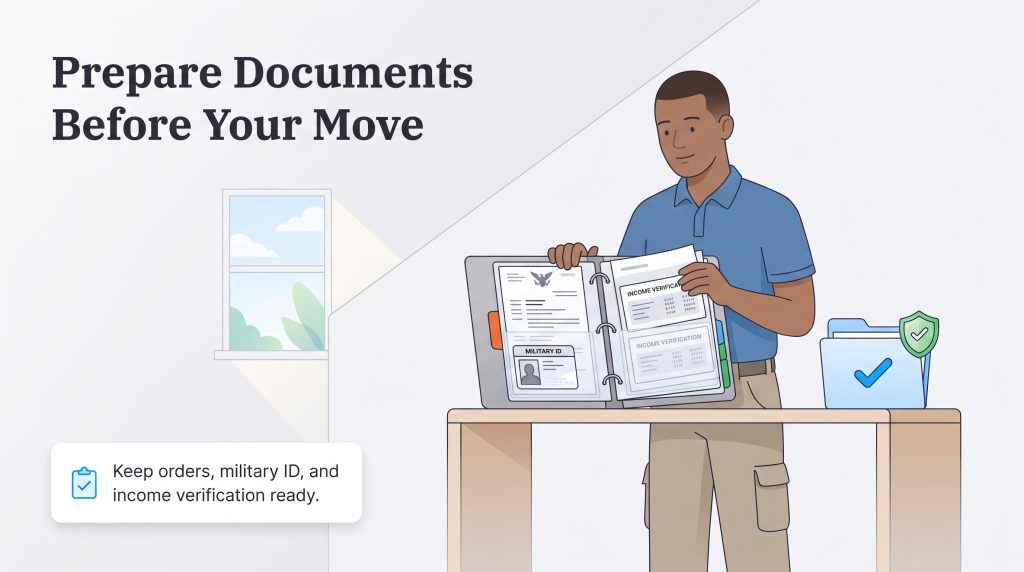
Protecting your personal credit score while juggling the chaos of a military move comes down to meticulous organization. Keep all vital documents safely inside a dedicated moving utilities checklist binder so you can immediately respond to any provider requests. Having physical copies of your orders and military ID readily available guarantees you can secure deposit waivers without unnecessary delays.
Strategic Timing for Household Moves
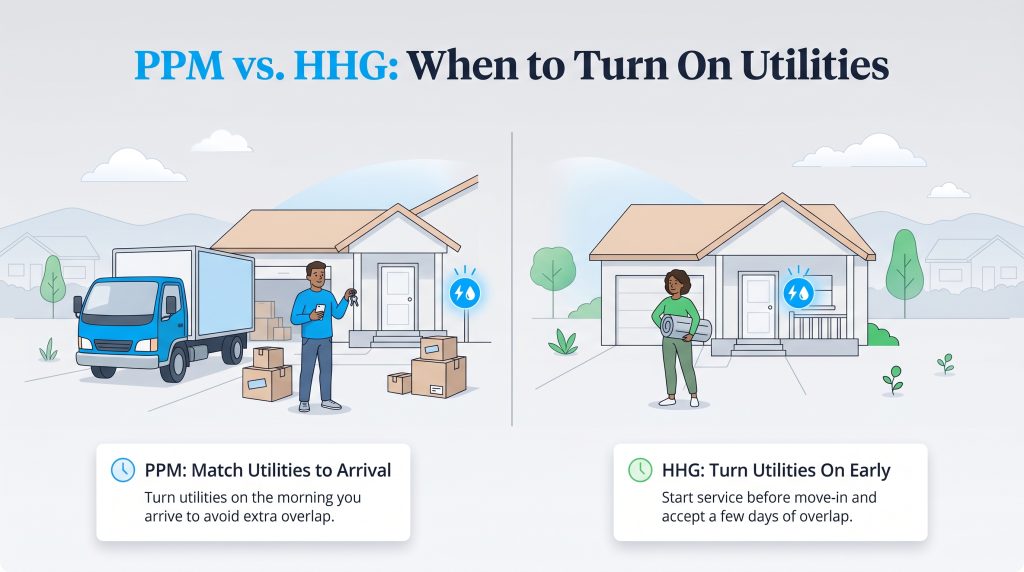
In the final 48 hours before you drive away from your old home or deploy, review your list of who to notify when you move one last time. Walk around the exterior of your property and take clear, time-stamped photographic proof of your final water, gas, and electric meter readings. This visual evidence will rapidly shut down any disputes if a utility company attempts to overcharge you for a subsequent tenant’s usage. Additionally, log into every digital utility portal and aggressively cancel all auto-pay authorizations to prevent unexpected drafts from draining your checking account while you are in transit.
Securing Long-Term Financial Stability
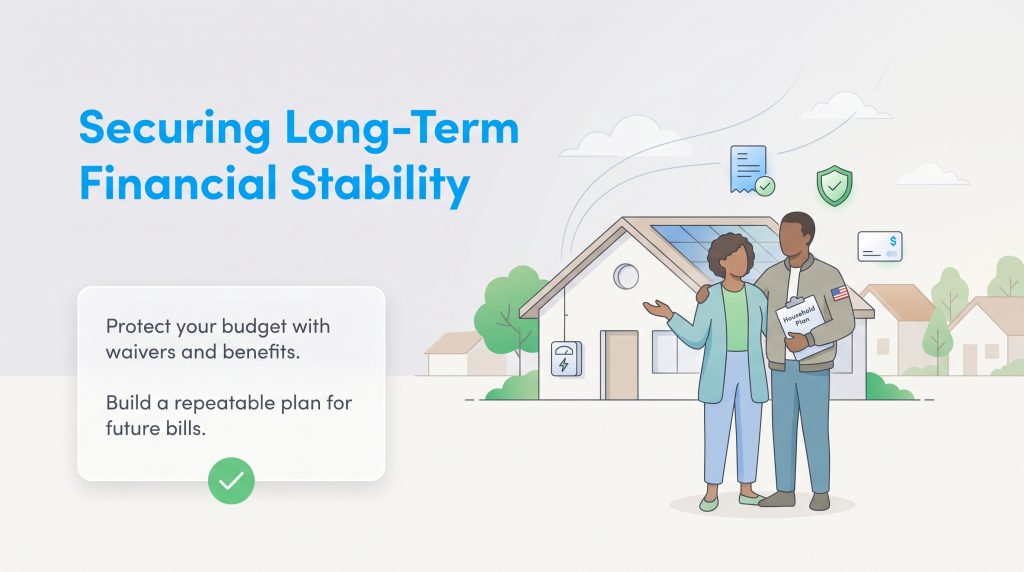
If you ever find yourself entirely overwhelmed by connection fees upon arriving at a new duty station, do not hesitate to seek emergency utility assistance for veterans through SSVF or Operation Homefront. By proactively asserting your SCRA rights, claiming specialized discounts, and utilizing these federal programs, you can seamlessly protect your household budget. Documenting your personal setup process creates a highly reliable blueprint, keeping your home comfortable, efficient, and cost-effective as you launch into your next assignment.
Frequently Asked Questions About Veterans Utility Setup
Do veterans get priority for LIHEAP utility assistance?
Can utility companies charge an early termination fee if I get PCS orders?
Does the VA offer emergency utility bill help?
How do disabled veterans get utility deposit waivers?
Is there internet assistance for veterans?
Will the military pay for my utility deposits or setup fees?
Are utility connection fees reimbursable during a military PCS?
About the Author

David has been an integral part of some of the biggest utility sites on the internet, including InMyArea.com, HighSpeedInternet.com, BroadbandNow.com, and U.S. News. He brings over 15 years of experience writing about, compiling and analyzing utility data.

Claudio is a sustainability-focused writer with a background in Anthropology and Psychology from NC State University. He has spent over 15 years working in writing, interpretation, and translation, driven by a deep interest in how human culture shapes the environment. Today, he shares his curiosity with readers by writing about sustainable living solutions and the connection between everyday choices and environmental impact.