

Moving Off-Campus Comes With New Responsibilities, But Setting Up Your Essential Services Doesn’t Have to Be a Headache With This Step-by-Step Plan
Key Takeaways
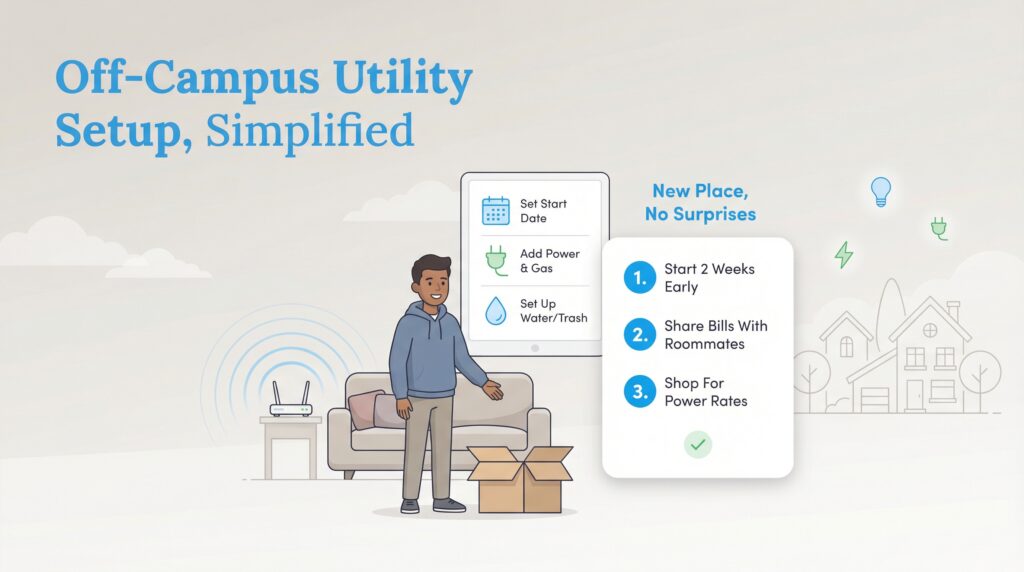
- Start the setup process at least two weeks before move-in to ensure your lights and internet are working the day you arrive.
- Discuss bill-splitting and account responsibility with roommates early to avoid financial conflicts or late fees later in the semester.
- Check if you live in a deregulated energy market to potentially save money by shopping around for competitive electricity rates.
Transitioning to your first apartment brings a wave of exciting independence, but managing the logistics of your new space can quickly feel overwhelming. If you forget to arrange your essential services in advance, you risk spending your first few nights in the dark without a reliable connection to complete your coursework. Fortunately, this complete student utility setup guide provides the exact steps to navigate applications, coordinate shared bills, and lock in the most reliable service providers. Whether you are splitting bills with roommates for the first time or figuring out how to bypass hefty deposit fees, this comprehensive student utilities guide removes the guesswork so you can focus on a successful semester. Read on to discover what utilities college students actually need, a step-by-step utility setup checklist, how to split utility bills with roommates fairly, average utility costs for college students, and eco-conscious hacks to lower your monthly bills.
Understanding What Is (and Isn’t) Included in Student Rent
Before you dial a single provider, mastering the art of understanding apartment lease utilities is your first assignment. Not all housing arrangements handle utilities the exact same way, and identifying what utilities are included in student housing protects your budget from unexpected surprises.
Purpose-built student housing (apartments specifically built and marketed to university students) often rolls electricity, water, and internet into your flat monthly rent. This all-inclusive setup is convenient, but you must read your lease agreement carefully to check for hidden utility usage caps. If your household exceeds the landlord’s monthly allowance, you will be hit with an unexpected overage charge. Standard off-campus renting, on the other hand, usually requires a “tenant-pays” arrangement where you manage every connection independently. Review the table below for a general breakdown of what to expect.
| Utilities Typically Included in Rent (Purpose-Built Housing) | Utilities You Must Set Up (Standard Off-Campus) |
|---|---|
| Water and Sewer | Electricity |
| Trash Collection | Internet and Wi-Fi |
| Basic Electricity (often subject to usage caps) | Natural Gas (if applicable) |
| Community Wi-Fi | Municipal Water and Trash |
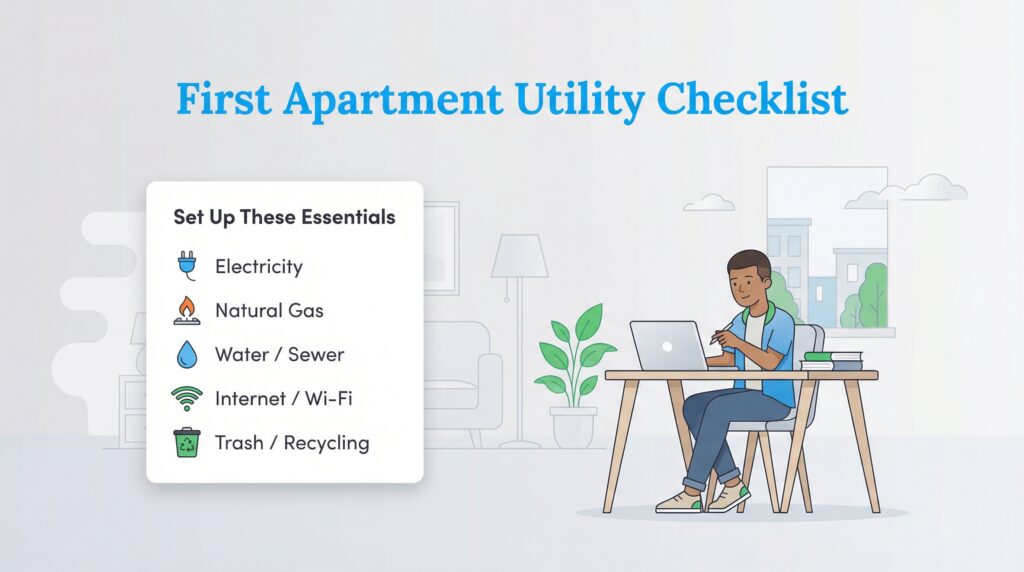
If you are learning how to set up utilities for off-campus housing, you will likely need to arrange the following essential services directly with local providers:
- Electricity: The absolute non-negotiable for lighting, cooking, cooling, and powering your electronics.
- Natural Gas: Check if your stove or heating system runs on gas, as not all modern apartment complexes utilize it.
- Water/Sewer: This is frequently billed through your property manager, but it often requires a separate city account if you are renting an entire house.
- Internet/Wi-Fi: A reliable connection is critical for passing your classes. Avoid expensive cable bundles and seek out back-to-school promotional rates for standalone broadband.
- Trash Collection: Typically handled by the complex for apartments, but single-family rental homes may require you to set up municipal waste management.
Compare Utility Providers for Your Home
Find which utilities service your address and connect your home to the best electricity, natural gas, water, internet, and trash companies in your area.
The Essential Student Utility Setup Checklist (Timeline)
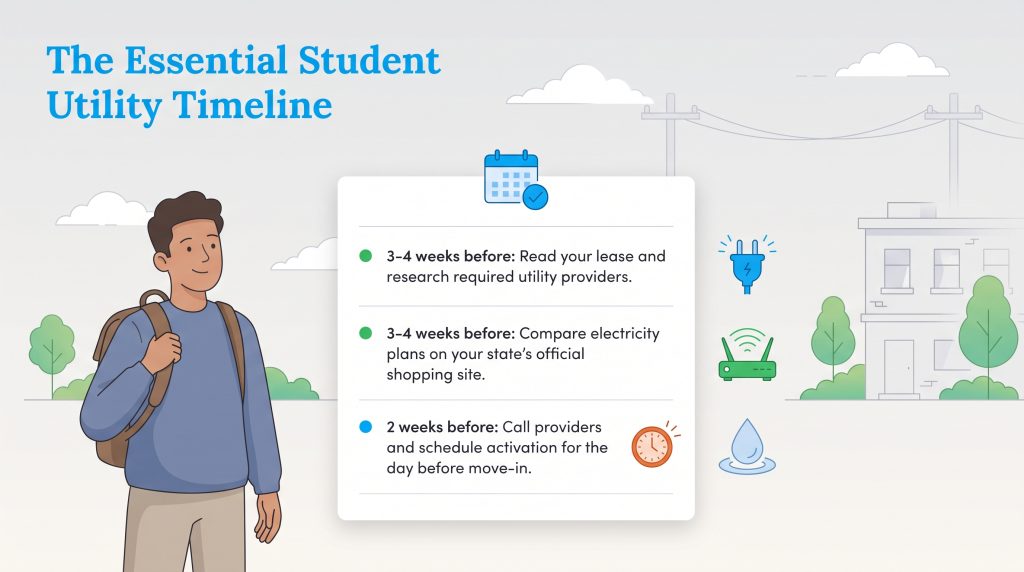
Procrastination is the easiest way to guarantee a stressful start to your semester. Because utility companies require advance notice to dispatch technicians or remotely switch on a meter, adhering to a strict utility setup checklist for students is critical. Follow this concrete timeline to ensure your essential services are active the moment you walk through the door.
- Three to Four Weeks Prior: Read your lease to confirm exactly which providers you must contact. If you live in a deregulated market like Texas, Pennsylvania, Georgia, or Ohio, use this early window to shop on state-run comparison sites like Power to Choose. Compare rates closely to ensure you lock in the most cost-effective energy plan.
- Two Weeks Prior: Call your chosen providers to officially schedule service dates. Setting up internet in student apartments takes time, and technician installation slots fill up rapidly during the late-summer rush, so prioritize your Wi-Fi call. Always request that your utilities be activated the day before you physically arrive.
Navigating Credit Checks and No-Deposit Utility Plans
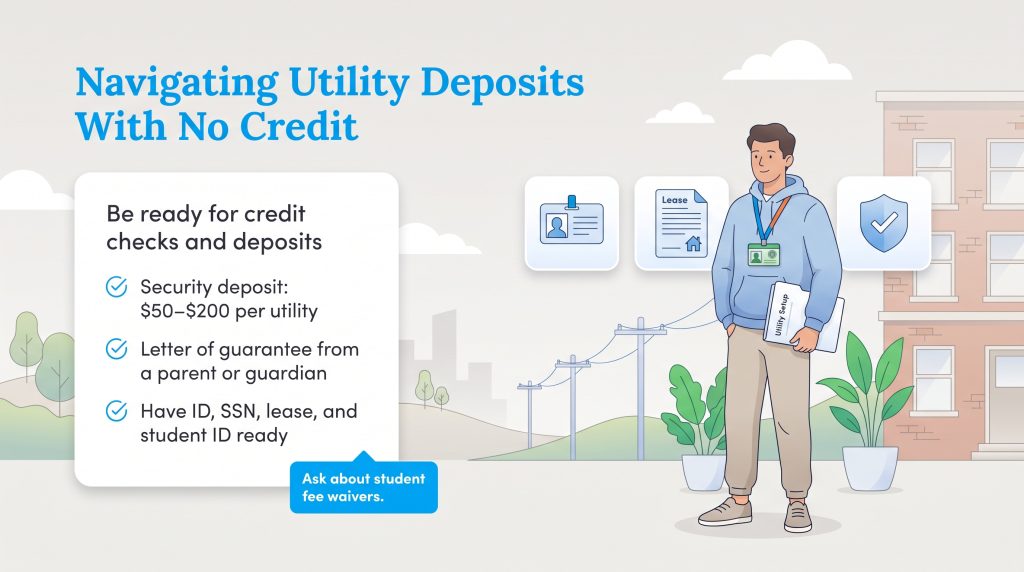
Figuring out how to establish an account is intimidating when you have a “thin file” indicating little to no credit history. Because utility companies run soft credit checks (which do not harm your credit score) to assess financial risk, young adults are frequently asked to pay an upfront security deposit. Expect to face fees ranging from $50 to $200 per utility.
Fortunately, these deposits are fully refundable at the end of your lease if you maintain a flawless payment record. However, if you cannot afford these initial fees, you can often bypass them by assigning a parent or guardian as a guarantor. By providing a signed Letter of Guarantee, your co-signer legally agrees to cover the bill if you default. Alternatively, look into no deposit electricity plans for students. These prepaid arrangements allow you to pay for your electricity usage in advance, completely eliminating the need for a traditional credit check.
When you initiate service, the provider must verify your identity. Have the following documents ready before making the call:
- A valid, government-issued ID (driver’s license or passport)
- Your Social Security Number (SSN)
- A signed copy of your apartment lease agreement
- Your active student ID
💡 Pro Tip: Always ask the customer service representative if they offer student utility discounts or administrative fee waivers. Many local providers will gladly waive standard setup charges if you present a valid university ID.
How to Split Utility Bills With Roommates Fairly
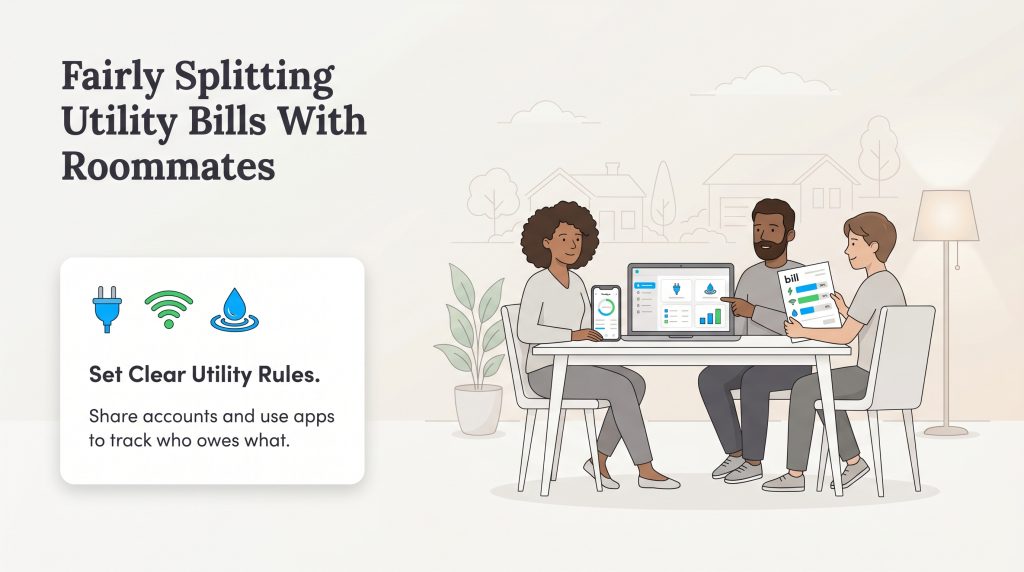
Financial misunderstandings can rapidly sour an otherwise fantastic living arrangement. Learning how to split utility bills with roommates early on is essential to maintaining peace in your household. Deciding whose name goes on the bill is your primary hurdle. The official account holder assumes all legal responsibility if a payment is missed, which can severely damage their personal credit score. Never place all shared utility accounts under a single tenant’s name without a formalized written agreement.
The smartest approach is to assign a different utility account to each roommate. For example, Roommate A takes the electricity, Roommate B takes the internet, and Roommate C handles the water. This designated account holder strategy distributes legal liability evenly and allows multiple people to build their own credit history simultaneously. From there, decide on an even split (everyone pays an equal percentage) or a usage-based split if one roommate consumes more resources (like charging an electric vehicle). Once your method is established, mandate the use of bill-splitting apps to keep everything transparent:
- Splitwise: This is the gold standard for shared housing. You simply enter the individual utility bills as they arrive, and the app mathematically calculates exactly who owes whom at the end of the month, sending automatic reminders to late payers.
- Venmo: Ideal for instant peer-to-peer transfers. Once the monthly utility total is determined, roommates can quickly transfer their exact share to the primary account holder.
- Zelle: A secure, direct bank-to-bank transfer method. Zelle avoids the third-party holding times associated with other apps, ensuring the account holder receives the funds immediately before the due date.
Understanding Average Student Utility Costs
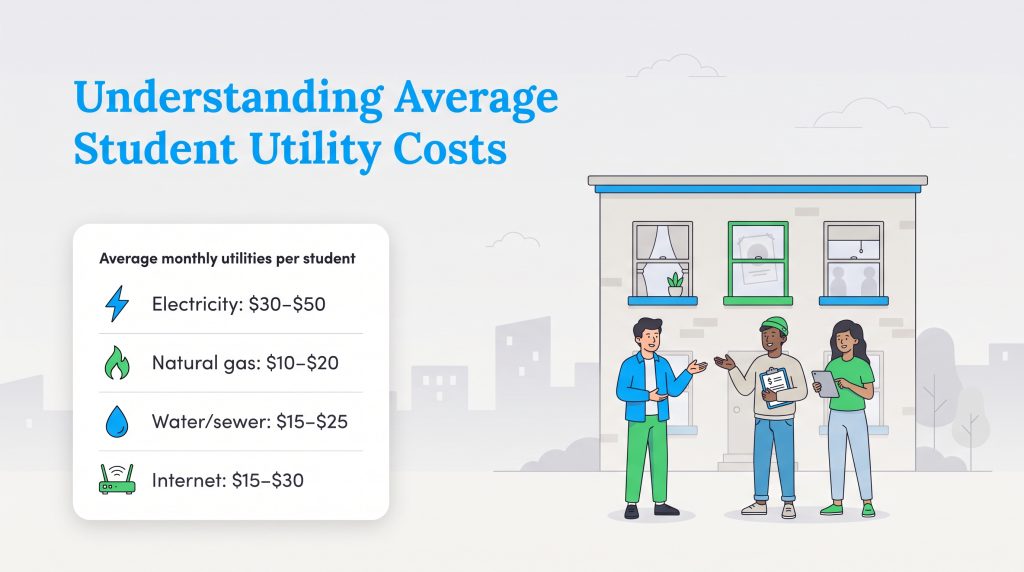
Budgeting on a student income is incredibly difficult when you don’t know what expenses to anticipate. While average student utility costs vary wildly based on your city, the size of your apartment, and the local climate, having a reliable baseline helps you prepare. For most off-campus renters, total utilities will land between $100 and $200 per person each month.
To help you accurately plan your household finances, review these realistic national average ranges based on a standard three-bedroom off-campus apartment split among three roommates:
| Utility Type | Estimated Monthly Cost per Person (3-Bedroom Apartment) |
|---|---|
| Electricity | $30 – $50 |
| Natural Gas | $10 – $20 |
| Water/Sewer | $15 – $25 |
| Internet / student utility bills package | $15 – $30 |
Exploring Student Utility Discounts and Assistance
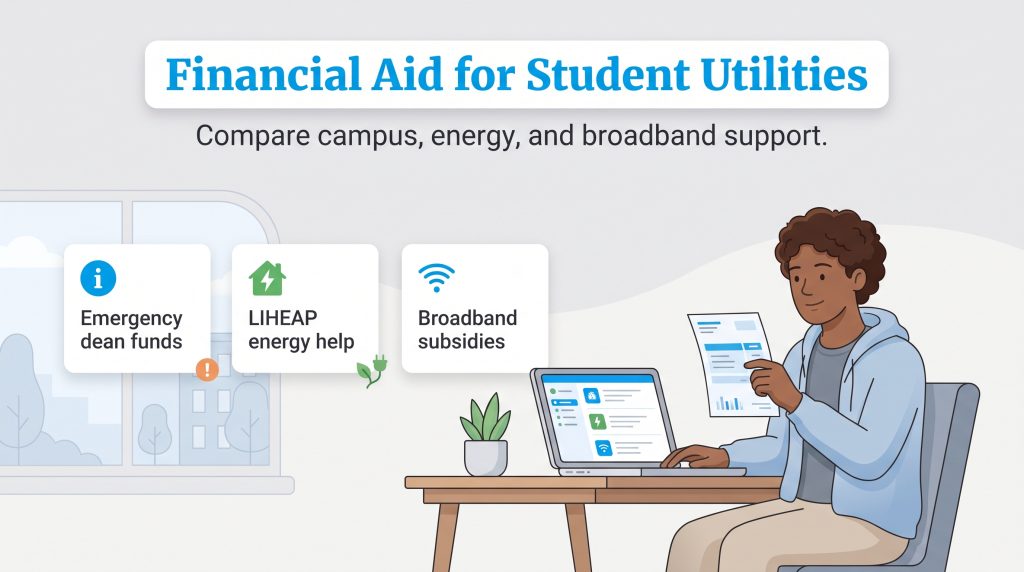
Even with careful budgeting, managing baseline monthly overhead on a student income is tough. If you find yourself struggling to cover essential services, there are several federal and university-level programs offering reliable student emergency utility assistance. Review the table below to find subsidies that help low-income households cover energy costs and secure discounted broadband connections.
| Program Name | Eligibility Parameters | Application Steps |
|---|---|---|
| Emergency Dean Funds | Requires active university enrollment and documented proof of an unexpected financial hardship or crisis. | Contact your university’s Student Affairs or Dean of Students office directly to submit an application alongside your past-due utility invoice. |
| Low Income Home Energy Assistance Program (LIHEAP) | Subject to state-specific income limits; typically reserved for households operating near or below the federal poverty line. | Apply through your local community action agency or state human services department by providing proof of total household income and recent utility bills. |
| Lifeline / Pell Grant Broadband Subsidies | Available for independent students who actively receive a Federal Pell Grant for the current academic award year. The program provides a monthly discount on broadband. | Apply online via the FCC’s National Verifier portal, then contact a participating internet service provider to successfully apply the discount. |
Managing Utilities During Summer and Winter Breaks
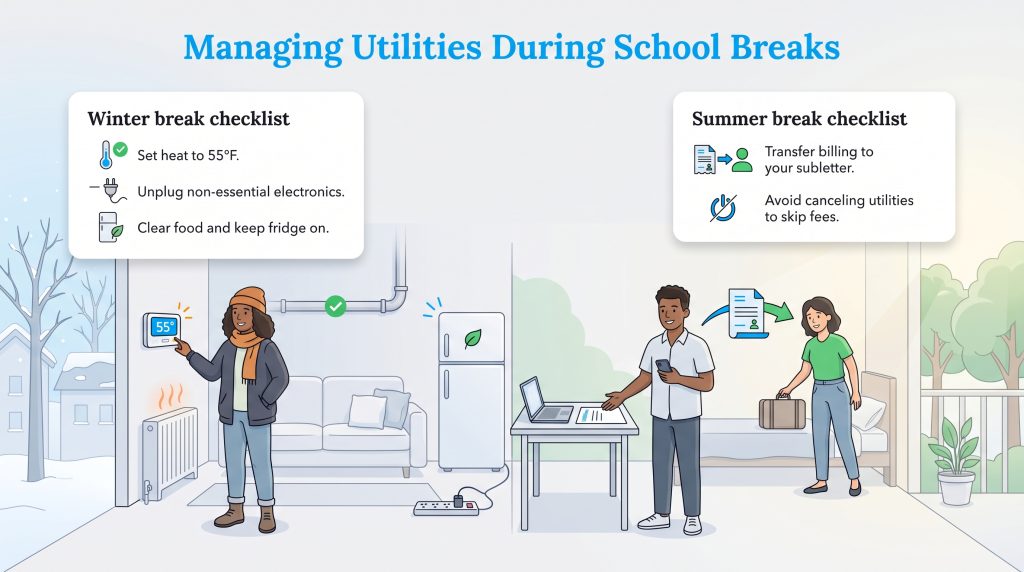
Student living arrangements are unique because apartments often sit empty during extended academic breaks. Properly managing your utilities during these vacant periods prevents unnecessary charges and protects your rental unit from serious damage.
If you are heading home for the winter holidays, complete this quick shutdown routine before you leave:
- Prevent Frozen Pipes: Never turn your heating system completely off during the winter. Set your thermostat to at least 55 degrees Fahrenheit to prevent the water inside your pipes from freezing and bursting.
- Unplug Electronics: Unplug all non-essential appliances, gaming consoles, and televisions to stop them from passively draining electricity while you are gone.
- Clear the Fridge: Throw away perishable food, but leave your refrigerator running on a slightly lower setting to save energy without risking mold.
During the long summer break, many students choose to sublet their apartments. If a subletter is moving into your space, do not cancel your utility accounts. Instead, contact your providers and request to temporarily transfer the billing responsibility to the subletter’s name, or set up an agreement where the subletter pays you directly each month. Canceling the service entirely often results in expensive reconnection fees when you return in the fall.
Eco-Friendly Tips to Lower Your Monthly Bills
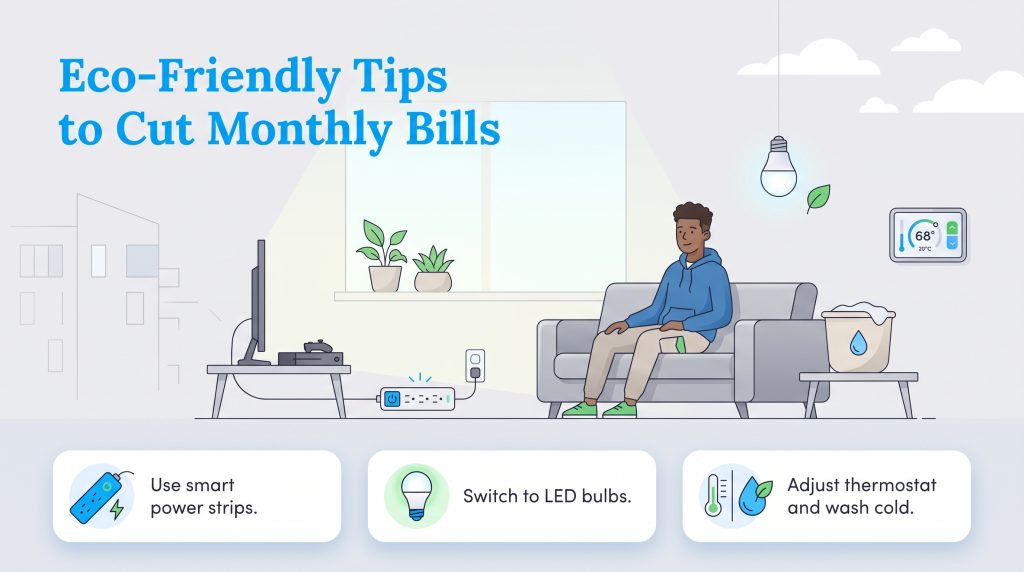
You don’t need to own your home or install expensive solar panels to make an environmentally mindful choice. Implementing eco-friendly habits is simpler than you might think, and small behavioral adjustments directly translate into extra cash in your pocket. As an off-campus renter, there are several highly actionable, low-cost investments you can make to lower your carbon footprint and reduce your shared expenses.
- Use Smart Power Strips: Gaming consoles, televisions, and laptop chargers continuously drain power even when turned off — a phenomenon known as “vampire power.” Plug your entertainment and desk setups into smart power strips that completely cut the electrical current when devices aren’t actively in use.
- Request LED Bulbs: If your property manager still uses outdated incandescent lighting, request an upgrade or manually swap them out for LED bulbs. They use up to 75% less energy and last significantly longer. Keep the old bulbs in a closet and switch them back when you move out so you can take your efficient LEDs to your next apartment.
- Adjust Thermostat Settings: Always adjust your thermostat before leaving for long days on campus. Bumping the temperature up a few degrees in the summer or down in the winter while the apartment is completely empty prevents your HVAC system from working overtime.
- Cold Water Wash: Washing your clothes in cold water cleans them just as effectively for most standard loads, but it drastically reduces the massive amount of energy consumed by your unit’s water heater.
🌱 Eco Edge: Check if your regional electricity provider offers a “Green Plan.” These specialized plans source 100% of your home’s usage from renewable energy like wind or solar. It is a completely effortless way for renters to support clean energy without purchasing extra equipment.
Preparing for a Seamless Move-In Day
When move-in day finally arrives, your utility checklist is not quite finished. Before you bring in a single box or piece of furniture, locate your main water shut-off valve and your apartment’s circuit breaker so you are prepared for any emergencies. More importantly, prioritize taking meter readings move-in day. Snap clear, timestamped photos of both your electricity and water meters the moment you walk in. This documentation ensures you are never falsely billed for the previous tenant’s usage if there is a discrepancy on your first invoice.
Planning Your Eventual Move-Out
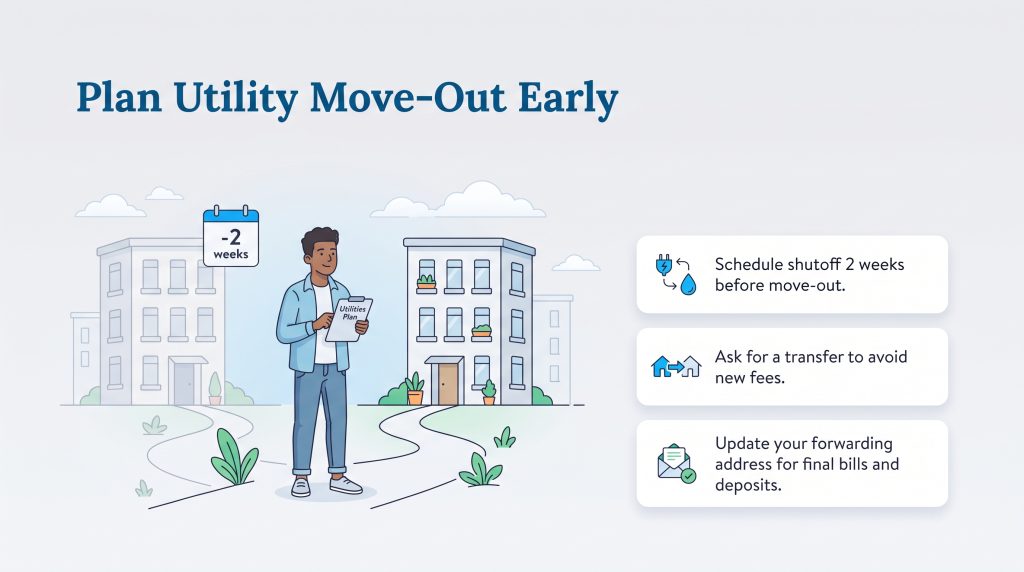
While establishing your initial connections is the primary hurdle, managing the end of your utility lifecycle is just as important. When your academic year concludes and your lease expires, you cannot simply pack your boxes and hand in your keys. Failing to formally close your utility accounts guarantees that you will continue to be billed for electricity and water long after the next tenant moves in.
To avoid paying someone else’s usage fees, contact your providers at least two weeks before your final day in the apartment to schedule an official disconnection. If you are simply relocating to another off-campus property within the same city, request a transfer of service rather than a complete cancellation to bypass hefty setup fees. Finally, ensure you leave an updated forwarding address with every provider so they can accurately mail your final invoice and return your initial security deposits.
Completing Your Student Utility Setup
Establishing services for an off-campus apartment involves a lot of moving parts, but following a clear timeline ensures the transition goes smoothly. By communicating openly with your roommates about shared expenses, prioritizing your internet installation, and leveraging student discounts to avoid deposits, you can set up a comfortable living environment without draining your bank account. As you settle into your new space, remember to monitor your monthly usage and utilize eco-friendly habits to keep your ongoing bills as manageable as possible.
Frequently Asked Questions About Student Utilities
How much do utilities usually cost for an off-campus student apartment?
Do I need to pay a deposit to set up electricity or water for the first time?
Who should put the student utility bills in their name?
Are utilities usually included in off-campus student housing?
Can I pause my internet service during summer break?
What happens if my roommate refuses to pay their share of the utility bill?
Can I use financial aid or student loans to pay for utilities?
About the Author

LaLeesha has a Masters degree in English and enjoys writing whenever she has the chance. She is passionate about gardening, reducing her carbon footprint, and protecting the environment. She also recently served as President of the Board for City Sprouts (a community garden).

David has been an integral part of some of the biggest utility sites on the internet, including InMyArea.com, HighSpeedInternet.com, BroadbandNow.com, and U.S. News. He brings over 15 years of experience writing about, compiling and analyzing utility data.