

Understanding The Trade-Offs Between Wired Stability And Wireless Flexibility To Find The Perfect Fit For Your Household Needs
Key Takeaways
- Cable internet offers superior stability and lower latency, making it the better option for serious gamers and large households with multiple heavy users.
- 5G home internet provides a budget-friendly, flexible alternative with simple setup and fewer hidden fees, ideal for renters and moderate internet users.
- Location plays the biggest role in performance because 5G speeds rely heavily on your proximity to a tower, while cable is consistent regardless of distance.
If you are in the middle of a move or trying to lower your monthly bills, comparing Cable vs. 5G Home Internet can feel confusing when both sides claim to be the absolute best. You likely see advertisements for ultra-fast 5G home internet promising ultimate freedom from wires, while traditional cable providers insist their setup is the only truly reliable choice. As you navigate these options, our honest guide to setting up internet in your new home will help you find the perfect balance of speed, cost, and reliability without the technical headaches.
What Is The Difference Between Cable And 5G Internet?
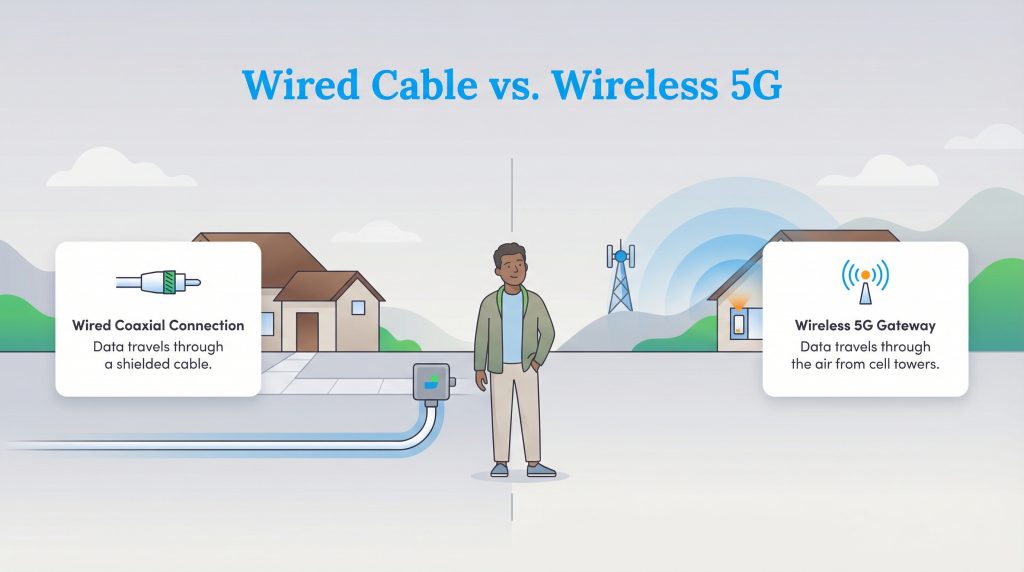
To make an informed decision, you first need to understand how these two systems transmit data differently. This creates an interesting showdown between fixed wireless versus coaxial cable internet, as both technologies take entirely different approaches to delivering connectivity directly to your living room.
How Cable Internet Works (Coaxial Infrastructure)
Think of cable internet like your home’s plumbing system. It delivers internet through physical, copper-shielded pipes that run underground or along utility poles, connecting directly into a wall outlet in your house. Because cable runs on an established physical grid connecting local neighborhoods, it offers an incredibly durable connection capable of carrying massive amounts of data without losing signal strength.
This physical infrastructure ensures that your speeds remain highly consistent. While neighborhood nodes are technically shared among multiple households, the hardwired connection naturally prevents the type of severe weather interference or distance-based drop-offs that often plague wireless networks.

- 2 Gbps
- Cable & Fiber
- Unlimited
- $30.00/mo

- 7 Gbps
- Cable & Fiber
- Unlimited
- $30.00/mo

- 7 Gbps
- Cable & Fiber
- Unlimited
- $30.00/mo
*Not all internet providers and speeds available in all areas.
How 5G Home Internet Works (Fixed Wireless Access)
Fixed wireless 5G takes an entirely different approach by ditching the physical wires altogether. Instead, it receives internet service via invisible radio waves broadcast from nearby cellular towers straight to a standalone gateway receiver inside your home. You can think of it like a highly localized, ultra-powerful radio station where your living room router acts as the antenna to catch the signal.
While 5G offers incredible flexibility by relying entirely on the airwaves, it introduces external variables into your connection quality. Your daily performance will heavily depend on your physical distance from the nearest cell tower, the building materials of your home, and potential signal interference from local geographical features.

- 300 Mbps
- 5G
- Unlimited
- $35.00/mo

- 498 Mbps
- 5G
- 1.2 TB
- $35.00/mo

- 300 Mbps
- 5G
- Unlimited
- $40.00/mo
*Not all internet providers and speeds available in all areas.
Side-By-Side Comparison Cable Vs 5G
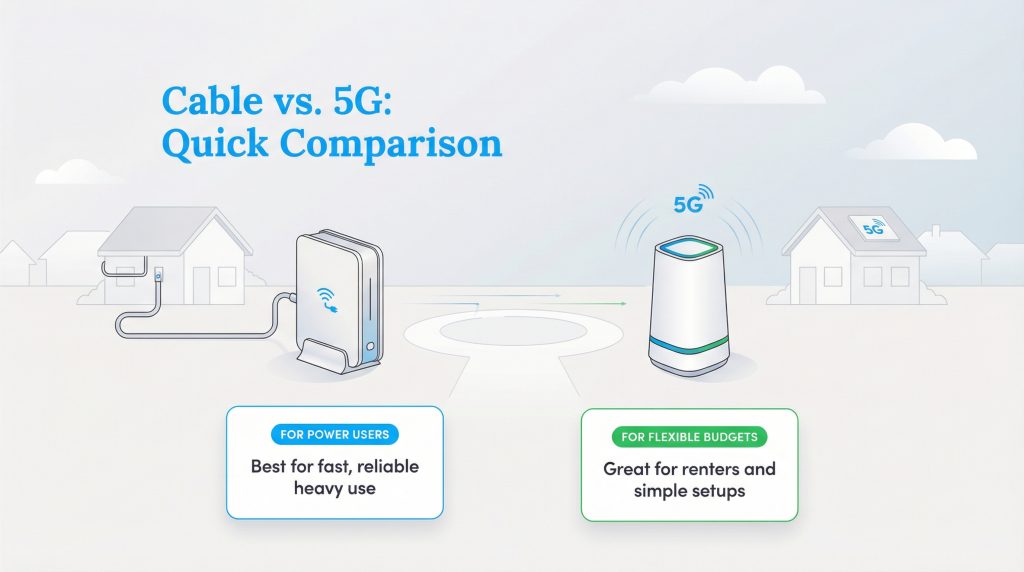
Before diving into the deep technical details, a side-by-side internet provider comparison helps highlight the typical differences between these two connection types. Keep in mind that specific capabilities will always vary slightly based on your local provider and proximity to the nearest cell network.
| Feature | Cable Internet | 5G Home Internet |
|---|---|---|
| Average Download Speed | 200 Mbps – 2,000 Mbps (2 Gbps) | 100 Mbps – 300 Mbps |
| Average Upload Speed | 10 Mbps – 50+ Mbps | 10 Mbps – 20 Mbps |
| Average Latency | Low (15 – 30 ms) | Medium to High (40 – 70+ ms) |
| Price Structure | Promotional rates, contracts, fees | Flat-rate pricing, all-in, no contracts |
| Installation Method | Technician visit or physical coax wiring | DIY plug-and-play gateway in minutes |
Speed And Network Reliability
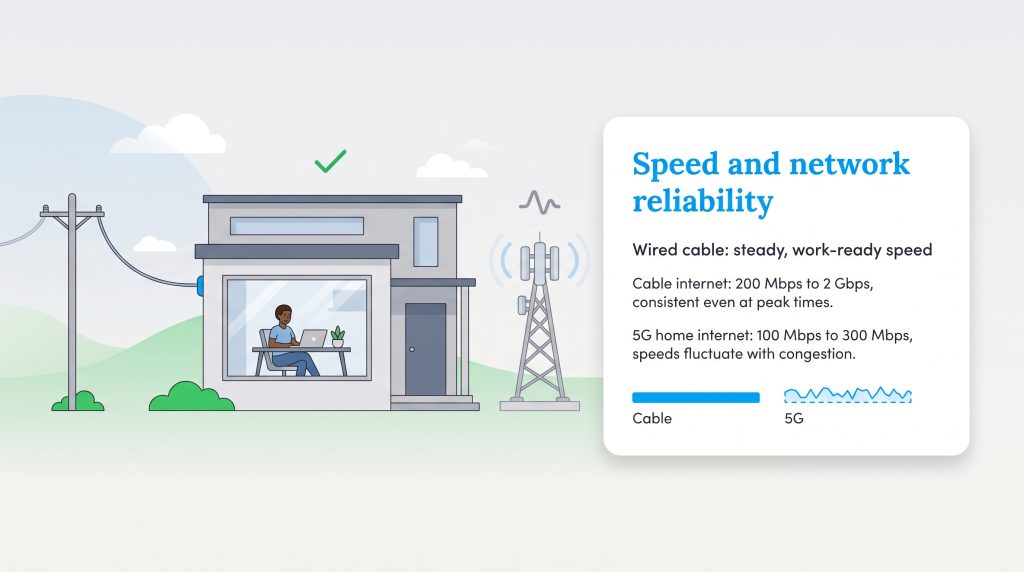
When you look at modern advertisements, you will often see providers boasting 5G home internet speed that rivals traditional setups. However, raw download speed is only half the story. While 5G can easily handle downloading a movie during quiet afternoon hours, it frequently struggles with network congestion. When the local cell tower becomes overloaded with heavy neighborhood smartphone traffic during evening peak times, your 5G speeds can fluctuate wildly. Most 5G providers confidently deliver speeds between 100 Mbps and 300 Mbps, but the consistency is rarely guaranteed.
In comparison, cable vs 5G reliability almost always tilts in favor of the physical wire. Because physical infrastructure handles heavy neighborhood loads much more efficiently, a robust cable connection delivers steady download speeds between 200 Mbps and a staggering 1 to 2 Gbps. Furthermore, cable providers are aggressively rolling out DOCSIS 4.0 technology to upgrade their networks, allowing for symmetrical multi-gigabit speeds. For remote professionals relying on crisp Zoom calls or accessing secure corporate servers, this hardwired consistency ensures that critical work functions are never interrupted.
Network Security And Data Privacy
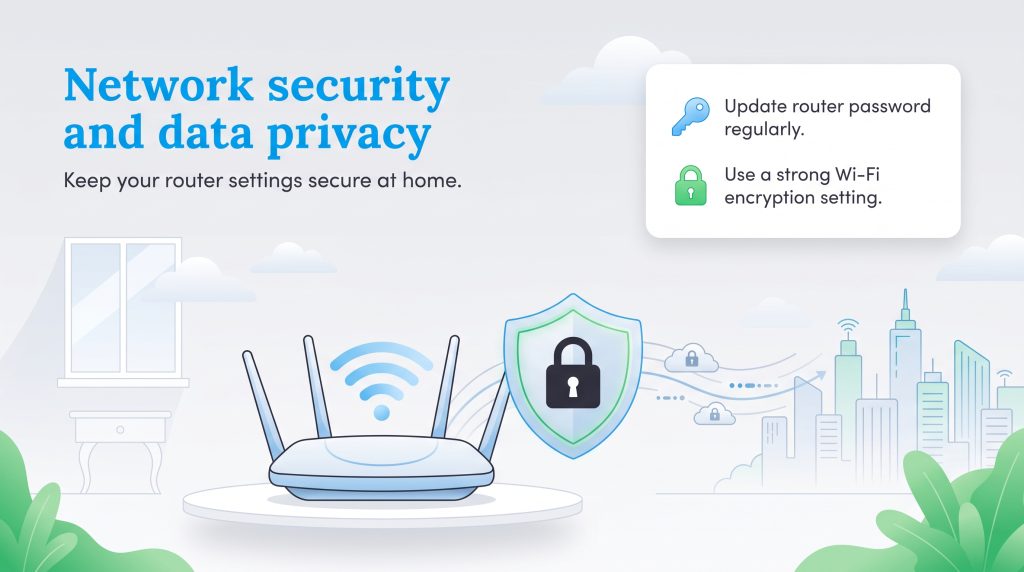
Both networks offer excellent enterprise-level encryption to keep your digital data protected as it travels from your home router to the wider web. Regardless of which service you choose, it is essential to practice basic router security measures to ensure your privacy stays completely intact.
Latency And Gaming Performance
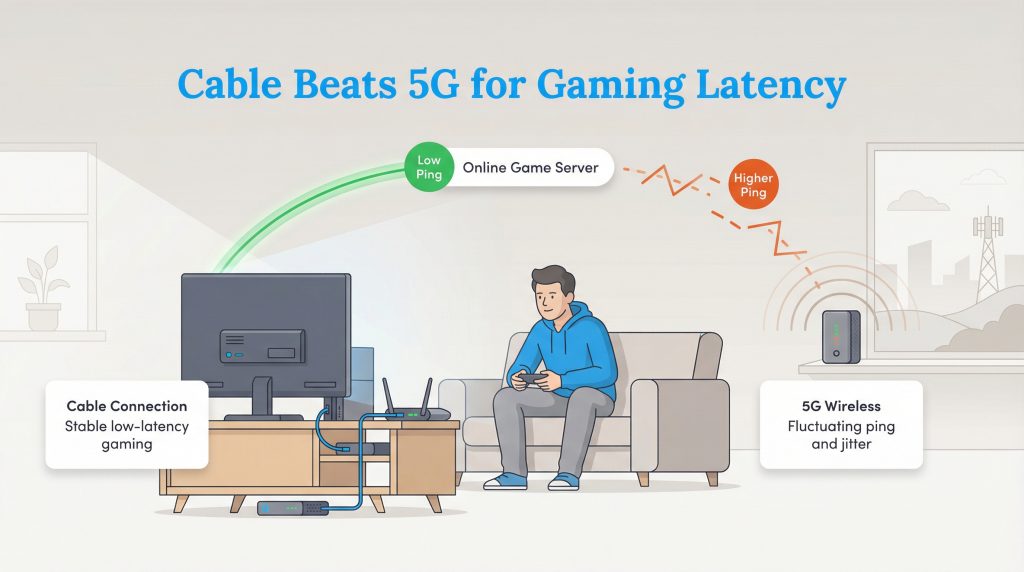
When comparing cable internet vs 5G latency, the technical differences become glaringly obvious for gamers and remote workers. Latency (often referred to as ping) measures the precise milliseconds it takes a signal to travel from your device to the server and back again. Because wireless signals travel through the open air, 5G is highly susceptible to packet loss, jitter, and sudden ping spikes.
If you are wondering, “Is 5G home internet good for gaming?” the honest answer is no for serious, competitive players. While 5G is fine for casual mobile games or downloading patches, a wired cable connection offers much lower, consistent latency. This makes cable vastly superior for fast-paced shooters, fighting games, and sports titles where even a split-second delay will ruin the experience.
Pricing, Contracts, And Hidden Fees
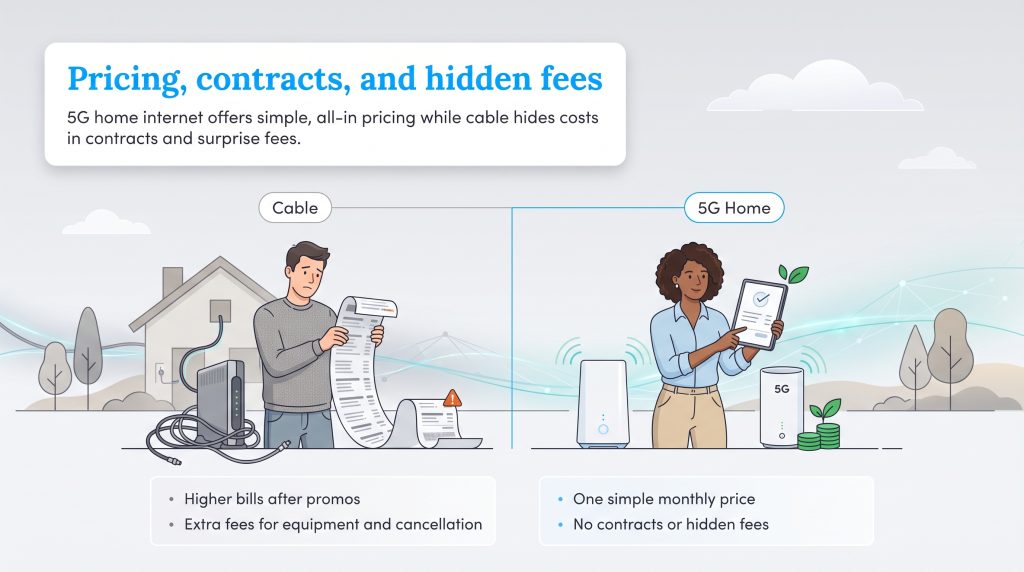
A true 5G vs cable price comparison reveals two entirely different billing philosophies. Cable providers are historically notorious for utilizing restrictive contracts and promotional pricing traps. You might sign up for a competitive rate of $49.99, but after the initial 12-month honeymoon phase ends, that price could easily double. Cable users also frequently face mandatory equipment rental fees for modems, one-time professional installation charges, and early termination fees if they decide to cancel the service before their contract ends.
5G providers have fiercely disrupted this traditional model with highly transparent, “all-in” pricing. There are generally no annual contracts, no cancellation fees, and the required gateway receiver device is included in the base monthly cost. The price you see advertised on the website is exactly what you pay each month, making the financial predictability of fixed wireless a massive win for budget-conscious households.
Installation And Equipment Setup
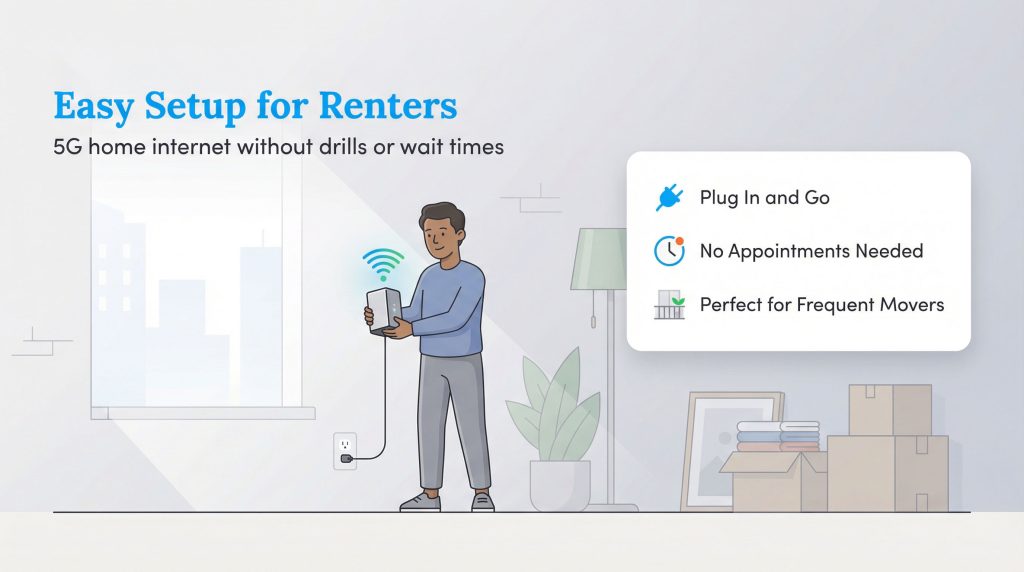
If you decide to make the leap and switch from cable to 5G internet, the initial setup experience is a massive differentiator. 5G home internet is almost universally a simple, “plug-and-play” process that entirely skips the technical headaches of traditional wired installations.
- 5G Gateway Setup: You simply order the standalone device in the mail, plug it into a standard wall outlet near a window, and follow the smartphone app prompts to activate your Wi-Fi within minutes.
- Cable Internet Setup: Generally requires scheduling a professional technician appointment, waiting around during a frustrating four-hour window, and potentially paying an installation fee. The technician may need to drill holes to run new coaxial lines through your walls — which usually requires special landlord permission if you rent.
This seamless portability of a 5G gateway proves incredibly valuable when setting up utilities when moving to a new apartment or temporary housing.
Top Providers In 2026 Who Lead The Market
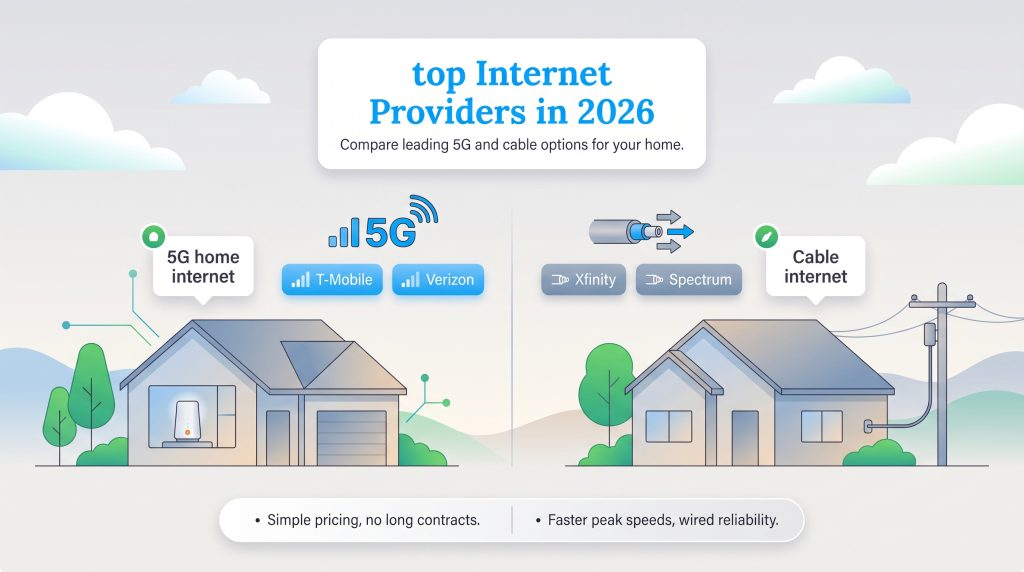
When choosing the best service for your new residence, it helps to know which companies currently dominate the landscape. Let’s look at the best 5G home internet providers alongside the biggest names in cable to help you compare your options.
- T-Mobile Home Internet (5G): Offering a flat rate generally starting around $50 to $60 per month, their standout feature is the beloved “Price Lock” guarantee, which ensures your base rate stays the same as long as you keep the plan.
- Verizon 5G Home Internet (5G): With plans dropping as low as $35 to $50 per month for existing qualifying mobile customers, Verizon rewards brand loyalty with steep bundle discounts and an incredibly fast, expanding mid-band cellular network.
- Xfinity (Cable): Known for offering promotional starter plans that occasionally dip below $30 per month, Xfinity leverages a massive national footprint and consistently delivers high top-end speeds for dedicated power users.
- Spectrum (Cable): Usually starting around $50 per month for the first year, Spectrum’s primary unique selling proposition is that they do not impose strict data caps on their residential cable lines, making them perfect for heavy downstreaming.
If you are specifically debating Xfinity vs T-Mobile home internet, the decision perfectly illustrates the industry divide: Xfinity wins on raw wired performance and peak speeds, while T-Mobile wins on transparent, contract-free pricing and overall ease of use.
Who Should Choose Cable Internet?
While wireless options are incredibly popular, a physical, wired connection remains the undisputed gold standard for specific households. You should opt for a traditional cable connection if you fit into these high-usage categories:
- Streamers and 4K enthusiasts: Families who frequently run multiple high-definition video streams on different televisions simultaneously need the heavy, uninterrupted bandwidth that physical coax lines deliver.
- Competitive online gamers: If you play fast-paced multiplayer titles, cable provides the remarkably low latency and packet-loss protection necessary to prevent frustrating lag.
- Large multi-device households: Homes packed with smart devices, tablets, laptops, and gaming consoles require the robust data management of a dedicated physical network.
- Remote workers with heavy upload needs: Professionals who handle massive file transfers or host critical corporate video conferences benefit from avoiding peak-hour cellular network congestion.
Who Should Choose 5G Home Internet?
For many modern consumers, ditching the physical cord is the ultimate path to billing freedom and sheer convenience. You will likely be much happier choosing a 5G connection if you identify with these lifestyles:
- Renters and apartment dwellers: Skip the hassle of asking your property manager or landlord for permission to drill holes or run new coaxial wiring through the walls.
- Rural residents: 5G wireless internet for rural areas is rapidly expanding, offering reliable high-speed connectivity to distant homes that traditional cable companies refuse to wire.
- Frequent movers: The ability to pack up your gateway box and plug it in at your new address within minutes makes 5G the most portable home connection currently available on the market.
- Budget-conscious users: If you despise promotional price hikes, expensive router rental charges, and hidden data overage fees, the transparent pricing model of 5G is incredibly refreshing.
Securing The Perfect Internet Setup For Your Household
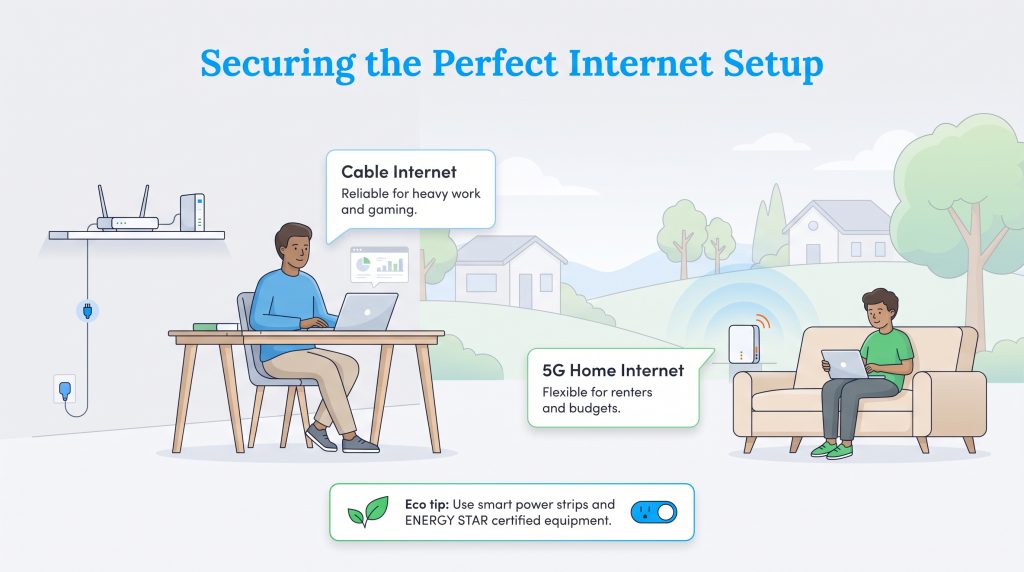
Choosing between cable and 5G home internet ultimately comes down to your unique lifestyle, daily digital habits, and physical location. Both options are incredibly capable technologies that can easily keep you connected to the modern world, but they serve different primary functions. For heavy users, gamers, and work-from-home professionals running data-heavy applications, the dedicated reliability of a wired cable line is absolutely worth the extra setup time and potential cost. The unshakeable stability against network congestion ensures your crucial meetings and high-stakes gaming sessions are never unexpectedly interrupted.
Conversely, for renters, college students, and budget-conscious users, 5G offers a highly compelling, flexible alternative. The self-installation model completely eliminates the need to manufacture and bury last-mile infrastructure for every single home. This actually makes 5G an environmentally mindful choice that entirely skips the carbon emissions of a rolling technician truck. Whichever technology you choose, be sure to verify local coverage maps and read the fine print before making your final call.
Frequently Asked Questions About Cable And 5G Internet
Is 5G home internet faster than cable?
Will bad weather affect my 5G home internet connection?
Is 5G home internet good for competitive gaming?
How hard is it to switch from cable to 5G internet?
Can I replace my cable internet with a 5G connection for smart home devices?
Do 5G home internet plans have data caps?
Is 5G home internet fast enough for streaming 4K TV?
Can I keep my 5G home internet router if I move to a new house?
About the Author

LaLeesha has a Masters degree in English and enjoys writing whenever she has the chance. She is passionate about gardening, reducing her carbon footprint, and protecting the environment. She also recently served as President of the Board for City Sprouts (a community garden).

David has been an integral part of some of the biggest utility sites on the internet, including InMyArea.com, HighSpeedInternet.com, BroadbandNow.com, and U.S. News. He brings over 15 years of experience writing about, compiling and analyzing utility data.