

Understand the legal and safe ways to remove a gas meter lock and get your home’s natural gas flowing again.
Key Takeaways
- Never attempt a DIY gas meter lock removal, as using the wrong tools can cause sparks, damage soft brass fittings, create a gas leak, and lead to fines or criminal charges.
- A locked gas meter is usually caused by a change in tenancy, missed payments, or a red-tagged safety violation on the property.
- The fastest way to restore your service is to contact your local utility provider directly to resolve the administrative issue and schedule a professional unlock.
Discovering a padlock or barrel lock on your natural gas meter can be an incredibly frustrating experience, especially if you’ve just moved into a new home or are dealing with an unexpected heating outage. While it might be tempting to search for a gas meter lock removal tool online and handle the situation yourself, tampering with utility equipment isn’t just illegal — it’s extremely dangerous. Instead of risking a hazardous gas leak or hefty fines, our best advice is to identify exactly why the utility company secured the meter in the first place. By understanding the root cause, whether it’s an administrative billing error, a simple account transfer, or a severe safety violation, we can help you take the proper steps to get your service restored quickly and securely.
What to Do First If Your Gas Meter Is Locked
If you discover a lock on your gas meter, your immediate next steps depend entirely on the physical environment around the equipment. Safety must always be your top priority when dealing with utility infrastructure.
- If you smell gas: Leave the home immediately if you smell rotten eggs, hear hissing near the meter, or feel dizzy. Don’t flip light switches, use your phone inside, or try to inspect the meter. Once you’re a safe distance away, call 911 and your gas utility’s emergency line.
- If there’s no gas smell: Do not touch, pry, drill, or attempt to grind the lock. Never open the valve yourself.
- Document the equipment: Take a photo of the tag or lock for your records, but leave the physical hardware exactly as you found it. Call the utility customer service line and ask why the meter is secured.
Why Is My Gas Meter Locked?
Utility companies don’t go around securing equipment just to inconvenience you; there’s always a specific, documented reason why a technician disabled your service. If you’re asking, “Why is my gas meter locked?” the answer usually comes down to one of three issues: account status, a recent move, or a safety concern. Because natural gas is highly combustible and requires careful monitoring, providers follow strict protocols before allowing any gas to flow into a residential property.
📌 Quick Fact: Natural gas serves tens of millions of U.S. households, according to the U.S. Energy Information Administration, which is why utilities follow strict shutoff and restoration procedures for inactive or unsafe meters.
Moving Into a New Home
When a previous tenant or homeowner moves out, they typically close their utility accounts. To prevent unmetered gas from flowing into an empty house, the local utility provider places a physical lock on the meter. If you are setting up utilities in a new home, encountering this barrier simply means the system is waiting for an active account holder to officially take over the service. If you just moved in and the utility says there’s a past-due balance, ask whether the debt is tied to your name or the previous account holder. In many cases, a new tenant or homeowner is not responsible for a prior occupant’s unpaid bill, but you may need to provide a lease, closing document, or ID to establish service.
Missed Payments and Disconnections
Falling behind on utility bills can prompt a provider to suspend your service. After multiple notices and a grace period, a technician will dispatch to the property and install a barrel lock on the valve to stop the flow of gas. In these instances, the meter will remain secured until the outstanding balance and any associated reconnection fees are fully paid.
Red Tag Safety Violations
A locked meter paired with a physical red tag hanging from the equipment means the utility company detected a severe hazard. This could be a confirmed gas leak, a faulty furnace, or an improperly vented water heater. The company will proactively lock the gas supply to protect the household from fire or carbon monoxide poisoning until a certified professional completes the necessary repairs.
The Dangers of DIY Gas Meter Lock Removal
Taking matters into your own hands when facing a locked utility meter is a recipe for disaster. You might come across a suspicious tutorial or an online listing for a gas meter lock removal tool, but purchasing and using these devices is a terrible idea. Avoid listings for barrel lock keys, gas meter lock keys, or utility lock removal tools. These tools are intended for authorized utility work, and buying one won’t clear the account hold, safety tag, or service order attached to your address. Natural gas infrastructure is incredibly sensitive, and applying forceful torque with unauthorized equipment like angle grinders, bolt cutters, or lock picks can easily strip the soft brass fittings on the meter. Damaging these specialized components often leads to thousands of dollars in replacement fees and extensive structural repairs that you’ll have to pay for out of pocket.
Beyond the financial risk, trying to break a utility lock introduces immediate, life-threatening physical dangers to you and your neighbors. Attempting to cut or grind a steel padlock creates friction and dangerous sparks. In an environment where residual natural gas might be present, a single spark can trigger a catastrophic explosion. Gas utilities train authorized technicians to operate meters and service valves safely because even small mistakes can create leaks, fire risks, or pressure problems. For more information on safely managing utility infrastructure, you can review resources from the Pipeline and Hazardous Materials Safety Administration.
🚩 Heads Up: Tampering with a utility meter is illegal in many jurisdictions and can lead to fines, criminal charges, equipment replacement costs, and longer service delays.
Who to Call to Unlock a Gas Meter
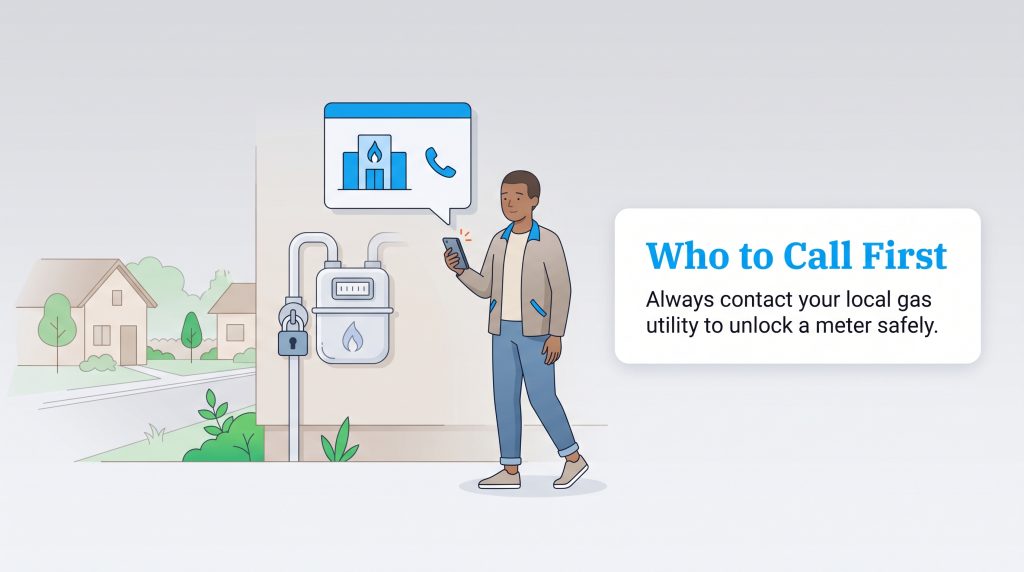
Figuring out who to call to unlock gas meter hardware is entirely straightforward: you must reach out to your designated local utility company. Bypassing the provider or hiring an unverified handyman won’t solve the administrative block on your account and will likely land you in serious legal trouble. When you’re ready to get your heat and hot water flowing again, follow these exact steps to ensure a smooth administrative process.
| Situation | Who to Call First | What to Expect |
|---|---|---|
| You just moved in | Gas utility customer service | Account setup, identity verification, technician appointment |
| You missed payments | Gas utility billing department | Payment arrangement, reconnection fee, service order |
| You see a red tag | Licensed plumber or HVAC contractor, then utility | Repair documentation before service restoration |
| You smell gas | 911 and the utility emergency line | Emergency inspection before anyone restores service |
| You don’t know why it’s locked | Gas utility customer service | Utility checks account and service status |
- Find your local utility provider: Identify the company that manages the natural gas infrastructure in your specific city or county.
- Have your address and lease or deed ready: Customer service representatives need to verify that you have the legal right to establish service at the property before removing the lock.
- Pay any outstanding balances or setup fees: Clear any previous debt tied to your name, or pay the standard activation fee required for new customers.
- Schedule the technician visit: Book an official appointment for a certified worker to come to your property and remove the physical lock.
Keep in mind that only an authorized utility worker can safely turn the gas back on and relight your appliance pilot lights after a lock is removed. Never attempt to open the main valve yourself, even if the padlock is successfully removed. If you aren’t sure where to start, use your utility’s official website or customer service number to confirm the account status and schedule authorized service, or learn more about setting up natural gas service on our hub.
How to Set Up Gas Utility Service Safely
If you’re worried about arriving at a new place and thinking, “The gas company locked my meter,” a little planning can prevent the headache. The best way to sidestep an unexpected utility disruption is to schedule your service activations at least one week ahead of your planned move-in date. Giving the utility provider a reasonable heads-up allows them to dispatch a technician to unlock the meter before you ever step foot through the front door, guaranteeing that your home is warm and ready for you. As you navigate the process of setting up your electric service, always confirm your appointment date in writing so you have a solid paper trail.
🌱 Eco Edge: Ask your provider whether they offer renewable natural gas, carbon offset options, budget billing, or energy-efficiency rebates. If you’re replacing a gas appliance, compare high-efficiency models and ENERGY STAR-certified options where available.
Dealing With a Red Tag on Your Gas Meter
Spotting a red tag on gas meter equipment can feel incredibly alarming, but it’s a critical safety mechanism designed to protect your home. A red tag indicates that a utility worker identified a direct, immediate safety hazard on the premises, such as a severe gas leak, improper ventilation, or a major building code violation. Because natural gas infrastructure is heavily regulated to prevent disasters, the utility company will lock the meter and refuse to supply fuel until the specific hazard is completely neutralized.
If you’re facing a red tag scenario, the utility provider won’t fix your broken appliances or internal piping. In most cases, the utility won’t repair appliances, vents, or interior piping on your side of the meter. You’ll need to hire a licensed, independent plumber or HVAC technician to inspect your home and repair the underlying issue. In most red tag cases, the utility will require proof that a licensed professional repaired the hazard before it schedules service restoration. Once the licensed contractor resolves the hazard and submits the paperwork, the utility provider will dispatch a technician to safely restore your service.
Restoring Your Gas Service the Right Way
We know dealing with utility locks is undeniably stressful, but patience and proper administrative procedures are the only reliable ways to handle the situation. Taking shortcuts by forcing a lock open will only endanger your property, risk your personal safety, and trigger severe legal consequences. By identifying the root cause of the shutoff, communicating directly with your local provider, and allowing authorized technicians to manage the equipment, you can quickly and legally get your home’s natural gas flowing again. Always prioritize the safety of your home and neighborhood over the fleeting convenience of a quick, unauthorized DIY fix.
Frequently Asked Questions About Gas Meter Lock Removal
What Should I Do If I Smell Gas Near a Locked Meter?
Is It Illegal to Remove a Gas Meter Lock?
Can I Turn My Gas Back On After a Lock Is Removed?
Am I Responsible for a Previous Tenant’s Unpaid Gas Bill?
Can a Plumber Remove a Gas Meter Lock?
How Long Does It Take for the Gas Company to Unlock My Meter?
What Does a Red Tag on My Gas Meter Mean?
Will the Gas Company Charge a Fee to Remove the Lock?
About the Author

LaLeesha has a Masters degree in English and enjoys writing whenever she has the chance. She is passionate about gardening, reducing her carbon footprint, and protecting the environment. She also recently served as President of the Board for City Sprouts (a community garden).

David has been an integral part of some of the biggest utility sites on the internet, including InMyArea.com, HighSpeedInternet.com, BroadbandNow.com, and U.S. News. He brings over 15 years of experience writing about, compiling and analyzing utility data.