

Proper fall rain barrel maintenance protects your investment from expensive winter freeze damage and extends its lifespan for spring gardening.
Key Takeaways
- Monitor local temperatures and use 40°F nighttime lows as a planning signal to prevent freezing and cracking before a hard freeze arrives.
- Drain, scrub, and disconnect your rain barrel to eliminate algae and divert stormwater safely away from your home’s foundation.
- Store the barrel upside down in a garage or shed, or use a specialized winter cover to block debris if keeping it outside.
When autumn leaves start to drop and temperatures take a dive, preparing your outdoor utilities is likely top of mind — but don’t let your rain barrel be an afterthought. Leaving a rain barrel full of water during freezing temperatures can crack the plastic, damage fittings, and create a costly mess next spring. Properly winterizing a rain barrel goes beyond just emptying the water; it involves cleaning out summer algae, safely diverting downspouts to protect your foundation, and securing the hardware. Whether you are an eco-conscious gardener or a first-time homeowner learning the ropes of seasonal home utility setup, these practical fall rain barrel tips will help you secure your investment and ensure your rainwater harvesting system is ready to go as soon as the spring thaw arrives.
What You’ll Need Before You Winterize a Rain Barrel
Gathering the right supplies ahead of time makes the shutdown process smooth and efficient. Having these items on hand ensures you can properly clean, disconnect, and store your setup without unnecessary interruptions:
- Long-handled scrub brush
- Gloves
- White vinegar or mild dish soap
- Garden hose or watering can
- Downspout extension
- Tarp or breathable cover
- Small bucket or container for hardware pieces
Fall Rain Barrel Winterization Checklist
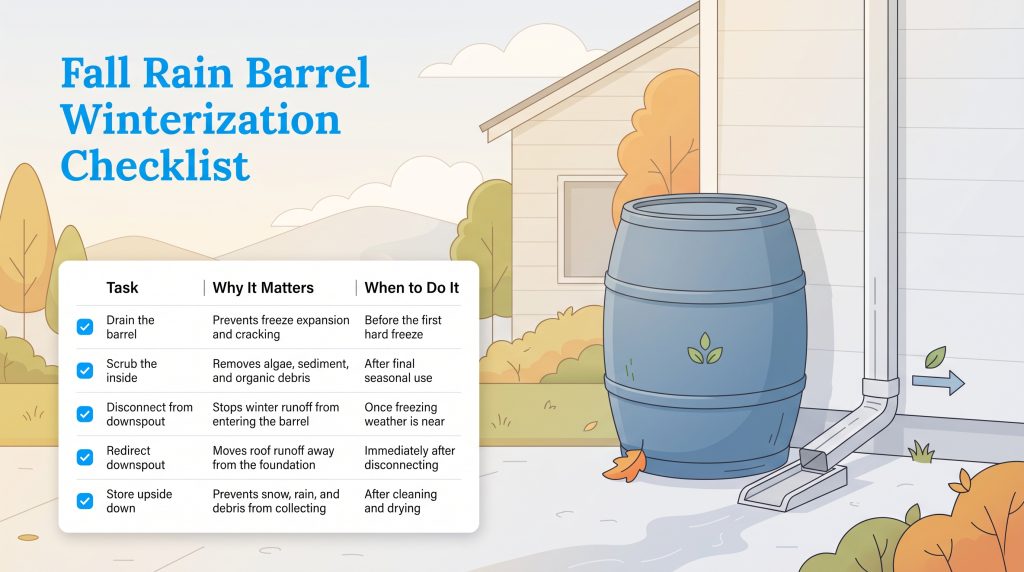
Staying organized helps you beat the freezing weather while checking off every essential maintenance step. Use this quick reference guide to ensure you address all critical areas of your rainwater harvesting system.
| Task | Why It Matters | When to Do It |
|---|---|---|
| Drain the barrel | Prevents freeze expansion and cracking | Before the first hard freeze |
| Scrub the inside | Removes algae, sediment, and organic debris | After final seasonal use |
| Disconnect from downspout | Stops winter runoff from entering the barrel | Once freezing weather is near |
| Redirect downspout | Moves roof runoff away from the foundation | Immediately after disconnecting |
| Store upside down | Prevents snow, rain, and debris from collecting | After cleaning and drying |
Why Fall Rain Barrel Maintenance Is Essential
Skipping your fall rain barrel maintenance might seem harmless, but the consequences often reveal themselves during the first hard freeze. Water expands as it turns to ice, exerting massive pressure against the rigid sides of your container. That expansion can put enough pressure on the barrel walls and fittings to cause stress fractures, leaks, or a full rupture. Many residential rain barrels cost roughly $100 to $200 or more to replace, depending on size, material, and local rebate availability, transforming an eco-friendly water solution into an unnecessary financial burden.
💸 Money-Saver: Many manufacturer warranties don’t cover freeze damage, so draining and storing your barrel is one of the simplest ways to protect your purchase.
We always recommend acting proactively rather than reactively when the weather turns cold. A few minutes of physical effort now ensures your setup remains completely intact and functional when you need to water your garden next season.
When to Start Winterizing Your Rain Barrel
Timing is everything when winterizing a rain barrel, and you definitely want to beat the freezing weather. Rather than holding out for the absolute final drop of autumn rain, we suggest beginning your shutdown process when nighttime temperatures consistently dip below 40°F. Use 40°F nighttime lows as your planning signal, not the freezing point. That buffer gives you time to clean, disconnect, and store the barrel before a sudden hard freeze. A 40°F nighttime forecast is a conservative reminder to start planning, but the real deadline is your area’s first hard freeze. If your region gets only occasional light frosts, you may have more flexibility than someone in a colder climate. If you aren’t sure exactly when this happens in your region, https://www.weather.gov/”>check your local National Weather Service frost guidance to establish a solid deadline. While the calendar is a helpful guide, your immediate environment will also give you several clear signals that it is time to act:
- Nighttime forecasts begin flirting with the upper 30s.
- Deciduous trees in your yard have dropped the majority of their leaves, increasing the risk of gutter debris clogging your system.
- You have completed your final significant fall watering session for outdoor perennials and shrubs.
Step-by-Step Fall Cleaning and Winterizing Guide
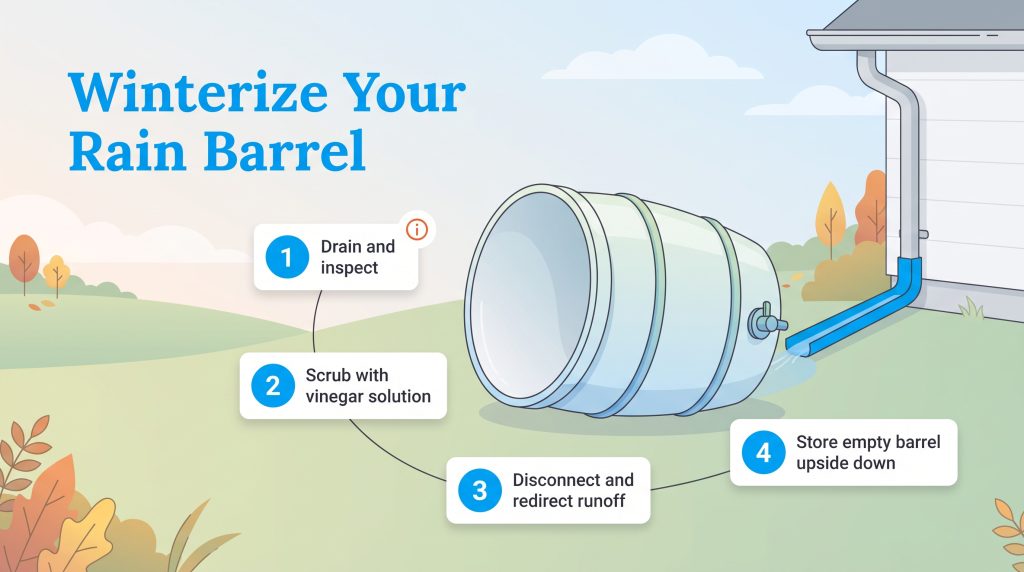
Tackling your outdoor prep doesn’t have to be overwhelming if you break it down into a logical progression. This chronological approach ensures you handle every vital detail of managing your home’s water systems before the frost sets in. Follow these specific steps to safely decommission your setup for the cold months ahead.
1. Drain and Inspect the Barrel
If you find yourself wondering, “Do I need to empty my rain barrel in winter?” the answer is yes, in climates where freezing temperatures are possible. Start by opening the spigot wide to release all the remaining contents. You can capture this leftover supply in watering cans for your outdoor ornamental plants, trees, shrubs, or non-edible garden areas or give your late-season garden beds one final, generous drink. Once the interior is completely dry, visually inspect the plastic body for micro-cracks or weakened stress points that might need patching before next year.
📌 Quick Fact: Rain barrel water is not drinking water. Use it for outdoor plants and landscaping, and avoid using it for cooking, bathing, or filling pet bowls.
2. Scrub to Prevent Fall Algae Growth
Prioritizing rain barrel algae prevention in fall saves you from dealing with a foul-smelling, green sludge when spring rolls around. If you want to know how to clean a rain barrel in autumn without resorting to harsh chemical bleaches, an eco-conscious alternative works perfectly. Mix a simple solution of equal parts white vinegar and warm water, then grab a long-handled brush to scrub the interior walls. This simple solution helps loosen algae film, sediment, and organic residue without relying on harsh cleaners. Rinse the barrel well before storing it.
3. Disconnect and Divert Downspouts
Once the container is clean and empty, you must physically separate it from your gutter system. To properly disconnect your rain barrel for winter, remove the specialized diverter or unhook the flexible downspout attachment feeding into the top screen. Failing to complete this step means winter runoff will continue funneling toward a blocked or stored system.
🚩 Heads Up: Attach a downspout extension to direct melting snow and roof runoff several feet away from your foundation, ideally toward a safe downhill drainage area. Follow local drainage rules if your municipality has specific requirements.
Redirecting your downspout in fall helps keep melting snow and roof runoff away from places you don’t want water pooling. Ensure your newly attached extensions point toward a natural downward slope in your yard so excess moisture drains safely away from your home.
4. Storing Rain Barrels for Winter
Properly storing rain barrels for winter extends the life of the plastic and keeps small critters from making a cozy home inside. The ideal storage location is indoors — a sheltered garage, weather-tight shed, or unfinished basement works beautifully. Always place the empty barrel entirely upside down to prevent dust accumulation and ensure any lingering moisture drips out rather than pooling at the bottom.
Winter Storage Options for Your Rain Barrel
Choosing the best location for your disconnected rain barrel ensures it stays protected from severe weather. Compare these common storage methods to find the most effective approach for your property.
| Storage Option | Best For | Pros | Watchouts |
|---|---|---|---|
| Indoors in a garage or shed | Maximum protection from elements | Zero freeze risk, no UV degradation | Takes up valuable indoor space |
| Indoors in a basement or utility room | Homes with ample indoor storage | Keeps plastic safe and dry | Requires carrying the barrel down stairs |
| Outside upside down | Properties lacking indoor space | Prevents debris buildup inside | Exposes plastic to winter temperatures |
| Outside with a secured breathable cover | Extending the lifespan of outdoor barrels | Blocks UV rays and blowing snow | Requires buying a separate cover |
What to Do If You Can’t Move Your Barrel Indoors
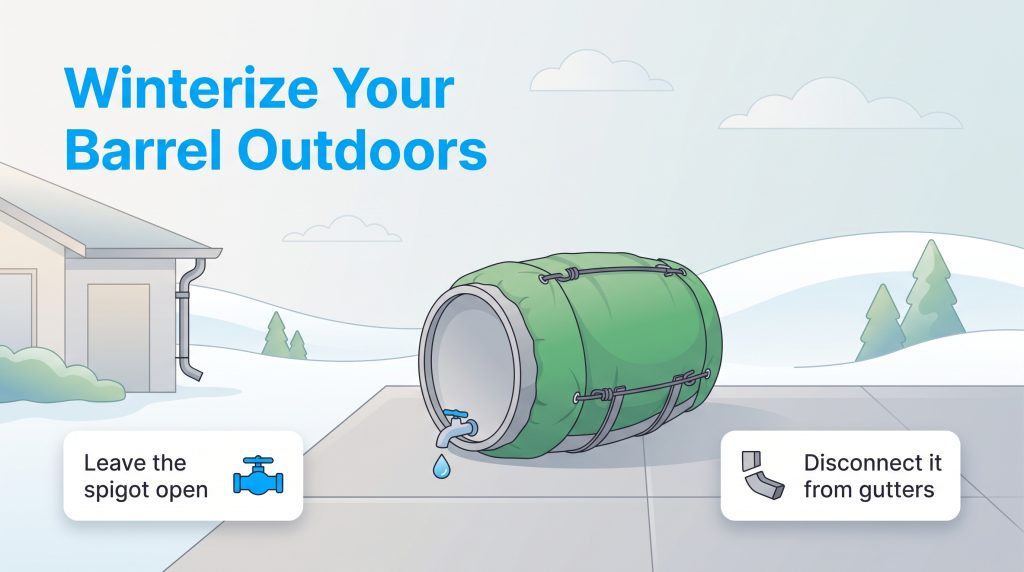
Not everyone has a spacious shed or extra garage corner to dedicate to seasonal storage. If your setup must brave the elements, you can still prevent rain barrel freezing by taking a few strict precautions. First, verify the tank is completely dry, and intentionally leave the spigot fixed in the “open” position so that any minor condensation or trapped moisture can easily expand without blowing out the valve. Next, flip the container entirely upside down on a flat, stable surface in your yard.
💡 Pro Tip: Wrap the inverted base in breathable rain barrel winter covers or a heavy-duty tarp secured tightly with bungee cords. This extra layer shields the plastic from harsh winter UV degradation while keeping out blowing snow and debris.
Even when stored outside, keeping the system unhooked from your gutters remains essential. Following these modified sustainable rainwater harvesting practices ensures your gear survives the freezing months right where it sits.
Wrapping Up Your Fall Rain Barrel Routine
Putting in the physical effort during autumn ensures your hardware remains in good shape and ready to capture the very first April showers. By draining, cleaning, and safely storing your system now, you eliminate the anxiety of watching the thermometer drop during unexpected cold snaps. Cultivating good seasonal maintenance habits is just one part of making environmentally mindful choices for your property, allowing you to maximize those valuable, eco-conscious water savings year after year.
Frequently Asked Questions About Fall Rain Barrel Tips
Do I Really Need to Empty My Rain Barrel in Winter?
How Do I Prevent My Rain Barrel From Freezing If It Stays Outside?
What Is the Best Way to Clean Algae Out of a Rain Barrel in Autumn?
When Should I Disconnect My Rain Barrel for the Season?
Can I Leave the Downspout Diverter Attached During Winter?
When Can I Reconnect My Rain Barrel in Spring?
About the Author

LaLeesha has a Masters degree in English and enjoys writing whenever she has the chance. She is passionate about gardening, reducing her carbon footprint, and protecting the environment. She also recently served as President of the Board for City Sprouts (a community garden).

David has been an integral part of some of the biggest utility sites on the internet, including InMyArea.com, HighSpeedInternet.com, BroadbandNow.com, and U.S. News. He brings over 15 years of experience writing about, compiling and analyzing utility data.