

Harnessing autumn’s bounty for your compost pile saves money on seasonal waste removal and creates nutrient-rich soil for spring.
Key Takeaways
- Blend brown and green materials in a rough 3-to-1 ratio by volume to keep your pile active before cold weather arrives.
- Avoid composting diseased plants and meat or dairy products that attract winter pests or inhibit breakdown.
- Winterize your compost bin by insulating the pile and adjusting how often you turn it before freezing temperatures arrive.
When the trees start shedding their colorful canopies, the sheer volume of fallen leaves covering your lawn can quickly feel overwhelming. Instead of stuffing countless plastic bags full of organic matter and hauling them to the curb, we recommend viewing this seasonal debris as a valuable resource for your property. By mastering a few straightforward fall composting tips, you can responsibly manage this sudden influx of seasonal waste right in your own backyard. Taking control of your yard trimmings not only helps minimize excess bags at the curb but also prepares your compost systems for the freezing months ahead, ensuring you’ll have rich, dark compost ready to nourish your spring garden.
How Composting Helps Reduce Municipal Yard Waste
In many communities, autumn debris can mean extra bag tags, seasonal pickup rules, or limits on how much yard waste you can set out each week. By composting fall leaves and organic debris on your property, you can potentially avoid these costly overage charges while taking a proactive step toward a sustainable waste setup for your home. Keeping this material out of local landfills also lessens the burden on city infrastructure, which is a major win for both your wallet and the environment. Checking your local yard waste rules before leaf season peaks is a smart move — if your area charges per bag, composting even half your leaves could save you money.
EPA data on yard trimmings shows that U.S. households and businesses generate tens of millions of tons of yard trimmings each year, much of which can be composted instead of landfilled. Turning leaves and scraps into usable compost directly benefits your property’s long-term utility footprint. When you apply finished compost to your garden beds, the organic matter acts like a sponge, significantly improving the soil’s natural water retention capabilities.
Healthier soil can hold moisture longer, which may help you water less often during dry spells. It’s an environmentally mindful choice that pairs perfectly with monitoring your overall water usage, ultimately lowering those expensive warm-weather utility bills. Building healthier soil now pays dividends long after the snow melts.
What to Compost in Fall: Finding the Right Balance
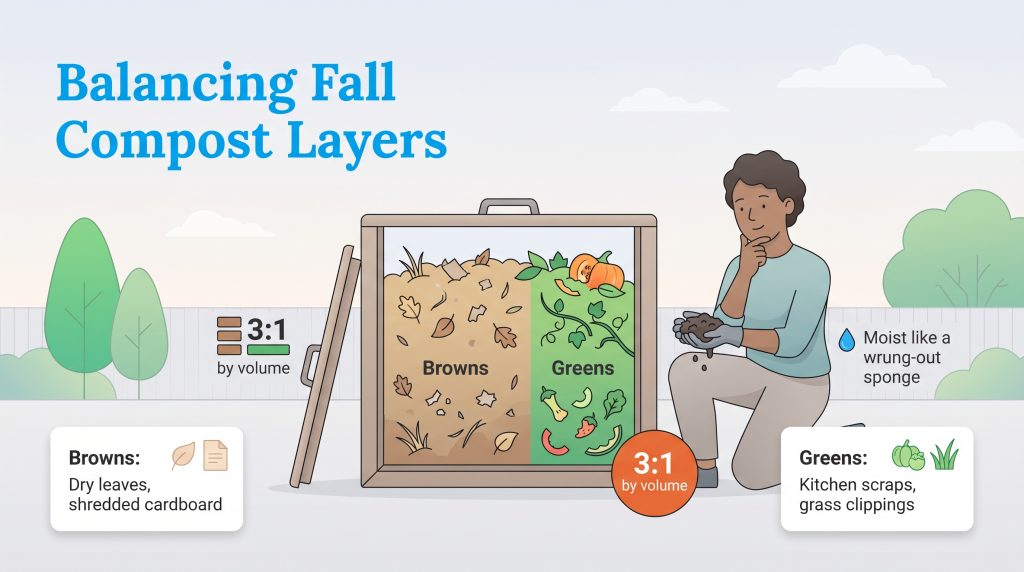
Understanding exactly what to compost in fall comes down to striking a rough 3-to-1 ratio by volume of carbon-rich “browns” to nitrogen-heavy “greens” to keep the microbial breakdown active. Following the guidelines for home composting, you should aim to balance these elements and keep your pile moist. A simple home test is the “wrung-out sponge” test — squeeze a handful of the mixture to ensure it feels damp but not dripping before the deep winter freeze sets in.
High-Carbon “Browns” for Your Pile
- Dry oak and maple leaves gathered from the lawn.
- Pine needles, which break down slowly and help aerate the pile.
- Dried ornamental grasses trimmed back during your garden cleanup.
- Shredded plain cardboard and unbleached paper products from your moving boxes.
High-Nitrogen “Greens” to Add
- End-of-season garden clear-outs, such as green vegetable vines that show no signs of blight.
- Indoor kitchen scraps like fruit peels, coffee grounds, and vegetable trimmings.
- Fresh grass clippings from the final mows of the season.
Composting Pumpkins After Halloween
Leftover holiday gourds are a fantastic way to inject moisture and nitrogen into your compost. To do this safely and effectively, you’ll need to prep your pumpkins first. Remove all candles, wax, paint, glitter, stickers, and synthetic decorations. Smash or chop the pumpkins into smaller pieces to speed up decomposition, and bury those pieces under a thick layer of leaves to deter pests. If you don’t want volunteer pumpkin plants popping up next year, be sure to scoop out the seeds before adding the rinds to your pile.
What Not to Compost in Autumn
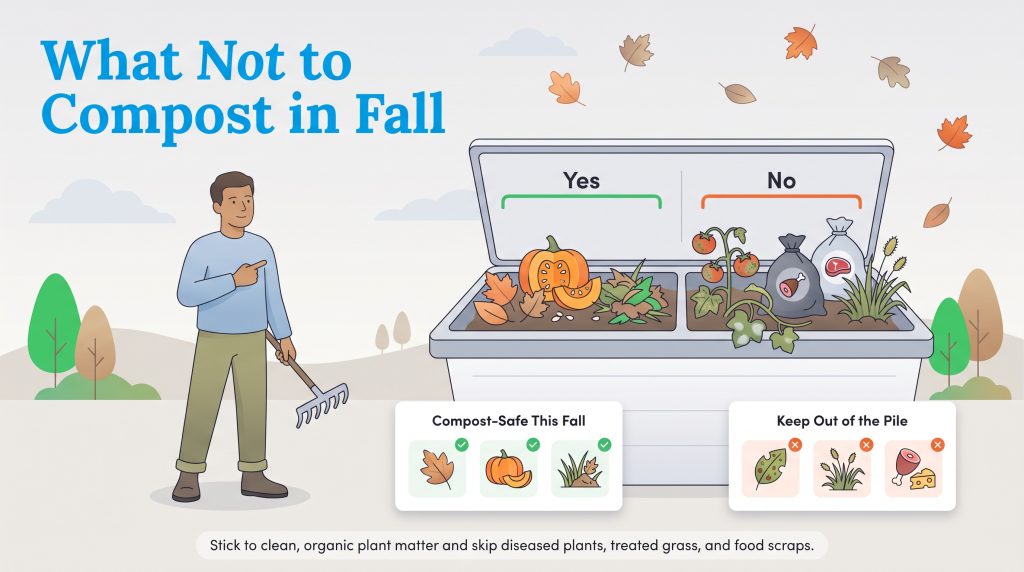
Even seasoned gardeners sometimes struggle to figure out what not to compost in autumn, as the rush to clear the yard can lead to hasty mistakes. You must absolutely avoid tossing diseased plant foliage, such as squash vines coated in powdery mildew or tomato plants suffering from late blight, into your bin. The relatively cool temperatures of an autumn pile rarely get hot enough to effectively kill off these resilient pathogens, meaning you risk spreading the exact same diseases to your new crops next spring.
Similarly, keep heavily chemically treated lawn clippings out of the mix, along with any invasive weeds that have already gone to seed. Never include meat, dairy, or greasy food scraps, as these will quickly putrefy and attract desperate, hungry rodents looking for a winter meal. Stick to clean, organic plant matter to ensure your pile remains healthy and pest-free throughout the colder months.
Quick Reference: What to Toss and What to Keep Out
If you’re ever in doubt while cleaning up the yard, refer to this simple breakdown to keep your pile healthy.
| Material | Compost It? | Fall Composting Tip |
|---|---|---|
| Dry leaves | Yes | Shred first to speed breakdown |
| Pumpkins | Yes, with prep | Remove wax, paint, glitter, and seeds |
| Diseased tomato vines | No | Bag or dispose according to local guidance |
| Meat and dairy | No | Attracts rodents and causes odors |
| Fresh grass clippings | Yes, sparingly | Mix with dry leaves to prevent matting |
A Simple Fall Composting Plan for Busy Homeowners
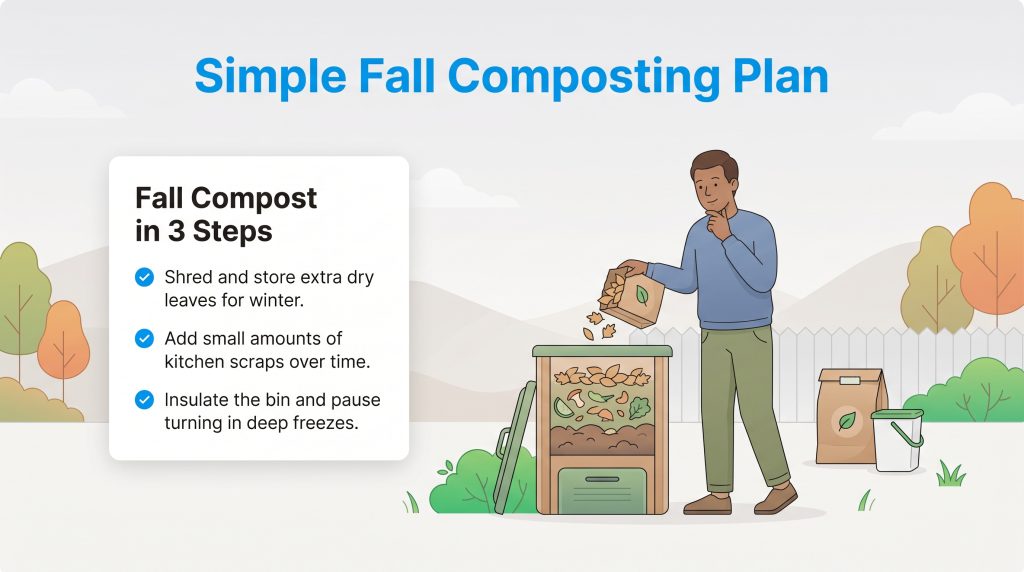
Setting up a successful winter composting system doesn’t require a degree in horticulture. Follow these straightforward steps to manage your yard waste effectively:
- Shred or mow dry leaves: Smaller pieces decompose much faster.
- Store extra leaves: Keep surplus leaves in bags or a dry bin for winter use.
- Add greens gradually: Mix in kitchen scraps in small amounts to maintain your ratio.
- Check moisture: Ensure the pile is damp, but not soggy, before temperatures drop.
- Insulate early: Protect your bin from wind before freezing weather sets in.
- Pause turning during deep freezes: Let the pile rest when temperatures stay below freezing.
- Resume in spring: Start aerating again once the ground thaws.
How to Winterize a Compost Bin for Cold Weather
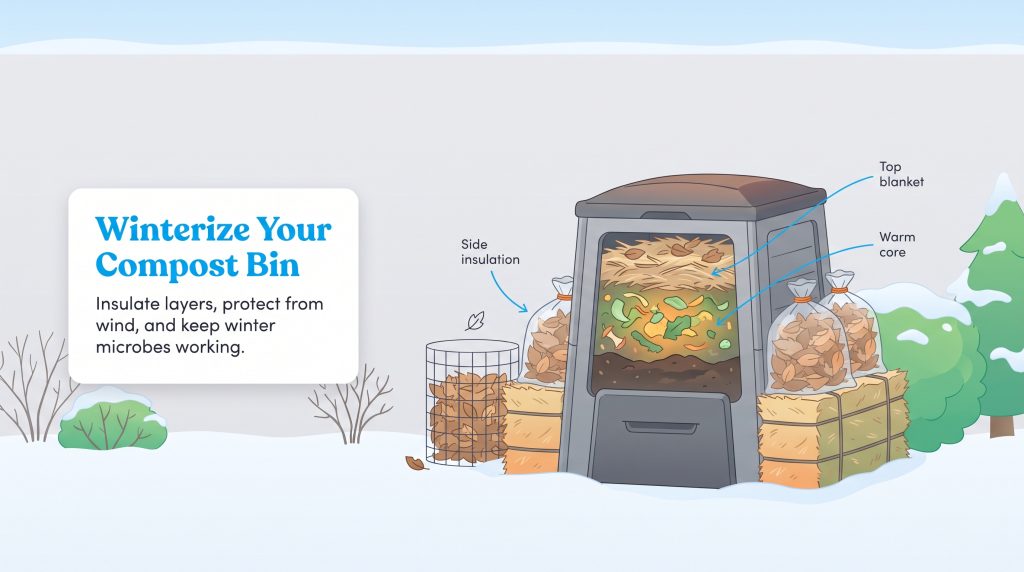
Learning how to winterize a compost bin ensures your organic materials continue breaking down, albeit at a slower pace, rather than freezing into a solid block of ice. Just as insulation can help you save on your electric bill during winter, your outdoor pile benefits from similar protection against cold air.
- Harvest finished compost: Remove any dark, crumbly soil at the bottom of your bin to make ample room for the incoming seasonal debris.
- Insulate the perimeter: Stack straw bales or tightly packed bags of dry leaves around the outside of your bin to create a thick barrier against winter winds.
- Build the core: Concentrate your fresh green kitchen scraps directly in the center of the pile where the heat from microbial activity is highest.
- Top it off: Add a thick, final layer of dry brown leaves or straw over the top of the pile like a heavy blanket to trap rising warmth.
- Reduce turning frequency: Reduce turning once temperatures stay below freezing. Less disturbance helps the pile hold heat, though decomposition will still slow until warmer weather returns.
Best Compost Bin Options for Fall Leaves
To keep the decomposition process limping along through the frost, you need to select the best compost bin for fall leaves and freezing conditions. Open wire meshes or slatted wooden pallets are fantastic for managing massive volumes of leaves, but they leave your pile completely exposed to icy winter winds. Enclosed plastic bins are much better for keeping out pests and protecting the pile from heavy snow. Tumblers are incredibly convenient for smaller households, though you should keep in mind that their contents can freeze solid and become difficult to rotate mid-winter. Finally, a DIY leaf corral is a great secondary option for making leaf mold if you simply have too many leaves for your primary bin.
Before the first heavy snowfall arrives, dedicate an afternoon to autumn compost bin maintenance by thoroughly inspecting your equipment. Look for structural cracks, loose hinges, or lid damage that could let snow melt directly into the mixture and cause it to waterlog. If your pile freezes solid in January, don’t panic. The materials will start breaking down again when temperatures rise. A dark bin can absorb warmth from winter sunlight, especially when placed in a sunny spot, gently thawing the edges of the pile and keeping the microorganisms mildly active.
How to Fix Common Fall Composting Problems
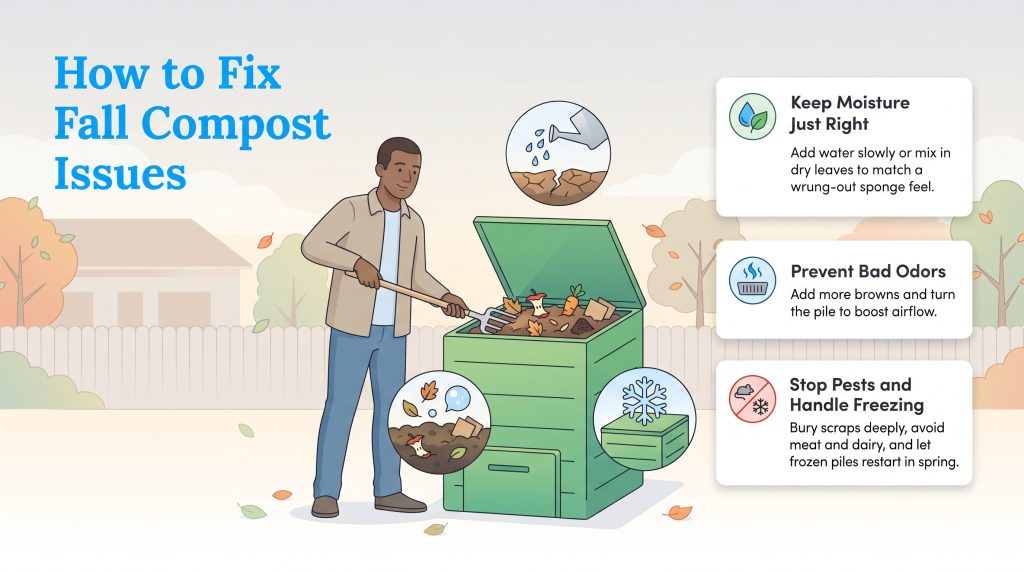
Even with careful preparation, things can occasionally go off track. If your pile starts acting up, here are a few simple troubleshooting tips:
- Pile smells bad: This usually means too much nitrogen or a lack of oxygen. Add more browns (like dry leaves) and give the pile a good turn before freezing weather arrives.
- Pile is too dry: Add water slowly until the mixture feels like a wrung-out sponge.
- Pile is soggy: Mix in plenty of shredded leaves, straw, or plain cardboard to absorb excess moisture.
- Pile freezes solid: Stop worrying! Freezing isn’t a failure, and the composting process will naturally restart in spring.
- Rodents appear: Always bury food scraps deep in the center, avoid meat and dairy entirely, and double-check that your bin has a secure lid.
Wrapping Up Your Fall Composting Routine
Tackling your autumn yard cleanup doesn’t have to result in endless plastic bags and inflated municipal pickup fees. By thoughtfully balancing your carbon and nitrogen ratios, keeping diseased plants out of the mix, and properly insulating your bins for the cold season, you transform yard debris into a powerful, soil-enriching asset. Committing to this sustainable practice shrinks your household’s environmental footprint while actively lowering the utility costs associated with residential waste management. A little fall prep now can mean fewer bags at the curb, healthier soil, and an easier start when spring planting season arrives.
Frequently Asked Questions About Fall Composting
Fall composting gets easier once you know how your pile behaves in colder weather. These answers cover the most common questions about leaves, moisture, pests, frozen bins, and winter composting.
Can I compost dead leaves if they have tar spots?
Do compost bins attract pests in the fall?
Should I add water to my compost pile in November?
Can I leave my compost tumbler outside all winter?
What happens to the worms in a vermicompost bin when it gets cold?
About the Author

LaLeesha has a Masters degree in English and enjoys writing whenever she has the chance. She is passionate about gardening, reducing her carbon footprint, and protecting the environment. She also recently served as President of the Board for City Sprouts (a community garden).

David has been an integral part of some of the biggest utility sites on the internet, including InMyArea.com, HighSpeedInternet.com, BroadbandNow.com, and U.S. News. He brings over 15 years of experience writing about, compiling and analyzing utility data.