

Knowing exactly how and where to shut off your water can help you limit damage fast during a plumbing emergency.
Key Takeaways
- Locating your main water shut-off valve ahead of time is the single most important step you can take to prevent severe water damage.
- Different fixtures have their own isolation valves, allowing you to turn off the water under a sink or behind a toilet without shutting off the entire house.
- Always open your faucets after shutting off the main valve to properly drain the lines and relieve built-up pressure in your plumbing system.
A burst pipe can turn a normal night into a cleanup job fast, but shutting off the water quickly gives you control before the damage spreads. Whether you’re a stressed homeowner dealing with a sudden plumbing emergency or a proactive renter preparing for freezing temperatures, we want to help. This guide will walk you through locating your valves, safely stopping the flow, and responsibly restoring pressure once the coast is clear.
If Water Is Leaking Right Now, Do This First
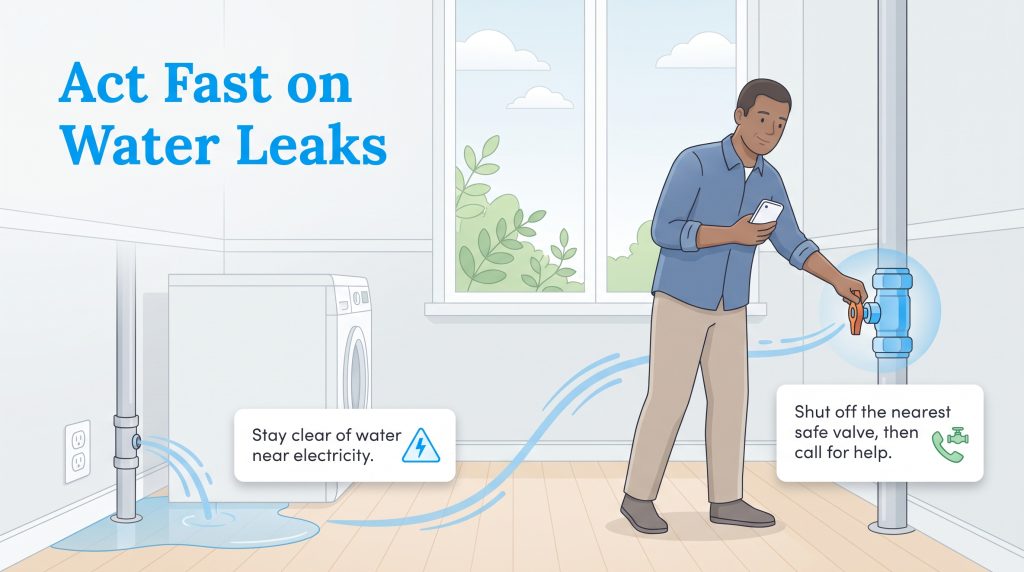
When water is actively damaging your home, every second counts. Follow these immediate steps to secure your space and stop the flow.
Heads Up
If water is pooling near outlets, appliances, or your electrical panel, don’t walk through it to reach a valve. Move to a safe spot and call emergency maintenance, your utility provider, or a licensed plumber.
- Move away from electrical hazards.
- Shut off the nearest fixture valve if the leak is isolated.
- Shut off the main valve if you can’t stop the leak locally.
- Open a low faucet to drain pressure.
- Call a plumber, landlord, or utility provider if the leak continues.
Understanding Your Home’s Water Supply System
Before diving into the mechanics of twisting knobs and levers, it helps to know how water actually enters your residence. Your supply flows from the municipal city line or a private well, passes through a water meter to track usage, and eventually travels into your internal plumbing network. Visualizing this straightforward path gives you a much clearer picture of why certain valves sit precisely where they do.
If you find yourself wondering where your main water shut-off valve is located, just trace that journey from the street to your front door. Gaining a little context goes a long way toward understanding your home water system and managing it effectively year-round.
Eco Edge
Conserving water starts with maintaining your plumbing. EPA WaterSense estimates that household leaks waste nearly 1 trillion gallons of water each year nationwide. Fixing leaks promptly is an environmentally mindful choice that saves both precious resources and money.
Where to Find Your Main Water Shut-Off Valve
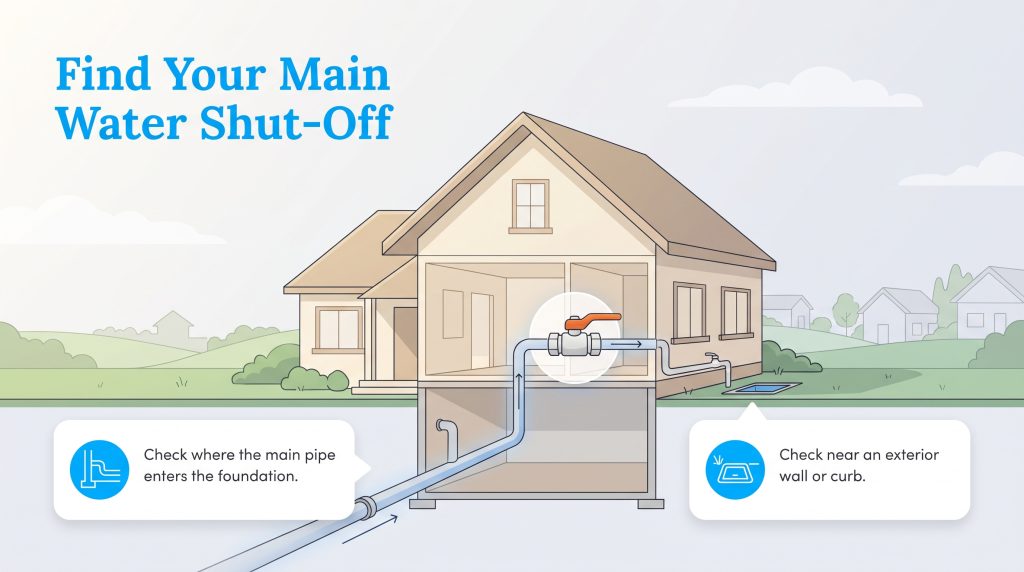
Tracking down your primary valve isn’t always a straightforward scavenger hunt. Builders place these crucial shut-offs in different spots based on the age of your property, the foundation type, and your local climate. Figuring out how to turn off main water valve mechanisms starts with knowing exactly where to look. We recommend taking ten minutes today to track it down so you aren’t searching blindly during an active emergency.
Basements and Crawl Spaces
If you live in a region prone to freezing temperatures, your primary shut-off is almost certainly hiding indoors. Cold-climate builders typically place the valve near the front foundation wall, right where the main pipe enters the basement or crawl space. Look for the main water pipe entering the home and a nearby handle, lever, or wheel-style valve. The handle may be red, yellow, blue, black, or plain metal. It might be tucked behind a drywall access panel, so grab a flashlight and check the perimeter walls facing the street.
Slab Foundations and Warm Climates
Homes in warmer climates, including many parts of Texas, often use different plumbing layouts because deep freezes are less common — though cold snaps can still happen. If you have a slab foundation, your main valve is frequently located on an exterior wall near your garden hose bib. In other Southern neighborhoods, it sits inside a ground-level utility box buried near the curb or sidewalk. Look for a heavy rectangular lid marked with the word “WATER” or a generic meter symbol.
Apartments and Condos
Renters and condo owners face a slightly different setup. Your unit likely has an individual shut-off tucked away in a utility closet, typically positioned right next to your water heater or washing machine. In some older high-rise buildings, the property manager controls a master valve for the entire floor. Don’t force locked access panels or enter mechanical rooms without permission. Ask property management where your unit shut-off is during move-in. If a leak affects another unit, notify building management immediately. Check your lease agreement or ask your landlord to clarify the setup before a leak ever happens.
Tools That May Help You Shut Off Your Water
While most indoor valves are designed to be turned by hand, having a few supplies ready can make the job easier and safer. Gathering these items ahead of time ensures you won’t be caught off guard.
- Flashlight: Essential for seeing into dark basements, crawl spaces, or deep utility closets.
- Adjustable wrench: Useful for gripping stubborn or slightly stiff fixture valves.
- Work gloves: Protects your hands from rough pipes, debris, or spiders hiding inside outdoor meter boxes.
- Water meter shut-off valve tool (meter key): Necessary for reaching into deep outdoor utility boxes, but only use one if your local utility allows customers to operate the homeowner-side valve.
- Cell phone: Keep it handy to call your landlord, plumber, or utility provider if you cannot stop the leak yourself.
How to Turn Off Your Main Water Valve in Three Steps
Once you locate the valve, stopping the flow only takes a few seconds. Most modern homes use a lever-style ball valve, while older properties typically feature a wheel-style gate valve. If you need to access a street-level box, you might also need a specialized key or long wrench to reach down and turn the mechanism. Here is the safest way to shut down your system:
- Clear the area around your valve so you have plenty of leverage and a secure grip.
- For a wheel-style gate valve, turn the handle clockwise as far as it will comfortably go (remember: righty-tighty).
- For a lever-style ball valve, turn the handle a quarter-turn until it rests completely perpendicular to the pipe. When the handle runs parallel to the pipe, the water is flowing; when it forms a cross, the water is off.
To confirm the water is off, open a nearby faucet. The flow should slow to a trickle and then stop. If water keeps running at full pressure, the valve may be faulty, or you may have closed the wrong valve.
For Homes With a Private Well
If your property relies on a well, your shut-off process involves an extra safeguard. First, close the main shut-off valve where the water line enters your home. Then, turn off the power to the well pump at your electrical breaker box if the leak is significant or the system will be off for a while. Call a well professional or plumber if the pressure tank, pump, or main line is involved.
Heads Up
Use only the homeowner-side shut-off valve if your local utility allows it. Don’t turn the city-side valve at the meter unless your water provider has specifically told you to — many utilities prohibit customers from operating it.
Common Water Shut-Off Valve Types
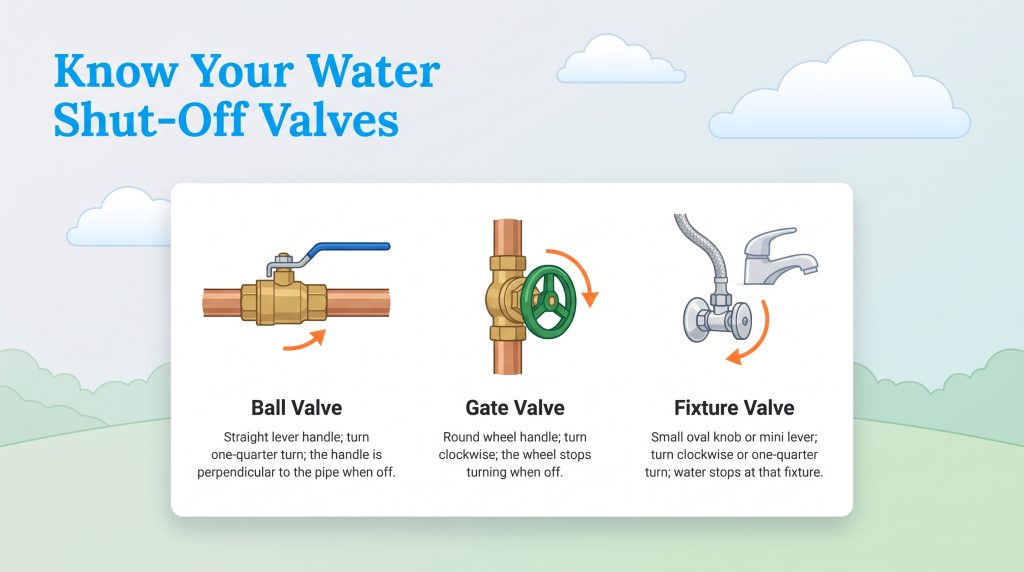
Identifying your valve type helps you quickly understand how to operate it under pressure. Here is a quick reference guide to the most common mechanisms found in residential plumbing systems.
| Valve Type | How It Looks | How to Shut It Off | How to Know It’s Off |
|---|---|---|---|
| Ball valve | Straight lever handle | Turn one-quarter turn | Handle is perpendicular to the pipe |
| Gate valve | Round wheel handle | Turn clockwise | Wheel stops turning |
| Fixture valve | Small oval knob or mini lever | Turn clockwise or quarter-turn | Water stops at that fixture |
Isolating Leaks: How to Shut Off Water to Specific Fixtures
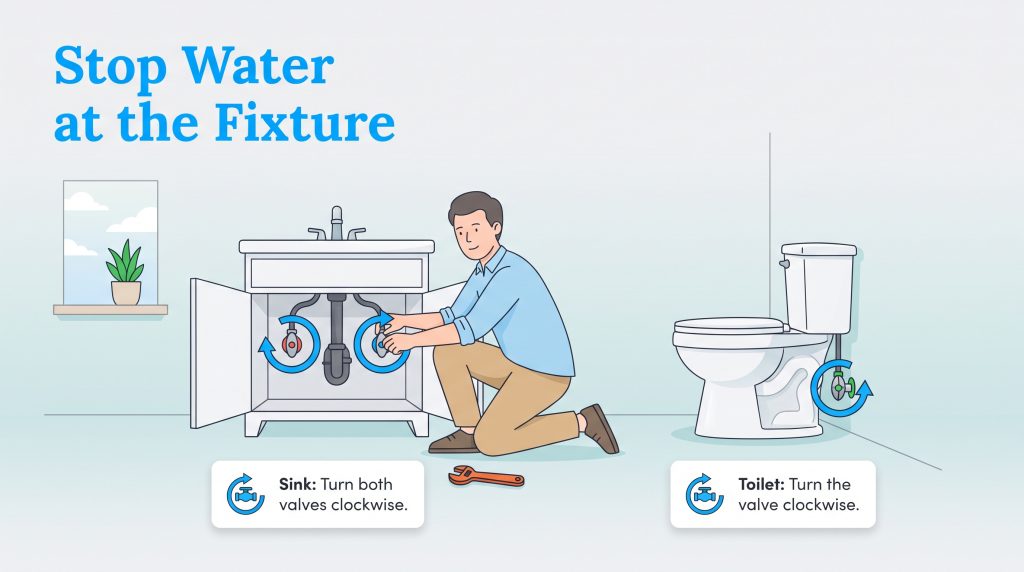
You rarely need to cut the whole house’s supply just because a single appliance is acting up. Different fixtures have dedicated isolation valves, frequently called supply stops, built right into their connecting pipes. This brilliant design allows you to continue running the dishwasher or taking a hot shower while simultaneously fixing a dripping faucet in the guest bathroom.
How to Turn Off Water Under the Sink
When a kitchen or bathroom basin starts overflowing, you can handle the situation locally. Learning how to turn off water under sink connections is incredibly simple. Look beneath the cabinet for two small oval-shaped knobs or levers — one for hot and one for cold. Turn both handles clockwise to completely stop the flow to that specific faucet.
How to Shut Off Water to the Toilet
A continuously running toilet wastes gallons of water and risks flooding your bathroom floor. Figuring out how to shut off water to toilet fixtures takes only a quick glance behind the bowl. You’ll see a single supply line extending from the wall or floor, attached to a small football-shaped valve. Twist it to the right until it stops, and the tank will immediately stop filling.
What to Do After You Shut Off the Water
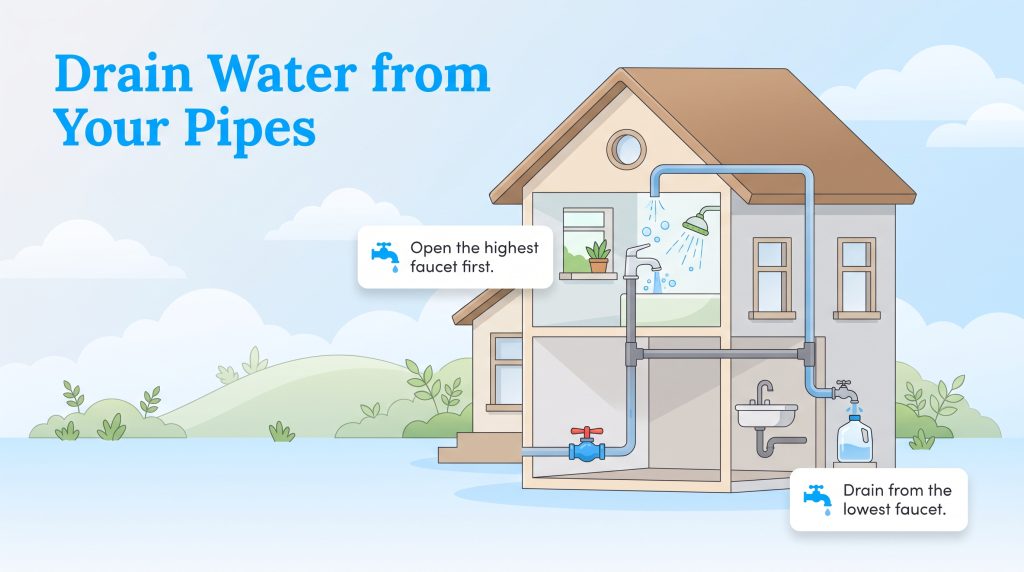
Closing the main valve stops new water from entering your home, but it doesn’t instantly empty your pipes. Some water will still be sitting inside your plumbing lines, and larger homes may hold a surprising amount. You need to drain this residual liquid to properly depressurize the system.
Start by opening the highest faucet in your home, like a second-story bathroom sink, to let air into the lines. Then, head down to the lowest faucet, such as a basement sink or an outdoor hose bib, and turn it on full blast. Gravity will push the remaining water out quickly and safely. If you’re shutting down your system due to a widespread natural disaster or municipal contamination issue, be sure to capture this draining water in clean jugs and consult the CDC’s guidelines for securing safe drinking water during an emergency.
How to Safely Turn the Water Back On
Restoring your supply requires a gentle touch. When you throw the main valve back open, water rushes into empty pipes at an incredibly high velocity. If you turn the handle too quickly, that rushing liquid slams into trapped pockets of air, creating a shockwave known as “water hammer.” This pressure surge can stress older pipes, loosen fittings, and damage appliance connections over time.
Understanding how to safely turn water back on protects your internal plumbing infrastructure from unnecessary stress. Simply grip the handle and crack it open a fraction of an inch. Listen for the sound of water slowly trickling into the system. Once the hissing stops and the pipes begin to pressurize, gradually turn the handle the rest of the way until it is fully open.
Pro Tip
Leave a few faucets open when you turn the main valve back on. This allows trapped air to safely sputter out of the lines as the water pressure normalizes.
Protecting Your Home With Preventative Maintenance
A shut-off valve is completely useless if it refuses to budge when you actually need it. Minerals and hard water deposits easily build up inside the mechanism over time, cementing the handle in place. We suggest testing your valves once a year. Give them a quick twist to ensure they operate smoothly, and immediately contact a licensed plumber if you encounter a heavily corroded or broken main water shut-off valve.
This routine maintenance is particularly critical for anyone living in a region with harsh winters or families planning extended vacations. Understanding how to winterize house plumbing involves closing that main valve and draining your pipes completely so nothing freezes and expands while you’re away. Taking a few proactive steps today goes a long way toward preparing your home for seasonal temperature drops.
Safeguarding Your Home Before the Next Emergency Strikes
Knowing how to control your home’s water supply empowers you to act decisively when every second counts. You no longer have to stand by helplessly while a cracked pipe damages your drywall, ruins your flooring, or drives up your utility bill. Take a quick walk around your property today, locate your main valve, and share its location with everyone in your household. We also highly recommend taking a photo of your main shut-off valve and saving it in your phone under “Home Water Shut-Off” for instant reference. A little bit of preparation ensures your home remains a dry, safe, and comfortable space.
Frequently Asked Questions About How to Shut Off Your Water
Where is my main water shut-off valve located?
Which way do you turn a water valve to shut it off?
Do I need a special tool to turn off my water?
What should I do if my water shut-off valve is stuck?
How do I shut off the water to my house outside?
Why is water still running after I turned the main valve off?
How do I shut off water if I have a private well?
How do I safely turn my water back on?
About the Author

Claudio is a sustainability-focused writer with a background in Anthropology and Psychology from NC State University. He has spent over 15 years working in writing, interpretation, and translation, driven by a deep interest in how human culture shapes the environment. Today, he shares his curiosity with readers by writing about sustainable living solutions and the connection between everyday choices and environmental impact.

LaLeesha has a Masters degree in English and enjoys writing whenever she has the chance. She is passionate about gardening, reducing her carbon footprint, and protecting the environment. She also recently served as President of the Board for City Sprouts (a community garden).