

Your Tennessee moving budget should account for local utility providers, seasonal energy use, and new-resident paperwork
Key Takeaways
- You will enjoy zero state income tax on wages when moving to Tennessee, though you should remember another state might still tax remote work depending on where you earn it.
- Your monthly utility bills will fluctuate significantly with the seasons, with electricity generated primarily by the Tennessee Valley Authority (TVA) and billed through local municipal power boards or cooperatives.
- New residents must transfer their driver’s license and vehicle registration within 30 days of establishing residency, and a current electric, water, or gas utility bill serves as one of your two required proofs of address.
When preparing for a relocation to Tennessee, understanding the regional differences in housing, local tax structures, and seasonal utility demands will help you build an accurate household budget. While the state offers the financial benefit of no state income tax on wages, high summer humidity and varying municipal service areas can complicate your monthly expenses. A smooth transition takes more than just loading up a moving truck. We’ve put together this comprehensive guide to help you weigh the everyday pros and cons, budget for housing and monthly energy costs, pick the right city, and seamlessly set up your home utilities and new-resident paperwork.
Pros and Cons of Living in Tennessee
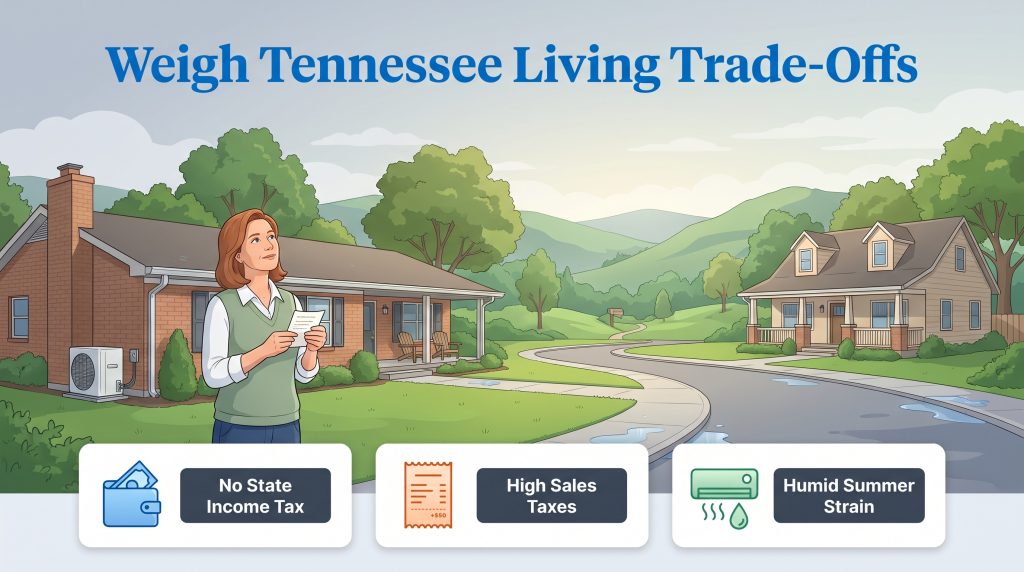
Every cross-country relocation involves a few practical trade-offs, and settling into the Mid-South is no exception. While Tennessee’s tax structure, mild winters, and outdoor recreation attract tens of thousands of newcomers each year, the summer humidity and high register receipts can easily catch you off guard when moving to Tennessee from out of state. Weighing the daily pros and cons of living in Tennessee before you sign a lease or mortgage will help you set realistic expectations for your household budget and lifestyle.
| Pros of Living in Tennessee | Cons of Living in Tennessee |
|---|---|
| Zero state income tax on earned wages, salaries, and retirement income | High average combined state and local sales tax, plus applicable local tax on groceries despite a reduced state rate |
| Diverse geography stretching from the Mississippi River to the Great Smoky Mountains | Hot, muggy summers from May through September that drive up air conditioning usage |
| Growing job markets in healthcare, automotive manufacturing, logistics, and tech | Frequent rain and severe spring thunderstorm or tornado risks depending on the region |
| Municipal fiber internet available in select cities and suburbs | Limited public transit options outside immediate downtown cores, requiring a personal car |
| Tuition-free community or technical college options for qualifying residents via the Tennessee Promise program | Competitive housing markets in popular metro areas like Nashville |
That climate column deserves a closer look before you unpack your boxes. Receiving precipitation generally in the mid-50-inch range annually, though with meaningful geographic variation, alongside five months of sticky southern heat means your gutters, roof, and air conditioner will work overtime. Planning ahead for seasonal weather swings is the secret to keeping your home comfortable and your monthly expenses predictable.
Cost of Living in Tennessee and Average Utility Bills
Overall living expenses in the Volunteer State sit below the national average in many regions, giving most newcomers noticeably more breathing room in their monthly budgets. However, your actual cost of living in Tennessee depends heavily on whether you settle in booming Middle Tennessee or choose more affordable communities in the eastern and western regions. Before you even get your keys, you should also budget for out-of-state relocation expenses, which you can plan for using our moving hub resources. Once you arrive, your ongoing monthly costs will revolve around housing prices, sales taxes, and seasonal energy bills.
Housing Prices and Tax Trade-Offs Across the State
The statewide median home price hovers around regional medians, though neighborhood price tags vary wildly from one county to the next. If you have your sights set on the Nashville metro area, expect median home prices to be significantly higher than the state average, with historic suburbs like Franklin and Brentwood climbing much higher. Mid-tier markets like Knoxville, Chattanooga, and the Tri-Cities offer a comfortable middle ground for buyers, while Memphis and Jackson consistently rank among the potentially lower-cost alternatives to Nashville.
Regardless of which zip code you choose, we recommend keeping your total monthly housing payment — including principal, interest, property taxes, homeowners insurance, and HOA fees — at or below 25% of your take-home pay as an optional conservative target. Tennessee makes hitting that target a little easier thanks to low effective property tax rates and zero state tax on earned wages. Just remember to factor the tax trade-off into your everyday spending: Tennessee levies a 7% base state sales tax, and local county or city add-ons push the average combined sales tax rate higher at the checkout counter.
Breaking Down Your Potential Utility Costs in Tennessee
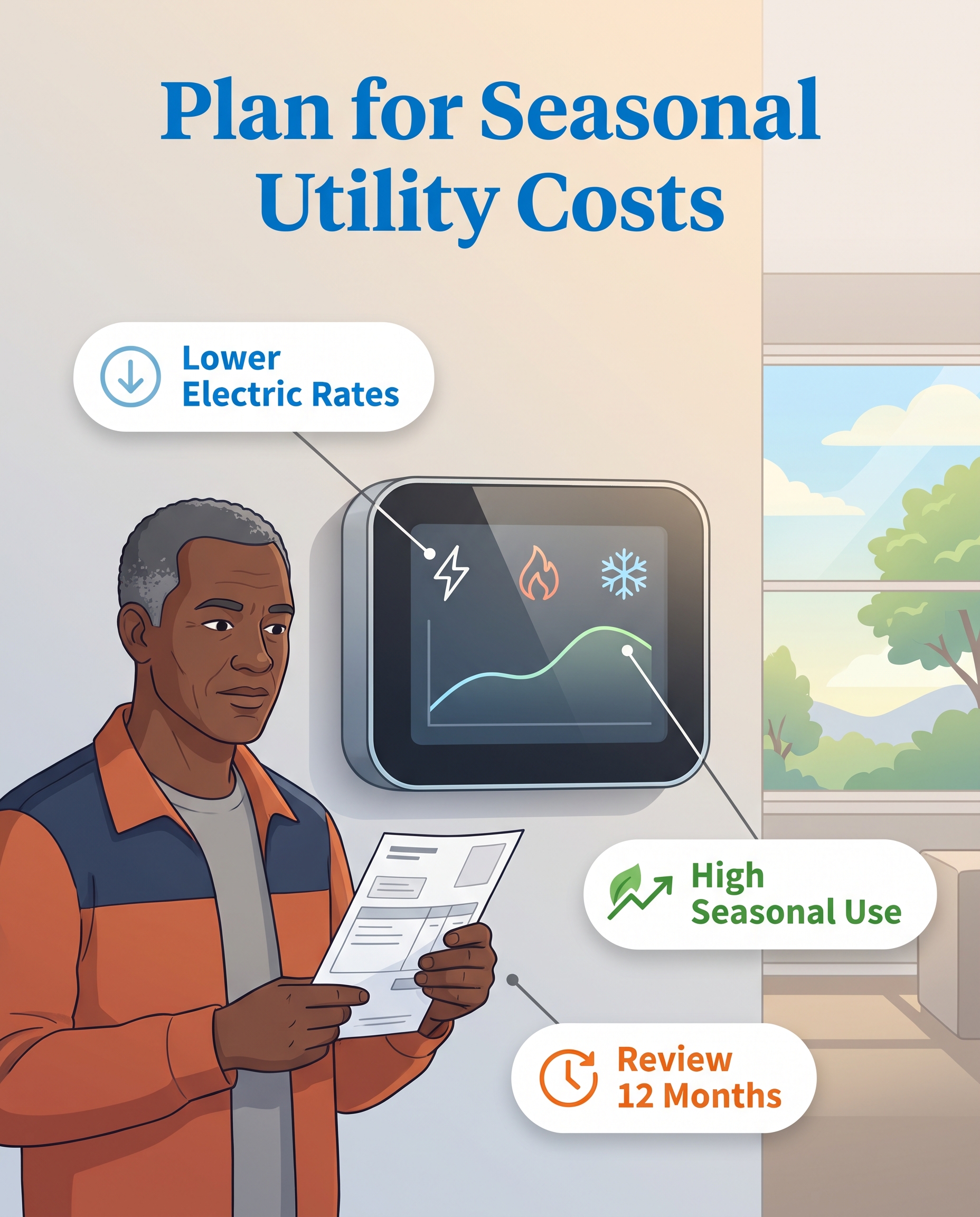
When building your household budget, plan for the combined utility costs to fluctuate based on your home size, location, and the season. That figure covers your core home services: electricity, natural gas, municipal water, wastewater, and curbside trash collection. According to the Tennessee state energy profile from the U.S. Energy Information Administration, residential electricity rates in the state sit comfortably below the national per-kilowatt-hour average, yet total monthly consumption is among the highest in the country.
Why do total bills climb when rates are so reasonable? Many homes across the state rely on electric heating systems for winter warmth and run central air conditioning frequently from late May through September. When an August heat wave pushes afternoon temperatures past 92 degrees with thick humidity, or a sudden January cold snap drops overnight lows into the teens, your HVAC system pulls heavy kilowatt-hours to keep up.
Money-Saver
Always ask the seller or landlord for the past 12 months of utility bills before closing on a house or signing a lease. Reviewing a full year of electric and water statements helps you spot unusually high usage that warrants further investigation before seasonal spikes become your financial responsibility.
Best Places to Live in Tennessee for Every Lifestyle

Tennessee is legally, geographically, and culturally divided into three distinct “Grand Divisions” and represented by the three white stars on the state flag. Because each region has its own terrain, economic drivers, and local utility infrastructure, finding the best places to live in Tennessee means matching your career, budget, and lifestyle priorities to the right part of the state.
Nashville and Middle Tennessee: Best for Corporate Careers and High Energy
If you want fast-paced career growth, major-league sports, and live music, Middle Tennessee is the economic engine of the state. Nashville and surrounding cities like Franklin and Murfreesboro boast thriving job markets in healthcare management, music production, finance, and technology, anchored by major corporate expansions from companies like Oracle and Amazon. If Nashville home prices stretch your budget too thin, look 45 miles northwest to Clarksville. Located right near the Kentucky border and Fort Campbell, Clarksville offers a much lower cost of living and attracts young families and military veterans alike. Newcomers settling in the metro core will typically set up power through Nashville Electric Service (NES), while suburban residents in Williamson and Rutherford counties are served by Middle Tennessee Electric (MTE).
Chattanooga: Best for Remote Workers and Municipal Fiber Internet
Tucked along the Tennessee River between Lookout Mountain and Signal Mountain, Chattanooga has transformed into a premier destination for remote workers, tech entrepreneurs, and outdoor enthusiasts. You can spend your Saturday morning rock climbing or kayaking and still enjoy a vibrant, walkable downtown. What truly sets the Scenic City apart when relocating to Tennessee is EPB (Electric Power Board), Chattanooga’s community-owned utility. Over a decade ago, EPB built a citywide fiber-optic smart grid that delivers symmetrical gigabit internet speeds directly to many homes and businesses in its service area.
Knoxville and the Tri-Cities: Best for Mountain Access and Retirees
East Tennessee is defined by the rolling valleys of the Tennessee River and the towering peaks of the Great Smoky Mountains. Knoxville blends the energetic college-town atmosphere of the University of Tennessee with a revitalized downtown market square and quick weekend access to hiking trails in Gatlinburg and Townsend. Residents inside the metro area enjoy streamlined service from the Knoxville Utilities Board (KUB), which manages electricity, natural gas, water, and select fiber internet under one roof. Further northeast, the Tri-Cities region provides lower-cost housing alternatives for retirees and families seeking four distinct seasons, lower property taxes, and quiet mountain views.
Memphis and West Tennessee: Best for Affordability and Cultural Heritage
Perched on the bluffs of the Mississippi River, Memphis offers deep cultural roots, world-famous barbecue, and the unmistakable legacy of Beale Street blues, soul, and rock ‘n’ roll. Beyond its rich artistic heritage, West Tennessee is a global transportation and supply-chain powerhouse anchored by the FedEx World Hub and a massive medical device manufacturing sector. Housing in Memphis and nearby suburbs like Germantown, Collierville, and Bartlett is remarkably affordable compared to the rest of the state. Moving day administration is also simpler here: Memphis Light, Gas and Water (MLGW) is a large municipal utility, allowing you to activate and pay for power, natural gas, and water on a single combined monthly bill in many areas.
Setting Up Utilities in Tennessee: How Power, Water, Gas, and Internet Work
Unlike deregulated energy states where some residents comparison-shop among competing retail electricity suppliers, Tennessee operates on a public power model. You won’t have to worry about variable-rate promotional traps or third-party energy brokers knocking on your door. Understanding who manages the regional grid versus who actually sends your monthly bill makes setting up utilities in Tennessee straightforward and stress-free.
How the Tennessee Valley Authority and Local Power Companies Work
One of the most common points of confusion for newcomers is the role of the Tennessee Valley Authority (TVA). While the federally owned TVA generates much of Tennessee’s electricity using a mix of nuclear plants, hydroelectric dams, natural gas, coal, and solar installations, you will never open a residential account or pay a bill directly to TVA. Instead, TVA acts as the wholesale power supplier, distributing electricity across the state through local power companies.
Your exact street address determines which electric provider serves your home. Most Tennessee households receive electricity through local utilities that purchase wholesale power from TVA, though some northeastern parts of the state are served by Appalachian Power. When you contact your local electric utility to turn on service, be prepared to provide your lease agreement or closing disclosure, a government-issued photo ID, and your Social Security number. Application requirements and deposits vary by utility. Ask whether the provider accepts a prior utility payment history, requires a credit check, or offers alternatives to a cash deposit.
Natural Gas, Water, and the Rural Trash Pickup Catch
How you coordinate your remaining utilities depends on whether your new home sits inside major city limits or out in an unincorporated county area. In cities like Memphis (MLGW) or Knoxville (KUB), a single municipal utility board handles your electric, natural gas, and water connections in many neighborhoods. In other metros like Nashville, your services are split: you will set up electricity with NES, drinking water and sewer with Metro Water Services, and natural gas with Piedmont Natural Gas (or Atmos Energy in surrounding middle-state suburbs like Franklin and Murfreesboro).
If you are buying a home on a few acres outside city limits, pay close attention to your wastewater and waste setup. Unincorporated county property taxes in Tennessee rarely include municipal curbside trash pickup or public sewer connections. Rural homeowners frequently rely on private septic systems and must either hire an independent waste hauling company for weekly bin pickup or haul bagged household trash to a county convenience center themselves.
High-Speed Internet Options Across the State
Tennessee has invested heavily in broadband infrastructure over the past decade, giving residents growing internet choices in both urban and rural zip codes. In addition to Chattanooga’s famous EPB fiber network, municipal power providers in Knoxville (KUB Fiber), Clarksville (CDE Lightband), and Jackson (EPlus Broadband) deliver symmetrical multi-gigabit fiber right alongside your electricity. In major metro neighborhoods, AT&T Fiber, Google Fiber, and Xfinity provide high-speed coverage depending on the address. Even if you move to a quiet rural hollow, you don’t necessarily have to settle for slow satellite connections. Many member-owned electric cooperatives have partnered with regional telecoms like United Communications and Twin Lakes to string high-speed fiber directly along rural power poles.
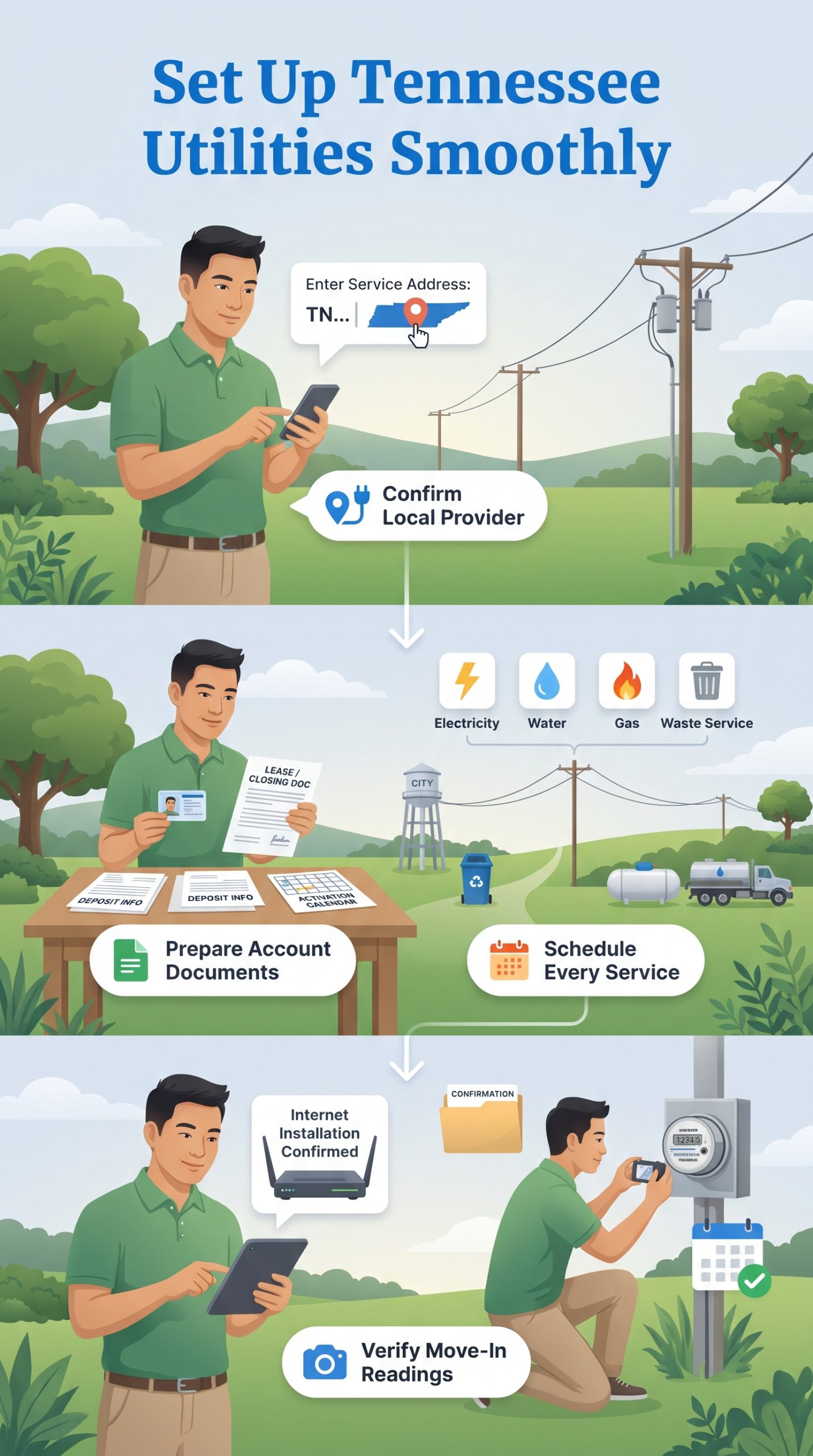
Standard Utility Setup Sequence
To establish your services efficiently, follow this basic sequence:
- Ask your landlord, seller, or property manager which services are included in your housing payment.
- Confirm each provider using your exact new service address.
- Ask about deposits, connection charges, required documents, and appointment availability.
- Schedule activation without prematurely disconnecting an occupied home.
- Confirm internet installation separately from advertised neighborhood coverage.
- Photograph accessible meter readings on move-in day and retain all activation confirmations.
If you are renting, remember to ask your landlord for permission before making any equipment upgrades. Homeowners should take time to identify well, septic, and propane systems before closing to ensure no vital service is missed.
Common Providers in Selected Tennessee Cities
Service boundaries do not always match city or county lines. Confirm electricity, gas, water, sewer, and internet availability separately for your exact address.
| City / Region | Electricity Provider | Natural Gas Provider | Water & Sewer Provider |
|---|---|---|---|
| Nashville & Davidson County | Nashville Electric Service (NES) | Piedmont Natural Gas | Metro Water Services (in specific service areas) |
| Memphis & Shelby County | Memphis Light, Gas and Water (MLGW) | Memphis Light, Gas and Water (MLGW) | Memphis Light, Gas and Water (MLGW) or local suburban providers |
| Knoxville | Knoxville Utilities Board (KUB) | Knoxville Utilities Board (KUB) | Knoxville Utilities Board (KUB) |
| Chattanooga | EPB of Chattanooga | Chattanooga Gas | Tennessee American Water or local municipal provider depending on address |
| Clarksville | CDE Lightband (City) or Cumberland Electric Membership Corp (CEMC) (County) | Clarksville Gas & Water | Clarksville Gas & Water or local utility districts |
Heads Up
If you are moving outside municipal city limits, ask the current homeowner whether the property uses buried propane tank service instead of municipal natural gas, as you will need to transfer the tank lease or schedule a fuel delivery with a local propane supplier. You should also set up private curbside trash service a week before move-in day so flattened moving boxes don’t pile up in your garage.
Keeping Your Home Energy Efficient in Tennessee’s Humid Climate
Because Tennessee’s humid subtropical climate brings muggy 90-degree summers and damp, chilly winters, proactive home energy management is the smartest way to protect your wallet. Keeping your average utility bill low comes down to controlling indoor moisture, sealing air leaks, and claiming regional cash-back rebates as soon as you move in.
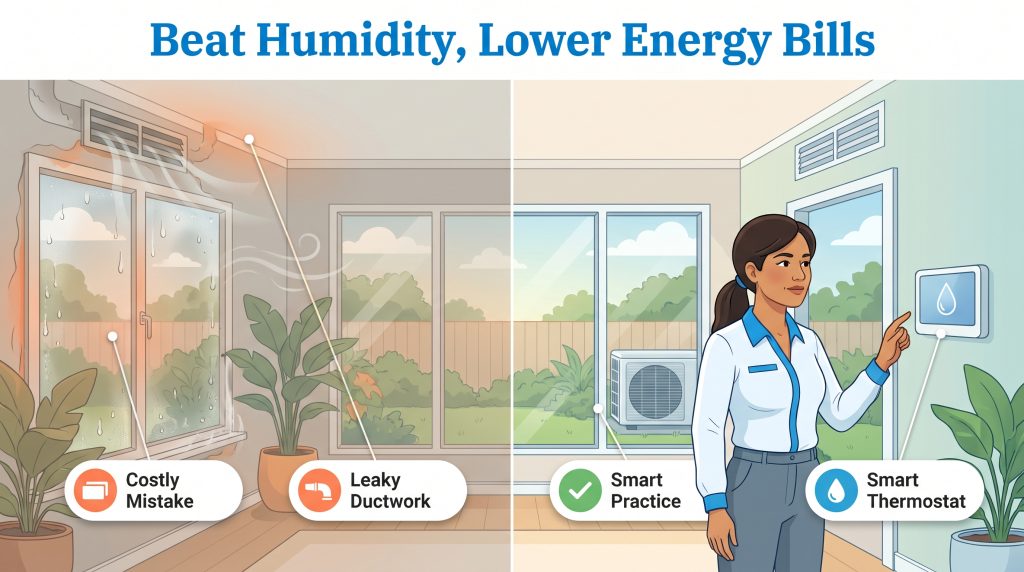
When managing southern heat, half the battle is removing moisture from the air inside your living space. Upgrading an older air conditioner to an ENERGY STAR certified heat pump with a high SEER2 rating and pairing it with a smart thermostat is the most effective energy-saving option for Tennessee homeowners. By using a smart thermostat compatible with your HVAC system, you can better manage temperatures. A dehumidifier can help control moisture in problem areas, but it uses electricity and releases heat indoors. Address leaks, drainage, and HVAC performance before adding equipment.
Before paying full price for any home upgrades when setting up utilities in Tennessee, check out the residential home energy incentives through your local utility offered in partnership with TVA EnergyRight. New residents can complete a Home Energy Assessment to see if their property qualifies for efficiency work. TVA EnergyRight may offer incentives for installing qualifying equipment, adding attic insulation, or sealing leaky ductwork through a vetted Quality Contractor Network professional. Check current program availability and eligibility requirements before purchasing.
If you want to reduce your household carbon footprint, check if your utility participates in Green Switch. This eco-conscious alternative lets you purchase renewable energy certificates associated with qualifying renewable solar generation. Check the current block size, price, and generation sources before deciding how much of your electricity use you want to match, making sustainable living accessible on any budget.
Eco Edge
Enrolling an existing or newly installed smart thermostat in a local demand-response program can sometimes earn you an upfront incentive or annual participation rewards. By allowing minor, temporary temperature adjustments during extreme weather peaks, you help reduce strain on the regional power grid.
Tennessee New Resident Checklist: How to Establish Residency and Update Documents
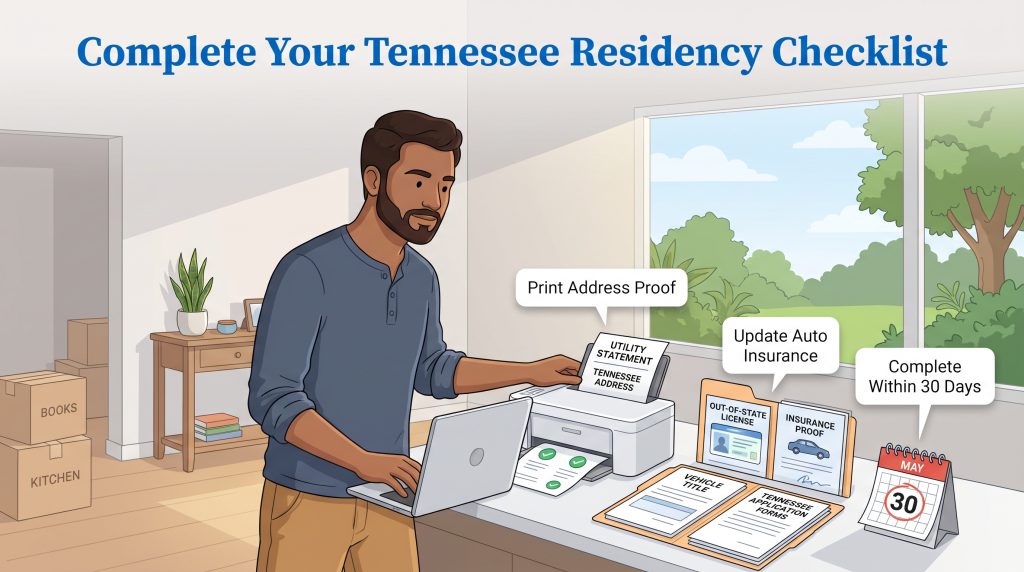
Once the moving truck pulls away, the administrative clock officially starts ticking. State law gives newcomers a strict window to complete their legal transition, and your home utility setup plays a central role. Follow this Tennessee new resident checklist to get your credentials, plates, and voter registration squared away without wasted trips to government offices.
- Two Weeks Before Moving (Schedule Utility Activation): Contact your local electric, water, gas, and internet providers to schedule service activation for the day before your moving crew arrives. Not only does this guarantee you have lights, cold air, and running water while unpacking, but it also generates the official utility service confirmation or first billing statement you will need at the DMV.
- Week One (Update Official Addresses and Auto Insurance): File your official USPS change of address online and update your residential address with your employer, banks, and credit card companies. Next, call your auto insurance carrier to switch your policy to your new Tennessee garage address. State law requires minimum liability coverage of $25,000 bodily injury per person, $50,000 bodily injury per accident, and $25,000 for property damage per accident before you can register a car.
- Within 30 Days (Transfer Your Driver’s License and REAL ID): Visit the Tennessee Department of Safety and Homeland Security new resident portal to review current requirements and acceptable documents before heading to a Driver Services Center. Generally, new residents must obtain a Tennessee driver’s license within 30 days of establishing residency. You will likely need your valid out-of-state license, proof of U.S. citizenship or legal presence, proof of your Social Security number, and two physical proofs of your new Tennessee address. Check whether an official utility activation agreement qualifies as proof or if you must wait for your first actual bill.
- Within 30 Days (Register Your Vehicle and Get Tennessee Plates): State law also requires you to register your vehicle within 30 days of establishing residency. Take your new Tennessee driver’s license, your out-of-state vehicle title, and proof of insurance to your local County Clerk’s office.
- While at the Driver Services Center (Register to Vote): Take advantage of Tennessee’s voter registration integration to register while completing your driver’s license application, provided you meet the state’s voting eligibility requirements.
Pro Tip
If you enroll in paperless utility billing right away, print an accepted proof-of-address document before heading to the Driver Services Center. State examiners must scan physical paper documents into their system and will not accept a digital utility bill displayed on your smartphone screen.
Settling Into Your New Home in the Volunteer State
Moving to Tennessee offers distinct seasonal changes and varying municipal services to navigate. Whether you are unpacking boxes in Memphis, plugging into fiber in Chattanooga, or enjoying mountain views outside Knoxville, taking a few proactive steps before move-in day takes the friction out of your relocation. By coordinating your local power and water connections early, sealing your home against summer humidity, and printing your required documentation for your 30-day residency appointments, you will save time, money, and energy from day one.
Frequently Asked Questions About Moving to Tennessee
Still have a few lingering questions as you finalize your moving timeline? Here are clear, practical answers to frequent questions we hear from people relocating to the Volunteer State.
How Much Will My Utilities Cost in Tennessee?
What Documents Do I Need to Get a Tennessee Driver’s License?
Can I Choose My Own Electricity Provider in Tennessee?
Is Tennessee Really Tax-Friendly for Retirees and Remote Workers?
What Are the Best Cities in Tennessee for Fast Home Internet?
Do I Need a Dehumidifier or Special HVAC Setup for Tennessee Summers?
About the Author

LaLeesha has a Masters degree in English and enjoys writing whenever she has the chance. She is passionate about gardening, reducing her carbon footprint, and protecting the environment. She also recently served as President of the Board for City Sprouts (a community garden).

David has been an integral part of some of the biggest utility sites on the internet, including InMyArea.com, HighSpeedInternet.com, BroadbandNow.com, and U.S. News. He brings over 15 years of experience writing about, compiling and analyzing utility data.