

Planning Ahead for the Ocean State’s High Energy Rates and Historic Homes Will Save You Time and Money
Key Takeaways
- When calculating the cost of living in Rhode Island, build an illustrative household budget between $380 and $460 for utilities, largely driven by winter heating and high electricity rates.
- While Rhode Island Energy manages almost all electricity and natural gas delivery, identifying your address-specific utility and exploring Rhode Island’s deregulated energy market can help you shop for cleaner power options.
- Scheduling a free home energy assessment and tapping into state-specific green energy incentives can help cut utility costs in older, draftier housing stock.
With extensive scenic coastline, locally loved Coffee Milk, savory baked stuffies, and easy train access to Boston and New York, it is easy to see why moving to Rhode Island appeals to so many people. Behind the postcard views of Narragansett Bay, however, the practical reality of setting up a household here requires a bit of strategy. Newcomers are often blindsided by steep New England winter heating bills and historic homes that leak warm air like a sieve. To make living in Rhode Island comfortable and affordable from day one, we’re walking you through the expected costs, neighborhood vibes, utility setup steps, and energy-saving options you need for a smooth, sustainable move.
Weighing the Pros and Cons of Living in Rhode Island
Before you pack your boxes, it helps to take an honest look at the pros and cons of living in Rhode Island. We recommend checking the heating system and utility costs before comparing rental prices or home values. Understanding both sides of the coin ensures you can budget accurately and avoid surprises once you arrive.
| The Perks of Ocean State Living | The Challenges to Plan Around |
|---|---|
| Extensive coastal access: The state features hundreds of miles of shoreline, making beach trips an easy weekend staple. | Steep electricity prices: Residential rates sit around 29.2 cents per kWh, ranking among the highest in the country. |
| Compact, convenient size: Covering just over 1,000 square miles of land area, everything is a short drive away, even if locals treat a 25-minute trip across the 401 area code like a cross-country road trip. | Aging housing stock: Many historic colonial and Victorian homes lack modern insulation and require proactive weatherization. |
| Rich food and arts scene: From Johnson & Wales culinary grads in Providence to coastal clam shacks, the local culture punches well above its weight. | High property taxes: Homeowners face steep property tax burdens, though rates vary widely by municipality. |
| Easy Northeast transit: The MBTA commuter rail and Amtrak intercity services offer direct, car-free access to Boston and New York City. | Harsh winter weather: Expect blustery winter nor’easters alongside sharp seasonal heating spikes from December through March. |
| Ambitious climate goals: The state has a binding commitment to transition its electricity sector, backed by green rebates for residents. | Road maintenance quirks: Freeze-thaw cycles leave local roads bumpy, making good tires and alignment checks a regular necessity. |
Quick Fact
While Rhode Island Energy serves most of the state, communities like Burrillville (Pascoag Utility District) and Block Island operate on independent power grids with their own distinct rates and service rules.
Breaking Down the Cost of Living in Rhode Island
Housing drives much of your living expense in the Ocean State, with typical home values hovering around $509,000 as of late 2025. While housing costs are still often lower than what you’ll find in the tightest markets of Greater Boston, you’ll want to pay close attention to your monthly home operating expenses.
Why the Average Utility Bill in Rhode Island Catches Movers Off Guard
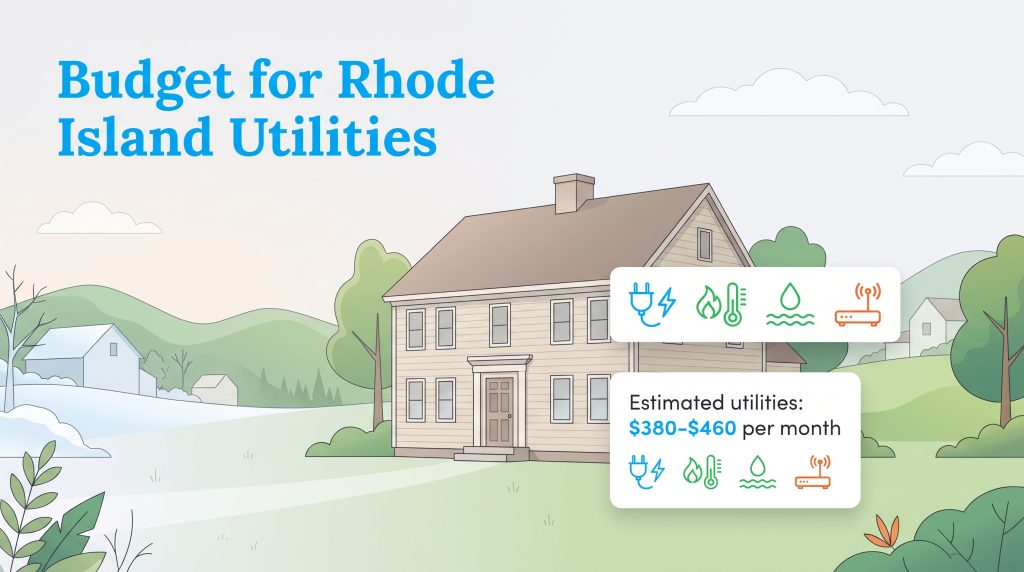
Many people relocating from the Midwest, South, or Mid-Atlantic experience instant sticker shock when opening their first power bill. To avoid this, we suggest establishing an illustrative household budget between $380 and $460 per month across electricity, heating, water, and internet. Why are Rhode Island energy rates so high? New England sits at the very end of the domestic natural gas pipeline system, and because natural gas fuels much of the region’s power plants, supply bottlenecks push average residential electricity rates to roughly 29.2 cents per kilowatt-hour (kWh) — about 59% higher than the U.S. average, according to the U.S. Energy Information Administration’s Rhode Island State Energy Profile.
When you pair those elevated utility rates with older colonial, cape, and triple-decker homes built long before modern building codes existed, winter heating costs can escalate quickly. Instead of relying on statewide averages, we recommend using this simple method to estimate your personal costs before signing a lease or closing on a house:
- Identify the primary heating fuel and verify who pays each bill.
- Request 12 months of usage or billing history from the landlord or seller, if available.
- Separate recurring service charges from usage charges.
- Account for seasonal peaks and possible overlapping charges (e.g., running electric space heaters).
- Confirm whether sewer, trash, equipment, and installation fees are included in your rent or municipal taxes.
| Utility Service | Estimated Monthly Cost | Key Cost Drivers in Rhode Island |
|---|---|---|
| Electricity | ~160–175/month | Based on typical usage of 550–600 kWh at roughly 29.2¢/kWh; spikes in summer if using window A/C units. Do not count this twice if your home uses electric resistance heating. |
| Natural Gas / Heating Fuel | ~115–140/month | Averaged annually; summer bills may drop below $40 while peak winter heating months often exceed $250. |
| Water & Sewer | ~45–65/month | Billed quarterly or monthly depending on your municipal water authority; often included in apartment rent. |
| High-Speed Internet | ~65–80/month | Depends on fiber-optic vs. cable plans and promotional equipment pricing. |
Best Places to Live in Rhode Island for Your Budget and Lifestyle
Despite its tiny geographic footprint, the Ocean State’s 39 cities and towns feature distinct personalities, architectural eras, and utility infrastructures. Finding the best places to live in Rhode Island comes down to balancing your commute, housing budget, and whether you prefer urban municipal services or rural setups with well water, septic systems, and basement oil tanks.
Choosing Providence and Nearby Urban Communities
If you love walkable neighborhoods, indie coffee shops, and historic architecture, choosing Providence and nearby urban communities puts you right in the cultural heart of the state. Neighborhoods like the East Side, Fox Point, Federal Hill, and the Jewelry District offer easy access to RIPTA bus hubs and the Amtrak/MBTA commuter rail station, where MBTA trains reach Boston’s South Station in roughly an hour. Adjacent Pawtucket also attracts artists and commuters seeking slightly lower rents in converted mill buildings.
When apartment hunting in Providence or Pawtucket, you’ll likely tour one of New England’s iconic “triple-decker” multifamily homes. Here is an essential utility tip for renters: many triple-deckers rely on older steam radiators or electric baseboard heating systems. Always ask the landlord to share past winter heating bills before signing a lease, and verify in writing whether heat and hot water are included in your monthly rent.
Family-Friendly Suburbs and Coastal Communities
Looking for a quieter yard without sacrificing convenience? Central suburban hubs like Cranston and Warwick offer more affordable single-family homes, top-rated parks, and reliable infrastructure. Most neighborhoods in these central suburbs are directly connected to Rhode Island Energy natural gas lines and municipal water systems, making utility management straightforward.
If coastal living is calling your name, towns like Newport, Narragansett, and South Kingstown deliver legendary beaches and historic harbor views. Keep in mind that in coastal and rural Washington County (affectionately called “South County” by locals), municipal gas lines are far less common. You’re much more likely to encounter homes heated by delivered heating oil or propane, private well water systems, and seasonal rental turnover created by summer vacationers and University of Rhode Island students.
Setting Up Utilities in Rhode Island Step by Step
We recommend setting up utilities in Rhode Island at least two weeks before your official move-in date. Starting early prevents awkward gaps in service and gives you time to evaluate your power supply options before your first billing cycle begins. Whether you’re buying a historic fixer-upper or renting a downtown loft, our step-by-step electric utility resources can help you stay organized along the way.
Electricity and the Deregulated Supply Market
The biggest point of confusion for newcomers is understanding how Rhode Island’s electric grid operates. Your first step is identifying the utility that services your specific address. Rhode Island Energy (formerly National Grid) is the primary utility delivering electricity to the vast majority of the state, with exceptions like the Pascoag Utility District in Burrillville and the Block Island Utility District. You must contact your local utility directly to open your account, as they maintain the poles, wires, and meters, and they send your monthly bill.
Because Rhode Island has retail electric choice, however, you don’t have to buy your actual power supply from Rhode Island Energy’s “Last Resort Service.” You can choose an environmentally mindful choice by selecting a third-party competitive supplier offering renewable energy plans, or by participating in a municipal aggregation plan. Cities and towns including Providence, Barrington, Newport, and South Kingstown run community electricity programs that pool residents’ buying power to negotiate competitive, cleaner supply rates automatically. Before signing up with any private marketer, always compare vetted third-party electricity suppliers against the utility’s baseline rate using Rhode Island’s Empower RI rate comparison tool.
Natural Gas, Heating Oil, and Propane Delivery
Winter heating is where your household utility strategy matters most. According to U.S. Census Bureau data, roughly 51% of Rhode Island households heat with utility natural gas managed through Rhode Island Energy. If your new address has a gas connection, you can activate both your electric and gas service during the same phone call or online session, and our natural gas resources walk you through safety checks and meter transfers.
Meanwhile, around 26% of Ocean State homes rely on delivered fuel oil, while others use propane, electric resistance heat, or heat pumps. If you’re moving from outside New England and have never dealt with a heating oil tank in the basement, the process is simpler than it looks:
- Choose a local dealer: Unlike regulated gas utilities, dozens of independent family-owned fuel companies compete for your business. Shop around for customer reviews and service plans.
- Check your tank gauge on day one: Look for the clear plastic vial on top of your basement oil tank (marked Full, 3/4, 1/2, and 1/4) to see how much fuel the previous occupant left behind.
- Pick your delivery style: You can choose “will-call” delivery, where you monitor the gauge yourself and call to order oil when the tank hits one-quarter full, or “automatic delivery,” where the fuel company tracks winter weather temperatures (degree-days) and refills your tank automatically. Automatic delivery reduces the risk of running out, but you must still monitor your fuel levels and report changes in your household size or usage habits to your dealer.
Heads Up
Always verify a home’s primary heating fuel type before signing a lease or closing on a house. If the property uses heating oil, ask when the furnace or boiler burner was last serviced and clarify whether the oil currently sitting in the tank is included in your lease or home purchase agreement.
Water, Sewer, and Trash Collection
Water service in Rhode Island is managed regionally rather than by a single statewide company. Providence Water supplies the capital and much of the greater metropolitan area, the Kent County Water Authority covers central West Bay communities, and individual town departments manage supply for other areas. You’ll need to identify the exact water authority for your street address. Renters should always check their lease to see if water and sewer fees are bundled into their monthly rent. If you’re purchasing a home, confirm the required transfer process with the water supplier and your closing team to transfer the account cleanly into your name. Check out our home water utility resources to learn more about reading meters and testing private well water.
Trash and recycling collection is handled at the city or town level, though every municipality follows base material rules set by the Rhode Island Resource Recovery Corporation (RIRRC). That means the list of accepted mixed recyclables is uniform statewide — clean mixed recyclables go loose into your bin, never in plastic bags. Be sure to check your town hall’s public works page upon arrival, as certain towns use municipal carts while others require town-specific “pay-as-you-throw” trash bags or private haulers. For tips on reducing landfill trips during your unpack, browse our guide to managing household waste and recycling.
High-Speed Internet and Fiber Options
When it comes to staying connected, Rhode Island is one of the best-wired states in the country, primarily served by two major providers. Verizon Fios offers a 100% fiber-optic network with fast, symmetrical upload and download speeds, and it is widely available across Providence, Cranston, Warwick, Pawtucket, and surrounding suburbs. Cox Communications provides high-speed cable internet with a nearly statewide footprint, often serving as the primary wired option in certain coastal pockets and South County neighborhoods. We suggest checking address-level availability in our internet provider resources a week before moving so you can pick up or ship a self-install router kit for day one.
Tapping Into Rhode Island Green Energy Incentives and Sustainability Programs
Because electricity and winter heating take a big bite out of your monthly budget here, making an environmentally mindful choice is also often a smart financial move. Rhode Island consistently ranks among the top states in the country for energy efficiency programs, offering cash rebates that lower your utility burden while shrinking your carbon footprint. Exploring residential solar guides and sustainable living tips right after you move in will pay dividends before your first winter arrives.
Free Home Energy Assessments and Weatherization Rebates
The single best resource for eligible Ocean State residents is scheduling a no-cost Home Energy Assessment. Available to both homeowners and renters (in one- to four-unit buildings), this program sends a certified energy specialist to inspect your home from attic to basement at zero cost to you. If you are renting, be sure to secure your landlord’s authorization before any physical work begins.
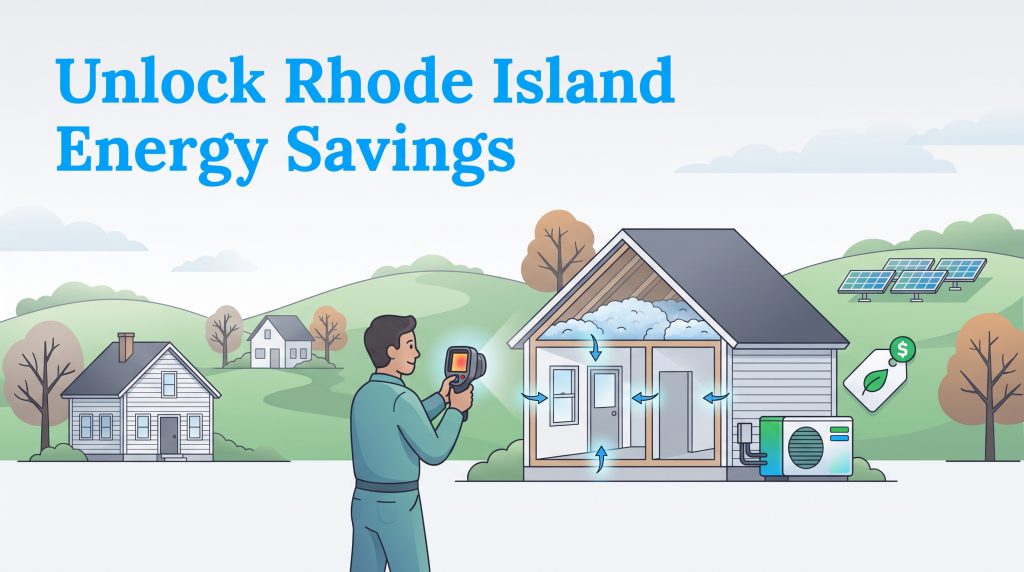
During the appointment, the specialist can provide no-cost LED lightbulbs, smart power strips, and low-flow showerheads, while using thermal cameras or blower-door tests to spot hidden air leaks. Better yet, completing the audit often qualifies eligible residents for weatherization incentives covering 75% to 100% of the cost of blown-in insulation and professional air sealing. For drafty New England homes, sealing attic and rim-joist leaks is the fastest way to slash your winter heating load.
Heat Pump Rebates, Solar Programs, and ENERGY STAR Upgrades
If your new home has an aging furnace, boiler, or inefficient window air conditioners, Rhode Island green energy incentives make upgrading much more affordable:
- Clean Heat RI & Utility Rebates: Administered by the Rhode Island Office of Energy Resources alongside Rhode Island Energy, these programs offer thousands of dollars in rebates when you switch from oil, propane, or electric resistance heat to high-efficiency, cold-climate ENERGY STAR certified air-source heat pumps. Funding availability and eligibility rules change periodically, so check the official state energy portal for current requirements.
- Community Solar for Renters and Homeowners: You do not need to own a sunny roof to benefit from solar energy. Through Rhode Island’s Community Remote Net Metering (Community Solar) program, renters in Providence triple-deckers and homeowners with shaded roofs can subscribe to a local solar farm. You support clean local generation and earn bill credits, which can typically lower your annual electricity costs by up to 10%, depending on the specific contract and provider.
- Rooftop Solar Incentives: If you own your home and want to install panels, the state’s Renewable Energy Growth (REG) program, Renewable Energy Fund (REF) grants, and net metering credits offer multiple pathways to help offset installation costs and reward you for every extra kilowatt-hour you send back to the grid.
Eco Edge
Depending on current IRS eligibility for the tax year, you may be able to stack federal clean energy tax credits with state rebates from Clean Heat RI to shave thousands of dollars off the upfront cost of an energy-saving option like a cold-climate heat pump.
Your Rhode Island Moving Checklist
Once your utility accounts are scheduled, following a clear timeline will keep the rest of your move organized and stress-free. Use this chronological checklist right on this page to track your final milestones before and after moving day.
- Four Weeks Before Your Move: Audit your new home’s heating system (natural gas, heating oil, propane, or electric), compare third-party electricity suppliers on Empower RI, and verify whether Verizon Fios or Cox Communications services your street address.
- Two Weeks Before Your Move: Call or go online with your designated utility to start or transfer your electric and gas service. Set up municipal water transfer details if buying a home, book your moving company, and apply for a temporary “No Parking” street permit (check with your specific municipality’s public works or police department) if you are moving into a dense Providence or Newport neighborhood with tight street parking.
- Moving Week: Snap photos of your electric, gas, and water meter readings (or check the basement oil tank gauge) on day one so you’re only billed for your own usage. Locate your main water shut-off valve and circuit breaker box. Finally, order a local Rhode Island E-ZPass transponder from the Rhode Island Turnpike and Bridge Authority (RITBA) — Rhode Island residents who enroll in the resident discount program pay just 83 cents per trip across the Newport Pell Bridge compared to $4 or more for out-of-state drivers!
- Within 30 Days After Arrival: Book an appointment with the DMV in Cranston or a local branch to transfer your out-of-state driver’s license and vehicle registration. Rhode Island requires new residents to transfer their registration within 30 days, which involves providing a VIN check from a local police department for out-of-state titles. You’ll also need specific identity documents to secure a REAL ID. You can review the required paperwork on the Rhode Island Division of Motor Vehicles New Resident Guide. While updating your address, register to vote and book your free RISE home energy assessment.
Settling Into Your New Ocean State Home With Confidence
Moving to Rhode Island gives you front-row access to stunning coastal beauty, vibrant culinary neighborhoods, and rich New England history. While the state’s elevated electricity prices and older housing stock require a little extra preparation, taking proactive control of your utility setup means high energy rates won’t dampen your excitement. By shopping smart for clean power supply, staying ahead of winter heating maintenance, and taking advantage of no-cost weatherization programs, you can keep your household bills much more manageable all year long. Soon enough, the boxes will be unpacked and you can relax on the beach with your first glass of Del’s Lemonade, knowing your new home is comfortable, efficient, and sustainably powered.
Frequently Asked Questions About Moving to Rhode Island
If you’re still navigating the logistics of your move, you aren’t alone. Below, we answer some of the most common questions new residents have about relocating to the Ocean State and setting up their utilities.
How Much Is the Average Utility Bill in Rhode Island?
Can I Choose My Own Electricity Company When Moving to Rhode Island?
Is It Cheaper to Live in Rhode Island or Massachusetts?
How Do I Handle Heating Oil if I Have Never Lived in New England?
Does Rhode Island Tax Retirement Income or Social Security?
How Can Renters Lower Their Electric Bills in Older Rhode Island Apartments?
About the Author

LaLeesha has a Masters degree in English and enjoys writing whenever she has the chance. She is passionate about gardening, reducing her carbon footprint, and protecting the environment. She also recently served as President of the Board for City Sprouts (a community garden).

Claudio is a sustainability-focused writer with a background in Anthropology and Psychology from NC State University. He has spent over 15 years working in writing, interpretation, and translation, driven by a deep interest in how human culture shapes the environment. Today, he shares his curiosity with readers by writing about sustainable living solutions and the connection between everyday choices and environmental impact.