

Regular generator upkeep ensures your home stays powered during unexpected outages while extending the lifespan of your system.
Key Takeaways
- Sticking to a generator maintenance checklist prevents costly repairs and ensures your system is ready when extreme weather hits.
- Checking your oil and fuel supply monthly keeps your specific unit — whether portable or standby — running efficiently and sustainably.
- Scheduling an annual inspection with a certified technician is crucial for complex tasks like transfer switch testing and valve adjustments.
When the grid goes dark, your generator is the only thing standing between your family and a stressful, potentially unsafe power outage. However, a backup power system isn’t a “set it and forget it” appliance; it requires a consistent, eco-conscious approach to keep it functioning at peak efficiency. Our comprehensive generator maintenance checklist takes the guesswork out of DIY generator maintenance, helping you protect your financial investment while minimizing emissions from poorly running engines. Keep in mind that maintenance requirements vary widely based on whether your unit is air-cooled or liquid-cooled, its runtime hours, and your specific fuel type.
Before You Start Any Generator Maintenance
Safety should always be your top priority when inspecting or servicing any backup power equipment. Generators produce carbon monoxide and handle high electrical loads, meaning a simple mistake can lead to dangerous consequences for you and your home.
- Always shut the generator off and let it completely cool before attempting any maintenance or refueling.
- Never run a portable generator indoors, in a garage, under a porch, or near open windows. Instead, place it at least 20 feet from your home with the exhaust pointing away.
- Install battery-powered or battery-backup carbon monoxide detectors indoors, following guidance from trusted sources like the Centers for Disease Control and Prevention (CDC).
- Do not connect a portable generator directly to your household wiring without a properly installed transfer switch or interlock kit, and always have a licensed electrician handle panel work.
- Ensure you store gasoline and liquid propane safely, keeping them away from living areas and potential ignition sources.
Why Following a Home Generator Maintenance Schedule Matters
Establishing a reliable home generator maintenance schedule is the best way to safeguard the significant investment you made in your backup power system. We know purchasing a generator isn’t cheap, so keeping it in good working condition simply makes financial sense. Beyond the obvious money-saving perks, routine care yields an impressive environmental return on investment. A well-maintained generator is more likely to run efficiently, avoid fuel waste, and produce fewer avoidable emissions from dirty filters, stale fuel, or poor combustion. When the residential electric grid fails, you want to know your backup plan will kick on without a hitch.
- Prevents expensive emergency repairs by catching small wear-and-tear issues early.
- Extends the total lifespan of the unit, maximizing the value of your initial purchase.
- Ensures optimal fuel efficiency, providing an environmentally mindful choice for backup power.
A Quick Look at Your Generator Maintenance Schedule
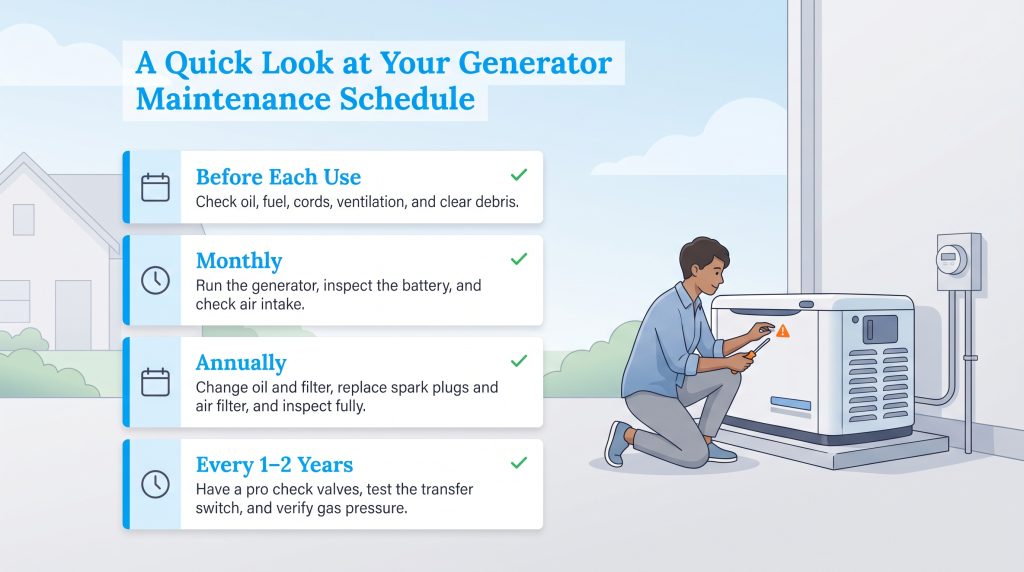
When you are looking for a reliable generator maintenance checklist, it helps to view your tasks based on frequency. While your specific owner’s manual should always be the ultimate guide, this general timetable keeps your equipment running smoothly.
| Frequency | Homeowner Task | Call a Pro? |
|---|---|---|
| Before each use | Check oil, fuel supply, cords, ventilation, and clear away debris | Usually no |
| Monthly | Run and exercise the unit, inspect the battery, and check the air intake | Usually no |
| Annually | Change oil and filter, replace spark plugs, replace air filter, and do a full inspection | Maybe |
| Every 1 to 2 years (or per manual) | Check valve clearances, test transfer switch, and check gas pressure | Yes |
Understanding Your Generator’s Critical Components
Before you dive into tinkering with moving parts and fluid levels, it helps to know exactly what makes your backup power system tick. We believe understanding these core pieces gives you a much better grasp of why you are checking them in the first place.
- The Alternator: This is the powerhouse component that actually turns mechanical energy into the electricity your home needs. Keeping it clean ensures it can generate voltage efficiently.
- The Transfer Switch: This essential device safely connects your generator to your home’s wiring. It acts as the brain of the operation, telling the system when utility power drops out and when it is time to take over.
- The Engine: Just like your car, the internal combustion engine creates the mechanical force needed to run the alternator. It houses the oil reservoir, which requires regular fluid checks to prevent moving parts from grinding together and breaking down.
- The Battery: Primarily found in electric-start portable units and standby systems, the battery provides the initial spark needed to fire up the engine. As an eco-conscious alternative, some homeowners bypass traditional engines entirely by using a solar battery backup system.
Your Weekly and Monthly Generator Maintenance Checklist
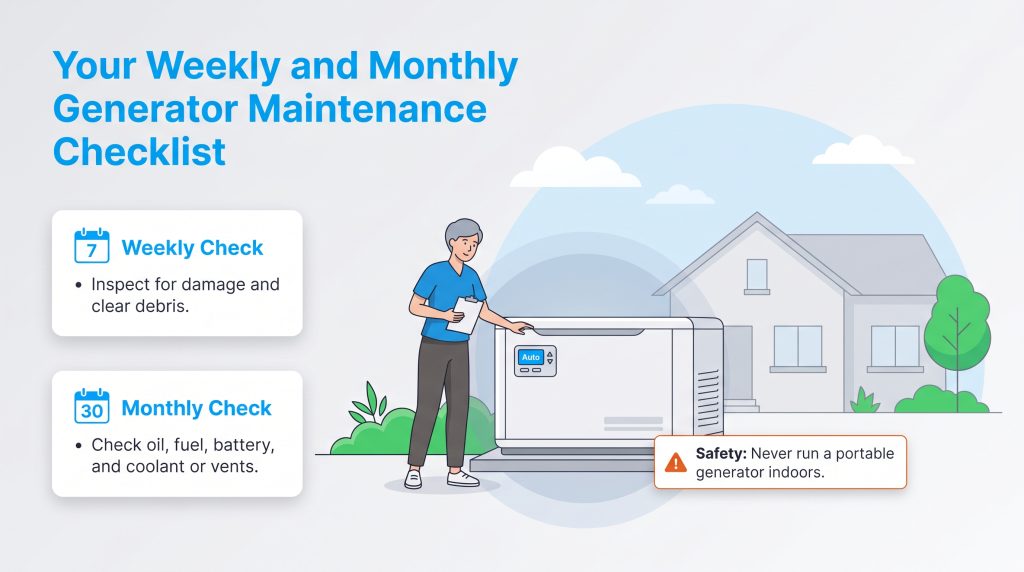
Developing a consistent rhythm with your generator maintenance checklist keeps the mechanical parts lubricated and the electrical components primed for action. Whether you rely on a permanent standby unit or adhere strictly to a portable generator maintenance schedule, sticking to these regular check-ins prevents nasty surprises during a severe storm.
Weekly Tasks to Keep Your Generator Ready
- Conduct a quick visual inspection to spot any obvious physical damage, loose wires, or strange fluid puddles underneath the machine.
- Clear away fallen leaves, dirt, or snow from the outside housing to guarantee proper airflow and prevent the motor from overheating.
- Verify the unit is actively set to “Auto” mode so it can seamlessly kick on if you own a whole-house standby generator.
Monthly Tasks for Peak Efficiency
- Check the engine oil levels using the dipstick, carefully topping off the reservoir if the fluid looks low or heavily discolored. If your standby unit runs on natural gas, verify the connection status; if it runs on propane or gasoline, check your fuel supply.
- If your generator is liquid-cooled, inspect visible coolant hoses for slow leaks. If it is air-cooled, keep the vents, fins, and enclosure clear of debris to prevent severe engine damage.
- Examine the battery terminals for fuzzy white corrosion, gently scrubbing it away with a wire brush to maintain a strong electrical connection.
- Run portable generators monthly for about 15 to 20 minutes, following your owner’s manual. Standby generators often run automatic exercise cycles, so confirm the schedule in the controller or manual to keep internal parts thoroughly lubricated.
- Dispose of any used, oily maintenance rags or drained fluids safely at a designated hazardous waste recycling facility, which is a smart, environmentally mindful choice.
What to Do After a Long Outage
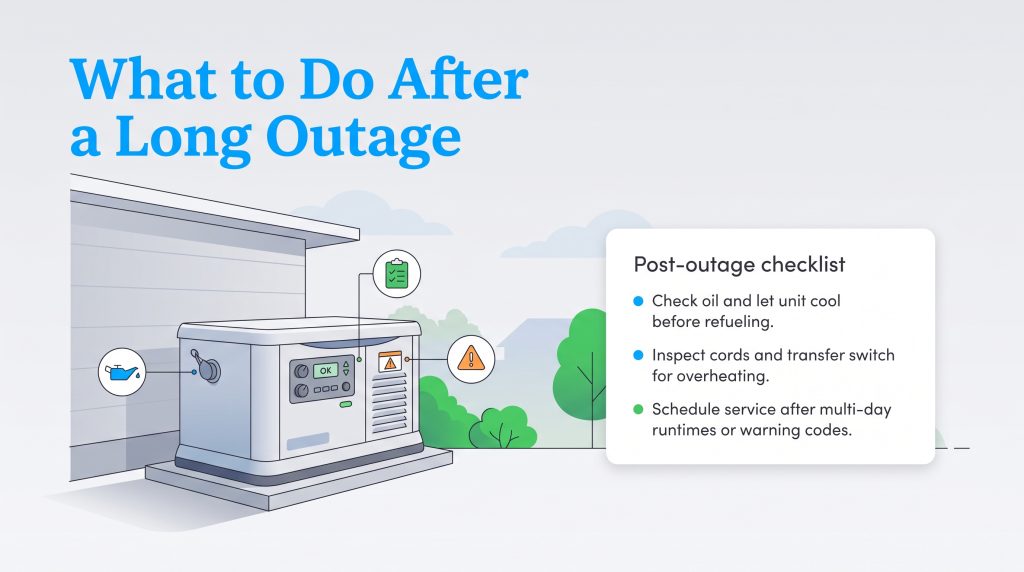
Extended grid failures force your equipment to work overtime, meaning your standard maintenance timetable needs to shift. Once the utility lines are back up and running, giving your backup system some immediate attention prevents long-term wear.
- Check the oil daily during extended runtimes, as engines consume more oil during continuous use.
- Always let the unit cool entirely before attempting to refuel it.
- Replace the oil and oil filter after the manufacturer’s recommended extended runtime interval, which is often around 50 to 100 hours.
- Inspect all cords and transfer equipment for signs of overheating or melting.
- Schedule a professional service visit if the generator ran continuously for several days or displayed any warning codes on the control panel.
Generator Maintenance Costs
Understanding the potential expenses associated with upkeep helps you budget effectively for the life of your machine. A basic DIY maintenance kit for a portable model may cost far less than a full professional service visit, making it an affordable Saturday project.
However, professional standby generator maintenance commonly costs more because it includes electrical testing, transfer switch inspection, fuel system checks, and diagnostic work. These costs vary significantly by brand, your geographic location, your fuel type, and whether replacement parts are included in the service fee.
Bi-Annual and Annual Maintenance: When to Call a Pro
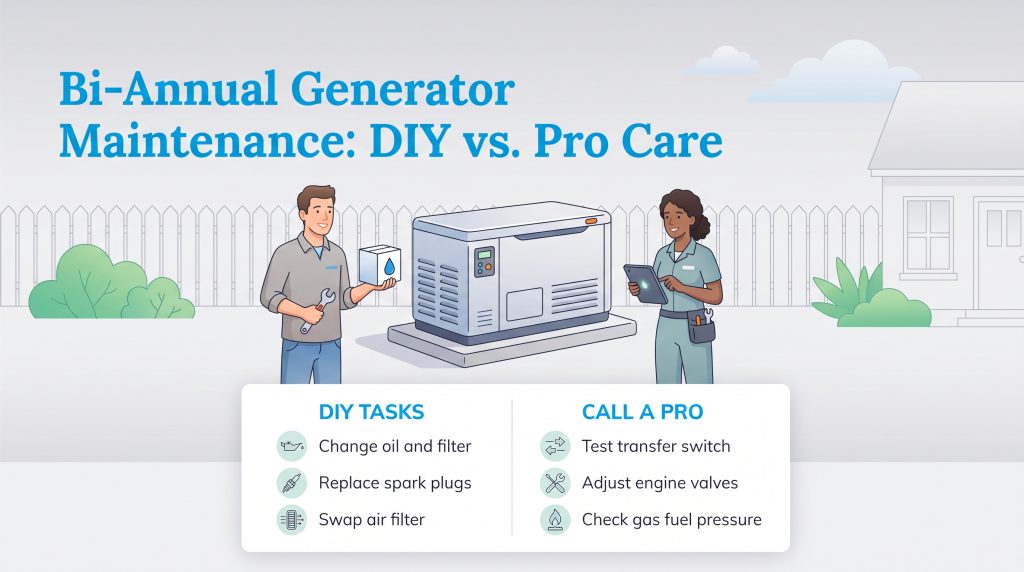
While you can handle many aspects of DIY generator maintenance, certain heavy-duty tasks require the trained eye of a professional. Every six to 12 months, your backup system needs a more comprehensive tune-up to ensure optimal performance. Attempting complex mechanical repairs without the proper training can easily void your manufacturer’s warranty or create serious household safety hazards. For instance, testing the automatic transfer switch or adjusting delicate engine valve clearances are jobs strictly meant for certified technicians. The same golden rule applies to verifying the pressure on natural gas lines, as any fuel-related misstep carries serious safety risks.
On the other hand, checking off the simpler items on an annual Generac maintenance checklist — like swapping out spark plugs, replacing a dirty air filter, or conducting an oil change — falls comfortably within the realm of weekend homeowner projects. Splitting the workload between your own elbow grease and a pro’s expertise guarantees your system is fully prepped for those stressful emergency power outage preparations.
| DIY Tasks | Professional Maintenance |
|---|---|
| Changing the engine oil and replacing the oil filter | Testing and calibrating the automatic transfer switch |
| Swapping out old spark plugs for fresh ones | Adjusting engine valve clearances |
| Replacing a dusty or clogged air filter | Checking natural gas or liquid propane fuel pressure |
| Cleaning the exterior housing and clearing debris | Updating firmware on the digital controller board |
Key Differences Between Standby and Portable Generator Upkeep
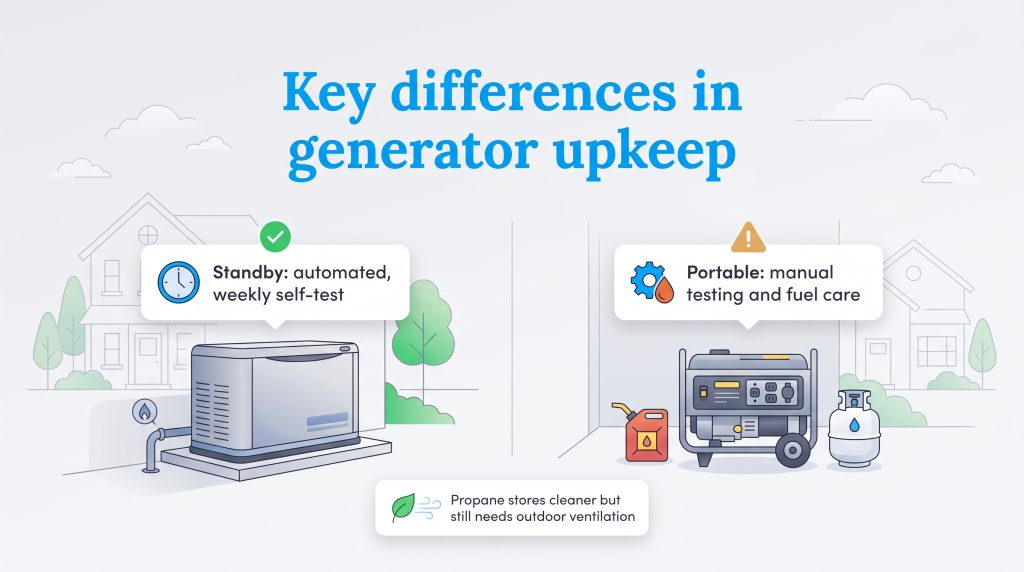
Understanding what type of unit you own directly dictates how you approach your long-term standby generator maintenance checklist. Whole-house standby units are permanently installed fixtures plumbed right into your municipal natural gas lines or an on-site liquid propane tank. Because they draw fuel continuously from utility lines, you never have to worry about gasoline going stale in a tank. These systems are highly autonomous, running their own weekly exercise cycles, which makes them incredibly reliable for areas prone to severe hurricanes, like many homes in outage-prone areas like Houston.
Portable generators demand a slightly different touch. If you plan to store a portable unit in your garage for several months, you absolutely must add a high-quality fuel stabilizer to the gasoline. Untreated gas breaks down quickly over time, leaving a sticky varnish inside the carburetor that prevents the engine from starting when you need it most. You also have to manually pull the cord and load-test portable models to ensure they stay in working order during the off-season.
Keep Your Power Flowing Smoothly
Developing a steadfast maintenance routine is the ultimate insurance policy against the chaos of sudden power loss. By keeping a close eye on your fluid levels, clearing away exterior debris, and bringing in a professional for complex mechanical calibrations, you secure real peace of mind for your entire household. You never know when the next major storm or unexpected grid failure will strike, but with a maintained generator ready outside, you know your family will stay comfortable, safe, and fully powered through it all.
Frequently Asked Questions About Generator Maintenance Checklists
How often should I check the oil in my home generator?
What is included in a Generac annual maintenance checklist?
Can I perform DIY generator maintenance myself?
How long does a whole-house standby generator last?
How do I safely store a portable generator for the winter?
Do portable generators need different maintenance than standby generators?
Should I service my generator after a long power outage?
About the Author

Claudio is a sustainability-focused writer with a background in Anthropology and Psychology from NC State University. He has spent over 15 years working in writing, interpretation, and translation, driven by a deep interest in how human culture shapes the environment. Today, he shares his curiosity with readers by writing about sustainable living solutions and the connection between everyday choices and environmental impact.

Jared Evans is a licensed electrician and the owner of Full Circuit Electric in Omaha, Nebraska. As an expert reviewer for UtilitiesForMyHome.com, Jared uses his 10+ years of hands-on experience to ensure our electrical advice is safe, accurate, and easy to follow. Whether he's troubleshooting a complex wiring issue or sharing tips on green energy upgrades, Jared is dedicated to helping you power your home efficiently — and safely.