

From Blinking Clocks to Food Safety, Here Is Everything You Need to Know About Navigating a Blackout
Key Takeaways
- Understanding the mechanics of a power grid failure helps you react calmly and prioritize safety for your home and family.
- Most home appliances will pause safely, but you should always unplug sensitive electronics to prevent power surge damage.
- Preparation is key, so keeping a stocked emergency kit and understanding your utility systems can save you immense stress.
During a power outage, the local electrical grid stops supplying energy to your home, causing lighting, HVAC systems, and plug-in appliances to instantly shut down. While this sudden loss of electricity can feel unsettling, knowing exactly what happens during a power outage empowers you to take absolute control of the situation. Whether you are dealing with a brief neighborhood interruption or a widespread, multi-day grid failure, understanding how your specific home systems react allows you to secure your property effectively. By recognizing the primary causes of an outage and actively maintaining a solid emergency plan, you can easily turn a highly stressful situation into a highly manageable minor event. At UtilitiesForMyHome, we want you to feel completely confident, deeply prepared, and profoundly safe the very next time the lights go out in your neighborhood.
What Causes Power Outages?
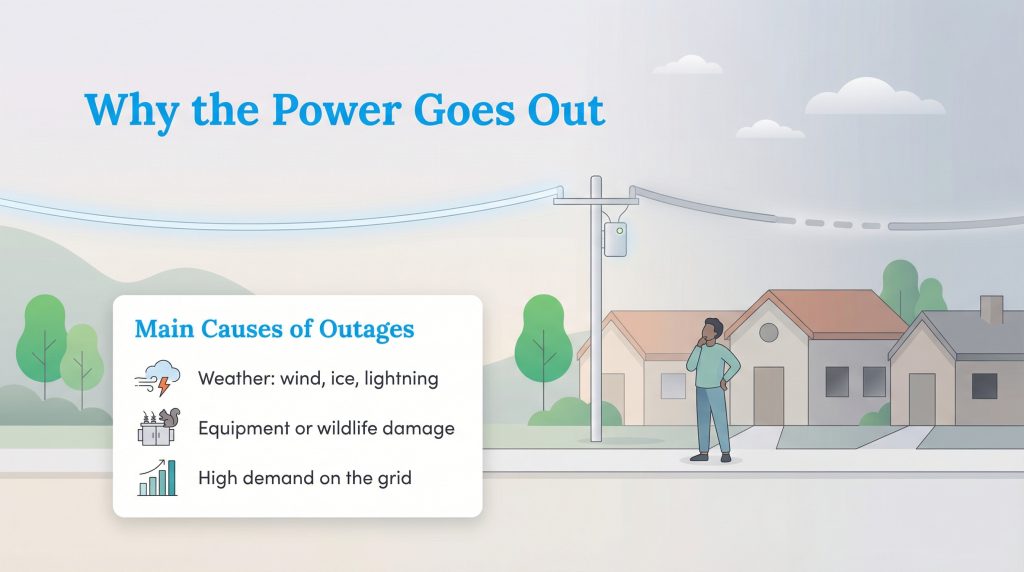
To fully grasp what happens during a blackout, you need to understand where electricity comes from. Power grids function on a delicate balance between electricity supply and real-time consumer demand. According to the U.S. Energy Information Administration (EIA), the average U.S. customer experiences roughly five hours of power interruptions annually. When evaluating a rolling blackout vs power outage, it is helpful to note that a rolling blackout is a planned, temporary shutoff by your utility provider to prevent widespread grid collapse during extreme demand. Unplanned power outages, on the other hand, usually stem from four primary causes:
- Severe Weather: High winds, aggressive lightning strikes, deep winter ice storms, and heavy rain routinely snap overhead transmission lines or destroy vital substation equipment.
- Wildlife Interference: Animals like squirrels, snakes, or large birds frequently climb onto local transformers looking for warmth or a resting spot, causing immediate electrical short circuits.
- Grid Overload: Unprecedented energy demand during extreme summer heatwaves or severe winter freezes can rapidly overwhelm the system’s capacity, causing automated safety mechanisms to fail specific circuits.
- Equipment Failure: Aging municipal infrastructure, corroded materials, and degrading underground cables can spontaneously malfunction without any prior warning.
How a Power Outage Affects Your Home Systems
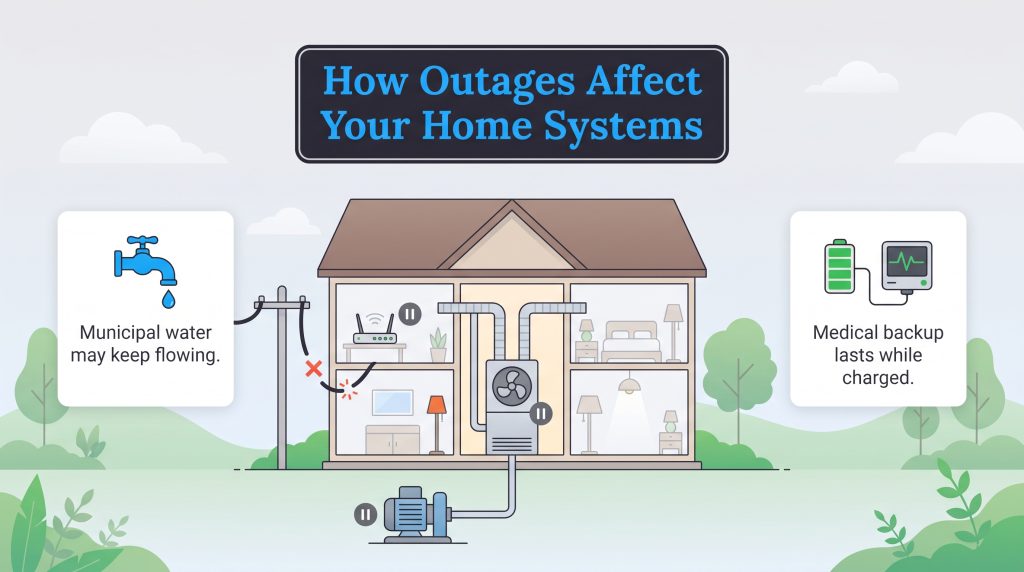
When your neighborhood goes dark, evaluating your entire home room by room helps you prioritize your next steps. The sudden loss of electricity immediately halts some systems while leaving others partially functional. Understanding these mechanical changes helps you safely navigate the disruption without inadvertently causing lasting damage.
| Fails Immediately | Retains Partial Functionality |
|---|---|
| Private well pumps and sump pumps | Municipal city water and tap pressure |
| Central air conditioning and standard furnaces | Gas stoves (if ignited manually with a match) |
| Electric water heaters and tankless units | Traditional copper-wire landline telephones |
| Wi-Fi routers and smart home devices | Battery-backed medical equipment |
| Standard grid-tied solar panels | Battery-operated smoke and carbon monoxide detectors |
Internet, Wi-Fi, and Smart Home Devices
Modern homes rely heavily on continuous, uninterrupted internet connectivity to manage daily life. When you lose electricity, your Wi-Fi router shuts down instantly, which subsequently knocks your smart locks, wireless security cameras, and smart thermostats entirely offline. If you want to maintain internet access during short-term blackouts, consider plugging your modem and router into a high-capacity uninterruptible power supply (UPS) backup battery. Additionally, you should familiarize yourself with the manual override features for your electronic deadbolts and electric garage doors so you are never accidentally locked out during a severe emergency.
Plumbing and Water Supply
A common question homeowners ask is: does water work in a power outage? The answer depends entirely on how your property receives its water supply. If your home connects to a municipal city water system, the large industrial generators and natural gravity towers utilized by the city will usually maintain your tap pressure perfectly. This means you can still safely wash your hands, fill your drinking glasses, and flush your toilets. However, if your home utilizes a private well, you will lose water access immediately because your electric pump cannot physically pull water from the underground aquifer. In this scenario, having an incredibly generous stockpile of bottled water is an absolute necessity.
Solar Panels and Battery Storage
Many homeowners excitedly assume that installing roof-mounted solar panels guarantees absolute immunity from grid failures. Unfortunately, this is a dangerous misconception. Standard grid-tied solar panels are designed to shut down automatically during an outage. This is a strict, federally mandated safety feature designed to protect utility workers. If your panels remained active, they would forcefully backfeed live electricity into the very transmission lines that crews are actively trying to repair. To keep your lights on using solar energy during a blackout, you must upgrade to a hybrid solar system paired with a dedicated home battery backup, which safely isolates your property from the broader utility grid. Learn more about deep energy storage in our comprehensive solar guide.
Medical Devices and Refrigerated Medication
For households that rely on daily healthcare equipment, a power outage transitions quickly from a simple inconvenience to a critical health emergency. Taking immediate action to secure your necessary medical supplies ensures your household remains safe until the utility trucks arrive.
- Medical Baseline Registration: If you use life-sustaining equipment like an oxygen concentrator or home dialysis machine, contact your utility provider right now to register as a “medical baseline” customer. This heavily prioritized status alerts utility dispatchers to restore your home’s power first during widespread outages.
- CPAP Machines and Oxygen: Always keep fully charged portable power banks or dedicated lithium power stations ready specifically for your nighttime breathing machines.
- Refrigerated Medications: Essential medications like insulin require strict temperature control. Keep reusable ice packs frozen and ready in your freezer. If the outage extends past a few hours, transfer your medication into an insulated cooler to maintain a safe, highly regulated temperature.
Immediate Steps: What to Do When the Power Goes Out
Knowing exactly what to do when the power goes out keeps your family exceptionally safe and prevents costly structural damage to your major appliances. Moving swiftly and methodically through an immediate action plan ensures your household remains secure while you wait for the utility company to fix the local grid.
Report the Power Outage
Never assume your neighbors have already called the utility company on your behalf. You must proactively learn how to report a power outage to ensure repair crews are actually dispatched. Utilizing your smartphone’s cellular data, log into your provider’s mobile app or call their 24-hour automated reporting hotline — a number you can quickly locate on your past billing statements. Reporting your exact address helps utility dispatchers actively triangulate the electrical fault and deploy specialized repair crews much faster.
Unplug Sensitive Electronics
When utility workers finally restore the electricity to your street, the sudden, aggressive rush of incoming current can create a highly destructive power surge. This unexpected transient overvoltage easily fries the delicate internal motherboards of desktop computers, gaming consoles, and smart televisions. To prevent permanent power surge damage, walk through your home and immediately disconnect these valuable items directly from the wall outlets. It is also incredibly wise to unplug major appliances like your oven, microwave, and window air conditioning units. Always leave one single, highly visible lamp turned on so you instantly know the exact moment your power is completely restored.
Power Outage Food Safety Guidelines
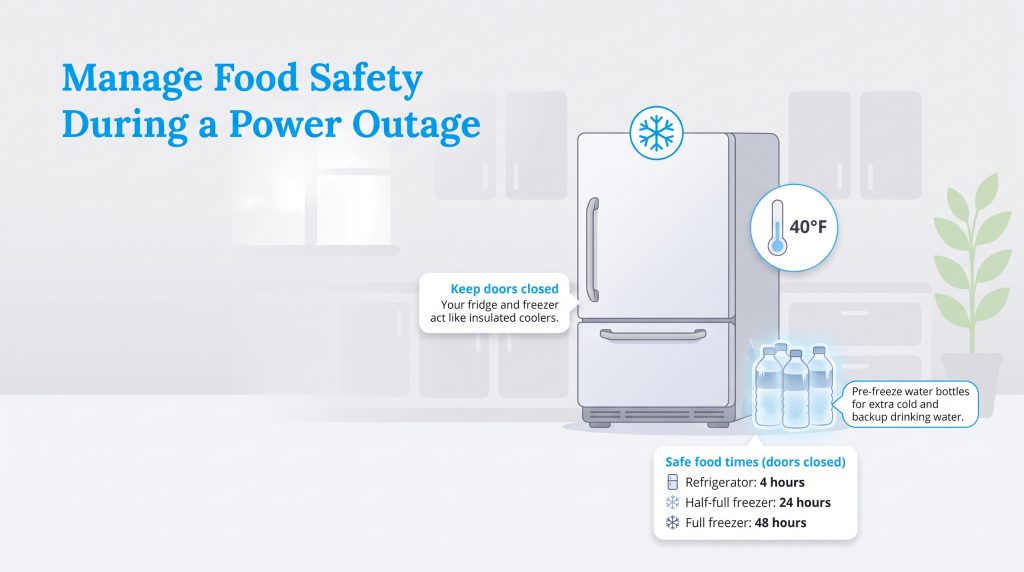
A massive concern during any extended neighborhood disruption is maintaining rigid power outage food safety. Managing your perishable goods effectively saves you hundreds of dollars in groceries and prevents serious foodborne illnesses. You must resist the urge to casually open your refrigerator doors to check on your food. As long as the heavy doors remain completely sealed, your kitchen appliances act as highly efficient insulated coolers. Instruct all family members to keep the doors tightly closed and follow these exact safe-duration timelines to avoid spoilage:
| Appliance / Item | Safe Duration (Closed Door) |
|---|---|
| Refrigerator (General) | 4 Hours |
| Freezer (Half Full) | 24 Hours |
| Freezer (Full) | 48 Hours |
| Refrigerated Baby Formula & Breast Milk | 4 Hours (Must remain at or below 40°F) |
Knowing exactly how long does food last in fridge without power ultimately protects your family’s health. Once power is finally restored, thoroughly check the temperatures of your perishables. The 40°F or below threshold is critical. If your raw meat, dairy, or cooked leftovers feel warm to the touch or exceed this safe temperature zone, the timeless golden rule always applies: when in doubt, throw it out.
💡 Pro Tip: Pre-freeze Water Bottles. Keep a few plastic water bottles completely frozen in the empty spaces of your freezer. Not only does this dense ice help maintain the ambient cold during a power outage, but it also provides you with chilled emergency drinking water as it slowly melts.
Essential Safety Rules During a Blackout
As utility companies work aggressively to restore power — heavily prioritizing local hospitals, critical infrastructure, and large transmission lines first — you must ensure your immediate home environment remains safe. Navigating the dark introduces a unique set of physical hazards, making strict adherence to fundamental safety protocols absolutely vital for your family’s well-being.
Generator Safety and Carbon Monoxide Risks
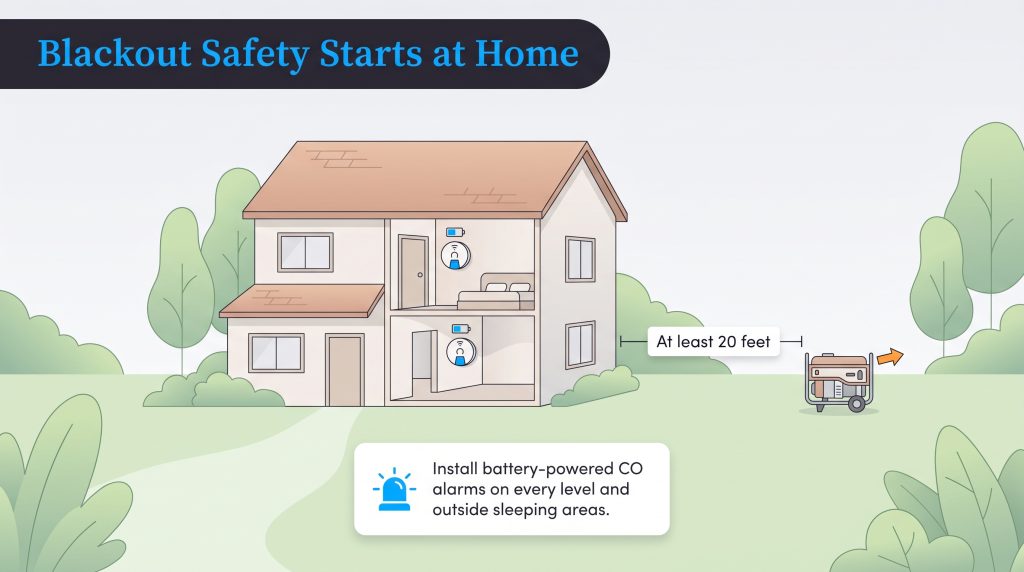
While utilizing a backup generator serves as an excellent way to maintain basic household comfort, these highly powerful machines introduce severe, life-threatening risks if operated improperly. Practicing strict portable generator safety is non-negotiable. The greatest danger stems from carbon monoxide (CO) — an odorless, colorless, and completely invisible gas produced by heavy engine exhaust. To protect your family from accidental, lethal poisoning, you must place your portable generator at least 20 feet away from the home, directing the hot exhaust pipe straight out and away from all nearby doors, windows, and basement vents. Furthermore, you must boldly install battery-operated carbon monoxide detectors on every single level of the home, especially directly outside all sleeping areas.
Managing Extreme Temperatures
Losing electricity during a deep winter freeze or a brutal summer heatwave presents immense physical challenges. To combat freezing temperatures without your central furnace, you must strictly seal off all unused rooms to drastically shrink your living space and retain precious body heat. Tightly roll up dry towels and wedge them under drafty doorways, and draw your heavy curtains closed to insulate your windows. Never, under any circumstances, use a gas stove, kitchen oven, or outdoor charcoal grill to heat the interior of your home. These appliances will quickly fill your house with fatal carbon monoxide. If your indoor temperatures reach exceptionally dangerous levels, proactively locate your municipal warming or cooling centers by calling 311 or listening to local emergency broadcasts.
Downed Power Lines and Grid Surges
If violent, severe weather caused the blackout, there is a remarkably high likelihood of physical damage to the surrounding neighborhood infrastructure. Stay clear of downed power lines under all circumstances. Always aggressively assume every single fallen wire is fully energized and inherently lethal. You must maintain a wide, incredibly safe distance of at least 35 feet and boldly report the downed line to 911 immediately. Additionally, when the power finally flickers back on, practice calm patience. Wait exactly 10 to 15 minutes before plugging your electronics back into the wall to ensure the incoming grid voltage has fully stabilized. You should also utilize surge-protecting power strips for your televisions, or invest heavily in a whole-home surge protector for permanent, unwavering peace of mind.
How to Build a Power Outage Emergency Kit
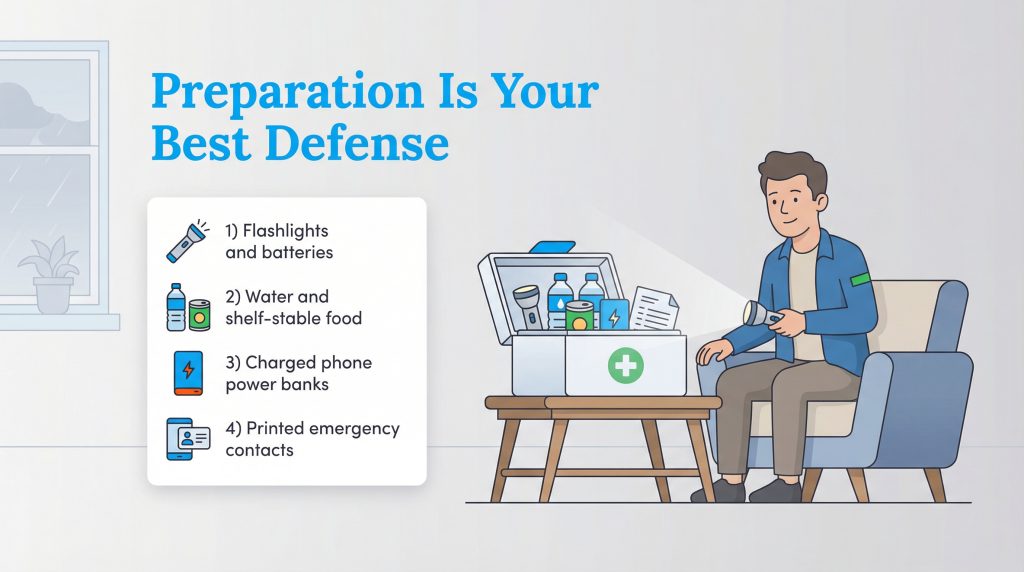
Power outages are a completely inevitable part of modern homeownership, but they certainly do not have to dictate your daily comfort or incite unnecessary panic. Curating a highly dedicated, meticulously organized power outage emergency kit guarantees you remain remarkably calm and firmly in control when the neighborhood goes totally dark. Rather than frantically searching for supplies by the dim light of your smartphone, we strongly recommend assembling these specific items into a stark, highly scannable checklist and storing them in a single, easily accessible waterproof tote bin:
- Stockpile One Gallon of Water Per Person: Secure commercially bottled water, planning for at least one gallon per person (and pet) per day to comfortably cover hydration and basic sanitation needs.
- Gather Shelf-Stable Pantry Items: Curate a multi-day stash of high-calorie, non-perishable foods like protein bars, canned soups, dried fruit, and a reliable manual can opener.
- Secure High-Lumen Flashlights: Store at least one heavy-duty, waterproof LED flashlight in every single bedroom, perfectly matched with unopened packages of backup batteries. Strictly avoid using candles due to the severe fire hazard they present.
- Prep a Comprehensive First-Aid Kit: Ensure your medical kit is generously stocked with necessary adhesive bandages, strong antiseptics, over-the-counter pain relievers, and any critical prescription medications.
- Invest in a Weather Radio: Include a hand-crank or battery-operated NOAA weather radio to consistently receive critical, localized emergency broadcasts when standard cellular towers eventually fail.
- Maintain Backup Power Options: Keep portable lithium power banks fully charged at all times to instantly revive mobile phones, tablets, and essential communication devices during extended, multi-day disruptions.
After the Outage: Power Restoration Steps
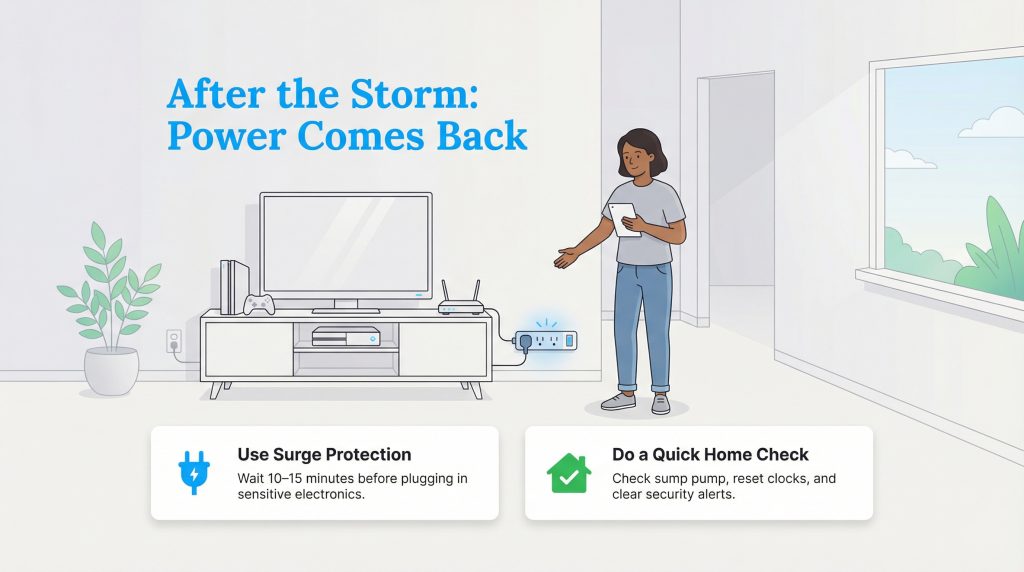
The moment the lights finally flicker back on brings immense relief, but your work is not entirely finished. Taking a highly methodical approach to restoring your home ensures your equipment remains unharmed and your family stays safe. Before you aggressively dive back into your normal routine, firmly complete this mandatory post-outage checklist:
- Check for Power Surge Damage: Briefly inspect your HVAC unit, major kitchen appliances, and desktop computers for any burnt smells or unusual humming noises that indicate complex internal component failure.
- Reset Tripped Breakers: If your neighborhood has power but a specific room in your house remains completely dark, open your main electrical panel and check for breakers that forcefully tripped during the initial outage.
- Safely Restock the Refrigerator: Discard any perishables that exceeded the safe 40°F limit, deeply sanitize the interior shelving, and safely restock your groceries.
- Plug Electronics Back In: After allowing the grid exactly 10 to 15 minutes to fully stabilize its voltage, safely plug your sensitive electronics, smart televisions, and heavy appliances back into their respective wall outlets.
🌱 Eco Edge: Use the aftermath of an outage as a brilliant opportunity to deeply assess your home’s energy usage. Upgrading to smarter, high-efficiency appliances not only lowers your monthly footprint, but it perfectly stretches the runtime of your emergency generator or home battery backup system during future grid failures.
Preparing Your Home for the Next Grid Failure
Preparation is undeniably your greatest defense against unpredictable, highly stressful electrical grid failures. While you cannot single-handedly control the incredible severity of approaching winter weather systems or magically upgrade aging municipal infrastructure overnight, you can completely dictate how your household boldly responds. Taking just ten minutes this weekend to program your utility provider’s emergency reporting numbers directly into your phone translates into profound, long-lasting peace of mind.
Do not recklessly wait until the ominous storm clouds gather to aggressively scramble for limited supplies at the local grocery store. Build out your comprehensive emergency kit this week, meticulously explore our actionable tips on how to save on your electric bill to drastically optimize your home’s daily efficiency, and actively consider learning more about sustainable home battery backup systems. By taking these highly practical, incredibly proactive steps today, you firmly guarantee your property remains a resilient, wonderfully safe sanctuary no matter what unexpected chaos happens out on the broader grid. When the local streetlights inevitably go out again, you will be entirely ready to handle it.
Frequently Asked Questions About Power Outages
How do I know if the power outage is just my house or a wider grid failure?
How do I report a power outage?
Should I unplug my appliances during a power outage?
Does water work in a power outage?
Do toilets still flush during a power outage?
Will my cell phone and internet still work during a power outage?
Is it safe to use a generator in the garage during a power outage?
What is the difference between a rolling blackout and a regular power outage?
Will my tankless water heater work in a power outage?
How long does food last in the fridge without power?
Does having solar panels prevent power outages?
Why did my power go out but not my neighbors?
About the Author

LaLeesha has a Masters degree in English and enjoys writing whenever she has the chance. She is passionate about gardening, reducing her carbon footprint, and protecting the environment. She also recently served as President of the Board for City Sprouts (a community garden).

David has been an integral part of some of the biggest utility sites on the internet, including InMyArea.com, HighSpeedInternet.com, BroadbandNow.com, and U.S. News. He brings over 15 years of experience writing about, compiling and analyzing utility data.