

Weighing the Upfront Investment Against Long-Term Comfort and Energy Savings
Key Takeaways
- Tankless water heaters offer endless hot water and significant space savings compared to traditional storage tanks.
- Upfront installation costs are significantly higher than standard models due to necessary gas line or electrical upgrades.
- Consistent annual maintenance is required to prevent mineral buildup and ensure the unit reaches its potential 20-year lifespan.
The promise of a steaming shower that never turns icy is a major draw for any homeowner weighing the tankless water heater pros cons. By generating heat only when you turn on the tap, these sleek systems offer significant long-term energy savings over bulky traditional tanks. This comprehensive guide breaks down everything from precise installation costs to maintenance realities, helping you decide if this eco-conscious upgrade is worth the premium price tag for your specific home.
How Does A Tankless Water Heater Work?
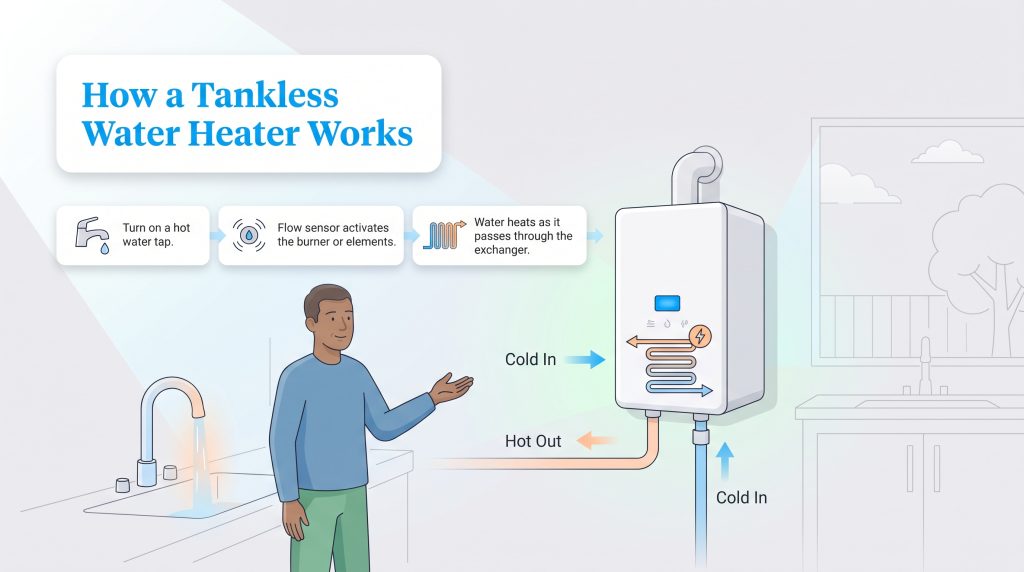
If you want to understand how these systems save so much energy, you first need to answer a basic question: How does a tankless water heater work? Unlike traditional storage units that continuously heat 50 gallons of water day and night, on-demand systems only spring into action when you physically need them. The entire heating sequence happens in just a few seconds:
- Step 1: You turn on a hot water tap in your kitchen or bathroom, and cold municipal water immediately flows into the tankless unit.
- Step 2: An internal flow sensor detects the moving water and signals the control board to instantly ignite the gas burner or activate the electric heating elements.
- Step 3: The water circulates rapidly through a highly conductive heat exchanger, warming up to your preset temperature on the fly before traveling through your home’s pipes.
Tank Vs Tankless Water Heater: Head-To-Head Comparison
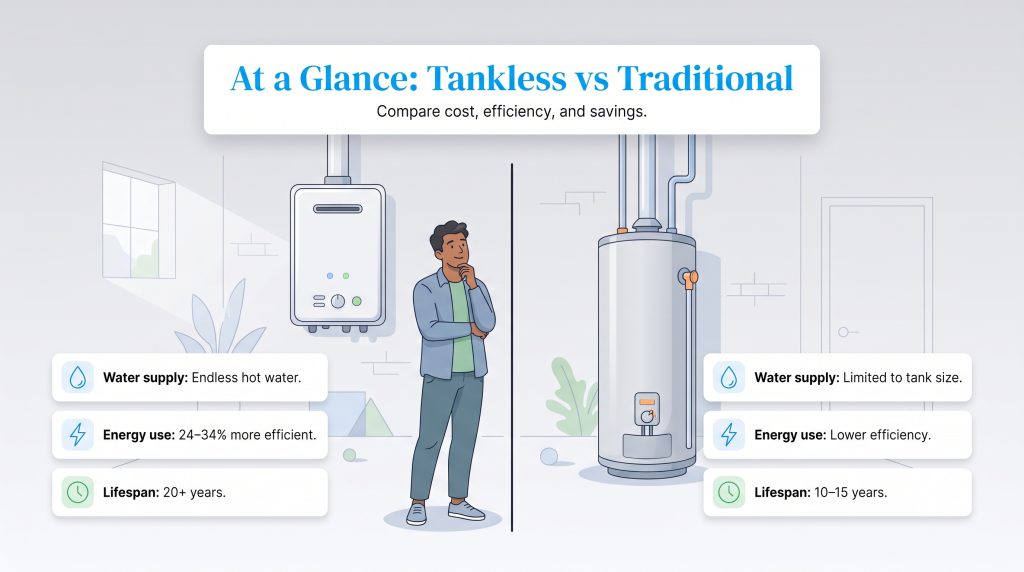
If you are in a rush to understand your options, evaluating a tank vs tankless water heater comes down to comparing upfront costs against long-term utility savings and lifestyle benefits. While traditional tanks are the standard, affordable choice for immediate emergency replacements, tankless systems represent a true modernization of your home’s infrastructure. Here is a quick breakdown of the core differences you need to consider before scheduling a consultation with a licensed plumber.
| Comparison Factor | Tankless Water Heaters | Traditional Tank Heaters |
|---|---|---|
| Upfront Cost (Unit + Install) | $1,500 to $4,000+ | $800 to $1,800 |
| Lifespan | 20+ years | 10 to 15 years |
| Space Required | Minimal (wall-mounted) | Large (bulky floor cylinder) |
| Energy Efficiency | 24-34% more efficient | Lower efficiency |
| Hot Water Supply | Endless, on-demand supply | Limited to tank capacity |
Top Pros Of Tankless Water Heaters
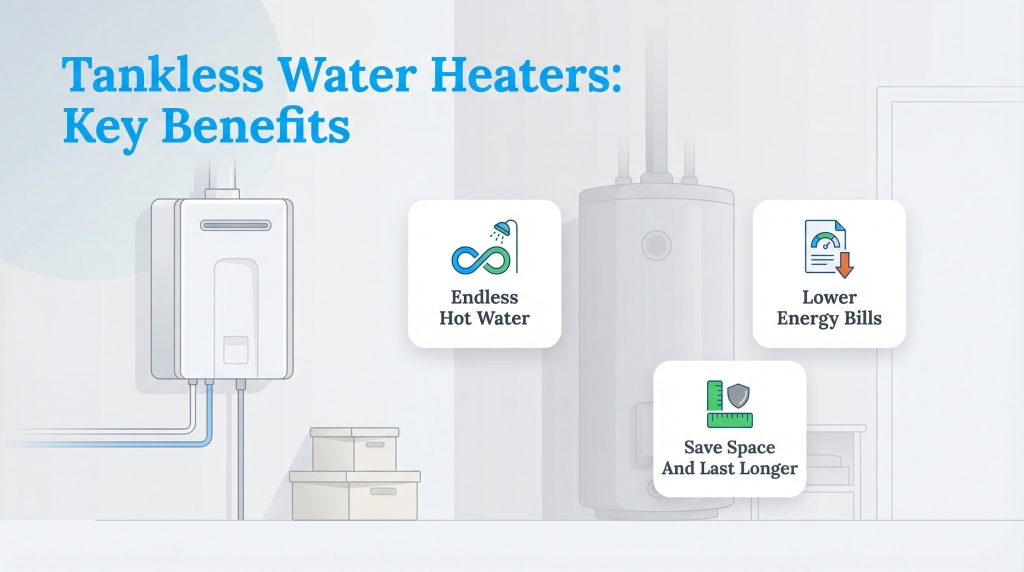
Switching to an on-demand system is a massive upgrade for your property. While the technology operates entirely differently from the standard tanks most of us grew up with, the everyday benefits can drastically improve your daily comfort and lower your utility bills.
Endless Hot Water Supply and Purer Water
The biggest selling point for these units is right in the name: on-demand. Endless hot water benefits mean if you have houseguests or a large family, you don’t have to schedule showers in shifts. You can hop in the shower immediately after your spouse without dreading that sudden, uncomfortable drop in temperature. Additionally, because tankless models do not store water, they completely eliminate the risk of bathing in water that has been sitting in a deteriorating, rusty metal container. The result is consistently purer water flowing directly to your tap.
Energy Efficiency and Monthly Savings
Traditional tanks keep 50 gallons of water piping hot 24 hours a day, creating expensive standby heat loss. Tankless units eliminate this waste entirely. According to the Department of Energy, homes that use 41 gallons or less of hot water daily can be 24% to 34% more energy efficient with a tankless system. Over the course of a year, this translates to natural gas savings of $100 to $150 and reduces your water heating carbon footprint by up to 30%.
Main Cons Of Tankless Water Heaters
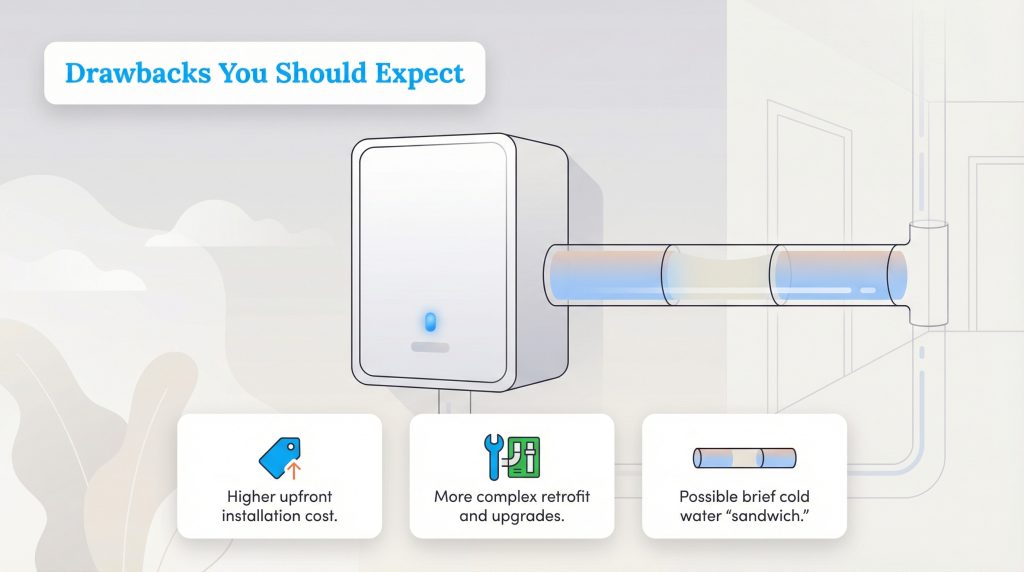
While the long-term benefits are clear, on-demand systems are not a plug-and-play solution. The logistical challenges of retrofitting older architecture can easily catch unprepared buyers by surprise.
Steep Tankless Water Heater Installation Cost
When evaluating the tankless water heater installation cost, the initial sticker shock is very real. The physical unit is more expensive, but the true cost hides in the professional labor. Installing a tankless system requires highly specialized plumbing expertise. A traditional gas heater trickles fuel to keep a flame going, but a tankless unit needs a massive volume of gas instantly. Plumbers almost always have to run a new 3/4-inch gas line from the meter. All told, an average professional installation easily costs between $1,500 and $4,000, and complex jobs requiring drywall repair or electrical panel upgrades can push past the $5,000 mark.
The Cold Water Sandwich Effect
This quirky industry term refers to a brief, surprising burst of cold water that can happen during regular use. The cold water sandwich effect occurs when you turn the hot water off for a moment — like while pausing to scrub a tough dish — and then turn it back on quickly. The heater registers that the water flow stopped, shuts the internal burner down, and must restart the ignition sequence. This momentary gap in heating sends a short slug of unheated water through the pipes, sandwiching it between the hot water already in the line and the fresh hot water being generated. It is an annoyance that can be jarring during a morning shower.
Tankless Water Heater Installation Cost And ROI
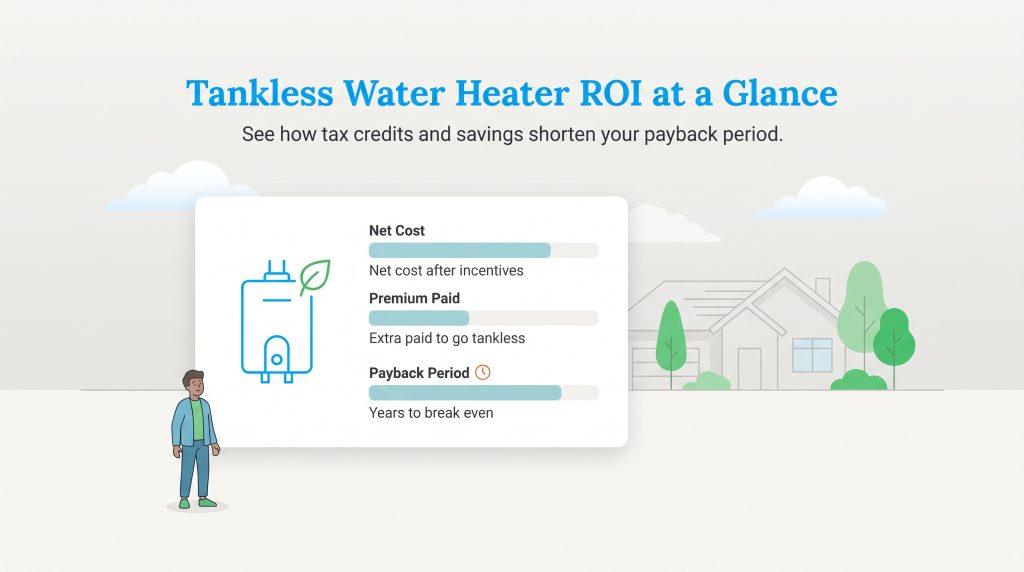
Determining whether this upgrade makes financial sense requires looking beyond the initial installation quote. By factoring in federal incentives and your projected annual utility savings, you can accurately map out your return on investment.
Thanks to the Inflation Reduction Act, upgrading to energy-efficient appliances is more affordable than ever. Under the Energy Efficient Home Improvement Credit (Section 25C), homeowners can claim a robust federal tax credit for installing qualifying ENERGY STAR-certified tankless water heaters. You can currently claim up to 30% of the project’s total cost, capped at a maximum of $600 for gas models. This tax credit, combined with local utility rebates, significantly shrinks the premium you pay. To calculate your payback period, subtract the cost of a standard tank installation from your net tankless quote, and divide that extra cost by your estimated annual energy savings. For most families, it takes just under a decade to break even on the upgrade.
Gas Vs Electric Tankless Water Heaters
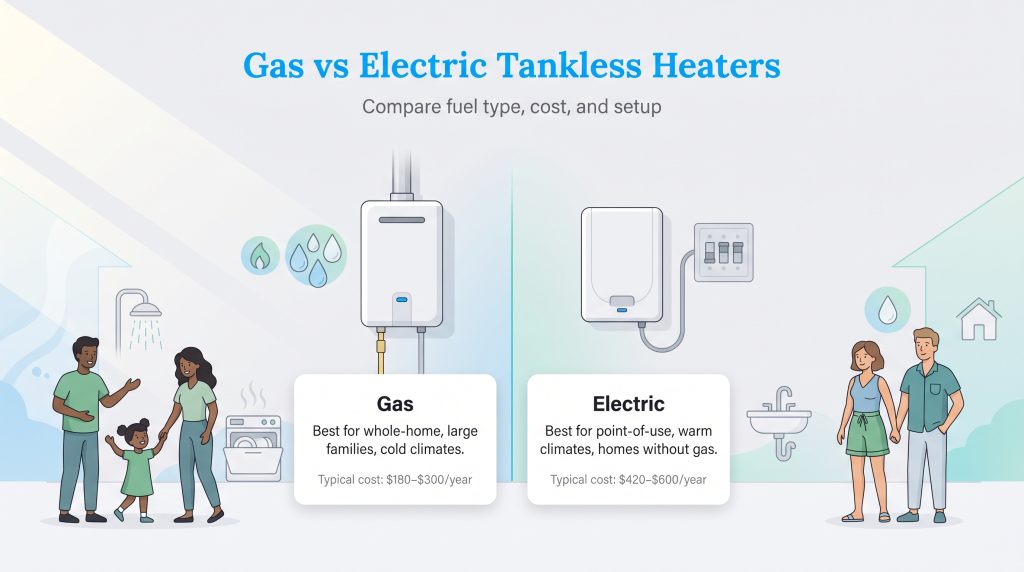
Choosing between fuel types is a critical decision that dictates both your home’s performance and the difficulty of the installation. When comparing gas vs electric tankless water heaters, gas tankless water heater models are the true powerhouses for full-sized homes. They offer significantly higher flow rates, easily supporting a family running a shower and the dishwasher at the exact same time. The downside is that they require complex venting systems, an upgraded natural gas line, and routine maintenance to check the burners and exhaust systems.
Conversely, an electric tankless water heater excels in simplicity. They do not require any venting, they are incredibly compact, and they tend to have slightly longer lifespans because there is no open flame degrading the metal. However, their immense power demand is a major hurdle. A whole-home electric unit often requires three to four dedicated 40-amp breakers. If you don’t already have heavy-duty electrical service, the necessary panel upgrade makes this option financially impractical for many older homes.
Sizing A Tankless Water Heater For Your Home
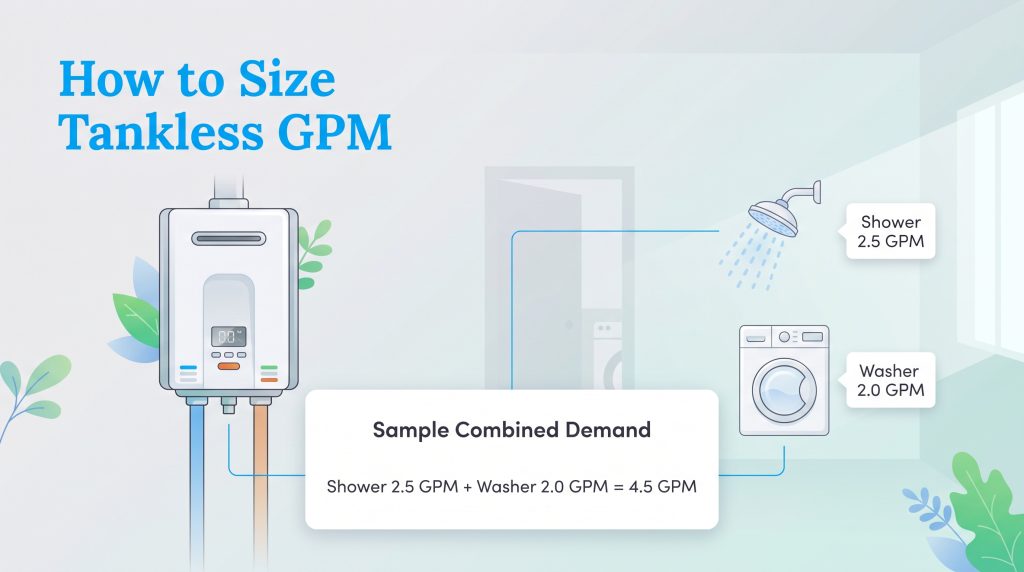
Unlike traditional tanks that are sized by how many gallons of water they can hold, on-demand units are sized by flow rate. Sizing a tankless water heater effectively requires you to calculate two crucial metrics: your desired Flow Rate (measured in Gallons Per Minute or GPM) and your regional Temperature Rise.
First, tally up the maximum flow rate you would expect to use simultaneously. Here are the typical GPM demands for common household fixtures:
- Standard Showerhead: 2.5 GPM
- Washing Machine: 2.0 GPM
- Kitchen or Bathroom Sink: 1.5 GPM
- Dishwasher: 1.5 GPM
If you anticipate someone taking a shower while the washing machine is running, your home needs a unit capable of delivering at least 4.5 GPM. Next, you must factor in temperature rise — the difference between your incoming cold groundwater and your target hot water temperature. If you live in a northern state during winter, your groundwater could be a frigid 40 degrees. The heater now has to work twice as hard to achieve an 80-degree temperature rise compared to a home in Florida. This massive strain forces the unit to drastically slow down the flow of water, meaning you must purchase a larger, higher-capacity unit to prevent low water pressure in the winter.
Maintenance And Lifespan Expectations
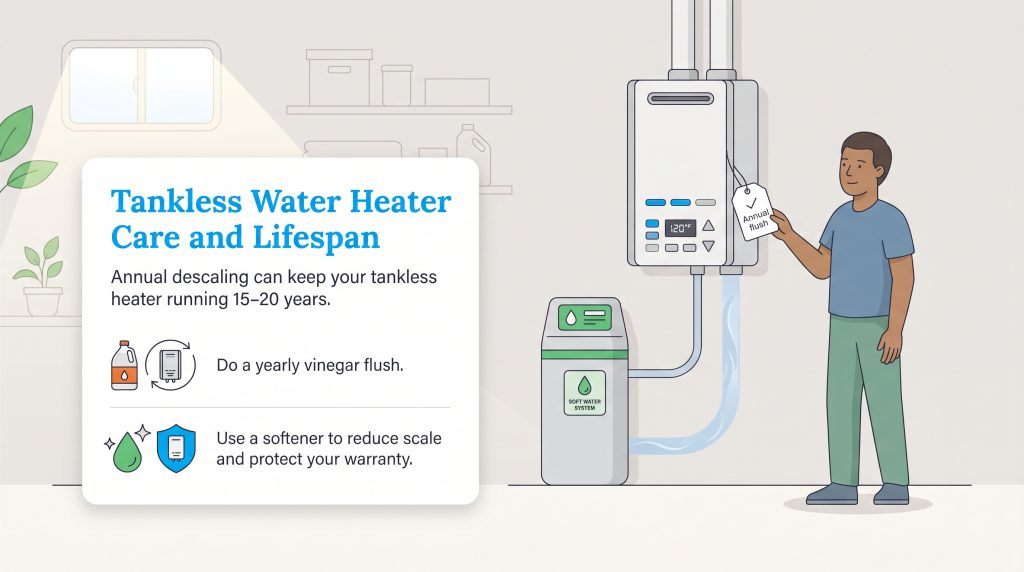
Proper tankless water heater maintenance is non-negotiable if you want to protect your long-term investment. Because the water is heated to such extreme temperatures inside a tightly confined heat exchanger, minerals drop out of the water rapidly. In areas with hard water, calcium and magnesium build up incredibly fast, acting as an insulator that forces the heater to work overtime and eventually causes it to burn out.
Routine maintenance involves an annual descaling flush. This process requires cycling four gallons of undiluted white vinegar through the system for 45 minutes to dissolve the mineral scale, followed by a clean water flush to clear the internal particulate filter. If you adhere to this routine care, the average tankless water heater lifespan sits comfortably between 15 and 20 years — practically doubling the life expectancy of a traditional storage tank.
Best Tankless Water Heater Brands On The Market
Once you decide to move forward, selecting a reliable manufacturer is your next big hurdle. The best tankless water heater brands have spent decades refining their heat exchanger designs to maximize efficiency and minimize annoyances like the cold water sandwich. Here are three industry leaders you should discuss with your plumbing contractor:
- Rinnai: Famous for their ThermaCirc360 technology, Rinnai units feature a built-in recirculation pump that moves water through your pipes to provide significantly faster hot water delivery.
- Navien: Dominating the premium market, Navien is celebrated for its highly efficient condensing technology and dual stainless steel heat exchangers that drastically resist corrosion.
- Rheem: Offering an exceptional balance of price and performance, Rheem stands out with its EcoNet smart home integration, allowing homeowners to easily monitor energy usage and adjust water temperatures from their smartphone.
Choosing Your Next Water Heater
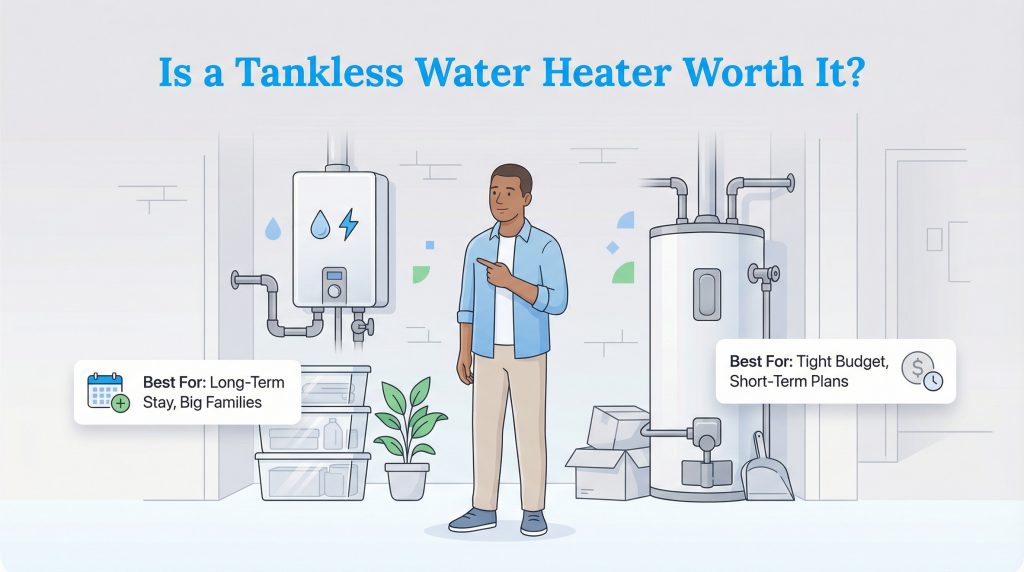
After reviewing the hard data, examining the tax credits, and crunching the flow rate numbers, the final choice comes down to your immediate budget and your future plans for the property. Upgrading to a tankless water heater is a fantastic, eco-conscious investment if you plan to stay in your current home for more than five to 10 years, which gives you ample time to recoup the expensive installation costs.
However, if you are working with a strict upfront budget or you plan to move within the next few years, the return on investment simply takes too much time to mature. The ballooning retrofitting costs will completely outweigh the benefits of your future water utility savings if your older home requires extensive drywall patching, a larger gas line, or an upgraded electrical panel.
Frequently Asked Questions About Tankless Water Heaters
Are tankless water heaters worth it?
Yes, they are highly worth it for homeowners who plan to stay in their house long enough to recoup the initial installation costs through consistent energy savings, or those who place a premium on having a continuous, endless supply of hot water for a large family.
Do tankless water heaters require special venting?
Yes, high-efficiency gas tankless units create acidic condensation and operate at lower exhaust temperatures. They cannot safely use standard metal B-vents used by traditional tanks and require dedicated concentric or PVC venting routed directly through a roof or exterior wall.
Will a tankless water heater work during a power outage?
Most modern gas tankless water heaters rely on electricity to power the digital control board and ignite the internal burners. Unless you have a battery backup system installed, the unit will not generate hot water during a power outage.
What is the average payback period for a tankless water heater?
The average payback period typically ranges from seven to 12 years, depending on your local energy rates, household water consumption, and the initial installation cost. You can shorten this timeframe significantly by taking advantage of federal tax credits and local utility rebates.
How many years does a tankless water heater last?
With rigorous annual maintenance and proper water quality management, the life expectancy of a tankless water heater is easily 20 years or more. This is significantly longer than traditional storage tank heaters, which typically succumb to internal rust and begin leaking between 10 and 15 years.
Can one tankless water heater run two showers at the same time?
Most standard gas models can comfortably run two simultaneous showers, provided the unit has a GPM rating of 5.0 or higher. However, if you live in a cold climate where the groundwater is freezing, the unit’s flow rate will drop as it struggles to heat the water, resulting in lower pressure.
Can I install a tankless water heater myself?
We strongly advise against taking this on as a DIY project. The installation process involves complex and dangerous natural gas connections, high-voltage electrical wiring, and strict exterior venting work that must adhere to local building codes. Improper installation will almost certainly void your manufacturer’s warranty.
About the Author

David has been an integral part of some of the biggest utility sites on the internet, including InMyArea.com, HighSpeedInternet.com, BroadbandNow.com, and U.S. News. He brings over 15 years of experience writing about, compiling and analyzing utility data.

LaLeesha has a Masters degree in English and enjoys writing whenever she has the chance. She is passionate about gardening, reducing her carbon footprint, and protecting the environment. She also recently served as President of the Board for City Sprouts (a community garden).