


Equipping your home with a reliable portable solar panel ensures you have access to eco-conscious backup power when you need it most.
Key Takeaways
- Invest in 200W or higher panels if you plan to recharge battery banks that support appliances like mini-fridges during an extended power outage.
- Portable solar panels with battery bank compatibility are essential to capture and store energy for nighttime use or cloudy days.
- Choosing a foldable solar panel charger makes it incredibly easy to store your backup power solution in a closet or apartment balcony when not in use.
When a sudden storm knocks out the neighborhood grid, hunting for flashlights in the dark gets old fast. Power outages can happen during severe weather, grid strain, equipment failures, or planned utility shutoffs, so a small backup system can make your home more resilient. Setting up a portable solar panel paired with a power station offers an energy-saving option for outage-ready backup power, whether you own a sprawling house or rent a cozy downtown apartment.
How Portable Solar Panels Help During Home Power Outages
The modern electrical grid experiences stress throughout the year, making preparation critical. Equipping yourself with a reliable backup power system acts as a crucial first step when preparing for unexpected power outages before disaster strikes. These compact units are especially perfect for apartment dwellers or renters who cannot commit to the expense and permanence of full rooftop arrays.
💡 Pro Tip: Portable solar panels offer a remarkably environmentally mindful choice compared to loud, gas-guzzling generators that emit harmful exhaust into your neighborhood.
How We Chose the Best Portable Solar Panels
With so many options on the market, finding the right emergency power equipment requires looking beyond the marketing hype. We selected these panels based on manufacturer-published specifications, compatibility with common portable power stations, weight-to-wattage ratio, weather resistance, warranty information, and suitability for home backup use. While we haven’t hands-on tested every model, our evaluation focuses on matching real-world home emergency scenarios to verified performance data and trusted user experiences.
Best Portable Solar Panels for Home Use: Quick Comparison Table
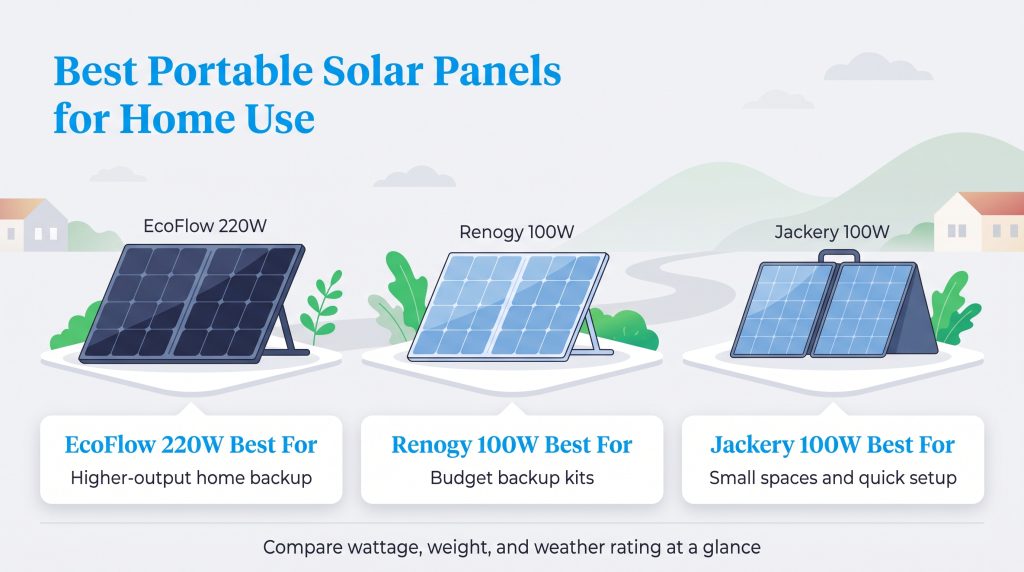
Reviewing the key specifications of our top picks side-by-side can help you narrow down your options quickly. Use this comparison table to identify which portable solar panel aligns best with your budget, space constraints, and emergency energy needs.
| Pick | Best For | Wattage | Weight | Weather Rating | Battery Compatibility | Price |
|---|---|---|---|---|---|---|
| EcoFlow 220W Bifacial Portable Solar Panel | Higher-output home backup | 220W | ~21 lbs | IP68 | MC4 connectors | ~$298.99 |
| Renogy 100W Portable Solar Panel | Budget backup kits | 100W | 9.5 lbs | IP65 | MC4 connectors | ~$112.49 |
| Jackery SolarSaga 100W | Small spaces and simple setup | 100W | 11.6 lbs | IP68 | Best with Jackery (DC 8mm) | ~$199.99 |
Best Overall Portable Solar Panel for Home Backup
For those seeking a highly capable home backup setup, the EcoFlow 220W Bifacial Portable Solar Panel stands out as the premium choice. We rank this model as one of the best portable solar panels for home use because its dual-sided design captures sunlight from both the front and the ambient light reflecting off the ground behind it. It features a rugged IP68 waterproof rating, ensuring it easily shakes off heavy rain and dusty conditions without missing a beat.
- Wattage: 220W front / 155W rear
- Weight: ~21 lbs
- Folded Dimensions: 32.3 x 19.7 x 1.3 in
- Connector: MC4 connectors
This panel is a strong fit if you want higher output in a foldable design, but it’s heavier than many 100W options and may require adapter planning. Check the connector before you buy. Some panels use MC4 connectors, while others use brand-specific plugs, so you may need an adapter to connect the panel to your power station.
Best Budget Portable Solar Panel
You definitely don’t have to empty your wallet to secure reliable emergency power for your family. The Renogy 100W Portable Solar Panel acts as an excellent, high-value entry point for anyone seeking the best budget portable solar panels. Coming in at an affordable price, this 100W unit provides enough juice to help recharge your essential communication devices and small electronics. It features a lightweight frame and sturdy kickstands, allowing you to quickly set it up in the backyard when the grid fails.
- Wattage: 100W
- Weight: 9.5 lbs
- Folded Dimensions: 24.3 x 21.1 x 1.8 in
- Connector: MC4 connectors
💸 Money-Saver: Maximize your panel’s efficiency by angling it directly at the sun and tweaking its position every few hours to capture the most direct rays possible.
Best Foldable Portable Solar Panel for Small Spaces
If you live in a tiny home, an apartment, or just lack extra closet space, the Jackery SolarSaga 100W is an excellent, space-saving option. This highly compact foldable solar panel charger neatly collapses down to the size of a standard briefcase, slipping effortlessly under a bed or into a crowded hallway closet. We love the heavy-duty durability of the reinforced seams and the convenient magnetic closures that keep things locked tight during storage. Setup takes less than a minute, snapping open with minimal effort so you can start soaking up the sun immediately.
- Wattage: 100W
- Weight: 11.6 lbs
- Folded Dimensions: 24.0 x 21.0 x 1.4 in
- Connector: DC 8mm (Jackery-specific)
Keep in mind that the proprietary connector is designed specifically for Jackery power stations, meaning you’ll need an adapter if you plan to plug it into a different brand’s battery bank.
How Much Solar Panel Wattage Do You Need?
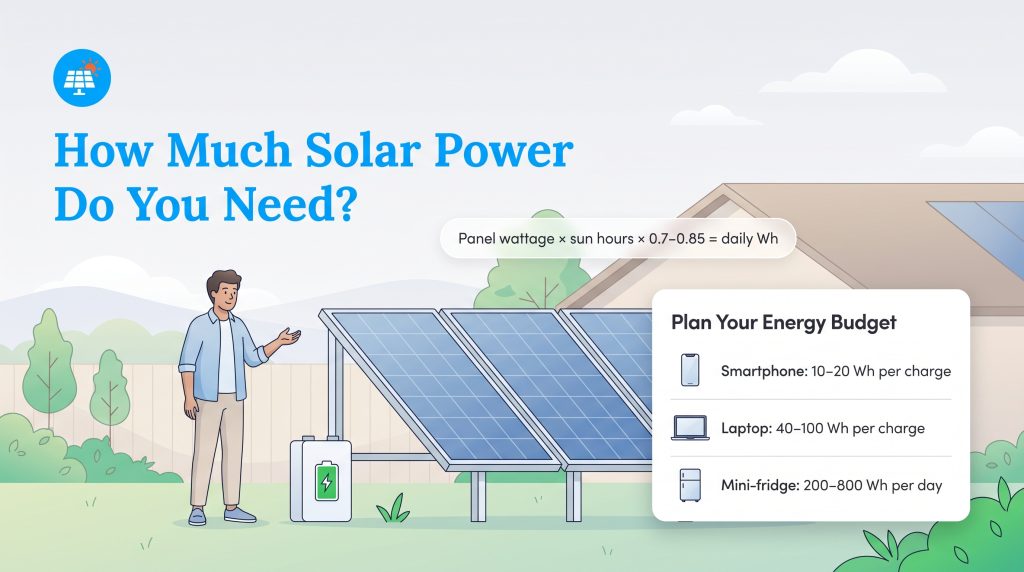
Understanding electrical jargon can feel overwhelming, but wattage simply measures how much energy a specific device uses or produces. To figure out what a panel can comfortably handle, you just need to match its wattage output to the demands of your household electronics and your battery’s capacity. Keep in mind that finding ways to efficiently power your essentials goes hand-in-hand with learning how to save on your electric bill throughout the year.
To estimate your daily energy, use this simple formula: Panel wattage × peak sun hours × 0.70 to 0.85 = estimated usable watt-hours per day. For example, a 200-watt panel in four hours of strong sun may generate roughly 560 to 680 usable watt-hours after efficiency losses. Use the chart below to plan your energy budget.
| Device | Approximate Use | Backup Planning Note |
|---|---|---|
| Smartphone | 10–20Wh per charge | Easy for almost any panel and battery |
| Wi-Fi router | 10–20W per hour | Needs a battery for evening use |
| Laptop | 40–100Wh per charge | 100W+ panel recommended |
| CPAP machine | Often 30–60W per hour | Verify your exact model and humidifier use |
| Mini-fridge | Often 200–800Wh per day | Needs a power station, not just a panel |
These are general estimates. For nighttime use or appliances with steady power needs, always pair the panel with a portable power station rather than relying on direct sunlight.
🚩 Heads Up: If you rely on a CPAP machine or another medical device, check the device’s wattage, battery runtime, and manufacturer guidance. For critical medical needs, keep a charged backup battery and follow your health provider’s emergency plan.
Portable Solar Panels vs. Gas Generators
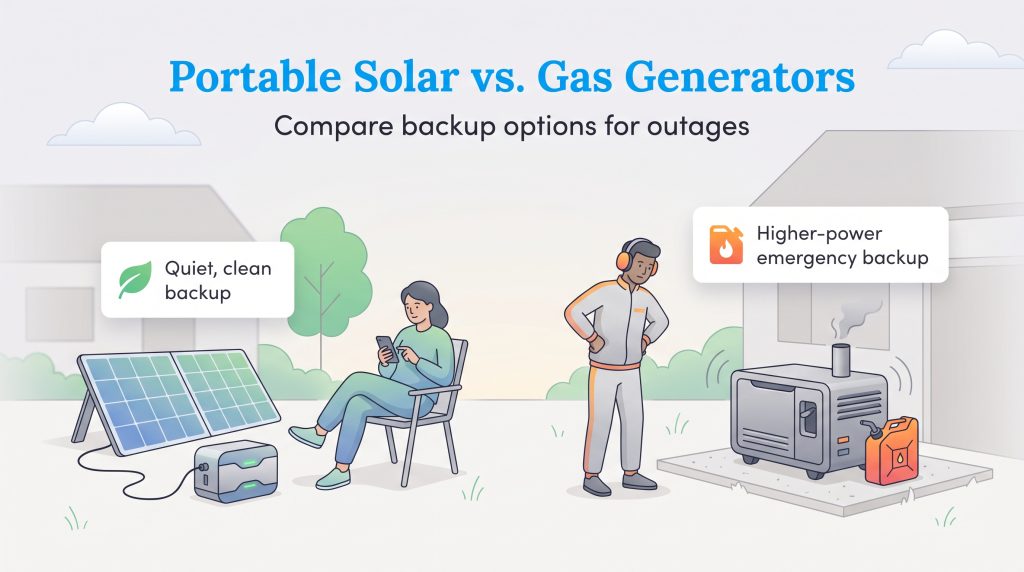
When preparing a power outage preparation guide for your family, you might wonder if traditional gas generators are a better route. Both options have distinct strengths, and reviewing their benefits and drawbacks can ensure you choose the best equipment for your living situation.
| Option | Best For | Benefits | Drawbacks |
|---|---|---|---|
| Portable solar panel + battery | Quiet backup for small essentials | No fuel, no exhaust, low noise | Slower charging, weather-dependent |
| Gas generator | Higher-wattage emergency power | Can run larger appliances | Fuel storage, noise, emissions, outdoor-only use |
| Rooftop solar + battery | Long-term home backup | High capacity, long-term savings potential | Higher upfront cost, permanent installation |
How to Choose a Portable Solar Panel for Your Home
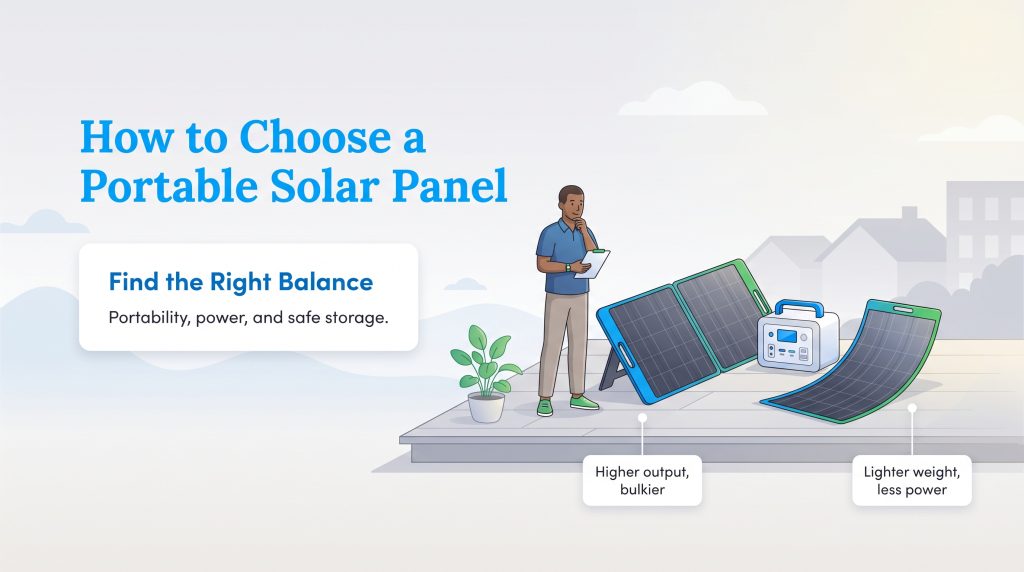
Navigating the growing market of eco-conscious gadgets requires knowing exactly what your household demands during a blackout. We designed this brief buyer’s guide to help you figure out how to choose a portable solar panel that perfectly matches your lifestyle. If you decide to scale up your setup later, you can always look into planning your solar electric system at home for more permanent coverage.
Understanding Portability vs. Power Output
Finding the sweet spot between carrying weight and energy generation dictates how useful your setup will actually be in an emergency. When comparing flexible vs folding solar panels, flexible models are incredibly lightweight but typically sacrifice output, whereas folding models pack a bigger wattage punch in a slightly bulkier frame. A solid benchmark for home emergency use is aiming for roughly 10 to 15 watts per pound of panel weight. This ratio guarantees you capture enough power to run critical appliances without lugging around an exhaustingly heavy piece of equipment.
The Importance of Battery Banks and Storage
Harnessing the sun’s rays during the afternoon is wonderful, but a solar panel alone won’t keep your lights on after dusk. Integrating portable solar panels with battery bank systems allows you to aggressively capture that daytime energy and safely store it for the evening hours. A dedicated power station acts as the brain of your backup grid, regulating the electrical flow to sensitive electronics while holding an impressive reserve charge. Investing in comprehensive home solar solutions means prioritizing energy storage so your refrigerator and medical devices never unexpectedly lose power when the clouds roll in.
Safety Considerations for Apartment Renters
Because portable solar panels are highly attractive to apartment dwellers, it’s important to keep a few practical safety details in mind. Never hang panels over balcony railings unless your building rules explicitly allow it, and avoid blocking walkways or emergency exits during deployment. Remember that setting up panels behind glass windows significantly reduces their power output, as modern window glazes limit solar exposure. Finally, always keep your power station indoors, dry, and within the manufacturer’s recommended temperature limits.
Build a Backup Power Plan That Fits Your Home
Taking the initiative to establish a dependable, eco-conscious backup power plan dramatically reduces the anxiety of unpredictable grid failures. Guarding against unexpected outages goes hand in hand with smartly managing your home electric utilities all year round. You deserve the comfort of knowing your essential devices will stay running regardless of what the weather brings to your front door. Start by listing the essentials you need during an outage, then choose a panel and battery setup that can realistically keep those devices charged.
Frequently Asked Questions About Portable Solar Panels
If you still have questions about navigating backup power solutions, we have you covered. Review these common inquiries to ensure you confidently find the perfect setup for your household.
Are portable solar panels worth it for home use?
What can a 200-watt portable solar panel actually run?
Can I leave my portable solar panel outside in the rain?
Do I need a battery bank to use a portable solar panel?
How long do portable solar panels last?
Can portable solar panels power a whole house?
Do portable solar panels work on an apartment balcony?
Is a 100W or 200W portable solar panel better for home backup?
About the Author

LaLeesha has a Masters degree in English and enjoys writing whenever she has the chance. She is passionate about gardening, reducing her carbon footprint, and protecting the environment. She also recently served as President of the Board for City Sprouts (a community garden).

David has been an integral part of some of the biggest utility sites on the internet, including InMyArea.com, HighSpeedInternet.com, BroadbandNow.com, and U.S. News. He brings over 15 years of experience writing about, compiling and analyzing utility data.

Jared Evans is a licensed electrician and the owner of Full Circuit Electric in Omaha, Nebraska. As an expert reviewer for UtilitiesForMyHome.com, Jared uses his 10+ years of hands-on experience to ensure our electrical advice is safe, accurate, and easy to follow. Whether he's troubleshooting a complex wiring issue or sharing tips on green energy upgrades, Jared is dedicated to helping you power your home efficiently — and safely.