

Heating oil contains more energy per gallon, but local prices, equipment efficiency, and tank costs determine which fuel offers better value.
Key Takeaways
- Heating oil contains about 1.5 times as much energy per gallon as propane, meaning per-gallon prices are misleading unless you calculate the cost per usable BTU.
- Propane furnaces can reach up to 98% efficiency and offer whole-home appliance versatility, whereas heating oil is typically limited to primarily space and water heating.
- Your existing tank ownership and home setup often dictate the smartest financial choice, especially when factoring in the high upfront cost to convert systems.
Moving into one of the millions of American homes without piped natural gas service usually comes with an immediate surprise: a massive metal tank sitting in your basement or buried in the yard. If you’ve never lived beyond the city gas grid, staring at that tank leaves you wondering how much it’ll actually cost to keep your living room warm in January. Because delivery trucks price their fuel by the gallon rather than by how much heat it produces, comparing your options gets confusing fast. We’re breaking down heating oil vs. propane across real-world heating math, furnace efficiency, tank leasing rules, and eco-conscious upgrades so you can manage your home’s delivered-fuel heating setup with confidence.
Heating Oil vs. Propane at a Glance
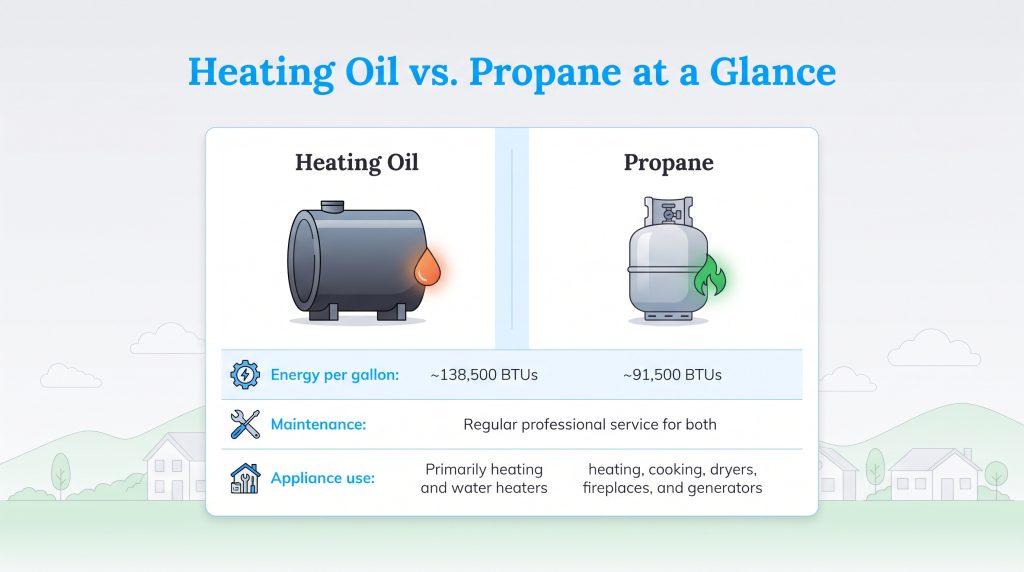
Because we don’t sell fuel or install furnaces, we can look objectively at how both delivered-fuel options stack up in a typical home. The main trade-offs involve cost, maintenance, and appliance flexibility. Here is how heating oil vs. propane compares across eight core homeowner metrics, from energy output to annual maintenance.
| Feature | Heating Oil (No. 2 Fuel Oil) | Propane (LP Gas) |
|---|---|---|
| Energy Content (BTUs per Gallon) | ~138,500 BTUs | ~91,500 BTUs |
| Equipment Efficiency (AFUE) | 83% to 87% (Standard) / up to 95% (High-Efficiency) | 80% to 90% (Standard) / up to 98% (Condensing) |
| Average Upfront Equipment Cost | Get an installed quote for comparable equipment | Get an installed quote for comparable equipment |
| Equipment Lifespan | Varies by equipment type and service schedule | Varies by equipment type and service schedule |
| Tank Location & Ownership | Usually indoors/basement (varies, often homeowner-owned) | Outdoors/buried (varies, often leased from supplier) |
| Appliance Versatility | Primarily space heating and water heaters | Heating, cooking stoves, dryers, fireplaces, and generators |
| Annual Maintenance Needs | Requires regular professional service | Requires regular professional service |
| Eco-Conscious Alternative | Bioheat (compatibility depends on burner and blend) | Renewable propane (regional availability varies) |
Heating Oil vs. Propane BTU: Why Price Per Gallon Misleads You
The biggest myth in off-grid home heating is that you can compare the per-gallon price of heating oil directly to a gallon of propane. You don’t buy heating fuel for its liquid volume — you buy it for its heat output, which is measured in British Thermal Units (BTUs). According to data on heating oil prices and energy content from the U.S. Energy Information Administration (EIA), a single gallon of heating oil packs roughly 138,500 BTUs, while a gallon of propane holds about 91,500 BTUs. When comparing the raw energy density, that creates a 1.5-to-1 ratio: you have to burn about 1.5 gallons of propane to get the exact same raw heat as one gallon of heating oil.
Is Propane Cheaper Than Heating Oil?
When homeowners ask, “Is propane cheaper than heating oil?” the answer depends on regional supply lines and how you run the math. To understand the true propane vs. oil heat cost, look at a realistic winter pricing example. Suppose your local heating oil dealer charges $3.60 per gallon and the propane company down the road advertises $2.80 per gallon. Propane looks like a bargain on the billboard, right? Not quite. However, “one gallon contains roughly 1.5 times the energy” is not the same as “one gallon provides 1.5 times the useful heat.” Equipment efficiency changes the comparison. If we assume an 85% efficient oil furnace and a 95% efficient propane furnace, the true fuel cost per million usable BTUs is about $30.58 for heating oil and $32.21 for propane. Under those specific assumptions, propane would need to drop to approximately $2.66 per gallon — or roughly 74% of the oil price — just to break even.
A Simple Heating Oil vs. Propane Calculator Formula for Your Home
Since fuel prices shift by zip code and winter weather, you don’t need a complicated online heating oil vs. propane calculator to find out which fuel wins in your neighborhood. You can run your own local numbers in 60 seconds using this three-step formula to find your true estimated fuel cost per million BTUs of usable heat, keeping in mind this calculation excludes maintenance, electricity, tank fees, and heat-distribution losses:
- Find your usable BTUs per gallon: Multiply the raw energy content — 138,500 for oil or 91,500 for propane — by your furnace’s efficiency rating as a decimal (for example, multiply 138,500 by 0.85 for an 85% efficient oil furnace to get 117,725 usable BTUs, or multiply 91,500 by 0.95 for a 95% efficient propane unit to get 86,925 usable BTUs).
- Calculate the gallons needed for one million BTUs: Divide 1,000,000 by your usable BTUs per gallon (that equals about 8.5 gallons of heating oil vs. 11.5 gallons of propane).
- Multiply by your local fuel price: Multiply that gallon figure by your local supplier’s per-gallon quote to see what one million BTUs of living room warmth actually costs you.
Money-Saver
Compare both fuels using your equipment’s efficiency, not gallon prices alone. Divide each per-gallon quote by its usable BTUs per gallon, then multiply by 1,000,000 to compare fuel costs on the same basis.
Oil Furnace vs. Propane Furnace: Efficiency, Equipment, and Upfront Costs
The fuel sitting in your tank is only half the equation; the metal box burning it in your basement determines how much of that heat actually reaches your vents or radiators. Heating systems are rated by Annual Fuel Utilization Efficiency (AFUE), which measures what percentage of your fuel turns into home warmth vs. how much escapes up the chimney. When weighing an oil furnace vs. propane furnace, checking the U.S. Department of Energy guide on furnaces and boilers helps clarify how burner design impacts your winter budget.
Comparing Heating Oil vs. Propane Efficiency Ratings
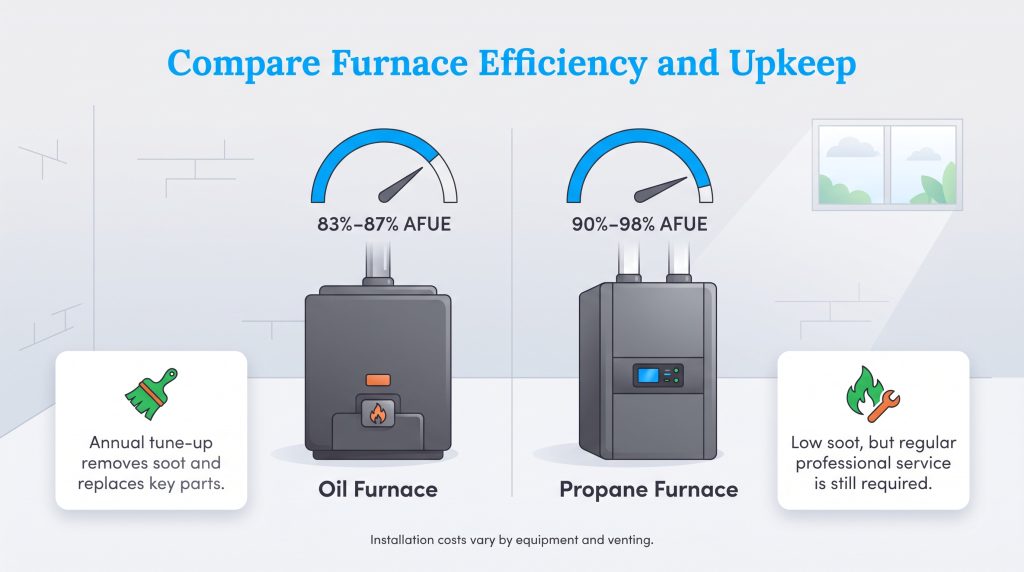
If you look purely at the efficiency ratings on the equipment sticker, propane often displays a higher number. Standard oil furnaces and boilers typically operate between 83% and 87% AFUE, while modern condensing propane furnaces can reach 90% to 98% AFUE. To earn the ENERGY STAR certification for high-efficiency furnaces, requirements differ based on equipment categories and regional climate zones, but propane units generally must hit a higher baseline than oil. Why the gap? Condensing propane equipment recovers additional heat from exhaust gases. Vent materials and installation requirements vary by model, while oil systems may use a chimney or approved direct-vent configurations depending on the appliance’s listing and local codes.
Upfront Installation, Maintenance, and Lifespan
While propane equipment frequently offers higher efficiency, heating oil equipment has historically maintained a strong reputation for durability. Comparing a cast-iron oil boiler to a condensing propane furnace with complex electronic sensors isn’t a like-for-like scenario, so equipment lifespans vary heavily based on the exact model you select. The trade-off is yearly maintenance. Because heating oil creates soot and sediment as it burns, an oil system requires a non-negotiable annual tune-up to maintain optimal performance where a technician brushes out the heat exchanger and replaces the oil filter, burner nozzle, and pump strainer. Propane burns with virtually zero soot, but both systems require regular professional service to ensure safety and efficiency.
Storage Tanks, Delivery Contracts, and Day-to-Day Living
New homeowners rarely learn about the quirkier side of off-grid heating until after closing day. Beyond furnace specs, the real-world oil vs. propane heat pros and cons often boil down to how the fuel is stored on your property and how delivery companies lock you into pricing structures.
Tank Ownership vs. Leasing Traps
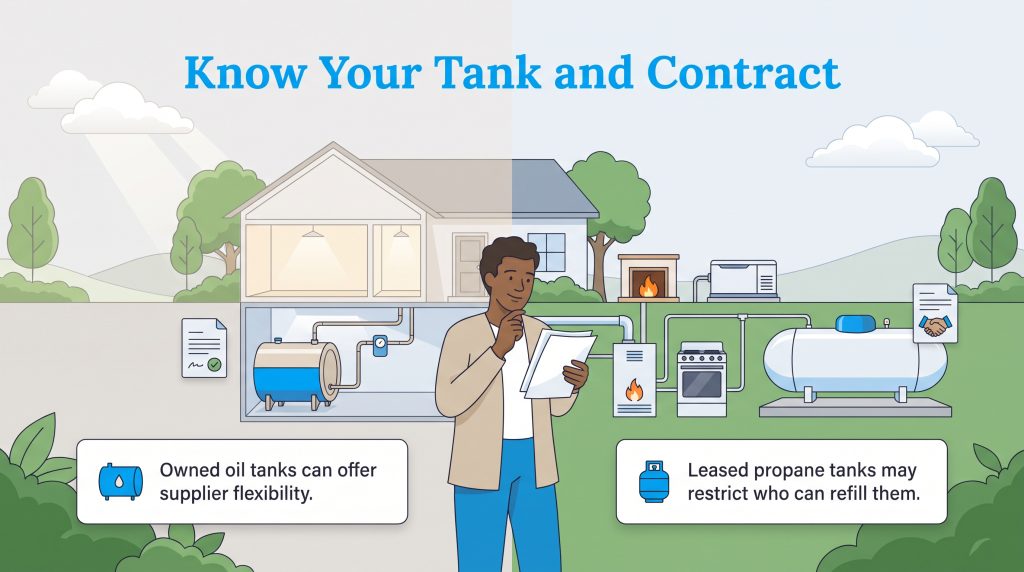
Walk down into the basement of an oil-heated home and you’ll usually see a 275-gallon steel or fiberglass-lined tank sitting in the corner. In many cases, that heating oil tank is owned outright by the homeowner. Owning your tank gives you total freedom: if your oil company raises prices, you can hop online and call any discount “will-call” oil dealer in town for a delivery the next day. Propane works differently. Large residential propane tanks (typically 500 to 1,000 gallons) sit outdoors or underground and are frequently leased from the propane supplier. A supplier-owned tank may restrict which companies can refill it. Review the lease, applicable rules, and switching fees before choosing a supplier to avoid being locked into uncompetitive per-gallon rates. Furthermore, a tank nameplate doesn’t establish ownership on its own, so verify your status through closing documents or your supplier.
Heads Up
Have an older oil tank and its fuel lines inspected before closing, especially if a tank is buried or shows corrosion. Ask your insurer what coverage applies to leaks and cleanup because standard homeowners policies may exclude pollution-related losses.
Whole-Home Versatility and Storm Readiness
Where propane truly separates itself in day-to-day living is appliance versatility. Heating oil is primarily utilized for space and water heating. A single outdoor propane tank, however, can pipe gas to your furnace, water heater, chef’s kitchen range, clothes dryer, living room fireplace insert, outdoor grill, and a standby whole-home generator. Propane also has an indefinite shelf life. While untreated heating oil can oxidize and develop tank sludge over time depending on storage conditions and fuel quality, propane never goes bad in the tank, making it an excellent fuel for winter storm readiness.
Heating Oil vs. Propane Environmental Impact and Eco-Conscious Upgrades
Both fuels produce emissions, but their impacts differ. Still, if you’re looking for environmentally mindful home upgrades, looking at the actual carbon math — and the cleaner fuel blends hitting the market today — gives you practical ways to shrink your winter footprint without freezing.
Carbon Footprint per Million BTUs and Cleaner Fuel Blends
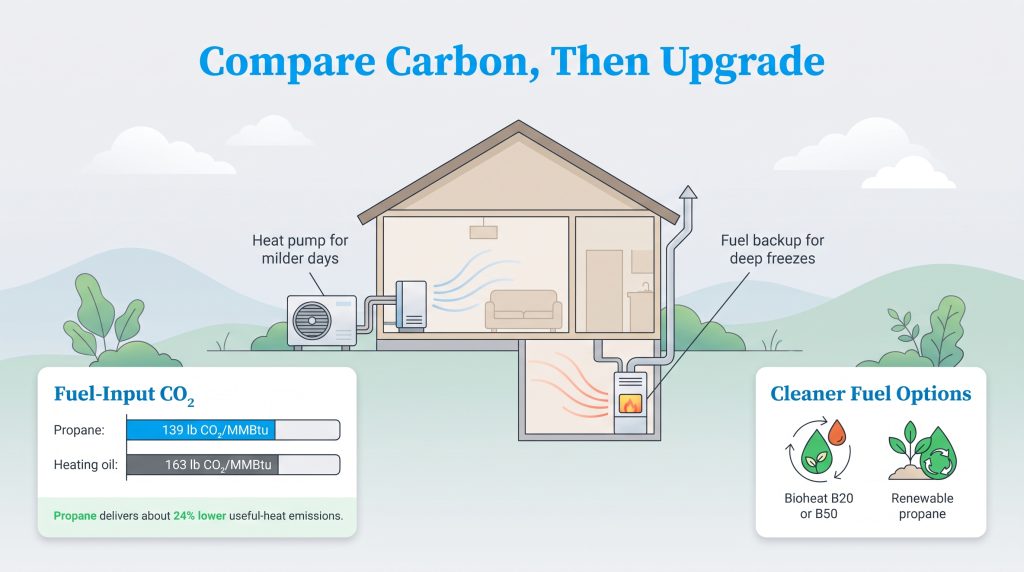
You’ll often hear that propane is much cleaner than heating oil, and on a per-gallon basis, that’s true. However, remember our BTU math: you have to burn 1.5 gallons of propane to get the raw heat of one gallon of oil. When you measure fuel-input combustion factors, conventional propane produces roughly 139 pounds of carbon dioxide per million BTUs compared to about 163 pounds for traditional heating oil. Factoring in equipment efficiencies of 95% for a propane furnace and 85% for an oil furnace, propane’s useful heat combustion advantage jumps to about 24%. Just keep in mind that this comparison excludes upstream production and transportation emissions. Fortunately, both industries now offer drop-in, low-impact alternatives:
- Bioheat (for oil systems): This eco-conscious alternative blends ultra-low-sulfur heating oil with renewable biodiesel made from recycled restaurant cooking oils, plant oils, and agricultural byproducts. Commonly delivered as B20 (20% biodiesel) or B50 (50% biodiesel), Bioheat can cut lifecycle carbon emissions, though equipment compatibility depends entirely on your specific burner, seals, and manufacturer approval.
- Renewable Propane: Chemically identical to conventional propane, renewable propane is refined from sustainable biomass, plant oils, and non-petroleum waste feedstocks, offering a steep reduction in lifecycle carbon intensity. However, residential availability varies greatly by region, and the true lifecycle benefits depend on the exact feedstock and production pathway.
Eco Edge
Instead of ripping out a working oil or propane furnace, consider a dual-fuel hybrid heating setup by pairing an electric air-source heat pump with your existing system. Depending on your heating load, capacity, and local electricity rates, the heat pump handles mild and moderate winter days efficiently, while your oil or propane burner serves as a heavy-duty backup during deep freezes.
Converting From Oil to Propane: When Does Switching Make Sense?
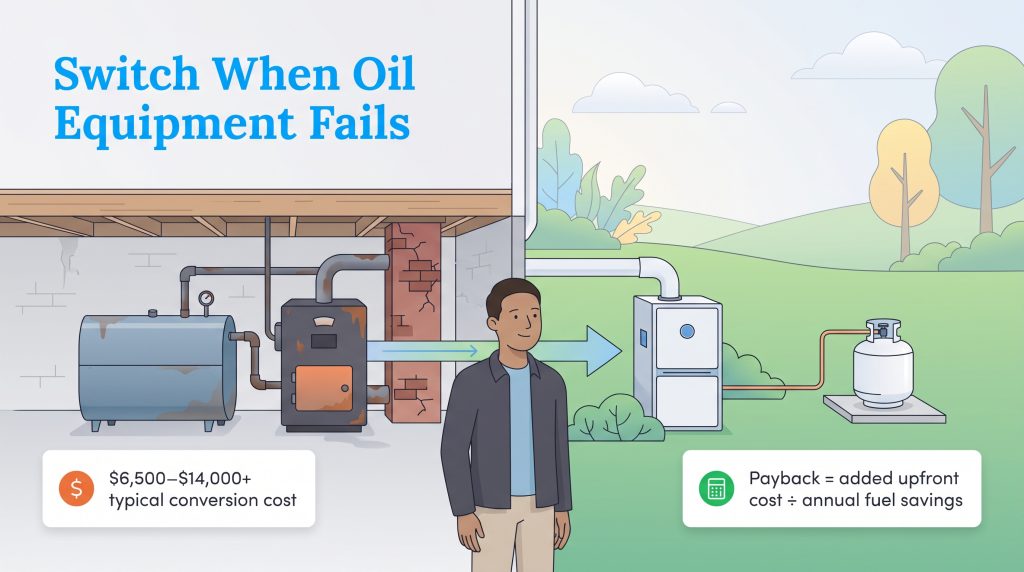
If you just inherited an aging oil furnace and a bulky basement tank, you’ve probably thought about converting from oil to propane. Homeowners usually consider the switch to reclaim basement storage space, eliminate the faint smell of fuel oil during filter changes, add a gas cooking range upstairs, or avoid rebuilding a crumbling masonry chimney.
Breaking Down the Incremental Cost to Convert Oil to Propane
Before calling an HVAC contractor, you need a realistic picture of the cost to convert oil to propane, which typically runs between $6,500 and $14,000 or more. Contrary to popular belief, you usually cannot just swap a burner part on an oil furnace to burn propane; because the heat exchangers and safety controls are completely different, you’ll need to replace the entire heating unit. Your project budget will need to cover four major line items:
- Oil tank removal and decommissioning: Pumping out leftover fuel and hauling a basement tank away costs $500 to $1,500 (or significantly more if an old tank is buried in the yard).
- New high-efficiency propane furnace or boiler: Expect to pay $4,500 to $8,500 for the unit and installation labor.
- Propane tank setup and gas piping: Pouring a concrete pad for an above-ground tank or excavating a trench for a buried tank, plus running copper gas lines to your basement, adds $1,000 to $3,500.
- Exhaust venting upgrades: Running new approved vent pipes for a condensing furnace or sliding a stainless steel liner down your existing chimney.
So, when does converting pay off? Calculate your simple payback by dividing the additional upfront conversion cost by your estimated annual fuel savings. If the proposed system costs more to operate, there is no fuel-savings payback. If your current oil furnace and tank are in good shape, spending $10,000 to switch to propane purely to “save on monthly winter bills” rarely pays for itself. However, if both your existing oil furnace and your aging oil tank need replacement at the exact same time, putting that replacement budget toward a clean-burning propane system — or an energy-saving option like a hybrid heat pump — could be a smart financial decision.
Before Move-In and During Your First Week
When you’re setting up utilities in your new home, delivered-fuel setups don’t turn on with a simple phone call to a city utility desk. Doing five minutes of detective work before you arrive and during your first week in the house prevents a freezing midnight emergency in the middle of winter.
- Verify who owns the tank: Check your purchase records, closing documents, lease paperwork, and the supplier to confirm tank ownership.
- Arrange your supplier account before move-in: Review minimum deliveries, rental charges, emergency fees, cancellation terms, and price-cap fees.
- Check the fuel gauge immediately: On a basement oil tank, look at the clear plastic tube on top with the red marker (1/4, 1/2, 3/4, Full). On an outdoor propane tank, lift the metal dome cover and check the percentage dial. Ask your supplier when to reorder based on these readings.
- Locate maintenance records: Look for the paper maintenance tag wired to your burner or pipes to see which local company serviced the system last and schedule service if needed.
- Prepare your alarms and backup power: Test your smoke and carbon monoxide alarms according to applicable requirements. Keep in mind that most central oil and propane heating systems need electricity to operate, so having fuel in the tank doesn’t guarantee heat during an outage.
Pro Tip
Keep your supplier’s emergency details accessible and ask them how to respond to a suspected leak or gas odor. Also, avoid letting an older heating oil tank drop below 1/4 full, and schedule your order well before severe weather arrives.
Making the Best Heating Fuel Choice for Your Home
If your existing oil system is safe and working well, compare its remaining service life and operating costs with the full cost of replacement. Propane may offer appliance flexibility, but it isn’t automatically cheaper to install or operate. If you have a healthy oil system, you can enjoy dense, high-BTU warmth and total freedom to shop around for discount fuel deliveries, especially if you upgrade to cleaner-burning Bioheat. If you’re replacing worn-out gear or crave the convenience of a gas stove, fireplace, and backup generator running off one low-maintenance tank, propane is an incredibly versatile option. By running the per-BTU math, staying on top of annual tune-ups, and exploring hybrid heat pumps when replacement time rolls around, you’ll keep your home cozy all winter without overpaying.
Frequently Asked Questions About Heating Oil vs. Propane
Understanding how to manage delivered-fuel heating systems can save you money and prevent winter emergencies. Below are some common questions homeowners have when comparing heating oil and propane setups.
Can I Use My Existing Heating Oil Furnace If I Switch To Propane?
What Happens If My Heating Oil Or Propane Tank Runs Completely Empty?
Does Heating Oil Or Propane Freeze In Extreme Winter Weather?
Why Do So Many Homes Use Heating Oil For The Furnace And Propane For The Stove?
Does Having A Heating Oil Or Propane System Affect My Homeowners Insurance?
Should I Switch From Heating Oil To Propane Or Go Straight To An Electric Heat Pump?
About the Author

David has been an integral part of some of the biggest utility sites on the internet, including InMyArea.com, HighSpeedInternet.com, BroadbandNow.com, and U.S. News. He brings over 15 years of experience writing about, compiling and analyzing utility data.

Claudio is a sustainability-focused writer with a background in Anthropology and Psychology from NC State University. He has spent over 15 years working in writing, interpretation, and translation, driven by a deep interest in how human culture shapes the environment. Today, he shares his curiosity with readers by writing about sustainable living solutions and the connection between everyday choices and environmental impact.