

Regularly maintaining your septic system prevents expensive plumbing disasters and protects your local environment
Key Takeaways
- Pump your septic tank every three to five years depending on your household size and daily water usage.
- Never flush anything other than human waste and toilet paper to keep your system flowing smoothly and avoid clogs.
- Conserve water and stagger heavy usage, like laundry days, to avoid overloading your septic drain field.
Moving from a city sewer line to a rural or suburban home often comes with a bit of a learning curve, especially when you discover your new property relies on a private wastewater setup. While managing your own septic system might sound incredibly intimidating at first, you actually don’t need a plumbing degree to keep things running smoothly. Implementing a few easy daily habits is all it takes to avoid stressful plumbing backups right in your own backyard. We compiled these essential septic system maintenance tips to give you total peace of mind and help you protect your home’s infrastructure for decades to come.
How Your Septic System Works
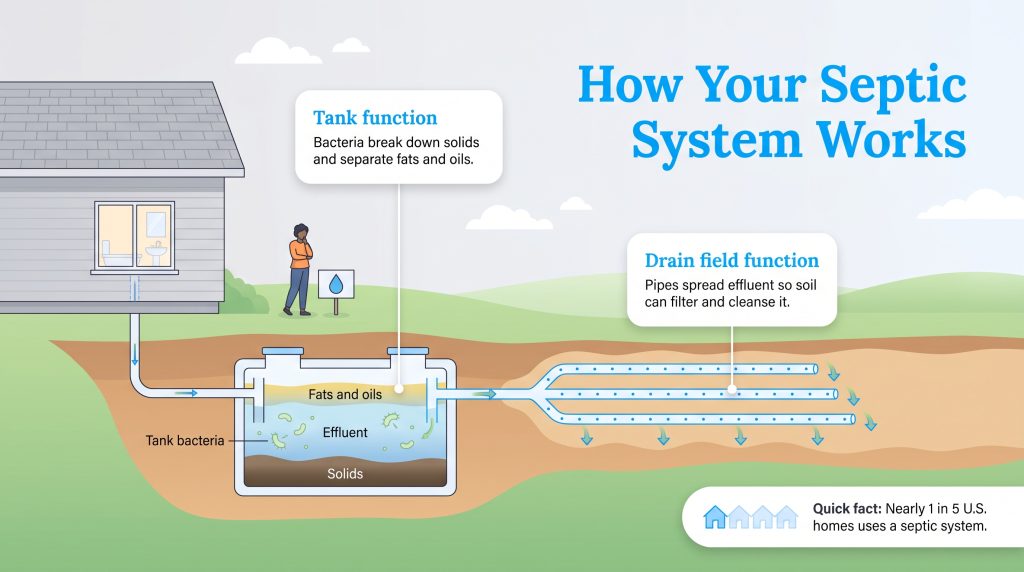
To fully appreciate why consistent upkeep matters, you first need to understand how a septic system works at a basic level. All the wastewater from your sinks, showers, and toilets flows into a buried, watertight container where heavy solids settle at the bottom and lighter fats float to the top. The remaining liquid — often called effluent — exits the chamber and disperses into a designated outdoor area, allowing the soil to naturally filter and purify the water before it reaches groundwater or nearby waterways.
- Tank Function: Naturally occurring bacteria live inside the watertight chamber and actively break down organic solid waste over time.
- Drain Field Function: A shallow, underground network of perforated pipes efficiently distributes the treated liquid effluent into the surrounding porous soil.
Pump and Inspect Your Septic Tank on Schedule
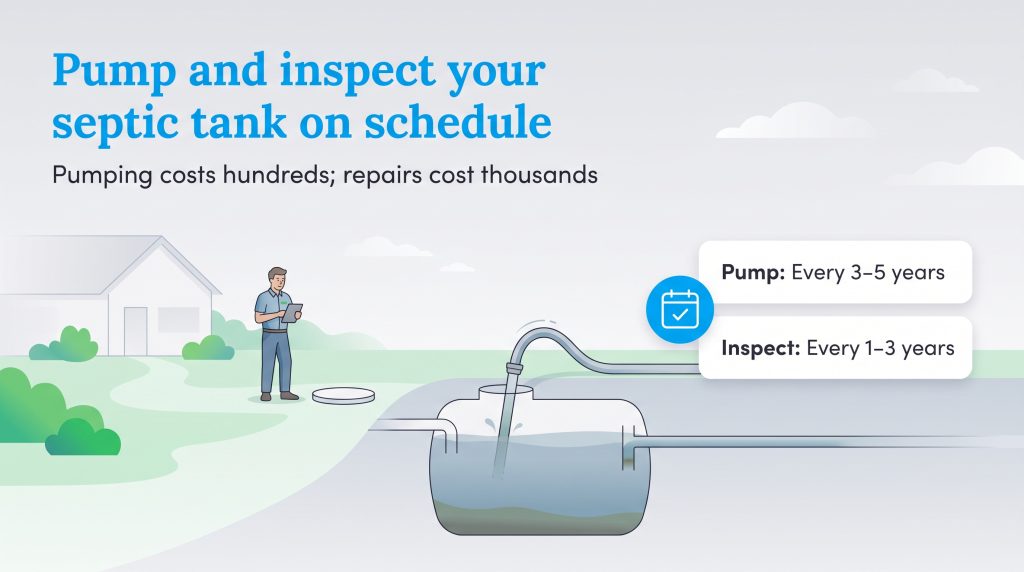
Establishing and strictly adhering to a routine pumping and inspection schedule is the single most critical aspect of septic system care for beginners. When you skip this important maintenance step, the sludge layer at the bottom of your tank thickens until solid waste eventually overflows into the delicate drain field pipes. If solids reach the drain field, they can clog the soil and pipes that treat wastewater. That kind of damage is much more expensive to fix than routine pumping. Most conventional septic tanks need professional pumping every three to five years, but your exact schedule depends on tank size, household size, water use, and whether you use a garbage disposal. The EPA recommends professional inspections at least every one to three years, while alternative systems may need more frequent checks. We highly recommend reviewing the EPA’s official guidelines on how to care for your system to better understand your specific needs.
Watch What You Flush and Pour Down Drains
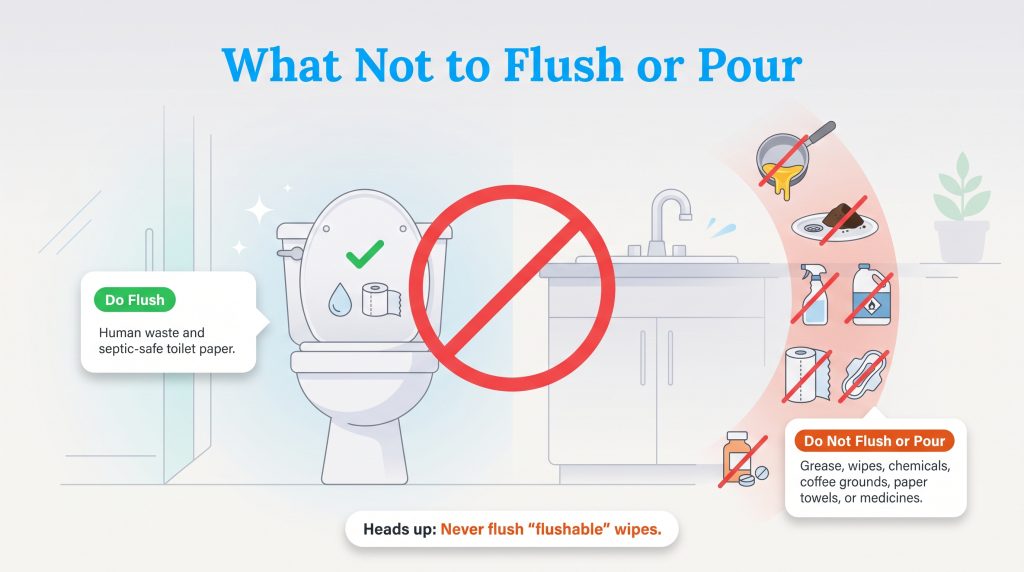
The golden rule of private wastewater management is incredibly straightforward: your toilets and sinks are not trash cans. Knowing what not to flush keeps your septic tank and pipes clear, prevents solid waste accumulation, and stops non-biodegradable items from damaging your pump chamber. If your home has a garbage disposal, use it sparingly. Food scraps add solids to the tank, and frequent use can shorten the time between pump-outs.
- Do flush human waste and septic-safe, easily dissolvable toilet paper.
- Don’t pour cooking grease, fats, or heavy oils down your kitchen sink.
- Don’t wash coffee grounds or harsh chemicals down the drain.
- Don’t flush paper towels, tissues, or feminine hygiene products.
- Don’t dispose of unused medications or pharmaceuticals in your toilet.
Use Septic-Safe Cleaning Products Wisely
The health of your underground tank relies entirely on a delicate ecosystem of living bacteria that actively consume and break down solid waste. Large amounts of bleach, ammonia, chemical drain cleaners, solvents, or antibacterial products can disrupt the bacteria your septic tank needs to break down waste. Occasional, diluted household cleaning is usually less risky, but septic owners should avoid pouring harsh chemicals directly down drains. Without healthy bacteria doing the heavy lifting, solid sludge builds up much faster, forcing you to schedule expensive pumping services far more frequently. When possible, choose septic-safe cleaning products throughout your home and use all cleaning items according to their labels.
Adopting these greener alternatives easily fits into broader eco-conscious household habits that benefit both your wallet and the planet.
Save Water to Protect Your Drain Field
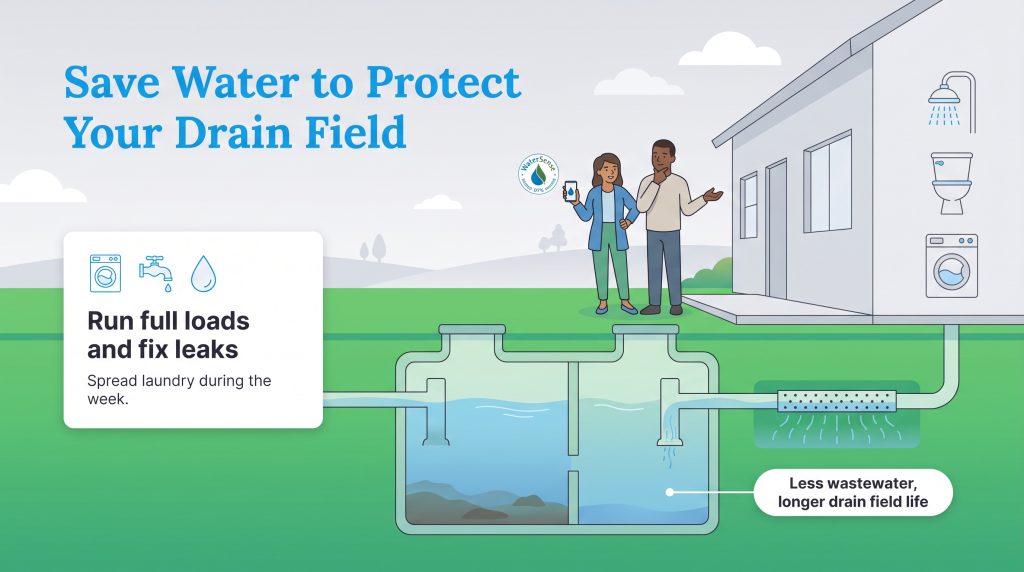
Conserving water is a crucial eco-conscious alternative to letting water run unnecessarily. Chronic high water usage forces solid waste into the drain field before it has proper time to settle at the bottom of the tank. Try running full laundry loads instead of multiple small loads, and spread your laundry across the week rather than doing it all in one day. Always fix running toilets quickly and avoid draining hot tubs or large volumes of water into your septic system.
Upgrading your indoor plumbing fixtures offers an excellent way to reduce daily wastewater output without changing your family’s lifestyle. You can explore the EPA WaterSense-labeled toilets and fixtures to see how installing high-efficiency showerheads and toilets significantly reduces the overall strain on your tank. Incorporating these upgrades is a brilliant foundation for smarter home water conservation and management tips.
Keep Heavy Weight and Deep Roots Off the Drain Field
Your outdoor drain field remains the most fragile component of the entire wastewater setup, as the shallow underground pipes are easily crushed or compacted by heavy weight. Proper septic drain field maintenance requires you to protect the soil above the pipes so liquid effluent can freely evaporate and filter downwards.
- Don’t park vehicles or heavy equipment on the lawn above the drain field, and avoid building structures like sheds or patios over the area.
- Direct rainwater away from the drain field using gutters, downspouts, and landscape grading to prevent accidental flooding and soil saturation.
- Plant only grass over the drain field — never plant trees, vegetables, or deep-rooted shrubs that will inevitably pierce and destroy the underground pipes.
Keep Septic Records From Day One
Moving into a new home with a private wastewater setup means you are officially responsible for all tank pumping and inspections. To make this transition easier, establish a dedicated file for all of your system’s documentation. Ask the previous owner or your real estate agent for past pumping and inspection records, and be sure to note the tank size, system age, and drain field location. Keep receipts from every pump-out and repair, and save the contact information of a trusted local septic contractor. Reviewing these documents and checking local health department rules before renovating, adding bedrooms, or installing new landscaping will help you make informed decisions during your move.
Your Simple Septic Maintenance Schedule
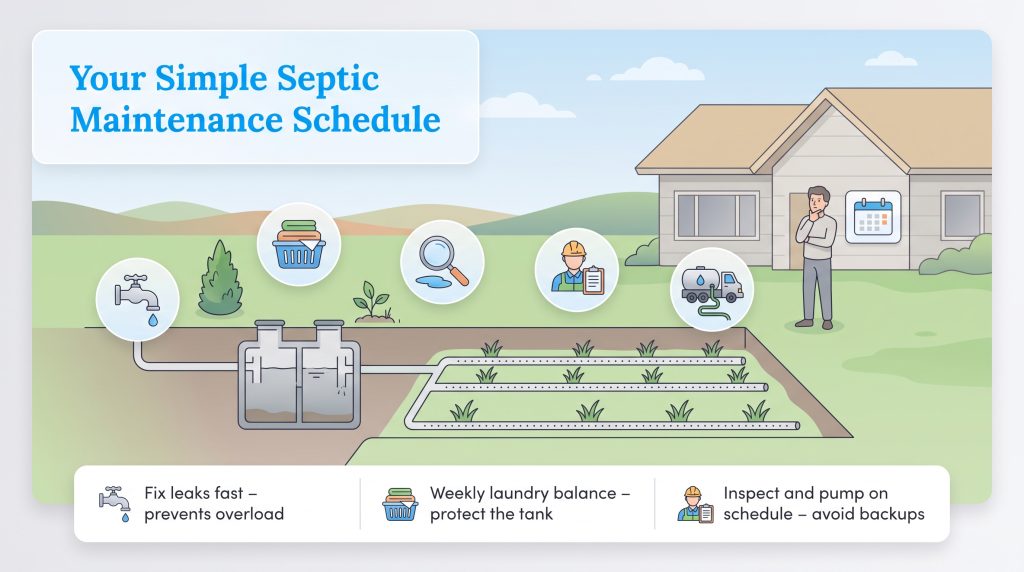
Consistency serves as the ultimate key to extending the lifespan of your property’s plumbing infrastructure. Figuring out how to maintain a septic system doesn’t require constant stressing, but it does demand a predictable, repeatable routine. By adopting a straightforward septic tank maintenance schedule, you catch minor plumbing quirks before they mutate into expensive backyard problems.
| Task | How Often | Why It Matters |
|---|---|---|
| Fix leaks and running toilets | As soon as possible | Reduces hydraulic overload |
| Spread out laundry loads | Weekly | Gives the tank time to separate solids |
| Check for soggy drain field areas | Monthly | Helps catch early failure signs |
| Schedule professional inspection | Every one to three years | Finds issues before backups happen |
| Pump the tank | Usually every three to five years | Prevents solids from reaching the drain field |
Know the Warning Signs of Septic Trouble
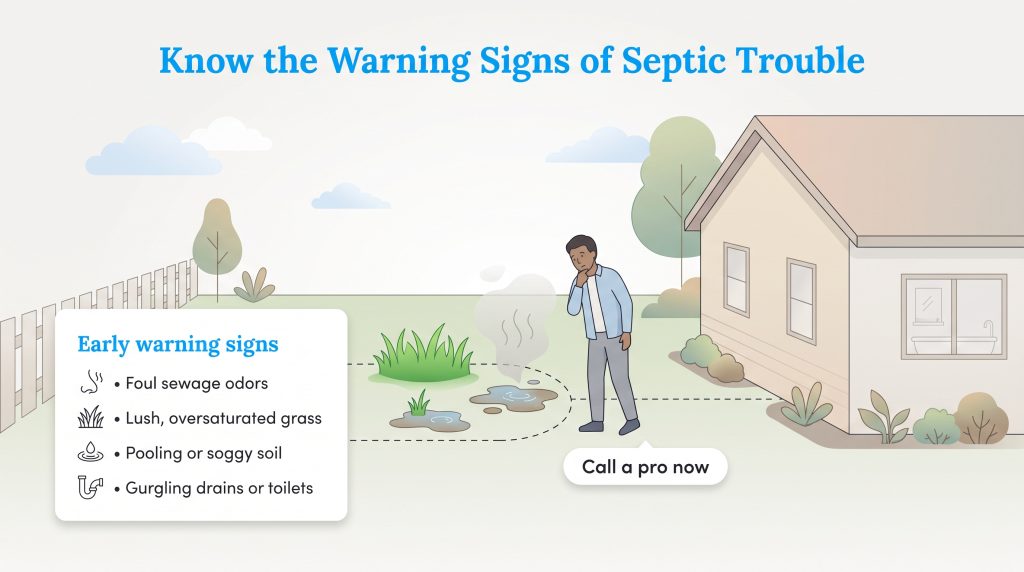
Dealing with a backed-up waste tank feels incredibly scary, but catching early warning signs helps you manage the situation before you suffer severe property damage. Pay close attention to how your yard looks and how your indoor plumbing sounds. Recognizing the distinct signs of a failing septic system empowers you to call an emergency technician before sewage backs up into your home or floods your lawn.
- Foul odors: Smelling a distinct sulfur or sewage odor in your yard, basement, or around household drains.
- Lush, bright green grass: Discovering patches of abnormally vibrant, rapidly growing grass directly over the drain field indicates excess moisture or surfacing effluent, especially if the area also smells bad or feels soggy.
- Pooling water: Spotting muddy, spongy, or consistently wet soil around the septic tank area even when it hasn’t rained recently.
- Gurgling pipes: Hearing strange gurgling or bubbling sounds coming from the plumbing system when flushing a toilet or draining a sink.
If you notice any of these more severe issues, stop troubleshooting and immediately reach out for professional help:
- Sewage backs up into tubs, toilets, or floor drains.
- Multiple drains are slow at the same time.
- The septic alarm sounds.
- The drain field is wet, smelly, or spongy.
- There is a sewage odor inside the home or near the tank.
Small Septic Habits Can Prevent Big Repairs
Taking care of your private wastewater setup doesn’t have to be an overwhelming burden that consumes your weekends. Proactive, eco-conscious maintenance — like being careful about what you flush, limiting your water usage, and staying on a strict pumping schedule — effortlessly extends the life of the system for decades. When you treat your tank with care and respect its biological processes, you protect your local environment while saving yourself thousands of dollars in unnecessary excavation and repair costs.
Frequently Asked Questions About Septic System Maintenance
Septic systems come with a few quirks, especially if you are used to city sewer service. These quick answers cover common questions homeowners ask when they are trying to avoid backups, odors, and unnecessary service calls.
Can I use a garbage disposal if I have a septic system?
Are biological septic tank additives necessary?
How much does it cost to pump a septic tank?
Does a long shower hurt my septic system?
What should I do if my septic alarm goes off?
About the Author

LaLeesha has a Masters degree in English and enjoys writing whenever she has the chance. She is passionate about gardening, reducing her carbon footprint, and protecting the environment. She also recently served as President of the Board for City Sprouts (a community garden).

Claudio is a sustainability-focused writer with a background in Anthropology and Psychology from NC State University. He has spent over 15 years working in writing, interpretation, and translation, driven by a deep interest in how human culture shapes the environment. Today, he shares his curiosity with readers by writing about sustainable living solutions and the connection between everyday choices and environmental impact.