

Understanding the mechanics of your home’s wastewater treatment can save you thousands in repairs and naturally protect the local environment.
Key Takeaways
- A septic system is an underground wastewater treatment structure that uses natural processes to safely treat and dispose of household plumbing waste right in your yard.
- Preventing costly repairs requires pumping your tank every three to five years and avoiding flushing harsh chemicals, grease, or non-biodegradable items.
- A well-maintained septic setup is an environmentally mindful choice that filters water through the soil and naturally recharges local groundwater aquifers.
If you just bought a home outside the city limits, you might be asking yourself exactly what is a septic system and how it will change your daily life. A septic system is a highly efficient, self-contained, underground wastewater treatment structure that collects, filters, and disperses household plumbing waste directly on your own property. Moving to a rural property with a private, onsite setup can feel a bit intimidating at first, but there is no need to feel overwhelmed. According to the EPA, more than one in five U.S. households use septic systems or other decentralized wastewater treatment systems. They’re entirely self-contained and manageable once you understand the core basics, but they do need routine care and smart water habits to thrive. We want to help you confidently take control of your plumbing infrastructure so you can enjoy your new home with complete peace of mind.
What Is a Septic System?
In the simplest terms, a septic system acts as your personal, onsite wastewater treatment facility. Instead of flushing waste into a pipe that travels miles to a municipal facility, everything that goes down your drains stays on your land. A conventional septic system collects water from your toilets, sinks, showers, laundry, and other household drains. It separates solid waste inside a watertight underground tank, then sends the remaining liquid wastewater to an engineered dispersal zone in your yard. Out in the yard, the native soil acts as a powerful biological filter to complete the natural treatment process.
This localized method of treating waste is an incredibly environmentally mindful choice when properly maintained. Because it relies heavily on gravity and natural bacterial breakdown, a standard system functions quietly around the clock, safely returning clean water back into the local water table.
How Does a Septic System Work?
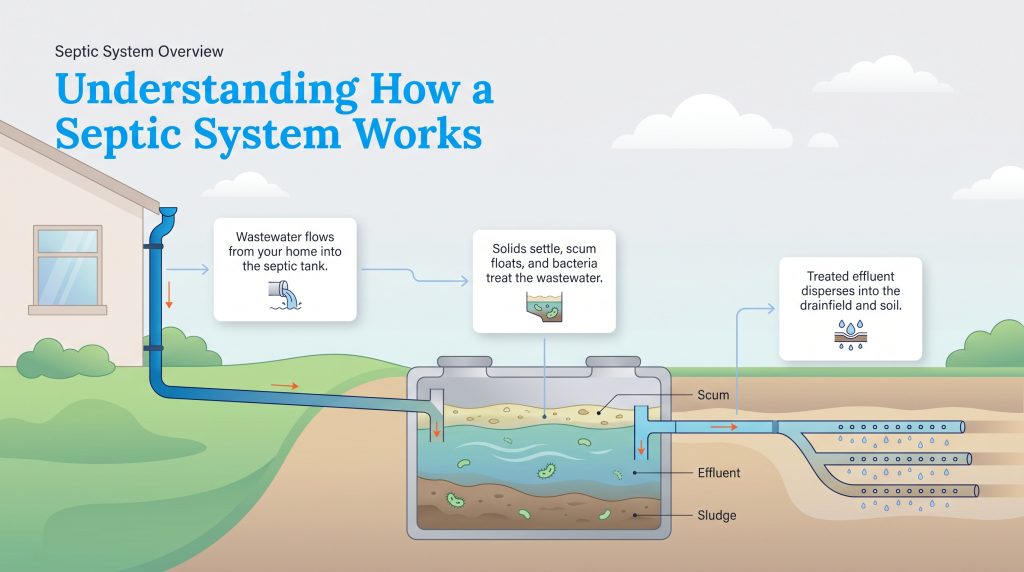
If you are wondering how does a septic system work on a practical level, the process is surprisingly straightforward. It relies almost entirely on gravity combined with biological bacterial action. According to the standard four-step treatment process outlined by the EPA’s SepticSmart program, treating your household waste happens seamlessly behind the scenes through these fundamental stages:
- Drain: Wastewater leaves the house through one main drainage pipe, carrying everything from toilet flushes to shower runoff directly into the underground tank.
- Separate: Solids separate inside the tank, settling at the bottom as sludge, while lighter materials like oils and grease float to the top to form a scum layer.
- Disperse: Liquid effluent exits to the drainfield once the tank reaches a certain capacity, flowing out into the yard through a series of underground perforated pipes.
- Filter: Soil helps filter the effluent as it percolates downward, naturally reducing harmful bacteria, viruses, and excess nutrients before the water safely recharges the local groundwater.
Key Parts of a Conventional Septic System
To truly master your home’s plumbing and catch potential issues early, it helps to familiarize yourself with the physical components buried in your yard. You definitely do not need a degree in civil engineering to grasp how these parts interact.
- Septic Tank: The large, buried, watertight container (usually made of concrete, fiberglass, or heavy-duty plastic) that initially receives all the household wastewater.
- Scum: The top layer of grease, oils, and lighter fats that naturally floats to the surface of the tank.
- Sludge: The heavier solid waste that sinks to the bottom of the tank, where it is slowly broken down by anaerobic bacteria over time.
- Effluent: The relatively clear liquid wastewater suspended between the scum and sludge layers that eventually flows out of the tank into the yard.
- Drainfield or Leach Field: The shallow, covered excavation area in your yard featuring a network of perforated pipes laid in gravel trenches. This is where the effluent is dispersed and naturally treated by the soil.
How to Tell if Your Home Has a Septic System
If you are touring properties or moving to a new address, you might not immediately know how your wastewater is handled. Here are a few clear indicators that your home relies on a private setup rather than a municipal connection:
- Your home is located in a rural, wooded, or sprawling suburban area well outside municipal sewer service lines.
- Your monthly water utility bill does not include a recurring sewer charge.
- Your property relies on well water for its drinking water (properties with private wells almost always have private septic tanks).
- You can visually locate a concrete tank lid, plastic riser, PVC inspection port, or a slightly elevated drainfield area in your yard.
- Your county health department, tax assessor, or local permitting office has historic septic installation records on file for your specific address.
How to Find Your Septic System in the Yard
Knowing exactly where your tank and drainfield are located is crucial for landscaping, remodeling, and routine pumping. If you have no idea where your underground components are hiding, follow these proven steps to locate them safely:
- Check your “as-built” drawings: When the property was first developed or the tank was officially permitted, an “as-built” diagram was likely created by the installer. This document maps out the exact location of the buried tank and drainfield relative to your house.
- Contact the local county health department: Most local permitting offices or environmental health departments keep meticulous septic records on file for residential addresses. You can usually request a copy of your property’s map over the phone or online.
- Look for visual clues in the yard: Walk your property slowly and scan the ground. Look for metal or concrete manhole covers, green plastic lids, or white PVC inspection pipes sticking a few inches out of the grass. You might also notice an area where the grass grows noticeably faster or greener, which often indicates the drainfield.
- Hire a professional locator: If you cannot find any visual signs and no municipal records exist, contact a certified septic inspector or local pumping company. They use specialized tools, such as ground-penetrating radar or flushable electronic transmitters, to trace your plumbing pipes directly to the tank.
Types of Septic Systems: Aerobic, Anaerobic, and Alternative
When you start researching how properties handle wastewater, you will quickly notice several different types of septic systems. The traditional anaerobic setup relies entirely on gravity and oxygen-free bacteria to slowly break down waste inside the tank. A conventional gravity-fed system often does not require any electricity to function, making it highly reliable during power outages.
However, an aerobic septic system might be installed instead if your property sits near a sensitive body of water or requires a smaller footprint. This upgraded configuration uses a mechanized electrical air pump to inject oxygen directly into the treatment chamber, rapidly accelerating bacterial activity. Understanding the difference between an aerobic vs anaerobic septic system mostly boils down to the intensity of the treatment the water undergoes before hitting your yard.
Beyond these standard options, many rural properties require alternative septic systems due to difficult environmental conditions. If your land has shallow soil depth, poor drainage, or high bedrock, traditional trenches will not work. In these cases, engineers often utilize mound systems or sand filter systems. A mound system requires constructing an elevated sand bed above the natural soil surface, and effluent is pumped from the tank up into the mound in measured doses. Similarly, a sand filter system pumps effluent through a large, constructed box of specialized sand to heavily filter pathogens before the liquid ever reaches the native soil. Both alternative systems are excellent energy-saving options for protecting the groundwater on challenging terrain.
🌱 Eco Edge: Aerobic systems use a small amount of electricity to run an air pump, but they can be an environmentally mindful choice on challenging lots because they provide a significantly higher level of wastewater treatment before dispersal.
Septic Tank vs Sewer: What First-Time Homebuyers Must Know
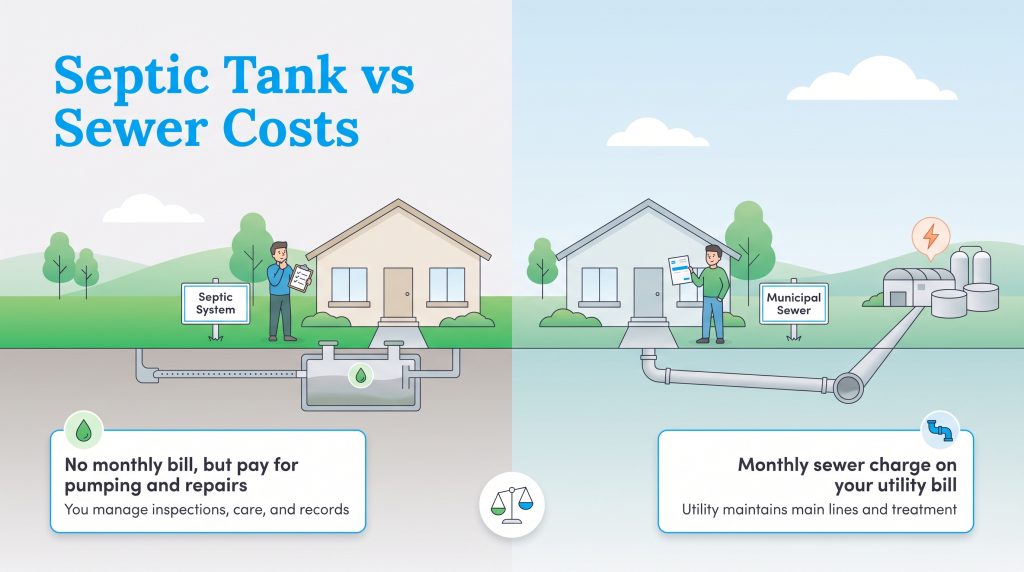
Making the transition from city living to a sprawling rural property drastically shifts how you handle basic amenities. When managing your home’s water utilities, grasping the true financial and practical differences between a septic tank vs sewer connection is vital for your budget.
With municipal sewers, you pay a local utility company a monthly fee to pipe your waste away to a massive centralized treatment plant. The municipality handles all the public sewer infrastructure and major emergency repairs, while you are only responsible for the plumbing issues located inside your home and along your specific service line. Conversely, with a private septic system, you act as the utility manager. You hold the primary responsibility for keeping the biological network flowing smoothly, scheduling routine inspections, and paying for any blockages or repairs that occur on your land.
| Feature | Septic System | Municipal Sewer |
|---|---|---|
| Monthly Cost | Usually no monthly sewer bill, but you’ll pay out-of-pocket for pumping, inspections, and repairs as needed. | Usually includes a recurring monthly sewer charge on your utility bill based on water usage. |
| Installation Cost | Can range from $5,000 for a basic conventional setup to over $20,000 for complex alternative mound or aerobic systems. | Usually requires a one-time connection fee if the main sewer line is already built on your street. |
| Maintenance Responsibility | Homeowner is 100% responsible for daily care, component repairs, and keeping maintenance records. | Utility company or municipality maintains the main system and treatment facility. |
| Lifespan | Typically lasts 20 to 40 years depending on material, soil conditions, and strict adherence to pumping schedules. | Effectively indefinite from the homeowner’s perspective, as municipal upgrades are managed publicly. |
| Environmental Impact | Can be an incredibly low-impact, sustainable choice when properly designed and maintained. | Centralized treatment is strictly regulated but can require massive amounts of energy to transport and treat waste. |
What to Check Before Buying a Home With a Septic System
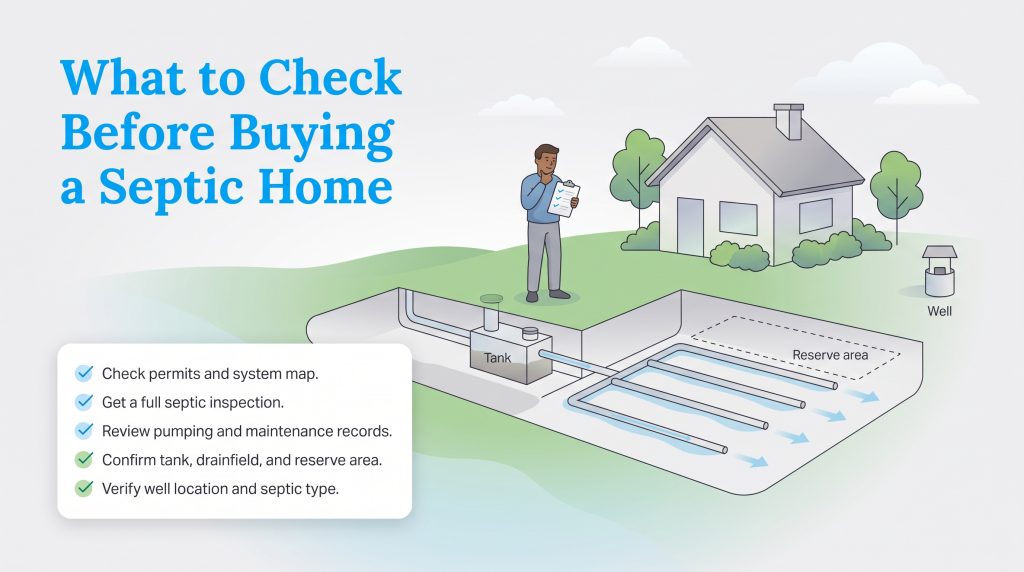
Evaluating a property with onsite wastewater treatment requires a few extra steps during your due diligence period. You never want to inherit a failing drainfield or an overloaded tank. Before closing on a home, request the septic permit, system map, or “as-built” drawing to understand exactly what is buried in the yard.
- Get an inspection: Hire a licensed septic inspector to evaluate the tank’s structural integrity and check the drainfield before closing. Do not rely on a standard home inspector for this specialized task.
- Request records: Ask the seller for routine pumping receipts and a log of past repairs. A well-documented maintenance history is a great sign.
- Locate the components: Confirm the physical location of the tank, the primary drainfield, and any designated reserve drainfield area where you are legally restricted from building.
- Check the water source: Note whether the home also uses a private well. Proper distance between the wellhead and the drainfield matters immensely for minimizing groundwater contamination risk.
- Identify the system type: Ask whether the setup is conventional, aerobic, mound, chamber, or another alternative configuration, as this determines your future maintenance costs.
Before installing a pool, building a deck, or expanding your home’s footprint, always check with your local health department or permitting office, because specific setback rules vary widely by county and state.
Essential Septic System Maintenance and Care
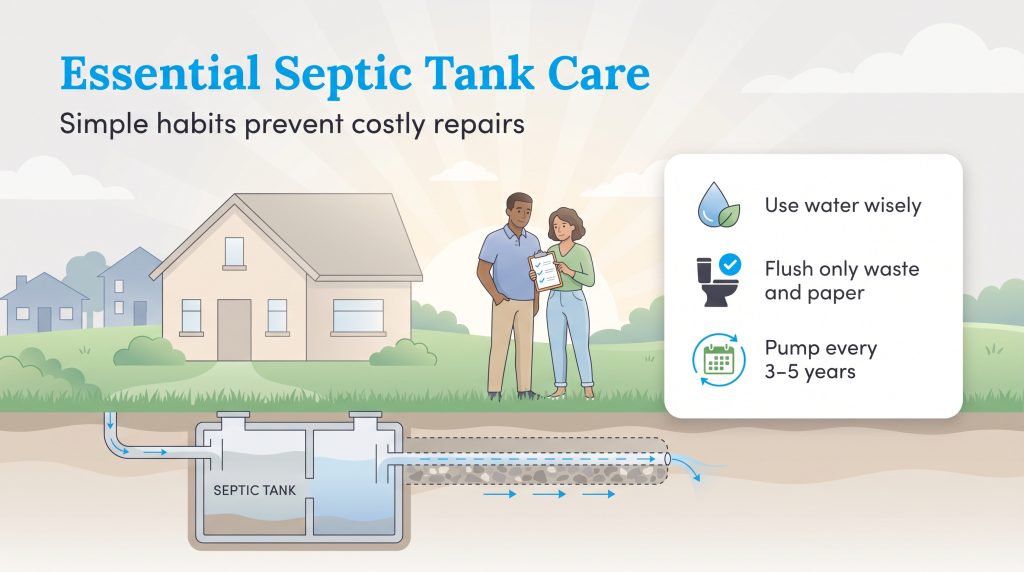
Keeping your backyard wastewater treatment plant running smoothly doesn’t have to consume your weekends or drain your wallet. Proper septic system maintenance is surprisingly manageable and primarily involves being incredibly mindful about what goes down your interior drains. By conserving water and spacing out heavy usage, you easily prevent overwhelming the tank’s daily capacity and drowning the helpful bacteria.
Additionally, shifting toward environmentally mindful cleaning habits ensures the healthy biology inside your tank thrives. Heavy, frequent use of harsh chemical disinfectants can severely disrupt the organic bacteria that help break down waste, which may eventually contribute to clogs, foul odors, or much slower treatment times.
💸 Money-Saver: In many areas, routine pumping may cost around $300 to $500, but local prices can vary. This is a tiny price to pay when you consider that a total system replacement due to neglect can easily exceed $10,000.
Septic-Safe Water Use Habits
Being highly conscious of your daily water consumption is one of the best ways to protect your underground infrastructure. Excess water easily overloads the tank, stirs up the sludge layer, and saturates the drainfield, leading to sluggish drains or potentially disastrous sewage backups inside the home.
- Fix leaky toilets and dripping faucets immediately, as a single running toilet can waste hundreds of gallons of water a day.
- Install high-efficiency, WaterSense-labeled fixtures in your showers and sinks to reduce overall water flow.
- Spread laundry loads over multiple days rather than doing all of your washing on Saturday afternoon.
- Avoid running several high-water appliances, like the dishwasher, washing machine, and bathtub, at the exact same time.
- Direct roof gutters, yard drains, and basement sump pumps far away from the drainfield to prevent excess rainwater soil saturation.
The Do’s and Don’ts of Flushing
The golden rule of maintaining your rural plumbing is remembering that your toilets and sinks are not municipal trash cans. Adhering to a strict list of what you can and cannot flush is critical for preventing expensive blockages and protecting the health of your drainfield.
One of the most dangerous culprits for system failure is the so-called “flushable” wipe. These dense synthetic wipes do not break down in the tank like traditional toilet paper. Instead, they quickly form massive clogs, wrap around tank baffles, and force homeowners to pay for emergency extraction services.
| Safe to Flush or Drain | Never Flush or Drain |
|---|---|
| Human waste and septic-safe toilet paper | “Flushable” wipes, baby wipes, and makeup remover pads |
| Wastewater from showers, tubs, and sinks | Cooking grease, heavy fats, and leftover cooking oils |
| Mild, biodegradable soaps and body washes | Coffee grounds, eggshells, and heavy food scraps |
| Septic-friendly, liquid laundry detergents | Harsh antibacterial chemicals, pure bleach, and drain cleaners |
| Standard, mild household surface cleaners | Feminine hygiene products, paper towels, and cotton swabs |
| Water from your dishwasher (spaced out) | Prescription medications, paint, or chemical solvents |
How Often to Schedule Septic Tank Pumping
A common question new rural homeowners ask is how frequently they need to schedule professional service to clean out the sludge. As a general rule of thumb, septic tank pumping should happen every three to five years to remove the inorganic solids that naturally accumulate.
| Household Size | Typical Pumping Frequency |
|---|---|
| One to two people | Every four to five years |
| Three to four people | Every three to four years |
| Five or more people | Every two to three years |
Keep in mind that tank size, daily water use, garbage disposal habits, and sludge levels can drastically alter this baseline schedule. A family of six utilizing a smaller tank might genuinely need service every two years, whereas a couple living in a massive home could safely wait the full five years. Always have a certified inspector measure your sludge and scum levels during routine visits to determine your ideal maintenance timeline.
Signs of a Failing Septic System
Even with diligent care and perfect water habits, aging infrastructure eventually wears out. Catching the visual and olfactory signs of a failing septic system early can mean the difference between a simple, affordable pipe repair and a catastrophic backyard excavation. Walk your property occasionally and watch out for unusually bright, spongy green grass growing directly over the drainfield during a dry season. Listen for persistent gurgling sounds coming from your home’s pipes when a toilet flushes or a sink drains. If you notice pooling water in the yard or a distinct sewage odor wafting near the tank lid, your setup is actively struggling to process the daily wastewater load.
🚩 Heads Up: If you ever notice raw sewage backing up into your bathtubs, showers, or floor drains, stop running water entirely and call an emergency septic professional immediately to prevent further interior damage and health risks.
Protecting the Local Environment With Your Septic Setup
We firmly believe that managing your household utilities should comfortably align with a sustainable, responsible lifestyle, and an onsite wastewater configuration definitely fits into that broader vision. A properly designed, well-sited, and consistently maintained septic system is an environmentally mindful choice because it treats wastewater close to the source and relies on natural soil processes rather than intensive chemical plants. When the system functions correctly, treated effluent safely returns to the earth, naturally recharging the local groundwater cycle without excessive energy use.
However, neglected or overloaded systems can release dangerous pathogens, excess nitrogen, and raw wastewater into nearby drinking wells, streams, or lakes. According to the Centers for Disease Control and Prevention and the Environmental Protection Agency, proper ongoing maintenance is the single most effective way to prevent harmful pathogens and excess nutrients from contaminating local water sources. When you properly care for your plumbing, you directly protect your community’s surrounding ecosystems.
Preparing for Life With a Private Wastewater System
Taking charge of your own wastewater treatment might seem slightly daunting on moving day, but it ultimately grants you more independence from fluctuating city sewer fees. By staying heavily invested in your routine pumping schedule and being consistently cautious about what goes down the drain, your underground infrastructure will quietly serve your family for decades. With a few smart conservation habits and a reliable maintenance routine, managing this eco-conscious system easily becomes just another manageable part of rural or suburban homeownership.
Frequently Asked Questions About Septic Systems
Below are quick, actionable answers to common septic system questions new homeowners often ask before buying a property, moving in, or scheduling their first maintenance appointment.
How much does a new septic system cost?
What size septic tank do I need for a 3-bedroom house?
Can you plant a garden or trees over a septic drainfield?
Can I use bleach if I have a septic tank?
How do you fix a failing septic system?
Do I pay a monthly water bill with a septic system?
Can I park my car on top of my septic drainfield?
Do flushable wipes actually ruin septic systems?
Is a septic system bad for a home?
How long does a septic system last?
Can I install a garbage disposal with a septic system?
About the Author

LaLeesha has a Masters degree in English and enjoys writing whenever she has the chance. She is passionate about gardening, reducing her carbon footprint, and protecting the environment. She also recently served as President of the Board for City Sprouts (a community garden).

David has been an integral part of some of the biggest utility sites on the internet, including InMyArea.com, HighSpeedInternet.com, BroadbandNow.com, and U.S. News. He brings over 15 years of experience writing about, compiling and analyzing utility data.