

Understanding the different types of septic systems helps you make an environmentally mindful choice that saves money and prevents future headaches.
Key Takeaways
- Soil and site conditions dictate your options when choosing from various residential septic system types.
- Alternative septic systems use eco-conscious technology to treat wastewater where conventional systems fall short.
- Knowing the cost of different types of septic systems upfront can save you thousands of dollars in the long run.
Moving to a rural or suburban home often introduces the overwhelming technical jargon of underground wastewater management. If you are accustomed to municipal sewer lines, suddenly worrying about drainfields and effluent can feel incredibly daunting. However, making an environmentally mindful choice now saves money and stress later, protecting both your property and the local watershed. Our goal is to break down the different types of septic systems and help you choose the right one for your home, so you can manage your home’s wastewater with confidence.
What Determines the Right Septic System for Your Home?
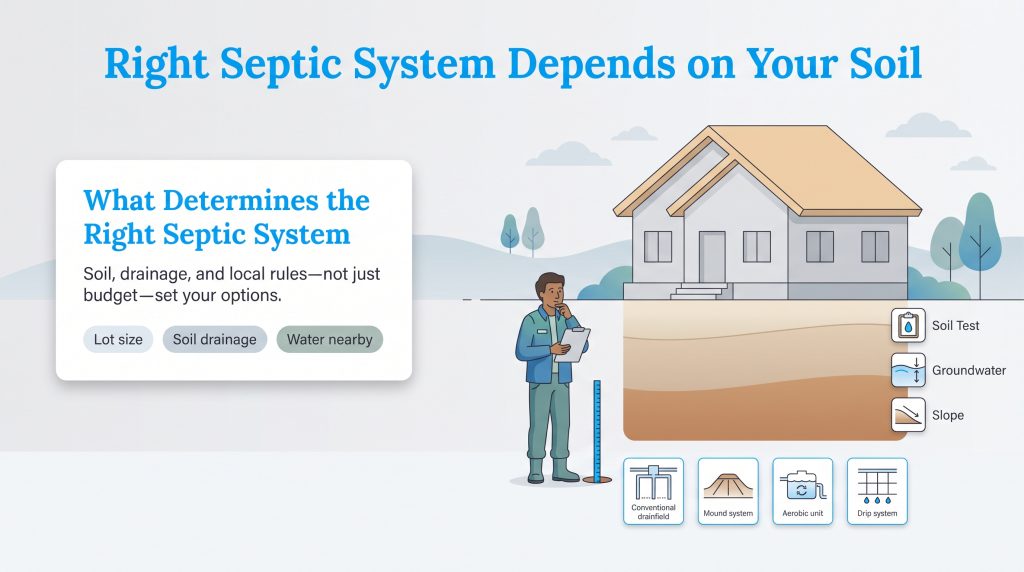
You don’t simply pick a system out of a catalog based on your budget. The reality of exploring residential septic system types is that environmental variables completely dictate your options. Your lot size, typical weather patterns, and proximity to sensitive water bodies all play a major role in choosing the right septic system. A local health department or soil engineer evaluates these factors through a percolation test, or “perc test,” which measures how quickly water drains through your earth.
Soil composition is the ultimate deciding factor. For example, clay-heavy soil often drains too slowly for a conventional gravity drainfield, but the final answer depends on your perc test, soil profile, groundwater depth, slope, and local code. In many cases, a mound, aerobic treatment unit, drip distribution system, or other engineered option may be required.
How a Septic System Works in Plain English
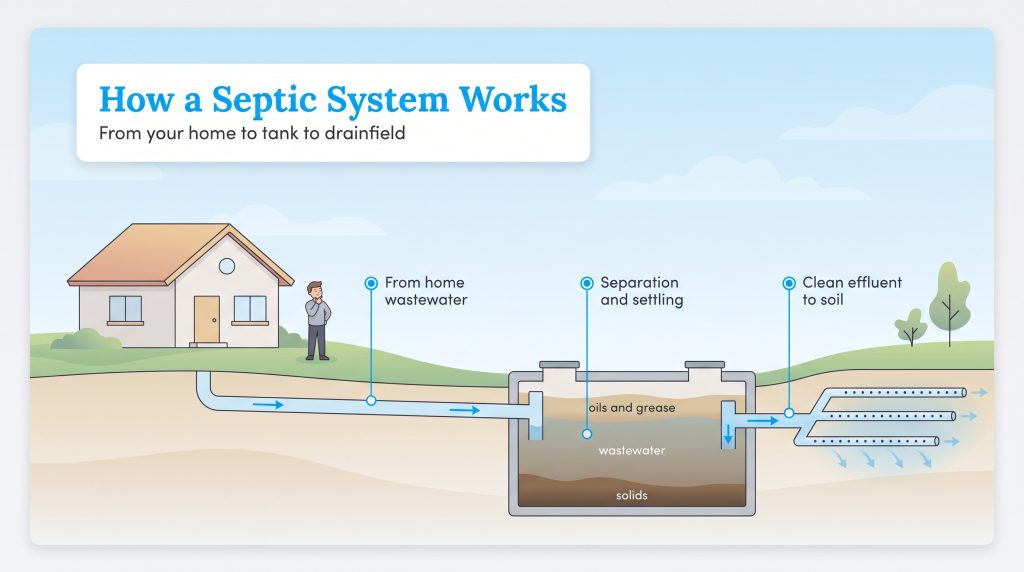
Before exploring specific options, it helps to understand basic septic system components. In a typical setup, wastewater flows from your house into a watertight container called a septic tank. The tank holds the wastewater long enough for solids to settle at the bottom and oils to float to the top. The remaining liquid then exits the tank and flows into a drainfield — a shallow, covered excavation made in unsaturated soil. The relationship between your septic tank and drainfield is the foundation of most residential wastewater treatment.
Conventional Septic Systems: The Time-Tested Choice
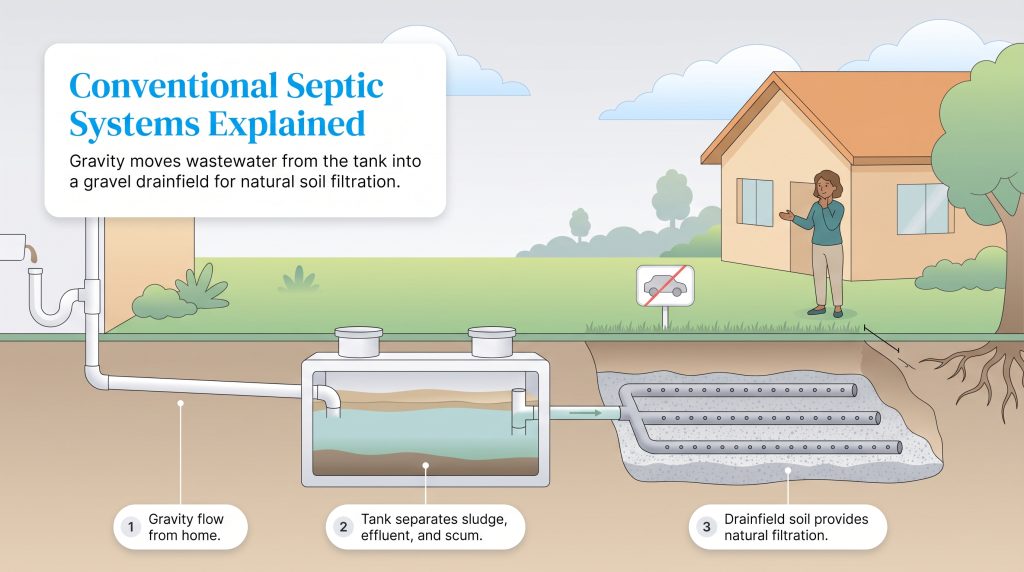
The conventional septic system is the most common residential wastewater solution across the country. These setups typically rely on gravity (though some use pumps for challenging elevations) to move waste from your home’s plumbing into an underground, watertight septic tank. Inside the tank, solids settle to the bottom as sludge, while lighter fats and oils float to the top as scum. The relatively clear liquid in the middle, known as effluent, flows out into a stone or gravel drainfield where it slowly percolates into the absorbent soil for natural filtration.
📌 Quick Fact: A well-maintained conventional system can last for decades if the drainfield is protected from heavy vehicles and invasive tree roots.
Because they rely on natural gravity and basic soil filtration, these systems require highly absorbent earth and a decent amount of property space. We always recommend reviewing the EPA overview of septic system types to see if your property meets the standard spatial and soil requirements. They are incredibly reliable and require minimal energy, making them an excellent choice for a suitable plot of land.
Common Types of Septic Systems Compared
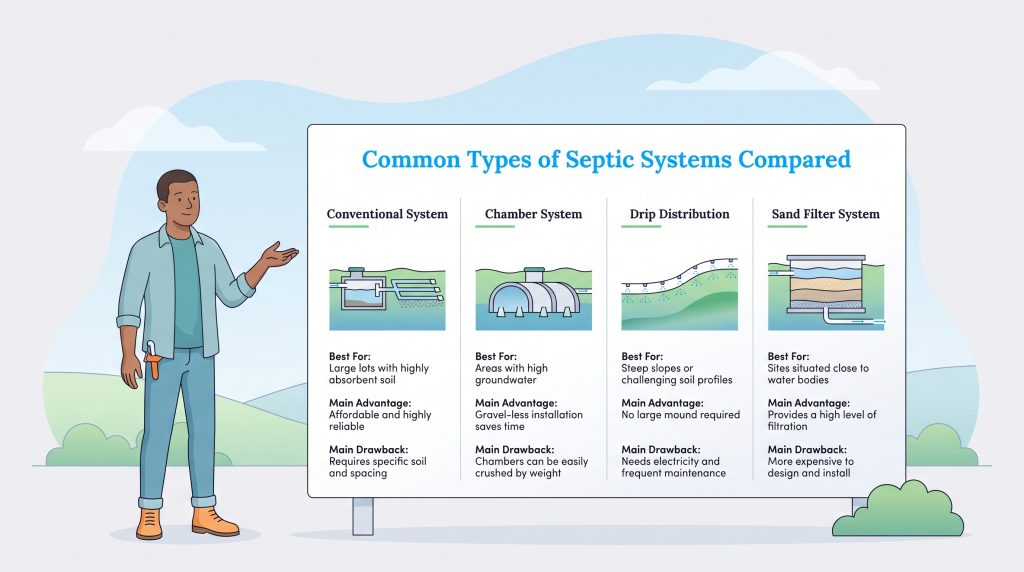
Understanding the engineered septic systems available ensures you find the perfect match for your landscape. Here is a quick breakdown of common residential septic system types you might encounter while planning your installation.
| System Type | Best For | Main Advantage | Main Drawback |
|---|---|---|---|
| Conventional System | Large lots with highly absorbent soil | Affordable and highly reliable | Requires specific soil and spacing |
| Chamber System | Areas with high groundwater | Gravel-less installation saves time | Chambers can be easily crushed by weight |
| Drip Distribution | Steep slopes or challenging soil profiles | No large mound required | Needs electricity and frequent maintenance |
| Sand Filter System | Sites situated close to water bodies | Provides a high level of filtration | More expensive to design and install |
Conventional vs. Alternative Septic Systems
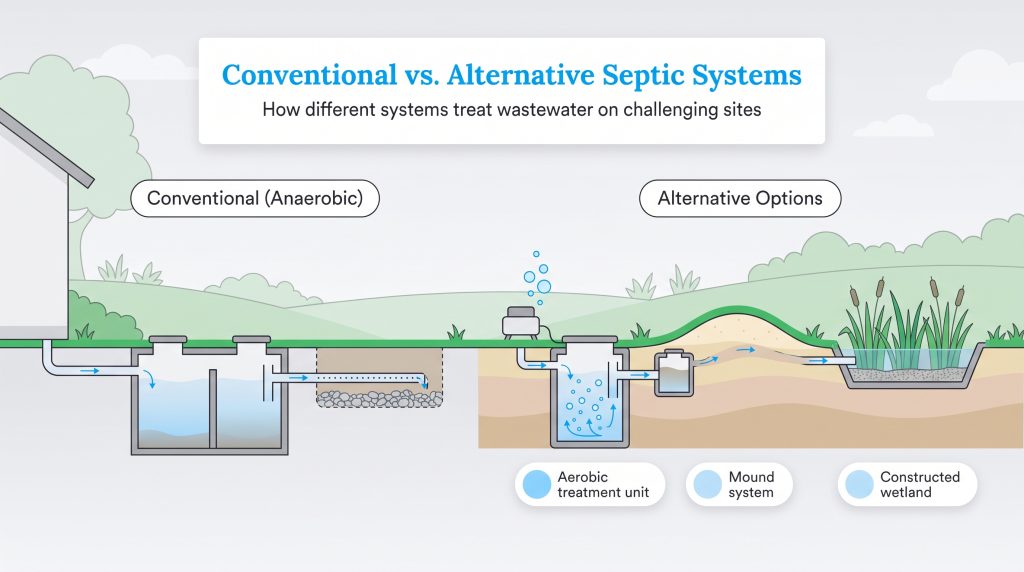
When a conventional system fails — or your specific site conditions don’t permit one in the first place — engineered, eco-conscious alternative septic systems step in to handle the job. The main difference usually comes down to an aerobic vs anaerobic septic system setup. Standard tanks are anaerobic, relying on bacteria that thrive without oxygen to slowly break down waste naturally. Aerobic systems pump oxygen directly into the treatment tank, fueling highly active bacteria that break down waste much faster and treat effluent to a higher standard before it reaches the environment.
Aerobic Treatment Units (ATUs)
Think of an Aerobic Treatment Unit (ATU) as a scaled-down municipal wastewater plant operating right in your backyard. A mechanical compressor continuously pumps oxygen into the treatment tank, keeping aerobic bacteria alive and hungry. These bacteria consume the organic matter in your wastewater much faster than their anaerobic counterparts do in a standard tank.
Because the effluent leaving an ATU is typically treated to a higher level than wastewater from a standard septic tank, it may be approved for sites with smaller lots, poor soils, or sensitive environmental conditions. The trade-off is that ATUs use electricity and need routine professional maintenance.
Mound Systems
Sometimes the natural soil is simply too shallow, or the groundwater table sits too close to the surface, risking contamination. In these scenarios, a mound system provides the necessary distance between your wastewater and the local water supply.
Contractors construct a raised sand mound directly on top of the natural soil. Wastewater is pumped from the primary tank into a dosing chamber, which periodically releases the effluent into the constructed mound. As the liquid slowly drips through the imported sand and into the native soil below, it receives adequate natural filtration before it ever reaches the water table.
Constructed Wetland Systems
If you want a highly sustainable, environmentally mindful choice, a constructed wetland system is a beautiful way to manage residential wastewater. This setup mimics nature by routing effluent from the septic tank into a shallow, gravel-filled basin planted with specific aquatic plants.
As the wastewater flows through the root systems of reeds, bulrushes, and cattails, treatment happens through a combination of microbial activity, plant roots, media settling, and oxygen transfer. It is a highly effective method that uses natural mechanics, though these systems often require pretreatment and specific climate conditions to function properly.
🌱 Eco Edge: Constructed wetlands provide a beautiful, natural habitat while effectively treating waste, making them an environmentally mindful choice for homeowners with the right soil and ample land.
Best Septic System Options for Clay Soil, Small Lots, and High Water Tables
Challenging site conditions call for specific technologies. If you are dealing with a high water table septic system requirement, a mound system or a chamber septic system safely lifts the wastewater above the saturated ground. A pressure distribution system ensures effluent spreads evenly across the entire drainfield, which is ideal for slightly sloped properties.
For compact spaces, a drip distribution septic system uses flexible tubing to weave through tighter areas or even wooded lots without requiring major excavation. If you have clay soil, an aerobic treatment unit combined with drip distribution is often the smartest choice to prevent the heavy earth from becoming waterlogged.
Comparing the Cost of Different Types of Septic Systems
Figuring out the cost of different types of septic systems can feel like a guessing game, but establishing a budget is a crucial step in the planning phase. It is tempting to hunt for the cheapest possible setup, but choosing a system based on upfront price alone can lead to premature failure and costly emergency repairs.
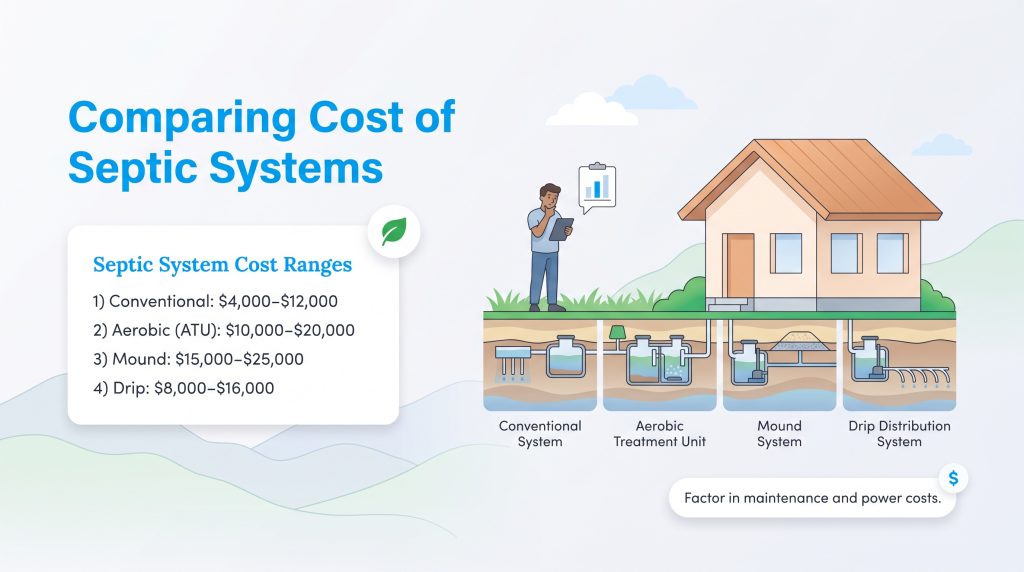
When managing your home water utility costs and systems, look at your septic installation as a long-term investment. Engineered and alternative designs definitely cost more upfront, but they are often the only legal and functional options for challenging landscapes. Prices vary widely by region, soil conditions, permitting rules, tank size, excavation difficulty, and whether your system needs pumps, alarms, disinfection, or a maintenance contract. Here is a rough look at what you can expect to pay for the installation of various types of systems:
| System Type | Estimated Cost Range |
|---|---|
| Conventional System | $4,000 to $12,000 |
| Aerobic Treatment Unit (ATU) | $10,000 to $20,000 |
| Mound System | $15,000 to $25,000 |
| Drip Distribution System | $8,000 to $16,000 |
Considering septic system maintenance costs, pumping schedules, and ongoing electricity usage is just as important as the initial installation price. A system that costs less upfront might require an expensive annual maintenance contract or frequent pumping, erasing any initial savings over time.
How to Choose the Right Septic System for Your Property
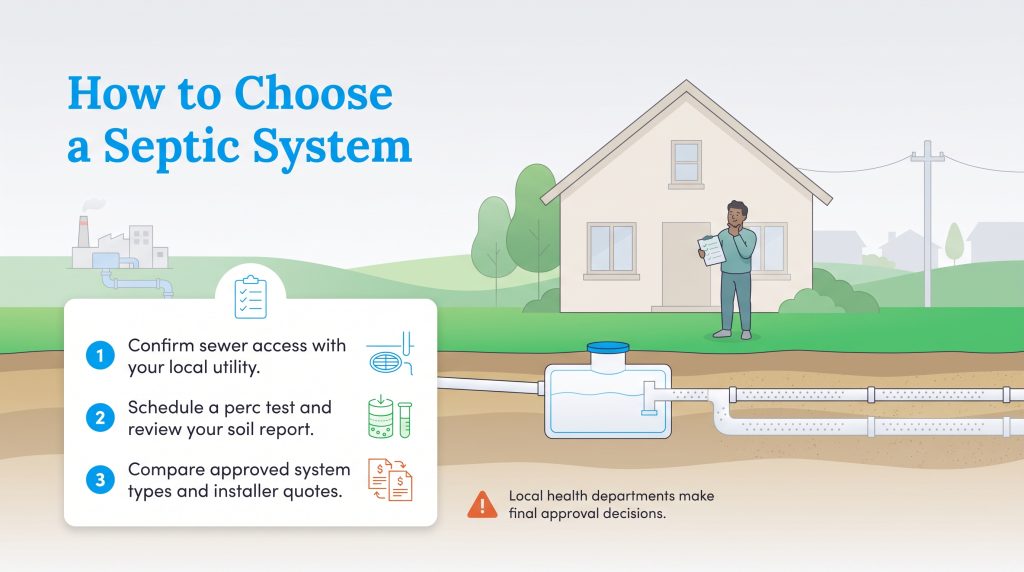
Selecting the best wastewater solution requires a careful evaluation of your specific lot. Whether you are building a custom house or simply moving to a new property that needs a functional upgrade, follow these practical steps:
- Check for municipal access: Confirm whether the property has existing public sewer access before assuming you need a private system.
- Contact your local health department: Ask about zoning rules, local codes, and permitting requirements in your specific county.
- Schedule a perc test: Hire a licensed soil engineer to evaluate your earth’s absorption rate and groundwater depth.
- Review the site constraints: Factor in your lot size, property slopes, and required setbacks from wells or delicate water bodies.
- Compare approved options: Weigh the installation costs, maintenance requirements, and energy use of the various systems approved for your dirt.
- Collect multiple quotes: Reach out to licensed septic designers or installers to find competitive, transparent pricing.
🚩 Heads Up: Your county or local health department usually has the final say on which septic systems are approved for your property. Before you compare installer quotes, confirm the required soil testing, setbacks, permits, and inspection rules in your area.
A Smarter Septic Choice Protects Your Home and Watershed

Navigating the technical world of residential wastewater does not have to be a frustrating ordeal. Consulting with a local soil engineer or your county health department is always the best first step, as they will quickly identify which systems are actually viable for your dirt. Investing in the right eco-conscious alternative or conventional system does more than just keep your toilets flushing; it directly protects your property value, supports sustainable living practices, and preserves the health of the local environment for generations to come. Always secure a licensed site evaluation before signing any contracts or comparing installation quotes.
Frequently Asked Questions About Septic Systems
How do I know what type of septic system I have?
What is the most common type of residential septic system?
How often should alternative septic systems be pumped?
Are engineered septic systems more eco-friendly?
Can I install a conventional septic system in clay soil?
What type of septic system is best for a small lot?
Do all septic systems require electricity?
What is the difference between a septic tank and a drainfield?
About the Author

LaLeesha has a Masters degree in English and enjoys writing whenever she has the chance. She is passionate about gardening, reducing her carbon footprint, and protecting the environment. She also recently served as President of the Board for City Sprouts (a community garden).

David has been an integral part of some of the biggest utility sites on the internet, including InMyArea.com, HighSpeedInternet.com, BroadbandNow.com, and U.S. News. He brings over 15 years of experience writing about, compiling and analyzing utility data.