

Your home’s connection to the power grid is a complex network that delivers electricity right to your outlets, and understanding it can help you save money.
Key Takeaways
- The electric grid is a complex, interconnected network that generates, transmits, and distributes electricity to your home.
- Modern smart grid technology is upgrading how we manage power, offering improved reliability and seamless integration for renewable energy.
- Understanding how power reaches your home can help you make eco-conscious decisions, shift your usage, and save money on your monthly utility bills.
Flipping a light switch in your new home feels instantaneous, but there’s an entire invisible world working behind the walls to make that happen. Moving into a new place gives you the perfect opportunity to evaluate where your electricity comes from, empowering you to make smarter, more sustainable financial decisions from day one. We want you to feel confident when setting up your services, and that starts with demystifying the infrastructure behind your daily electricity use. By pulling back the curtain on how electricity is made and delivered, you can find simple ways to lower your carbon footprint while trimming down those monthly expenses.
What Is the Electric Grid?
People often wonder about the difference between the electric grid and the power grid, but most everyday conversations use the two terms interchangeably. Simply put, it’s a vast, interconnected network of power plants, transmission lines, and transformers that delivers electricity from where it’s created directly to consumers. Think of it as a massive highway system specifically designed for electrons, operating 24 hours a day to keep your lights on and your refrigerator running. Modern homes depend on this system every day.
When you’re managing your home’s electric service, grasping the basics of this system is incredibly useful. We like to break this journey down into the “Rule of Three” to keep things simple. Every time you power up an appliance, the electricity has traveled through three distinct phases: generation, transmission, and distribution. Each phase plays a vital role in ensuring a steady, safe supply of energy reaches your neighborhood.
| Component | What It Does | What It Means for Your Home |
|---|---|---|
| Generation | Creates electricity | Determines the energy sources behind your power |
| Transmission | Moves high-voltage power long distances | Brings electricity from power plants or renewable projects to your region |
| Distribution | Delivers lower-voltage power locally | Connects your neighborhood, meter, and breaker panel |
How Does the Power Grid Work?
If you’ve ever asked, “How does the power grid work?” the answer lies in a carefully orchestrated balancing act between supply and demand. Electricity is generated at massive power plants, pushed onto high-voltage transmission lines to cover vast geographic distances, and finally stepped down to safer, lower voltages before it flows through the distribution lines into your home. The electrical signal moves through the system extremely quickly, while grid operators and automated systems continuously balance supply and demand so power is available when you need it.
Step 1: Electricity Generation
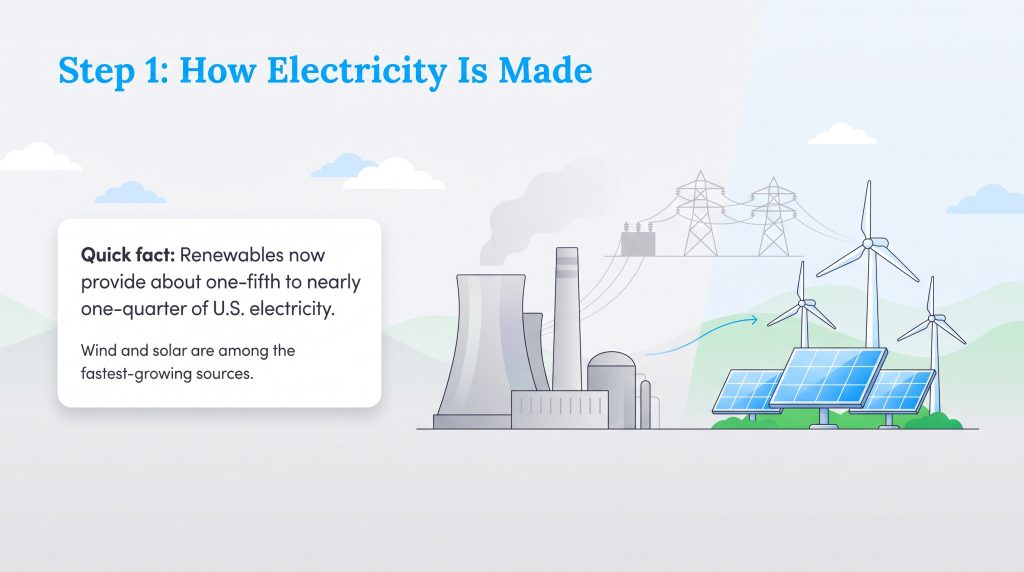
The first stop on this high-speed journey is generation, which is exactly how electricity is made. Traditionally, massive power plants burn fossil fuels like natural gas or coal to heat water, create steam, and spin giant turbines. Those spinning turbines generate the electrical current that feeds into the grid. Other conventional methods include nuclear power and large-scale hydroelectric dams. These sources still provide a large share of U.S. electricity, but the generation mix is shifting as wind, solar, and other energy-saving options grow.
Today, the integration of renewable energy and the grid is fundamentally changing how we produce power. Wind farms and solar arrays generate electricity without burning fuel on-site, making them an environmentally mindful choice that can reduce the carbon intensity of the grid. In fact, according to the U.S. Energy Information Administration’s overview of electricity generation in the United States, renewable sources such as wind, hydropower, solar, biomass, and geothermal now provide a significant share of U.S. electricity, with wind and solar growing especially quickly in recent years. This transition ensures a cleaner future while requiring significant updates to how we manage the electricity supply.
📌 Quick Fact: Renewable energy sources, including wind, solar, hydropower, biomass, and geothermal, now generate about one-fifth to nearly one-quarter of U.S. electricity, depending on the year. Wind and solar are among the fastest-growing pieces of that mix.
Step 2: Electricity Transmission
Once the electricity is generated, it needs to travel from rural power plants or distant wind farms to heavily populated cities and towns. This requires high-voltage transmission lines — those towering metal structures you often see cutting across fields or running alongside major highways. By drastically cranking up the voltage, utilities can push the electrical current over hundreds of miles with minimal energy loss. It’s a highly efficient way to move massive amounts of power across the country.
Step 3: Electricity Distribution
The final leg of the journey explains how electricity gets to your home. High-voltage power is far too intense to safely enter a residential neighborhood, so it must be stepped down at a local substation. You’ve probably driven past these fenced-in facilities filled with large transformers and wire coils. These transformers reduce the voltage to a safe, manageable level before sending the electricity out along local distribution lines, which are either strung on wooden poles or buried underground.
From the local street lines, the electricity flows through a specialized service drop wire directly into your home’s electrical meter. Your utility company uses this meter to track your usage, and from there, the power heads straight into your breaker panel. The panel distributes the electricity safely throughout your house, waiting behind the walls until you need it for your television, HVAC system, or kitchen appliances. For you, the distribution system is usually the part of the grid most likely to affect outage restoration times, tree-trimming notices, and local service reliability.
What Is a Smart Grid and Why Does It Matter?
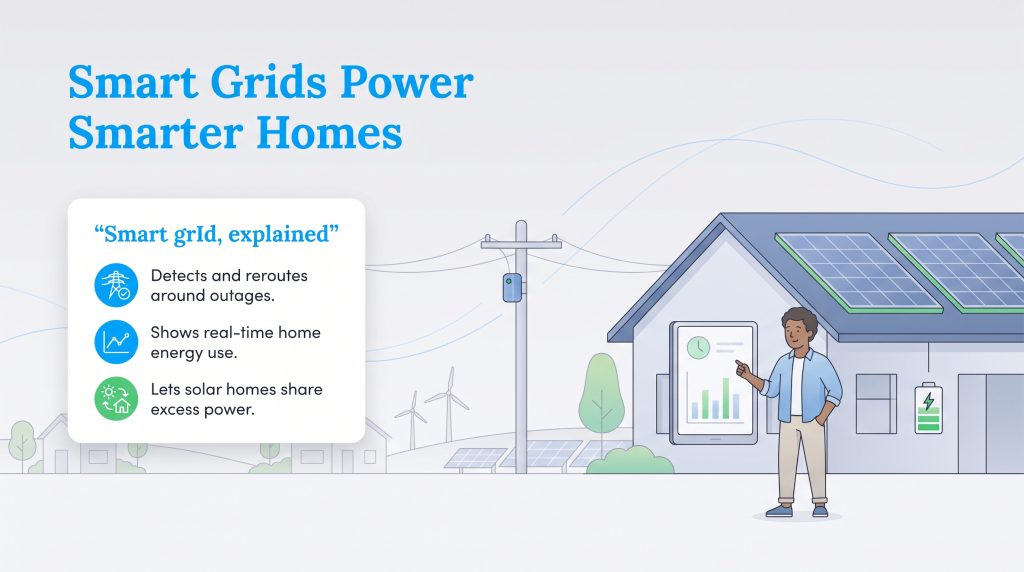
If you find yourself wondering what is a smart grid, think of it as a significant digital upgrade to our century-old power infrastructure. The traditional grid was built for one-way traffic, sending electricity from a power plant directly to your house. The smart grid introduces two-way digital communication between you and your local utility provider. This allows the system to instantly detect outages, automatically reroute power to prevent widespread blackouts, and provide consumers with real-time data on their energy consumption.
This electric grid modernization is vital for the future of sustainable energy. Advanced sensors and automated controls help utilities balance the unpredictable nature of wind and solar power, ensuring the system remains stable even when the sun goes down or the wind stops blowing. There are ongoing federal grid modernization initiatives dedicated to upgrading these critical systems, paving the way for better security, fewer service interruptions, and more efficient energy use across the board.
If your home has a smart meter, your utility may provide hourly or daily usage data through an online account. That data can help you spot energy-hungry habits, compare weekday and weekend usage, and see whether shifting chores to off-peak hours could lower your bill.
For modern homeowners, these upgrades mean you’re no longer just a passive consumer of electricity. With a modernized grid, investing in an eco-conscious alternative like home solar panels allows you to actively participate in the energy market. You can generate your own power, store it, or share it back with your community, turning your home into a miniature power plant that supports the broader electrical network.
🌱 Eco Edge: Home solar tying into the grid is a game-changer for eco-conscious homeowners. Where net metering or solar buyback programs are available, you may be able to send excess solar power back to the grid and receive bill credits. Rules vary by state, utility, and rate plan.
How High Energy Demand Affects Your Utility Costs
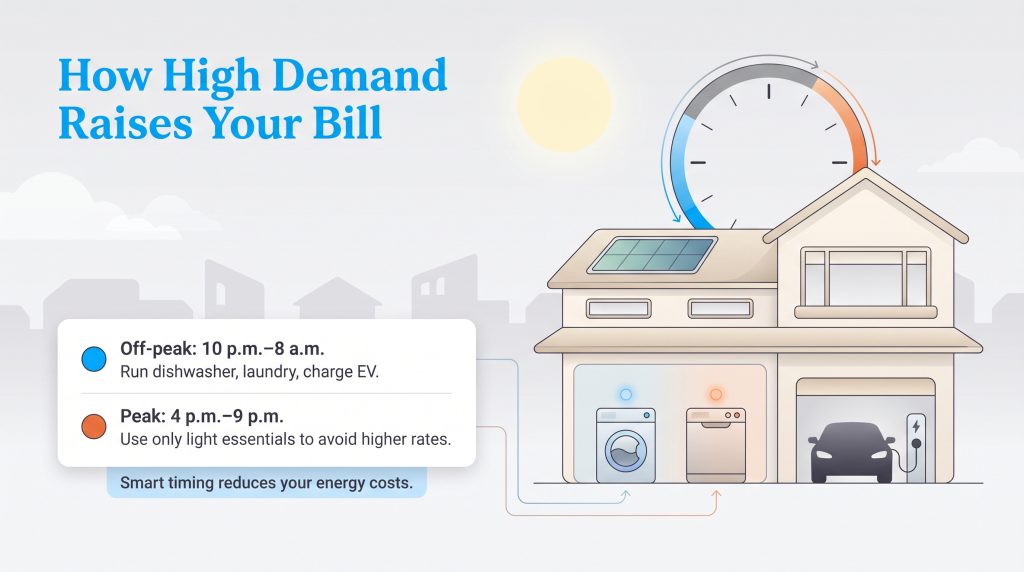
The grid doesn’t have unlimited capacity, which means extreme weather conditions can put a severe strain on the entire system. When a brutal summer heatwave forces everyone in your city to blast their air conditioning simultaneously, or a freezing winter storm causes a spike in heating demand, utility companies have to scramble to provide enough power. Some utilities and retail electricity plans use time-of-use rates or peak pricing, which means electricity can cost more during high-demand hours.
Understanding these daily rhythms is one of the best strategies to lower your electric bill. By shifting your heavy energy consumption away from the late afternoon and early evening, you avoid peak pricing and actively help prevent localized blackouts. Shifting flexible chores to lower-demand hours is a simple, no-cost way to support the grid and potentially lower your bill if your rate plan rewards off-peak use.
Some utilities also offer demand response programs, which reward you for reducing electricity use during high-demand periods. If you have a smart thermostat, EV charger, or connected appliance, check whether your provider offers bill credits for participating. Pairing grid-aware habits with ENERGY STAR certified appliances, smart thermostats, and efficient HVAC equipment can lower your demand without changing your daily routine much.
Your utility’s schedule may differ, but many time-of-use plans follow a pattern like this.
| Time of Day | Best Home Activities |
|---|---|
| Example Off-Peak Period (10 p.m. to 8 a.m.) | Running the dishwasher, charging an EV, doing laundry |
| Example Peak Period (4 p.m. to 9 p.m.) | Watching TV, reading, using small kitchen appliances, running ceiling fans |
💸 Money-Saver: Running heavy appliances like your washing machine or dishwasher during off-peak hours can reduce your household’s demand during peak periods and save you money on time-of-use utility rates.
How the Grid Affects Your Electric Service Options
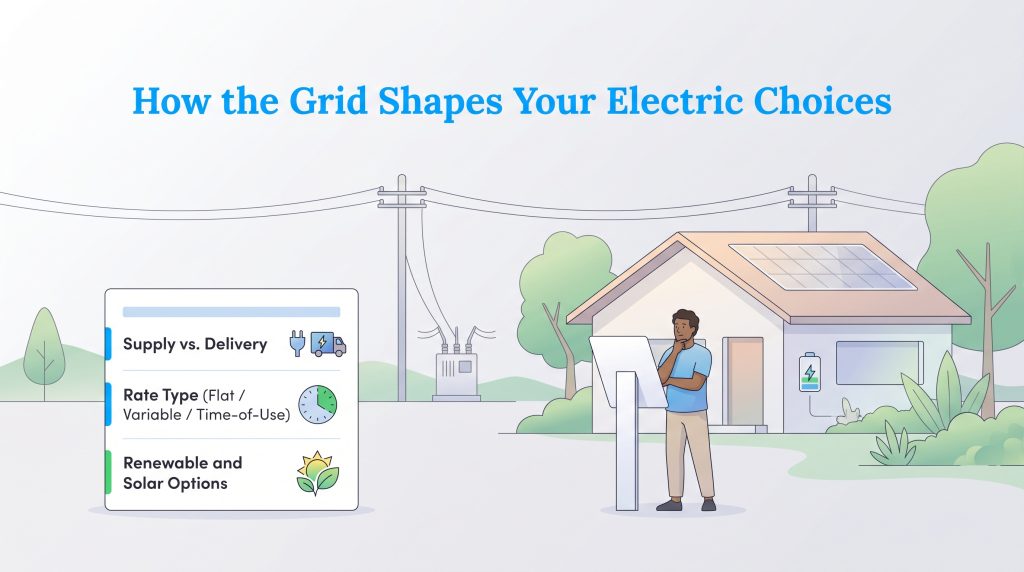
When you’re setting up electric service in a new home, understanding your connection to the grid can help you make the best choice. In regulated markets, your local utility usually delivers and sells your electricity. In deregulated markets, you may choose an electricity supplier while the local utility still maintains the poles, wires, and outage response.
Because of this, your monthly bill may separate supply charges from delivery charges. Understanding that difference can help you compare plans more confidently. When evaluating your options, you should check whether your plan has flat rates, variable rates, or time-of-use pricing. Also, consider whether your utility offers renewable energy plans or if your home is eligible for solar, net metering, battery storage, or demand response credits.
Understanding Your Connection to the Electric Grid
The journey from power plant to outlet involves incredible engineering, relying on generation, transmission, and distribution to keep modern life moving forward. As smart grid technology continues to modernize this infrastructure, homeowners are gaining unprecedented control over their energy usage and utility expenses. Armed with a deeper knowledge of how electricity travels to your front door, you’re well-prepared to make environmentally mindful choices, shift your usage habits, and manage your new home’s energy profile with more confidence.
Frequently Asked Questions About the Electric Grid
These quick answers cover the most common questions homeowners and renters have about how the electric grid works, who manages it, and how it affects your home. Use them as a starting point when comparing providers, solar options, or energy-saving programs.
Who Manages the Power Grid in the United States?
What Happens to the Grid During a Power Outage?
Can I Disconnect My Home Completely From the Electric Grid?
Is the Electric Grid the Same Across the Whole Country?
Why Is Upgrading the Electric Grid Necessary?
Is the Electric Grid the Same as the Power Grid?
What Are the Main Components of the Electric Grid?
Does Home Solar Work During a Power Outage?
About the Author

LaLeesha has a Masters degree in English and enjoys writing whenever she has the chance. She is passionate about gardening, reducing her carbon footprint, and protecting the environment. She also recently served as President of the Board for City Sprouts (a community garden).

Jared Evans is a licensed electrician and the owner of Full Circuit Electric in Omaha, Nebraska. As an expert reviewer for UtilitiesForMyHome.com, Jared uses his 10+ years of hands-on experience to ensure our electrical advice is safe, accurate, and easy to follow. Whether he's troubleshooting a complex wiring issue or sharing tips on green energy upgrades, Jared is dedicated to helping you power your home efficiently — and safely.