

Knowing how to safely shut off your home’s power can help prevent electrical hazards during floods, storms, and utility outages.
Key Takeaways
- Locate your main electrical panel and understand how to properly flip the main breaker before an emergency strikes.
- Always prioritize physical safety by standing to the side and avoiding water when operating an emergency electricity disconnect switch.
- Prepare for utility-initiated outages by building an eco-conscious backup plan to keep your essential appliances running.
Whether a severe storm is approaching your neighborhood or a sudden pipe burst threatens your basement, having a solid emergency power shutoff procedure can make the difference between a minor inconvenience and a major electrical hazard. We know that dealing with utility emergencies feels overwhelming, especially when you are scrambling in the dark. That is exactly why we created this guide to walk you through shutting off power to your home’s circuits when it’s safe to access your breaker panel. You will learn exactly how to handle your breaker box during extreme weather events, sudden household floods, or targeted utility outages — without putting yourself at risk.
Why an Emergency Power Shutoff Plan Matters
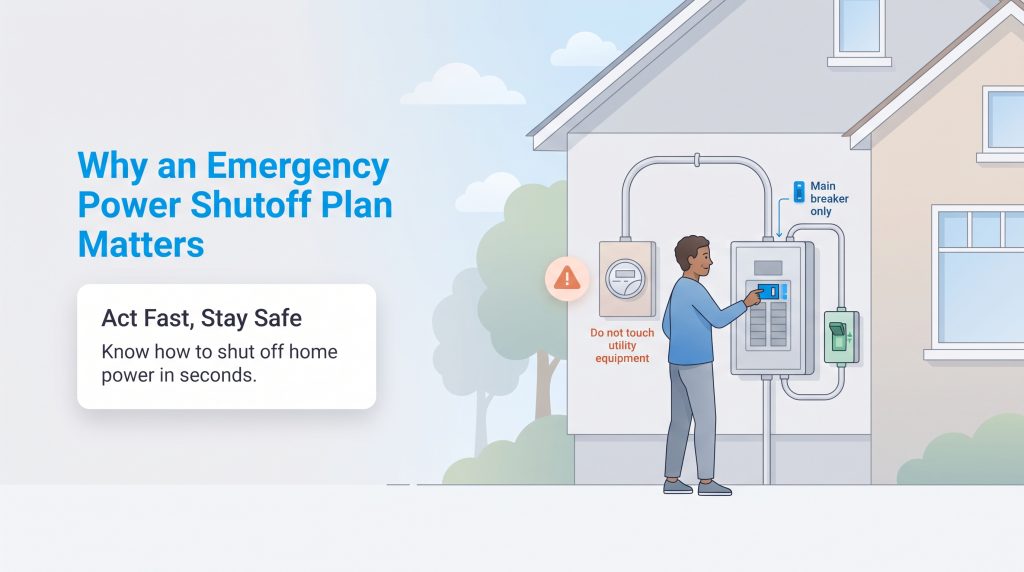
Most homeowners assume they will only need to cut the lights during a catastrophic storm or widespread natural disaster. The reality is that immediate electrical shutoffs are far more common during localized home emergencies, like a burst indoor plumbing pipe, major DIY renovations gone wrong, or severe summer storms. Having a dependable action plan ensures you won’t hesitate when seconds count. This guide explains how to shut off power to your home’s circuits from the main breaker or exterior emergency disconnect. It does not make utility-owned equipment safe to touch, so never remove the meter, open sealed equipment, or handle service wires.
When to Shut Off Power and When to Stay Away
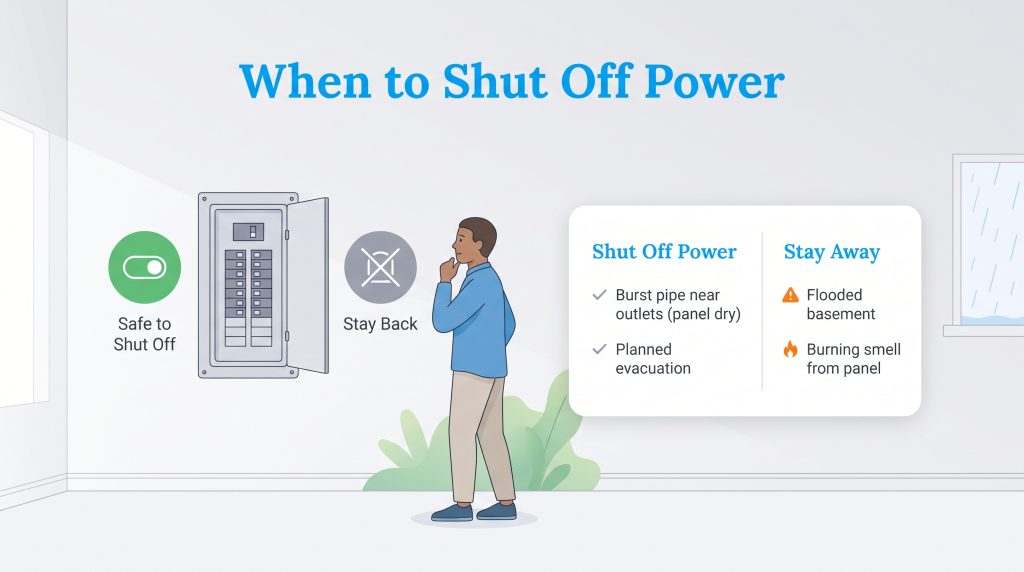
When floodwater reaches outlets, cords, appliances, or wiring, the risk of shock, electrocution, and fire rises quickly. Learning how to shut off power in an emergency proactively protects your property from dangerous sparks and keeps your household appliances safe from unpredictable power surges when the grid flickers. However, recognizing when it is too dangerous to approach your panel is critical.
| Situation | Should you shut off power? | What to do first |
|---|---|---|
| Burst pipe near outlets | Yes, if safe | Turn off main breaker if panel is dry |
| Flooded basement | No | Evacuate and call your utility |
| Burning smell from panel | No | Leave the area and call 911 |
| Planned evacuation | Yes | Turn off branch breakers, then the main |
| Utility-initiated outage | Optional but recommended | Turn off major appliances to prevent surges upon restoration |
Understanding Public Safety Power Shutoffs
Sometimes, the decision to shut off electricity doesn’t come from you. Utility companies may initiate deliberate outages to prevent active wildfires or ease severe grid strain during extreme temperatures. Proper public safety power shutoff preparation ensures you aren’t caught off guard when the local provider temporarily halts service. In areas with high summer demand, severe storms, or wildfire risk, your utility or grid operator may issue outage alerts, conservation notices, or controlled outage updates. Knowing this possibility exists helps you stockpile the right supplies and secure alternative lighting long before the grid goes dark.
How to Find Your Main Electrical Shutoff
Before you can safely kill the electricity, you have to know exactly where to go. If you are currently wondering, “where is my main electrical shutoff,” start by checking your basement, garage, or dedicated interior utility closets. In many newer builds or warmer climates, the primary electrical panel sits on an exterior wall right next to your utility meter. Take five minutes this weekend to locate this gray metal box so you aren’t hunting for it with a dying flashlight.
If you are a renter, ask your landlord where the electrical panel is located during your move-in walkthrough. Don’t enter locked electrical rooms, and always report inaccessible panels to maintenance before an emergency strikes. Keep your property manager’s emergency number saved in your phone.
Emergency Power Shutoff Procedure
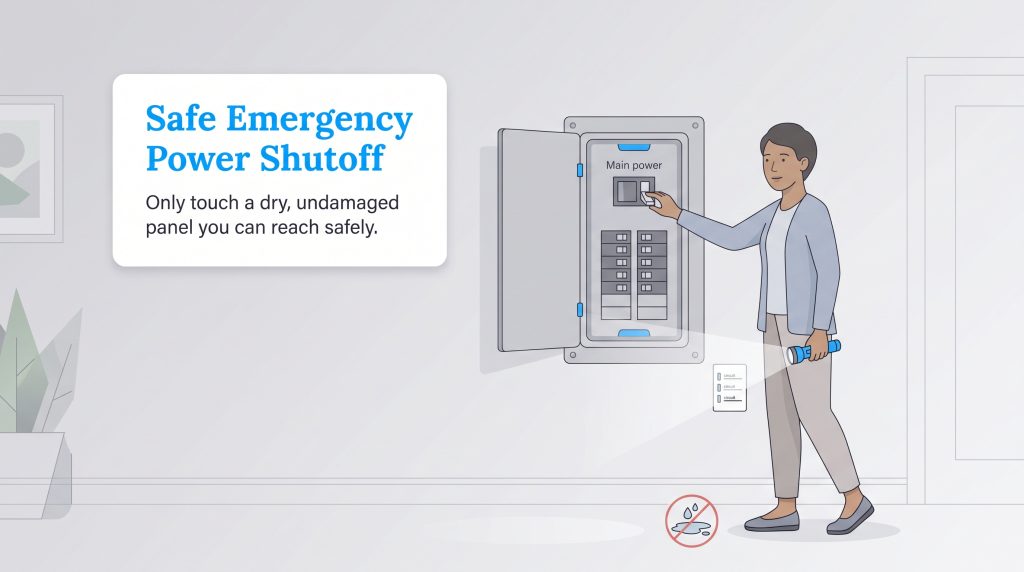
Executing a home emergency power shutoff doesn’t require an electrician’s license, but it does demand a cool head and strict attention to safety protocols. Having a clear mental plan completely reduces panic when the lights suddenly go out, allowing you to systematically shut down your connection to the grid when safe to do so.
Assess the Area for Hazards
Once you locate the box, pause and assess your surroundings. Grab a reliable LED flashlight and ensure you have secure, dry footing before stepping anywhere near the equipment. The golden rule of electrical safety always applies: absolutely never touch the metal electrical panel if it is wet, if the floor is damp, or if you are wearing wet clothing. Furthermore, do not touch the panel if you see sparks, smoke, scorch marks, melted plastic, or exposed wiring. Avoid the panel completely if it feels hot, is making a buzzing or crackling sound, or smells like burning plastic. If there is fire, smoke, severe flooding, or a downed power line, leave the area immediately and call 911 or your utility’s emergency line.
🚩 Heads Up: Never attempt to turn off your power if you must stand in a puddle or flooded area to reach the electrical panel.
Planned Shutdown vs. Urgent Shutdown
How you flip the breakers depends entirely on the urgency of your situation. For a planned shutdown, turn off individual branch breakers first, then switch off the main breaker. In a true emergency, only approach the panel if it’s dry, undamaged, and safe to reach. If you are facing an immediate hazard and the panel is completely safe to access, turn off the main breaker immediately to save time.
Whenever you flip a breaker, body positioning is everything. Stand to the side of the panel rather than directly in front of it, use only one hand to pull the switch, and look away as you flip it. This stance physically protects your face and body from potential arc flashes. If your home features an exterior emergency electricity disconnect switch, apply these exact same physical safety measures when cutting the line.
💡 Pro Tip: Label your circuits clearly with a permanent marker or printed stickers on a normal, sunny day so you aren’t guessing what switch controls which room in the pitch dark.
What to Do During an Extended Power Outage
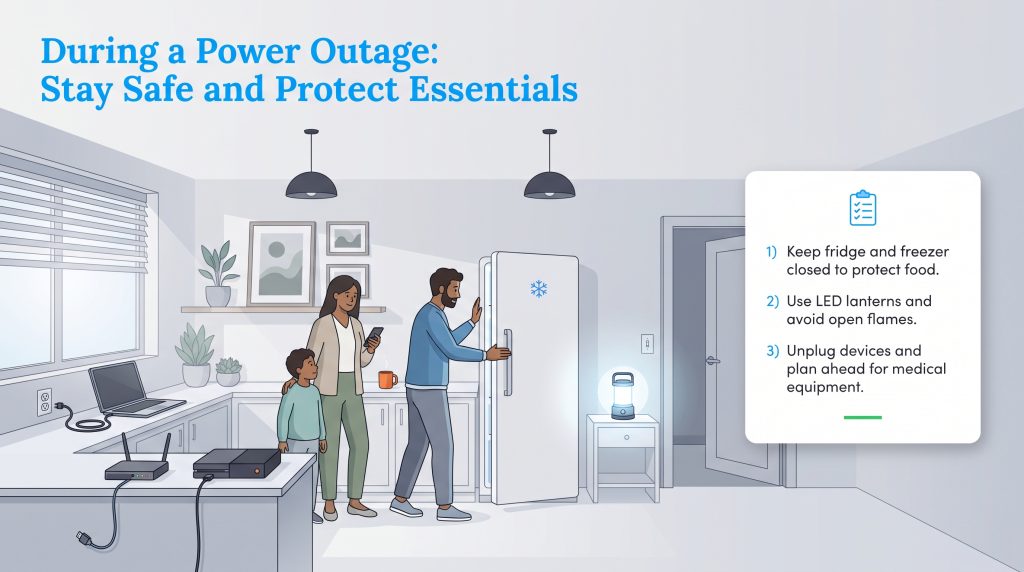
Figuring out exactly what to do in a power outage starts the moment the main switch is off. Your first priority should be keeping your refrigerator and freezer doors tightly closed to preserve your perishable food for as long as possible. According to FEMA’s guidelines for power outages, food can stay cold for about four hours in a refrigerator and about 48 hours in a full freezer if the doors remain closed. From there, unplug any sensitive electronics that weren’t caught by the breaker shutdown, and focus on comfortably navigating your space. Successfully managing your home’s electric system means knowing how to adapt your daily routines when that system is temporarily out of commission.
Keeping Your Household Safe and Comfortable
Safety remains a top priority even after the panel is secured. Skip the rustic aesthetic of open-flame candles, which pose a massive fire risk, and opt for battery-powered LED flashlights or reliable camping lanterns to illuminate your hallways. To maintain a safe internal temperature, focus on controlling your environment passively. In the winter, dress in layers and gather your family in a single, well-insulated room. During intense summer heat, close your blinds against direct sunlight, stay hydrated, and try to rest on the lowest, coolest level of your property.
Preparing Medical Devices for Outages
If anyone in your household relies on powered medical equipment like oxygen concentrators, CPAP machines, or refrigerated medicine, having a robust plan is critical. Contact your utility provider ahead of time to ask about medical baseline or priority notification programs. Always keep backup batteries fully charged and consult your health care provider for an actionable outage plan tailored to your specific medical needs.
Sustainable Backup Power Options
When the blackout stretches from hours into days, having a backup energy source becomes vital. Instead of defaulting to a traditional, noisy gas generator that churns out toxic fumes, consider an environmentally mindful choice like a high-capacity home battery power station. Portable power stations can charge from a wall outlet before a storm and power essentials like phones, medical devices, lights, or a refrigerator for a limited time, depending on their capacity. If you want an even more robust eco-conscious alternative, exploring home solar solutions with portable panels gives you a way to recharge during daylight hours without running a fuel-burning generator. Understanding how your home integrates with the grid empowers you to build an independent, sustainable backup power plan that makes sense for modern living.
🌱 Eco Edge: A battery backup or portable power station can be a cleaner indoor option than a gas generator because it runs silently and doesn’t produce exhaust at the point of use. For smaller electronics, look for efficient, appropriately sized units, and pair larger batteries with solar charging when practical.
Safely Restoring Your Home’s Electricity
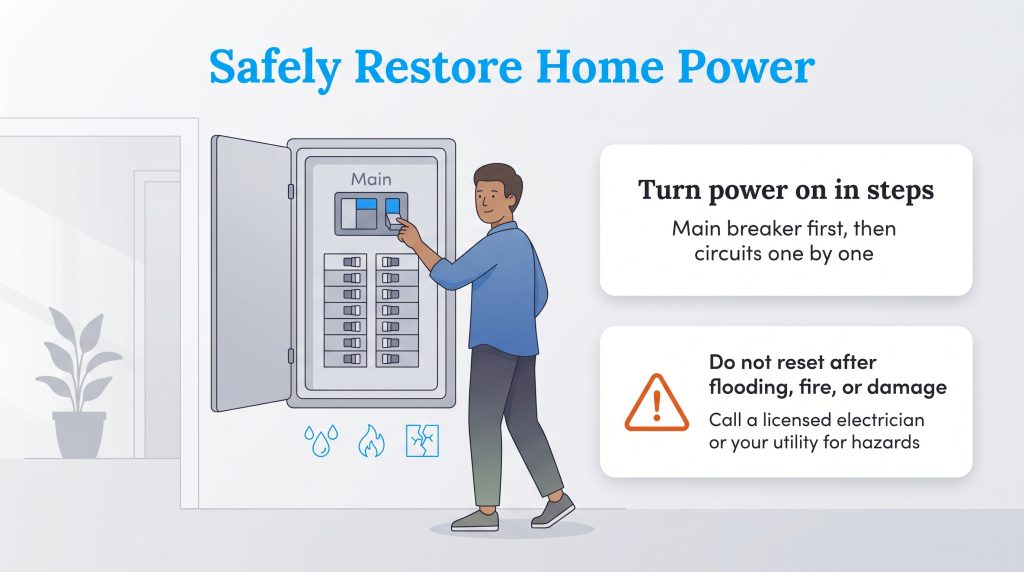
Turning your power back on requires the exact same level of caution and care as shutting it off. Assuming it is safe to do so, the process is simply reversed: always flip the main heavy-duty breaker on first while all the smaller circuits remain off. Once the primary grid connection is restored, begin turning on your individual branch circuits one at a time, pausing for a few seconds between each flip. This phased, careful approach reduces load and helps equipment restart more smoothly.
When Not to Restore Power Yourself
There are specific situations where you should never attempt to flip the main breaker back on. If your home experienced flooding, fire damage, or structural breaches, do not restore power. Similarly, if you notice burning smells, scorch marks around the panel, or a tripped main breaker that instantly trips again when reset, step away. In these scenarios, you must have a licensed electrician inspect your system or contact your utility provider to verify the service equipment is safe to operate. For comprehensive guidance on post-storm electrical hazards, consulting resources from the Electrical Safety Foundation offers invaluable safety checklists.
Staying Ready Before the Next Outage
Mastering your emergency power shutoff procedure is one of the most empowering steps you can take as a resident. We want you to feel completely confident handling your home’s electrical infrastructure, even when severe weather threatens or a sudden plumbing leak springs up. Proactive preparation remains the ultimate defense against unpredictable, chaotic emergencies. Taking just a few minutes today to locate your panel, review the shutoff sequence, and stock up on sustainable backup supplies ensures your household stays safe, comfortable, and deeply resilient no matter what happens to the local grid. With a labeled panel, a clear plan, and the right emergency contacts, you’ll be better prepared to act quickly and safely.
Frequently Asked Questions About Emergency Power Shutoff Procedures
These quick answers cover common emergency power shutoff questions for homeowners, renters, and anyone preparing for severe weather. If your situation involves fire, flooding, smoke, or damaged equipment, contact your utility or emergency responders instead of handling the panel yourself.
Where is my main electrical shutoff located?
Is it safe to flip the main breaker during a severe storm?
Should I turn off my power if my house floods?
What is an emergency electricity disconnect switch?
Will turning off my main breaker reset my smart home devices?
Can I shut off power from outside my home?
Should renters shut off the main breaker in an emergency?
About the Author

LaLeesha has a Masters degree in English and enjoys writing whenever she has the chance. She is passionate about gardening, reducing her carbon footprint, and protecting the environment. She also recently served as President of the Board for City Sprouts (a community garden).

Jared Evans is a licensed electrician and the owner of Full Circuit Electric in Omaha, Nebraska. As an expert reviewer for UtilitiesForMyHome.com, Jared uses his 10+ years of hands-on experience to ensure our electrical advice is safe, accurate, and easy to follow. Whether he's troubleshooting a complex wiring issue or sharing tips on green energy upgrades, Jared is dedicated to helping you power your home efficiently — and safely.