
Winter Supply Rate Increases from 11.09¢ to 17.03¢ per Kilowatt-Hour for Most Ocean State Households
Key Takeaways
- Rhode Island Energy’s default residential supply price rose to 17.029¢ per kWh on Oct. 1, marking a 53.5% increase over summer rates.
- Average household bills will climb by roughly $31 per month, though state-mandated bill refunds and credits will help reduce the net impact.
- Ocean State residents can manage costs by checking community electricity aggregation programs, shopping competitive suppliers, or applying for income-eligible discount rates.
As cooler weather arrives across Southern New England, Rhode Island homeowners are facing a familiar seasonal chill on their monthly utility statements. On Oct. 1, Rhode Island Energy officially implemented its winter electricity rates, bumping the baseline supply charge from $0.11092 to $0.17029 per kilowatt-hour (kWh). While a jump of this size sounds alarming on paper, your overall monthly electric bill will not surge by 53%, because supply makes up only a portion of what you pay. Understanding how your bill breaks down, why prices swing every autumn, and which rate relief options are available can help you keep household energy costs in check this winter.
Breaking Down the October 1 Rate Adjustment
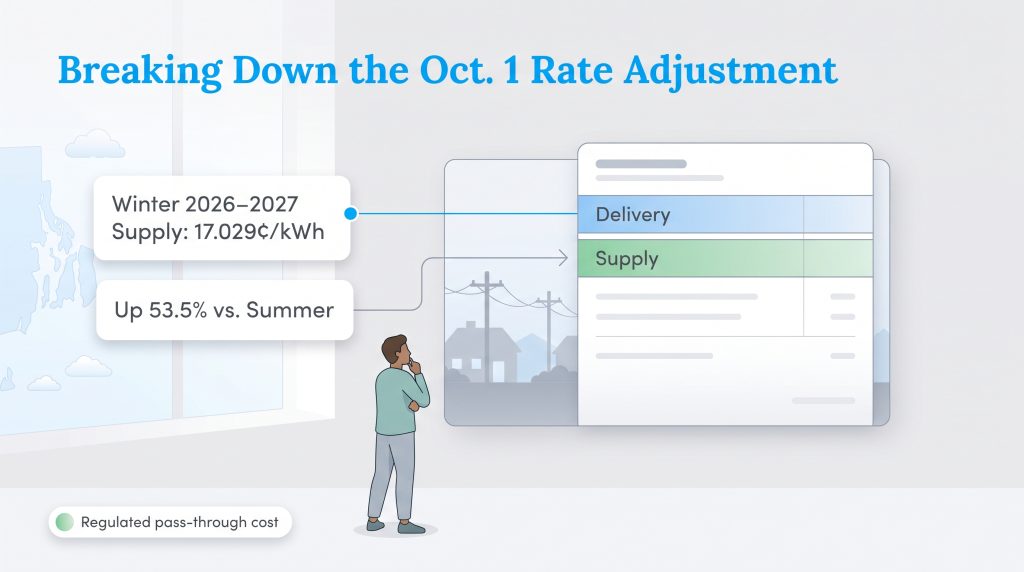
Electricity bills in Rhode Island are divided into two distinct charges: delivery and supply. Delivery services cover the physical poles, wires, substations, and customer service managed by Rhode Island Energy, whereas supply services cover the actual generation of the electricity you consume.
Under state regulations governed by the Rhode Island Public Utilities Commission, electricity supply is a pure pass-through cost. Rhode Island Energy is legally prohibited from adding a profit markup to power generation. Instead, the utility procures electricity through competitive wholesale auctions twice each year, setting fixed six-month rates that take effect on April 1 for the summer and Oct. 1 for the winter.
The current adjustment applies to the utility’s default supply option, known as Last Resort Service (LRS). Residential customers who have not chosen an independent third-party supplier or enrolled in a municipal aggregation plan automatically receive this default rate.
Supply Rate Comparison
- Summer 2026 Supply Rate (April 1 – Sept. 30): 11.092¢ per kWh ($0.11092)
- Winter 2026–2027 Supply Rate (Oct. 1 – March 31): 17.029¢ per kWh ($0.17029)
- Change from Summer 2026: +5.937¢ per kWh (+53.5%)
- Change from Winter 2025–2026 (14.770¢ per kWh): +2.259¢ per kWh (+15.3%)
Commercial accounts will also see a seasonal change, with fixed-price commercial supply rates moving from 10.485¢ per kWh to 16.581¢ per kWh.
How the Rate Hike Impacts Your Monthly Electric Bill
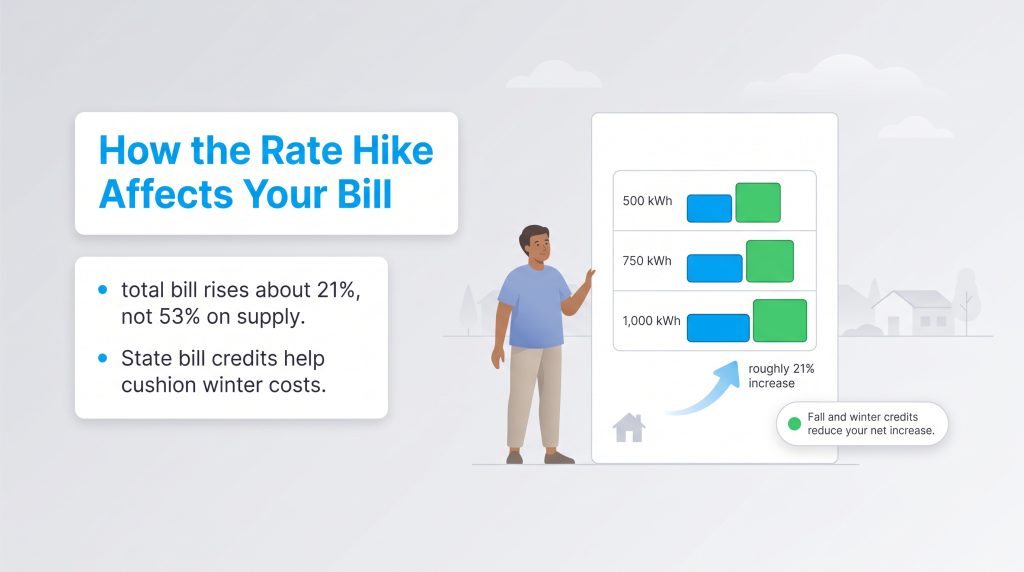
Because delivery charges remain steady, your total electric bill will rise by roughly 21% rather than the 53% seen on the supply line item. The exact dollar change you experience will depend entirely on how much energy your household consumes each billing cycle.
The table below illustrates estimated monthly costs for different home sizes under the new winter supply rate compared to summer charges:
| Monthly Usage | Summer Supply Charge | Winter Supply Charge | Estimated Monthly Supply Change | Estimated Total Winter Bill |
| 500 kWh (Apartment / Small Home) | $55.46 | $85.15 | +$29.69 | ~$175 |
| 750 kWh (Average Single-Family) | $83.19 | $127.72 | +$44.53 | ~$261 |
| 1,000 kWh (Large Home / Electric Heat) | $110.92 | $170.29 | +$59.37 | ~$348 |
State Bill Credits Offer Cushioning
To help soften the impact of higher seasonal rates, regulators approved two sets of credits for residential customers this winter:
- Fall Utility Refund (October – December): A company-issued credit of approximately $14 per month reduces the net increase for a typical 500 kWh customer to about $16.42 per month during early winter.
- RGGI Regional Credit (January – March): Beginning in January, proceeds from the Regional Greenhouse Gas Initiative cap-and-trade auction will provide an additional monthly credit of roughly $20.45, providing direct relief during the coldest months of the year.
Why New England Electricity Rates Surge in Winter
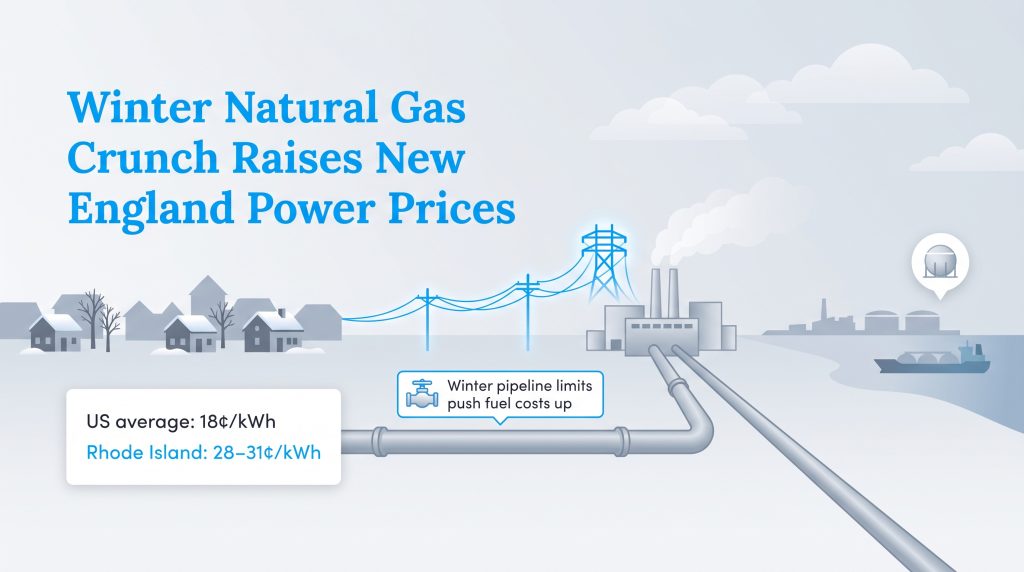
The primary driver behind higher winter power costs across Rhode Island is the region’s reliance on natural gas for both home heating and electric generation. Power plants across the ISO New England electric grid generate more than half of the region’s power from natural gas.
During winter cold snaps, interstate pipeline capacity becomes constrained as home heating systems take priority for available pipeline gas. Power generators must then purchase spot-market pipeline fuel at premium rates or burn costlier imported liquefied natural gas (LNG).
According to data compiled by the U.S. Energy Information Administration, Rhode Island households pay some of the highest retail electricity prices in the country, frequently ranking in the top five states nationwide alongside Massachusetts and Connecticut. While the national residential benchmark hovers around 18¢ per kWh, Rhode Island’s all-in residential cost averages between 28¢ and 31¢ per kWh when factoring in both delivery and supply.
Impacted Areas and Communities Across Rhode Island
Rhode Island Energy is the primary electric distribution utility for the state, delivering power to more than 500,000 customers across nearly the entire Ocean State territory. The Oct. 1 rate change affects residential and commercial ratepayers throughout all five Rhode Island counties:
- Providence County: Providence, Pawtucket, and Cranston
- Kent County: Warwick, West Warwick, Coventry, and East Greenwich.
- Washington County: South Kingstown, North Kingstown, and Westerly.
- Newport County: Newport, Middletown, and Jamestown.
- Bristol County: Bristol, Warren, and Barrington.
Only residents served by municipal electric departments — specifically the Pascoag Utility District in Burrillville and the Block Island Utility District on New Shoreham — are exempt from Rhode Island Energy’s tariff changes, as they procure power through independent contracts.
Practical Steps to Protect Your Household Budget
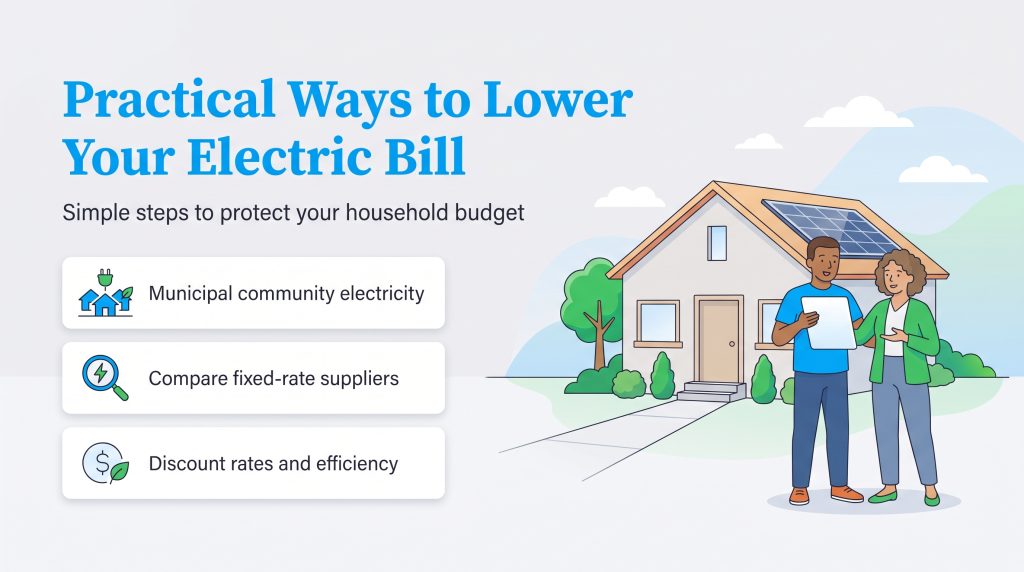
You do not have to accept higher electricity bills without taking action. Because Rhode Island is a deregulated energy market, consumers have several pathways to lower their monthly expenses or secure cleaner, stable alternatives.
Explore Municipal Community Electricity Programs
Many Ocean State municipalities have launched Community Electricity aggregation programs that leverage group buying power for lower rates. For instance, the City of Providence recently announced its winter community supply rates starting in November, setting standard pricing below Rhode Island Energy’s 17.029¢ per kWh while delivering an environmentally mindful choice with 5% more local renewable energy. These programs allow residents to opt out or switch tiers at any time without exit fees.
Compare Competitive Retail Suppliers
You can shop for an alternative retail electricity supplier online. If you decide to shop, look for a fixed-rate plan lower than 17.029¢ per kWh that locks in savings through March 31. Be sure to check the contract fine print: avoid plans with variable teaser rates that jump after a few months, monthly administrative fees, or high cancellation penalties.
Apply for Income-Eligible Discount Rates
If your household participates in programs such as Supplemental Nutrition Assistance Program (SNAP), Supplemental Security Income (SSI), or Medicaid, you may qualify for Rhode Island Energy’s low-income electric discount (Rate A-60). This provides an ongoing 25% to 30% reduction on your total bill. Additional assistance is available through the federally funded Low-Income Home Energy Assistance Program (LIHEAP), which is administered by regional Community Action Program agencies.
Tap into Efficiency Rebates and Equalized Billing
Taking advantage of a no-cost EnergyWise home energy assessment can reveal easy ways to eliminate drafts and reduce waste. The program offers generous discounts on insulation, smart thermostats, and energy-saving heat pumps. If you prefer steady household expenses throughout the year, enrolling in Budget Billing spreads your annual utility costs into 12 equal monthly installments, shielding your wallet from winter bill spikes.
Taking Charge of Your Winter Power Costs
Higher winter electricity rates are an annual reality across New England, but proactive management can keep your utility costs manageable. By checking whether your town offers a community aggregation program, taking advantage of state bill refunds, and adopting small efficiency upgrades around your home, you can successfully counter this season’s supply hike. We will continue monitoring regulatory updates and rate filings to ensure you have the most up-to-date information for your home utility decisions.
About the Author

Claudio is a sustainability-focused writer with a background in Anthropology and Psychology from NC State University. He has spent over 15 years working in writing, interpretation, and translation, driven by a deep interest in how human culture shapes the environment. Today, he shares his curiosity with readers by writing about sustainable living solutions and the connection between everyday choices and environmental impact.