
Choosing the right type of water can protect your health, extend the lifespan of your home appliances, and reduce your household’s environmental footprint.
Key Takeaways
- Purified water undergoes filtration to remove chemical pollutants and pathogens, but its mineral content depends on the treatment method and whether minerals are added back.
- Distilled water is created through a boiling and condensation process that removes nearly all dissolved minerals and impurities, making it ideal for specialized home appliances.
- Investing in home water filtration rather than relying on bottled water is an eco-conscious choice that can save you hassle and money over time.
When you fill up a glass from the tap or grab a clear bottle off a store shelf, it all looks identical, but understanding the intricacies of distilled vs purified water can save your appliances from premature breakdowns and elevate your family’s daily health. Distilled water is a type of purified water, but it is made through boiling and condensation. Purified water can be made through several methods, including reverse osmosis, carbon filtration, or distillation. Although both liquids appear crystal clear, the invisible differences in mineral content and exact purification methods carry a meaningful impact on your living environment. We want to help new homeowners and health-conscious families make smart, environmentally mindful choices about the water they drink and use in their home appliances. By learning exactly when to use each type, you can protect your investments, maintain your physical health, and cut down on unnecessary utility and grocery expenses.
What Is the Difference Between Purified and Distilled Water?
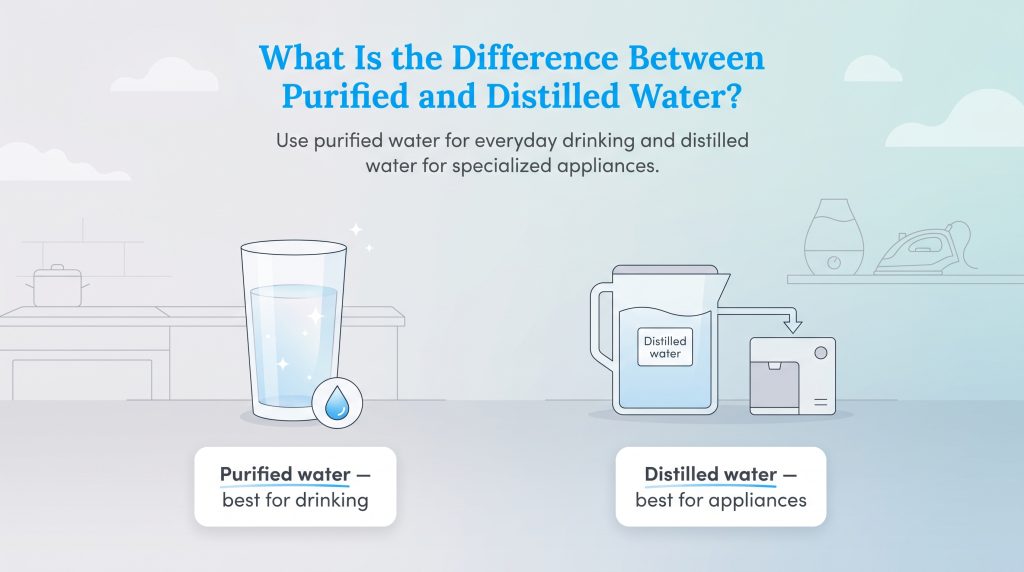
Figuring out the difference between purified and distilled water comes down to understanding that one is a broad category and the other is a highly specific process. Purified water is any water that has been mechanically filtered or processed to remove impurities and make it suitable for use. This umbrella term covers various treatments — like reverse osmosis, carbon filtration, and deionization — which strip away harmful chemicals, pathogens, and heavy metals to meet stringent safety guidelines set by the EPA’s National Primary Drinking Water Regulations. Distillation operates as a very specific type of purification.
To create distilled water, you must boil the liquid into steam and then capture the condensation in a separate, clean container. This intense method effectively leaves nearly all dissolved minerals, salts, and many other impurities behind in the original boiling chamber. Because all distilled water is purified but not all purified water is distilled, their end uses vary drastically.
| Feature | Purified Water | Distilled Water |
| Purification Method | Reverse osmosis, carbon filtration, or ozone treatment | Boiling into steam and capturing condensation |
| Mineral Content | May contain trace minerals, depending on the treatment method | Nearly all dissolved minerals removed |
| Primary Best Use | Daily drinking, cooking, and hydration | Home appliances, medical devices, and steam irons |
| Taste Profile | Crisp, refreshing, and clean | Flat, bland, and slightly metallic |
Best Water by Household Use Case
If you need a quick reference for exactly which type of water belongs in your cup or your household appliance, this breakdown provides the most practical and efficient choices.
| Household Use | Best Choice | Why |
| Daily Drinking | Purified or filtered water | Better taste and may contain trace dietary minerals |
| Coffee and Cooking | Purified or filtered water | Offers a cleaner taste without being flat |
| Humidifiers | Distilled water | Reduces airborne mineral dust and hard water scale |
| CPAP Machines | Distilled water (if recommended by manufacturer) | Helps limit dangerous mineral buildup inside the chamber |
| Steam Irons | Distilled water | Prevents scale buildup and jagged white residue on clothes |
| Baby Formula | Depends on water source and formula instructions | Requires following specific label directions and pediatric guidance |
| Sensitive Houseplants | Distilled, rainwater, or low-mineral water | Helps avoid leaf damage from chlorine and heavy metals |
When to Use Distilled Water in Your Home
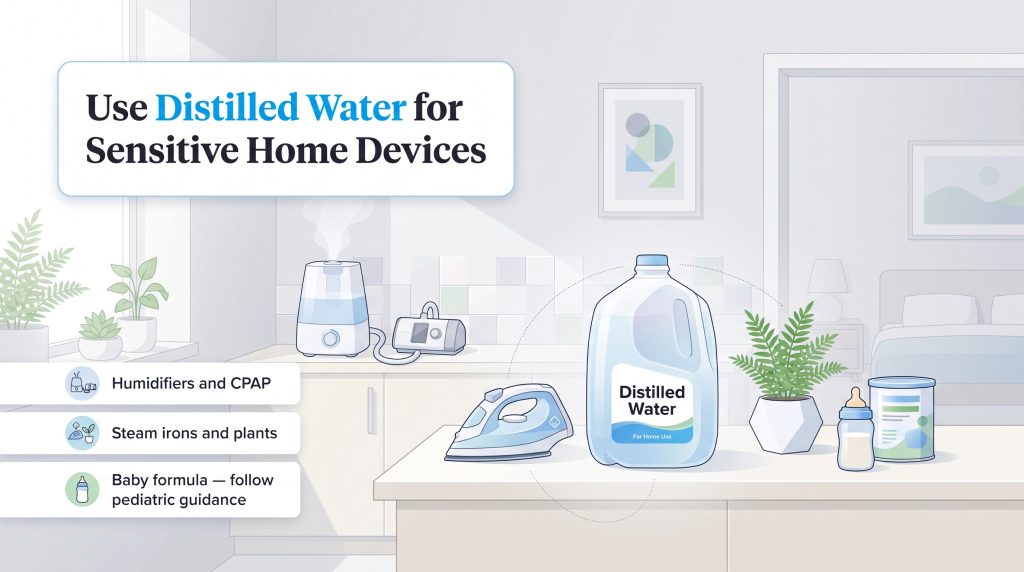
Because the rigorous boiling process completely strips away naturally occurring minerals, distilled water operates as an ideal utility liquid for your residence. It prevents hard mineral deposits from crusting over your favorite devices, ensuring they run efficiently for years without spitting out white mineral dust. You should reach for a jug of distilled water whenever an instruction manual explicitly warns against using standard tap water.
🚩 Heads Up: Scale buildup occurs when hard water evaporates and leaves behind tough calcium and magnesium deposits. Over time, these stubborn minerals can permanently clog internal pipes and ruin expensive home appliances.
Distilled Water for Humidifiers and CPAP Machines
When operating medical or respiratory equipment, using the right liquid is critical for your health and the longevity of the machine. If you are comparing purified vs distilled water for humidifier use, distilled is often recommended by manufacturers. Standard purified water can still harbor trace minerals that aerosolize into fine white dust, which irritates your lungs and coats your bedroom furniture. The EPA advises using distilled or demineralized water in humidifiers to reduce airborne mineral dust. For CPAP machines, follow your manufacturer’s instructions; many recommend distilled water in the humidifier chamber to prevent scale buildup and keep the machine functioning safely.
Steam Irons, Indoor Plants, and Baby Formula
Beyond medical devices, keeping a gallon of distilled water under the sink is a smart move for general household chores. It stops your clothing iron from unexpectedly spitting jagged white calcium chunks onto your favorite dark shirts. Sensitive indoor houseplants, such as temperamental calatheas or delicate ferns, also thrive on distilled water since chlorine and heavy metals can scorch their leaf tips. For baby formula, the safest choice depends on your water source, your baby’s age, and the formula label. Distilled or purified bottled water may be appropriate, but parents using well water, preparing formula for newborns, or caring for premature or immune-compromised infants should follow CDC guidance and ask a pediatrician.
When to Choose Purified Water
While your mechanical appliances crave mineral-free environments, your body operates quite differently. When evaluating your home water systems, you will quickly notice that daily hydration and cooking require liquid that actually tastes good and supports human biology. Equipping your kitchen with a robust whole-house filtration system ensures that every tap delivers crisp, clean hydration without the flat profile of heavily processed utility water.
The Best Water to Drink: Purified or Distilled?
If you are standing in the grocery aisle wondering about the best water to drink purified or distilled, always grab the purified option for your family. Distilled water is entirely safe to consume, but the complete lack of essential dietary minerals like calcium, magnesium, and potassium leaves it tasting distinctly flat. It doesn’t contribute minerals to your diet, which is one reason most people prefer purified or filtered water for daily drinking. Purified water strikes the perfect balance for your household by offering the following benefits:
- Superior flavor: When it retains trace minerals, purified water provides the crisp, refreshing taste you expect from a cold glass of water.
- Dietary support: Small amounts of naturally occurring calcium and magnesium contribute to your daily nutritional intake.
- Optimal hydration: The presence of mild electrolytes helps your body absorb the liquid more efficiently after a rigorous workout or time spent in the hot sun.
Environmental Impact and Cost: Bottled vs. Home Systems
We constantly evaluate utility decisions through a lens of sustainability and financial sense. Purchasing heavy, single-use plastic jugs of specialty water from the grocery store every week quickly drains your wallet and generates an enormous amount of landfill waste. If you use distilled or purified water regularly, a home system can reduce single-use plastic and cut down on the hassle of hauling jugs from the store. Investing in an NSF/ANSI-certified under-sink reverse osmosis system provides endless purified drinking water, while a simple countertop steam distiller can generate all the zero-mineral water your humidifiers will ever need.
Transitioning away from disposable plastics is a cornerstone of sustainable living. Reverse osmosis systems can waste some water as part of the filtration process, and filters periodically need replacement. However, creating your own supply at home drastically lowers your household carbon footprint since you are no longer paying to truck heavy liquids across the country.
🌱 Eco Edge: A countertop water distiller requires an upfront investment and uses electricity for each gallon produced, but it can ultimately save you from the recurring costs and plastic waste associated with buying weekly jugs of distilled water for a CPAP machine or humidifier.
Finding the Perfect Balance for Your Home’s Water Needs
Equipping your home with the right type of water ensures your family stays healthy and your appliances run efficiently for years to come. Dedicate your crisp, mineral-rich purified water to daily cooking, brewing coffee, and keeping your household hydrated. Reserve the intensely processed, mineral-free distilled water strictly for your steam irons, sensitive houseplants, and respiratory medical devices. By understanding these subtle differences and utilizing energy-saving home filtration systems, you take total control over your utility footprint and your budget.
Frequently Asked Questions About Distilled and Purified Water
If you are still weighing your options, we have gathered answers to some of the most common inquiries regarding your home water choices.
Is Distilled Water the Same as Purified Water?
Can You Drink Distilled Water Every Day?
Does Purified Water Have Minerals?
Which Is Better: Purified, Distilled, or Filtered Water?
Should You Use Purified or Distilled Water in a Humidifier?
Can You Make Distilled Water at Home?
About the Author

David has been an integral part of some of the biggest utility sites on the internet, including InMyArea.com, HighSpeedInternet.com, BroadbandNow.com, and U.S. News. He brings over 15 years of experience writing about, compiling and analyzing utility data.