

Learning how to check and reduce disinfection byproducts can help you make your new home’s tap water safer from day one.
Key Takeaways
- DBPs form when municipal chlorine or chloramine mixes with natural organic matter in your drinking water.
- Checking your local Consumer Confidence Report (CCR) is the first step to knowing your new home’s DBP exposure levels.
- Installing an activated carbon or reverse osmosis water filter is a practical way to reduce disinfection byproducts from your tap.
As you set up service at your new address, checking your local water quality is a smart early step. We want to help you understand exactly what DBPs in water are and how you can easily reduce them to protect your family from day one.
What Are Disinfection Byproducts in Drinking Water?
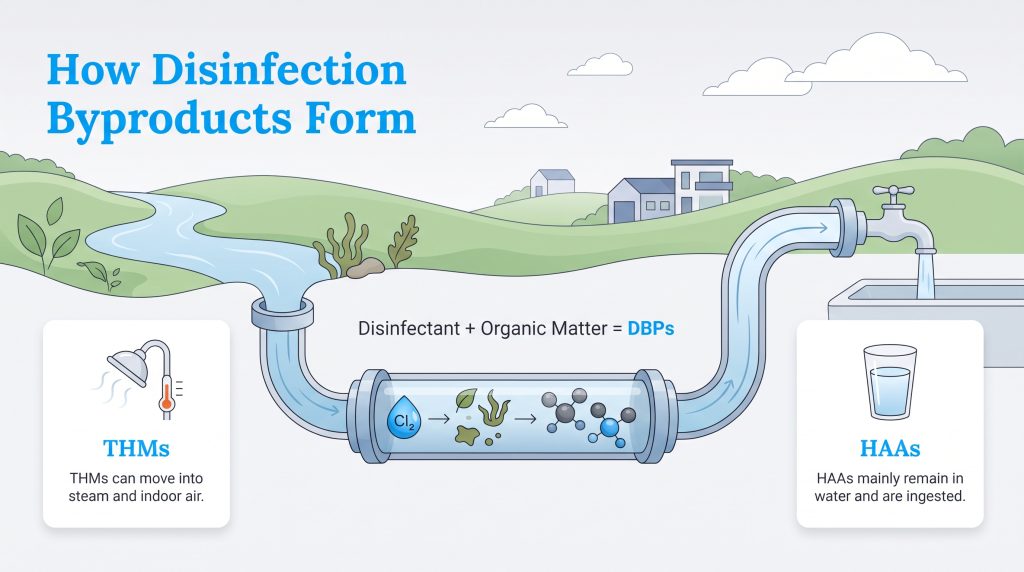
Public utilities face a tough job in keeping dangerous pathogens out of our communities. To accomplish this essential public health measure, facilities add chlorine or chloramine during the water utility setup and service process. This chemical effectively kills off harmful bacteria, viruses, and parasites before the water travels through miles of underground pipes to reach your faucet. While this treatment keeps us safe from immediate disease, it creates a secondary issue that many homeowners completely overlook when establishing their utility services.
When that protective chlorine or chloramine interacts with naturally occurring organic matter like decaying leaves, algae, or soil in the local supply, a chemical reaction occurs. This interaction forms chemical compounds known as disinfection byproducts in drinking water. Because organic material is common in surface water sources like rivers and lakes, some level of DBP formation is common in many municipal systems.
Quick Fact
Hot showers can increase exposure to volatile DBPs, especially THMs, because some compounds can move from water into steam and indoor air.
Common Chlorine Byproducts in Water (THMs and HAAs)
When you start researching chlorine byproducts in water, two specific chemical groups frequently pop up in the data. Understanding these primary groups helps you make better filtration choices for your household.
- Trihalomethanes (THMs): These are the most widespread group of chemical leftovers found in treated supplies. Managing THMs in drinking water is a top priority for utilities, as these compounds easily vaporize into the air when you run hot tap water. You might even notice a slight chemical odor in your bathroom when concentrations are particularly high.
- Haloacetic acids (HAAs): Unlike their chemical counterparts, these acids do not vaporize easily, meaning your primary exposure risk comes from actually drinking the water rather than showering in it. They form under slightly different chemical conditions during treatment but often appear alongside THMs in the same municipal systems.
Are DBPs in Water Dangerous to Your Health?
Hearing about synthetic chemicals forming in your tap water sounds intimidating, but there is no need to panic. For most people, short-term contact won’t cause immediate harm, though some individuals with highly sensitive skin might experience mild irritation or dryness after bathing. The real concern centers around chronic, long-term exposure stretching over decades. The EPA regulates certain DBPs because long-term exposure above federal limits may increase the risk of cancer and may be associated with reproductive or developmental health concerns.
While these long-term risks are legitimate, they are also highly manageable once you know exactly what to look for. By taking a few proactive steps during your new home utility setup checklist, you can easily control your family’s daily exposure. The EPA regulates several disinfection byproducts under the Stage 1 and Stage 2 Disinfectants and Disinfection Byproducts Rules because long-term exposure above federal limits may increase health risks. If you’re concerned about your local results, look for filters certified to reduce the specific contaminants listed in your water report. If someone in your household is pregnant, immunocompromised, or under medical care, ask your health care provider and local water utility about any water-quality concerns specific to your area.
How to Check EPA Limits for Disinfection Byproducts in Your Area
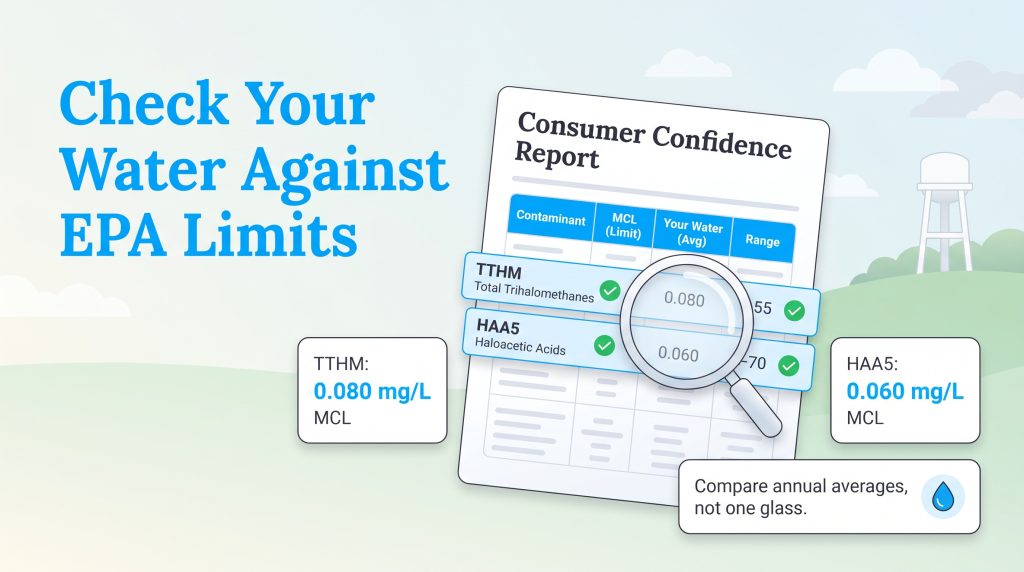
To keep public supplies relatively safe, the federal government establishes strict regulatory guidelines that all municipal facilities must carefully follow. The National Primary Drinking Water Regulations mandate specific caps on how many chemical byproducts can legally remain in your tap water at any given time. Understanding the EPA limits for disinfection byproducts gives you a reliable benchmark to compare against your neighborhood’s actual water quality data.
| Byproduct Category | EPA Maximum Contaminant Level (MCL) | Primary Exposure Route |
|---|---|---|
| Trihalomethanes (THMs) | 0.080 mg/L | Ingestion and Inhalation |
| Haloacetic Acids (HAAs) | 0.060 mg/L | Ingestion |
These limits are based on regulated monitoring averages, not a single glass of water from your tap. Your CCR may show detected ranges, averages, and whether your utility violated the federal standard.
Reading Your Local Consumer Confidence Report
Treat reviewing your water quality data just like changing the locks or testing the smoke detectors — it is an essential new home checklist item. Every community water supplier must provide an annual Consumer Confidence Report (CCR) that details exactly what contaminants were detected in the local system over the past year. You can usually find this report on your water utility’s website. If you’re not sure who serves your address, check your city or county website, contact your local water department, or use EPA and state drinking water resources to track down your system’s CCR.
When you open the report, scroll past the general information until you find the detailed contaminant data tables. Look specifically for the rows labeled TTHM (Total Trihalomethanes) and HAA5 (Haloacetic Acids). Compare the detected levels in your area to the federal limits outlined above. If your local numbers hover uncomfortably close to the maximum allowances, it is probably time to seriously consider upgrading your home’s filtration setup.
- Find the water system name serving your new address.
- Open the latest Consumer Confidence Report on the utility’s website.
- Look for rows labeled TTHM, Total Trihalomethanes, HAA5, or Haloacetic Acids.
- Compare the reported average and range against the federal MCL.
- Call the utility if the report is missing, outdated, or unclear.
Pro Tip
Ask your local water provider for the latest CCR if it wasn’t provided to you at move-in. Most utilities are happy to mail a physical copy or email a direct link upon request.
When DBP Levels May Be Higher in a New Home
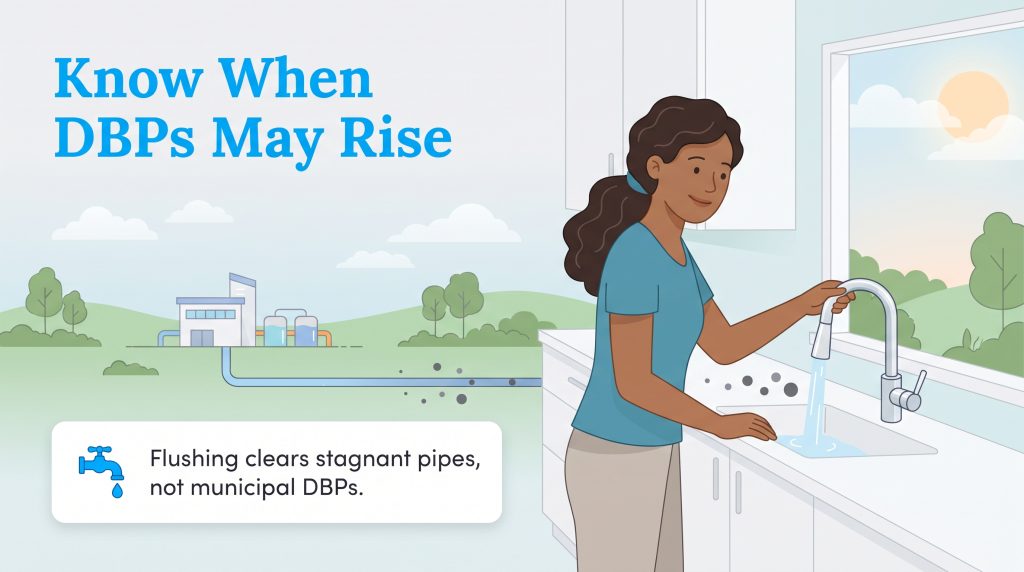
DBP levels can vary by season, source water, and location within the distribution system. Factors such as summer heat, high organic matter after storms or algae blooms, and homes situated farther from the treatment plant can all cause fluctuations. Changes in the disinfectant type used by your municipality can also impact the concentration of these chemical compounds.
If your home sat vacant before move-in, flush each tap for a few minutes, clean faucet aerators, and use cold water for drinking and cooking until you understand your local water quality. While flushing can clear out stagnant water in your pipes, it does not remove DBPs from the municipal supply — it simply gives you a cleaner baseline as you settle into your space.
How to Remove Disinfection Byproducts From Water
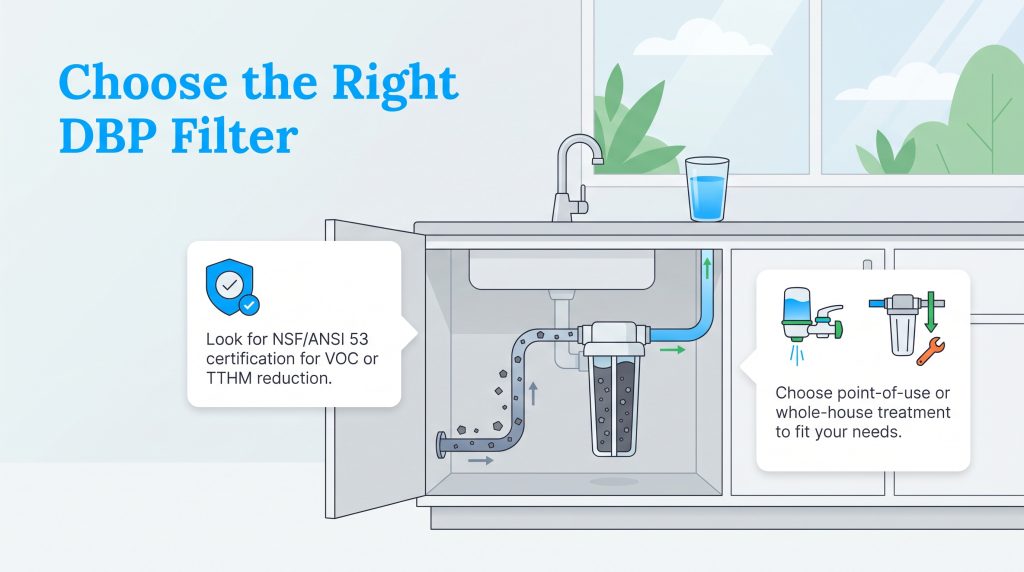
Realizing your tap might contain trace chemicals can feel frustrating, but residential filtration puts the power entirely back in your hands. Determining exactly how to remove disinfection byproducts from water simply comes down to choosing the right system for your household’s budget and plumbing capabilities. Investing in a permanent filtration solution is also a deeply environmentally mindful choice. Instead of relying on single-use plastic water bottles, you can use filtered tap water for daily drinking and reduce household plastic waste.
When comparing products, look for filters certified by NSF/ANSI Standard 53 for VOC or TTHM reduction, or review the manufacturer’s performance data for the specific DBPs listed in your CCR.
| Filter Type | Best For | DBP Reduction Notes | Good for Renters? |
|---|---|---|---|
| Carbon pitcher | Low-cost taste improvement | Only rely on models certified for target contaminants | Yes |
| Faucet-mounted carbon filter | Easy tap treatment | May reduce some DBPs if certified | Yes |
| Under-sink carbon block | Daily drinking and cooking water | Strong practical choice for many DBP concerns | Sometimes |
| Reverse osmosis with carbon stages | Broad contaminant reduction | Useful when paired with effective carbon filtration | Sometimes |
| Whole-house carbon system | Shower and whole-home exposure reduction | Best for reducing DBPs before water reaches taps | No, usually homeowner-focused |
Do-It-Yourself Under-Sink Water Filters
If you are a renter or a budget-conscious homeowner, point-of-use systems offer fantastic protection without requiring major plumbing overhauls. Certified activated carbon filtration is one of the most practical ways to reduce many disinfection byproducts at the tap, and some reverse osmosis systems include carbon stages that add extra protection. Activated carbon works beautifully as a water filter for disinfection byproducts, trapping the chemical compounds within its porous surface before they ever reach your glass.
Reverse osmosis systems can reduce many dissolved contaminants, and many units include carbon prefilters or postfilters that help address chlorine-related tastes, odors, and some DBPs. Both options are cost-effective compared to buying bottled water, and handy homeowners can usually install these residential water filtration systems in just a couple of hours using basic hand tools.
Professional Whole-House Filtration Systems
For those who want comprehensive protection at every tap, point-of-entry (POE) systems treat your water before it even reaches the interior plumbing. Whole-house systems are the most comprehensive option because they treat water before it reaches showers, sinks, and appliances, helping to completely eliminate the hidden DBP inhalation risks associated with drawing hot baths or taking long showers. While they do require professional installation and a higher upfront investment, the long-term peace of mind is often well worth the initial cost.
Here is a quick look at the pros and cons of whole-house filtration:
- Pros: Protects every sink, shower, and appliance in the house; drastically reduces vapor inhalation during showers; generally requires less frequent filter changes than small under-sink units.
- Cons: Carries a significantly higher initial purchase price; demands professional installation from a licensed plumber; requires adequate space near your main water shut-off valve.
What to Do During Your First Week in a New Home
- Find your water provider.
- Download the latest CCR.
- Search for TTHM and HAA5.
- Flush taps if the home sat vacant.
- Choose a certified point-of-use filter if levels are elevated or you want extra protection.
- Save the utility’s water-quality phone number.
Eco-Conscious Choices for Safe Drinking Water
Tackling water quality issues during a stressful move doesn’t have to be an overwhelming chore. Managing DBPs in your new home is actually straightforward once you arm yourself with your local water report and select a high-quality filtration system. We know you want the best for your household, and taking control of your tap water is one of the easiest ways to support a healthy environment from the moment you unpack the very first box.
As you finalize your utility setup, remember that investing in reliable eco-conscious home upgrades benefits both your family and the planet. You can rest easy knowing your daily hydration habits are safe, cost-effective, and fully aligned with a sustainable lifestyle.
Eco Edge
Filtering tap water at home is a highly sustainable, energy-saving option compared to the massive carbon footprint associated with manufacturing, transporting, and disposing of store-bought bottled water.
Frequently Asked Questions About DBPs in Water
Can a standard pitcher filter remove DBPs from water?
Are DBPs worse in hot or cold water?
How long do disinfection byproducts stay in the body?
Is it safe to boil water to remove DBPs?
Do all municipal water systems have DBPs?
Can I test my own water for DBPs?
What can renters do about DBPs in water?
About the Author

David has been an integral part of some of the biggest utility sites on the internet, including InMyArea.com, HighSpeedInternet.com, BroadbandNow.com, and U.S. News. He brings over 15 years of experience writing about, compiling and analyzing utility data.

Claudio is a sustainability-focused writer with a background in Anthropology and Psychology from NC State University. He has spent over 15 years working in writing, interpretation, and translation, driven by a deep interest in how human culture shapes the environment. Today, he shares his curiosity with readers by writing about sustainable living solutions and the connection between everyday choices and environmental impact.