

Understanding the mechanics, costs, and benefits of whole-house water filtration systems helps you make an informed decision for your home.
Key Takeaways
- Whole-house water filters target specific contaminants at the point of entry so your tap water is treated for your unique needs.
- System configurations vary widely based on your water source, meaning private well owners need different filtration stages than those on municipal water lines.
- Regular maintenance is key to longevity, with most pre-filters requiring quarterly changes to keep the main filtration tanks functioning properly.
Moving into a new home gets a lot less exciting when the tap water smells like chlorine, leaves rust stains, or coats your shower doors with mineral buildup. A whole-house water filter can help, but only if it’s matched to the water problems you actually have. Here’s how these systems work, what they can and can’t reduce, how much they usually cost, and how to decide whether one belongs on your home utility checklist.
Understanding How a Whole-House Water Filter Works
A whole-house water filter works by treating water at the point where the main water line enters your home. Water typically flows through a sediment pre-filter, one or more contaminant-reduction filters such as activated carbon, and optional add-ons like UV disinfection, iron filtration, or a water softener before it reaches your faucets, showers, and appliances.
Identifying When You Need a Whole-House Filtration System
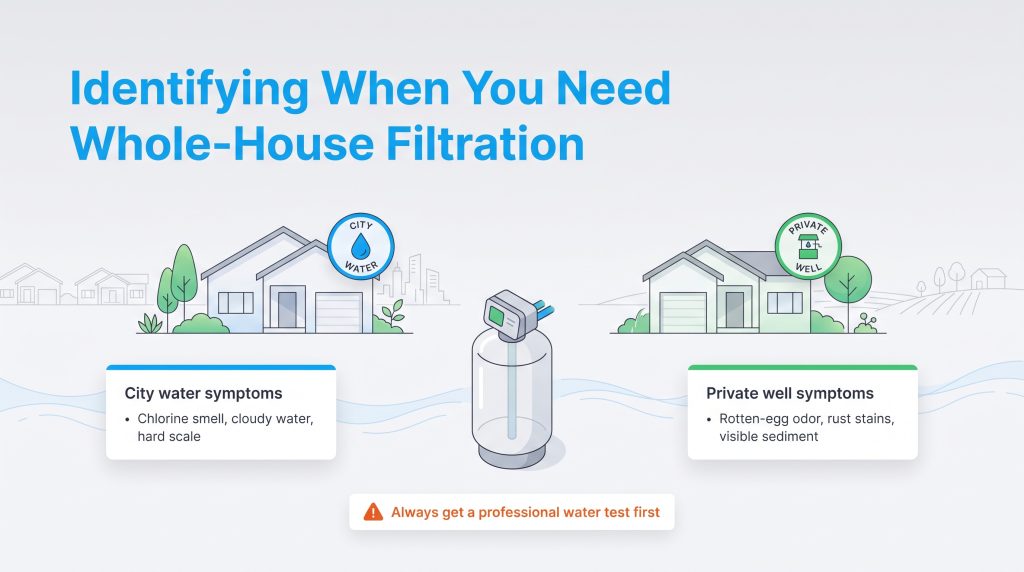
Before you dive into understanding the intricate mechanics of filtration, you must first diagnose the actual problem flowing through your pipes. If you are setting up utilities before moving in, checking your water quality is a great first step. City water and private well water tend to have different treatment needs. Municipal water is disinfected and regulated, while private well water depends on local geology, nearby land use, and the condition of your well.
If you’re on city water, start with your utility’s annual Consumer Confidence Report, then consider an at-home or certified lab test if you suspect lead, sediment, chlorine taste, or plumbing-related contamination. If you use a private well, you’re responsible for testing your own water, and the EPA recommends regular testing for common concerns such as bacteria, nitrates, and local contaminants.
- Municipal Water Symptoms: Strong chlorine or bleach smells, cloudy water, and heavy scale buildup on faucets and showerheads caused by calcium and magnesium.
- Private Well Water Symptoms: Unpleasant rotten-egg odors from hydrogen sulfide, reddish-brown rust stains on laundry and porcelain from excess iron, and visible floating sediment or sand in your drinking glass.
🚩 Heads Up: Always get a professional water test before purchasing any equipment. Knowing your exact water chemistry ensures you don’t waste money on a system that targets the wrong contaminants.
The Step-by-Step Mechanics of Whole-House Water Filtration
When you ask what does a whole-house water filter remove, the answer largely depends on the specific sequence of filters you decide to install. These setups are known as “point-of-entry” systems, meaning the water is intercepted and treated the exact moment it enters the main water line of your home. Instead of just filtering the kitchen sink, it purifies the water feeding your showers, washing machine, and toilets.
Think of the entire process as a series of increasingly finer sieves. Just like a screen door lets a cool summer breeze into your living room while keeping out pesky bugs, a multi-stage filtration system allows filtered water to pass while trapping unwanted particles. For our visual learners, the ideal structural flow follows a straightforward path: Main Water Line → Sediment Pre-Filter → Carbon or Specialty Filter → Optional UV/Softener → Home Plumbing.
Step 1: Pre-Filtration and Sediment Removal
The journey to clean tap water begins with the pre-filter, serving as your plumbing’s resilient first line of defense. This initial stage is entirely dedicated to sediment removal, capturing large physical particles like dirt, rust flakes, silt, and sand before they can travel any further into your home’s infrastructure.
By trapping this bulky debris early, the pre-filter prevents your more expensive, specialized downstream filters from instantly clogging up. These filters are rated by micron size. A five-micron filter is designed to capture many visible and near-visible particles, including debris larger than about five microns. Actual performance depends on whether the filter is nominal or absolute rated.
Step 2: Activated Carbon and Contaminant Reduction
Once the physical dirt is gone, the water enters the absolute heart of the system: the activated carbon tank. This is where the heavy lifting occurs for chemical removal. Using a fascinating process called adsorption, the activated carbon essentially acts like a giant, highly porous sponge.
As water flows through the media bed, contaminants stick directly to the expansive surface area of the carbon. Activated carbon is commonly used to reduce chlorine, many taste and odor issues, and some VOCs. If your utility uses chloramine instead of chlorine, look for a system with catalytic carbon that is certified for chloramine reduction. Look for systems certified to relevant NSF/ANSI standards, such as NSF/ANSI 42 for aesthetic effects like chlorine taste and odor, or NSF/ANSI 53 for certain health-related contaminant reductions. The NSF advises checking whether a product is certified for the exact reductions you need.
Step 3: Post-Filtration and Specialty Add-Ons
After the water leaves the main carbon tank, it passes through a final, ultra-fine post-filter to catch any remaining micro-particles or loose carbon dust. From here, your water is practically pristine, but this is also the exact point where many homeowners introduce specialty add-ons tailored to their unique household needs.
For instance, if your house runs on private well water, installing an ultraviolet (UV) purifier at this stage is a fantastic way to inactivate many bacteria, viruses, and other microbes, but it works best after sediment has been removed because cloudy water can block UV light. Alternatively, families fighting extreme hard water might add a traditional ion-exchange water softener. This replaces calcium and magnesium minerals with sodium or potassium ions, which helps reduce scale buildup.
🌱 Eco Edge: Reducing scale buildup can help water heaters and appliances operate more efficiently over time, especially in homes with very hard water. Exploring eco-conscious home upgrades like a proper water conditioning setup helps you manage energy use while protecting sensitive plumbing fixtures.
What Whole-House Water Filters May Not Remove
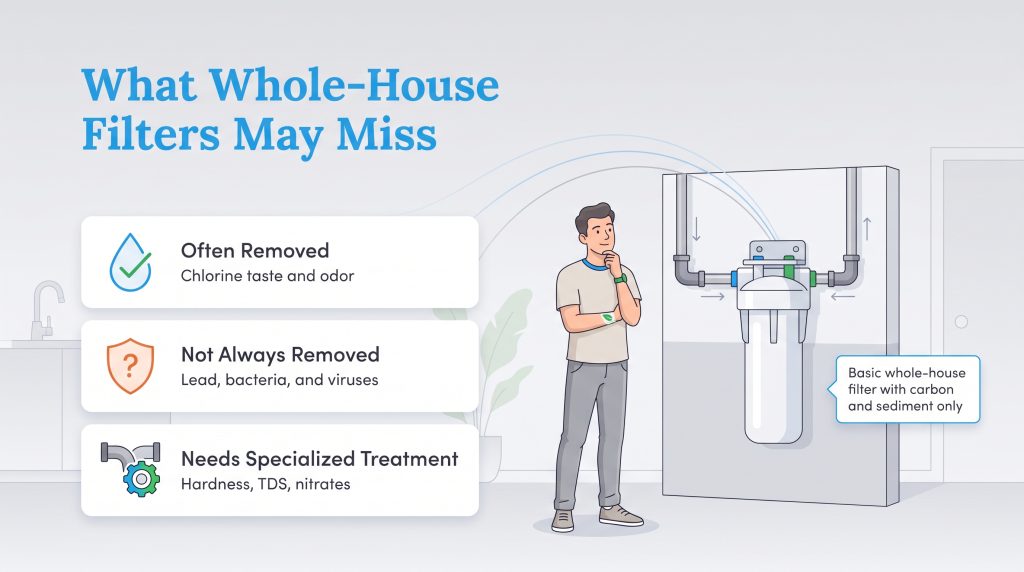
While an entry-point system is highly effective, it isn’t a magical cure-all. Depending on your water chemistry, standard carbon and sediment filters might miss certain elements. Here is a quick look at what a basic system generally won’t remove and the specialized equipment you might need instead.
| Contaminant or Issue | Does a Standard Whole-House Filter Remove It? | What You May Need Instead |
|---|---|---|
| Chlorine taste and odor | Often, with carbon | Carbon filter certified to NSF/ANSI 42 |
| Lead | Not always | NSF/ANSI 53-certified filter |
| Bacteria and viruses | No, not with standard carbon/sediment filters | UV system or disinfection system |
| Hard water minerals | No | Water softener or conditioner |
| Dissolved solids/TDS | No | Reverse osmosis |
| Nitrates | Usually no | Specialized RO or ion exchange system |
Comparing the Types of Whole-House Water Filters
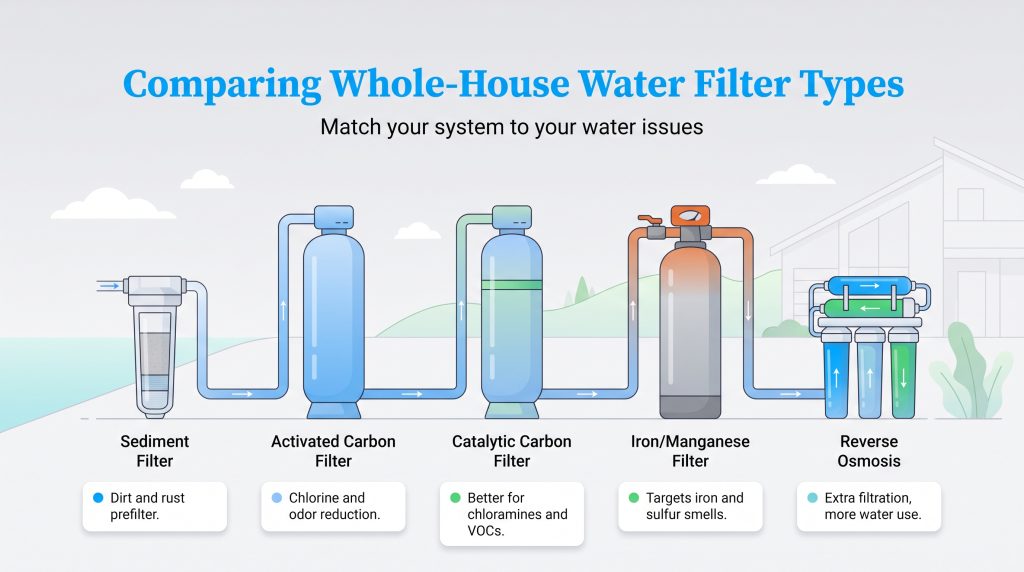
The EPA recommends choosing home drinking water treatment based on your specific contaminants. Understanding the various types of whole-house water filters helps you pinpoint exactly which system will yield the highest return on your investment. We mapped out the most popular configurations below so you can confidently match the equipment to your specific daily needs. If sustainability is a priority, avoid oversizing your system and be cautious with whole-house reverse osmosis unless your water test shows a clear need. Whole-house RO can use more water than carbon or sediment filtration, so it’s usually best reserved for specific contamination issues.
| System Type | Pros | Cons | Ideal Use-Case |
|---|---|---|---|
| Sediment Filter | Traps dirt, rust, and sand; highly affordable. | Does not remove chemicals or odors. | Pre-filtration for well or city water. |
| Activated Carbon Filter | Reduces chlorine taste and odor; usually affordable upfront. | Requires media replacement; doesn’t remove heavy metals. | Standard municipal city water treatment. |
| Catalytic Carbon Filter | Effectively reduces chloramines and some VOCs. | More expensive than standard carbon. | Cities using chloramine disinfection. |
| Iron/Manganese Filter | Reduces rotten-egg smells; prevents rust stains. | Air-injection tanks take up space; targets specific issues only. | Private well owners with high iron and hydrogen sulfide. |
| Reverse Osmosis (RO) System | Reduces many dissolved solids and certain contaminants when properly installed. | Expensive to install whole-house; generates wastewater. | Homes needing extreme purification for health reasons. |
Whole-House Water Filter vs. Under-Sink Filter: Which One Fits Your Home?
When deciding on your home utility setup, you might wonder whether a whole-house system is truly necessary or if an under-sink unit will suffice. Choose a whole-house system if you want to treat water before it reaches plumbing, showers, laundry, and appliances. These are best for capturing sediment, reducing chlorine odors throughout the house, and managing well water issues. Choose an under-sink filter if your main concern is strictly drinking and cooking water at a single faucet, as they offer targeted filtration at a much lower cost.
Breaking Down the Cost of a Whole-House Water Filtration System
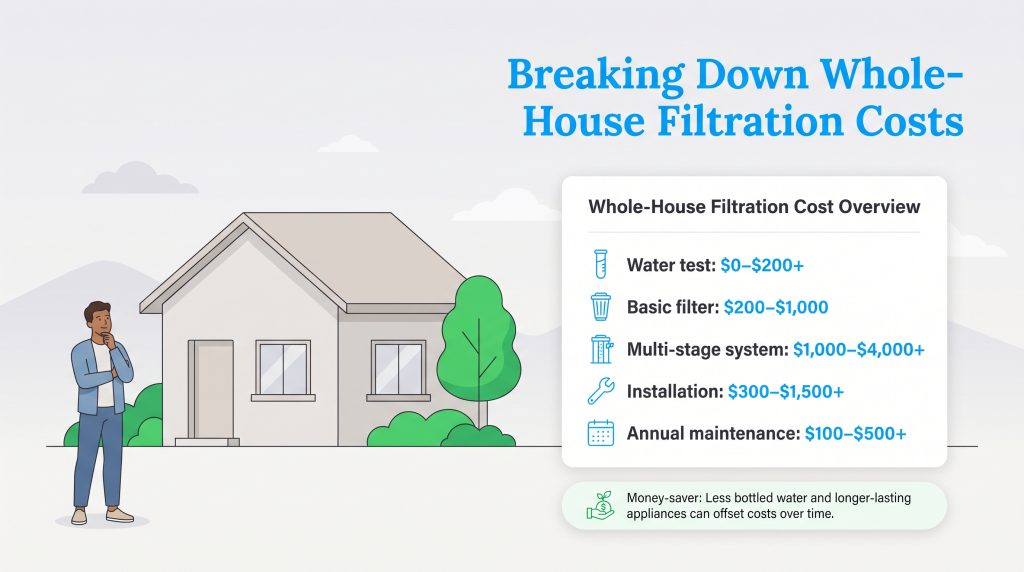
Upgrading your plumbing infrastructure is a serious financial decision, and it’s totally normal to experience a little sticker shock during your initial research. The total cost of a whole-house water filtration system depends on the equipment, installation complexity, and local labor rates.
While a basic setup might be relatively affordable, a specialized well water system complete with UV purification and a robust water softener can easily climb into the thousands. Whole-house RO and complex well treatments can exceed the ranges shown below. Here is a realistic look at what you can expect to spend.
| Expense Category | Typical Cost Range | Notes |
|---|---|---|
| Water test | $0 to $200+ | Utility reports may be free; lab tests cost more. |
| Basic sediment/carbon unit | $200 to $1,000 | Best for simple taste, odor, and sediment issues. |
| Multi-stage whole-house system | $1,000 to $4,000+ | Cost depends on contaminants and flow rate. |
| Professional installation | $300 to $1,500+ | Higher if plumbing modifications are needed. |
| Annual maintenance | $100 to $500+ | Depends on filter size and replacement schedule. |
💸 Money-Saver: For some households, lower bottled water use and better appliance protection can help offset the cost over time.
Establishing a Whole-House Water Filter Maintenance Routine
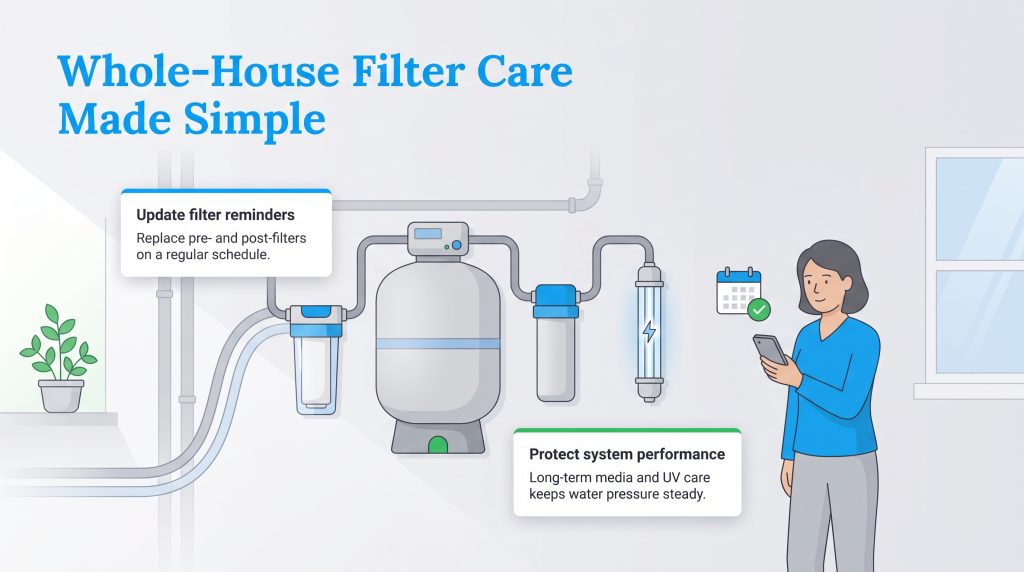
We often tell homeowners that installing a premium filtration system is only half the battle; the real secret to plumbing longevity is keeping up with your whole-house water filter maintenance. A water filter works best when properly maintained. If you wait too long to replace filters, contaminants can break through the media, water pressure can drop, and the system may stop reducing the substances it was designed to capture.
Fortunately, staying on top of your system is relatively painless. By setting a few recurring calendar reminders on your phone, you can easily ensure your equipment continues protecting your home for years to come. Replacement intervals vary by water use and contaminant levels, but you can generally follow this maintenance schedule:
| Component | Replacement Schedule | Maintenance Notes |
|---|---|---|
| Pre-filters | Every 2 to 3 months | A sudden drop in water pressure often means the sediment filter is clogged. |
| Carbon/Post-filters | Every 6 to 12 months | Maintains crisp taste and optimal chemical adsorption. |
| Main Media Tanks | Every 5 to 10 years | Depends entirely on your family’s daily water usage volume. |
| UV Lamps | Annually | Ensures the light remains strong enough to effectively inactivate microbes. |
Making the Right Choice for Your Home’s Tap Water
Taking control of your home’s water quality is an impactful upgrade when you are setting up water service at your new home. By demystifying the complex pipes, media beds, and tanks, we hope you feel much more confident about evaluating your specific property needs. Understanding the mechanics directly empowers you to choose the precise system designed to tackle your unique water chemistry head-on.
Whether you’re trying to eliminate the harsh smell of municipal chlorine or battling the stubborn iron stains of an aging private well, there’s a reliable filtration solution out there waiting for you. The best whole-house system is not the one with the longest contaminant list. It’s the one certified to reduce the specific contaminants found in your water at the flow rate your household actually uses. Test your water, consult with a licensed professional, and get ready to finally enjoy the luxury of pouring a filtered glass of water straight from your own kitchen sink.
Frequently Asked Questions About Whole-House Water Filters
Do Whole-House Water Filters Actually Work?
Are Whole-House Water Filters Worth the Investment?
How Do You Choose Between a Whole-House Water Filter and an Under-Sink System?
How Do I Install a Whole-House Water Filter?
Does a Whole-House Filter Reduce Water Pressure?
Will a Whole-House Filter Soften My Water?
About the Author

LaLeesha has a Masters degree in English and enjoys writing whenever she has the chance. She is passionate about gardening, reducing her carbon footprint, and protecting the environment. She also recently served as President of the Board for City Sprouts (a community garden).

Claudio is a sustainability-focused writer with a background in Anthropology and Psychology from NC State University. He has spent over 15 years working in writing, interpretation, and translation, driven by a deep interest in how human culture shapes the environment. Today, he shares his curiosity with readers by writing about sustainable living solutions and the connection between everyday choices and environmental impact.