Written By: David Cosseboom | Updated On: July 12th, 2026
Setting up your home utilities efficiently helps you lock in better rates and reduce your environmental footprint
Moving into a new place brings a flurry of excitement, but before you can settle in, you need to make sure the lights turn on and the water flows. Figuring out how to establish your electricity, natural gas, internet, water, and waste services might feel like a daunting chore, but we’re here to make it as painless as possible. Setting up your utilities gives you a fantastic opportunity to evaluate your household needs, explore an environmentally mindful choice or two, and ensure you aren’t overpaying for basic services. Whether you’re buying your first house or renting a new apartment, taking control of these essential services early ensures a seamless transition and puts you on the path toward a comfortable, sustainable home.
What Services Qualify as Home Utilities
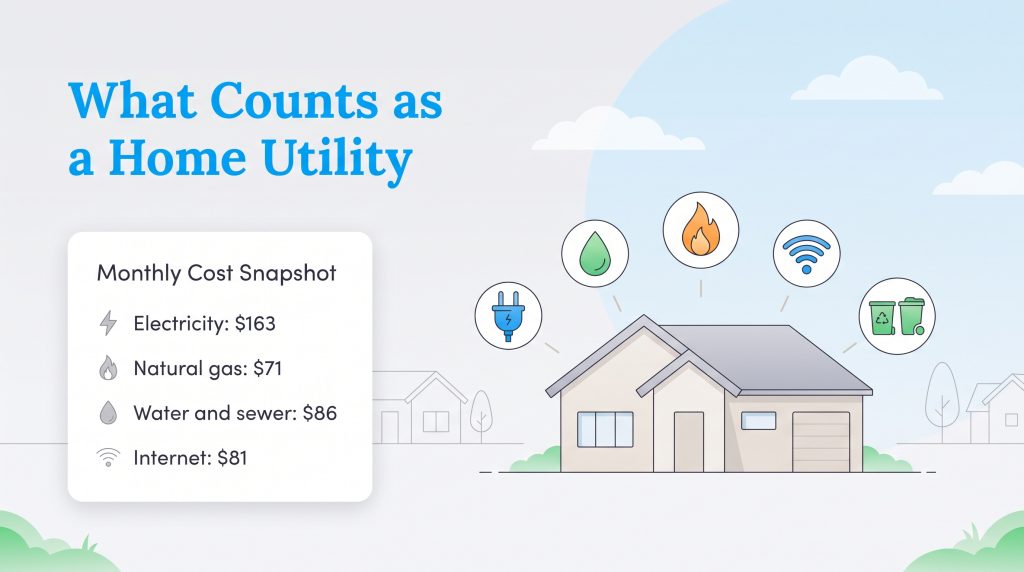
Historically, public utilities only encompassed water, electricity, and natural gas. Today, our definition has evolved, and services like home internet, telephone networks, and waste management are universally considered essential for modern living. Your overall costs will vary significantly based on your state, personal usage, and local weather patterns. On a national scale, the average U.S. household pays roughly $163 per month for electricity, $71 for natural gas, $86 for water and sewer, and $81 for internet service. By understanding these baseline costs, you can easily identify areas where you might be overpaying or where an eco-conscious alternative could lead to long-term savings.
How to Set Up Utilities When Moving
Juggling boxes and changing your address is stressful enough without having to worry about cold showers on your first night in a new home. We recommend contacting your utility providers at least two weeks before your move-in date to schedule your service activations. If you’re a renter, check your lease agreement carefully, as some landlords cover water and trash, leaving you responsible only for electricity and internet. Always keep a running record of your account numbers, contact information, and setup dates so you can seamlessly track your progress as moving day approaches.
Learn more about Setting up utilities for your home
Connecting Your Home to Electricity
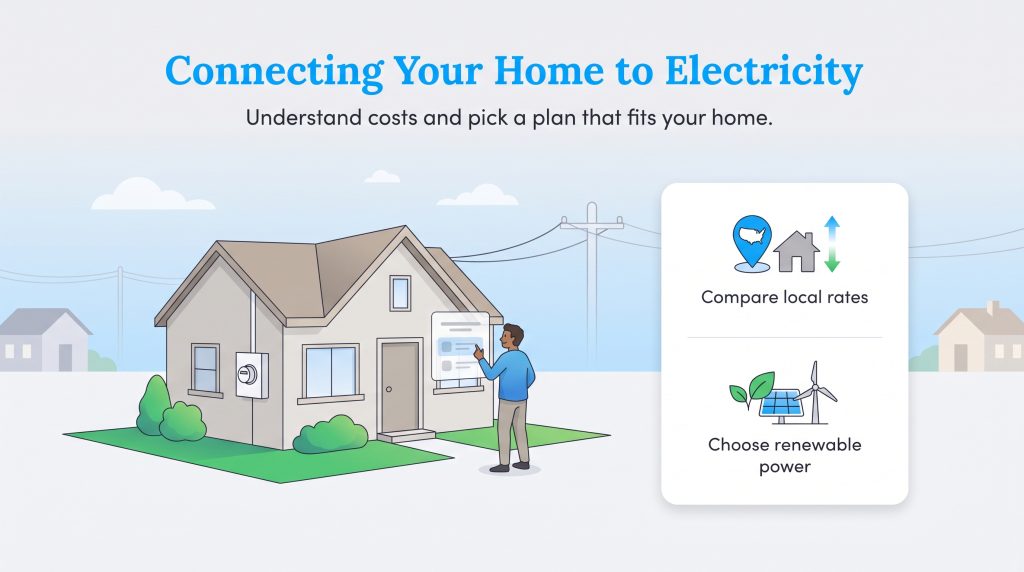
Electricity is the lifeblood of any modern household, powering everything from your refrigerator to your late-night reading lamp. Depending on where you live, you might be served by a single local utility, or you might live in a deregulated energy market — like Texas, Ohio, Pennsylvania, or Illinois — where you can shop around for an electricity supplier. If your area has deregulated energy, you have the freedom to compare rates, read provider reviews, and select a plan that matches your household habits. As you look at your options, we highly recommend exploring an eco-conscious alternative, such as selecting a plan sourced entirely from wind or solar energy. You can also research the EPA Green Power market to better understand how your choices support renewable energy development across the country.
Find an Electric Provider for your home
Cheapest and Most Expensive States for Electricity
Finding an affordable rate often comes down to regional infrastructure, climate, and local energy resources. For example, states with abundant natural resources and moderate weather tend to see much lower average monthly bills, while areas that rely heavily on imported fuels or experience extreme temperatures often pay top dollar.
Top 10 Cheapest States for Electricity (2026)
| State | Average Monthly Bill |
| Utah | $102.86 |
| Colorado | $115.00 |
| Wisconsin | $123.90 |
| Wyoming | $126.69 |
| Washington | $137.14 |
| Vermont | $140.97 |
| Arkansas | $141.00 |
| Illinois | $145.00 |
| Idaho | $146.00 |
| Montana | $148.00 |
Top 10 Most Expensive States for Electricity (2026)
| State | Average Monthly Bill |
| Connecticut | $195.00 |
| Alabama | $186.00 |
| California | $185.00 |
| Virginia | $179.36 |
| Texas | $175.34 |
| Florida | $167.05 |
| District of Columbia | $165.00 |
| West Virginia | $164.94 |
| Maryland | $160.00 |
| Hawaii | $158.00 |
Establishing Natural Gas Service
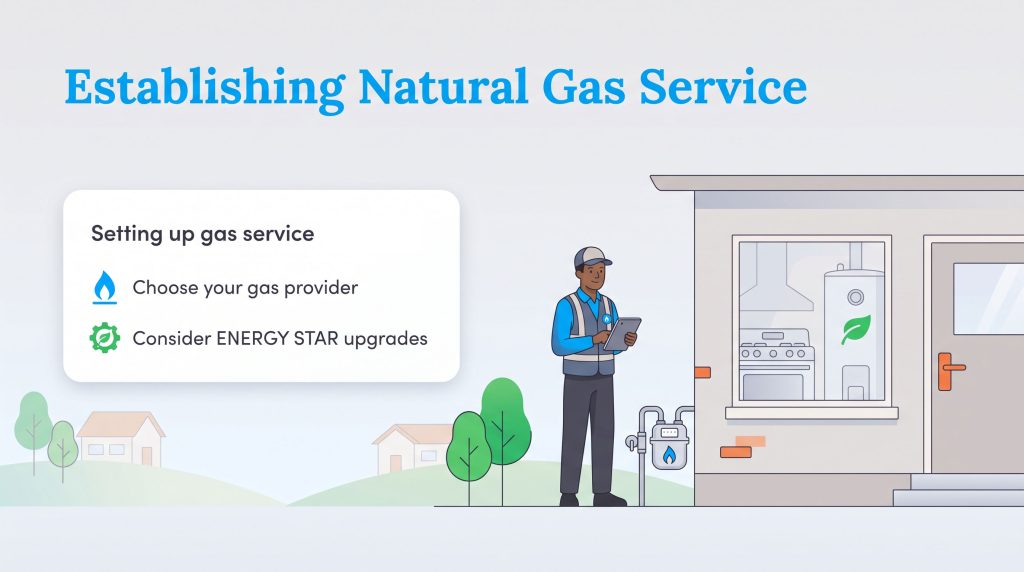
While electricity runs the appliances, natural gas is often the heavy lifter for heating your home, cooking your meals, and running your water heater. If your new home is equipped with gas lines, establishing service requires setting up an account with your local gas utility or, in deregulated natural gas markets, picking a competitive supplier. Natural gas pricing is typically measured in therms or cubic feet, and costs can fluctuate dramatically based on winter weather and seasonal demand. When setting up your gas service, it’s also a great time to evaluate your appliances and see if upgrading to an ENERGY STAR certified system can serve as an energy-saving option that lowers your monthly utility expenses over time.
Find a natural gas provider for your home
Cheapest and Most Expensive States for Natural Gas
Natural gas prices depend heavily on pipeline proximity, local infrastructure, and regional temperatures. States with hot, year-round climates barely use their gas for heating, keeping their monthly averages incredibly low, while northern states naturally use significantly more gas to stay warm during harsh winters.
Top 10 Cheapest States for Natural Gas (2026)
| State | Average Monthly Bill |
| Louisiana | $38.00 |
| Arizona | $41.00 |
| Florida | $44.00 |
| Hawaii | $45.00 |
| New Mexico | $48.00 |
| Texas | $50.00 |
| California | $52.00 |
| Mississippi | $53.00 |
| Nevada | $55.00 |
| Georgia | $56.00 |
Top 10 Most Expensive States for Natural Gas (2026)
| State | Average Monthly Bill |
| Alaska | $136.00 |
| Connecticut | $124.00 |
| Maine | $119.00 |
| New York | $101.00 |
| Ohio | $95.00 |
| Massachusetts | $94.00 |
| Rhode Island | $92.00 |
| Vermont | $87.00 |
| Pennsylvania | $85.00 |
| New Hampshire | $83.00 |
Securing Reliable Home Internet
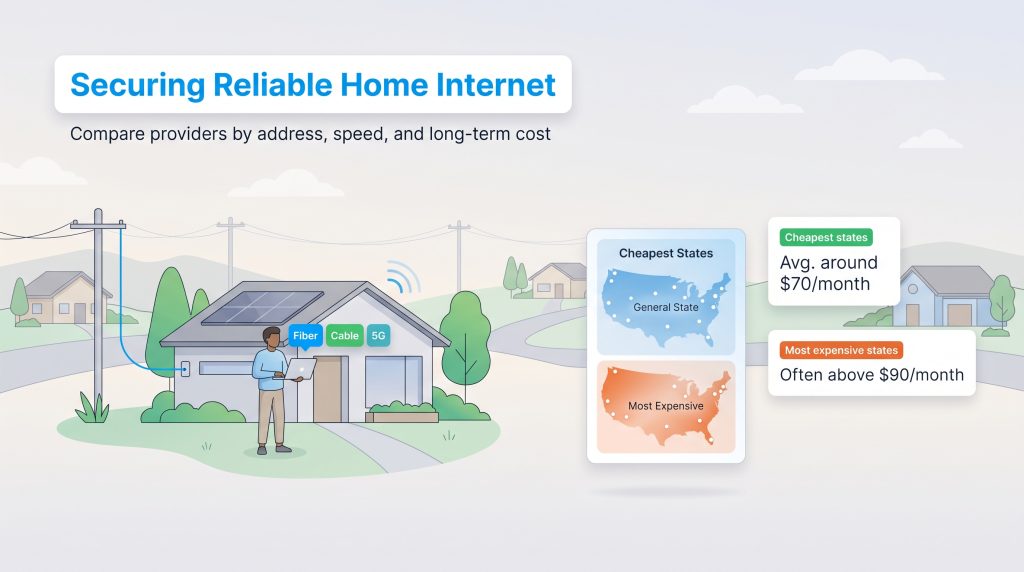
A fast, reliable internet connection is no longer just a luxury — it’s an absolute necessity for remote work, streaming entertainment, and managing smart home devices. When you move, you’ll want to check which fiber, cable, or 5G home internet providers service your specific address. Speeds and pricing vary wildly based on your neighborhood’s infrastructure, so comparing multiple companies ensures you get the bandwidth you need without paying for excessive speed you’ll never use. If you bundle your internet with other services, carefully read the fine print to guarantee the promotional pricing doesn’t skyrocket after your first year.
Find internet service for your home
Cheapest and Most Expensive States for Internet Service
Internet affordability relies heavily on market competition and geographical density. Sparsely populated, rural, or highly remote areas tend to have more expensive internet infrastructure, while regions with heavy fiber-optic competition enjoy more budget-friendly rates.
Top 10 Cheapest States for Internet Service (2026)
| State | Average Monthly Price |
| New Jersey | $65.43 |
| North Dakota | $68.20 |
| South Dakota | $69.10 |
| Idaho | $71.50 |
| Utah | $72.10 |
| Florida | $73.40 |
| South Carolina | $74.17 |
| Alabama | $74.20 |
| Minnesota | $74.50 |
| Oregon | $75.10 |
Top 10 Most Expensive States for Internet Service (2026)
| State | Average Monthly Price |
| Alaska | $109.88 |
| Montana | $105.50 |
| District of Columbia | $102.00 |
| West Virginia | $98.40 |
| Massachusetts | $93.60 |
| Vermont | $88.50 |
| Virginia | $86.70 |
| Delaware | $85.90 |
| New Hampshire | $84.20 |
| Rhode Island | $83.50 |
Turning on Water and Sewer Services
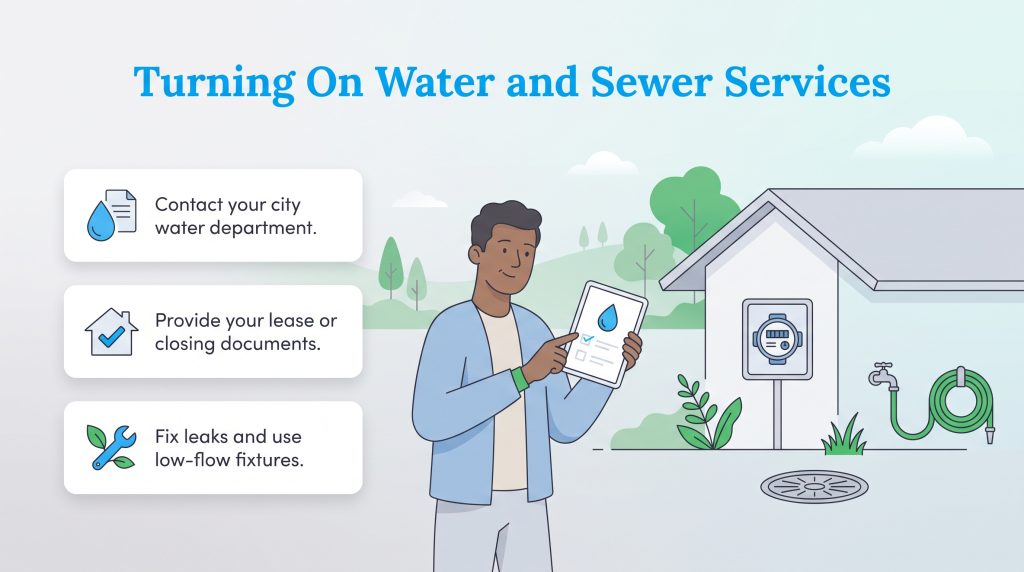
Unlike electricity and internet, you rarely get to shop around for your water and sewer provider. These utilities are inherently local, managed by municipal governments or regional public utility commissions. To establish service, you typically need to contact your city’s water department directly, provide your lease or closing documents, and occasionally pay an upfront deposit. To keep your subsequent bills low and practice good environmental stewardship, look for easy wins like fixing running toilets, installing low-flow showerheads, and being mindful of your outdoor irrigation schedule.
Find a water provider for your home
Cheapest and Most Expensive States for Water
Water usage depends heavily on climate, but costs also come down to local infrastructure and municipal subsidies. For example, some states utilize strong water conservation rate structures to encourage lower consumption, which rewards residents with cheaper monthly bills over time.
Top 10 Cheapest States for Water (2026)
| State | Average Monthly Bill |
| North Carolina | $21.00 |
| Wisconsin | $23.00 |
| Vermont | $23.00 |
| Maine | $24.00 |
| Arkansas | $26.00 |
| Alabama | $26.00 |
| Illinois | $28.00 |
| South Dakota | $28.00 |
| Georgia | $30.00 |
| New Hampshire | $30.00 |
Top 10 Most Expensive States for Water (2026)
| State | Average Monthly Bill |
| West Virginia | $123.00 |
| Oregon | $94.00 |
| Alaska | $93.00 |
| Washington | $84.00 |
| California | $81.00 |
| Wyoming | $79.00 |
| New Jersey | $76.00 |
| Hawaii | $70.00 |
| Arizona | $57.00 |
| Nevada | $55.00 |
Managing Trash and Recycling Collection
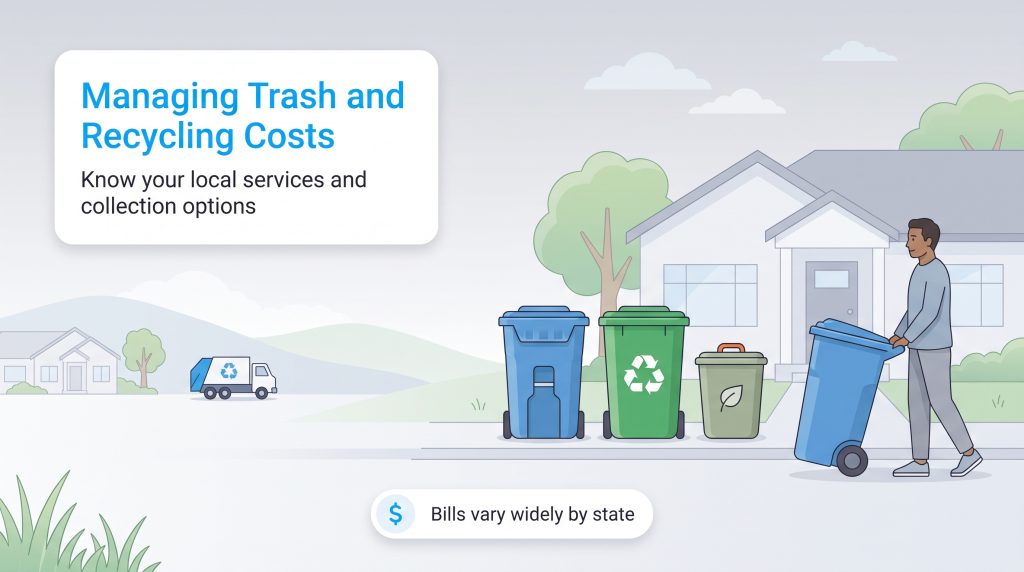
Waste management is another service that depends heavily on your local municipality. In some cities, your trash and recycling collection costs are completely hidden within your annual property taxes, meaning you won’t receive a separate monthly bill. In other areas, you must hire a private waste management company to roll out your bins each week. We strongly encourage you to participate fully in your local recycling and composting programs, as keeping reusable materials out of landfills is a highly impactful, environmentally mindful choice. If you have bulky items from moving, check with your provider about special pickup days to properly dispose of large cardboard boxes and old furniture.
Cheapest and Most Expensive States for Trash Collection
Waste collection costs fluctuate based on landfill availability, transportation logistics, and regional tipping fees. When a state has plenty of available space and lower operational costs, the monthly savings trickles right down to your wallet.
Top 10 Cheapest States for Trash Collection (2026)
| State | Average Monthly Bill |
| Oklahoma | $25.00 |
| Hawaii | $34.00 |
| West Virginia | $44.00 |
| Mississippi | $50.00 |
| Iowa | $53.00 |
| South Dakota | $55.00 |
| Montana | $55.00 |
| Nevada | $58.00 |
| Utah | $59.00 |
| Illinois | $60.00 |
Top 10 Most Expensive States for Trash Collection (2026)
| State | Average Monthly Bill |
| Massachusetts | $127.00 |
| Maryland | $127.00 |
| Connecticut | $124.00 |
| New Jersey | $111.00 |
| California | $100.00 |
| Delaware | $97.00 |
| New York | $95.00 |
| New Hampshire | $92.00 |
| Colorado | $89.00 |
| Washington | $86.00 |
Understanding Public Utility Deregulation
As you research providers for your new home, you might notice that some areas only have one local utility company, while others let you shop around. If your area has deregulated energy, you have the power to choose your retail electricity or natural gas supplier. This setup fosters competition, allowing you to compare rates, read reviews, and select a plan that perfectly matches your household budget. In regulated markets, a single utility company manages both the delivery and supply of your energy, and a public utility commission sets the exact rates. If you live in a deregulated area — like Texas, Pennsylvania, or Ohio — taking the time to explore your options can result in a substantially lower monthly bill.
How to Save Money and Find Assistance
Even if you find the cheapest possible rates, the most effective way to lower your public utility costs is to reduce your overall household consumption. Simple, everyday changes like switching to LED bulbs, fixing leaky faucets, and washing your laundry in cold water can make a noticeable dent in your monthly expenses. If you’re struggling to keep up with your energy bills, you aren’t alone, and practical help is available. Programs like the Low Income Home Energy Assistance Program (LIHEAP) provide federally funded assistance to help qualifying families manage their heating and cooling costs year-round.
State-by-State Breakdown of Average Utility Costs
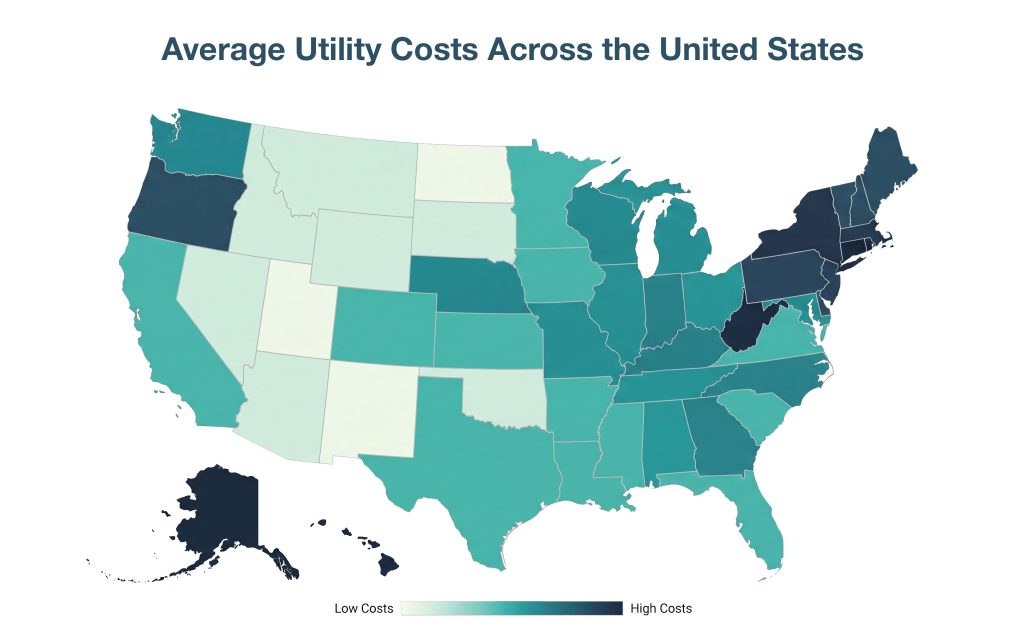
When you are planning a move across state lines or simply trying to see how your current bills stack up against the rest of the country, having a comprehensive view of the landscape makes a massive difference. We have put together a complete, alphabetical breakdown of all 50 states to show you exactly how much the average household spends on essential services each month. By looking at these five key categories — electricity, natural gas, internet, water, and trash collection — you can map out a highly accurate moving budget. Take a close look at the data below to see where your state lands and identify where switching to an energy-saving option could protect your household wallet.
| State | Electricity | Natural Gas | Internet | Water | Trash | Total Monthly Cost |
| Alabama | $186.00 | $65.00 | $74.20 | $26.00 | $62.00 | $413.20 |
| Alaska | $150.00 | $136.00 | $109.88 | $93.00 | $72.00 | $560.88 |
| Arizona | $131.31 | $41.00 | $78.00 | $57.00 | $64.00 | $371.31 |
| Arkansas | $141.00 | $60.00 | $76.00 | $26.00 | $61.00 | $364.00 |
| California | $185.00 | $52.00 | $79.00 | $81.00 | $100.00 | $497.00 |
| Colorado | $115.00 | $62.00 | $77.00 | $45.00 | $89.00 | $388.00 |
| Connecticut | $195.00 | $124.00 | $78.00 | $48.00 | $124.00 | $569.00 |
| Delaware | $152.00 | $72.00 | $85.90 | $46.00 | $97.00 | $452.90 |
| Florida | $167.05 | $44.00 | $73.40 | $42.00 | $68.00 | $394.45 |
| Georgia | $154.00 | $56.00 | $76.00 | $30.00 | $63.00 | $379.00 |
| Hawaii | $158.00 | $45.00 | $78.00 | $70.00 | $34.00 | $385.00 |
| Idaho | $146.00 | $58.00 | $71.50 | $36.00 | $61.00 | $372.50 |
| Illinois | $145.00 | $78.00 | $76.00 | $28.00 | $60.00 | $387.00 |
| Indiana | $142.00 | $70.00 | $76.00 | $32.00 | $63.00 | $383.00 |
| Iowa | $134.00 | $68.00 | $75.00 | $34.00 | $53.00 | $364.00 |
| Kansas | $138.00 | $65.00 | $76.00 | $35.00 | $62.00 | $376.00 |
| Kentucky | $132.00 | $64.00 | $76.00 | $32.00 | $61.00 | $365.00 |
| Louisiana | $149.00 | $38.00 | $77.00 | $34.00 | $64.00 | $362.00 |
| Maine | $151.00 | $119.00 | $79.00 | $24.00 | $37.00 | $410.00 |
| Maryland | $160.00 | $74.00 | $78.00 | $48.00 | $127.00 | $487.00 |
| Massachusetts | $156.00 | $94.00 | $93.60 | $45.00 | $127.00 | $515.60 |
| Michigan | $152.00 | $79.00 | $76.00 | $36.00 | $65.00 | $408.00 |
| Minnesota | $149.00 | $72.00 | $74.50 | $38.00 | $66.00 | $399.50 |
| Mississippi | $156.00 | $53.00 | $79.00 | $32.00 | $50.00 | $370.00 |
| Missouri | $152.00 | $82.00 | $76.00 | $36.00 | $68.00 | $414.00 |
| Montana | $148.00 | $74.00 | $105.50 | $38.00 | $55.00 | $420.50 |
| Nebraska | $136.00 | $66.00 | $76.00 | $34.00 | $63.00 | $375.00 |
| Nevada | $151.00 | $55.00 | $78.00 | $55.00 | $58.00 | $397.00 |
| New Hampshire | $153.00 | $83.00 | $84.20 | $30.00 | $92.00 | $442.20 |
| New Jersey | $155.00 | $79.00 | $65.43 | $76.00 | $111.00 | $486.43 |
| New Mexico | $81.08 | $48.00 | $77.00 | $38.00 | $62.00 | $306.08 |
| New York | $159.00 | $101.00 | $78.00 | $44.00 | $95.00 | $477.00 |
| North Carolina | $151.00 | $62.00 | $76.00 | $21.00 | $65.00 | $375.00 |
| North Dakota | $139.00 | $66.00 | $68.20 | $32.00 | $61.00 | $336.20 |
| Ohio | $149.00 | $95.00 | $76.00 | $36.00 | $64.00 | $420.00 |
| Oklahoma | $148.00 | $65.00 | $75.00 | $34.00 | $25.00 | $347.00 |
| Oregon | $142.00 | $63.00 | $75.10 | $94.00 | $72.00 | $446.10 |
| Pennsylvania | $157.00 | $85.00 | $78.00 | $44.00 | $68.00 | $432.00 |
| Rhode Island | $156.00 | $92.00 | $83.50 | $46.00 | $74.00 | $451.50 |
| South Carolina | $159.00 | $61.00 | $74.17 | $32.00 | $66.00 | $392.17 |
| South Dakota | $144.00 | $64.00 | $69.10 | $28.00 | $55.00 | $360.10 |
| Tennessee | $153.00 | $62.00 | $76.00 | $34.00 | $63.00 | $388.00 |
| Texas | $175.34 | $50.00 | $77.00 | $46.00 | $69.00 | $417.34 |
| Utah | $102.86 | $61.00 | $72.10 | $36.00 | $59.00 | $330.96 |
| Vermont | $140.97 | $87.00 | $88.50 | $23.00 | $71.00 | $410.47 |
| Virginia | $179.36 | $68.00 | $86.70 | $42.00 | $68.00 | $444.06 |
| Washington | $137.14 | $61.00 | $76.00 | $84.00 | $86.00 | $444.14 |
| West Virginia | $164.94 | $74.00 | $98.40 | $123.00 | $44.00 | $504.34 |
| Wisconsin | $123.90 | $72.00 | $76.00 | $23.00 | $64.00 | $358.90 |
| Wyoming | $126.69 | $68.00 | $78.00 | $79.00 | $65.00 | $416.69 |
Mastering Your Household Utilities Setup
Getting your utilities connected and organized is one of the most vital steps in turning a new house into your true home. By taking the time to research your local providers, comparing rates early, and actively seeking out sustainable options, you’re protecting both your wallet and the environment. We know that managing passwords, account numbers, and billing cycles can feel overwhelming during a move, but knocking these tasks out ahead of time takes the pressure off your shoulders. Leaning on expert resources like the U.S. Energy Information Administration helps you stay informed on state price updates, making it easy to kick back and enjoy a fully powered, comfortable living space from day one.
Our Methodology and Data Standards
To bring you the most accurate and up-to-date look at household expenses, we spent hours aggregating and analyzing the latest public utility data across all 50 states. Our team gathers primary source information directly from leading government agencies and industry research groups to ensure our cost estimates reflect real-world budgets. We establish our baseline figures by looking at average residential consumption rates rather than just raw utility tariffs, which gives a more realistic picture of what you will actually pay each month.
Sourcing Our Pricing Data
Our residential electricity and natural gas figures are derived from the latest reports published by the U.S. Energy Information Administration (EIA), factoring in recent shifts in regional energy markets. For home internet costs, we evaluate the Federal Communications Commission (FCC) urban rate survey data and look at average baseline packages for standard broadband speeds. Water, sewer, and trash collection costs are synthesized from municipal rate databases, the American Water Works Association (AWWA), and state-level environmental agency reports on municipal solid waste disposal fees.
Frequently Asked Questions About Utilities
How far in advance should I set up my utilities?
Do I have to pay a deposit to start utility service?
Can I choose my energy provider?
What is the most effective way to lower my utility bills?
What documents do I need to set up utilities?
Can I transfer my current utility services to a new address?
What happens if I forget to turn off utilities at my old home?
What is a smart thermostat, and can it really save me money?
How does apartment utility setup differ from setting up a house?
What is the difference between a utility company and an energy supplier?
How do I know if my new home has a hidden water leak?
What are the best ways to reduce my internet bill?
What should I do if my utilities aren’t working on move-in day?
Are there eco-conscious alternatives for household trash disposal?
About the Author

David has been an integral part of some of the biggest utility sites on the internet, including InMyArea.com, HighSpeedInternet.com, BroadbandNow.com, and U.S. News. He brings over 15 years of experience writing about, compiling and analyzing utility data.