
- Prepaying for service in 3 to 12-month blocks is required to secure the lowest monthly rate of $40 (or $30 with a bundle).
- Speeds and hardware are nearly identical to T-Mobile Home Internet because Mint utilizes the same 5G network towers.
- Heavy data users should note the 1TB soft data cap, after which your speeds may be slowed during times of congestion.
We break down the speeds, hardware, and unique pricing model to help you determine if this prepaid 5G service is the smart choice for your next move.
Moving into a new home usually brings a mountain of unexpected bills, from security deposits to utility activation fees, making Mint Mobile’s aggressive $30 per month price tag for home internet incredibly tempting. While the monthly savings are real, the service comes with a specific “catch” involving buying your data in bulk upfront and accepting the natural variability of a wireless connection. In this review, we will walk you through the pros and cons of “MINTernet” to help you decide if it can reliably replace a traditional cable connection at your new address.
What Is Mint Mobile Home Internet?
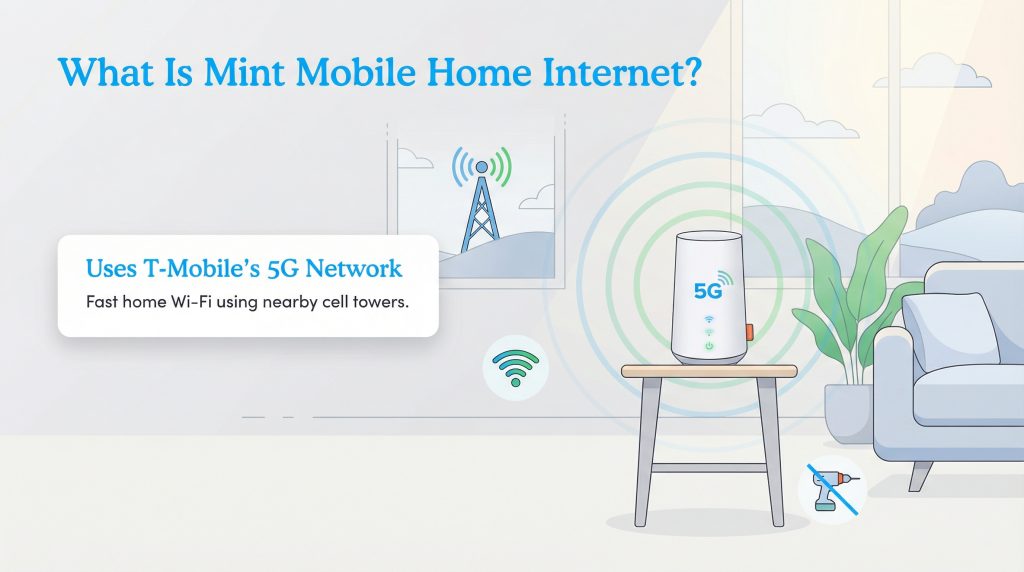
If you have seen the ads for MINTernet, you might be wondering how a small prepaid carrier can offer home Wi-Fi. The answer is Fixed Wireless Access (FWA) or Home Internet. Instead of relying on underground copper or fiber-optic cables that physically connect your home to the grid, Mint Mobile Home Internet grabs a signal from nearby cellular towers and converts it into Wi-Fi for your devices. It is important to know that Mint does not own these towers; the service runs entirely on T-Mobile’s 5G network.
Because it uses the T-Mobile network, the experience is very similar to T-Mobile’s own home internet offering. You receive a “MINTernet Gateway”, a white, cylindrical router that is essentially a rebranded version of the hardware T-Mobile uses. There is no need for a technician to drill holes in your walls or run wires from the street. You simply plug the gateway into a power outlet, set it up through an app, and you are online.
The Cost Breakdown: The “Bulk” Buy System
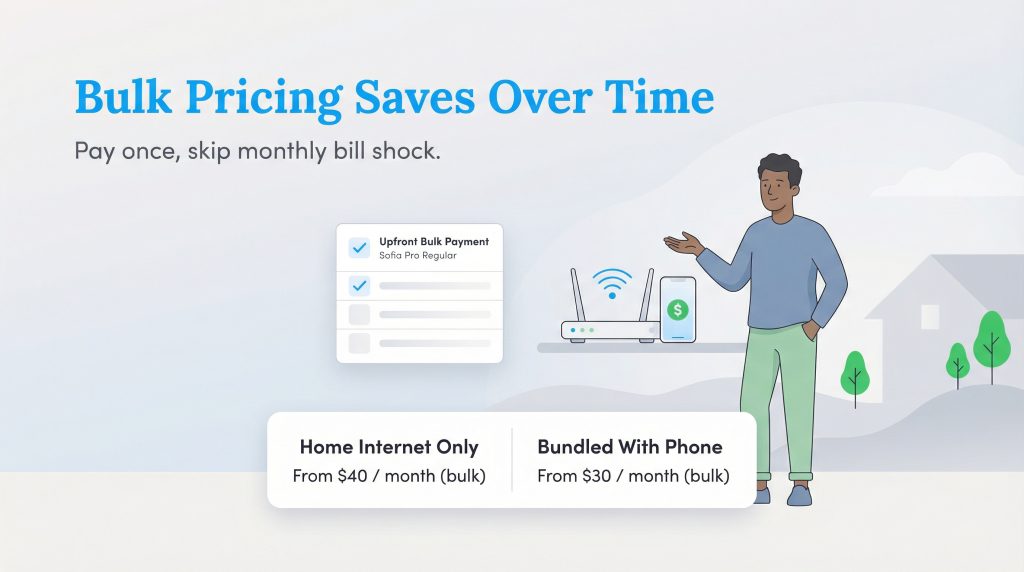
The most confusing part of this service for many new users is the Mint Mobile home internet cost structure. Unlike traditional internet service providers (ISPs) that send you a bill every month, Mint operates on a prepaid “bulk” model. To get the service, you must pay for several months of access upfront. This is great for avoiding monthly bill shock, but it means you need to have a lump sum of cash ready when you sign up.
The standard rate is $40 per month if you commit to a longer term, but the price is higher if you opt for a shorter commitment. The real magic happens when you bundle the home internet service with a Mint Mobile phone plan. By bundling, you slash the price to just $30 per month. Here is how the pricing breaks down based on how many months you buy at once.
| Plan Type | 3-Month Price (Total Upfront) | 12-Month Price (Total Upfront) | Annual Total Savings (vs. Short-Term) |
|---|---|---|---|
| Standalone Internet | $180 ($60/mo) | $480 ($40/mo) | $240 |
| Bundle (with Phone Plan) | $120 ($40/mo) | $360 ($30/mo) | $360 |
Note: Pricing examples above are based on Mint’s current promotional rates at the time of writing and may change. Always confirm the latest rates on Mint Mobile’s site.
While writing a check for $360 or $480 upfront might feel steep, it eliminates a monthly internet bill for an entire year. For budget-conscious movers, this predictability is a major asset.
Speed and Performance: Is It Fast Enough?
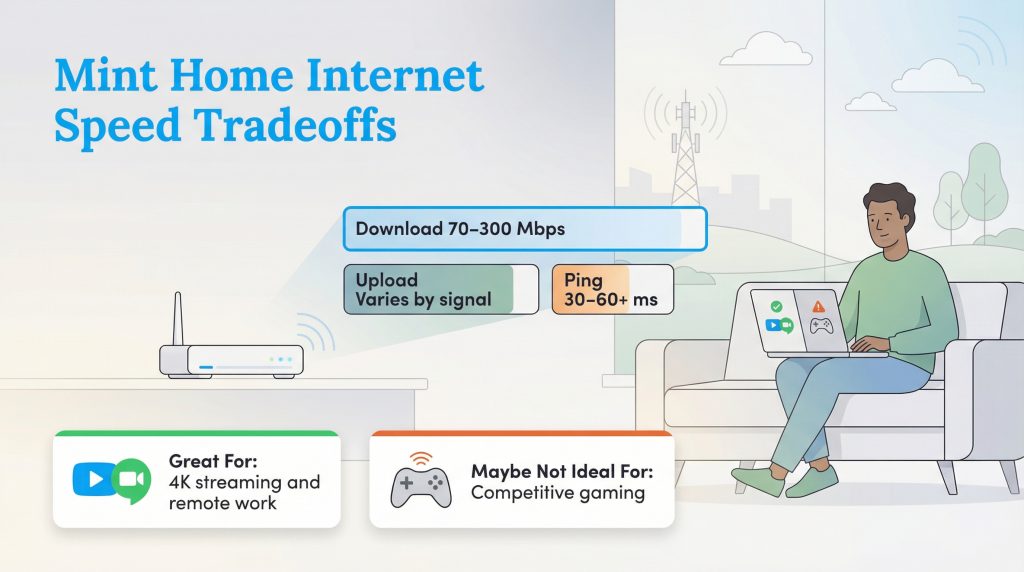
When evaluating Mint Mobile home internet speeds, you have to manage your expectations regarding wireless technology. Because the signal travels through the air, it is subject to interference from weather, trees, and building materials. Many reviewers and users report download speeds in roughly the 70 Mbps to 300 Mbps range, with upload speeds varying depending on your proximity to the tower. This is plenty of bandwidth for streaming 4K video, attending Zoom meetings, and browsing the web on multiple devices.
However, is Mint Mobile home internet good for gaming? That depends on what you play. Casual gaming on a tablet or console is fine, but competitive gamers may struggle. 5G internet typically has higher latency (ping) than fiber or cable internet, often hovering between 30 ms and 60 ms or higher. This means you might experience lag in fast-paced shooters like Call of Duty or Fortnite. If you are a serious gamer, you might want to consider keeping a wired fiber connection if it is available at your address.
Learn more about 5G Home Internet
Is MINTernet Good for Working From Home?
For most remote workers, Mint Mobile Home Internet handles video calls and general productivity tasks reliably. However, because upload speeds can fluctuate more than on wired connections, you might occasionally experience glitches during large file uploads or if multiple people are on video calls simultaneously. If your job requires a constantly stable VPN connection, you should test the service during business hours to ensure the signal strength at your home is sufficient.
You should also be aware of the data cap. Mint includes a generous 1TB soft cap. If you use more than 1TB of data in a billing month, which is quite difficult for the average household unless you are downloading massive files constantly, your speeds may be slowed (deprioritized) during times when the network is congested. It isn’t a hard cut-off, but it is a guardrail to keep the network fair for everyone.
Mint Mobile vs. T-Mobile Home Internet
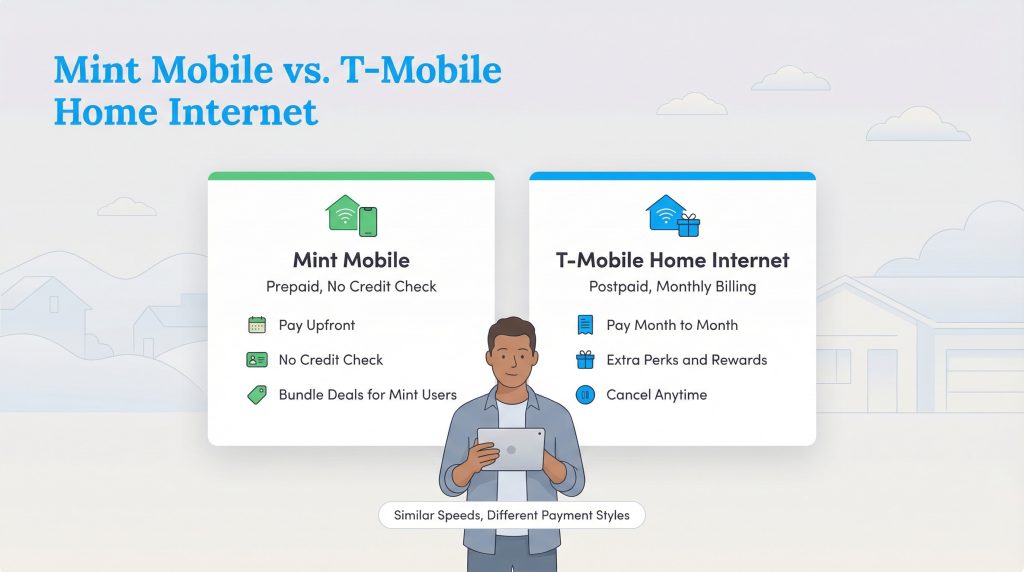
Since both services use the same towers, the battle of Mint Mobile home internet vs T-Mobile comes down to billing preferences and flexibility rather than performance. T-Mobile Home Internet is a postpaid service, meaning they run a credit check and bill you monthly. It costs $50 to $60 per month with AutoPay, but you are not locked into a term and don’t have to pay a large sum upfront.
Mint, on the other hand, requires no credit check and no contract, but you must prepay. If you move frequently or have a lower credit score, Mint’s model is more accessible. However, T-Mobile often sweetens the pot with perks like free Netflix subscriptions or T-Mobile Tuesdays rewards, which Mint does not offer. The refund policies also differ; Mint generally offers a short money-back guarantee period, while T-Mobile allows you to cancel anytime without penalty since you pay month-to-month. For many budget shoppers comparing the cheapest 5G home internet plans, Mint’s bundle pricing can be among the lowest options if you’re already a Mint phone customer.
Setup and Usability
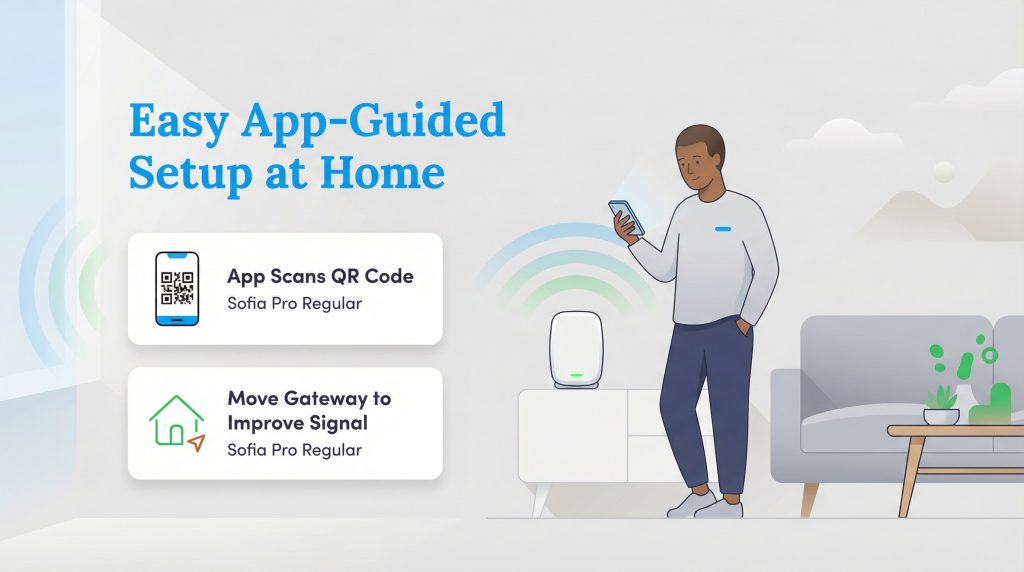
One of the biggest advantages of this service is the setup process. Most users report that setup is straightforward, but you must be comfortable using a smartphone. The entire setup is managed through the Mint Mobile app. Once you receive your gateway, you scan a QR code, and the app guides you to the best location in your home to catch a signal.
Troubleshooting is also largely a DIY affair. Because the connection is wireless, your speeds can fluctuate based on time of day (network congestion) or even heavy storms. If you notice persistent issues, you may need to troubleshoot your home internet connection by moving the gateway to a different side of the house. Unlike cable companies, there is no truck roll or technician to call for a quick fix.
The Environmental Impact of 5G Home Internet
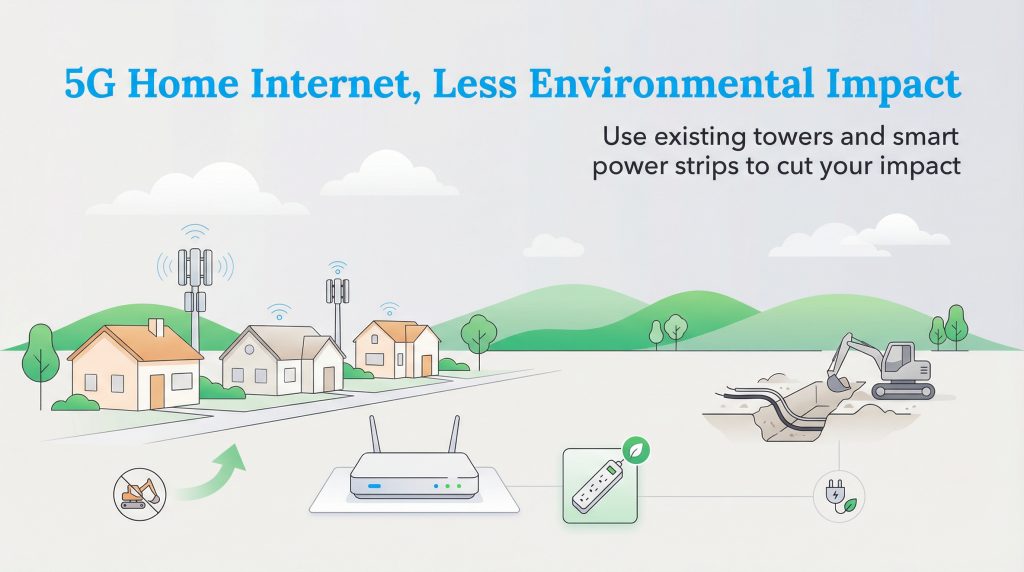
Choosing a fixed wireless service like Mint aligns well with sustainable living goals. Traditional internet infrastructure requires heavy machinery to trench roads and lay miles of copper or fiber-optic cables, a process that disrupts local ecosystems and consumes significant fuel. By utilizing existing cellular towers, 5G home internet can reduce the need for new physical infrastructure in your neighborhood.
To further reduce your footprint, you can ensure your gateway isn’t wasting electricity. We recommend plugging your modem and router into a smart power strip so they aren’t drawing “phantom energy” when you are away on vacation. You can find more tips on energy-efficient electronics at Energy Star.
Verdict: Is Mint Mobile Home Internet Right for You?
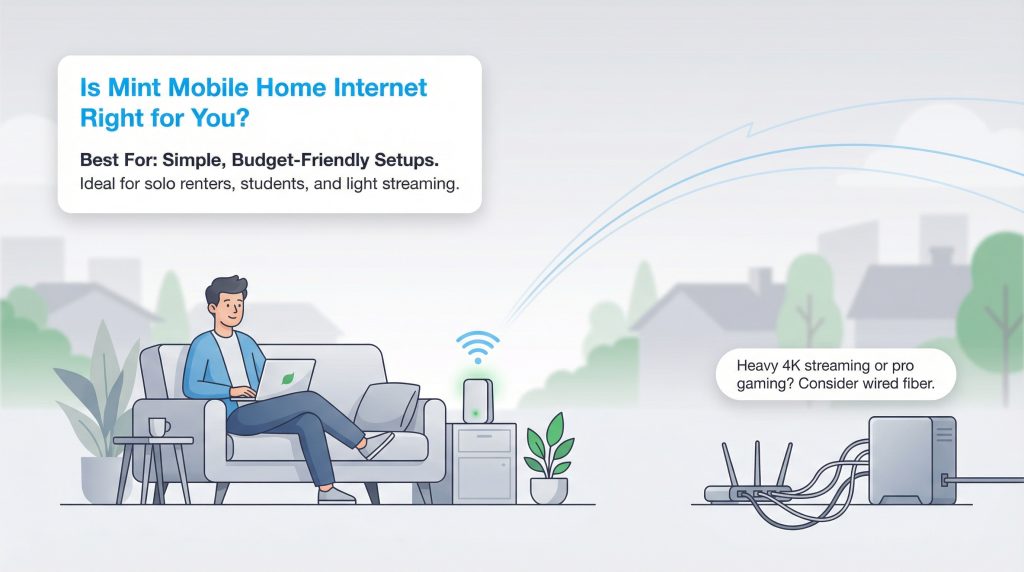
After reviewing the costs and capabilities, we believe MINTernet is an excellent choice for solo renters, students, and budget-conscious movers who already use Mint Mobile and don’t require professional-grade latency for gaming. The bulk pricing model provides peace of mind by eliminating monthly bills for a full year, and the setup is painless. However, large families with multiple 4K streams running at once or competitive gamers might be better served by a wired fiber connection. Ultimately, if you want to take control of your moving costs and simplify your utility setup, Mint offers a compelling, low-waste alternative to the big cable giants.
| Best For | Not Ideal For |
|---|---|
| Budget-conscious renters and Mint Mobile phone customers | Households needing ultra-low latency or very high upload speeds |
| Small homes or apartments with moderate streaming and browsing | Large households with multiple simultaneous 4K streams and heavy downloads |
FAQs About MINTernet
Is Mint Mobile 5G Home Internet available at my address?
Can I get a refund if Mint Mobile Home Internet doesn’t work at my house?
Does Mint Mobile Home Internet have a data cap?
Can I move my Mint Mobile gateway to a different house?
Is MINTernet faster than cable internet?
Do I need a technician to install MINTernet?
About the Author

David has been an integral part of some of the biggest utility sites on the internet, including InMyArea.com, HighSpeedInternet.com, BroadbandNow.com, and U.S. News. He brings over 15 years of experience writing about, compiling and analyzing utility data.